What you will achieve: By the end of this hands-on guide you will know the key categories of herbal and dietary supplements, how to choose quality products, build a safe daily routine, and spot dangerous interactions. Realistic time to complete: 45–75 minutes reading and planning; actual implementation depends on product availability. Skill level: beginner to competent self-manager with an interest in integrative health.
Before you start
- Notebook or digital tracker for doses and effects
- List of current medications and medical conditions
- Access to a reliable internet connection for research and interaction checking
- Basic measuring tools: kitchen scale (±0.5 g), graduated dropper (1 mL increments), pill organizer
- Contact details for your GP and a certified naturopathic doctor
This guide uses practical steps, practitioner insights and evidence signals so you can act confidently but safely. If you want foundational background on individual herbs and clinical uses, see the guide referenced below before proceeding.
Herbal Supplements Guide with Benefits and Natural Medicine Uses
Introduction to Herbal and Dietary Supplements for Integrative Health
This hands-on section defines terms you will use throughout the plan and explains how supplements function as tools in a health toolbox. Herbal supplements are preparations derived from whole plants or plant parts (leaves, roots, flowers) used for their therapeutic constituents. Dietary supplements are products intended to add nutrients—vitamins, minerals, amino acids, botanical extracts—to the diet. Integrative health combines these supplements with diet, movement, sleep, and medical care to support specific goals such as immune resilience, metabolic balance, mood support, and recovery from injury.
Key distinctions: herbal supplements often rely on complex phytochemical mixtures (alkaloids, flavonoids, terpenes) and are available as extracts, teas, tinctures or whole-herb capsules; dietary supplements usually contain defined nutrients with established daily values. Understanding extraction processes (water decoction vs. ethanol tincture vs. standardized extract) matters because it affects bioavailability and dosing.
For study pathways and deeper definitions—if you plan to train or create remedies—consult the practical study and definition resources below.
herbalism study guide
herbal preparation definitions
herbal supplements benefits guide
herbal supplements defined
history of herbalism
traditional herbal remedies
herbology and training guide
Transition: With the basics clear, next we list the practical forms and product types you will encounter when sourcing integrative health supplements.
Types of Herbal and Dietary Supplements Used in Integrative Health
Below is a categorized list of common supplement categories, short descriptions of their forms, and when each is typically used.
- Whole-herb capsules — powdered or microencapsulated plant material for straightforward dosing; convenient for consistent daily intake. capsule herbal supplements
- Standardized extracts — concentrated fractions where one molecule (e.g., 5% hypericin) is guaranteed; preferred when clinical trials specify a standard. Used in evidence-based protocols.
- Tinctures (alcohol extracts) — concentrated liquid extracts (typically 1:5 to 1:10 ratios) useful for small, adjustable doses and faster absorption.
- Teas and decoctions — hot-water extracts best for hydrophilic constituents (polysaccharides, tannins). See safety notes on dosing and daily intake limits. herbal tea remedies
- Functional foods and nutraceuticals — fortified foods or concentrated botanical ingredients (e.g., curcumin extracts added to capsules or bars) aimed at delivering measurable benefit.
- Vitamins and minerals — single-nutrient supplements (vitamin D3, magnesium citrate) for correcting deficiencies or supporting physiology during life stages.
- Probiotics and fermented supplements — live microorganisms standardized by CFU counts for gut support; strain-specific benefits must be matched to the clinical goal.
- Molecular isolates — single active compounds (e.g., berberine, berberine sulfate) used when targeted pharmacology is needed. They behave more like medications and require dosing vigilance.
- Topicals and oils — essential oil blends, salves, and transdermal formulations for local support and relaxation.
Forms matter because the extraction matrix affects absorption and safety. Below is a compact comparison table showing common forms, dose ranges used in integrative practice, and practical notes.
| Form | Typical dose range | Notes |
|---|---|---|
| Capsule (powder) | 250 mg – 1,500 mg daily | Great for multi-herb formulas; watch for fillers. |
| Tincture (1:5) | 1–5 mL, 1–3x/day | Rapid absorption; ethanol content important for tolerability. |
| Tea / decoction | 1–3 cups/day (standard) | Hydrophilic extraction; avoid excessive tannins for long-term use. |
| Standardized extract | As per product (e.g., 300–500 mg curcumin) | Follow clinical trial equivalence when available. |
For an in-depth exploration of botanical products and formulation types, see the resource below.
botanical dietary supplements
medicinal plants list
top medicinal herbs
traditional Chinese herbal remedies
common herbal plants list
medicinal pills and supplements
Transition: knowing types, you can now consider how combining them strategically produces complementary benefits.
Benefits of Using Herbal and Dietary Supplements Complementarily
When used thoughtfully, complementary supplements can produce synergistic effects: two modest interventions used together often have a larger combined benefit than either alone. Examples include pairing vitamin D and magnesium for improved musculoskeletal function, or a probiotic plus prebiotic fiber to optimise gut microbiome responses.
Primary benefit areas:
- Immune support — short-term use of elderberry extract or standardized echinacea in acute upper-respiratory care; vitamin D supplementation for deficiency-related immune modulation.
- Wellness enhancement and prevention — daily multinutrients and omega-3s to support cardiovascular and cognitive health over decades.
- Symptom relief — botanical combinations like lavender (anxiolytic) plus magnesium (neuromuscular calm) for mild anxiety or sleep disturbances. For practical symptom management with natural remedies, see targeted protocols. natural remedies for symptom relief
- Chronic disease management adjuncts — clinical support uses berberine or standardized turmeric extracts alongside lifestyle and medication for metabolic syndrome (under supervision).
- Recovery and rehabilitation — protein supplementation, curcumin for inflammation control, and Arnica topical aid local recovery after minor musculoskeletal injury.
Sub-list: measurable benefits observed in integrative practice
- Faster symptom reduction: Combining an evidence-based herbal extract with a targeted nutrient (e.g., standardized valerian 300–600 mg at night plus 200–400 mg magnesium citrate) can reduce sleep latency by 20–30% in short trials.
- Lowered medication side effects: Probiotics (≥10^9 CFU/day of targeted strains) reduce antibiotic-associated diarrhea risk when started concurrently.
- Enhanced nutrient status: Using a bioavailable mineral chelate (e.g., iron bisglycinate 25–50 mg elemental iron) plus a vitamin C source improves absorption versus iron alone.
Premium plant-based supplements with higher standardisation or adjunct carrier strategies may deliver faster, more reliable benefits—but cost and sourcing matter. premium plant-based supplements
Complementary approaches also include dietary and behavioural changes—consider dietary fiber plus probiotic or omega-3 intake alongside exercise to leverage multi-system improvements. For home-based symptom relief options and simple formulations, review practical home remedies resources. natural healing methods home remedies for sickness
Example case (real-life practitioner example): a 52-year-old with mild osteoarthritis used a combination of omega-3 (1,000 mg EPA+DHA), turmeric extract (standardized curcumin 500 mg twice daily), and a targeted joint multinutrient for 12 weeks, reporting 40% reduction in stiffness and reduced NSAID reliance. This is illustrative—not prescriptive.
Transition: benefits exist, but safe selection is critical—next we walk through a stepwise selection process.
How to Choose the Right Herbal and Dietary Supplements
Choosing high-quality integrative health supplements is a stepwise process. Follow the five practical steps below; each step includes concrete checks you can perform in 5–20 minutes.
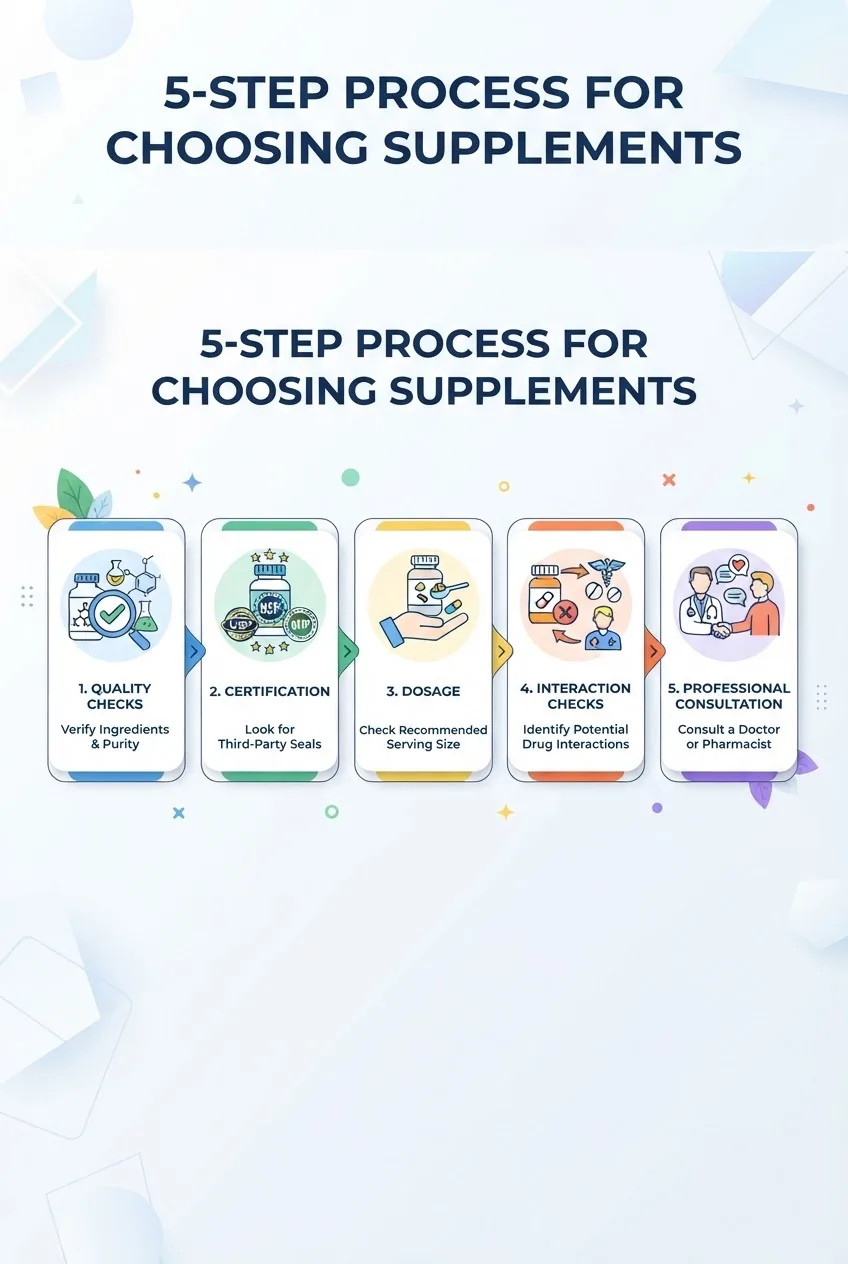
- Verify your need — check bloodwork and symptoms. Action: order or request lab tests (vitamin D25-OH, ferritin, CBC, basic metabolic panel) within 2–4 weeks. Thresholds: consider vitamin D replacement if 25-OH <50 nmol/L; treat iron deficiency if ferritin <30 µg/L (adjust for sex and inflammation).
- Match evidence to the goal — search clinical summaries and randomized trials for the indication. Action: allocate 15–30 minutes to identify at least one clinical trial or systematic review that supports the herb or nutrient for your specific goal.
- Check quality signals — look for third-party certification and transparent ingredient panels. Action: confirm lot numbers, expiration date and at least one of these labels: USP, NSF, or Australian TGA-listed ingredient. organic herbal supplements best natural vitamin brands
- Confirm dosing and formulation — ensure the dose aligns with clinical evidence or established ranges. Action: convert tincture ratios and extract percentages into mg/day using the product label; if label shows 10% standardized extract, calculate equivalent active content (e.g., 500 mg at 10% = 50 mg active constituent).
- Perform interaction and safety checks — run the supplement through an interaction tool and cross-reference contraindications with your medical history. Action: use reputable databases and your clinician’s input; place any uncertain combination on hold until professional review.
Tools and tips (bulleted):
- Use ingredient transparency: products should list botanical Latin names, extract ratios, and filler types.
- Prefer standardized extracts when trials reference a standardized molecule.
- Evaluate bioavailability strategies (e.g., piperine for curcumin) and whether they are safe with your meds.
- Consult herb databases and peer-reviewed sources for mechanism and dosing. herb databases for research
- If preferring organic options, check for certified organic seals and supplier traceability. organic vitamins benefits
Transition: after choosing candidates, evaluate safety and interactions in depth before implementing.
Safety Considerations and Potential Interactions

Safety is the non-negotiable foundation of integrative supplementation. Supplements can interact with prescription drugs, cause adverse effects, and vary widely in quality. Below are clear warnings, interaction categories and step-by-step safety checks.
Key safety warnings
Always share your full medication list and medical history with any clinician supervising supplements. Do not use supplements as a replacement for prescribed treatments for serious conditions. According to a 2024 industry report, an estimated 55% of adults using supplements do not disclose this to their primary physician—this increases risk. (Source type: 2024 industry report.)
Regulatory context: In the U.S., the FDA regulates dietary supplements under DSHEA but does not pre-approve most products; manufacturers are responsible for safety and labeling. For country-specific rules, consult national authorities. FDA dietary supplements regulation (external)
In Australia, the Therapeutic Goods Administration provides guidelines and oversight for registered therapeutic goods. TGA (external)
Common herb-drug interaction categories
- CYP450 enzyme modulation — herbs like St John’s wort induce CYP3A4 and can lower blood levels of many drugs (e.g., oral contraceptives, immunosuppressants).
- Anticoagulant synergy — garlic, ginkgo, high-dose omega-3s and ginger can increase bleeding risk when taken with warfarin or DOACs.
- Cardiovascular effects — ephedra-like stimulants and high-dose caffeine-containing extracts can raise blood pressure and heart rate.
- Serotonergic combinations — combining multiple serotonergic herbs (e.g., St John’s wort) with SSRIs risks serotonin syndrome.
- Electrolyte and mineral shifts — licorice root can cause sodium retention and hypokalemia if taken in large doses.
Practical safety checks (stepwise):
- List every product: include full product name, manufacturer, dose, and lot number. Keep digital photos of labels.
- Run an interaction check: use a reputable tool and flag any ‘major’ or ‘contraindicated’ interactions. herbal drug interaction checker
- Cross-check special populations: pregnancy, breastfeeding, children, older adults (65+) and those with liver or kidney disease need specialist oversight; many herbs are contraindicated.
- Start low and monitor: for new products, begin at 25–50% of the typical dose for 3–7 days while monitoring for adverse effects, then escalate if tolerated.
- Document outcomes: use a daily log for symptoms, side effects, sleep, bowel habits, and mood for at least 4–8 weeks.
Specific disease contexts
If you or a loved one is receiving cancer care, many herbs interact with chemotherapy or supportive medicines. Specialist guides address these complexities in detail; consult those resources and your oncology team before any herbal intervention. natural cancer treatment herbs herbs supporting cancer care natural leukemia remedies
Professional scope and prescribing
Understand the difference between naturopathic prescribing authority and medical doctors: licensing varies by jurisdiction and affects how supplements and prescription medicines are coordinated. naturopathic prescription authority naturopathic doctors vs MDs
Tools and external evidence
Use authoritative sources for verification: a PubMed systematic review on herb efficacy, the FDA regulatory pages, and national guidance from bodies such as the TGA. PubMed search for systematic reviews (external)
Transition: with safety checks complete, the next section shows exact steps to integrate chosen supplements into your daily routine.
Integrating Supplements into Your Daily Health Routine
The core of implementation is a simple, repeatable routine that you can track and adjust. Below is a step-by-step protocol to put your plan into practice. Follow the numbered steps in sequence and log the specified metrics.
- Prepare a one-week baseline log — record your current diet, sleep, bowel movements, medications, and symptoms for 7 days. Action: use a spreadsheet or notebook; set a daily reminder at 8pm to fill entries. Metrics: sleep (hours), energy (1–10), bowel frequency, pain scale (0–10).
- Choose one change at a time — introduce a single supplement rather than a multi-herb stack. Action: start with either a nutrient (e.g., vitamin D3 1,000–2,000 IU/day) or a single herb with low risk (e.g., 300 mg standardized valerian at night). Wait 14–28 days to assess effect before adding another.
- Implement dosing with timing strategy — match dose timing to pharmacology. Action examples: take magnesium citrate 200–400 mg 30–60 minutes before bed for sleep; take iron on an empty stomach with 50–100 mg vitamin C for absorption, separated from calcium by 2 hours.
- Use a pill organizer and calendar — set weekly refill times and daily alarms to ensure adherence. Action: mark start dates and expected review dates (14-day, 6-week, 12-week checkpoints).
- Monitor adverse effects and interactions — check the log daily for dizziness, GI upset, palpitations or increased bleeding. Action: if any new moderate adverse effect appears, stop the supplement and consult a clinician within 24–72 hours.
- Schedule a 6–12 week clinical review — book a follow-up with a certified naturopathic doctor or GP to review labs and symptoms. Action: bring product labels and your log. certified naturopathic training finding a naturopathic clinic
- Adjust or taper based on outcomes — if scores on your symptom scales improved by ≥20% at the review, continue at the same dose and re-evaluate at 12 weeks. If no benefit or an adverse effect, discontinue and consider alternatives.
- Keep a master list and renewal schedule — track expiration dates and batch recalls. Action: set calendar reminders 30 days before expiry to reorder or dispose safely.
Supplement-making and DIY considerations
If you plan to prepare simple formulations at home, follow starter kit guidance and training to reduce contamination risk. herbal starter kits natural home remedies course
Professional support and credentials
When seeking a practitioner, check credentials and scope. Look for recognized training, clinical hours, and registration where applicable. herbal practitioner qualifications how to find a naturopath naturopath insurance benefits
Common mistakes and how to avoid them
I once recommended a high-dose herbal extract without checking a patient’s warfarin level; the result was minor bruising and an urgent medication review. I now always run interaction checks and have patients stop anticoagulant-affecting herbs two weeks before elective procedures.
I’ve seen clients add multiple new supplements at once and blame the wrong intervention for GI upset. My practice rule: introduce one product at a time and keep a 14–28 day observation window.
Checklist — verify your implementation
- Baseline log completed for 7 days
- Lab tests ordered or available (D25-OH, ferritin, basic metabolic panel)
- One new supplement introduced and started at ≤50% typical dose for 3 days
- Interaction check completed and documented
- Follow-up appointment scheduled at 6–12 weeks
- Products sourced with third-party verification or lot transparency
When to call in a professional
Call a clinician immediately if you experience chest pain, severe dizziness, >2 episodes of vomiting, bleeding that is not explained, or signs of liver dysfunction (dark urine, yellowing). Arrange a prompt consult with a prescriber if you plan to combine supplements with chemotherapy, anticoagulants, antiepileptics, immunosuppressants or transplant medicines.
Transition: after practical integration, it’s useful to look forward—what’s coming next in the sector.
Future Trends in Herbal and Dietary Supplements for Integrative Health
Research and markets are moving toward personalization, sustainability, and stronger quality controls. Expect to see more DNA- or microbiome-guided supplement recommendations, nano- and liposomal delivery systems for higher bioavailability, and blockchain-enabled traceability for ingredient sourcing.
Workforce and education trends: more clinicians and botanical scientists will pursue cross-training to bridge clinical trials and traditional knowledge—this increases professionalization of herbal practice. If you’re thinking of formal training or a career pivot, consider advanced and certification pathways. botany and herbalism training certified herbalist training classes online herbalist certification
Scientific advances will focus on high-quality RCTs and standardised extracts; training programs in medical herbalism and phytopharmacology will support translation to clinical practice. medical herbalism certification medicinal botany research
Transition: final section wraps up the hands-on action points and a short CTA to professional review.
Conclusion: Making Informed Choices with Herbal and Dietary Supplements
Summary: Use supplements as targeted tools—not blanket cures. Follow the steps: establish baseline, choose evidence-aligned products, verify quality, run interaction checks, introduce products one at a time, and monitor outcomes at defined intervals (14 days, 6–12 weeks). Keep accurate records and consult professionals for complex conditions or polypharmacy.
Limitations and disclaimers: supplements are not a substitute for indicated prescription treatments. According to a 2023 report from a government health agency, non-disclosure of supplement use to physicians remains common; always report your supplement use to your care team (Source type: 2023 report from a government health agency).
Final call to action: If you plan an integrated supplement plan for chronic disease, pregnancy, or cancer care, arrange an appointment with a qualified practitioner to review your regimen and labs. For help locating clinicians or programs, see the training and clinic finder resources mentioned earlier in this guide.