
Answer: Plants for drugs are botanical sources used to isolate bioactive compounds that become medicines; the field combines medicinal botany, phytochemistry and pharmacology to translate traditional remedies into standardized pharmaceuticals through extraction, isolation, preclinical testing and clinical development (40–60 words).
This guide explains medicinal botany and plant pharmacology, traces historical roots, defines key phytochemical classes, lists medicines derived from plants, explains extraction and research workflows, compares benefits and challenges, and maps future directions for plant-based pharmaceuticals.
Introduction to Plants for Drugs?
Answer: Plants for drugs refers to the scientific use of plants as starting materials for pharmaceuticals; researchers identify active compounds in botanicals, characterise their pharmacology, and develop standardized, regulated medicine products from plants and their derivatives.
Medicinal botany: the study of plants with therapeutic properties and their classification, ecology and cultivation.
Medicinal botany and plant pharmacology intersect to produce medicines derived from plants: botanists document species and chemotypes, phytochemists isolate molecules, and pharmacologists test mechanisms of action. This hybrid discipline covers raw plant material through finished pharmaceutical forms and regulatory compliance.
Practical context: many consumers encounter plant-derived compounds as both prescription drugs and botanical supplements; readers seeking broader herbal supplement context can explore the pillar resources below for benefits and natural medicine uses.
Herbal Supplements Guide with Benefits and Natural Medicine Uses
botanical dietary supplements benefits overview
Historical Overview of Medicinal Plants in Drug Development?
Answer: Humans have used plants as medicines for millennia; many modern drugs (aspirin, morphine, quinine) originated from ethnobotanical knowledge and were later validated by phytochemistry and clinical research.
Traditional medicine products from plants informed early pharmacology: healers recorded uses, which later guided systematic isolation of active molecules. The transition from remedy to regulated drug usually follows documentation, chemical isolation, potency testing and clinical validation.

- ~1500 BCE–1600 CE: Traditional pharmacopeias and materia medica (Egyptian, Chinese, Indian, Greek) record plant remedies used for specific ailments.
- 18th–19th century: Isolation of morphine (1804) from Papaver somniferum and quinine from Cinchona bark; chemistry enables compound identification.
- Late 19th century: Salicin to salicylic acid and acetylsalicylic acid (aspirin) demonstrates chemical modification of plant compounds for therapeutic use.
- 20th century: Systematic drug discovery accelerates; paclitaxel (taxol) from Taxus brevifolia and vincristine/vinblastine from Catharanthus roseus become anticancer agents.
- 21st century: Biotechnological synthesis, standardized extracts and regulatory frameworks integrate traditional knowledge with modern pharmacology.
Example case study — morphine: the opium poppy (Papaver somniferum) yielded morphine when chemists isolated alkaloids in the early 1800s; morphine’s analgesic properties were characterised pharmacologically and refined into controlled clinical use (case study context drawn from pharmacognosy histories and clinical reviews).
Traditional Chinese medicinal systems contributed many leads; for modern readers wanting courses on those traditions, see the resource below.
traditional Chinese medicinal herbs
Scientific Principles Behind Plants for Drugs?
Answer: Plants produce diverse phytochemicals—alkaloids, terpenoids, flavonoids—that can modulate human physiology; phytochemistry and extraction methods identify and isolate these molecules for pharmacological testing and drug development.
Phytochemistry: the branch of chemistry that studies chemicals produced by plants, especially bioactive secondary metabolites.
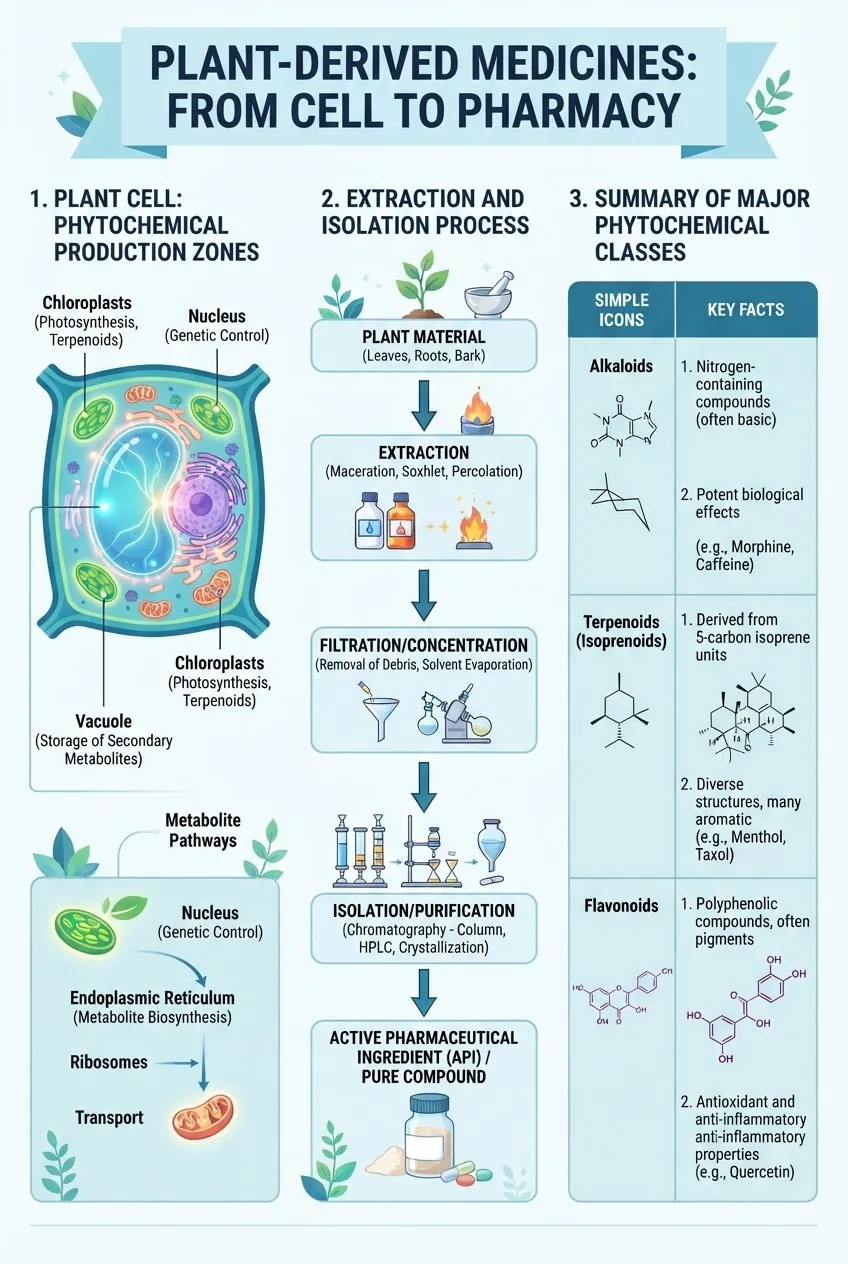
Major phytochemical classes and how they act
- Alkaloids: nitrogen-containing molecules (e.g., morphine, quinine); often interact with neurotransmitter receptors or ion channels.
- Terpenoids (isoprenoids): built from isoprene units (e.g., taxol/paclitaxel); many alter membrane or enzyme function, and have anticancer or anti-inflammatory activity.
- Flavonoids: polyphenolic antioxidants that modulate enzyme activity and cell signalling; common in dietary botanicals.
- Glycosides: sugar-linked molecules (e.g., digoxin) that affect cardiac contractility or other physiological systems.
Extraction methods turn plant material into testable fractions. Traditional approaches (decoction, infusion, poultice) remain relevant for ethnobotanical context; modern pharmaceutical extraction uses solvent extraction, steam distillation (volatile oils), and supercritical CO2 for non-polar compounds.
Extraction methods (concise definitions):
- Solvent extraction: use of solvents (ethanol, methanol, water, hexane) to dissolve compounds; followed by concentration and fractionation.
- Steam distillation: recovery of essential oils from plant material by vaporising volatile components.
- Supercritical CO2 extraction: high-efficiency non-toxic method for lipophilic compounds using CO2 above critical temperature/pressure.
- Chromatography: separation technique (HPLC, flash, GC) to purify individual compounds for structure elucidation and assays.
Analytical characterisation uses mass spectrometry (MS), nuclear magnetic resonance (NMR) spectroscopy and LC-MS to determine structures and quantify concentrations. According to a 2023 pharmacognosy review, coupling LC-MS with bioassay-guided fractionation accelerates lead identification by prioritising biologically active fractions (source: peer-reviewed pharmacognosy review).
Pharmacodynamics and pharmacokinetics determine whether a plant-derived compound can become a drug: potency, selectivity, ADME (absorption, distribution, metabolism, excretion) and toxicity must be characterised preclinically. Many promising phytochemicals require chemical modification or formulation to become viable medicines.
Common Plant-Derived Drugs and Their Uses?
Answer: Numerous clinically used drugs originate from plants; the list below gives key examples, their botanical source, mechanism snapshot and clinical use to show how traditional leads became pharmaceuticals.
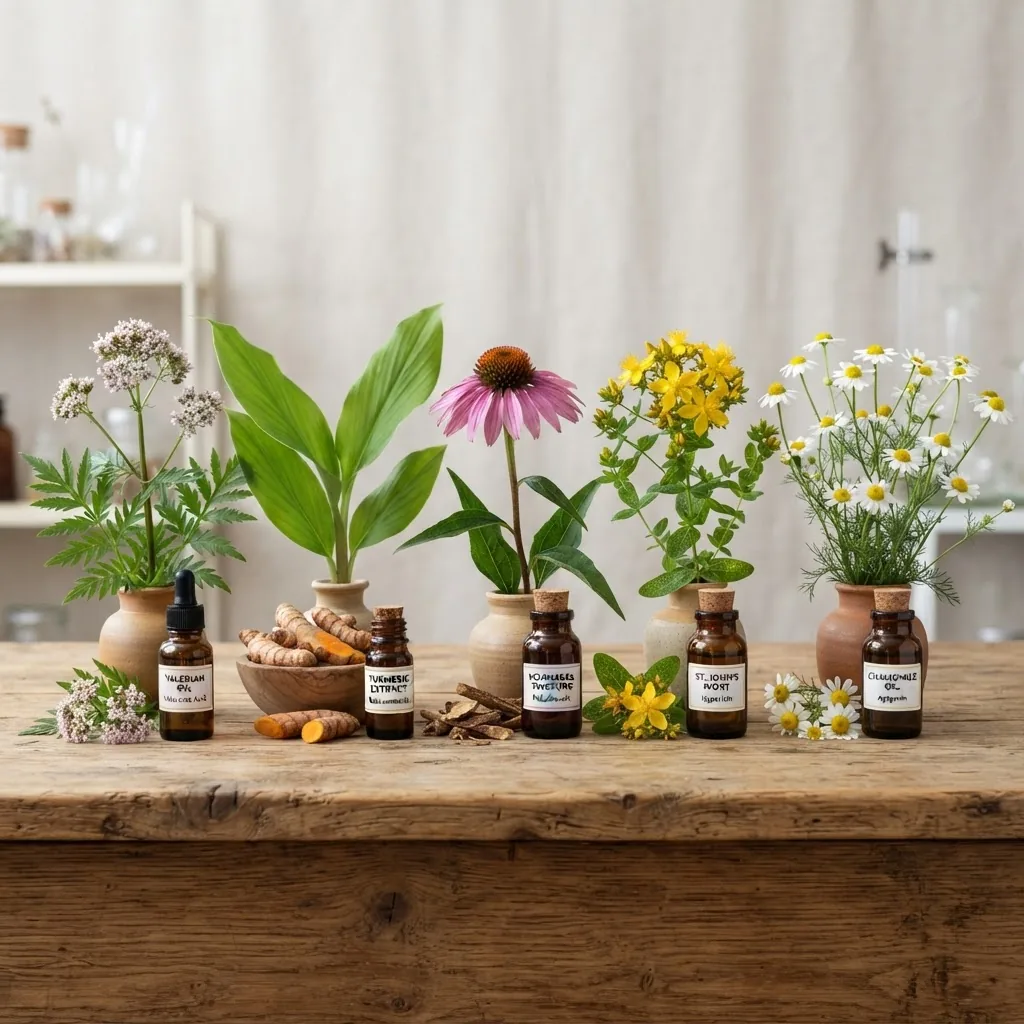
- Morphine — Source: opium poppy (Papaver somniferum). Use: potent opioid analgesic for severe pain. Mechanism: mu-opioid receptor agonist. Development note: isolated early 19th century; foundational opioid pharmacology and subsequent semi-synthetic opioids derived from it.
- Aspirin (acetylsalicylic acid) — Source: willow (Salix spp.), salicin precursor. Use: analgesic, antipyretic, antiplatelet. Mechanism: irreversible COX inhibition reducing prostaglandin synthesis. Historical note: derived from salicylic chemistry in the late 19th century.
- Quinine — Source: Cinchona bark. Use: antimalarial (historic); mechanism: interferes with Plasmodium heme detoxification. Note: guided development of synthetic antimalarials and semi-synthetic derivatives.
- Artemisinin — Source: Artemisia annua (sweet wormwood). Use: frontline antimalarial in artemisinin-based combination therapies (ACTs). Mechanism: generates reactive radicals that damage parasite proteins. Recognition: Nobel Prize–highlighted discovery from traditional Chinese medicine (According to a 2015 Nobel Committee summary).
- Paclitaxel (Taxol) — Source: Pacific yew (Taxus brevifolia). Use: chemotherapy for breast, ovarian and lung cancers. Mechanism: stabilises microtubules and prevents mitosis. Development: complex isolation and later semi-synthetic supply solutions.
- Vincristine & Vinblastine — Source: Catharanthus roseus (Madagascar periwinkle). Use: anticancer agents for leukemia, lymphomas. Mechanism: microtubule destabilisation inhibiting mitosis.
- Digoxin — Source: foxglove (Digitalis lanata). Use: heart failure, atrial fibrillation (specific contexts). Mechanism: inhibits Na+/K+ ATPase, increasing intracellular calcium and contractility.
- Atropine — Source: Atropa belladonna (deadly nightshade). Use: antimuscarinic for bradycardia, ophthalmic dilation, organophosphate poisoning. Mechanism: muscarinic receptor antagonist.
- Ephedrine — Source: Ephedra species. Use: bronchodilator, decongestant historically; also precursor for synthetic drugs. Mechanism: sympathomimetic action increasing norepinephrine release.
- Colchicine — Source: Colchicum autumnale (autumn crocus). Use: gout flares and pericarditis. Mechanism: inhibits microtubule polymerisation, reducing neutrophil activity.
- Artemisinin derivatives & semi-synthetics — Source and development: plant lead (Artemisia) modified for potency and stability; example of bridging ethnobotany to global therapy.
- THC/CBD — Source: Cannabis sativa. Use: analgesic, antiemetic, spasticity, and investigational indications. Mechanism: cannabinoid receptor modulation (CB1/CB2) and diverse signalling effects.
- Paclitaxel derivatives (chemotherapy prodrugs) — Source: plant lead refined into clinically usable semi-synthetic molecules to improve supply and activity.
- Camptothecin derivatives (irinotecan, topotecan) — Source: Camptotheca acuminata. Use: topoisomerase I inhibitors for colorectal and ovarian cancers.
Practical forms: many plant-derived molecules are delivered as capsules, tablets or injectable formulations; for consumer-level encapsulated botanicals and benefits see the capsule supplements guide below.
herbal supplement capsule benefits
Notes on selection: selection of plant-derived drugs prioritises agents with defined mechanisms, reproducible potency, and feasible supply or synthetic routes. According to a 2022 drug-discovery review, bioassay-guided isolation remains the dominant practical approach for identifying lead compounds from complex botanical extracts (source: peer-reviewed drug discovery review).
For readers interested in oncology-focused herbal options and evidence, see our targeted guide on natural approaches to cancer care.
natural cancer treatments using herbal remedies
The Study of Medicinal Botany – Research and Methodologies?
Answer: The study of medicinal plants combines field ethnobotany, phytochemical screening, bioassay-guided fractionation, analytical chemistry (LC-MS/NMR), in vitro/in vivo pharmacology and clinical trials to translate plant leads into medicines.
Study of medicinal plants: systematic investigation of botanical species for therapeutic compounds, including taxonomy, ecology, chemistry and pharmacology.
Research workflow (high level):
- Ethnobotanical documentation and species selection based on traditional use or chemotaxonomic rationale.
- Collection, voucher specimen creation and botanical authentication by trained botanists.
- Crude extract preparation and preliminary screening in relevant bioassays (antimicrobial, cytotoxicity, enzyme inhibition).
- Bioassay-guided fractionation using chromatography to isolate active fractions and compounds.
- Structure elucidation with MS and NMR, followed by target identification and mechanism studies.
- Preclinical ADME/toxicity studies, formulation development, and then clinical trials (phases I–III) for candidate drugs.
Examples of research techniques:
- Ethnobotany: structured interviews and literature surveys that prioritise leads with repeated cultural use and plausibility.
- Bioassay-guided fractionation: iterative separation of extracts with concurrent biological testing to focus on active constituents.
- Chromatography and spectroscopy: HPLC, GC-MS, LC-MS/MS and NMR for purification and structure determination.
- High-throughput screening (HTS): adapts plant libraries to rapid in vitro assays to identify hits against molecular targets.
- Omics approaches: metabolomics profiles plant chemical diversity; genomics/transcriptomics identify biosynthetic genes for target compounds.
- Plant cell culture and elicitation: in vitro culture systems produce phytochemicals under controlled conditions, reducing wild harvesting.
Case example — paclitaxel development: discovery from Taxus bark involved initial activity screens, isolation of taxol, structural elucidation, and later supply challenges solved by semi-synthesis from more abundant precursors and plant cell culture production (according to pharmaceutical development literature).
Training and capacity building for researchers: for those seeking formal instruction that combines botany and applied herbal science, consult the training resource below.
Regulatory and ethical frameworks are integral: documentation of sustainable harvesting, benefit-sharing with source communities, and compliance with international conventions (e.g., Nagoya Protocol) are now standard considerations in medicinal-botany research.
Benefits and Challenges of Using Plants for Drug Development?
Answer: Benefits include novel chemical diversity and historically validated leads; challenges include chemical variability, supply sustainability, standardisation and regulatory complexity—each requires specific mitigation strategies.
Below is a concise pros and cons comparison to evaluate plant-based drug development against modern pharmaceutical requirements.
| Benefits | Challenges |
|---|---|
| Access to unique, evolutionarily refined bioactive scaffolds often not found in synthetic libraries. | Natural variability in compound concentrations between plant populations and harvest times complicates standardisation. |
| Ethnobotanical knowledge can prioritise biologically plausible leads, saving discovery time. | Supply and sustainability concerns—overharvesting can threaten species; cultivation or synthesis may be required. |
| Many plant-derived molecules have proven clinical efficacy (e.g., taxanes, vinca alkaloids). | Complex mixtures require sophisticated analytical and quality-control frameworks to ensure batch-to-batch consistency. |
| Opportunity for novel intellectual property and value-added semi-synthetic derivatives. | Regulatory pathways for botanicals are heterogenous globally; clinical evidence standards must be met for approved indications. |
Safety and efficacy: plant-based drugs can be highly effective but also pose safety risks if unstandardised or interacting with pharmaceuticals. For practical safety tools, consult the interaction checker and guidelines below.
herbal drug interaction checker and safety guidelines
Legal and clinical integration: clinicians must often rely on licensing and prescribing frameworks that vary by jurisdiction; for details on scope and licensing, see the prescribing licensing resource below.
licensing for prescribing plant-derived medications
For symptom-focused, consumer-level remedies with documented effects, review natural symptom relief resources to weigh evidence against expectation.
natural symptom relief remedies
Regulatory references: WHO and FDA guidance provide frameworks for safety, quality, and acceptable uses of plant-derived medicines—these are essential references for developers and clinicians.
Authoritative sources: WHO traditional medicine guidance and FDA pharmaceutical quality resources offer regulatory context for botanical drug development (government health agencies).
Future Directions in Plant-Based Pharmaceuticals?
Answer: Future directions emphasise biotechnology (metabolic engineering, synthetic biology), sustainable sourcing, standardised extracts, plant cell culture production and tighter clinical integration to address supply and variability.
Advances in medicinal botany focus on using genomics to map biosynthetic pathways and on engineering microbes or plant cell cultures to produce complex phytochemicals at scale, reducing pressure on wild species and stabilising supply chains.
Biotechnological strategies include:
- Metabolic engineering of microbes to produce plant alkaloids and terpenes.
- CRISPR-enabled enhancement of plant biosynthetic genes to increase yields of target compounds.
- Scale-up of plant cell culture bioreactors for continuous phytochemical production.
Sustainability and policy: sustainable harvesting standards and benefit-sharing protocols will grow more central to responsible drug discovery. According to a 2024 industry report on natural product supply chains, companies investing in cultivated sources and biotechnological production reduce ecological and economic risks (source: 2024 industry report).
Education and workforce: as plant-based pharmaceuticals grow, trained professionals in both botanical science and clinical practice will be needed; for those planning professional pathways, certification resources are available below.
naturopathy certification and training resources
Integration with modern healthcare will require clear evidence for efficacy and safety, plus education for prescribers on herb-drug interactions and standardised dosing. Novel regulatory frameworks for botanical drugs (distinct from dietary supplements) are likely to expand globally.
Conclusion – Integrating Plants for Drugs in Modern Medicine?
Answer: Integrating plants for drugs requires rigorous science, sustainable sourcing, standardised quality control and clinical validation; when those elements align, plant-derived medicines are a durable and valuable part of modern therapeutics.
Key takeaways: medicinal botany supplies chemically diverse leads; phytochemistry and extraction methods translate leads into testable compounds; research workflows guide development from field to clinic; and modern biotechnology helps overcome supply and standardisation challenges.
If you want to explore botanical and dietary supplement strategies within integrative care and evidence-based uses, see the integrative supplements resource below to continue your learning pathway.