
Certified herbalism classes near me provide structured, accredited training that combines plant science, herbal preparation and clinical skills to qualify graduates as certified herbalists able to practice or join integrative health teams—covering curriculum, accreditation, costs, and step-by-step enrollment for local or hybrid programs.
What Are Herbalism Classes and Certified Herbalist Training?
Answer: Herbalism classes are structured courses teaching medicinal plant identification, preparation and clinical applications; certified herbalist training culminates in a credential from an accredited program or recognised professional board that confirms competency to practice within defined scopes.
Certified herbalist training: a formal educational pathway (certificate, diploma or degree) combining coursework, hands‑on practicum and assessment leading to a certificate from a school or professional association.
Certified herbalist training programs range from short workshops to multi-year diplomas. Core content includes botany, phytochemistry, pharmacology, herbal materia medica, client consultation and safety protocols. Programs often require supervised clinical hours and a final assessment or portfolio review.
Terminology and examples:
- Herbalism classes: short courses, workshops or modules focused on skills such as tincture making or plant ID.
- Certification: award or credential given after an institute or association verifies a student has met learning outcomes.
- Accreditation: third-party recognition that a program follows agreed educational standards (examples below).
Accreditation landscape: recognized bodies include the American Herbalists Guild (AHG) and the UK’s National Institute of Medical Herbalists (NIMH); government oversight varies by country, and you should verify local regulation via your health department.
According to a 2024 industry report, demand for accredited herbalist training grew as integrative clinics sought qualified herbal practitioners; check programme outcomes and graduate placement rates when comparing courses.
Student experience snapshot: one graduate described completing a 12‑month clinical diploma with 200 supervised hours, practicing client intake, formulating teas, and preparing tinctures under supervision, then passing a board portfolio review to gain certification.
Transition: Now that you know what certified herbalist training is, read about why taking nearby certified herbalism classes can be advantageous for career and practice credibility.
Benefits of Taking Certified Herbalism Classes Near Me
Answer: Local certified herbalism classes speed practical skill development, provide supervised clinical hours close to home, increase professional credibility, and simplify hands‑on access to plants and mentors for quicker transition into practice.
- Hands‑on learning and immediate practice: Local classes let you collect, identify and prepare herbs (drying, tinctures, infusions), which strengthens retention and competence in practical herbal preparation methods.
- Supervised clinical hours: In-person clinics and community placements provide required supervised practice for certification portfolios and real client exposure.
- Networking and mentorship: Face-to-face mentorship with experienced instructors and local herbalist networks supports apprenticeships and referrals.
- Credential credibility: Accredited local programs that partner with recognised boards improve employer and public trust in your role as a certified herbalist.
- Career readiness: Practical training speeds entry to roles such as private practice herbalist, integrative clinic assistant, product formulation technician or wellness educator.
- Access to local plant knowledge: Regional courses teach native species identification and sustainable wildcrafting practices specific to your area.
- Lower travel barriers: Save on travel and lodging while meeting in-person practicum requirements.
- Complementary resources: Pair classes with self-study guides like Herbal Supplements Guide with Benefits and Natural Medicine Uses to deepen understanding of supplement roles in clinical herbalism.
- Regulatory alignment: Local programs often map curriculum to region-specific scope of practice and safety standards, making it simpler to comply with local legal requirements.
- Continuing education pathways: Accredited local schools frequently offer continuing education modules, enabling ongoing skill refreshers and advanced topics.
Career and integration context: Certified training also supports work with allied professions and opens options for product development—learn more about botanical product training in the botanical dietary supplements and integrative approaches resources.
Transition: Understanding benefits helps choose the right course type; next we compare local, online and hybrid options to match your learning needs.
Types of Herbalism Classes Available Locally and Online
Answer: Herbalism classes are offered as short workshops, certificate programs, diploma degrees, online modules, hybrid courses and specialised traditional medicine tracks—each varies by hands-on time, accreditation and clinical requirements.
Terms:
Hybrid certification courses: programs mixing online theory with scheduled in-person practicums and clinics.
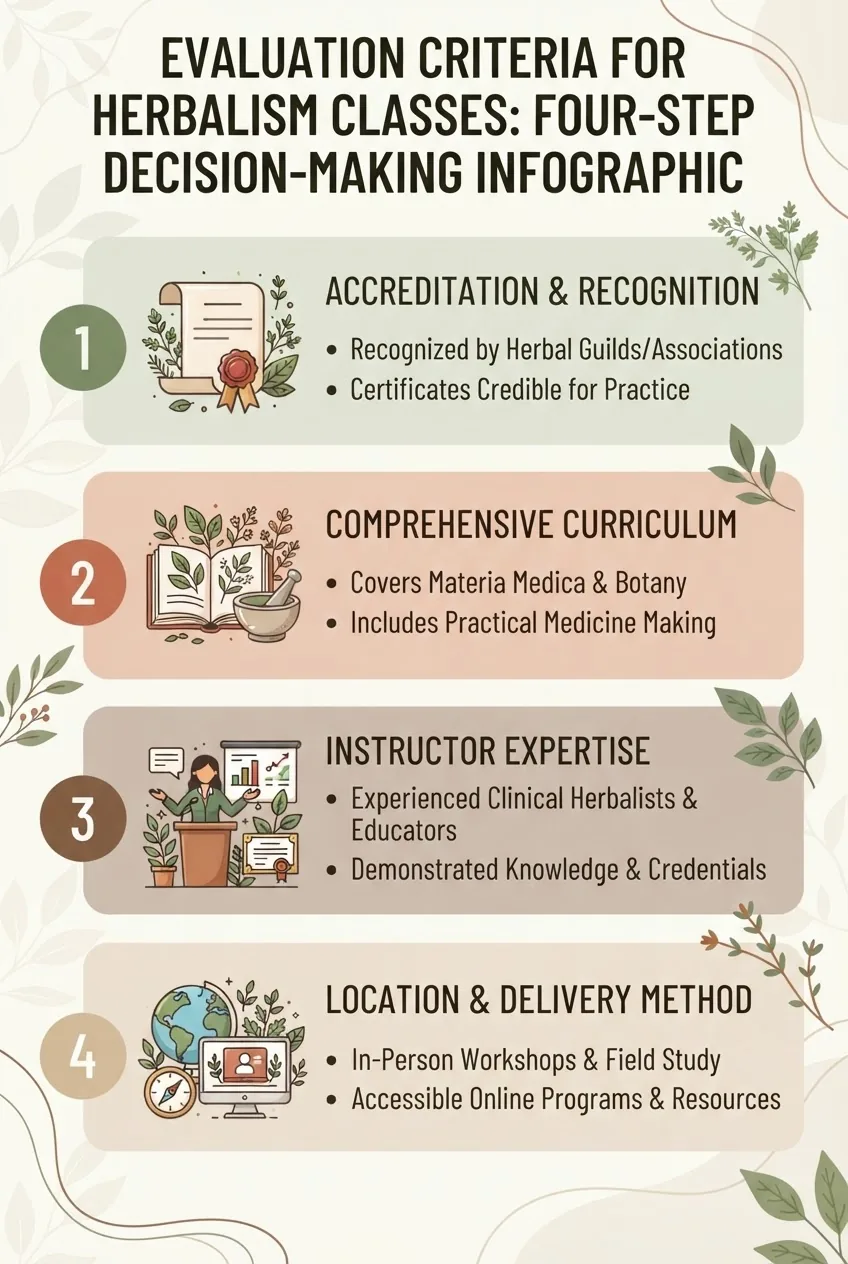
| Class Type | Format | Hands‑on | Accreditation/Use Case |
|---|---|---|---|
| Short workshops | 1–3 day in‑person | High (specific skill) | Skill-building; not standalone certification |
| Certificate programs | Weeks–months; in-person or online | Moderate | Entry-level credential; may feed into diploma |
| Diploma / Advanced | 6–36 months; often in-person or hybrid | High (clinical hours) | Professional practice eligibility with board recognition |
| Online modular courses | Asynchronous theory | Low (requires local practicum) | Flexible theory; combine with local labs for certification |
| Traditional medicine tracks | In-person or specialist schools | High (clinical + materia medica) | Specialised practice (e.g., Chinese herbal medicine) |
Examples and pathways:
- If you want plant science depth, consider botany-focused herbal training alongside clinical modules.
- Remote learners: review online herbalist certification courses and ensure a supervised practicum is offered locally.
- For traditional programs, explore curricula like Chinese herbal medicine studies or other cultural medicine tracks.
Transition: After comparing formats, you’ll need selection criteria to choose a reputable program near you—covered next.
How to Choose the Right Certified Herbalist Training Program Near You
Answer: Choose a program with transparent accreditation, clear certification outcomes, qualified instructors, structured clinical hours, and alignment with your career goals; weigh curriculum depth, practicum opportunities and graduate support.
Accreditation: verify institutional or program accreditation and professional association recognition (AHG, NIMH or local equivalents) and check government education registers where applicable; consult authoritative sources like the WHO traditional medicine guidance for safety frameworks.
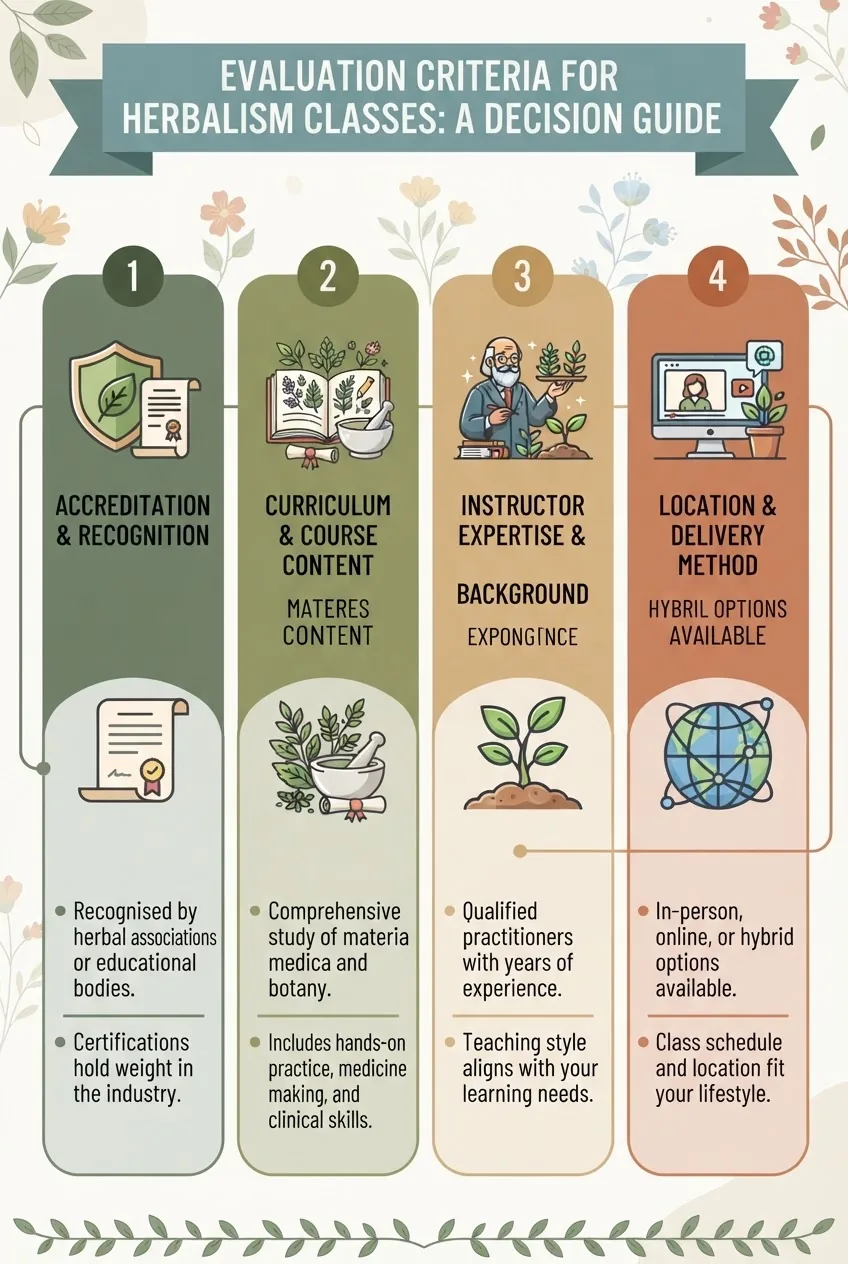
Key criteria (use this checklist):
- Accreditation and recognition: Confirm if the program is recognized by a reputable association or tertiary accreditation body. herbalist training and qualifications
- Curriculum depth: Look for courses that include botany, phytochemistry, clinical assessment, pharmacology and safety protocols (see core curriculum list below).
- Instructor qualifications: Instructors should have practical clinical experience and recognised credentials; review bios and clinical case histories.
- Clinical hours and practicums: Verify required supervised hours, local clinic partnerships and assessment formats (case studies, exams, portfolios).
- Assessment and certification process: Understand whether certification is program-issued, board-awarded, or both, and whether there’s an exam or portfolio review.
- Facilities and resources: On-site herb gardens, labs, and teaching clinics materially improve hands-on learning.
- Delivery method and schedule: Compare in-person, hybrid or fully online and the availability of scheduled labs you can attend locally.
- Cost transparency and financial aid: Confirm tuition breakdown, materials fees and available scholarships or payment plans.
- Graduate outcomes: Ask for graduate employment or practice placement data and alumni testimonials to gauge program efficacy.
- Regional legal alignment: For Canadian readers, review the Canadian naturopathy certification context and local licensing nuances.
Decision process (stepwise):
- List programs within commuting distance and hybrids that schedule local practicums.
- Cross-check program recognition with professional associations or government registers.
- Review syllabi for required competencies and supervised clinical hours.
- Contact alumni for candid feedback and inspect facilities where possible.
- Compare costs, duration and certification pathway to your career goal.
Case study: Maria’s path — hypothetical example:
Maria wanted clinic practice within two years. She selected a 24‑month hybrid diploma listed with AHG-aligned competencies, completed 300 supervised clinic hours in a partnered naturopathic clinic, submitted a clinical portfolio and received board recognition. This pathway highlighted the importance of sheltered clinical placements and portfolio assessment.
Transition: With a selection strategy in place, review the actual curriculum elements and skills you’ll gain in these certified programs.
Core Curriculum and Skills Covered in Certified Herbalism Classes
Answer: Certified programs teach plant identification, phytochemistry, therapeutic actions, formulation and preparation techniques, clinical assessment, safety and drug interaction awareness essential for safe, professional herbal practice.
Herbal identification: learning Latin names (e.g., Matricaria chamomilla for chamomile, Echinacea purpurea for Echinacea) and morphological features for safe field identification.
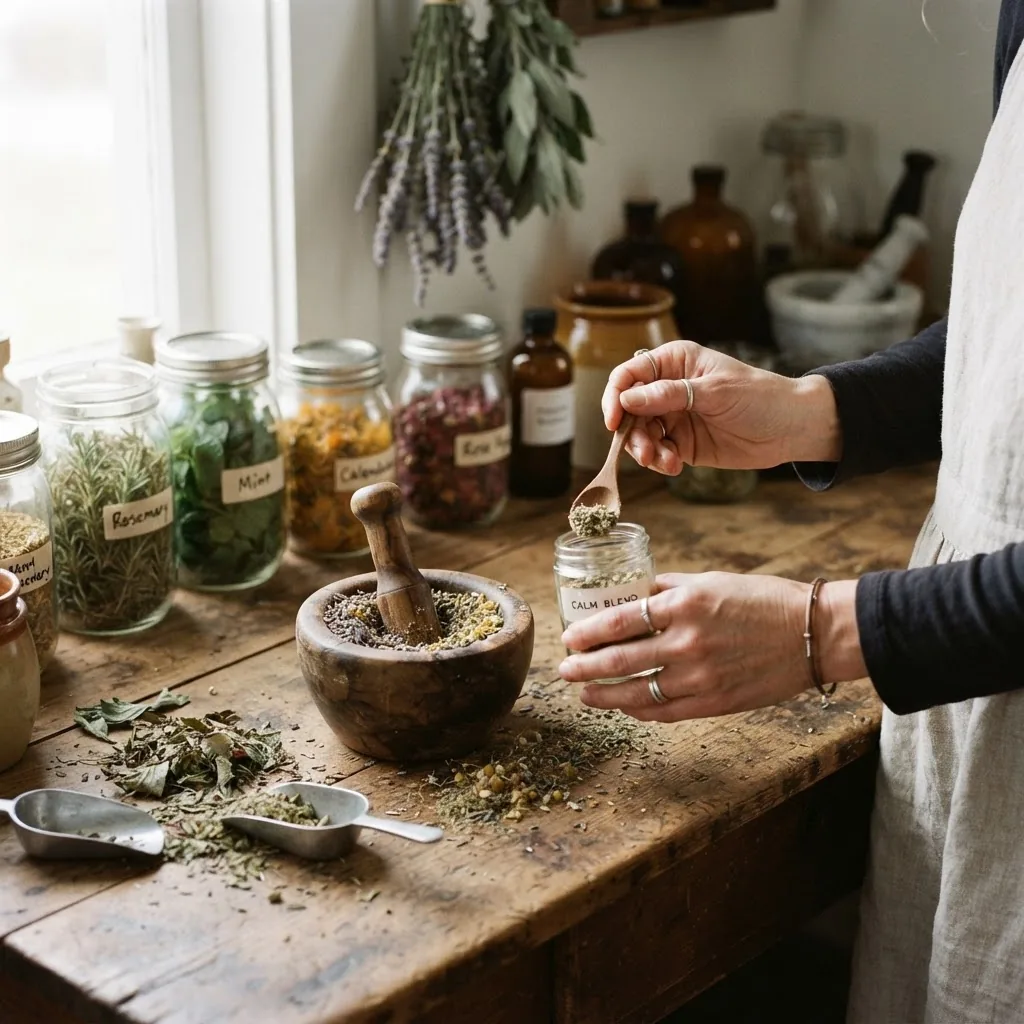
- Plant identification and botany: systematic taxonomy, Latin binomials, local flora, and sustainable wildcrafting techniques to recognize and ethically gather species.
- Phytochemistry and pharmacology: active constituents (alkaloids, glycosides, tannins, terpenes) and mechanisms of action that inform clinical use.
- Materia medica: therapeutic profiles for core herbs such as Matricaria chamomilla (chamomile), Hypericum perforatum (St John’s wort), and Salvia officinalis (sage).
- Herbal preparation techniques: tinctures, decoctions, infusions, poultices, salves and capsule herbal supplement preparation — practical training in dosing and preservation.
- Formulation and dispensary skills: creating individualized formulations, compounding into teas, capsules and topical preparations; see practical modules like capsule herbal supplement preparation.
- Clinical assessment: client history-taking, red flags, contra-indications and building treatment plans within defined herbalist scope of practice.
- Safety protocols and herbal drug interaction awareness: training to identify herb–drug interactions and contraindications; students use interaction resources and undertake risk assessment simulations. herbal drug interaction awareness
- Regulatory and ethical practice: scope of practice, record-keeping, informed consent and local legal constraints for herbalists.
- Research literacy: interpreting clinical studies, evidence grading and integrating peer-reviewed data into practice planning; consult journals like the Journal of Herbal Medicine for current research.
- Top medicinal herbs: practical competence with top medicinal herbs and their clinical indications.
Safety and applied learning: certified courses include case-based clinics to practice client consultations, contraindication screening and formulation; students often complete mock consultations under supervisor observation.
Related applied topics: learn natural symptom relief and formulation techniques in modules connected to natural symptom relief techniques and broader supplement applications via Herbal and Dietary Supplements Guide for Integrative Health.
Transition: Next, know what to expect regarding time commitment, costs and the certification process so you can plan enrollment and finances.
What to Expect: Duration, Costs, and Certification Process
Answer: Expect program durations from weekend workshops to multi‑year diplomas (6–36 months); costs vary widely—AUD 500 workshops to AUD 10,000+ diplomas—and certification requires coursework completion plus supervised hours and either exams or portfolio review.
Duration and timelines:
- Short courses: 1–5 days for discrete skills.
- Certificates: 3–12 months for foundational competencies.
- Diplomas/advanced certificates: 12–36 months with clinical practicums.
Cost comparison (indicative):
- Weekend workshop: AUD 150–600
- Certificate course: AUD 800–3,500
- Diploma/advanced training: AUD 3,000–15,000 (depending on institution and hours)
Certification steps (typical):
- Complete required coursework and practical modules.
- Accumulate supervised clinical hours (varies; 100–500 hours depending on program).
- Submit assessments: exams, clinical case portfolio or supervised practical exam.
- Receive program certificate and, where available, apply to professional association registration.
Financial aid and payment options:
- Some schools offer payment plans, scholarships or early-bird discounts; inquire about material fees, herb kits and clinic placement costs.
- According to a 2023 educational funding survey, many private herbal schools introduced staggered payments to increase accessibility.
Limitations and expectations:
- Certification is not equivalent to a medical degree—herbalists should work within their legal scope; see professional liability guidance where relevant.
- Insurance and clinical credentialing vary by region; graduates often pursue additional qualifications for clinic-based roles.
Transition: Having budgeted time and money, next learn where to locate certified programs, community offerings and clinics for placements near you.
Where to Find Certified Herbalism Classes Near Me: Locations and Resources
Answer: Find certified herbalism classes near me by searching local herbal schools, community colleges, herbalist associations’ directories, naturopathy clinics with training partnerships and event listings; verify accreditation and practicum options before enrolling.
Step-by-step search method:
- Search local listings for “herbalism classes near me” and filter for accredited schools and hybrid programs with practicum options.
- Check professional association directories (e.g., AHG, NIMH) for endorsed schools and registries.
- Contact nearby naturopathic clinics and community colleges to ask about continuing education partnerships and supervised clinic placements; example resource: naturopathic and herbalist clinic locations.
- Attend local herb festivals, community botany walks and workshops to meet instructors and see facilities firsthand.
- Use online platforms that list courses and reviews, but confirm hands-on practicum details directly with the school.
Example resources to check:
- Professional association directories (AHG, NIMH)
- Community education departments at regional universities and TAFE institutions
- Local herbalist collectives and community herbalism programs
- Event platforms listing workshops and short courses
- School websites for syllabi and practicum partnerships
Practical enrollment checklist:
- Confirm program accreditation and what “certified” means for that school.
- Verify supervised clinical hours and local practicum availability.
- Request a sample syllabus and assessment rubrics.
- Ask for alumni references and graduate outcome statistics.
- Plan logistics: commute, materials, herb kits and clinic schedules.
Transition: With classes located, explore typical career paths available after completing certified herbalist training.
Career Paths After Completing Certified Herbalist Training
Answer: Certified herbalist training opens careers in private clinical practice, integrative health teams, herbal product development, education, research and community herbalism, with pathways differing by level of certification and local regulation.
Common roles and examples:
- Private practice herbalist: offering consultations, personalised formulations and clinics; may require professional association registration and insurance.
- Integrative clinic practitioner: working alongside naturopaths, physiotherapists or GPs in multidisciplinary settings.
- Herbal product developer: roles in formulation, quality control and manufacturing for supplements or topical products.
- Educator or workshop leader: teaching community classes, corporate wellness workshops or post-secondary modules.
- Research assistant or clinical researcher: participating in herbal clinical studies and evidence synthesis.
Specialised interests and bridges:
- Herbalists who specialise in oncology-adjacent support may study protocols and safety; see specialised resources such as herbal cancer remedy approaches for context and always coordinate with oncology teams.
- To understand how naturopathic licensing compares to prescribing scopes, consult resources on naturopathic licensing and prescription.
- Insurance considerations for practice are discussed in insurance coverage for natural health practitioners.
Transition: To get the most from any program, use practical strategies that maximise skill retention and professional readiness.
Tips to Maximize Your Herbalism Training Experience
Answer: Maximise training by prioritising hands-on practice, joining peer study groups, securing mentorship, completing internships, and committing to continuing education and reflective case documentation.
- Attend every practical session and practise herbal preparations at home.
- Form or join study groups to review materia medica and clinical cases.
- Pursue mentorship or apprenticeship with a local clinical herbalist for additional supervised hours.
- Document all clinical case studies carefully; build a portfolio aligned with certification requirements.
- Seek internships in naturopathic or integrative clinics to observe interdisciplinary care.
- Commit to continuing education to stay current with safety guidance and emerging research.
Transition: The next section provides concise, actionable FAQs to resolve common decisions for prospective students.