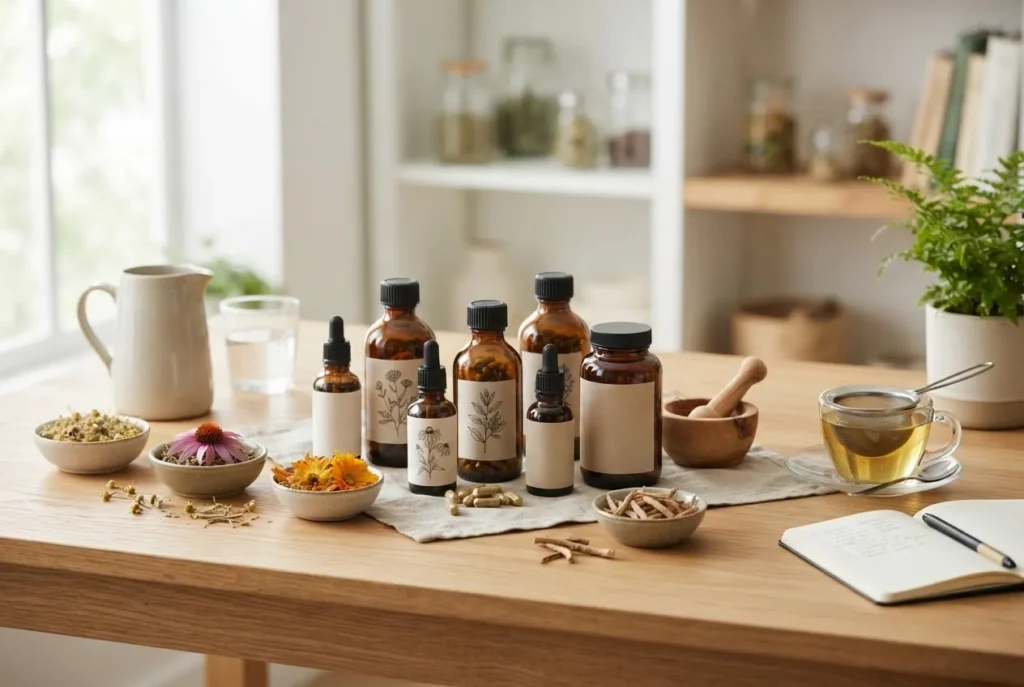
What you will achieve: By the end you will be able to verify organic herbal supplements, identify trustworthy herbal supplements guide with benefits and natural medicine uses, and shop confidently online or in-store. Time required: 2–4 hours of research plus ongoing monitoring; skill level: beginner to intermediate consumer with willingness to verify labels and suppliers.
Before you start
- Checklist: government ID, list of current medications and allergies, and a notepad for product lot numbers.
- Tools: internet access, ability to view product batch & certificate PDFs, smartphone camera for photographing labels, and a magnifier for tiny print.
- Reference sources: FDA / NIH guidance pages, USDA Organic database, and recognized herbal pharmacopoeias.
-
Understand organic classification and certification
Understanding Organic Herbal Supplements
Start by learning what distinguishes organic herbal supplements from conventional products: organic means the herbs were grown, harvested and handled per organic standards that minimise synthetic pesticides, GMOs and certain processing aids. This section is a practical primer on the standards, labels and why they matter for purity and environmental impact.

Definition and Importance of Organic in Herbal Supplements
Organic herbal supplements are products made from plants cultivated under certified organic agriculture rules. Certification controls the use of synthetic pesticides, herbicides, fertilizers and genetically modified organisms and also governs post-harvest handling. Choosing organically certified herb products reduces chemical residues and supports regenerative farming practices that benefit soil health and biodiversity.
Differences Between Organic Herbal Supplements and Conventional Supplements
Key differences include traceability, permitted inputs, and documentation. Organic herbal products are traceable from farm to bottle and must be verified by an accredited certifier. Conventional supplements may use non-organic raw herbs, extractants with synthetic solvents, or botanical raw materials grown with conventional pesticides.
- Traceability: Certified organic suppliers provide farm origin and certifier details.
- Allowed inputs: Organic systems permit only specific natural pesticides and fertilisers.
- Processing: Organic standards restrict certain additives, solvents and irradiation.
Certification Standards for Organic Herbal Products (e.g., USDA Organic, EU Organic)
Major certification systems set the rules for organic claims. The most recognised include USDA Organic and the EU organic logo and regulations. Certification covers production, processing and labelling; look for the certifier name and a certifier code on packaging.

Practical verification walkthrough (step-by-step):
- Find the organic logo and certifier name on the product label.
- Locate the certifier code or certificate number (usually printed on label or manufacturer website).
- Search the certifier’s online directory to confirm the manufacturer’s certificate (save a screenshot).
- Confirm the product lot number and certificate validity date match the batch where possible.
According to a 2024 industry report, a rising share of consumers report “organic certification” as a key purchase driver for herbal supplements; verification reduces the risk of mislabelled or contaminated products (source type: industry report).
Transition: Now that you can distinguish certified organic herbal products and verify labels, next we’ll outline the health benefits and how they differ from non-organic options.
-
Identify specific health benefits and safety margins
Benefits of Using Organic Herbal Supplements for Natural Health
Using certified organic herbals can support holistic wellness with potentially lower exposure to agricultural chemicals. This section lists direct benefits, how organic impacts safety and the role of herbals in integrative care.
Health Advantages Over Non-Organic Supplements
Certified organic herbs may contain fewer pesticide residues and avoid certain processing chemicals. Practically, that can mean:
- Lower chemical load for long-term users and vulnerable groups (pregnant women, children).
- Potential retention of natural phytochemical profiles when grown in healthier soils.
- Better traceability that supports recall and safety investigations.
Role in Supporting Immune System and Detoxification
Many herbal extracts are used as antioxidant or immune-support adjuncts. Typical benefits for general wellness include:
- Antioxidant support: herbs like organic green tea and rosemary supply polyphenols.
- Immune system support: echinacea and elderberry are commonly used (evidence varies by preparation and dose).
- Detoxification aids: bitter herbs and mild hepatic tonics such as milk thistle may support liver function when used appropriately.
See integrative studies and usage in the broader integrative supplement benefits overview for cross-reference and dosing frameworks.
Safe Consumption and Reduced Chemical Exposure
Organic certification reduces the chance of synthetic pesticide residues and undeclared solvents. For consumers with chemical sensitivities or those taking herbals long-term, organic can be a risk-reduction strategy. Always follow label dose and consult a clinician before combining herbals with pharmaceuticals.
According to a 2024 industry report, consumers who choose organic report higher perceived safety, but clinical outcomes depend on the herb, extract standardisation and dose (source type: industry report).
Transition: With benefits in context, the next step is a practical, step-by-step checklist to choose and buy the highest quality organic herbal supplements.
-
Vet suppliers, test reports and packaging carefully
How to Choose and Buy High-Quality Organic Herbal Supplements
This hands-on section gives the stepwise method I use as a practitioner to evaluate herbal supplement suppliers, herbal online shop listings, and the highest quality criteria for products before purchase.

Traits of Reputable Herbal Online Shops and Suppliers
- Check transparency: Reputable sites publish company history, manufacturing addresses and third-party Certificates of Analysis (CoAs) for batches.
- Verify certifications: Ensure the vendor lists certifier and certificate number. Use certifier directories to validate.
- Look for GMP & testing: Good Manufacturing Practice (GMP) statements and independent lab testing for heavy metals, microbes and pesticides are essential.
- Customer care: A clear returns policy, lot recall process and a responsive customer service are red flags when absent.
- Community feedback: Read mixed reviews and seek documented user testimonials or case studies rather than only star ratings.
For readers who want deeper training in plant provenance and identification, consider herbalism training to evaluate herb sources and supply chains expertly.
Key Quality Indicators: Sourcing, Testing, Transparency
Use this checklist when evaluating a product page:
Indicator What to look for Sourcing Farm origin, organic certifier name & cert number, region of cultivation Testing Batch CoA showing active markers, heavy metals, pesticides & microbial limits Transparency GMP site, manufacturing dates, third-party test lab name Evaluating Packaging and Dosage Forms (capsules, tablets, tinctures)
Match form to goals and stability:
- Capsules: stable, dose-accurate and often suitable for standardised extracts — see capsule herbal supplements for specifics.
- Tablets: compressed, may include binders — check ingredient transparency.
- Tinctures: alcohol or glycerin extracts; check solvent type and concentration (e.g., 1:5 w/v) and alcohol percentage if relevant.
- Powders and teas: store in sealed, light-resistant packaging to preserve phytochemicals.
Practical thresholds: choose extracts standardised to active markers when clinical effects are sought (for example, milk thistle >70% silymarin for liver support). If no standardisation is required, source whole-herb preparations that list botanical part and ratio.
Tips for Shopping Herbal Supplements Online Safely
- Match product to evidence: Use clinical reviews and pharmacopoeia monographs to match herb and dose.
- Verify CoAs: Download and compare CoA lot numbers with product lot numbers on page—if missing, request them before purchase.
- Confirm return and recall policies: A 30-day return window and an established recall policy are preferable.
- Use small test purchases: Buy a single bottle before committing to subscription or bulk buys.
- Document everything: Save screenshots of labels, order confirmations and CoAs to support any dispute resolution.
Check practitioner credentials and supplier expertise where applicable: look for published manufacturing quality systems and staff bios. For supplier staffing and qualifications, review the herbalist qualifications guidance.
Transition: With purchasing steps covered, next is a practical overview of the common organic herbal supplements you’ll encounter and how to pick among them.
-
Learn the common herbs, extracts and when to choose them
Overview of Popular Types of Organic Herbal Supplements
This section lists commonly available organic herbals online and in stores, with short practical notes on use, typical extract forms and stability considerations.
Top Organic Herbal Supplements for General Wellness
- Chamomile (Matricaria recutita) — calming tea or 4:1 tincture; choose organic flowers; storage: cool, dark, 18–24 months for dried flowers.
- Organic Turmeric (Curcuma longa) — standardised extracts at 95% curcuminoids for targeted use; prefer black pepper extract (piperine) or formulation for absorption.
- Milk Thistle (Silybum marianum) — standardised to 70–80% silymarin for liver support; check heavy metal CoAs for seed products.
- Organic Green Tea Extract — source catechin profile and note caffeine content; choose decaffeinated if sensitive.
- Elderberry (Sambucus nigra) — syrup or extract for immune support; organic syrup should list preservative methods and sugar content.
For an extended list and clinical profiles, see the top medicinal herbs guide.
Specific Herbal Supplements for Energy, Digestion, Stress Support
- Energy: Organic rhodiola (standardised rosavins) or organic eleuthero (Siberian ginseng) — start with 100–200 mg standardized extracts and monitor tolerability.
- Digestion: Organic peppermint oil (enteric-coated capsules 0.2–0.4 mL) or gentian root tincture (1:5) for bitter digestive tonics.
- Stress support: Organic ashwagandha (KSM-66 type or full-spectrum 1:1 extract) 300–600 mg daily; check standardisation and solvent used.
Organic Herbal Vitamins vs. Pure Herbal Extracts
Organic vitamins are nutrients derived from organic plant sources; pure herbal extracts concentrate phytochemicals. Choose organic vitamins for nutrient gaps and standardised extracts when you require consistent active marker levels. For botanical overview, see the botanical dietary supplements.
Transition: After selecting herbs and formulations, learn where to find trusted retailers and compare channels next.
-
Compare trusted vendors and local shops
Where to Find Trusted Organic Herbal Supplement Stores Online and Offline
This section shows where to look for reliable stock, and how to compare online shops, specialist herbal products store retailers and brick-and-mortar options.
Trusted Online Herb Websites and Brands
- Large certified brands with transparent CoAs and GMP statements — check vendor pages for downloadable CoAs and batch numbers.
- Independent herbal manufacturers who publish full ingredient sourcing and agronomy reports — prefer suppliers with laboratory accession numbers.
- Specialist herbal vitamin store sites focusing exclusively on organic lines; they often maintain stricter sourcing policies than broad marketplaces.
Brick-and-Mortar Herbal Products Stores with Organic Selections
Visit stores and inspect physical labels: verify the certifier, check expiry dates and request CoAs if buying higher-risk items (e.g., root powders). Local herbal shops often carry small-batch organic lines where farm origin is displayed on the shelf tag.
Comparing Pricing and Product Range Across Channels
Price signals and range comparison:
- High price + transparent CoAs = often higher quality but verify documentation.
- Low price + absent CoAs = red flag; request batch testing before buying in bulk.
- Subscriptions can be cost-effective but confirm the first-bottle test policy and return options.
Common online resources include specialist herb marketplaces, certified brand storefronts and regulated natural product retailers. When ready to shop, use this pragmatic approach: shortlist three vendors, compare CoAs for the same product, and select the vendor with verifiable testing and a clear recall policy.
Transition: You will have questions — the next section addresses common safety concerns and regulatory nuances.
-
Answer common safety, interaction and regulation questions
Common Concerns and FAQs About Organic Herbal Supplements
Below are practitioner-level Q&A responses to common concerns, designed to be practical and decision-driving.
Q&A practical notes
Important safety resources: use a formal interaction checker before combining herbals with prescription drugs and review practitioner guidance on prescribing scopes.
For practical symptom approaches, consult our natural remedies for symptoms resource for non-urgent symptom relief strategies.
Legal scope questions are covered in naturopathic doctors prescribing.
To check for herb-drug safety, use a reliable tool such as our herbal drug interaction checker.
-
Maintain correct storage and monitor potency
Maintaining Quality and Safety When Using Organic Herbal Supplements
Once you have purchased certified organic herb products, correct storage and monitoring ensure potency and safety. Below are practical protocols I use in clinic and recommend to clients.
Storage Conditions for Organic Herbal Products
Guidelines:
- Store capsules/tablets: 15–25°C (59–77°F), low humidity, away from direct sunlight.
- Tinctures: room temperature stable if >20% alcohol; refrigerate if alcohol-free glycerites.
- Dried herbs/powders: vacuum-sealed or resealable opaque containers, 12–24 months depending on herb and packaging.
- Keep tea leaves in airtight tins and use within 12 months for best flavour and efficacy.
Understanding Shelf Life and Expiration Dates
Expiration dates reflect manufacturer stability testing and packaging. If you want professional-level guidance on testing standards and credentialing, review naturopathy certification benchmarks for clinician-level storage and handling protocols.
How to Report and Avoid Low-Quality or Contaminated Products
Steps to report suspected contamination or mislabelling:
- Stop using the product and document lot number, purchase date and photographs of the label.
- Contact the vendor immediately and request a recall inquiry.
- Notify your national regulator (e.g., FDA) and the certifier if organic claims appear false.
- Store the product securely for potential lab analysis.
According to a 2023 government health agency report, prompt reporting significantly improves trace-back speed and consumer safety outcomes (source type: government health agency report).
Transition: Below I share mistakes I commonly see and a concise checklist you can use to verify your purchase decisions.
Common mistakes and how to avoid them
I once purchased an “organic” tincture that listed no certifier—many buyers assume the word organic is verified. The failure was not requesting the CoA. How I avoid it now: I always ask for a certificate and verify the certifier’s online registry before buying more than a single bottle.
I have seen capsule labels without extract ratios—result: inconsistent dose. Now I choose standardised extracts or whole-herb products with clear ratios and third-party testing to avoid variability.
Checklist — Verify before you buy
- Organic logo + certifier name + certificate/number present and verified.
- Batch CoA downloadable and matches product lot number.
- GMP declaration and third-party lab testing for heavy metals & microbes.
- Clear ingredient list with botanical part, extract ratios and standardisation.
- Visible expiry date, return & recall policy, and labelled manufacturer contact details.
When to call in a professional
Contact a qualified naturopath, pharmacist or medical herbalist if you or your client: are pregnant, breastfeeding, on immunosuppressants, anticoagulants or chemotherapy; or if you experience unusual adverse reactions after starting an herbal product. For practitioner-level scope and prescribing questions see naturopathic doctors prescribing.
Conclusion
Key takeaways: choosing high-quality organic herbal supplements means verifying certification, reviewing batch CoAs, and matching product form and standardisation to your health goal. Expect to spend 1–4 hours initially to verify suppliers; once you have trusted sources, maintenance is simple. Act now: pick one product, verify its certifier and CoA, and buy one test bottle to assess effect and tolerability—shop with confidence.