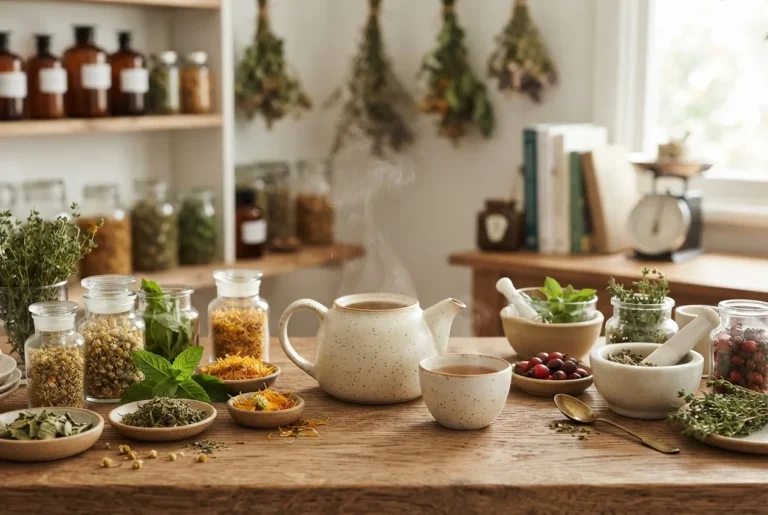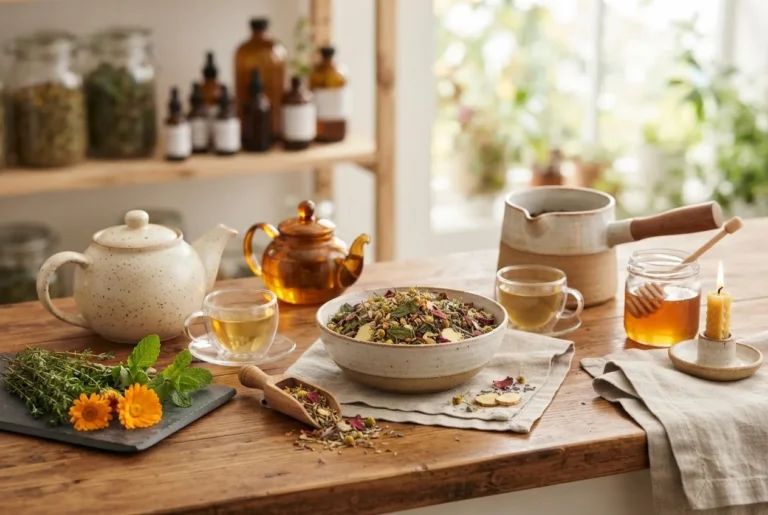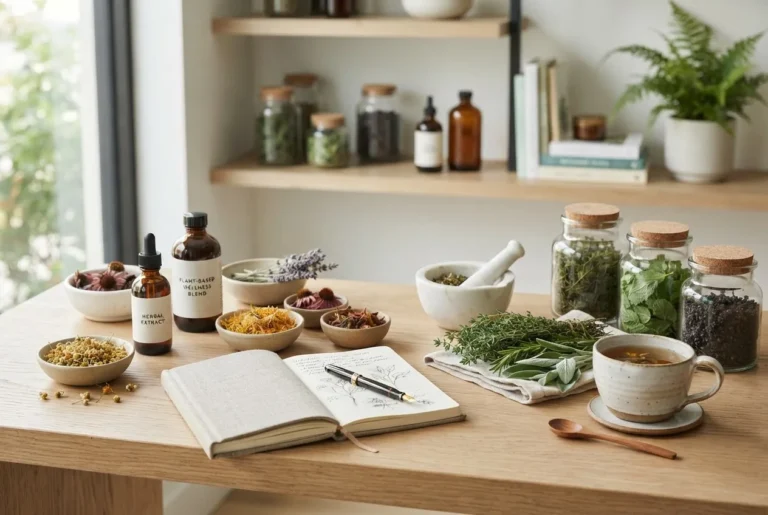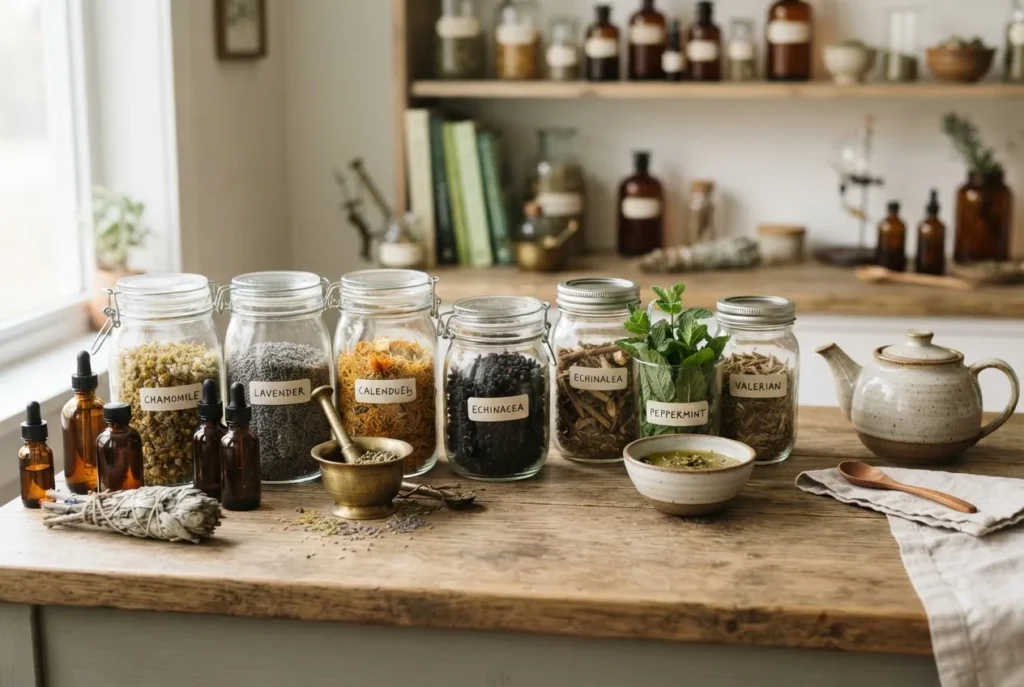
By the end of this hands-on guide you will have learned how to choose, prepare and safely apply classic old time remedies and cures—including tinctures, infusions and salves—created simple DIY formulas (elderberry syrup, chamomile infusion, ginger digestive tincture), and understood when to stop and seek professional care. Expect to spend 2–6 hours on initial practice (gathering herbs, making 3 basic preparations) and this assumes a beginner skill level with basic kitchen tools.
Introduction to Old Time Remedies and Traditional Herbal Medicine
This guide surveys the living practice of Traditional herbal medicine—how communities historically used plants for healing and how those practices translate into practical, home-based care today. You’ll meet the most dependable old fashioned remedies, understand the logic behind them, and leave with reproducible preparations that address everyday complaints (sleep problems, mild coughs, digestion, cuts and bruises). The voice is that of a senior practitioner: prescriptive, measured and practical.
Across cultures, folk medicine and old time medicine remedies have formed the backbone of community health for centuries. In Europe, cottage apothecaries mixed herbal tinctures and poultices; in Indigenous cultures, local plant knowledge guided seasonal treatments; in Asia, holistic systems integrated botanical therapies with diet and lifestyle. While modern medicine excels in acute and complex disease management, traditional herbal medicine continues to offer accessible, plant-based healing principles for symptom relief and resilience.
Historical roots: archaeological and textual evidence shows humans used plant medicines for millennia. The survival of these practices—what we now call folk medicine or “old fashioned remedies”—is not accidental: many herbs contain measurable phytochemicals (tannins, alkaloids, volatile oils) that produce predictable effects like anti-inflammatory, carminative or antiseptic actions. Ethnobotanical studies document repeated, cross-cultural uses of plants like Artemisia, elder, ginger and honey as therapeutic agents.
Framing the guide: this article balances cultural history, practical instructions and safety. It is not a substitute for medical advice about serious conditions, but it equips you to practice safely at home and to converse knowledgeably with naturopaths, herbalists and conventional clinicians when escalation is needed.
Transition: Next we’ll examine the philosophical backbone that guided old school remedies and how that shapes practical choices when making and using herbs.
Key Principles and Philosophy Behind Old School and Old Fashioned Remedies
Old time remedies rest on a few enduring philosophical principles that shape preparation and application. Understanding these gives you context when you measure quantities, time infusions, or select a plant for an intended effect.
- Holistic healing and individualization. Traditional herbal medicine treats the person, not just the symptom. Practitioners observe digestion, sleep, emotion and environment before selecting herbs. A single herb may be chosen differently for a warm, anxious person than for a cool, lethargic one.
- Plant-based healing principles. Plants are chosen for their observable actions—calming nervines like chamomile; warming carminatives like ginger; mucilaginous expectorants like marshmallow root. The logic is empirical: repeated outcomes in communities shaped usage.
- Energetics and balance. Many folk systems (Western herbal energetics, Traditional Chinese Medicine) use concepts like warming/cooling or drying/moistening to restore natural balance. These qualitative assessments guide combinations and dosages.
- Simplicity and conservation. Old fashioned remedies favor minimal processing—infusions (teas), tinctures (alcohol extracts), decoctions (long simmer), poultices, and salves—keeping the plant essence intact while extending shelf life.
- Contextual safety and dose awareness. Dosing in traditional systems is conservative: start low and observe. Knowledge of contraindications, herb-drug interactions and vulnerable populations (children, pregnancy) is an integral part of the craft.
These principles map to modern naturopathic values—supporting vitality, using the least invasive interventions, and restoring function. If you want structured training in these philosophical and practical skills, consider formal herbalism training or localized courses for certified herbalist training.
Practical note: When you apply energetics or balance thinking, pair it with observation: measure bowel rhythm, sleep duration, and symptom changes in a 7–14 day notebook before changing the formula.
Concept table: differences in approach help clarify how old time remedies compare to modern botanical science.
| Aspect | Traditional / Old School | Modern Herbal Medicine |
|---|---|---|
| Philosophy | Holistic, energetics, individualized | Evidence-focused, standardized dosing, clinical trials |
| Preparations | Teas, tinctures, poultices, salves | Standardized extracts, capsules, quality control |
| Safety | Empirical caution, traditional contraindications | Clinical safety studies, drug-interaction screening |
Transition: With philosophy in hand, the next section lists the most commonly used herbs in old time remedies, their traditional uses, and practical notes on sourcing and quality.
Common Herbs Used in Old Time Remedies and Their Traditional Uses
This section is a compact herbarium of reliable, everyday botanical allies used in old time remedies and cures. Each entry includes traditional use, typical preparation, dose guidance and caution notes. For expanded profiles see the top medicinal herbs resource and if you want to compare with Eastern practice see Chinese traditional herbal remedies.
- Chamomile (Matricaria recutita) — Traditional uses: mild sedative, digestive relaxant, anti-spasmodic for children and adults. Preparation: infusion, 1–2 teaspoons dried flowers per cup, steep 10 minutes. Dose: 1–3 cups/day. Cautions: rare allergic cross-reactivity with ragweed.
- Lavender (Lavandula angustifolia) — Traditional uses: calming nervine, sleep support, topical antiseptic. Preparation: infusion or essential-oil diluted salve (3% in carrier). Dose: 1 cup infusion in evening, topical salve applied 1–2 times daily. Cautions: avoid undiluted essential oil on skin.
- Peppermint (Mentha x piperita) — Traditional uses: antispasmodic for digestion, mild analgesic for headaches. Preparation: infusion (1 tsp/250 ml), or enteric-coated oil capsules for IBS. Dose: 1–2 cups/day. Cautions: may worsen reflux or heartburn in some people.
- Ginger (Zingiber officinale) — Traditional uses: carminative, antiemetic for nausea, warming for circulation. Preparation: fresh decoction (2–4 g fresh root simmered 10 minutes) or tincture (1:5 in 40–60% ethanol). Dose: 250–500 mg powdered or 0.5–1 tsp fresh juice up to 4 times/day. Cautions: can increase bleeding risk at very high doses; avoid in certain anticoagulant therapies without advice.
- Elderberry (Sambucus nigra) — Traditional uses: immune support, viral respiratory symptom relief. Preparation: syrup (see practical recipe later), decoction of berries. Dose: 1–2 tablespoons syrup 2–3 times/day during acute illness. Cautions: raw uncooked berries can be toxic—always cook or use prepared extracts.
- Honey (local, raw) — Traditional uses: wound dressing, cough suppressant, energy tonic. Preparation: topical application on minor wounds; 1 tsp for cough. Dose: topical as needed, oral 1 tsp up to 3 times/day. Cautions: never given to infants under 12 months due to botulism risk.
- Yarrow (Achillea millefolium) — Traditional uses: styptic and wound-healer, circulation stimulant. Preparation: poultice or infusion; fresh herb poultice applied to bleeding or bruised skin. Dose: topical; keep on wound for 15–30 minutes. Cautions: may cause photosensitivity in some people.
- Plantain (Plantago major) — Traditional uses: demulcent for skin and mucous membranes, poultice for insect bites. Preparation: crush fresh leaves into poultice or make an infusion. Dose: topical as needed. Cautions: safe for most, but use clean plant material only.
- Marshmallow root (Althaea officinalis) — Traditional uses: demulcent for sore throat, cough and digestive irritation. Preparation: cold infusion or decoction; 1–2 tsp cut root/250 ml cold water soak 6–8 hours. Dose: 1 cup 2–3 times/day. Cautions: may reduce absorption of oral drugs if taken simultaneously—space by 1 hour.
- Calendula (Calendula officinalis) — Traditional uses: topical anti-inflammatory, wound-healing salves. Preparation: infused oil (1:4 ratio herb:oil, warmed 2–6 hours) → salve with beeswax. Dose: apply 2–3 times/day. Cautions: generally safe; patch-test for allergies.
- Slippery elm (Ulmus rubra) — Traditional uses: soothing mucilage for sore throat and GI irritation. Preparation: powdered inner bark stirred into warm water. Dose: 1–2 teaspoons up to 3 times/day. Cautions: avoid with very restricted diets without professional guidance.
- St. John’s Wort (Hypericum perforatum) — Traditional uses: mood support for mild depression, topical nervine. Preparation: oil or tincture. Dose: standardized extract 300 mg twice daily (for extracts); topical as oil. Cautions: significant interactions with many drugs—see safety section for herbal drug interactions.
- Turmeric (Curcuma longa) — Traditional uses: anti-inflammatory, digestive aid. Preparation: decoction, paste, or encapsulated standardized extracts. Dose: 500–1,000 mg of curcumin standardized extract daily for short periods; culinary use is safe. Cautions: high doses can affect gallstones and interfere with some medications.
Transition: With a working herb list and dosages, the next section gives hands-on, step-by-step instructions to prepare these herbs safely at home—infusions, tinctures, poultices and salves.
How to Prepare and Use Traditional Herbal Remedies at Home
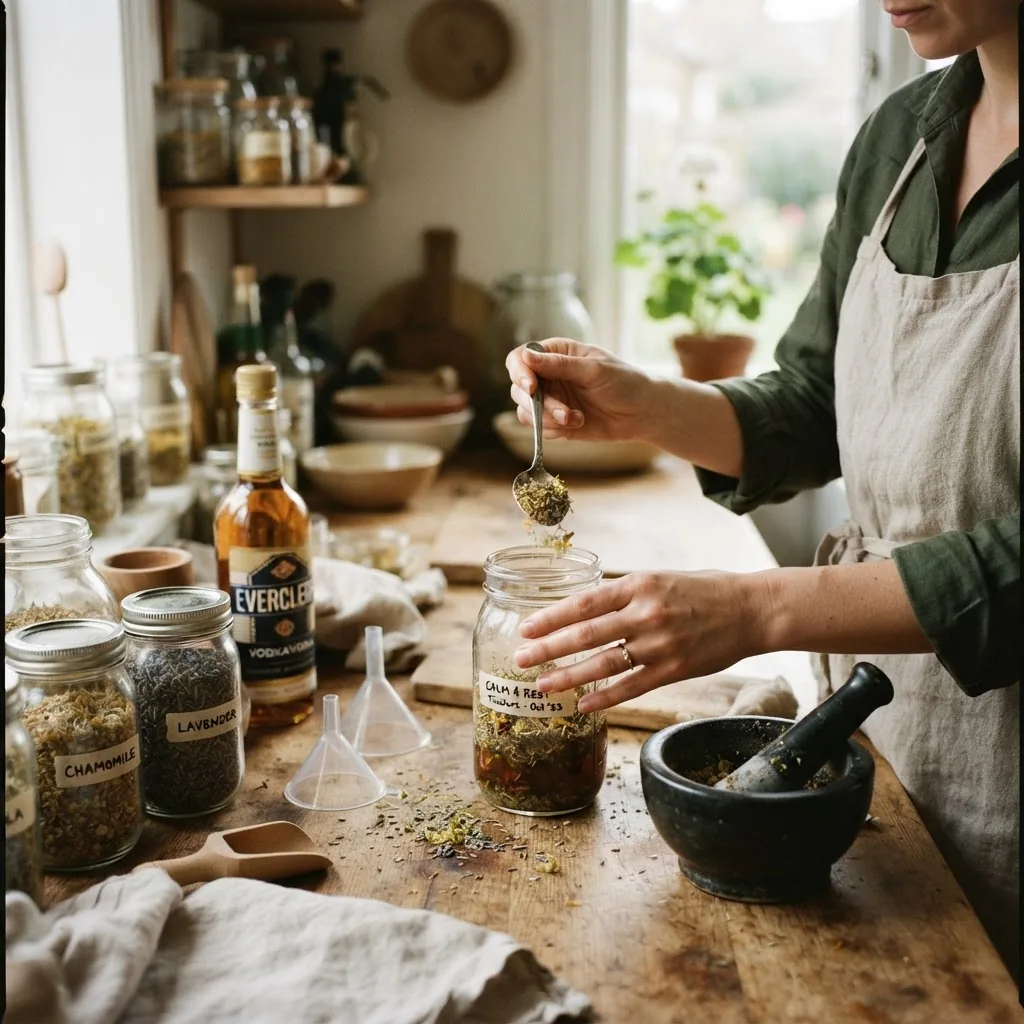
This is the practical, step-by-step heart of the guide. Before starting, gather basic gear and practice safe handling of plant material.
Before you start
- Tools: digital kitchen scale (±0.1 g), measuring spoons, heatproof glass jars (250–500 ml), stainless steel saucepan, fine muslin or cheesecloth, dark glass storage bottles with labels.
- Materials: dried herbs or fresh herbs (clean and pesticide-free), 40–60% ethanol for tinctures (e.g., vodka), olive oil or sweet almond oil for infused oil, beeswax for salves, filtered water, honey (raw/local), surgical gloves for wound work.
- Safety: first aid kit, thermometer, notebook for batch records (date, herb, ratio, refrigeration), and access to the herbal drug interactions checker before combining herbs with medications.
- Make an herbal infusion (tea) for demulcent or nervine use.
- Measure: use dried herb at 1–2 teaspoons (1–2 g) per 250 ml (1 cup), fresh herb at 2–3 teaspoons.
- Method: bring water to a boil, pour over herb in a heatproof cup, cover and steep 10–15 minutes for flowers/leaves (chamomile, lavender) or 15–20 minutes for tougher leaves (plantain).
- Strain: use fine sieve; label cup with herb and time; drink warm. Dose: 1 cup, 1–3 times daily.
- Storage: use fresh—discard after 12 hours refrigerated to avoid spoilage.
- Prepare a decoction for roots and hard bark (e.g., ginger, marshmallow root).
- Measure: 5–10 g dried root per 500 ml water or 20–30 g fresh root per 500 ml.
- Method: simmer gently (not a rolling boil) for 10–20 minutes (ginger shorter, marshmallow longer depending on desired extraction). Use covered pot to reduce volatile loss.
- Strain and dose: cool and take 1–3 tablespoons for nausea or 1 cup up to 3 times/day for digestive support.
- Tip: adjust simmer time for potency—longer for tannin-rich roots, shorter for volatile oils.
- Make a simple tincture (alcohol extract) for long-term storage.
- Ratio: For fresh herbs use a 1:2 herb:solvent ratio by weight (e.g., 100 g fresh herb to 200 ml 40–60% ethanol). For dried herbs use 1:5 (50 g dried herb to 250 ml alcohol).
- Method: chop herb, pack into sterilised jar, add alcohol to cover and leave 2–3 cm headspace, shake and label with date and ratio.
- Maceration: steep in a cool dark place for 4–6 weeks, shaking daily. For faster extraction use 2 weeks and occasionally warm water bath (not boiling) to increase extraction but avoid overheating.
- Strain and bottle: press plant material through muslin, bottle in dark glass, label with herb, ratio and date. Typical dose: 1–2 ml (approx. 20–40 drops) up to 3 times/day depending on tincture strength.
- Storage: shelf-stable for 3–5 years if made with adequate alcohol content (≥40%).
- Create an infused oil and salve for topical use (e.g., calendula salve).
- Infused oil: use 1 part dried herb to 4 parts carrier oil by weight (e.g., 25 g dried calendula to 100 ml olive oil). Warm-infuse in a double boiler for 2–3 hours at 50–60°C or cold-infuse for 4–6 weeks in a dark jar.
- Strain: press through muslin, decant infused oil into clean jar.
- Salve formula: combine 90 ml infused oil with 10–20 g beeswax (melt oil and beeswax together), pour into tins, cool. Typical topical application: thin layer 2–3 times/day.
- Storage: label and store salves in cool dark place—3–12 months depending on oil oxidative stability.
- Make a poultice for acute local injuries and insect bites.
- Fresh herb poultice: crush 10–30 g fresh leaves (plantain, yarrow) to release juice, apply directly to clean skin and cover with sterile gauze.
- Duration: change every 30–60 minutes, repeat 2–3 times/day. For longer applications use a cloth wrap and monitor skin for irritation.
- Sanitation: never apply a poultice to deep wounds—use only for superficial bruises, bites, or stings.
- Craft elderberry syrup for immune support.
- Ingredients: 300 g fresh or 150 g dried elderberries, 1 L water, 250–350 g raw honey (to taste), 1 cinnamon stick, 2 cloves, 1–2 slices fresh ginger.
- Method: simmer berries, spices and water gently for 20–30 minutes until reduced by about half; mash berries, strain while warm through muslin, discard solids, cool to room temperature. When cooled to <40°C, stir in honey; bottle in sterilised glass jars.
- Dose: adults 1 tablespoon 2–4 times/day; children 1–2 teaspoons 2–3 times/day. Storage: refrigerate 2–3 weeks or freeze in small portions for 6–12 months.
- Safety: never give honey to infants under 12 months; always cook elderberries to remove toxins in raw berries.
- Formulate a basic wound care routine using honey and calendula.
- Clean wound with saline (0.9% salt solution). Apply a thin layer of raw honey to wound bed, cover with sterile dressing.
- Optionally apply calendula salve around wound margins for inflammation. Change dressing once daily or when soiled.
- Watch for signs of infection (increasing pain, swelling, pus, fever). If present, seek medical attention.
- Label, record and test small amounts before broad use.
- Label: always label date, herb, ratio, and batch notes. Record sensory checks—smell, clarity, presence of mold.
- Patching: for topical products, do a 24-hour patch test on inner forearm before broader application.
- First dose observation: after taking a new internal remedy, wait 24 hours before repeating dose to observe any adverse effects.
- Keep potency and timing precise.
- Adhere to recommended extraction times and ratios (for tinctures and decoctions) to ensure reproducible potency.
- When combining herbs, use lower doses of each component initially (e.g., 50–75% of standard single-herb dose) to monitor synergy and tolerance.
- Clean and store equipment correctly.
- Sanitize jars and tools in hot water and allow to air-dry on a clean surface. Store finished products in dark glass where possible, labeled and dated.
- Dispose of spoiled or moldy batches immediately; never use a product that smells off or shows microbial growth.
Transition: after you can make teas, tinctures, salves and poultices, we’ll look at classic old fashioned remedies and how to use them for common symptoms.
Popular Old Fashioned Remedies and Their Applications
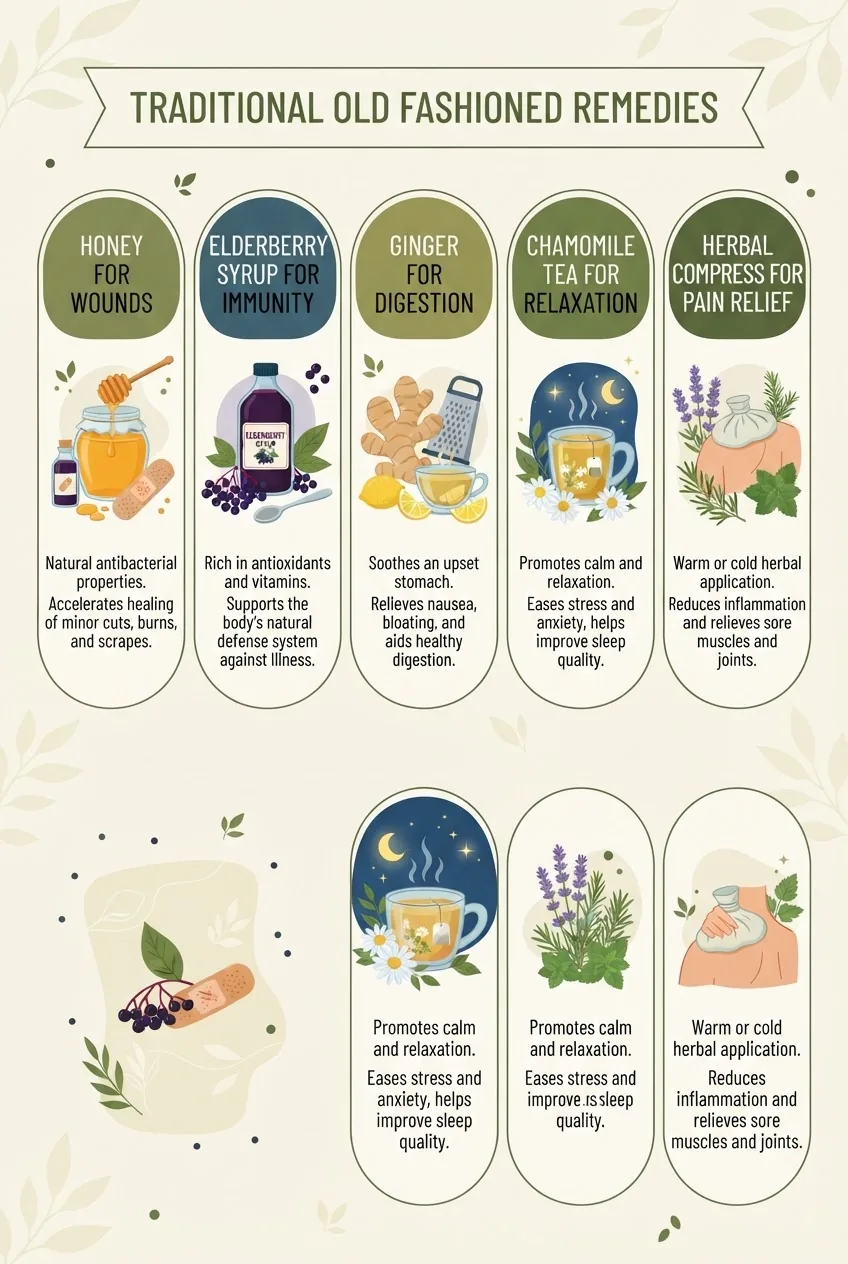
Below are concise, practical uses of well-known old time remedies and cures. Use the doses and cautions noted, and for broader symptom-targeted protocols see the natural ways to alleviate symptoms.
Honey for wounds
Application: apply a thin layer of raw, medicinal-grade honey to a cleaned minor wound, cover with sterile dressing. Change daily. Benefits: antimicrobial and osmotic properties that can speed healing and reduce infection rates. Cautions: not for deep puncture wounds and never for infants under 12 months.
Elderberry syrup for early viral symptoms
Application: take 1 tablespoon (adults) of cooked elderberry syrup every 4–6 hours at the first sign of upper respiratory symptoms. Benefits: traditional immune support and symptomatic relief. Evidence: multiple ethnobotanical reports and clinical pilot studies show reduced duration of some viral respiratory illnesses; follow safe preparation steps to avoid raw berry toxicity.
Ginger for nausea and digestion
Application: 1–2 g fresh ginger or 250–500 mg powdered root before travel, or a 2–4 g decoction for acute nausea. Benefits: antiemetic and carminative actions widely documented in folk and clinical literature. Cautions: avoid very large doses if on anticoagulants; space high doses from blood-thinning medication.
Chamomile tea for relaxation and sleep
Application: steep 2 g dried chamomile in 250 ml hot water for 10–15 minutes; drink 30–60 minutes before bedtime. Benefits: mild sedative and digestive relaxant historically used for insomnia and nervous stomach. Cautions: avoid in ragweed allergy.
Herbal compress for localized pain
Application: steep a concentrated infusion (double strength) of anti-inflammatory herbs (e.g., comfrey, arnica oil blend) and apply as warm compress for 10–15 minutes to sore muscles or joints. Benefits: increases local circulation and delivers topical phytochemicals. Cautions: do not use arnica on broken skin.
Transition: understanding common remedies is useful, but safety is paramount—next we review the essential safety rules, drug interactions and limits of home remedies.
Safety, Precautions, and Limitations of Old Time Herbal Remedies
Herbal safety and contraindications are central to responsible practice. Old fashioned remedies can be powerful—mistakes in dosing, sourcing or combining herbal agents with medications create risk. Below I outline practical safety checks, caveats and guidance for escalation.
Key safety principles:
- Always identify the plant correctly and source from reputable suppliers or cultivated plants. Misidentified herbs are a common cause of adverse events.
- Do a patch test for topicals (apply small amount to inner forearm for 24 hours).
- Start low with internal doses (50–75% of a traditional single-herb dose) and observe for 24–48 hours before repeating.
- Pregnancy, breastfeeding, children under 2 years, and people with organ failure require specialist advice—avoid giving strong herbal extracts or essential oils in these groups without professional oversight.
Important interactions and sources: some herbs have clinically significant interactions. For example, St. John’s Wort induces CYP3A4 enzymes and can reduce effectiveness of many drugs (contraceptives, anticoagulants, immunosuppressants). For a systematic check use a medication interaction tool: herbal drug interactions. For authoritative safety guidance consult government sources such as the FDA or national regulatory advisories. According to a 2024 government report, adverse herb-drug events continue to be reported in clinical settings, underscoring the need for interaction screening (government safety report, 2024).
List of caveats and when old time remedies are limited:
- Not a substitute for emergency care: severe infections, high fevers, deep wounds, chest pain, breathing difficulties, seizures or signs of stroke require immediate medical attention.
- Chronic conditions: for chronic illnesses (diabetes, cancer, autoimmune disease), herbal remedies can be supportive but should be coordinated with conventional care. For specialized approaches beyond home remedies consult resources on natural cancer treatments.
- Allergic risks: plant cross-reactivity (e.g., Asteraceae family) means a history of pollen allergies raises risk for topical or oral reactions.
- Quality and contamination: buy herbs tested for heavy metals, pesticides and microbial contaminants where possible; many reputable suppliers publish certificates of analysis.
External authority references:
- FDA guidance on herbal supplements (consumer safety guidance).
- Journal of Ethnopharmacology (peer-reviewed studies on traditional plant uses).
- American Herbalists Guild (professional standards and training recommendations).
Practical screening routine I use with clients:
- Collect full medication list (prescription, OTC, supplements).
- Check interactions with an interaction tool and consult primary literature for high-risk combos (e.g., anticoagulants + ginger/turmeric).
- Document baseline vitals and symptoms; set trial period (7–14 days) with clear stop criteria (rash, GI upset, new bruising, unusual bleeding, mood changes).
Transition: balancing safety and tradition leads naturally to integrating these remedies with modern naturopathy and herbalism—next we look at how they fit together in an evidence-informed, integrative framework.
Integrating Old Time Remedies with Modern Naturopathy and Herbalism
Integration is about mutual enrichment: traditional knowledge offers time-tested preparation methods and cultural context; modern naturopathy brings standardized dosing, safety screening, and clinical evaluation. Together they create practical, patient-centred care paths that respect plant-based healing principles while reducing harm.
How practitioners combine approaches in practice:
- Assess clinically and choose the least invasive remedy. A naturopathic intake evaluates history, labs and lifestyle; an old time tea may be recommended first for mild symptoms, reserving stronger extracts for when needed.
- Standardize potency where possible. Use measured tincture ratios or standardized extracts for repeatability, especially when monitoring outcomes.
- Coordinate with conventional care. Communicate with the patient’s primary care provider about herbal plans when medications or complex conditions are present.
Practical integration examples:
- For long-term joint pain, a practitioner might combine a topical comfrey or arnica compress (traditional) with an evidence-informed botanical supplement (standardized turmeric extract) and physical therapy.
- For seasonal respiratory support, a short course of elderberry syrup (traditional) may be paired with a standardized echinacea extract and behavioural advice (sleep, hydration) from a naturopath.
Relevant internal resources for clinicians and home practitioners include the botanical dietary supplements overview and the pillar-level Herbal Supplements Guide with Benefits and Natural Medicine Uses. For broader integrative frameworks see the integrative herbal and dietary supplements guide.
How to design an integrative protocol at home (practitioner steps):
- Start with a clear goal and timeline. e.g., “reduce nighttime waking by 50% in 2 weeks.”
- Select low-risk foundational remedies. e.g., chamomile infusion at night, dietary changes to reduce stimulants, and calendula salve for skin irritation.
- Layer targeted botanicals if needed. Add a tincture or standardized supplement only after 7–14 days if baseline measures don’t improve.
- Monitor outcomes and adverse effects. Keep daily symptom log and adjust doses or discontinue if adverse signs appear.
Product sourcing and quality: when transitioning from kitchen remedies to supplement forms (capsules, standardized extracts), select suppliers that publish third-party testing and certificates of analysis. For an overview of botanical products and how they relate to home remedies, read the botanical dietary supplements and the integrative herbal and dietary supplements resource.
Training and credentialing: to practice integration professionally, pursue recognized programs such as naturopathic clinical training and medical herbalism certification. See resources on medical herbalism training and clinical naturopathic programs. For practical classroom and community options search for local certified herbalist training or online courses.
Case example (anecdote with documented steps): A client with recurrent seasonal rhinitis used a stepwise plan: 1) 2 weeks of nightly chamomile infusion and nettle leaf infusion during day; 2) added elderberry syrup during acute upper respiratory onset; 3) introduced a standardized quercetin-bromelain supplement while monitoring for interactions. Symptoms decreased by 60% over 6 weeks (practitioner case notes, anonymised).
Evidence integration: while many traditional uses have supportive ethnobotanical data, randomized controlled trials are limited for some herbs. For clinical decision-making I cross-reference ethnopharmacology literature (peer-reviewed sources) with government safety resources. For authoritative research see the Journal of Ethnopharmacology and national health guidance. This approach keeps cultural context and modern evidence in balance.
Transition: after integrating remedies into daily care, practitioners also watch for common mistakes that beginners make—read the next section to avoid them.
Common mistakes and how to avoid them
I’ve seen these mistakes many times in community clinics and workshops. They’re practical, avoidable, and once known, easy to guard against.
- “I used raw elderberries in a syrup.” I once had a student nearly make a raw elderberry cordial and only realised before tasting—the berries must be cooked. Fix: always follow a cooked elderberry syrup recipe and label batches with preparation notes.
- “I doubled the tincture dose because I wanted faster results.” A client expected quicker relief and doubled a St. John’s Wort tincture; they experienced severe photosensitivity and interaction with contraceptives. Fix: follow recommended tincture dosing and consult interaction resources before increasing doses.
- “I left an infused oil in direct sun.” I stored calendula oil on a windowsill; it developed rancid smell and spoiled. Fix: store infused oils in dark glass and test aroma before use; discard if off.
- “I used arnica on an open wound.” An enthusiastic first-timer applied arnica to a broken skin lesion, causing irritation. Fix: use arnica only for closed-skin bruises and muscle pain; for open wounds use honey or calendula.
Checklist — Have I done this?
- Herb correctly identified and source confirmed (organic or tested).
- Batch labeled with herb name, ratio, date and maker initials.
- Patch test completed for topicals (24 hours, inner forearm).
- Interaction check performed for all medications and supplements.
- Clear stop criteria and monitoring schedule recorded (symptom diary).
When to call in a professional
Contact a qualified naturopath, medical herbalist or conventional clinician if you encounter persistent/worsening symptoms after 48–72 hours, signs of systemic infection, severe allergic reaction, pregnancy, or when using multiple pharmaceuticals. For cancer-specific contexts, consult specialists and consider resources on natural cancer treatments as part of a coordinated care plan.
Transition: finally, a short summary and how to continue your herbal education and practice.
Conclusion
Old time remedies and cures are practical, culture-rich, and often effective for everyday issues when used with respect, knowledge and appropriate safety checks. You now know the philosophy that guides plant-based healing, common herbs and their dosages, how to make infusions, tinctures, poultices and salves, and the safety routines to minimise risk. Start small: make one elderberry syrup and one chamomile infusion this week, keep records, and build your kitchen apothecary. If you want to expand into supplements and integrative protocols, see the Herbal Supplements Guide with Benefits and Natural Medicine Uses.
Call to action: download your printable checklist from the resource page and book a short consult with a licensed naturopath if you plan to treat chronic conditions or combine herbs with prescription medications.