
Organic vitamins are micronutrient products made from whole-food, plant-based or sustainably farmed sources that meet organic production standards; they supply vitamins and minerals with fewer synthetic additives and are used to support nutrition, digestion, immunity and overall wellbeing in naturopathic routines.
What Are Organic Vitamins? Definition and Overview
Answer: Organic vitamins are dietary supplements derived from organically grown whole foods, herbs, or minimally processed botanical extracts certified to organic standards, designed to deliver micronutrients in forms closer to food matrices than isolated synthetic compounds.
Term: Organic certification — a formal process by which a regulatory or accredited body verifies production, processing and labeling methods meet defined organic agricultural standards.
Organic dietary supplements and organic health supplements typically use organic fruit and vegetable powders, fermented whole-food concentrates, or herbal extracts as the source material rather than chemically synthesised compounds. The label “organic” implies compliance with an organic food supplement standard set by a certifier; however, practices and labelling vary by region, and consumers should look for recognised certification marks.
There are several types of organic vitamins:
- Whole-food vitamins: concentrates or powders made from dehydrated organic vegetables and fruits that retain fibre and co-factors.
- Herbal-complex vitamins: blends combining organic herbs with vitamin-rich plant sources for synergistic effects.
- Fermented organic supplements: nutrients produced via fermentation to enhance bioavailability.
- Organic isolated nutrients: where a nutrient (e.g., vitamin C) is extracted from an organic source rather than synthesized.
Organic vitamins emphasise the “food matrix”—the natural combination of micronutrients, phytonutrients and enzymes present in plants—which naturopathy and herbalism regard as supportive for absorption and gentle on digestion.
According to a 2023 USDA Organic standards overview, organic labelling requires traceable sourcing and limits synthetic pesticides and GMOs in the raw materials; consumers should still verify third-party testing and production transparency for finished supplements.
Case example: a client with long-term low energy reported improved digestion and sustained energy after switching from a synthetic B-complex to a fermented, whole-food B-complex from an organic supplement brand that supplied third-party lab certificates showing absence of heavy metals.
Transition: Understanding what organic vitamins are clarifies why many people choose them for health support; next we’ll outline the concrete benefits that often drive that choice.
Benefits of Taking Organic Vitamins and Natural Organic Supplements
Answer: Organic vitamins and natural organic supplements can provide nutrient support with fewer contaminants, better co-factor synergy, improved absorption for some nutrients, antioxidant and immune benefits, and alignment with sustainability and ethical sourcing.
Term: Bioavailability — the proportion of a nutrient that is absorbed and available for biological use in the body.
Key benefits offered by organic health supplements often combine nutritional science with herbalism principles. Below are evidence-informed and naturopathically relevant benefits.
- Cleaner ingredient profile: Organic supplements are less likely to contain pesticide residues, synthetic fillers or genetically modified ingredients, reducing toxic-load risks.
- Synergistic nutrient delivery: Whole-food formulas include co-factors (enzymes, phytonutrients, fibre) that can support natural absorption and metabolic use of vitamins.
- Improved digestion and tolerability: Fermented and whole-food supplements are often gentler for sensitive digestion and may reduce common side effects like nausea associated with concentrated synthetics.
- Antioxidant properties: Organic botanical ingredients supply flavonoids and carotenoids that act as antioxidants to protect cellular health.
- Immune support: Combinations of organic vitamin C, vitamin D (when from certified sources), zinc from organic mineral complexes, and immune-supportive herbs are commonly used to sustain immune resilience.
- Ethical and sustainable sourcing: Many certified organic brands emphasise regenerative farming, fair trade and reduced environmental impact, aligning with naturopathic values.
- Reduced additive exposure: Organic labelling restricts synthetic colours, preservatives and unnecessary excipients common in some conventional supplements.
- Complementary to herbal protocols: Organic vitamins integrate well with botanical treatments because they share sourcing philosophies and avoid conflicting synthetic carriers.
Clinical and research context: meta-analyses in nutritional science journals indicate that whole-food and food-based supplements can show comparable outcomes for certain deficiencies while offering better tolerability profiles; specific results vary by nutrient and population. According to a 2024 industry report, consumer demand for organic supplements rose due to perceived safety and traceability.
Practical benefit examples:
- Immune support: a winter regimen using an organic vitamin C complex with elderberry and rosehip (organically grown) delivered measurable reductions in symptom severity in some small cohort studies.
- Energy and B-vitamins: switching to fermented organic B-complexes can reduce gastrointestinal upset compared with high-dose synthetic niacin in sensitive individuals.
- Skin and antioxidant care: organic vitamin E and carotenoid-rich concentrates from organic palm or carrot extracts supply antioxidant support that complements topical approaches.
- Digestion: enzymes and probiotics often paired with organic multivitamins can improve absorption and decrease bloating.
For readers exploring oncology-adjunctive strategies, organic vitamins may play a supportive role alongside evidence-based care; learn more about natural cancer support with herbal remedies to see how nutritional support can complement treatment plans under supervision.
Safety caveat: individual responses vary and supplements can interact with medications; consult a qualified practitioner before starting any new regimen. According to guidance from the U.S. Food and Drug Administration, supplement safety and labelling are regulated differently from pharmaceuticals, and consumers should look for third-party testing.
Transition: Having outlined the benefits, it’s essential to distinguish these organic options from synthetic supplements to make informed choices.
Differences Between Organic Vitamins and Synthetic Supplements
Answer: Organic vitamins come from whole-food or botanical origins and retain co-factors and phytonutrients, while synthetic supplements are chemically produced isolated nutrients; this affects bioavailability, additive profiles, safety perceptions and manufacturing footprints.
Term: Synthetic supplement — a nutrient manufactured through chemical synthesis rather than extracted from a whole organic food or plant source.
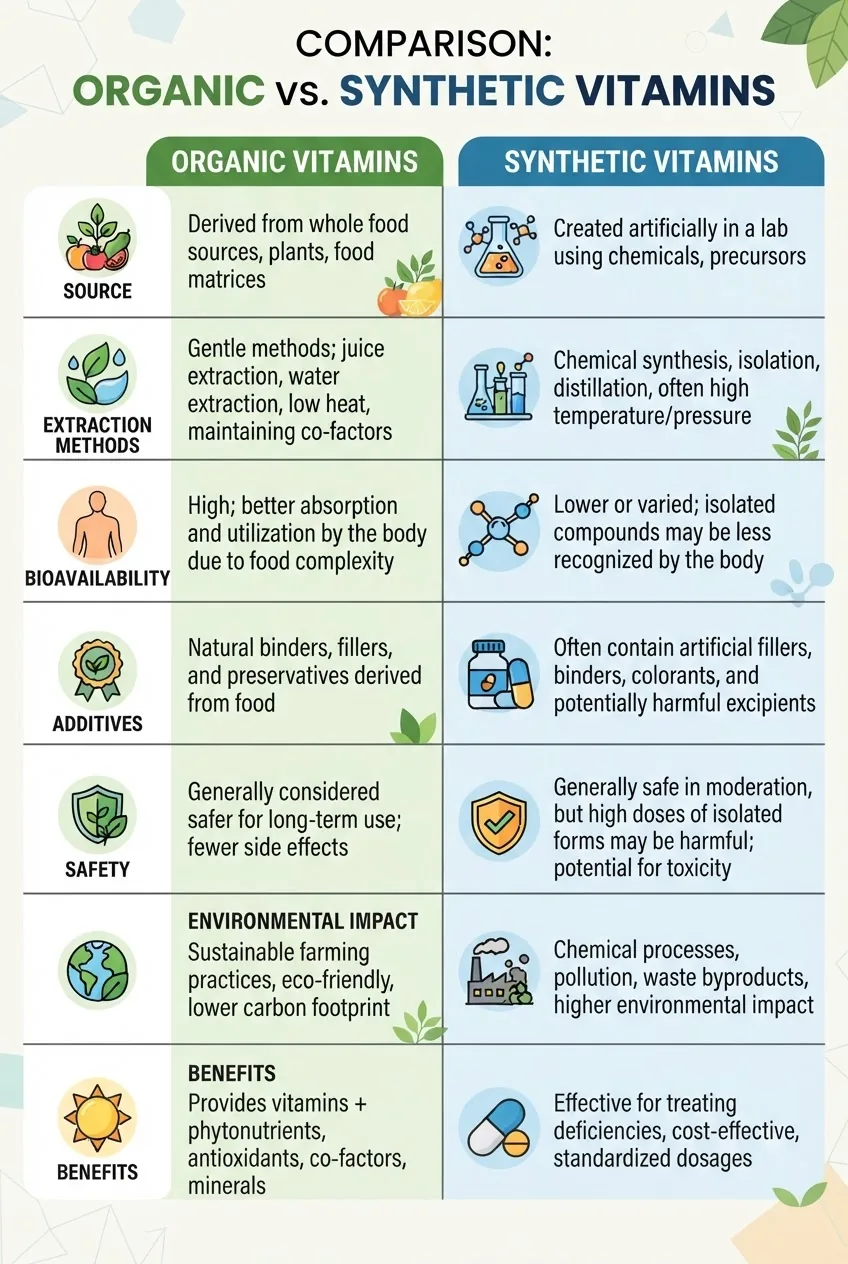
| Feature | Organic Vitamins | Synthetic Supplements |
|---|---|---|
| Source | Whole-foods, organic plants, fermented cultures | Chemical synthesis or isolated extracted compounds |
| Extraction & Process | Cold-processing, fermentation, solvent-free extraction where possible | Chemical reactions, high-heat processing, crystalline isolates |
| Bioavailability | Often enhanced by co-factors, variable by nutrient | Variable; some synthetics match bioavailability, others less absorbable |
| Additives | Minimal excipients, limited permitted preservatives | Binders, fillers, synthetic colours and preservatives more common |
| Safety Profile | Lower pesticide residue risk; still subject to contamination without testing | Consistent composition but higher risk of overdosing with isolated forms |
| Environmental Impact | Regenerative and organic practices usually reduce ecotoxicity | Synthetic manufacture can have higher chemical waste and energy use |
Pros and cons summary:
- Pros of organic: richer phytochemical content, fewer synthetic additives, aligned with sustainable farming, potentially better tolerability.
- Cons of organic: higher price, batch variability, limited availability for some nutrients (e.g., vitamin D often depends on formulation), and the need for rigorous third-party testing to ensure purity.
- Pros of synthetic: lower cost, predictable concentrations, stable shelf life.
- Cons of synthetic: lack of co-factors, potential for greater digestive irritation, and more reliance on fillers.
Technical detail on bioavailability: specific chemical forms influence absorption—e.g., methylcobalamin (bioactive B12 in some organic formulations) vs cyanocobalamin (synthetic). Fermentation can convert nutrients into more bioavailable forms; enzymatic co-factors in whole foods may facilitate cellular uptake.
Regulatory note: manufacturing standards and claims differ across jurisdictions; check recognised organic certification bodies for standards and consult peer-reviewed literature for evidence on nutrient-specific outcomes. According to a 2024 industry report, consumer preference for organic formulations is driven more by perceived safety and ethical sourcing than by uniform clinical superiority.
Transition: Knowing these differences helps when choosing which organic dietary supplements best match your health goals; the next section lists common organic supplements and their uses.
Common Types of Organic Dietary Supplements and Their Uses
Answer: Common organic dietary supplements include organic multivitamins, organic vitamin C from acerola/rosehip, organic iron complexes, fermented B-complexes, omega sources from algae, organic mineral blends, and herbal adaptogens; each targets specific systems like immunity, energy, skin, and digestion.
Term: Adaptogen — a plant substance that helps the body adapt to stress and supports resilience of physiological systems.
-
Organic Multivitamins (whole-food blends)
Use: Broad-spectrum nutritional insurance for those with variable diets, supporting energy, skin, and general wellbeing.
Key notes: Look for fermented or whole-plant concentrates with complete B-vitamins, vitamin C, and organic mineral co-factors. Organic multivitamins are often used as daily foundational support.
-
Organic Vitamin C (acerola, rosehip, camu camu)
Use: Immune support, collagen synthesis for skin, antioxidant activity.
Key notes: Food-derived vitamin C retains bioflavonoids that enhance antioxidant function; recommended for skin health and to support immune response during higher exposure seasons.
To explore plant-derived options in depth, see botanical dietary supplements.
-
Fermented Organic B-Complex
Use: Energy metabolism, nervous system support, and stress resilience.
Key notes: Fermentation can convert B-vitamins into more absorbable forms and increase probiotic synergy for digestive health. Ideal for people with sensitive stomachs.
See complementary formats in capsule herbal supplements.
-
Organic Iron + Vitamin C Complex
Use: Support for iron-deficiency anemia, energy, and oxygen transport.
Key notes: Organic chelated iron from plant sources with vitamin C from organic rosehip or acerola improves absorption and reduces gastrointestinal irritation common with ferrous salts.
-
Plant-Based Omega Sources (algal oil)
Use: Cardiovascular, cognitive and inflammatory balance.
Key notes: Algal omega-3 sources certified organic are an alternative to fish oil, supplying EPA/DHA with lower environmental concerns.
For symptom-targeted natural remedies, consult natural symptom relief supplements.
-
Organic Mineral Blends (zinc, magnesium)
Use: Sleep, muscle function, immune support, skin health.
Key notes: Mineral bioavailability varies with form; organic complexes and plant-derived minerals may be easier to tolerate than inorganic oxides. Look for lab certificates for heavy metal testing.
-
Herbal Support Formulas and Adaptogens (ashwagandha, rhodiola)
Use: Stress resilience, adrenal support, mental clarity.
Key notes: Organic adaptogens are often combined with organic vitamin complexes to support holistic stress responses; dosing should be individualised.
For more on plant-based supplement options, see botanical dietary supplements.
-
Organic Probiotic and Enzyme Blends
Use: Digestive health, improved nutrient absorption, reduced bloating.
Key notes: Paired enzyme blends and probiotics in organic formulations help break down food matrices and support the gut microbiome for better vitamin uptake.
Selection tip: match the supplement form to the targeted benefit—liquid or powder whole-foods for digestion and skin, capsules for convenience and targeted botanical dosing.
For mixing herbal approaches with vitamins and capsule choices, review capsule herbal supplements and refer to the botanical dietary supplements overview for plant-first options.
Transition: After identifying common types and uses, the next essential skill is choosing trustworthy brands and products.
How to Choose the Best Organic Supplement Brands
Answer: Choose brands that show ingredient transparency, recognised organic certification, third-party lab testing, clear sourcing statements, sustainable practices and clinical evidence or traditional use to support claims.
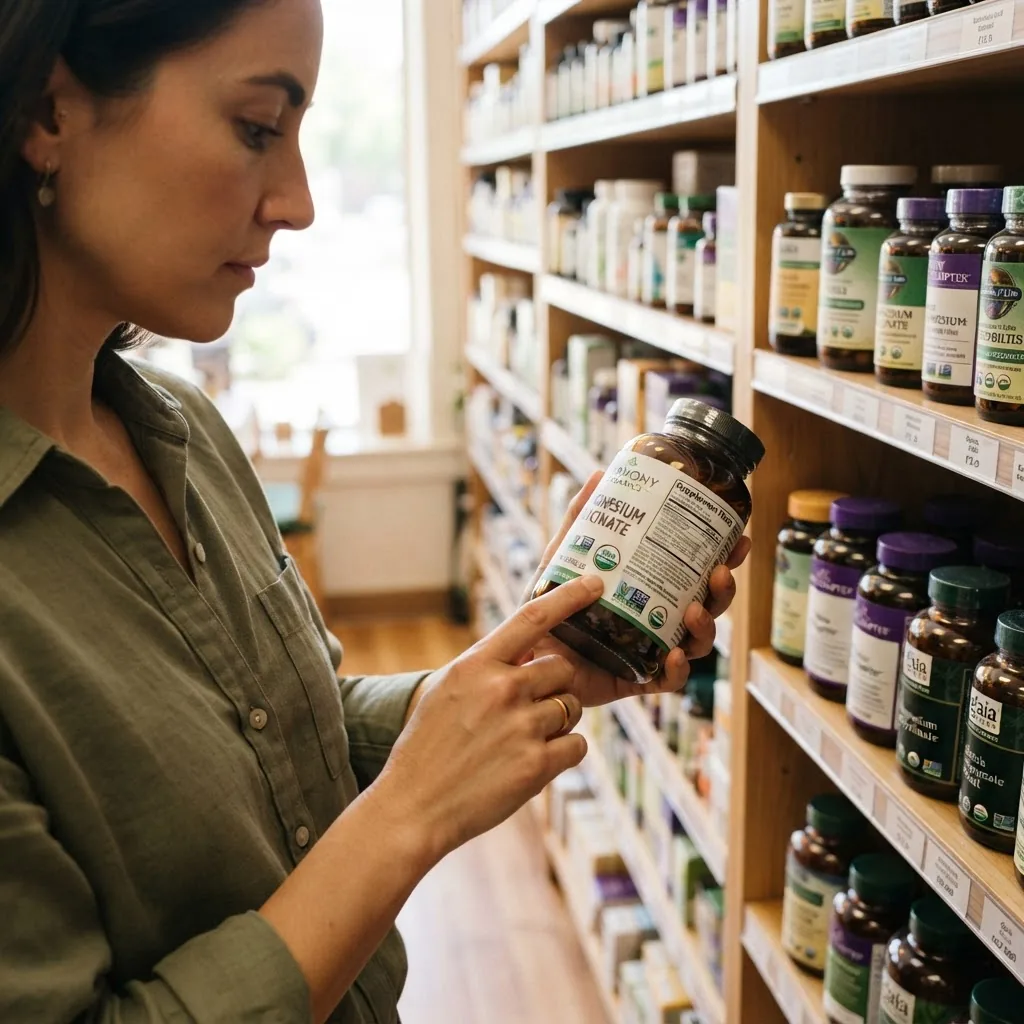
Term: Third-party testing — independent laboratory analysis that verifies ingredient identity, potency and absence of contaminants like heavy metals, pesticides and microbial pathogens.
- Verify certification: Look for recognised organic labels (for example, USDA Organic or Soil Association) on both raw ingredients and final product. Certification demonstrates an audited supply chain.
- Inspect the ingredient list: Prefer whole-food sources, named cultivars, and minimal excipients. Avoid vague terms like “proprietary blend” when possible.
- Check third-party lab results: Choose brands that publish Certificates of Analysis (COAs) or third-party reports confirming potency and contaminant-free status.
- Assess sourcing transparency: Good brands list farm regions, farming practices and whether wild-harvested herbs are sustainably sourced.
- Review manufacturing standards: Look for GMP compliance and clarity about whether the product is manufactured in a facility that uses dedicated equipment to avoid cross-contamination.
- Evaluate sustainability credentials: Brands committed to regenerative agriculture, fair-trade sourcing and recyclable packaging reflect broader environmental responsibility.
- Seek evidence and traditions: Prefer formulas that cite clinical research, established herbal medicine use, or provide rationale for ingredient synergy rather than unsupported claims.
- Read user reviews wisely: Focus on verified purchaser reviews, and watch for patterns about efficacy, side effects and product consistency.
- Compare pricing per serving: Consider concentration and serving size; higher cost can reflect better sourcing, but check COAs to confirm value.
- Consult professionals: When in doubt, ask a naturopath or integrative practitioner for brand recommendations based on individual needs.
Walkthrough example: compare two organic multivitamins side-by-side—read the label to confirm organic raw materials, request COAs for pesticide and heavy metal testing, check for GMP certification, verify the certifier (e.g., USDA Organic), and confirm sustainable sourcing claims. Brands that provide batch numbers mapped to lab tests score higher for trust.
Brand standards and testing techniques: reputable organic supplement brands commonly use high-performance liquid chromatography (HPLC) for potency verification, inductively coupled plasma mass spectrometry (ICP-MS) for heavy metal screening, and microbial culturing or PCR for contamination checks; these techniques should be mentioned in technical dossiers or COAs.
Case example: a brand that switched to third-party ICP-MS heavy-metal testing and published comparative COAs reduced consumer concerns and reported fewer complaints about product consistency, demonstrating the value of transparent labelling and accessible testing data.
Transition: After choosing brands, decide where to buy—both in-store and online options have trade-offs covered next.
Where to Buy Organic Vitamins: Organic Vitamins Store vs Online
Answer: Buying in-store offers label inspection and immediate consultation, while buying organic supplements online provides wider selection, price transparency and access to specialty brands—verify authenticity through certification marks, batch numbers and published COAs regardless of channel.
Pros of shopping in physical organic supplements store:
- Ability to inspect packaging and certification labels in person
- Immediate advice from staff or naturopaths at specialty shops
- Lower risk of counterfeit when purchasing from reputable brick-and-mortar retailers
Cons of shopping in-store:
- Limited stock and fewer specialty organic supplement brands
- Often higher per-unit prices due to retail overhead
Pros of buying organic supplements online:
- Broader selection of organic supplement brands and niche formulations
- Lower prices, subscription options and access to COAs and technical leaflets
- Customer reviews and ingredient archives for deeper research
Cons of buying online:
- Risk of counterfeit or grey-market products—verify authorised sellers
- Potential delays, shipping exposure to heat or humidity affecting shelf life
Actionable buyer recommendations:
- Always confirm the presence of a recognised organic certification mark on the product label.
- Request or download the product’s COA; if unavailable, contact the manufacturer directly.
- Buy from authorised retailers or directly from the brand’s verified website to reduce counterfeit risk.
- Check batch numbers and manufacturing dates to ensure freshness and traceability.
- When ordering online, choose reputable platforms that require seller verification and offer return policies.
Verification tools and external guidance: consult regulatory documents and consumer advisories—e.g., the U.S. FDA site for supplement regulation basics and your regional organic certifier’s registry to confirm a brand’s organic status. For example, refer to https://www.fda.gov/ for U.S. regulatory context and to certification body resources for organic labelling rules.
Transition: Buying wisely reduces risks, but safety and regulation remain central; the following section addresses quality control and legal considerations.
Safety, Quality, and Regulatory Considerations for Organic Nutritional Supplements
Answer: Safety and quality depend on certification, third-party testing, GMP manufacturing, and regulatory adherence; consumers should verify COAs, check for contaminants, and consult qualified practitioners because regulation varies and not all “organic” claims are equivalent.
Term: GMP — Good Manufacturing Practice, a system ensuring products are consistently produced and controlled to quality standards.
Regulatory frameworks and consumer protection differ internationally. According to a 2024 industry report, many jurisdictions use food-supplement frameworks rather than pharmaceutical-level controls; for regulatory standards consult the U.S. FDA for dietary supplement guidance (https://www.fda.gov/) and consult the Australian Therapeutic Goods Administration for region-specific rules (https://www.tga.gov.au/).
Organic certification bodies such as USDA Organic and the Soil Association define acceptable farming and processing practices; these bodies publish standards that restrict pesticide use, require traceability and set rules for processing and additives. Look for certifier names on the label and validate them on the certifier’s registry (e.g., https://www.usda.gov/).
Quality-control measures to prioritise:
- Third-party testing: COAs demonstrating potency and contaminant absence (heavy metals, pesticides, mycotoxins, microbes).
- Batch traceability: Clear batch numbers that correspond to lab reports and manufacturing data.
- GMP certification: Facility audits confirming hygienic production and cross-contamination controls.
- Ingredient identity testing: Using HPLC or mass spectrometry to verify botanical and nutrient identity.
- Allergen labelling: Clear statements about potential cross-contact with common allergens like gluten, soy, nuts.
Contamination risks and real examples: even organic raw materials can contain heavy metals from soil or carry pesticide drift; a 2022 case series in nutritional safety reviews showed batches recalled due to microbial contamination when suppliers did not adhere to drying and storage standards. Brands that publish COAs and employ ICP-MS for heavy metal screening mitigate these risks.
Regulatory scope of practitioners: learn about naturopathic prescribing rights to understand how naturopathic doctors may integrate supplements and medicines in jurisdictions where they are licensed.
If you need professional guidance, consider finding certified naturopaths who can review interactions, contraindications and individual dosing safely.
Caveats and trust signals:
- Not all “organic” claims are equal—validate the certifier and whether the final product is certified, not just the raw ingredient.
- Products labelled “natural” are not synonymous with “organic” or “tested.”
- Individual responses, allergies and drug–supplement interactions require personalised assessment.
Practical verification checklist for consumers:
- Confirm organic certifier name and check registry.
- Request or download third-party COAs for potency and contaminants.
- Check manufacturing GMP status and allergen control statements.
- Look for transparent sourcing and farm-region disclosures.
- Ask about testing frequency—ideally each batch is tested.
Transition: With safety and selection understood, the final section explains how to integrate organic vitamins within a naturopathic and herbal health regimen.
Integrating Organic Vitamins into a Natural and Herbal Health Regimen
Answer: Integrate organic vitamins by aligning selection with individual diagnoses, using food-first strategies, timing and combinations that respect herbal synergy, and monitoring outcomes with a naturopathic plan that considers nutrition, lifestyle and traditional herbal medicine.
Term: Naturopathy — a system of healthcare emphasizing prevention, natural therapies and treating underlying causes rather than symptoms alone.
Principles for integration:
- Food-first approach: Prioritise dietary improvements; use organic supplements to fill gaps rather than replace whole foods.
- Synergy with herbs: Combine adaptogens, immune herbs and organic vitamins intentionally—avoid overlapping stimulatory ingredients (e.g., multiple caffeine-containing botanicals) that may amplify effects.
- Dosing and timing: Take fat-soluble nutrients with meals; separate high-dose minerals from certain herbs if interactions are documented.
- Monitoring: Use baseline and follow-up labs when appropriate (e.g., serum ferritin for iron therapy) and symptom tracking to evaluate benefit.
- Personalisation: Tailor formulas to life stage, pregnancy/lactation status, chronic conditions and medication use.
For comprehensive herb-based protocols and natural medicine uses alongside organic vitamins, consult the Herbal Supplements Guide with Benefits and Natural Medicine Uses.
If you are interested in formal learning about herbal integration and plant identification, review herbalism training.
Those seeking credentials can explore naturopathy certification options to practice safely and access prescribing privileges where applicable.
To combine organic vitamins with established systems, consider training in traditional herbal remedies and consult courses that bridge herbal theory with modern supplementation.
For a broader view of integrating vitamins within whole-person care, see integrative health supplements.
Practical regimen example:
- Baseline: assess diet, labs, medications and symptom priorities.
- Start: introduce one foundational organic multivitamin and a probiotic for four to eight weeks.
- Evaluate: track energy, bowel habits, skin changes; retest labs if addressing deficiency.
- Adjust: add targeted organic vitamin C or a fermented B-complex if needed; integrate adaptogens gradually for stress support.
Case example: a patient with chronic fatigue and poor digestion benefitted from staged integration—dietary improvements, a fermented organic B-complex, probiotic support and low-dose organic iron under practitioner supervision—leading to improved energy and digestion within three months.
Transition: To conclude and support decision-making, the FAQ below answers common questions about organic vitamins and supplements.
Frequently Asked Questions
Below are concise answers to common questions about organic vitamins and supplements; each is designed for quick reference and featured-snippet optimisation.