

Mental health disorders are clinically significant disturbances in cognition, emotion or behaviour that cause distress or impaired functioning; they include conditions like anxiety, depression, bipolar disorder, schizophrenia and PTSD and are diagnosed using standardized criteria and clinical assessment. This guide explains definitions, causes, signs and evidence-based treatments.
What Are Mental Health Disorders? Definition and Explanation
Answer: Mental health disorders are health conditions that alter thinking, mood, behaviour or the ability to relate to others, causing significant distress or impairment in daily life; they are diagnosed by clinicians using systems such as the DSM-5 or ICD-11 and range from short-term reactions to chronic illnesses.
Term: mental health disorder — a clinically significant disturbance in mental functioning diagnosed by established criteria (DSM-5/ICD-11).
A clear definition helps separate normal mood fluctuations from diagnosable conditions: mental health disorders exceed expected responses to stressors and persistently impair work, relationships or self-care. For pragmatic classification clinicians use the Diagnostic and Statistical Manual of Mental Disorders (DSM-5) and the World Health Organization’s ICD-11; both categorize disorders into groups such as mood, anxiety, psychotic and personality disorders.
Examples clarify scope: clinical depression (major depressive disorder) involves prolonged low mood, diminished interest and functional decline; generalized anxiety disorder involves excessive, hard-to-control worry and physiological arousal. Short-term stress reactions differ from disorders when symptoms persist, recur or significantly impair functioning.
Clinical classification matters for treatment choice and prognosis. For authority on definitions see the American Psychiatric Association’s guidance on the DSM-5 and global definitions by the World Health Organization.
Authoritative resources: American Psychiatric Association DSM guidance, WHO mental disorders fact sheet.
Transition: Understanding what counts as a disorder prepares us to identify the most common types and how they present in everyday life.
Common Types of Mental Health Disorders
Answer: The most common mental health disorders include anxiety disorders, depressive disorders, bipolar disorder, psychotic disorders (like schizophrenia), post-traumatic stress disorder (PTSD), obsessive–compulsive disorder (OCD), eating disorders and personality disorders—each with distinct core symptoms and treatment paths.
-
Anxiety disorders — Persistent and excessive fear or worry that interferes with daily activities. Examples include:
- Generalized Anxiety Disorder (GAD): chronic excessive worry with restlessness, fatigue, and concentration problems.
- Panic Disorder: recurrent unexpected panic attacks, fear of future attacks.
- Social Anxiety Disorder: intense fear of social situations and negative evaluation.
- Depressive disorders — Prolonged low mood, loss of interest, changes in appetite/ sleep and impaired function. Major depressive disorder and persistent depressive disorder (dysthymia) are common examples. According to a 2023 WHO report, depression is a leading cause of disability worldwide.
- Bipolar disorder — Alternating episodes of depression and mania or hypomania marked by elevated mood, increased activity, reduced need for sleep, and risky behaviours; requires mood-stabilizing treatments and monitoring.
- Psychotic disorders (e.g., schizophrenia) — Disorders that include hallucinations, delusions, disorganized thinking and significant functional decline; antipsychotic medications plus psychosocial support are standard care.
- Post-traumatic stress disorder (PTSD) — Persistent distress, intrusive memories, avoidance and hyperarousal following exposure to traumatic events; evidence-based trauma therapies are recommended.
- Obsessive–compulsive disorder (OCD) — Recurrent intrusive thoughts (obsessions) and repetitive behaviours or mental acts (compulsions) aimed at reducing distress; specialized CBT (ERP) and medication can help.
- Eating disorders — Anorexia nervosa, bulimia nervosa and binge-eating disorder involve disturbed eating behaviours, body image concerns and medical risk; multidisciplinary treatment is often required.
- Personality disorders — Enduring patterns of inner experience and behaviour that deviate markedly from cultural expectations, cause distress or impairment (e.g., borderline personality disorder, antisocial personality disorder).
- Neurodevelopmental disorders — Conditions with onset in early development such as autism spectrum disorder and attention-deficit/hyperactivity disorder (ADHD) that affect social, cognitive and behavioural functioning.
- Substance-related and addictive disorders — Problematic use of alcohol or drugs and behavioural addictions that cause significant impairment and may co-occur with other mental disorders.
Each disorder carries a spectrum of severity and symptom overlap is common; comorbidity (two or more disorders together) is frequent and shapes treatment choices. For prevalence context and key data see the National Institute of Mental Health statistics and the WHO reports cited earlier.
Real-world case example (anonymized): A 32-year-old presented with six months of pervasive worry, insomnia and concentration loss; assessment diagnosed generalized anxiety disorder and coexisting mild depression. A combined plan of cognitive behavioural therapy and SSRI medication reduced symptoms by 60% within 12 weeks, illustrating integrated care effectiveness.
Transition: Knowing the types helps narrow likely causes and risk factors, covered next to explain why these disorders develop.
Causes and Risk Factors of Mental Health Problems
Answer: Mental health problems arise from interacting biological, psychological and social factors—genetics and brain chemistry, trauma and cognitive patterns, and social environments such as poverty, relationship stress or discrimination—often acting together rather than a single cause.
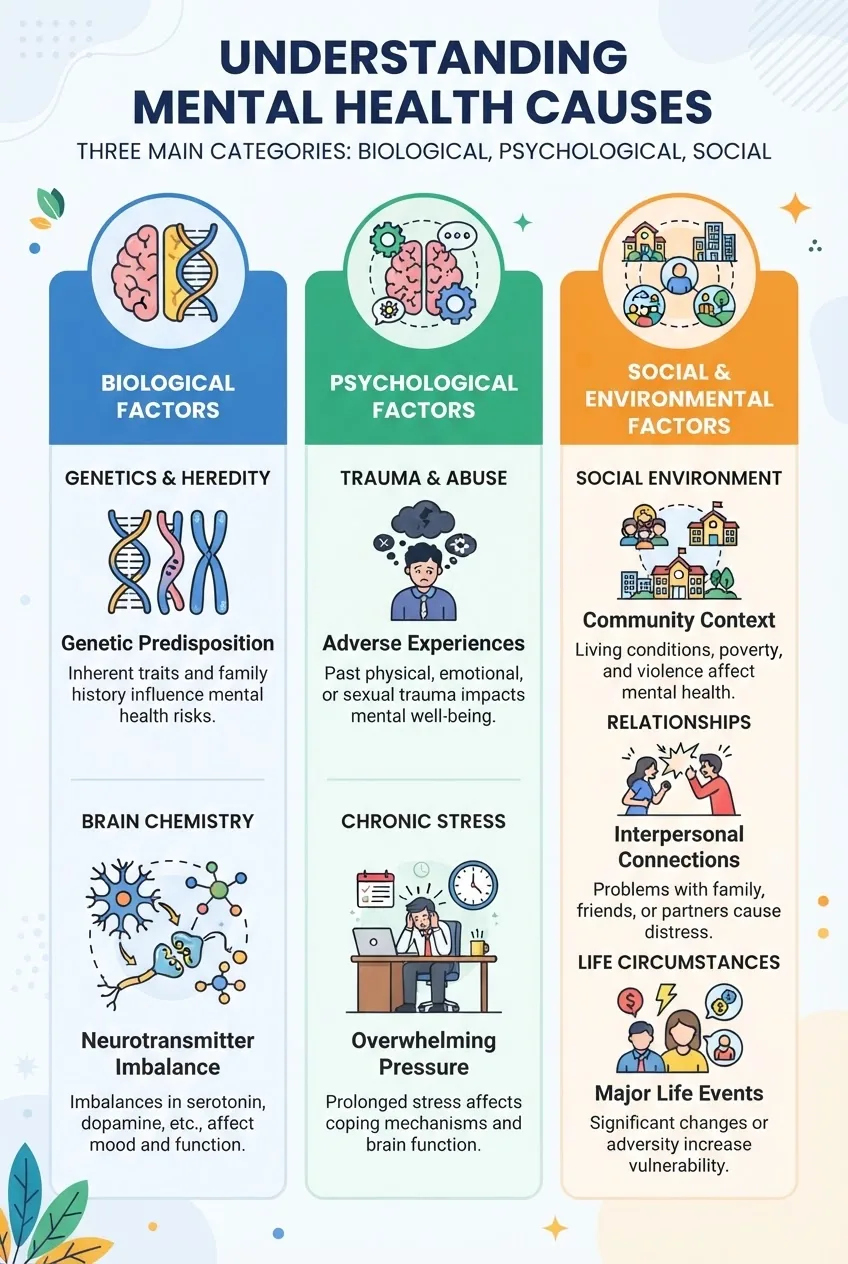
Biological causes:
- Genetic predisposition: family history increases risk for many disorders (heritability varies by diagnosis).
- Brain structure and neurochemistry: neurotransmitter imbalances (e.g., serotonin, dopamine), neural circuitry differences observed in depression, schizophrenia and bipolar disorder; see APA clinical resources.
- Physical illness and medications: chronic pain, endocrine disorders, neurological disease and some medications can precipitate psychiatric symptoms.
Psychological causes:
- Trauma and adverse childhood experiences: exposure to abuse, neglect or loss increases lifetime risk of mood, anxiety and personality disorders.
- Cognitive patterns and coping styles: persistent negative thinking, avoidance, maladaptive beliefs contribute to anxiety and depression.
- Stress as a precipitating factor: Am I Stressed Guide: Symptoms, Causes, and Relief Tips explains how acute or chronic stress raises vulnerability.
Social and environmental causes:
- Poverty, unemployment and housing instability increase chronic stress and limit access to care.
- Social isolation, discrimination, and relationship conflict elevate risk for many disorders.
- Cultural factors and stigma delay help-seeking and worsen outcomes.
Additional cross-cutting factors:
- Substance use can both cause and complicate mental disorders.
- Developmental timing matters: exposure during sensitive periods (e.g., adolescence) can have long-term effects.
- Resilience factors—strong social support, stable housing, access to care—reduce risk; see Influences of Good Mental Health: Benefits and Key Factors.
Physiological pathways connect stress and physical responses: chronic stress alters the hypothalamic–pituitary–adrenal axis and sympathetic nervous system, impacting mood and cognition. For a focused review, see Physiological Health: Effects of Stress and Body Response Guide and Physiology Effects of Stress: Nervous System and Hormone Guide.
Specific causes overview: For a deeper dive on etiologies see the site’s review What Causes Mental Illness: Risk Factors and Health Overview and population statistics from NIMH.
Transition: Recognising causes and risk factors supports earlier detection through symptom awareness, explored in the next section.
Symptoms and Signs to Identify Mental Health Problems
Answer: Mental health problems commonly present with persistent changes in mood, thought patterns, behaviour, energy, sleep and social functioning—look for cognitive symptoms (confusion, concentration problems), emotional symptoms (prolonged sadness, irritability), physical symptoms (changes in appetite, unexplained aches) and behavioural signs (withdrawal, risky actions).
Term: psychological distress — a state of emotional suffering associated with symptoms of depression and anxiety.
- Emotional and mood signs: prolonged sadness, irritability, emotional numbness, excessive worry or fear.
- Cognitive and perceptual signs: persistent negative thoughts, trouble concentrating, memory problems, hallucinations or delusional beliefs in psychotic disorders.
- Behavioural changes: social withdrawal, decline in work or school performance, avoidance behaviours, increased substance use, self-harm or suicidal thoughts.
- Physical and somatic signs: sleep disturbance (insomnia or hypersomnia), appetite/weight changes, unexplained aches, fatigue—see physiological effects of poor mental health for body symptom links.
- Functional impairment: difficulty managing daily tasks, relationships or self-care despite effort to cope.
Red flag signs requiring immediate attention:
- Active suicidal ideation or intent.
- Severe self-neglect or inability to care for oneself.
- Acute psychosis with risk to self or others.
Self-assessment walkthrough (step-by-step):
- Record symptoms over 2–4 weeks: mood, sleep, appetite, thoughts and daily function.
- Rate severity and frequency (mild/moderate/severe) and note triggers or patterns.
- Compare to functional impact: do symptoms impair work, relationships or safety?
- If symptoms are persistent, worsening or include red flags, seek professional evaluation—see next section.
Unrecognized stress can present as fatigue, irritability or physical pain; learn more about Can You Be Stressed and Not Know It? Signs and Symptoms which often overlap with early mental health problems. For definitions of distress symptoms see What Is Psychological Distress: Definition and Symptoms Guide.
Transition: After recognising symptoms, effective treatment and management options span clinical interventions, lifestyle changes and holistic approaches covered below.
Treatment and Management of Mental Health Disorders
Answer: Treatment combines evidence-based psychotherapy, medication when indicated, lifestyle adjustments, social support and adjunctive mind–body and holistic approaches tailored to diagnosis, severity and personal preferences; integrated care yields the best outcomes for most disorders.

Term: psychotherapy — a structured psychological treatment delivered by a trained professional to change thoughts, emotions, and behaviours (e.g., CBT).
Core evidence‑based treatments
- Cognitive behavioural therapy (CBT): Structured, time-limited therapy that identifies and modifies unhelpful thoughts and behaviours; effective for anxiety, depression, OCD and PTSD. The CBT process involves assessment, skill-building, exposure (when relevant) and relapse prevention.
- Medications: Antidepressants (SSRIs, SNRIs), mood stabilizers (lithium, anticonvulsants), antipsychotics and anxiolytics are used based on diagnosis; medication management requires monitoring for benefits and side effects per clinical guidelines (see APA/DSM resources).
- Trauma-focused therapies: EMDR and trauma-focused CBT for PTSD and complex trauma.
- Psychosocial interventions: Family therapy, group therapy, supported employment and housing programs improve long-term outcomes.
How to choose and combine treatments (practical steps)
- Obtain an accurate diagnosis from a qualified clinician (psychiatrist, psychologist, or trained clinician).
- Discuss severity, preferences, side-effect profiles and access; for moderate-to-severe disorders, consider combined therapy + medication.
- Set measurable goals and review progress regularly (6–12 weeks for medication response; 8–20 sessions for many therapy models).
- Adjust treatment plan if progress stalls—change therapy modality, medication dose, or add adjunctive supports.
Lifestyle and self-management strategies
- Regular physical activity and an active lifestyle for mental health reduce symptom burden and improve mood.
- Sleep hygiene, structured daily routines, balanced nutrition and limiting alcohol/drugs support recovery.
- Peer support, community resources and vocational rehabilitation address social determinants.
- Practice emotional regulation and coping skills; see Emotional Wellness Examples and Resources for Better Health and Examples of Emotional Health and Tips for Wellness Improvement.
Holistic and mind–body approaches
Complementary therapies—mindfulness-based stress reduction, yoga, tai chi, biofeedback and certain complementary medicines—can relieve symptoms and enhance resilience when combined with evidence-based care. See the overview of Mind Body Medicine: Definition and Benefits Overview, and integrate within a clinician-supervised plan.
Comparison: Therapy vs Medication vs Combined Care
| Option | Typical use | Pros | Cons |
|---|---|---|---|
| Psychotherapy (CBT, DBT) | Mild–moderate mood/anxiety, personality support | Skill-building, durable change, no pharmacologic side effects | Requires time, access and active participation |
| Medication | Moderate–severe disorders, acute stabilization | Rapid symptom relief for many, accessible | Side effects, adherence and monitoring required |
| Combined care | Severe, complex or comorbid conditions | Best functional outcomes for many disorders | Higher coordination needs and cost |
Clinical guideline note: Medication choices and psychotherapy formats should follow current best-practice guidelines and be regularly reviewed; consult APA and national health guidance. Recovery is often a process of symptom reduction, functional improvement and relapse prevention rather than a single “cure.”
Adjunctive resources and practical supports:
- Self-help and wellbeing practices: Mental Health Tips: Effective Practices for Better Wellness, Well Being Examples: Personal Health and Wellness Explained.
- Strategies to handle episodic stress: Episodic Stress Explained: Types and Management Techniques.
- Holistic and spiritual integration: Spiritually Mentally Physically Healthy: Holistic Wellness Guide, Mind Body and Spirit Connection: Meaning and Wellness Guide.
- Practical rehabilitation and lifestyle: Physical Health and Mental Health: Benefits of Active Lifestyle, Physically and Mentally and Emotionally Healthy: Wellness Guide.
- For a complete list of clinical and complementary options see Remedies for Mental Illness: Treatment Options and Care Guide.
Transition: Clear misconceptions about whether mental health is a “disease” shape stigma and help-seeking; next section addresses myths and facts.
Addressing Myths and Stigma: Is Mental Health a Disease?
Answer: Mental health is best described as a spectrum of conditions that can be classified as medical disorders when they meet diagnostic criteria; calling them “diseases” is sometimes accurate for specific biologically based conditions, but more often a biopsychosocial framing reduces stigma and guides appropriate care.
Myth vs Fact:
Myth: Mental health problems are a personal weakness.
Fact: They are health conditions rooted in biological, psychological and social factors and require professional care, support and treatment.
Myth vs Fact:
Myth: Mental disorders are always lifelong and untreatable.
Fact: Many disorders respond well to treatment; people can recover, manage symptoms effectively and lead fulfilling lives. Clinical remission and functional recovery are common goals.
Terminology nuance: The phrase “mental illness” is commonly used to describe diagnosable conditions; using “condition,” “disorder” or “mental health problem” can reduce stigma. Emphasizing recovery, skills and support encourages help-seeking.
Authoritative framing: For clinical classification and treatment standards refer to the DSM (APA) and WHO resources cited earlier. According to a 2023 WHO report, framing mental health as a public health priority reduces stigma and improves service uptake.
Transition: If symptoms or concerns persist, professional support should be sought—next section explains when and where to get help.
When to Seek Help and Professional Support Resources
Answer: Seek professional help when symptoms are persistent, worsening, impair daily function, or include suicidal thoughts; options include GPs, psychiatrists, psychologists, crisis services and certified coaches for supplemental support.
If you experience red-flag symptoms (suicidal thoughts, severe self-neglect, psychosis) contact emergency services or crisis lines immediately. For non-urgent but persistent problems, start with a primary care clinician or a mental health specialist.
Resources and credentials:
- For clinician-led treatment seek licensed psychologists, psychiatrists and accredited therapists.
- Consider Mental Health Coach Certification: Training and Course Guide or Wellbeing Coaching Certification: Training and Program Guide for complementary coaching support.
- Use trusted national resources like the National Institute of Mental Health and local health services for referral lists.
If treatment seems ineffective after an adequate trial, ask for a review, a second opinion, or a referral to a specialist; persistent non-response may require medication adjustment or alternative therapies. For training and practice resources consult certification guides above.
Final transition to wrap up key points and next steps.