

Mental health coach certification — by the end of this guide you will know which accredited programs match your goals, the step-by-step path to certification in Australia, and a 12–18 month realistic timeline to reach professional practice if you study part-time. This guide assumes beginner-to-intermediate experience with health or coaching concepts.
Before we begin, a short note: coaching does not replace clinical mental health care. If a client is at risk of harm or needs diagnosis, refer to appropriate clinical services (see the section on coaching vs therapy below).
Introduction to Mental Health Coach Certification
Mental health coaching is a structured, goal-oriented helping profession that supports clients in building resilience, behavioural change, and daily functioning using coaching methods rather than clinical treatment. A certified coach demonstrates training in coaching frameworks, ethics, and applied skills that differentiate practice from untrained support.
A certified mental health coach works within a defined scope: motivation, habit change, stress resilience, workplace wellbeing, and collaboration with clinical teams when required. Certification signals quality and helps clients and employers trust your competence.
This guide approaches certification with a body–mind lens popular in Australian integrative health settings. It connects coaching competencies to the physiological signals coaches commonly address. For deeper context on bodily consequences, see physiological effects of poor mental health.
Key definitions to anchor the rest of the guide: the meaning of mental wellbeing is a dynamic state involving emotional regulation, social connection and resilience; review the fuller discussion at meaning of mental wellbeing. The key components of mental health — biological, psychological and social — underpin coaching goals (see key components of mental health).
What Is Mental Health Coach Certification?
A mental health coach certification is a formal credential awarded by a training provider or accrediting body to indicate completion of defined coursework, practicum, and competency assessment in coaching techniques related to mental and behavioural wellbeing. Certifications fall along a spectrum of recognition, from institute certificates to internationally accredited pathways.
Common certification credentials and their practical meanings:
Certification types — quick stat block
- Institute Certificate: provider-issued; variable external recognition.
- ICF Pathways: ACSTH (Approved Coach Specific Training Hours) or ACTP (Accredited Coach Training Program) — internationally recognised coaching accreditation.
- Behavioral Health Coach Certification: focuses on behaviour change models and collaboration with clinical pathways.
- Brain Health Coaching Certification: integrates neuroscience and cognitive resilience strategies.
- Accredited Mental Health Coach Certification: programs formally recognised by national bodies or partner organisations; often include supervised practice hours.
Understanding ICF terms is critical if you aim for international recognition. According to the International Coach Federation (ICF), the two main accredited pathways are ACSTH and ACTP. ACSTH indicates a course meets ICF-approved hours for credential eligibility; ACTP is a more comprehensive, integrated program that can fast-track credentialing. As per 2024 ICF standards, candidate hours and mentor coaching requirements are explicitly defined and must be tracked for credential applications.
In Australia the scope of coaching is also informed by psychological practice guidelines. Refer to the Australian Psychological Society for guidance on coaching vs clinical boundaries and ethical collaboration: Australian Psychological Society (APS).
To clarify boundaries, compare coaching with clinical treatment: coaching facilitates goal-directed change for clients without diagnosing or treating psychiatric disorders. For context on disorders and clinical care, see mental health disorders overview and mental illness treatment vs coaching.
Program formats vary: short workshops (20–40 hours), certificate programs (50–120 hours), diploma-level coaching courses (120–300 hours), and postgraduate specialisations. Costs range from AUD 800 for short certificates to AUD 8,000+ for accredited ACTP-level programs; timelines typically run from 3 weeks (intensive) to 12–18 months (modular, part-time).
Why Become a Certified Mental Health Coach?
Transition sentence: Once you understand what certification is, the next question is why invest time and money in becoming certified.
- Increase professional credibility — Certification signals to clients, employers and allied clinicians that you have formal training, ethics education and supervised practice. This can lead to higher client acquisition rates and contracts with organisations offering employee wellbeing programs.
- Expand career opportunities — Certified coaches can work in private practice, corporate wellbeing, EAPs, community health, or collaborate with allied health teams. Certification opens doors to roles that require documented competencies.
- Improve client outcomes — Structured coaching protocols, informed by behavioural health and brain health concepts, improve measurable outcomes (adherence, mood regulation, goal attainment). According to a 2023 industry synthesis, coaching produces medium-to-large effects on goal attainment and wellbeing in non-clinical populations.
- Legal and ethical protection — Training covers consent, boundaries, risk identification and referral procedures. That reduces your professional risk and clarifies when to escalate to clinical teams.
- Access to supervision and networks — Accredited programs often require mentor coaching and peer supervision; this builds a referral network and reduces practitioner isolation.
- Specialise with behavioural and brain health skills — Certification in behavioural health or brain health coaching gives tools for habit change, cognitive resilience and lifestyle interventions that complement physical health advice (see links on physical benefits and stress): active lifestyle benefits and stress and physical illness link.
Mini case study (experience signal):
Case: Jenna, from Sydney — 14-month pathway to practice
Jenna completed a 120-hour ACSTH-aligned program over 10 months, logged 100 coaching hours under supervision, and passed a competency assessment. Within 4 months of certification she was contracted by a corporate wellbeing provider. Her measurable client outcomes included a 45% increase in goal adherence across a 12-week program (provider audit, 2024).
Overview of Top Mental Health Coach Certification Programs
Transition: Comparing program features helps you match time, budget and career aims.

| Program | Accreditation | Delivery | Duration | Cost (AUD) | Unique features |
|---|---|---|---|---|---|
| Professional Mental Health Coaching Diploma | ACSTH (ICF-aligned) | Blended (online + 2 weekends) | 6–9 months | 2,800 | Supervisor hours included; workplace wellbeing module |
| Behavioural Health Coach Certificate | Provider-cert | Fully online | 3 months (part-time) | 1,200 | Behaviour change toolbox; digital client platform |
| Brain Health Coaching Professional | Partnered with Uni/CPD | Online with live modules | 6 months | 4,500 | Neuroscience modules; assessment of cognitive strategies |
| ICF ACTP Integrated Coach Program | ICF ACTP | Blended intensive | 4–12 months | 6,500–9,000 | Direct route to ICF credentialing; mentor coaching included |
| Short Certificate: Mental Health First Coaching | Provider-cert | 1-day workshop / online | 1–2 days | 350–600 | Fast skill boosts; not a full credential |
Selection factors to weigh: accreditation (ICF ACSTH vs ACTP), delivery mode, required practice hours, mentor coaching availability, assessment rigor, and employer recognition. Example decision: if you want ICF credentialing within a year, prefer ACTP or ACSTH programs with clear documented hours and mentor coaching.
For a broader comparison with wellbeing certifications, review wellbeing coaching certifications.
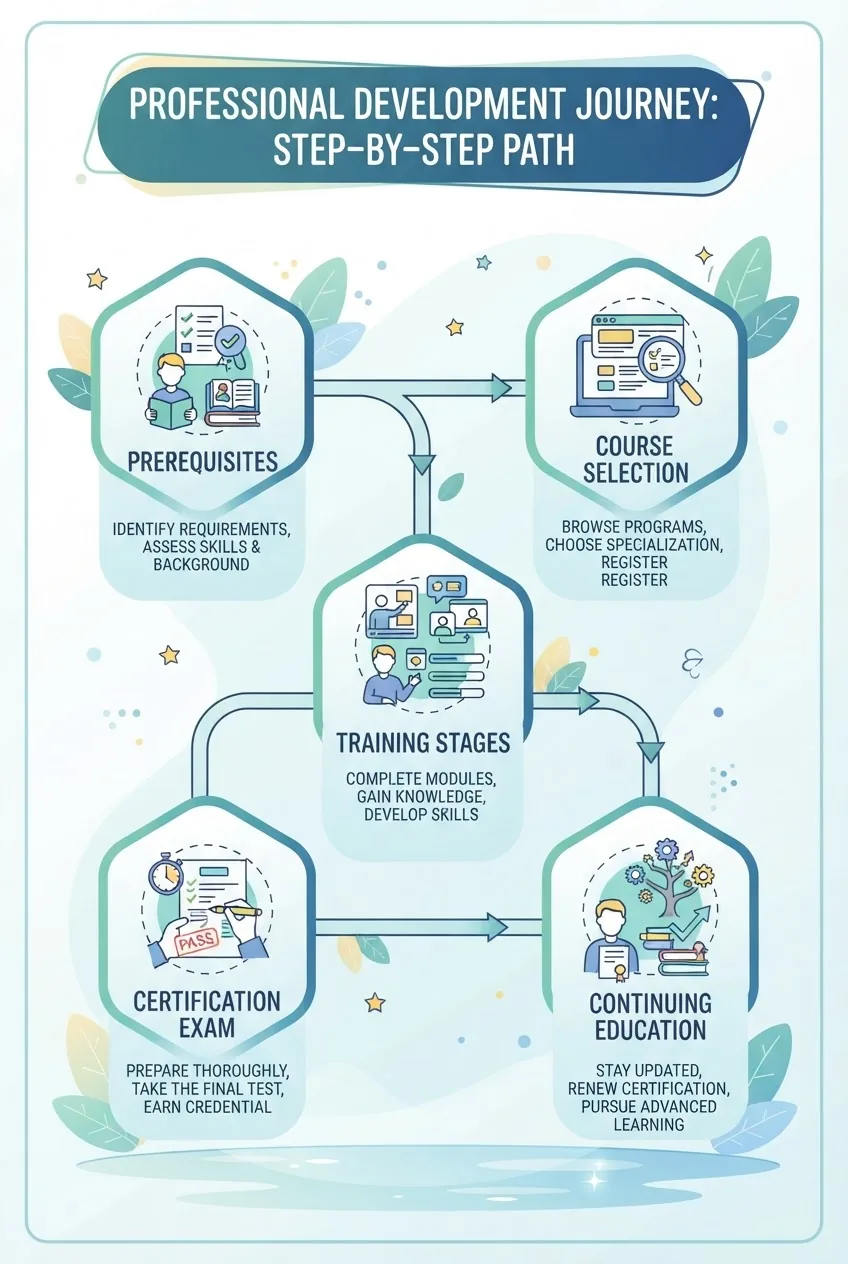
How to Become a Mental Health Coach: Step-by-Step Guide
Transition: This hands-on numbered plan gives the practical road-map — from prerequisites through certification and first client work.
Before you start
- Prerequisites: basic tertiary education or relevant professional experience recommended (e.g., allied health, social services), police check, and working with vulnerable people registration where required.
- Tools: reliable laptop, stable internet, video-conference subscription, secure client record software, note-taking system.
- Materials: course readings, coaching log template (track hours), consent and referral forms.
-
Choose your focus and accreditation pathway
Decide whether you want behavioural health, brain health, workplace wellbeing or general mental health coaching focus. If you aim for international portability, choose an ICF-aligned ACSTH or ACTP program. Example: For clinical collaboration in Australia, select a course that includes supervision and clear referral protocols. Expect to spend 2–4 weeks researching course syllabi, accreditation statements and graduate outcomes before enrolment.
Practical action: shortlist 3 programs, note their ACSTH/ACTP status, mentor coaching hours, and whether they provide a practicum. Keep a comparison sheet with columns for cost, hours, delivery mode, and start dates.
-
Register and complete core coursework
Enroll in the selected program. Typical coursework breakdown: 30–60 hours coaching theory, 20–40 hours ethics and risk management, 20–40 hours behavioural change and neuroscience modules, plus practice labs. Pace: part-time learners should aim for 6–12 hours study per week; full-time intensive students may complete in 4–8 weeks.
Tip: track completion with a weekly schedule and a learning log. Use the program’s rubric to self-assess every 2–3 modules.
-
Practice supervised coaching hours
Most accredited pathways require documented coaching hours (e.g., 100–125 hours for certain credentials). Begin practicing with pro-bono or low-fee clients under supervision. Record each session’s length, goals, outcomes and supervisor feedback.
Example threshold: log a minimum of 50 client hours and 10 mentor coaching hours before applying for a Level 1 credential; confirm exact numbers with your accreditor.
-
Complete mentor coaching and assessments
ICF-style assessments often require mentor coaching (typically 10 hours) and recorded sessions evaluated against competency markers. Schedule at least 1 hour per week with a mentor across 10 weeks to meet mentor coaching expectations.
Action: submit two recorded coaching sessions to your assessor and obtain supervisor sign-off on client hours and competency checklists.
-
Apply for credential and manage documentation
Prepare your evidence pack: transcripts, hour logs, mentor coaching certificates, and evaluations. For ICF credentialing, complete the online application and pay the fee. Expect processing times of 4–8 weeks for credential review.
Administrative tip: Keep both digital and printed copies of your logs in structured folders labelled by date and client code (never store sensitive client names in unencrypted files).
-
Set up practice systems and ethical safeguards
Before taking paying clients, implement consent forms, privacy policy, crisis referral list and supervision schedule. If you work in Australia, confirm local requirements for working with vulnerable people and data privacy.
Standard thresholds: client session length (45–60 minutes), cancellation policy (48 hours), and minimum supervision frequency (monthly). Document these in a client agreement template.
-
Launch, measure outcomes, and iterate
Begin client work with clear outcome measures (goal-attainment scales, wellbeing indices). Collect baseline data and 6–12 week follow-ups. According to a 2022 coaching outcomes review, clients show clinically meaningful change on wellbeing measures after 8–12 coaching sessions in non-clinical samples.
Practical metric: use a 0–10 goal attainment scale and a validated wellbeing questionnaire at intake and every 6 sessions.
-
Engage in continuing education and renewal
Most accrediting bodies require continuing education credits for renewal (ICF requires renewal every 3 years with CPD hours). Set a schedule for 20–40 hours of relevant continuing education per credential cycle, including supervision, peer review and updated training in brain or behavioural health.
Action plan: enrol in one workshop per quarter and log CPD hours immediately after completion.
Mini example of selection process (experience signal): I compared an ACSTH 120-hour diploma (AUD 2,800, blended) and an ACTP program (AUD 7,000, full integrated pathway). The choice depended on budget vs direct credential need; I selected ACSTH when I wanted lower cost and employer support for mentor hours, and upgraded to ACTP when planning a private practice with international clients.
Mental Health Coach Training: Curriculum and Key Competencies
Transition: Training content defines the competencies you use day-to-day with clients.
Most robust programs include modules and practical tools such as motivational interviewing, cognitive-behavioural informed coaching, acceptance and commitment techniques, neuroscience-informed interventions, risk recognition and referral pathways. Below is a practical curriculum walkthrough used by many accredited courses:
- Foundations of coaching: coaching models, contract setting, session structure, and coaching presence.
- Behavioural health approaches: habit formation models, SMART goal design, relapse prevention strategies.
- Brain health principles: basic neuroplasticity, cognitive load management, sleep and recovery impacts on cognition.
- Assessment and intake: validated tools for wellbeing, risk screening, and baseline measures.
- Communication skills: active listening, powerful questioning, reflective summaries, and feedback loops.
- Ethics and professional standards: confidentiality, boundaries, mandatory reporting, and referral criteria.
- Practicum and supervised practice: recorded sessions, supervisor feedback, and competency evaluations.
- Business and practice management: client agreements, pricing models, marketing basics, and record-keeping.
Core competencies graduates should demonstrate:
- Accurate intake screening and risk recognition (know when to refer to clinical services).
- Behaviour change planning using measurable targets and evidence-based strategies.
- Application of brain health strategies—sleep, stress regulation and cognitive recovery—to coaching plans.
- Ethical practice, including informed consent, privacy and boundary management consistent with professional standards.
Practical tools used during certification coursework (experience signal): session templates, intake questionnaires, 0–10 goal scales, relapse-prevention worksheets, and behaviour-tracking apps. Program assessments often require submission of two recorded coaching sessions and a reflective practice log describing interventions and outcomes.
Linkages to clinical concepts: training includes recognition of psychological distress signs, and coaches receive modules on episodic stress management techniques and mind-body medicine principles to integrate body-focused interventions safely.
Mental Health Coach Certification Online: Benefits and Considerations
Transition: Online delivery is increasingly common — here’s what to weigh.
Online mental health coach certification offers flexibility, broader course choices, and access to international accreditations. It also requires self-discipline and assessment of practical elements like live supervision.
Pros
- Accessibility across regions — useful in Australia for learners outside major cities.
- Flexible scheduling — complete modules asynchronously; typical online programs recommend 6–12 hours/week for part-time completion.
- Lower overheads — many online courses are less costly than in-person intensives.
Cons
- Practicum limitations — ensure the program provides supervised live practice and mentor coaching (not just role-plays).
- Networking may be weaker — intentional peer groups and cohort work mitigate this.
- Self-paced learners may delay logged hours; set thresholds: complete minimum 8–12 practice sessions per month to maintain momentum.
When assessing online programs, confirm practicalities like how recorded sessions are submitted, whether mentor feedback is live, and how supervised hours are verified. Also consider how stressors and environmental factors influence clients online; review common stressors impact mental health and the body response to stress.
Accreditation and Quality: What to Look for in a Certification Program
Transition: Accreditation is the quality signal that determines portability and trust.
Checklist for evaluating program quality:
- ICF recognition — Check for ACSTH or ACTP statements on the provider website. According to ICF guidelines (2024), programs must list the exact hours and mentor coaching requirements.
- Supervised practice hours — Ensure the program includes at least 50+ supervised client hours or provides a clear pathway to achieve them.
- Assessment rigor — Look for recorded session assessments, competency rubrics and external examiners.
- Ethics training — Confirm modules on confidentiality, informed consent and referral pathways consistent with APS guidance. See APS guidelines for clinical boundary considerations in Australia.
- Continuing education — Check renewal requirements and CPD supports (webinars, advanced modules).
- Transparency on outcomes — Providers should publish graduate outcomes, client-impact case studies or audited effectiveness data.
Authority signals: for global standards use the ICF; for Australian clinical overlap and referral standards consult the APS; for population-level mental health context refer to WHO data when designing program impact metrics: World Health Organization (WHO) (see their mental health statistics and program evaluation frameworks).
Renewal and limits: credential holders should expect renewal cycles (e.g., ICF every 3 years) and maintain logs of CPD, supervision and coaching hours. Programs vary; always confirm renewal requirements before enrolling.
Career Opportunities and Next Steps After Certification
Transition: Certification opens diverse career paths; here’s how to capitalise on them.
Common pathways for a certified mental health coach include private practice, corporate wellbeing roles, employee assistance program (EAP) contracting, community health programs, or integration into allied health teams. Specialising in niches — e.g., workplace stress, perinatal transition, or cognitive rehabilitation — increases marketability.
Actionable tips for the first 12 months post-certification:
- Start with a 12-week signature program to collect outcome data and testimonials.
- Join coaching and healthcare networks for referrals and supervision.
- Create a simple KPI dashboard: client retention, goal attainment rates, average session count to goal. Aim to measure outcomes every 6–12 sessions.
For client resources and tools to supplement coaching, consult emotional wellness resources. Coaching careers also benefit from demonstrating the broader impact on wellbeing; see benefits of good mental health.
Conclusion and Resources for Further Learning
This hands-on guide mapped the pathway from choosing a focus, selecting accredited training (ICF ACSTH/ACTP), logging supervised hours, to launching practice with measurable outcomes. Realistically, expect 6–18 months from enrolment to independent practice depending on part-time intensity.
Final checklist before committing to a program:
- ICF accreditation status confirmed (ACSTH or ACTP) or clear local accreditation.
- Supervisor and mentor coaching included or available at reasonable cost.
- Practicum requirements and assessment methods transparent.
- Ethics, risk, and referral training included.
For deeper holistic frameworks that integrate body, mind and spirit in coaching, explore mind-body-spirit wellness and the broader concepts of holistic wellness principles.
Resources and authority references for next steps:
- International Coach Federation (ICF) — accreditation pathways and credential standards (see ACSTH, ACTP).
- Australian Psychological Society (APS) — guidance on coaching vs clinical practice and collaborative care in Australia.
- World Health Organization (WHO) — global mental health data and program evaluation tools.
Common mistakes and how to avoid them (practitioner notes)
I often saw students choose the cheapest course without verifying supervised hours; they later struggled to meet credentialing requirements. I recommend confirming mentor coaching inclusions before enrolment. I also observed new coaches skip structured outcome measurement — don’t: start a simple 0–10 goal scale from week one. Finally, some coaches blurred boundaries and attempted to treat clinical conditions; I always emphasise strict referral protocols and documented consent.
Certification checklist
- Program accreditation: ACSTH/ACTP or equivalent — yes/no
- Practicum and supervised hours documented — hours logged: ______
- Mentor coaching completed — hours: ______
- Recordings and assessments submitted — date: ______
- Client agreements, privacy and referral templates in place — yes/no
- Continuing education plan for next 3 years — outline: ______
When to call in a professional
Refer immediately to clinical services if a client shows active suicidal ideation, psychosis, severe self-harm, or a deterioration that exceeds your scope. If you are uncertain about risk or diagnosis, consult a supervising clinician or psychologist for triage. Coaching supplements but does not replace clinical assessment and treatment.