

Episodic stress is a repeating pattern of intense but time-limited stress episodes—more frequent and unpredictable than acute stress yet not continuously present like chronic stress; it causes recurring physical and psychological strain that responds best to targeted short-term interventions plus long-term behaviour change to prevent recurrence.
Understanding Episodic Stress
Answer: Episodic stress is when stress occurs in repeated, often intense bursts that come and go, producing a cycle of crisis, recovery, and relapse rather than a single short event or a constant state of wear. Below we define it clearly and show real-world examples.
Term: episodic stress — a pattern of repeated stress episodes separated by periods of relative calm, usually driven by recurring triggers, behavioural patterns, or situational cycles.
Episodic stress commonly appears when a person experiences repeated deadlines, frequent interpersonal conflicts, or self-imposed overload — for example, a project manager who spikes into weeks of high anxiety before every quarterly report, then recovers, only to repeat the pattern. These episodes are often predictable once triggers are recognised, but their intensity can still be high.
Key features that distinguish episodic stress:
- Recurring intensity: episodes are sharper and more severe than single acute events but are intermittent.
- Patterned onset: episodes often follow behavioural or situational patterns, such as “stressed type” personalities who overcommit.
- Recovery windows: there are periods of reduced symptoms between episodes, unlike chronic stress which persists.
- Escalation risk: without modifications, episodic stress can accumulate and progress into chronic stress or more severe psychological distress.
Example scenario: Sarah repeatedly takes on extra shifts right before school terms end; each term triggers intense worry, insomnia and irritability for 2–3 weeks — she then rests for a month and repeats the behaviour. That cyclical pattern reflects episodic stress driven by work-school seasonality plus personal behaviour stressors (overcommitment).
Definition of Episodic Stress and How It Differs from Other Stress Types
Answer: Episodic stress differs from acute and chronic stress primarily by frequency and pattern: it’s recurrent and often self-perpetuated, unlike one-off acute stress or continuous chronic stress. The table below compares core attributes and examples.
Term: acute stress — short-term reaction to a single immediate threat or challenge; chronic stress — persistent stress exposure over months or years.
| Type | Duration | Typical causes | Example |
|---|---|---|---|
| Acute Stress | Minutes to days | Immediate threats, emergencies | Startled by a car crash, exam day nerves |
| Episodic Stress | Days to weeks per episode; recurring pattern | Repeated deadlines, cyclical life events, behaviour patterns | Quarterly work sprints causing repeated burnout |
| Chronic Stress | Months to years (continuous) | Long-term adversity: caregiving, poverty, persistent illness | Ongoing financial hardship or chronic caregiving strain |
The practical implication is treatment focus: acute stress often needs immediate coping tools; chronic stress requires systemic change and clinical support; episodic stress benefits from rapid-episode strategies plus habit and environment changes to reduce recurrence.
The Three/Four Types of Stress Explained (Including Episodic)
Answer: Psychology typically recognises three core forms—acute, episodic, and chronic—but some frameworks add a fourth, such as cumulative or traumatic stress; each has distinct causes, timelines, and management approaches.
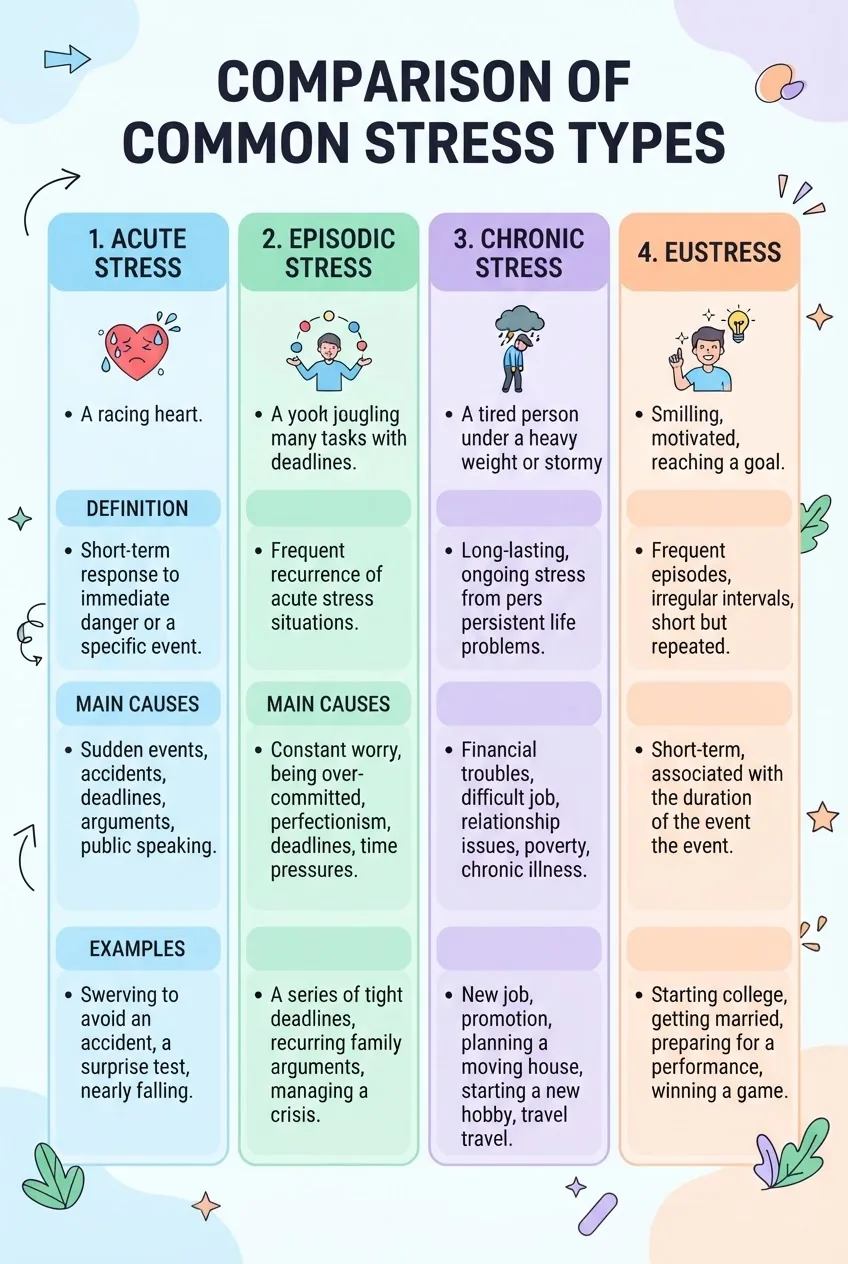
- Acute stress — Short-term, expected responses to immediate events; triggers fight-or-flight, resolves quickly with rest and situational coping (e.g., a minor accident, public speaking). Management: brief grounding, breathwork, problem-focused steps.
- Episodic stress — Repeated stress episodes caused by recurring triggers or behaviour patterns; intensity is higher than routine stress but separated by intervals. Management: rapid-relief techniques plus behaviour modification and scheduling changes.
- Chronic stress — Prolonged exposure to stressors with limited recovery windows, producing sustained physiological strain; requires systemic lifestyle change, social support, and often professional care.
- Fourth common category — Cumulative / Traumatic stress — Stress building over multiple exposures or from unresolved trauma; may overlap with chronic stress and often needs trauma-informed therapy.
Different frameworks label and group these types differently, but clinically relevant distinctions focus on duration, predictability and whether the pattern is self-sustaining (behavioural origin) or externally imposed.
Causes and Characteristics of Episodic Stress
Answer: Episodic stress is typically caused by recurring external events (work cycles, family obligations) and internal personal behaviour stressors (perfectionism, overcommitment); its defining traits are predictability of episodes, pronounced symptom spikes, and a behavioural upkeep of the cycle.
Term: personal behaviour stressors — behaviours or habitual patterns that create repeated stress, such as chronic procrastination, perfectionism, or compulsive overworking.
Common episodic stress causes include:
- Seasonal or cyclical workload patterns (end-of-term, quarterly reporting).
- Intermittent relationship conflicts that recur during certain triggers (holidays, anniversaries).
- Self-driven expectations: perfectionist deadlines, frequent volunteering, or continual multitasking.
- Financial cycles: periodic bill clusters or tax seasons causing temporary spikes.
Behavioural drivers (personal behaviour stressors) that frequently underpin episodic stress:
- “Stressed type” personality traits — people who thrive on busy schedules and unconsciously recreate high-pressure situations.
- Avoidant coping (procrastination) that compresses work into intense bursts.
- Poor boundary-setting that allows repeated overwork or caretaking episodes.
Examples to illustrate causes and characteristics:
- A parent who handles childcare alone during school holidays experiences repeated three-week spikes of exhaustion each term.
- An employee who delays tasks until deadlines repeatedly faces intense work sprints followed by brief recovery.
Observable characteristics during episodes can include heightened heart rate, sleep disturbance, irritability, and narrowed focus; between episodes the person may present relatively normal functioning which can make episodic stress harder to detect early.
common stressors and their health impact
Impact of Episodic Stress on Mind and Body
Answer: Episodic stress triggers repeated activations of the nervous system and stress hormones, producing both transient physical effects (palpitations, headaches, sleep disruption) and psychological impacts (heightened anxiety, reduced concentration) that can accumulate over time.
Term: stress physiology — the bodily processes (nervous system activation, HPA axis, hormone release) that occur in response to perceived threats.
- Autonomic arousal: increased sympathetic activity during episodes (palpitations, sweating).
- Endocrine response: repeated cortisol and adrenaline surges that impair sleep and immune function.
- Sleep disruption: frequent episodes shorten sleep and reduce REM, worsening recovery.
- Cognitive effects: reduced working memory, attention, and decision-making during and after episodes.
- Emotional effects: episodic anxiety, mood swings, and heightened irritability.
Physiologically, episodic stress repeatedly engages the fight-or-flight response; this is mediated by the sympathetic nervous system and the hypothalamic–pituitary–adrenal (HPA) axis. Over repeated activations, even if separated by recovery periods, regulation becomes less efficient and inflammatory markers can rise.
According to a 2023 NIMH report, recurring acute activations of stress pathways are linked with higher risks of sleep disorders and increased incidence of anxiety disorders when left unmanaged — this highlights how episodic patterns can escalate systemically. NIMH
Psychologically, episodic stress commonly produces anticipatory anxiety (worry between episodes), avoidance behaviours, and cycling rumination. For some, repeated episodes produce a sense of helplessness or hypervigilance which lowers resilience.
For readers wanting to detect less obvious signals, see complementary discussion of signs and symptoms of stress that often accompany episodic patterns.
physiological effects of poor mental health
For context from leading health authorities: the American Psychological Association describes how repeated stress reactivity links to cardiovascular risk and impaired cognition (APA), and the World Health Organization includes stress-related impairment as a contributor to global mental health burden (WHO).
Practical Management Techniques for Episodic Stress
Answer: Manage episodic stress using immediate episode strategies (breathing, grounding, time-limited behavioural fixes) plus long-term changes that alter triggers and habits—combine quick-relief tools with lifestyle and behaviour modification rooted in the body-mind connection.

Term: stress coping mechanisms — specific techniques used to reduce stress intensity in the short term and strategies that change exposure or response to stress over time.
Successful programs blend three layers:
- Immediate episode response (fast-acting techniques).
- Mid-term stabilisers (sleep, nutrition, social support adjustments).
- Long-term behaviour change (habit redesign, boundary-setting, workload rebalancing).
Evidence-based foundations: mindfulness-based stress reduction, cognitive-behavioural approaches, and paced breathing show consistent benefits for episodic patterns. According to a 2024 industry report summarising recent trials, brief mindfulness and breathing interventions reduced episode intensity and shortened recovery time in controlled studies. APA
Below are step-by-step practical approaches and guidance for each layer.
Immediate Strategies for Managing Episodic Stress Episodes
Answer: Use rapid, repeatable grounding, breathing, and micro-behavioural steps to reduce arousal within minutes and prevent escalation.
- Four-part breathing (2–5 minutes): inhale 4s — hold 4s — exhale 6–8s — hold 2s; repeat until breathing steadies. This shifts autonomic balance toward parasympathetic activity.
- 5-4-3-2-1 grounding: name 5 things you see, 4 you can touch, 3 you hear, 2 you smell, 1 you taste or sense; anchors attention outward and interrupts rumination.
- Progressive muscle release (6–8 minutes): tense each muscle group for 5s then release; start at feet and move upward to reduce body tension.
- Short behavioural reset (10–20 minutes): step away, hydrate, take a brisk 10-minute walk, or do a focused chore to break the cognitive loop and create physiological recovery.
- Set a time-bound problem-action plan (15 minutes): identify the immediate problem, list one to three small actions, perform one now; reduces perceived helplessness and gives control.
Use these consistently at the first sign of an episode to limit duration and intensity. Keep a checklist card or smartphone note of steps for reliable access during high stress.
Long-Term Behavioural and Lifestyle Modifications to Prevent Episodic Stress
Answer: Prevent recurrence by changing the triggers and reinforcing resilience through boundaries, routine, and body-centred practices.
Principles to guide lasting change:
- Identify and modify personal behaviour stressors such as overcommitment and procrastination.
- Create predictable buffers (planned rest windows) around known stress cycles like end-of-term work or financial due dates.
- Strengthen recovery systems: consistent sleep schedule, regular movement, and nutritional support.
- Develop cognitive strategies: set realistic standards, reframe catastrophic thinking, and practice acceptance of imperfection.
Specific habit changes and actions:
- Weekly planning ritual: block time for deep work and recovery weeks to prevent deadline compression.
- Boundary script templates: pre-written responses to reduce ad-hoc obligations (e.g., “I can’t take that on this week; can we schedule for next month?”).
- Micro-habits for resilience: daily 5-minute morning breathing, 10-minute midday walk, nightly wind-down routine to protect sleep.
- Social support practices: delegate tasks, ask for schedules from partners or colleagues, and establish check-ins to share load.
- Therapeutic tools: brief CBT workbooks or structured coaching focusing on time management and cognitive restructuring.
For more resources on strengthening emotional health alongside these changes, see curated emotional wellness resources and practical emotional health improvement tips.
benefits of good mental health
Behavioural modification walkthrough — short example:
- Map episode triggers for three months (calendar + symptom log).
- Identify recurring patterns (e.g., end-of-month workload spike, social events causing rumination).
- Design a specific countermeasure (reduce client load by 20% during spike weeks; schedule mandatory rest days).
- Evaluate monthly and adjust based on measurable outcomes (sleep hours, episode frequency).
Combine these with targeted therapy or coaching for persistent patterns. Practical tools work best when paired with social accountability and routine monitoring.
When to Seek Professional Help for Episodic Stress
Answer: Seek professional help when episodic stress is frequent, severe, interferes with daily life, produces suicidal thoughts, or when self-management no longer reduces episode intensity or frequency.
If you experience any of the following, consult a mental health professional or GP:
- Episodes increase in frequency or intensity despite self-care.
- Persistent sleep loss, appetite changes, or substance use to cope.
- Decline in work performance or relationships.
- Thoughts of self-harm or uncontrolled panic attacks.
For an extended practical guide to symptoms and options for relief, consult our broader resource on symptoms and relief tips for stress.
Disclaimer: This article provides educational information and is not a substitute for professional diagnosis or therapy. If you’re in immediate danger, contact emergency services.
Summary and Key Takeaways
Answer: Episodic stress is a repeating pattern of intense but time-limited stress episodes driven by external cycles and personal behaviour stressors; manage it with immediate coping techniques and long-term habit and environment changes to prevent recurrence.
- Episodic stress = recurring intense episodes + recovery windows; distinct from acute and chronic stress.
- Core drivers are cyclical triggers and personal behaviour stressors like overcommitment.
- Immediate strategies: breathing, grounding, progressive muscle relaxation, brief behavioural resets.
- Long-term prevention: boundary setting, predictable buffers, habit redesign, and strengthening recovery systems.
- Seek professional help if episodes escalate, impair life functioning, or if self-help is ineffective.
To learn more about how episodic stress affects physiology in depth, follow the linked resources above and consider scheduling a consultation with a qualified mental health professional or coach to create a personalised prevention plan. Regain control by combining quick-relief tools with sustainable lifestyle change today.