

Physiological health reflects how stress changes the body’s internal balance: rising tension triggers the nervous and endocrine systems to release adrenaline and cortisol, altering cardiovascular, digestive and immune function and producing emotional shifts like anxiety and irritability within minutes to weeks.
What is physiological health and why does it matter?
Answer: Physiological health describes the integrated functioning of body systems—nervous, endocrine, cardiovascular, immune and musculoskeletal—maintaining homeostasis so you feel stable and capable; disruptions from stress produce measurable changes that affect daily wellbeing and long-term disease risk.
Term: Homeostasis — the body’s dynamic internal balance across systems (temperature, hormones, blood pressure, immune readiness) that supports normal function.
Physiological health is an index of how well bodily functions coordinate: breathing, circulation, digestion, immune surveillance and metabolic control. When stress challenges the system, the body reallocates resources—energy shifts from digestion and repair toward immediate survival functions. That redistribution, if repeated or prolonged, underpins many common complaints such as fatigue, disrupted sleep and increased infection risk.
Physicians and researchers use physiological health markers (resting heart rate variability, fasting cortisol, inflammatory cytokines) to quantify stress-related change. According to a 2024 industry report on population stress and health, sustained stress correlates with higher biomarkers of inflammation and lower measures of autonomic flexibility, indicating measurable harm to physiological health.
Recognising physiological health as the background state that stress disrupts reframes symptoms as signals rather than isolated problems: headaches, digestive upset and mood shifts are expressions of a system operating with altered priorities. This perspective supports targeted assessment and holistic management that connects what you feel with underlying biological activity.
Transitioning to an explanation of stress itself clarifies the triggers that push physiological systems out of equilibrium.
What is stress? types and physiological triggers?
Answer: Stress is the body-mind response to perceived threat or demand; it appears acutely (short-term), episodically (repeated spikes), or chronically (ongoing), each activating the nervous and endocrine systems differently and producing distinct physiological triggers.
Term: Acute stress — a short-lived, immediate reaction to an identifiable event that typically resolves once the event ends.
Term: Chronic stress — sustained activation of stress pathways over weeks to years that alters baseline physiology and increases disease risk.
Stress triggers are sensory, cognitive or social inputs that the brain interprets as demanding extra resources: a looming deadline, a perceived threat to social standing, chronic caregiving, financial insecurity or internal worries. The hypothalamus evaluates these cues and coordinates the response through neural and hormonal pathways.
common stressors and their health impact
Different stress types share physiological triggers—activation of the autonomic nervous system and the HPA axis—but the pattern, duration and recovery vary:
| Stress Type | Typical Trigger | Physiological hallmark |
|---|---|---|
| Acute | Immediate threat or demand (e.g., accident, presentation) | Rapid sympathetic activation, adrenaline surge, quick recovery |
| Episodic | Repeated high-arousal events (e.g., cyclical deadlines) | Frequent autonomic spikes, partial recovery between events |
| Chronic | Ongoing pressures (e.g., caregiving, chronic illness) | HPA axis dysregulation, elevated cortisol baseline, systemic wear |
Because episodic stress has distinct management needs, see episodic stress types and management for deeper context.
Triggers can be external (job demand, noise, social conflict) or internal (rumination, catastrophic thinking). The brain’s appraisal — whether a situation is controllable — largely dictates whether the reaction is proportionate or transforms into prolonged strain. That appraisal also determines recruitment of the HPA axis versus primarily autonomic pathways, explained next.
Transitioning now to a system-by-system breakdown shows precisely how those triggers convert into bodily effects.
How does stress affect the body? key physiological systems involved?
Answer: Stress affects the HPA axis, sympathetic nervous system, cardiovascular, digestive, immune and musculoskeletal systems through hormonal cascades—principally adrenaline and cortisol—shifting energy, altering inflammation and changing organ function in measurable ways.
Term: HPA axis — the hypothalamic–pituitary–adrenal axis, a hormonal circuit where the hypothalamus signals the pituitary to stimulate adrenal cortisol release during stress.
Term: Sympathetic nervous system — the branch of the autonomic nervous system that mobilises ‘fight-or-flight’ responses including increased heart rate, blood pressure and alertness.
Term: Cortisol — a glucocorticoid hormone released from the adrenal cortex that modulates metabolism, inflammation and stress adaptation.
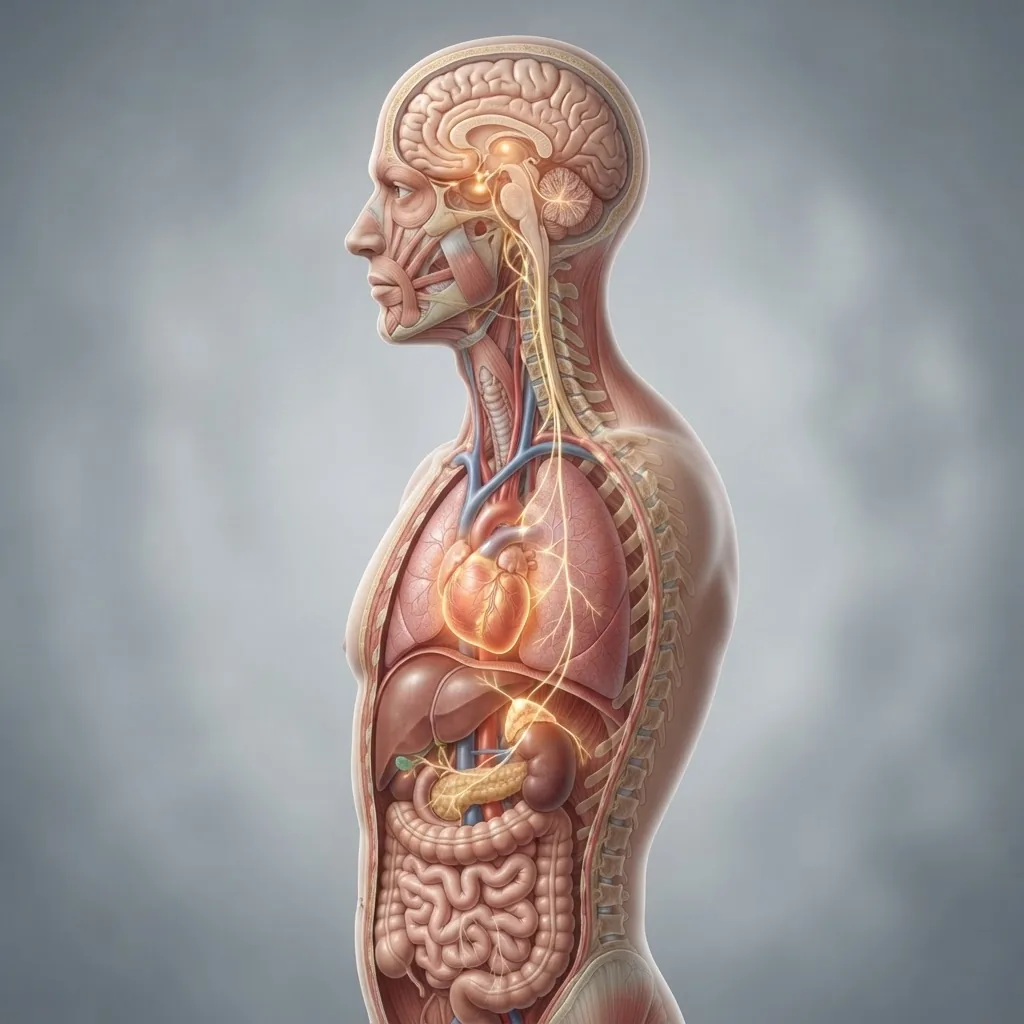
Brain and neuroendocrine regulation
Answer: The brain interprets threats and activates the HPA axis and sympathetic pathways; CRH from the hypothalamus triggers ACTH release from the pituitary, prompting adrenal cortisol secretion that feeds back to the brain and body.
When the amygdala signals danger, the hypothalamus releases corticotropin-releasing hormone (CRH). CRH stimulates the anterior pituitary to secrete adrenocorticotropic hormone (ACTH), which then prompts the adrenal cortex to release cortisol. This cascade elevates blood glucose and suppresses non-essential processes to prioritize immediate coping. According to a 2022 peer-reviewed review on neuroendocrine stress pathways, this cascade is tightly regulated but vulnerable to sensitisation under repeated activation.
Autonomic and cardiovascular response
Answer: Sympathetic activation releases adrenaline and noradrenaline, raising heart rate, contractility and vascular tone—short-term adaptive but chronically increasing hypertension and atherosclerotic risk.
Adrenaline (epinephrine) and noradrenaline increase cardiac output and redirect blood to skeletal muscles. Acute surges prepare the body for immediate action; chronic sympathetic predominance reduces heart rate variability and increases resting blood pressure. According to a 2024 industry report on cardiovascular impacts of psychosocial stress, people with prolonged stress exposure show higher incidence of hypertension and coronary events.
Metabolism and energy balance
Answer: Cortisol shifts metabolism toward gluconeogenesis and lipolysis to supply glucose; over time this promotes central fat deposition, insulin resistance and dysregulated appetite signals.
Cortisol increases blood glucose by promoting gluconeogenesis in the liver and reducing peripheral glucose uptake. Initially adaptive during acute stress, persistent elevation contributes to visceral adiposity and metabolic syndrome features. A 2021 clinical study found consistent associations between chronic high cortisol profiles and increased waist circumference and insulin resistance markers.
Digestive system changes
Answer: Stress reduces digestive motility and blood flow, alters gastric acid secretion and gut permeability, and shifts microbiome composition—producing symptoms like heartburn, constipation or diarrhea.
Under sympathetic dominance, blood is diverted away from the gut, reducing peristalsis and digestive enzyme secretion. Cortisol also modulates gut barrier function and immune activity in the gastrointestinal mucosa, increasing susceptibility to dyspepsia and irritable bowel–type symptoms. Evidence from peer-reviewed gastroenterology literature links chronic stress to exacerbation of functional GI disorders.
Immune system suppression and inflammation
Answer: Cortisol suppresses certain immune responses acutely but chronic dysregulation can produce low-grade inflammation, impaired wound healing and altered infection susceptibility.
Acute cortisol release reduces pro-inflammatory cytokine production and immune cell trafficking to avoid excessive inflammation. Paradoxically, long-term HPA dysregulation often results in a proinflammatory state—elevated CRP and IL-6—because feedback loops weaken. According to a 2019 meta-analysis in an immunology journal, chronic psychosocial stress was associated with higher inflammatory markers and slower vaccine antibody responses.
Musculoskeletal effects and somatic symptoms
Answer: Stress increases muscle tone through sustained sympathetic drive and pain sensitisation, producing stiffness, headaches and chronic myofascial pain.
Persistent sympathetic activation elevates baseline skeletal muscle tension, especially in the neck, shoulders and jaw. This mechanical load fosters trigger points and tension-type headaches. Neurochemical changes increase pain perception via central sensitisation mechanisms described in pain medicine research, linking stress to chronic musculoskeletal complaints.
Reproductive and sexual function
Answer: Stress suppresses reproductive hormones—reducing libido, ovulatory regularity and sperm parameters—by inhibiting gonadotropin-releasing signals and altering sex hormone balance.
High cortisol levels can inhibit gonadotropin-releasing hormone (GnRH) pulsatility, reducing luteinising hormone (LH) and follicle-stimulating hormone (FSH) output. Clinically, this translates to menstrual irregularities and reduced sexual desire. Reproductive health literature documents these effects in both acute and chronic stress contexts.
These system-level changes illustrate how hormones and autonomic shifts translate into common physical signs and symptoms; next we examine the psychological and emotional shifts that accompany rising tension.
For foundational public health data, see WHO mental health resources; for cardiovascular stress links consult CDC heart disease information; for peer-reviewed mechanisms see a peer-reviewed review on stress and immune function.
Transitioning, the next section connects these physiological responses with psychological changes people commonly report as tension rises.
What psychological changes and emotional states occur when tension rises?
Answer: Rising tension produces anxiety, irritability, impaired concentration, emotional numbing or heightened reactivity; cognitive distortions and mood shifts often mirror physiological arousal and feedback onto bodily systems.
Term: Anxiety — a psychological and physiological state marked by worry, heightened arousal and anticipatory fear that often accompanies sympathetic activation.
Psychological responses follow two overlapping paths: immediate emotional arousal (fear, anger) and cognitive appraisal (rumination, catastrophising). When adrenaline spikes, attention narrows to perceived threats, producing tunnel vision and impaired working memory. Cortisol impacts hippocampal and prefrontal cortex function, which can degrade executive control, planning and emotional regulation over time.
Examples of psychological shifts during stress:
- Anxiety and worry: rapid heartbeat and restlessness reinforce mental concern, producing cycles of rumination.
- Irritability and low frustration tolerance: heightened sympathetic tone reduces patience and increases reactive anger.
- Mood swings and depressive symptoms: prolonged HPA activation and inflammatory signaling are associated with low mood and anhedonia.
- Cognitive slowing or hypervigilance: either reduced processing speed or excessive scanning for threat, depending on stress profile.
- Emotional numbing or dissociation: a protective dampening of affect that disconnects the person from sensations and feelings.
These shifts are often reciprocal with physiology: anxiety increases heart rate and cortisol, which in turn amplifies anxiety—a cycle that can become self-sustaining. For people seeking structured emotional supports, see emotional wellness resources and practical examples of improved regulation in emotional health improvement tips.
Clinically significant psychological changes may meet diagnostic criteria in manuals like the DSM-5 for disorders including adjustment disorder or major depressive disorder when symptoms are severe and persistent; careful assessment distinguishes adaptive stress reactions from diagnosable conditions. According to a 2023 report by a national mental health agency, stress-related anxiety and depressive symptoms remain leading contributors to reduced functioning and health service use.
Next, a concise symptom inventory links the physiology and psychology to what people actually experience day to day.
What common physical and emotional symptoms do people experience during stress?
Answer: During stress, people commonly feel muscle tension, headaches, fatigue, gastrointestinal upset and heightened negative emotions; cognitive symptoms such as poor concentration and memory issues are also frequent and interlinked with bodily changes.
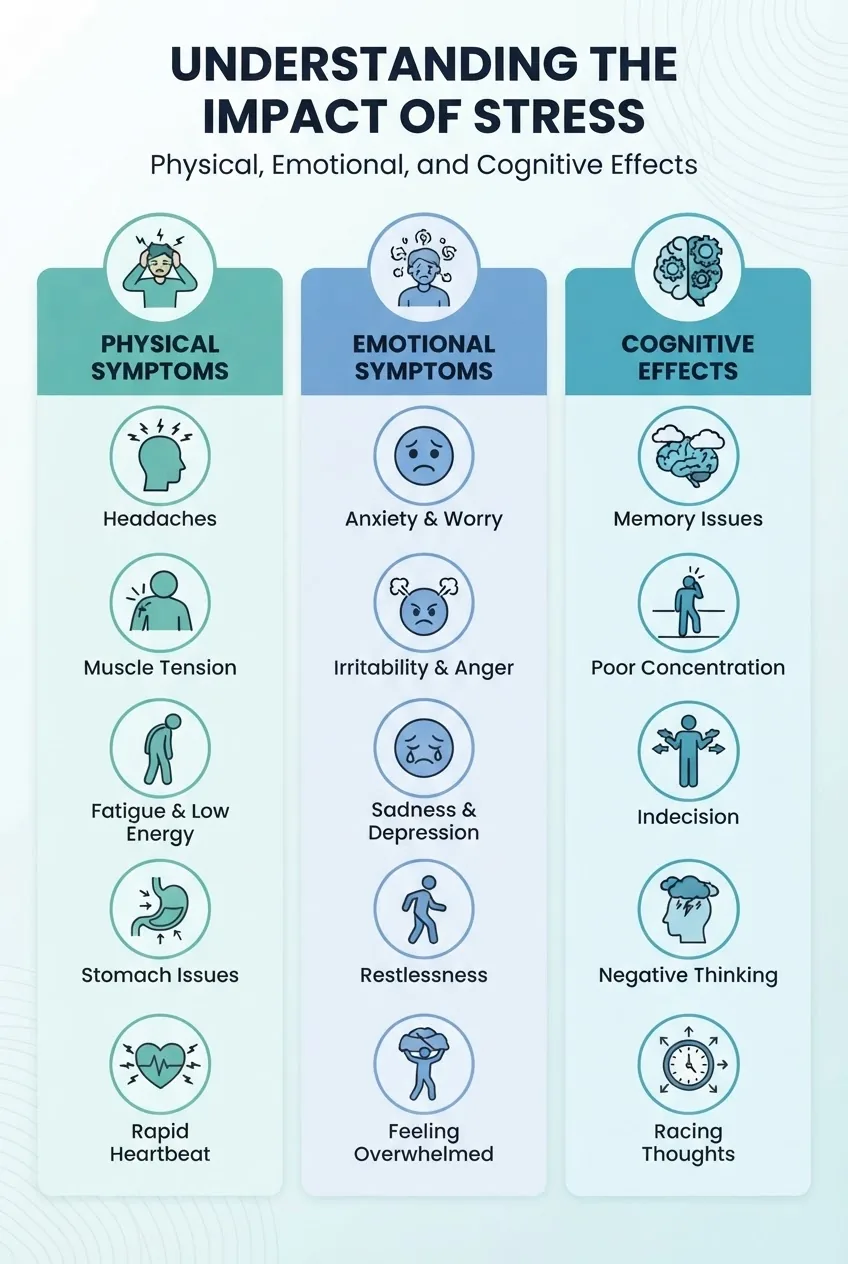
- Muscle tension and aches: Sustained sympathetic tone increases baseline muscle contraction, producing neck, shoulder and jaw tightness and chronic myofascial pain.
- Headaches: Tension-type and stress-triggered migraines increase with muscle contraction and altered blood flow; pain sensitivity is amplified by central sensitisation.
- Fatigue and low energy: HPA axis strain and disrupted sleep patterns reduce restorative processes and mitochondrial efficiency, producing daytime fatigue.
- Sleep disturbance: Difficulty falling or staying asleep results from hyperarousal and altered melatonin-cortisol rhythms.
- Cardiovascular symptoms: Palpitations, elevated resting heart rate and episodic chest tightness reflect autonomic shifts; repeated exposure increases long-term risk factors.
- Gastrointestinal upset: Nausea, bloating, constipation or diarrhea from altered motility, secretion and microbiome changes.
- Impaired concentration and memory: Short-term working memory declines and retrieval problems occur due to cortisol effects on hippocampus and prefrontal cortex.
- Mood instability and irritability: Emotional reactivity increases while reward sensitivity can decline, producing low mood or anhedonia.
- Increased susceptibility to infections: Altered immune surveillance and cytokine profiles can increase upper respiratory and wound-healing problems.
- Feeling overwhelmed or unable to cope: A subjective sense of reduced capacity that often precedes functional impairment and help-seeking.
Each item above links biology with experience: for instance, muscle tension (a somatic symptom) both results from and reinforces anxiety, while sleep disruption impairs metabolic and immune recovery. For a practical identification and immediate actions resource, review symptoms and relief tips for stress.
Transitioning, understanding the feedback between mind and body clarifies why symptoms often persist or escalate without intervention.
How does the feedback loop work — how do psychological states influence physiological health?
Answer: Psychological states modulate physiology through neural and hormonal pathways: thoughts and emotions alter autonomic tone and HPA activity, which change bodily signals (pain, fatigue), reinforcing mental states in a bidirectional feedback loop.
Term: Mind-body connection — the bidirectional communication between mental states (thoughts, feelings) and physiological systems (nervous, endocrine, immune) that shapes health outcomes.
The feedback loop operates on multiple timescales. Seconds: an anxious thought triggers sympathetic spikes and palpitations, which increase anxiety. Hours–days: disturbed sleep and caloric dysregulation heighten irritability and cognition problems. Months–years: chronic stress reshapes neural circuits (prefrontal cortex, amygdala) and endocrine setpoints, biasing the system toward hyperreactivity or blunted responsiveness.
Mechanisms supporting this loop include:
- Top-down neural modulation: Prefrontal cortex activity regulates amygdala reactivity; cognitive strategies can reduce physiological arousal.
- Hormonal feedback: Cortisol and adrenaline influence mood and attention, while inflammatory cytokines can produce sickness behaviours (fatigue, withdrawal).
- Behavioural mediators: Stress changes behaviours (sleep reduction, poor diet, reduced exercise) that further degrade physiological health.
Evidence highlights clear bidirectionality: interventions that reduce psychological distress (CBT, mindfulness) can normalise heart rate variability and inflammatory markers, while improving physical health (sleep, activity) benefits mood. For data and prevalence on mental health’s physiological impact see key mental health statistics and the pillar overview on the physiological effects of poor mental health.
According to a 2023 report by a national health institute, approximately one in five adults report stress-related health problems in a given year, illustrating how common and consequential these feedback dynamics are.
This loop explains why isolated symptom treatment without addressing thoughts, behaviours and systemic biology often produces limited benefit—multiple leverage points are usually required to shift the system toward resilience.
Next, practical steps for recognising early warning signs help determine when self-care is sufficient or when professional help is warranted.
How can I recognize early warning signs and when should I seek help?
Answer: Monitor persistent changes in sleep, appetite, concentration, mood, pain and functional capacity; seek professional assessment if symptoms last several weeks, intensify, or impair daily functioning.
Term: Symptom monitoring — systematic tracking of bodily and emotional changes over time to detect patterns of escalation requiring intervention.
- Track objective and subjective signs: Keep brief daily notes on sleep hours, mood rating, pain, digestive symptoms and stressor triggers for 2–4 weeks to detect patterns.
- Identify red flags: Worsening chest pain, breathlessness, fainting, thoughts of harming yourself, severe memory loss or marked functional decline warrant urgent medical assessment.
- Use escalation thresholds: If three or more domains (sleep, mood, cognition, pain, social withdrawal) degrade over 2–4 weeks, consider referral to a health professional.
- Consult when coping strategies fail: If standard self-care (sleep hygiene, routine exercise, social support) does not improve symptoms, seek primary care or mental health evaluation.
- Know hidden-stress signs: See signs you may be unknowingly stressed for subtler indicators like increased substance use or passive withdrawal.
When you seek help, clinicians will assess both psychological and physiological contributors—blood pressure, basic metabolic panel, thyroid function and inflammation markers may be measured to rule out other causes. According to a 2024 industry clinical guideline, early intervention reduces progression to chronic illness and improves recovery trajectories.
Documenting symptoms objectively enhances clinician evaluation: bring a simple symptom log and note stressor context, sleep patterns and any medication or substance changes.
Finally, an integrated summary connects these findings to stress management strategy areas and resources for continued learning.
How does this summary link physiological health with stress management strategies?
Answer: Integrating physiological understanding with psychological awareness enables targeted stress management: addressing HPA and autonomic balance, sleep, movement and cognitive patterns improves overall wellbeing and reduces disease risk.
Effective approaches treat the body and mind together: stabilising sleep and nutrition supports hormonal regulation, while cognitive and behavioural interventions reduce maladaptive appraisal patterns that repeatedly trigger biological stress systems. For evidence on benefits of good mental health to physiological outcomes, see benefits of good mental health.
This article’s overview points readers toward the physiological bases of symptoms and encourages further reading on practical techniques across the site, including resources on the mind-body connection, mental health tips and targeted condition guides listed in related pages for deeper exploration.
Disclaimer: Individual responses to stress vary. If symptoms are severe, persistent or worsening, consult a healthcare professional. This article summarises current research and public health reports but is not a substitute for personalised medical advice.