

What is psychological distress? Psychological distress is a state of emotional, cognitive and physical strain marked by symptoms such as anxiety, persistent sadness, irritability, sleep disturbance and bodily tension; it indicates reduced coping and wellbeing on the mental health continuum and is a signal to assess functioning and consider support.
Introduction to Psychological Distress
Answer: Psychological distress is the subjective experience of emotional discomfort or psychological tension that affects thinking, mood and daily functioning; it differs from ordinary, short-lived stress because it often involves persistent negative feelings and broader effects on wellbeing.
Term: Psychological distress — a non-diagnostic term describing emotional and cognitive strain that reduces a person’s capacity to cope with routine demands.
Psychological distress is a useful way to describe when a person’s internal “mental weather” becomes persistently stormy: emotions feel heavier, thoughts may narrow, sleep and appetite can change, and day-to-day tasks feel harder. Recognising distress early supports self-awareness, coping and timely help-seeking.
According to a 2024 WHO report on population mental wellbeing, elevated distress levels are common across age groups and contexts, reinforcing the need for clear recognition and public health responses (World Health Organization).
For evidence and baseline data on population-level mental health and why distress matters, see mental health facts and statistics.
Below we move from this introduction to a precise definition, symptom lists and practical guidance for recognising psychological distress in everyday life.
What Is Psychological Distress? Definition and Explanation
Answer: Psychological distress is an umbrella term for emotional and cognitive suffering—feelings such as anxiety, sadness or hopelessness—often accompanied by physical symptoms; it occupies a place on the mental health continuum between normal stress reactions and clinical disorders.
Term: Mental distress — a synonymous phrase used in some literature to mean psychological distress, emphasising the mental (rather than solely emotional) component.
Clinically, psychological distress is not a diagnosis but a descriptor used by researchers and clinicians to capture non-specific distress symptoms that may indicate risk for developing a disorder if persistent. Models such as the mental health continuum place distress between flourishing and diagnosable mental illness, helping clinicians decide when assessment or intervention is needed.
Psychological models referenced in research include:
- the mental health continuum model (emphasises states from wellbeing to severe mental illness),
- the stress-response framework (describes how prolonged activation of physiological systems translates to mood and cognition),
- and biopsychosocial models that link life events, personality, and biological vulnerability.
Symptoms of psychological distress cluster across domains—thoughts (rumination, difficulty concentrating), emotions (heightened anxiety, low mood), behaviour (withdrawal, changes in activity) and the body (fatigue, muscle tension). Symptoms vary in intensity and duration and are influenced by personal history, social supports and context.
Screening instruments commonly used by practitioners to detect elevated distress include the Kessler Psychological Distress Scale (K10/K6), the Patient Health Questionnaire (PHQ-9) for depressive symptoms and the Generalized Anxiety Disorder scale (GAD-7) for anxiety; these tools identify likely cases but do not replace clinical assessment.
Symptoms can overlap with normal stress reactions; the key distinguishing features are severity, duration, and impact on functioning. Clinical and population studies (see a 2022 peer-reviewed analysis on distress and functional impairment) show that persistent distress predicts declines in productivity and increased healthcare use (peer-reviewed research databases).
Common Symptoms of Psychological Distress
Answer: Psychological distress commonly causes cognitive, emotional and physical symptoms—such as persistent worry, low mood, irritability, sleep disruption, fatigue and bodily aches—that can appear alone or in clusters and impair daily functioning.

Symptoms can present differently between people and across contexts; none of these symptoms alone is diagnostic. The following list organises common symptoms into cognitive, emotional, behavioural and physical categories with brief explanations.
- Anxiety and nervousness — persistent worry, restlessness or a sense of impending doom; can include physical racing heart or tremor. Anxiety may be situational or pervasive and often co-occurs with other distress symptoms.
- Excessive rumination — repetitive, intrusive thoughts about problems or perceived failures that impede concentration and decision-making.
- Persistent sadness or low mood — feelings of heaviness, diminished pleasure in activities once enjoyed and a bleak outlook lasting days to weeks.
- Irritability and mood swings — low frustration tolerance, quickness to anger, or emotional reactivity that is out of proportion to events.
- Sleep disturbance — difficulty falling or staying asleep, early morning waking, or sleeping too much; sleep disruption both reflects and amplifies distress.
- Fatigue and low energy — unusual tiredness not proportional to activity levels; energy depletion that makes routine tasks feel onerous.
- Difficulty concentrating — frequent mind-wandering, forgetfulness, slowed thinking or inability to sustain focus at work or home.
- Appetite and weight changes — loss of appetite or overeating, with noticeable weight loss or gain linked to mood changes.
- Social withdrawal — avoiding friends, family or activities; decreased participation in previously valued roles.
- Physical tension and muscle aches — neck, shoulder or jaw tension; muscle tightness as a somatic expression of emotional strain.
- Gastrointestinal symptoms — stomach pain, indigestion, nausea or changes in bowel habits often linked to stress-related gut-brain interactions.
- Headaches — tension-type headaches or increased frequency of migraines associated with ongoing psychological strain.
- Panic-like episodes — sudden intense fear, shortness of breath, heart palpitations and derealisation; when recurrent, they require clinical assessment for panic disorder versus distress-related panic.
- Reduced motivation and productivity — procrastination, missed deadlines, decline in work or study performance tied to cognitive and emotional overload.
- Indecisiveness — heightened difficulty making choices, second-guessing, and prolonged decision cycles due to anxiety or low confidence.
- Increased substance use — turning to alcohol, nicotine or drugs to self-medicate mood or anxiety symptoms, which can worsen distress over time.
- Emotional numbness or detachment — feeling disconnected from emotions, reduced empathy or an internal sense of blankness.
- Heightened startle response — disproportionate sensitivity to loud noises or sudden stimuli, often present after acute stress or traumatic experiences.
- Hopelessness or despair — pervasive negative expectations about the future, loss of hope that daily problems will improve; requires careful assessment for suicidal risk if severe.
- Reduced sexual interest — diminished libido or sexual dysfunction linked to mood and hormonal changes under distress.
- Obsessive or intrusive thoughts — repetitive, unwanted ideas or images that cause anxiety and disrupt daily life; when severe, may suggest an anxiety disorder but can also be present in distress.
- Perceptual changes — mild derealisation or depersonalisation experiences during intense stress; typically transient but distressing.
- Changes in speech or movement — slowed speech, psychomotor retardation or agitation when emotional regulation is impaired.
- Increased illness perception — heightened worry about bodily sensations and fear of serious physical illness without medical confirmation.
Clinical terminology: many of these are described as psychological symptoms (thought patterns, cognitive disruption), emotional symptoms (mood, affective changes) and physical symptoms (somatic expressions). Symptoms should be viewed in context: frequency, intensity and functional impairment determine clinical concern.
Research validation: Recent studies from 2022–2023 link persistent psychological distress with poorer work outcomes and greater healthcare utilisation, with measured effects across diverse populations (according to peer-reviewed studies published in indexed journals).
Practical recognition: ask yourself reflective questions—Are these symptoms new or worse? Do they interfere with daily tasks? Have they lasted more than two weeks?—to decide whether to monitor, use self-help, or seek assessment.
Causes and Triggers of Psychological Distress
Answer: Psychological distress arises from a mix of external stressors (life events, chronic pressures), internal vulnerabilities (genetics, temperament), and social-contextual factors (isolation, socioeconomic strain); acute triggers and cumulative burdens both precipitate distress.
Common external triggers include bereavement, relationship breakdown, job loss, caregiving demands, financial strain and exposure to violence or trauma. Chronic triggers include ongoing illness, caregiving burden, workplace bullying or long-term economic hardship.
common causes of stress often overlap with distress triggers but distress reflects broader functional impact.
Biological and developmental contributors include genetic predisposition, early life adversity, chronic medical illness and neurobiological sensitivity to stress. Personality traits such as high neuroticism or low resilience increase vulnerability.
Social determinants—poverty, discrimination, unstable housing, social isolation—amplify distress risk and reduce options for recovery. Life transitions (new parenthood, relocation, retirement) can be normative stressors that trigger heightened distress when supports are limited.
Trauma and adverse events: exposure to traumatic events can produce acute distress responses and, if unresolved, prolonged psychological distress. Emergency responders, survivors of violence and disaster-affected populations commonly report elevated distress levels in cohort studies (according to 2022 trauma research literature).
Cumulative load: distress often follows an accumulation of small to moderate stressors that exceed coping capacity—sleep deprivation, minor health complaints, ongoing workplace pressure. This cumulative load model explains why people sometimes experience distress without a single catastrophic event.
common stressors lists stressor types and pathways to distress.
Vignette (anonymised): A 34-year-old teacher began experiencing persistent fatigue, difficulty concentrating and irritability after months of increased workloads and caring responsibilities. No single event triggered the change; the cumulative strain combined with poor sleep and reduced social time to produce clear psychological distress that impaired work performance.
Screening context: professionals use validated scales (K10, PHQ-9, GAD-7) to identify elevated distress and triage care. These tools are brief questionnaires that measure symptom frequency over recent weeks and flag individuals needing further assessment.
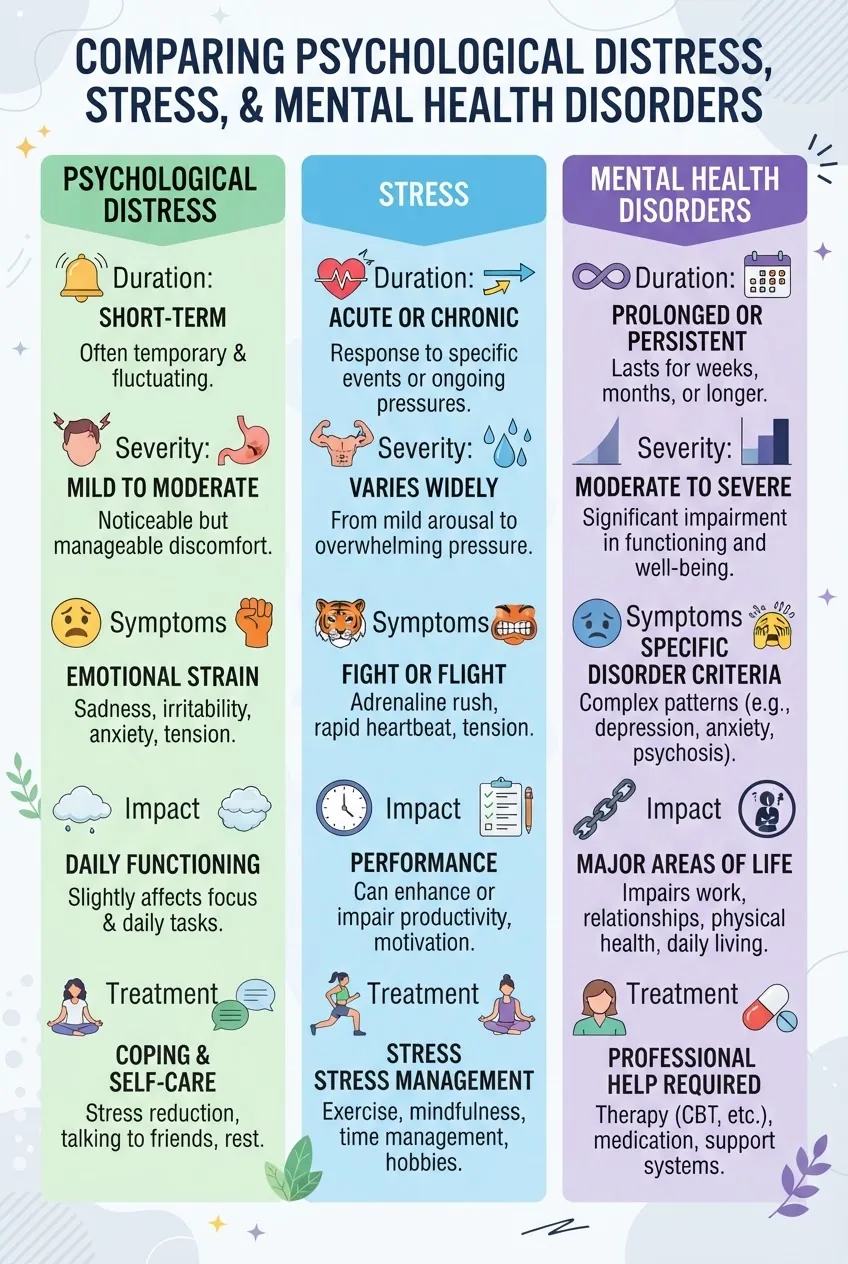
Psychological Distress vs. Stress and Mental Health Disorders: Key Differences
Answer: Psychological distress is broader and less specific than clinical mental disorders and differs from routine stress primarily in duration, intensity and functional impact; disorders require diagnostic criteria whereas distress is a state that may or may not meet those criteria.
Below is a concise comparison across three concepts to clarify overlap and difference.
| Feature | Psychological Distress | Stress | Mental Health Disorders |
|---|---|---|---|
| Definition | Non-diagnostic state of emotional/cognitive strain affecting functioning. | Physiological and psychological response to demands or threats. | Clinically defined syndromes with diagnostic criteria (DSM/ICD). |
| Duration | Variable; may be persistent or episodic. | Usually tied to identifiable trigger; often time-limited. | Typically sustained and meets duration thresholds in diagnostic manuals. |
| Severity | Ranges from mild to severe but less specific than disorders. | Often mild-moderate; acute stress can be intense but transient. | Meets specific severity and symptom clusters for diagnosis. |
| Functional Impact | Often noticeable: work, relationships, self-care can decline. | May impair performance short-term; usually reversible. | Significant impairment in social, occupational, or other important areas. |
| Treatment needs | May respond to psychosocial support, coping strategies, monitoring. | Self-management and stress reduction often effective. | Often requires formal psychiatric/psychological interventions, sometimes medication. |
Supporting prose: Stress is a normal adaptive response; psychological distress indicates that adaptation is strained. Mental health disorders (e.g., major depressive disorder, generalized anxiety disorder) meet specific diagnostic criteria—such as symptom counts and time thresholds described in diagnostic systems (DSM/ICD)—and often require targeted clinical treatment.
Subtle stress signs can mimic distress. For a focused comparison of subtle presentations, see hidden signs of stress.
Episodic stress—brief, intense stress episodes—differs from ongoing distress in time course; read more on episodic stress types for specifics.
Diagnosis caveat: symptom overlap means only a qualified clinician can determine if symptoms meet criteria for a disorder. Persistent distress should prompt screening and possibly diagnostic assessment.
Impact of Psychological Distress on Daily Life and Wellbeing
Answer: Psychological distress impairs daily functioning—reducing work productivity, degrading relationships, increasing absenteeism, and producing physiological strain—so it affects both personal wellbeing and societal functioning.
Distress affects cognitive efficiency: decision-making slows, attention narrows and error rates increase. On the job, this reduces productivity and increases the risk of mistakes; at home, it can diminish parenting capacity and household management.
Social effects include withdrawal, reduced empathy and increased conflict in relationships. Interpersonal tension is commonly reported in cohort surveys as a proximal consequence of sustained distress (according to a 2023 population-level mental health survey).
Physiological effects are significant: chronic distress activates stress-response systems (hypothalamic–pituitary–adrenal axis and autonomic nervous system), contributing to elevated heart rate, blood pressure, and systemic inflammation, which can exacerbate chronic medical conditions.
For a detailed review of how distress translates into bodily symptoms and longer-term physiological change, see the pillar page on physiological effects of poor mental health.
Economic and functional consequences include increased healthcare utilisation, lost workdays and decreased job performance. Employers and healthcare systems report higher costs associated with untreated distress and related mental health disorders (according to a 2023 occupational health analysis).
Quality of life declines: leisure enjoyment drops, sense of purpose may wane, and overall life satisfaction often falls during sustained distress. Distress can also impair self-care behaviours—reducing exercise, sleep hygiene and adherence to medical treatments—creating a negative feedback loop with physical health.
When and How to Seek Help for Psychological Distress
Answer: Seek help when symptoms are persistent, worsening, causing functional impairment, or include thoughts of self-harm; begin with a primary care visit or mental health professional who can assess severity, recommend screening tools and refer to appropriate care.
Step 1 — Self-check and early steps:
- Use brief self-reflection: Are symptoms persistent for more than two weeks? Are they interfering with work, relationships or daily tasks?
- Try basic self-care: consistent sleep, nutritious meals, gentle activity and social contact—these steps can reduce transient distress.
Step 2 — Screening and assessment:
- Complete validated screening tools such as the Kessler K10, PHQ-9 or GAD-7 to quantify symptom levels; these are used by clinicians to guide next steps.
- If screening indicates high scores or suicidal thoughts occur, contact a health professional immediately.
Step 3 — Seeking professional help:
- Contact your GP for an initial assessment and to rule out medical contributors.
- Request a referral to a psychologist, psychiatrist or allied mental health provider based on symptom profile.
- Consider brief interventions (problem-solving, CBT-informed strategies) for moderate distress; specialist care for severe or disorder-level presentations.
Step 4 — Use trusted resources: community mental health services, employee assistance programs and telehealth providers can offer timely support. For practical resources on improving emotional resilience and structured supports, see emotional wellness resources.
Step 5 — Ongoing self-help complements treatment:
- After initial assessment, combine professional guidance with lifestyle approaches—regular activity, structured routine and social contact.
- For practical wellness exercises and longer-term strategies, explore emotional health improvement tips.
Emergency advice: if someone is in immediate danger or expressing intent to self-harm, call emergency services or a crisis hotline. Local and national crisis lines provide immediate support and triage.
Summary and Key Takeaways on Psychological Distress
Answer: Psychological distress is a non-diagnostic indicator of reduced coping that presents with emotional, cognitive and physical symptoms; early recognition, screening and appropriate help prevent escalation and support recovery.
Key points:
- Psychological distress is distinct from ordinary stress and from diagnosable mental disorders; assess duration, severity and functional impact.
- Symptoms span emotional, cognitive, behavioural and physical domains—none are diagnostic alone.
- Causes are multi-factorial: life events, chronic pressures, biological vulnerability and social determinants.
- Early screening (K10, PHQ-9, GAD-7) and help-seeking reduce risk of progression.
- Prevention and recovery are supported by social connection, routine self-care and professional support when needed; learn more about factors influencing good mental health.
This guide is educational and not a substitute for clinical assessment. If you are concerned about your mental state, contact a healthcare professional for personalised evaluation.
Conclusion and next step: Recognise signs early, complete a brief screening if symptoms persist, and contact a GP or mental health professional when distress impairs your life. If you want practical next steps, start with a screening tool and reach out to a trusted clinician or local support service.