

Physiology effects of stress begin with rapid autonomic activation and hormone release (adrenaline, norepinephrine, cortisol), producing immediate cardiovascular, respiratory and metabolic changes; if prolonged, this coordinated nervous–endocrine response shifts into maladaptive patterns that affect nearly every organ system and long-term health.
What are the physiology effects of stress?
Answer: Stress produces a coordinated physiological response involving the autonomic nervous system and the endocrine HPA axis, causing immediate sympathetic activation (elevated heart rate, respiration, blood glucose) and hormonal shifts (adrenaline, cortisol) that, when chronic, lead to cardiovascular, immune, metabolic and neuromuscular dysfunction.
Autonomic nervous system (ANS): the involuntary neural network (sympathetic and parasympathetic branches) that regulates heart rate, breathing, digestion and arousal.
HPA axis: the hypothalamic‑pituitary‑adrenal axis, a hormone cascade where the hypothalamus triggers pituitary release of ACTH, stimulating adrenal cortisol secretion.
This introduction explains how immediate nervous activation and slower hormonal responses work together to protect short-term survival (fight or flight) while also being capable of producing harm if activated too often or for too long. The remainder of this guide details the ANS and stress nervous system mechanics, profiles key stress hormones, outlines systemic effects on body systems, and explains stress pathophysiology from acute to chronic stages.
If you’re curious about how to recognise stress, our guide on signs and symptoms of stress covers this in detail.
Learn about stress signs that often go unnoticed in our related article.
Understanding the mind and body connection helps explain why physiological effects of stress often present as physical symptoms.
Transition: Having outlined the overall effect, the next section explains the nervous system’s role in stress and how sympathetic and parasympathetic branches coordinate the response.
How does the nervous system respond to stress through the autonomic response?
Answer: The nervous system responds to stress primarily via the autonomic nervous system: the sympathetic branch initiates rapid ‘fight or flight’ responses while the parasympathetic branch promotes recovery and ‘rest and digest’ functions; both interact with hormonal systems to shape magnitude and duration of the response.
Sympathetic nervous system: the ANS branch that increases heart rate, blood pressure and blood flow to muscles during acute stress.
Parasympathetic nervous system: the ANS branch that supports energy conservation, digestion and recovery after stress is reduced.
The autonomic nervous system (ANS) coordinates immediate autonomic changes through fast neural circuits and longer afferent-efferent feedback loops. Sensory input of a threat reaches the brainstem and limbic centers (amygdala), triggering sympathetic efferents and adrenal medulla stimulation. Simultaneously, cortical appraisal modulates intensity: perceived controllability, familiarity and coping resources scale the neural output.
A simplified sequence during acute stress:
- Threat detection in sensory pathways and the amygdala.
- Hypothalamic activation and brainstem sympathetic outflow.
- Immediate sympathetic effects (cardiovascular, respiratory, pupil dilation).
- Adrenal medulla release of adrenaline/norepinephrine for systemic amplification.
- HPA axis activation (minutes), releasing cortisol for sustained metabolic adaptation.
Role of the Sympathetic Nervous System in Fight or Flight
Answer: The sympathetic nervous system drives the acute fight-or-flight response by releasing norepinephrine at synapses and triggering adrenal adrenaline secretion, increasing heart rate, blood pressure, airway dilation and mobilising energy stores for immediate action.
Think of the sympathetic branch like a car’s gas pedal: pressing it increases output (heart rate, blood pressure, glucose availability). In real‑world terms, when a person narrowly avoids a vehicle, heart rate typically jumps 20–50% within seconds and breathing accelerates—this is sympathetic activation coupled with catecholamine surge.
Mechanisms and examples:
- Cardiovascular: sympathetic nerves increase stroke volume and constrict peripheral vessels, raising systemic vascular resistance and systolic blood pressure.
- Respiratory: bronchodilation improves oxygen uptake; respiratory rate and tidal volume increase.
- Metabolic: glycogenolysis and lipolysis raise circulating glucose and free fatty acids for muscle use.
- Sensory and motor: sympathetic tone sharpens attention, dilates pupils, and primes skeletal muscles.
Neurochemistry: presynaptic sympathetic neurons release norepinephrine locally; the adrenal medulla secretes epinephrine (adrenaline) systemically to coordinate multi‑organ responses. Together these catecholamines act within seconds and subside quickly when the threat resolves.
Parasympathetic Nervous System: Rest and Digest in Stress Recovery
Answer: The parasympathetic nervous system counterbalances sympathetic activation by lowering heart rate, enhancing digestion and supporting tissue repair—its activation signals recovery and helps return physiology to baseline following stress.
The parasympathetic branch can be considered the body’s brake. After threat resolution, vagal (cranial nerve X) activity increases, reducing sinoatrial node firing rate and promoting digestive enzyme secretion. Higher baseline parasympathetic tone is associated with faster physiological recovery and improved emotion regulation.
Practical examples and mechanisms:
- Heart rate variability (HRV) reflects parasympathetic influence; higher HRV indicates stronger recovery capacity.
- Vagal stimulation lowers inflammation through the cholinergic anti‑inflammatory pathway (a neural–immune circuit).
- Parasympathetic reengagement supports glucose storage, digestion and sleep consolidation—processes that restore energy balance after sympathetic mobilization.
Clinically, interventions like slow diaphragmatic breathing and paced exhalation increase vagal tone and accelerate the transition from sympathetic activation to parasympathetic recovery.
Transition: Nervous system activity sets the pace for hormone release; the next section profiles the main stress hormones and how they mediate sustained physiological effects.
Which stress hormones drive the physiological response and how do they work?
Answer: Key stress hormones—adrenaline (epinephrine), norepinephrine and cortisol—mediate acute and sustained physiological adaptations: catecholamines act within seconds to minutes via the sympathetic nervous system, while cortisol from the HPA axis sustains metabolic and immune adjustments for minutes to hours or longer.
Cortisol: a glucocorticoid hormone from the adrenal cortex that increases blood glucose, modulates inflammation and supports long‑duration stress adaptation.
Adrenaline (epinephrine) and norepinephrine: catecholamines produced by the adrenal medulla and sympathetic neurons that rapidly raise heart rate, blood pressure and energy availability.
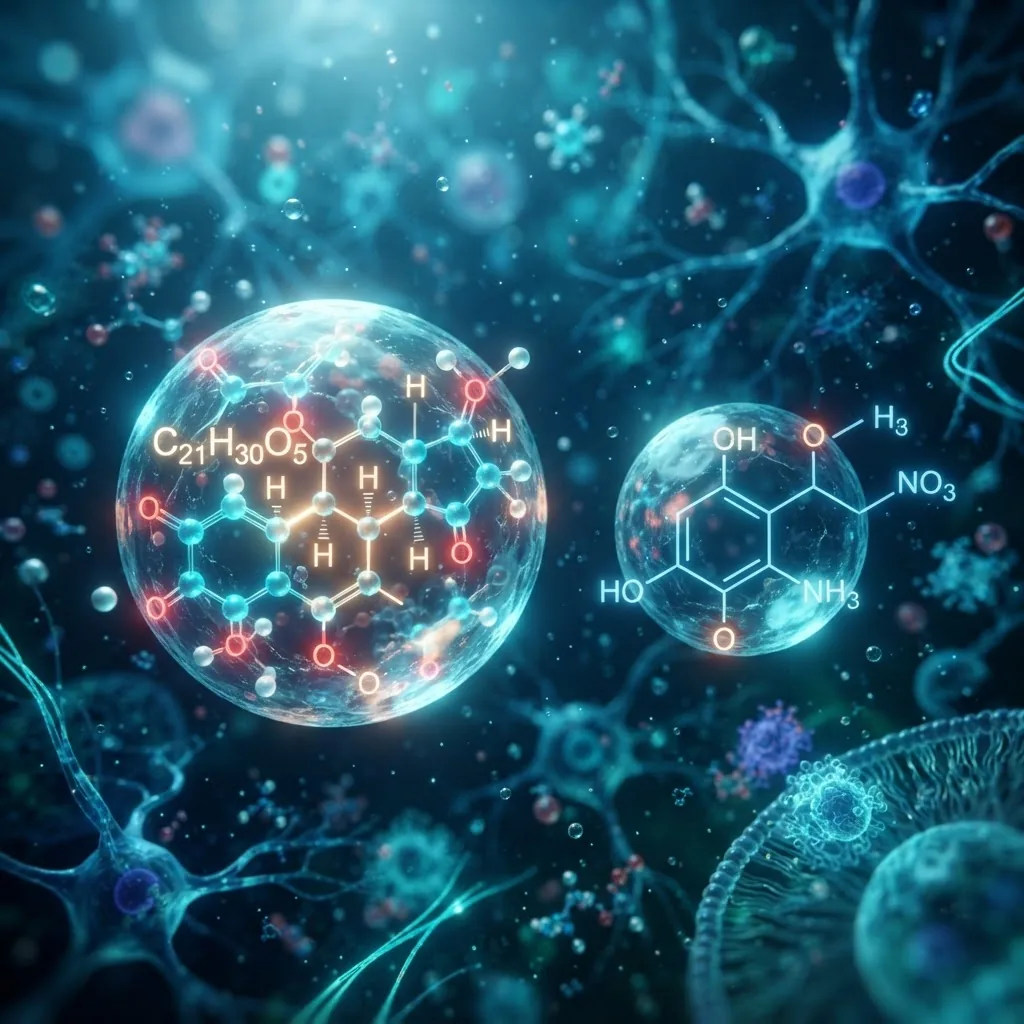
The endocrine response complements neural signals. The HPA axis starts with corticotropin‑releasing hormone (CRH) from the hypothalamus, triggering pituitary adrenocorticotropic hormone (ACTH), which stimulates cortisol release. Cortisol exerts genomic effects (altering gene transcription) and non-genomic effects (rapid signaling) to regulate metabolism, immunity and cognition.
Below are concise hormone profiles summarising roles, timing and primary physiological effects.
| Hormone | Source & Timing | Primary Physiological Effects |
|---|---|---|
| Adrenaline (epinephrine) | Adrenal medulla, seconds | ↑Heart rate, bronchodilation, glycogenolysis, alertness |
| Norepinephrine | Sympathetic neurons & adrenals, seconds | Vasoconstriction, arousal, focused attention |
| Cortisol | Adrenal cortex via HPA axis, minutes-hours | ↑Gluconeogenesis, immunomodulation, sustained energy supply |
Cortisol and Its Role in Prolonged Stress
Answer: Cortisol sustains the stress response by mobilising glucose, modulating inflammation, and altering brain function; chronically elevated cortisol contributes to metabolic dysfunction, immune suppression, sleep disturbance and cognitive changes.
Cortisol increases hepatic gluconeogenesis and reduces peripheral glucose uptake to maintain blood glucose during prolonged demand. It suppresses certain immune pathways (e.g., lymphocyte proliferation) while shifting cytokine profiles, which can increase infection risk when cortisol is persistently high.
Clinical observations and study references:
- According to a 2024 NIH report on stress physiology, prolonged HPA axis activation correlates with higher incidence of metabolic syndrome and impaired wound healing (source: government health body).
- Case series and cohort studies show associations between chronic cortisol elevation and hippocampal volume reduction, affecting memory—although individual susceptibility varies widely (peer‑reviewed evidence available via PubMed).
Regulatory feedback: cortisol normally feeds back to the hypothalamus and pituitary to reduce CRH and ACTH release; dysregulation of this feedback (e.g., flattened diurnal cortisol rhythm) is a hallmark of chronic stress and allostatic load.
Adrenaline and Norepinephrine in Acute Stress Response
Answer: Adrenaline and norepinephrine are immediate catecholamine mediators: adrenaline is released broadly into circulation by the adrenal medulla, while norepinephrine acts at sympathetic synapses to rapidly increase cardiovascular output and sharpen cognition for immediate action.
Functionally, catecholamines prepare the organism for immediate physical or cognitive action by:
- Increasing heart rate and contractility (beta‑adrenergic effects).
- Redistributing blood to skeletal muscles and heart via vasoconstriction in nonessential beds (alpha‑adrenergic effects).
- Raising blood glucose via glycogen breakdown and inhibiting insulin secretion transiently.
- Enhancing selective attention and memory encoding during high arousal states.
Evidence: acute catecholamine surges are adaptive for short threats; however, repeated or prolonged catecholamine exposure is linked with vascular damage and arrhythmia risk in clinical studies (see American Psychological Association for mechanism summaries and risk assessments).
Transition: Having described neural and hormonal actors, we next examine how those signals translate into systemic effects across organ systems.
How does stress affect each system of the body?
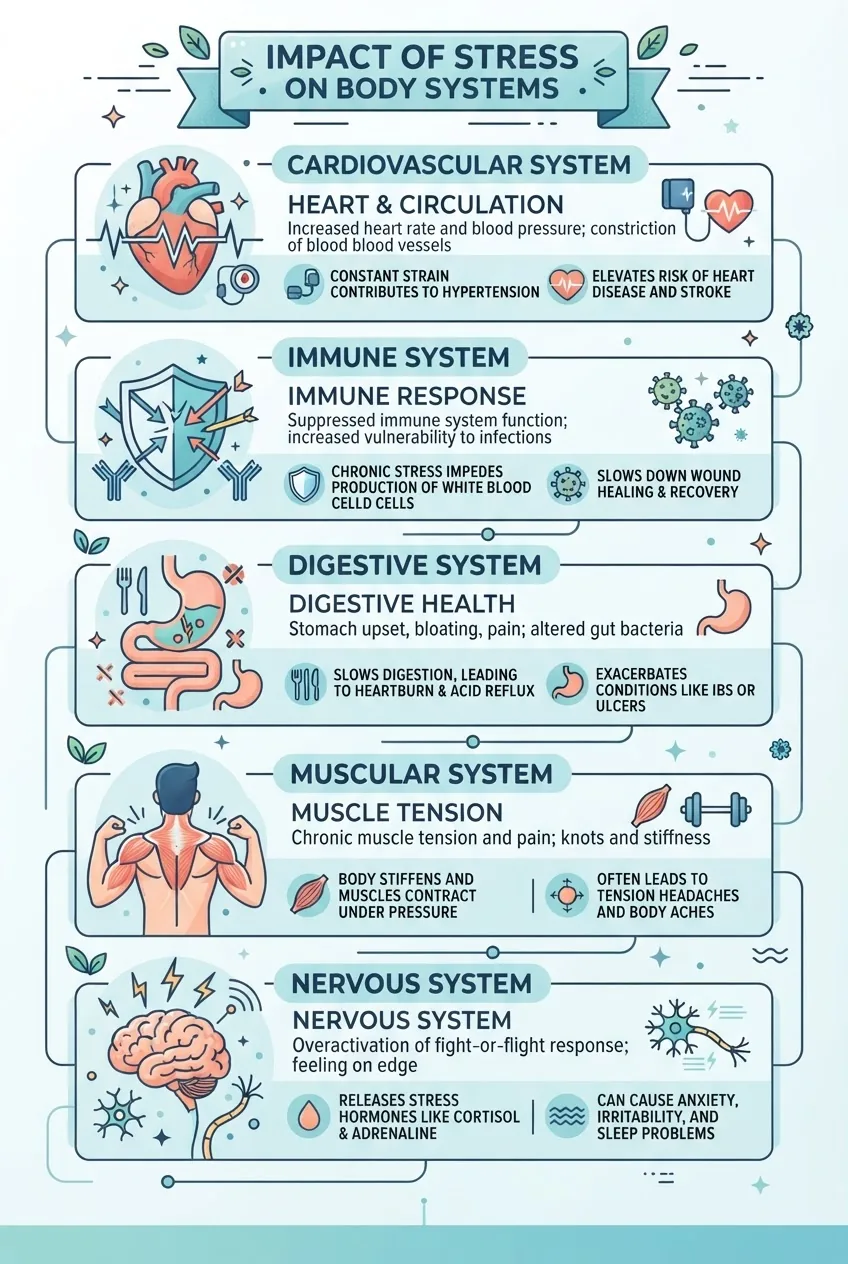
Answer: Stress affects cardiovascular, immune, digestive and musculoskeletal systems through sympathetic activation, hormone-mediated metabolic shifts and immune modulation; the pattern differs by acute versus chronic exposure, with chronic stress producing wear-and-tear (allostatic load) across systems.
Below are structured sub‑paragraphs examining key systems and representative physiological consequences.
Cardiovascular and Respiratory System Effects
Stress increases heart rate, blood pressure and myocardial oxygen demand via sympathetic drive and catecholamines; repeated elevations promote endothelial dysfunction, atherosclerotic progression and higher risk of hypertension. Respiratory effects include increased respiratory rate and bronchial dilation, which can exacerbate asthma or COPD in susceptible individuals.
Key mechanisms and facts:
- Acute: transient tachycardia and increased cardiac output aid survival; typical heart rate increases vary by intensity, often 20–50% in laboratory stressors (clinical observation).
- Chronic: persistent sympathetic tone contributes to hypertension and left ventricular hypertrophy; epidemiological studies link chronic perceived stress with higher cardiovascular disease incidence (peer‑reviewed cohort data).
Immune System Modulation Under Stress
Stress hormones have biphasic immune effects: short-term cortisol can curb excessive inflammation (adaptive), while long-term cortisol and catecholamines suppress cellular immunity and alter cytokine balance, increasing susceptibility to infections and impairing vaccine responses.
Practical implications:
- Short-term stress: may temporarily enhance certain immune functions (e.g., natural killer cell trafficking).
- Long-term stress: associated with reduced lymphocyte proliferation, decreased antibody responses and slower wound healing (observed in clinical and experimental studies).
Effects on Digestion and Metabolism
Sympathetic activation inhibits digestion (reduced gastric motility and secretion) while cortisol increases appetite and promotes lipogenesis and insulin resistance. Over time, chronic stress predisposes to weight gain (particularly central adiposity), dyslipidaemia and type 2 diabetes risk.
Mechanistic notes:
- Acute: nausea, decreased appetite in some people, delayed gastric emptying.
- Chronic: cortisol‑driven appetite increases, preference for calorie‑dense foods, and altered gut microbiome relationships affecting metabolism and mood.
Muscular Tension and Neurological Symptoms
Stress increases muscle tone via prolonged sympathetic drive and reflexive guarding, contributing to tension headaches, neck and back pain, and temporomandibular joint strain. Neurologically, chronic stress affects sleep architecture, attention, and memory through HPA and monoaminergic modulation.
Clinical observations:
- Tension myalgia and trigger points are common in individuals under chronic stress.
- Sleep fragmentation and reduced slow‑wave sleep are associated with elevated nocturnal cortisol and sympathetic activity.
Understanding the common stressors impacting health helps target interventions to reduce system-wide burden.
For a broader look at body systems and stress, see physiological health effects of stress.
Transition: Specific system effects accumulate; the following section explains how acute adaptive responses become maladaptive with chronic stress, describing stress pathophysiology.
How does stress pathophysiology evolve from acute to chronic effects?
Answer: Stress pathophysiology starts as adaptive acute responses (sympathetic activation and HPA axis engagement) but becomes maladaptive when repeated or prolonged, causing allostatic load—dysregulated cortisol rhythms, persistent inflammation, autonomic imbalance and progressive organ dysfunction.
Acute stress is protective: rapid catecholamine and cortisol responses sharpen performance, suppress unnecessary processes and prioritise immediate survival. Chronic exposure, however, shifts homeostasis: negative feedback loops in the HPA axis can become blunted or hypersensitive, diurnal cortisol rhythms flatten, and autonomic balance is persistently skewed to sympathetic dominance or poor parasympathetic recovery.
| Feature | Acute Stress | Chronic Stress |
|---|---|---|
| ANS tone | Transient sympathetic surge | Sustained sympathetic dominance, reduced HRV |
| Cortisol pattern | Diurnal rhythm preserved | Flattened diurnal curve or elevated evening cortisol |
| Immune effect | Short-term modulation | Immune suppression and chronic inflammation |
Cause and effect chain leading to dysfunction:
- Repeated stressors → repeated sympathetic and HPA activation.
- Feedback dysregulation → altered cortisol secretion patterns.
- Metabolic and immune shifts → insulin resistance, dyslipidaemia, low‑grade inflammation.
- End-organ effects → hypertension, psychiatric comorbidity, musculoskeletal pain, impaired cognition.
Research and authority signals:
- According to a 2023 review in a peer‑reviewed medical journal, allostatic load scores predict cardiovascular and neurocognitive decline (peer‑reviewed source: PubMed).
- According to a 2024 NIH report, persistent stress-related physiological changes are linked with increased risk for metabolic syndrome and poorer recovery from illness (government health body).
For a deeper understanding of how stress contributes to poor mental health symptoms and care, see our comprehensive guide on physiological effects of poor mental health.
To prevent progression from episodic to chronic stress, review episodic stress management techniques for practical interventions.
See recent mental health statistics that underscore why early stress management matters.
Caveats and variability: individual differences (genetics, early life stress, social support, sleep, and lifestyle) markedly alter trajectories; not everyone with repeated stress exposure develops pathology. Clinical assessment and targeted interventions should be personalised.
Transition: The stress response evolved to improve survival; the next section places this physiology in an evolutionary and modern context.
What is the purpose and evolutionary role of the stress response system?
Answer: The stress response evolved as a rapid, integrated survival mechanism—detect threats, mobilise energy, sharpen cognition, and protect against injury—optimising chances of survival in acute danger, though modern chronic psychosocial stressors can activate this system in maladaptive ways.
Evolutionary context: early humans faced intermittent physical threats where intense short bursts of energy were life-saving. The same neural‑endocrine circuitry that enabled fleeing predators now responds to non‑physical threats (social evaluation, work pressure), producing physiological responses that are mismatched to modern chronic stressors.
Relevance to modern life:
- Adaptive when brief: fight-or-flight supports immediate problem solving and escape.
- Maladaptive when frequent: modern chronic threats (financial insecurity, social stress) drive sustained activation without physical resolution, producing wear-and-tear.
Frameworks: Hans Selye’s General Adaptation Syndrome model (alarm → resistance → exhaustion) remains a useful heuristic for understanding progression from adaptive response to depletion and disease; contemporary models emphasise allostatic load as cumulative physiological cost.
Transition: Knowing the evolutionary purpose clarifies why deliberate practices to regulate nervous system and hormones improve resilience; the conclusion summarises actionable points and links to resources.
How can understanding the physiology of stress help you manage it?
Answer: Understanding nervous system activation and hormonal dynamics enables targeted interventions—breathing, sleep, exercise, nutrition, social support and therapy—that reduce sympathetic overdrive, normalise HPA axis rhythms and lower allostatic load, improving long‑term health.
Actionable summary and evidence-based steps:
- Regulate breathing: slow diaphragmatic breathing increases parasympathetic tone and lowers heart rate quickly.
- Prioritise sleep: normalising sleep restores diurnal cortisol rhythms and supports immune function.
- Exercise regularly: moderate aerobic exercise improves HRV and metabolic health while reducing cortisol reactivity to stressors.
- Nutrition: reduce excessive refined carbohydrates and favour protein and fibre to stabilise glucose and reduce cortisol-driven cravings.
- Social and psychological supports: therapy, social connection and perceived control reduce HPA activation and sympathetic responses.
Supporting your emotional wellness resources can help regulate the stress response and encourage hormone balance.
Read practical emotional health and wellness improvement tips to strengthen nervous system adaptability.
Learn about the benefits of good mental health that support balanced physiological stress responses.
Consider holistic approaches that integrate the mind, body, and spirit connection to build resilience.
Authority and resources: authoritative summaries of stress mechanisms and management are available from the National Institutes of Health, the American Psychological Association, and peer‑reviewed journals indexed on PubMed.
Final takeaways: Recognise stress as a nervous‑endocrine event with both immediate adaptive and potential long‑term harmful consequences; practical regulation of breathing, sleep, activity and social supports reduces physiological load and prevents chronic disease progression.
For actionable help and curated resources, visit our emotional wellness resources page to begin applying these steps today.