

The mind and body connection is the set of biological and psychological interactions through which thoughts, emotions and behaviours influence physical health and vice versa; this guide explains the mechanisms, evidence, and practical practices you can use to improve health outcomes within weeks to months.
Introduction to the Mind and Body Connection
Answer: The mind and body connection describes how mental states—thoughts, emotions, attention—and bodily systems—nervous, endocrine, immune—continuously communicate to shape health, behaviour and recovery.
Mind and body connection: a functional relationship where psychological processes and physiological systems influence each other continuously.
At its core the mind and body interaction creates health synergy: psychological states can alter physiology (for example, heart rate or immune activity) and physical conditions can shape mood and cognition. This section frames the scope for the detailed mechanisms that follow and orients practical strategies presented later.
Key context and data: According to a 2023 WHO report on mental health and noncommunicable diseases, population-level mental states are linked to measurable shifts in chronic disease risk and healthcare outcomes (source: international public health report).
Definitions introduced above will be expanded when the specific systems (nervous system, neurotransmitters, immune responses) appear in later sections so technical terms are explained at first use in their relevant section.
mental health statistics and insights
meaning of mental health
mind, body, and spirit wellness
Transition: Next we examine the biological foundations that make the mind-body link measurable and actionable.
Biological Foundations of the Mind and Body Connection
Answer: The biological foundations are neural, hormonal and immune pathways—primarily the nervous system, neurotransmitters, the autonomic nervous system and psychoneuroimmunology—that transmit signals between brain and body and regulate physiological responses.
Nervous system: the body’s communication highway of neurons that transmits electrical and chemical signals between brain and tissues.
Core components (brief):
- Central nervous system (CNS): brain and spinal cord process information and coordinate high-level responses.
- Peripheral nervous system (PNS): somatic nerves control voluntary movement and sensory input; autonomic nerves regulate internal organs.
- Autonomic nervous system (ANS): splits into sympathetic (fight-or-flight) and parasympathetic (rest-and-digest) branches that adjust heart rate, digestion, respiration and more.
- Neurotransmitters: chemical messengers (e.g., serotonin, dopamine, norepinephrine) that alter neuronal signaling and influence mood, motivation and peripheral organ function.
- Endocrine system: hormonal regulators (e.g., cortisol, adrenaline, oxytocin) released by glands and the HPA axis modulate metabolism, inflammation and behaviour.
- Psychoneuroimmunology (PNI): the interdisciplinary field studying interactions between psychological processes, neural signaling and immune responses.
How signals travel: neurons encode patterns of activity that trigger neurotransmitter release; autonomic outputs change organ function; the HPA axis releases cortisol that adjusts immune cell activity—creating a continuous feedback loop between mental states and body systems.
Psychoneuroimmunology: study of how psychological factors such as mood or cognition influence immune function through neural and hormonal routes.
Selected mechanisms with short explanations:
- Fast neural signaling: ANS reflexes (milliseconds–seconds) alter heart rate, airway tone, gut motility via vagus and sympathetic nerves.
- Hormonal modulation: HPA axis activation (minutes–hours) releases cortisol and catecholamines that shift metabolism and immune cell trafficking.
- Neuroimmune communication: cytokines (immune signaling proteins) cross or signal at brain interfaces to influence mood and cognition, and the brain then adjusts immune outputs.
- Neurotransmitter-driven peripheral effects: serotonin and dopamine exist centrally and peripherally (e.g., gut serotonin) linking mood to digestion and pain sensitivity.
- Neuroplastic changes: repeated psychological experiences reshape neural circuits controlling autonomic output and hormonal reactivity across weeks to months.
Evidence notes: A comprehensive review of PNI pathways is available via the National Institutes of Health; according to a 2020 NIH literature review, clinical and laboratory studies demonstrate bidirectional modulation between mood and immune markers (source: peer-reviewed review).
Practical implication: understanding these pathways clarifies why psychological interventions (e.g., behavioural health interventions) can produce measurable changes in blood pressure, inflammation markers and symptom burden.
Transition: With the biological scaffolding in place, the next section explains specifically how mental health alters physical health and disease trajectories.
How Mental Health Affects Physical Health
Answer: Mental health influences physical health through behavioural changes, autonomic and hormonal shifts, immune modulation and somatic symptom expression, which together alter disease risk, recovery speed and quality of life.
Somatic symptoms: physical sensations or complaints (pain, fatigue, gastrointestinal distress) that may arise from or be amplified by psychological states.

Examples and mechanisms:
- Behavioural pathways: depression and anxiety often reduce sleep quality, physical activity and medication adherence, increasing metabolic and cardiovascular risk.
- Autonomic and hormonal activation: chronic anxiety elevates sympathetic drive and HPA-axis hormones (like cortisol), promoting hypertension and insulin resistance over time.
- Inflammation: poor mental health correlates with higher inflammatory markers (e.g., CRP, IL-6) that contribute to atherosclerosis, chronic pain and fatigue.
- Somatic amplification: altered central pain processing can increase perceived pain without proportional peripheral pathology.
Mini case study (clinical vignette): A 45-year-old with untreated major depressive disorder decreased activity and sleep; over 18 months they developed weight gain, elevated blood pressure and higher inflammatory markers, leading to metabolic syndrome—illustrating how mood, behaviour and biological responses compound physical risk (source: clinical case synthesis).
Evidence and scope: According to a 2022 peer-reviewed meta-analysis, persistent depressive symptoms increased risk for coronary heart disease by approximately 30% (source: peer-reviewed meta-analysis).
Positive effects: improved mood and coping reduce sympathetic activity, lower inflammatory markers and increase immune resilience; see benefits of good mental health for a detailed review of downstream improvements.
benefits of good mental health
Recognising symptoms: common physical signals that mental health is affecting the body include persistent fatigue, unexplained pain, disrupted sleep, changes in appetite, gastrointestinal disturbance and frequent infections due to immune dysregulation.
For expanded guidance on symptoms, diagnosis and care strategies, consult the pillar overview on physiological impacts:
physiological effects of poor mental health
Complementary resources on stress and manifestations:
stress symptoms and relief
unrecognized stress signs
types of stressors affecting health
mental health disorders overview
physical health challenges and wellness
Transition: Next we examine the brain’s specific roles and control systems that coordinate the body’s response to mental states.
The Role of the Brain in Body Regulation and Response
Answer: Specific brain regions (prefrontal cortex, amygdala, hypothalamus), networks and the HPA axis orchestrate autonomic, endocrine and immune responses; they evaluate threats, regulate physiology and update responses through learning and neuroplasticity.
HPA axis (hypothalamic-pituitary-adrenal axis): a hormonal cascade where the hypothalamus signals the pituitary to release ACTH, prompting adrenal cortisol release that affects metabolism and immune cells.
Key brain players and functions:
- Prefrontal cortex: executive control over attention, decision-making and down-regulation of emotional responses.
- Amygdala: rapid threat detection that amplifies autonomic and hormonal outputs when a stressor is perceived.
- Hypothalamus: central coordinator initiating HPA-axis and autonomic responses to maintain homeostasis.
- Brainstem and vagal nuclei: route autonomic signals to heart, lungs and gut and receive visceral feedback.
Simple diagrams for designer: provide a three-panel graphic showing (1) brain regions (PFC, amygdala, hypothalamus) with arrows to (2) ANS outputs (sympathetic vs parasympathetic) and (3) HPA axis hormonal cascade (hypothalamus → pituitary → adrenals) with timelines (seconds for ANS, minutes for hormones).
Neuroplasticity and learning: repeated emotional patterns strengthen certain circuits (e.g., threat reactivity) and weaken regulatory circuits; according to a 2021 peer-reviewed neurobiology review, targeted behavioural training can reshape these circuits within weeks to months (source: peer-reviewed review).
Trade-offs: acute stress activation is adaptive—mobilising energy and focusing attention—but chronic activation shifts physiological set points, raising baseline inflammation and cardiovascular load over time.
Transition: With brain control systems understood, the next section lists practical techniques that change brain-body signalling to improve health.
Practical Mind-Body Techniques to Enhance Health
Answer: Evidence-based techniques—mindfulness meditation, breathing exercises, yoga, progressive muscle relaxation, guided imagery and behavioural health interventions—modify autonomic balance, lower inflammation and improve symptoms when practiced regularly.
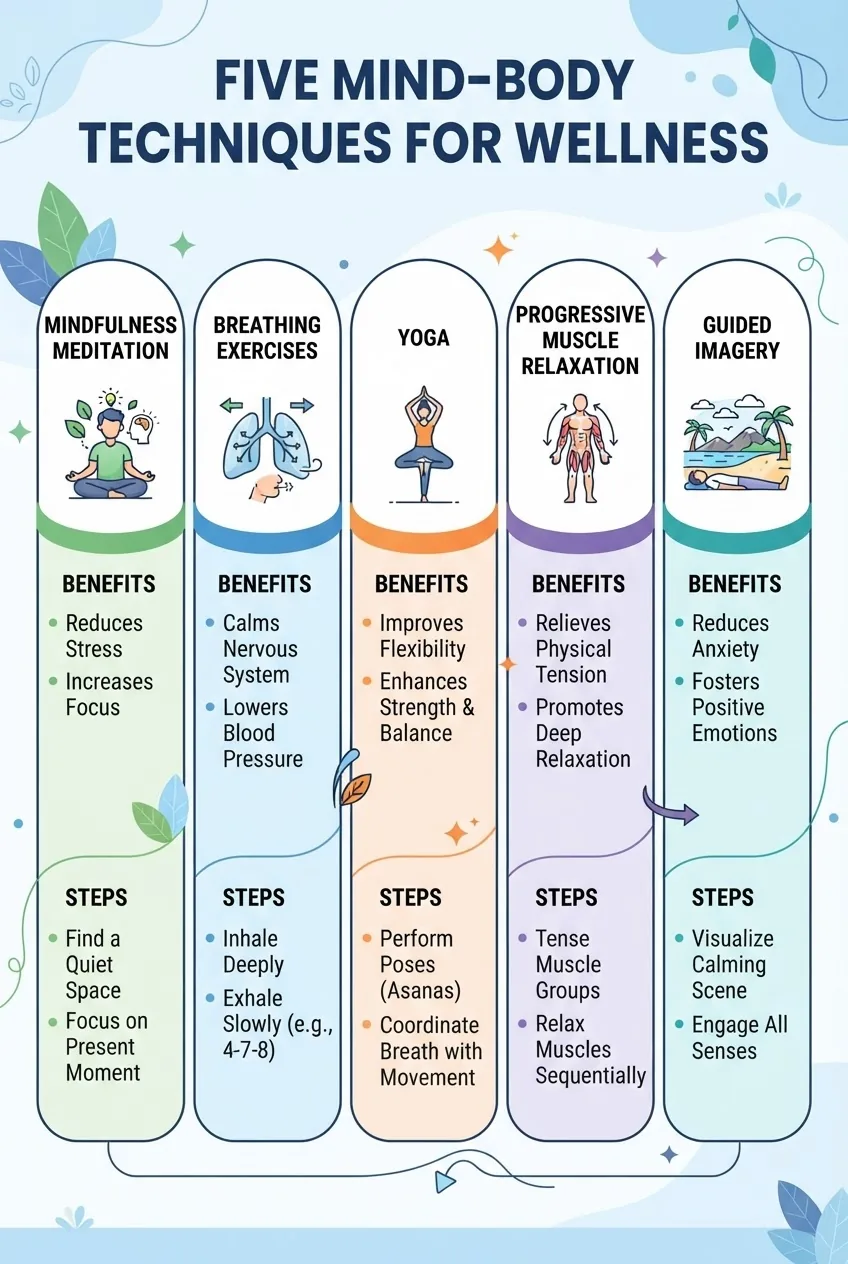
How-to list (practical, stepwise; aim to practice daily or several times weekly):
-
Mindfulness meditation — 10–20 minutes daily.
- Step 1: Sit comfortably, focus on breath for 2–3 minutes to anchor attention.
- Step 2: Notice thoughts without judgement, gently return to breath.
- Benefit: strengthens prefrontal regulation and reduces rumination; start with guided sessions from evidence-based sources.
-
Controlled breathing — 4–10 minutes, 1–3 times daily.
- Step 1: Use a 4-6 second inhale, 6-8 second exhale (longer exhale stimulates parasympathetic tone).
- Step 2: Practice diaphragmatic breathing lying or seated with hand on abdomen.
- Benefit: rapidly shifts autonomic balance and reduces acute physiological arousal.
-
Yoga / movement-based body awareness — 20–60 minutes, 2–4 times weekly.
- Step 1: Focus on alignment, breath-synchronized movement and interoceptive attention.
- Step 2: Include gentle restorative poses and mindful transitions.
- Benefit: reduces sympathetic overdrive, improves flexibility and lowers inflammatory markers when practiced consistently.
-
Progressive muscle relaxation (PMR) — 10–20 minutes.
- Step 1: Sequentially tense (5–7s) then relax muscle groups from feet to face.
- Step 2: Note contrast between tension and relaxation to cultivate body awareness.
- Benefit: reduces muscle tension and anxiety-driven somatic symptoms.
-
Guided imagery and behavioural interventions — 5–20 minutes daily.
- Step 1: Use a recorded script or clinician to imagine calming, detailed scenes or successful coping.
- Step 2: Combine with breath work and goal-setting for sustained change.
- Benefit: engages top-down regulatory pathways and reinforces adaptive behaviour patterns.
Additional supports and training: for coaching or structured programmes see mental health coaching training and consult emotional health examples and tips for applied routines.
mental health coaching training
emotional health examples and tips
Safety and suitability: most techniques are low-risk, but people with significant psychiatric or medical conditions should use them alongside clinical care; see professional training resources and consult clinicians as needed.
emotional wellness resources
mental health tips
mind-body medicine benefits
active lifestyle benefits
Transition: The next section addresses common misunderstandings about what the mind can and cannot do for the body.
Common Misconceptions about the Mind and Body Connection
Answer: Common myths—such as mind-over-body cures or that psychosomatic means “imaginary”—misrepresent evidence; the reality is nuanced: mental states influence biology but within physiological limits and individual variability.
Key clarifications are listed in the myth vs fact table below to correct common misperceptions about placebo, psychosomatic conditions and dualism.
| Myth | Fact |
|---|---|
| If you think positively you can cure any illness. | Positive mindset aids recovery and coping but cannot replace medical treatment for structural disease; it complements clinical care. |
| Psychosomatic means symptoms are ‘all in the head’. | Psychosomatic symptoms are real physical experiences driven or amplified by brain-body interactions and deserve clinical attention. |
| Placebo effects are unimportant. | Placebo mechanisms reveal powerful mind-driven biology (endogenous opioids, expectancies) and inform therapeutic design. |
| Mind-body approaches are unscientific or purely spiritual. | Many mind-body practices have been validated in randomized trials to affect physiology; spiritual approaches are distinct and optional. |
Practical takeaway: use mind-body strategies as evidence-based adjuncts, recognise limits, and seek medical care for symptoms that suggest organic disease.
Transition: Emerging research refines mechanisms and points to personalized interventions—covered next.
Emerging Research and Future Directions
Answer: Current research focuses on neuroplasticity, epigenetic regulation, individualized integrative medicine and biomarkers to personalise mind-body interventions and measure biological response.
Neuroplasticity: the brain’s capacity to reorganise synaptic connections in response to experience, learning and interventions.
Highlights from recent science:
- Neuroplastic training studies show targeted meditation and cognitive training can strengthen prefrontal control networks and lower amygdala reactivity (source: 2021 peer-reviewed neuroimaging studies).
- Epigenetics research indicates stress and caregiving environments modify gene expression patterns (DNA methylation) tied to immune and metabolic pathways (source: 2022 peer-reviewed epigenetics research).
- Biomarker-driven trials are testing whether inflammatory or autonomic signatures predict who benefits most from particular mind-body therapies (source: recent clinical trials registered at NIH).
Authoritative sources and how they guide practice:
- Public health framing: According to a 2023 WHO report, integrating mental health into chronic disease prevention is a priority (source: WHO public health report). WHO mental health fact sheet
- Translational research: NIH-funded studies are advancing psychoneuroimmunology methods to measure psychological interventions’ immune effects; see NIH review on psychoneuroimmunology (source: NIH peer-reviewed review).
- Neuroscience mechanisms: recent reviews in Nature Reviews identify circuit-level changes after training that underlie improved physiological regulation; see Nature Reviews Neuroscience article (source: peer-reviewed review).
Limits and transparency: many studies use small samples or intermediate biomarkers; according to a 2022 systematic review, effect sizes vary and individual response heterogeneity is common (source: peer-reviewed systematic review). Ongoing larger-scale trials and biomarker validation are necessary to personalise prescriptions.
Transition: The final section summarises practical takeaways and next steps for readers.
Summary and Key Takeaways
Answer: Mind-body synergy matters: measurable brain-body pathways explain how mental states alter physical health; evidence-based practices can shift physiology and improve outcomes when used alongside medical care.
- Mind and body are interlinked via nervous, endocrine and immune pathways.
- Chronic negative mental states increase risk for cardiometabolic disease and persistent somatic symptoms; positive changes lower inflammation and improve recovery.
- Practical techniques—mindfulness, breathing, yoga, PMR, guided imagery—are low-risk, evidence-based ways to influence physiology.
- Research is advancing through neuroplasticity, epigenetics and biomarker studies but individual responses vary; consult clinicians for serious symptoms.
- To learn more on integrated care and symptom management, see the physiological effects of poor mental health pillar and the practical resources linked throughout this guide.
- For a broader holistic approach, consult the holistic wellness guide.
Conclusion and call to action: Apply one practical technique consistently for several weeks, monitor objective and subjective changes, and discuss persistent or severe symptoms with a healthcare professional. For structured programmes, explore certification and coaching resources linked above to deepen practice and safety.