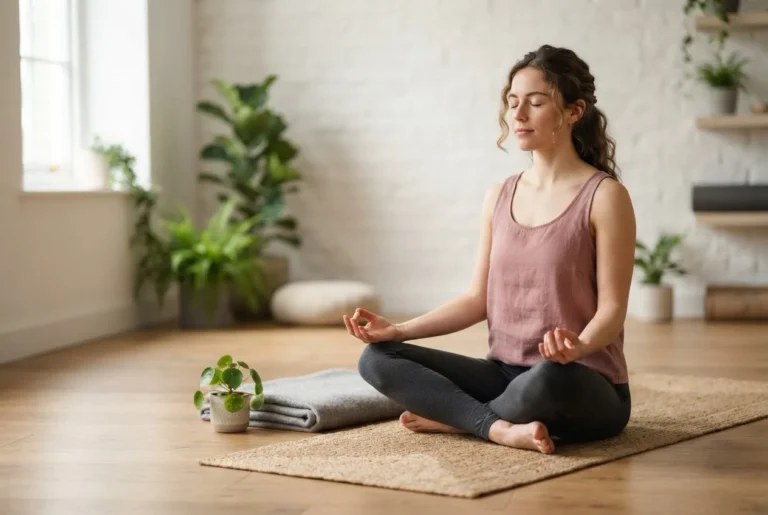
By the end of this guide you will be able to perform a range of practical, evidence-informed mindfulness techniques, build a short daily routine (5–20 minutes) and choose practices suited to anxiety, concentration or sleep. Estimated time to follow: 60–90 minutes to read and practice selected exercises; skill level: beginner to intermediate.
This hands-on guide begins with clear definitions, moves into the scientific benefits, and then walks you through step-by-step techniques you can use immediately. Read the “Before you start” checklist and follow the numbered practice steps to make progress steadily.
Before you start
- Quiet space or corner where you can sit uninterrupted for 5–20 minutes
- A cushion or chair and a timer (phone or kitchen timer) set to 3, 5, 10 or 20 minutes
- Notebook and pen for brief practice notes (30–60 seconds post-session)
- Comfortable clothing; a glass of water nearby
- An open mind and one practical intention (e.g., “reduce evening worry”)
What Is Mindfulness? Defining Mindfulness and Its Core Principles

Mindfulness is paying attention on purpose, in the present moment, and without judging what arises. To define mindful more concretely: it means noticing sensations, thoughts and emotions as they occur — like watching traffic pass rather than driving the car. This quiet, steady noticing is the core skill that differentiates mindfulness from simply relaxing.
What does practicing mindfulness mean in everyday terms? It means training attention so you can:
- Spot stress signals early (tight shoulders, short breath)
- Pause before reacting to difficult emotions
- Return focus to a chosen anchor (breath, body, sound)
Core principles: present-moment attention, nonjudgmental awareness, intention, and curiosity. For example, if you feel anxious about an upcoming meeting, a mindful response is: notice the racing thoughts, label the sensation (“tight chest”), breathe twice, then decide the next action. That sequence—notice, name, breathe, respond—is a simple template you can use in 30–60 seconds.
Mindfulness is not emptying the mind. It is learning to notice mental events (thoughts, images, memories) as transient and not necessarily truths. When people ask “what does mindfulness do,” the short answer is: it increases your ability to observe internal experience and choose responses rather than habitually reacting.
Practical examples:
- Mindful pause: before answering an email, breathe for three counted breaths and scan your posture for tension.
- Mindful eating: take three small mouthfuls with eyes closed, noting texture and taste.
- Mindful commute: notice footfall and breath for five minutes while walking to the car or bus stop.
Mindfulness can be practiced formally (sitting meditation) and informally (brief awareness during daily tasks). Both strengthen the same attention muscles. Over weeks, the practice changes how the mind habitually reacts to stress—this is the practical pathway to better mental wellbeing.
Transitioning to the research: now that the practice is defined, the next section summarises what science shows about its benefits and limits.
The Science and Benefits of Mindfulness Practice

Research over the past two decades has documented robust benefits from structured mindfulness programs and informal practice. Studies show improvements in stress, attention, emotional regulation and sleep when practice is consistent and supported.
Stress reduction: Mindfulness-based interventions such as Mindfulness-Based Stress Reduction (MBSR) consistently reduce perceived stress scores in clinical and non-clinical samples. For example, a major systematic review and meta-analysis found moderate reductions in stress and mood symptoms after 8-week programs (peer-reviewed meta-analysis, 2014). JAMA Internal Medicine review (2014).
Attention and cognitive control: training attention through breath counting and focused awareness increases sustained attention and reduces mind-wandering. Neuroimaging research links regular practice to reduced activity in the Default Mode Network (DMN), which is associated with ruminative thinking (peer-reviewed neuroscience studies, 2011–2018). For a concise overview of clinical applications, see American Psychological Association (APA).
Anxiety and depression: randomized controlled trials show mindfulness-based cognitive therapy (MBCT) reduces relapse risk in recurrent depression and decreases anxiety symptoms in clinical samples. A 2016 meta-analysis reported small-to-moderate effects for anxiety and depression when mindfulness was delivered as an 8-week program (peer-reviewed meta-analysis, 2016).
Sleep and physiological recovery: brief mindful breathing practices before bed reduce sleep onset latency for some people. A community study reported improved subjective sleep quality after 6 weeks of nightly mindfulness practice (community trial, 2019).
Mechanisms: mindfulness appears to support neuroplastic changes in brain regions tied to attention (anterior cingulate cortex), emotion regulation (prefrontal cortex) and interoception (insula). Clinically, we describe two linked psychological processes: increased meta-awareness (noticing thoughts) and decentering (seeing thoughts as events, not facts).
Limitations and effect sizes: effects vary by program intensity, participant baseline symptoms and adherence. According to a 2024 industry report on wellness program outcomes, short ad hoc practice (<5 minutes/day) gives small immediate relief, while structured practice (20–45 minutes/day, multi-week) yields more durable gains (industry report, 2024).
Practical takeaway: mindfulness supports stress reduction, improved focus, better emotional regulation and sleep when practiced regularly. For authoritative public health summaries and practice guidelines, consult the NIH site for mental health resources: National Institutes of Health (NIH).
For an accessible guide to the broader advantages of meditation and how it complements mindfulness practice, review this internal resource on the benefits of meditation.
Transition: with the research and practical benefits established, the next section gives concrete practice instructions for the most useful mindfulness techniques.
Popular Mindfulness Techniques: Step-by-Step How to Practice
The following steps are written as a practical sequence. Each numbered step is a technique you can practice right away. Times listed are exact: start with short durations and build up.
-
1. Practice a Neutral Breath Anchor — 5–10 minutes
Why: Breath anchors train sustained attention and reduce reactivity.
How-to (step-by-step):
- Sit comfortably on a chair or cushion with a neutral spine; set a timer for 5 minutes.
- Gently close your eyes or soften your gaze. Take two slow full breaths to settle (inhale 4 counts, exhale 6 counts).
- Bring attention to the physical sensations of the breath at the nostrils or abdomen. Choose one anchor and keep it consistent.
- When the mind wanders, label “thinking” or “planning” silently, then return to the breath. Count the return as part of the practice, not a failure.
- Finish with three deeper breaths and note one word to summarise the session (e.g., “steady”).
Notes: Aim for daily practice. Start with 5 minutes/day for 2 weeks, then add 2 minutes each week up to 20 minutes.

-
2. Body Scan Meditation — 10–20 minutes
Why: Body scan increases interoceptive awareness and helps release chronic tension.
How-to:
- Lie on your back or sit comfortably. Set a timer for 12–20 minutes.
- Start at the toes: breathe in, notice sensations; breathe out, release. Progress slowly up the body—feet, calves, knees, thighs, pelvis, abdomen, chest, hands, arms, shoulders, neck, face.
- If you encounter pain or numbness, shorten attention to 3–4 breaths and then move on—do not try to “fix” sensations.
- Finish by widening awareness to the whole body for three breaths and slowly open eyes.
Practice frequency: 3–5 times weekly for ten weeks to notice measurable changes in body awareness.
Variations: use progressive muscle relaxation by tensing and releasing each muscle group for 5–7 seconds before releasing.
-
3. Open Awareness / Noting Practice — 5–15 minutes
Why: Improves meta-awareness and reduces rumination by learning to note thoughts nonjudgmentally.
How-to:
- Sit with eyes closed. Set a 10-minute timer. Allow awareness to be open to sounds, sensations, thoughts.
- When a thought arises, label it briefly: “thinking,” “planning,” “worry.” Do not elaborate—label and let it pass.
- Return to open monitoring. If emotions rise, label “anger,” “sadness,” or “anxiety.” Practice tolerance for 3–5 breaths.
Notes: This exercise is especially helpful if you notice repetitive thought loops or rumination. Short daily practice (5–10 minutes) builds skill quickly.
-
4. Mindful Walking — 5–20 minutes
Why: Integrates mindful awareness into movement and is ideal for restlessness.
How-to:
- Choose a 5–20 metre clear path or walk slowly outdoors. Set a timer if desired for 10 minutes.
- Walk at a pace that allows you to feel each step. Notice heel-to-toe motion, weight shifts and breath rhythm.
- Coordinate breathing with steps if helpful: inhale for 3–4 steps, exhale for 3–4 steps.
- If the mind drifts, bring attention back to foot sensations or breathing.
Practice tip: Use mindful walking when you feel agitated—3–5 minutes often reduces physiological arousal.
-
5. Mindful Eating — 5–10 minutes
Why: Trains sensory focus and interrupts autopilot eating patterns that can fuel stress and poor sleep.
How-to:
- Choose one small portion (e.g., a grape, a square of dark chocolate). Sit down without distractions.
- Observe the item: colour, texture, smell. Take one small bite and hold it in your mouth for three slow breaths, noticing taste and movement.
- Swallow and wait 10–20 seconds before the next bite. Aim for 5–10 mindful chews per mouthful.
Notes: Practice one mindful meal or snack daily to build the habit; this helps reduce automatic stress-eating.
-
6. Focused Compassion Break — 3–5 minutes
Why: Quickly reduces self-criticism and increases emotional regulation in moments of distress.
How-to:
- Stop and place one hand over the heart. Take three slow breaths (inhale 4, exhale 6).
- Silently say: “This is a moment of suffering. Suffering is part of life. May I be kind to myself.”
- Repeat for 3–5 rounds of breath; note any easing in intensity.
Use when overwhelmed or after a difficult interaction. This stabilises emotion within 60–120 seconds for many people.
-
7. Breath Counting for Focus — 3–10 minutes
Why: Breath counting is a core attention training useful for improving concentration at work or study.
How-to:
- Sit upright. Inhale and on the next exhale silently count “one.” Continue counting exhalations up to five, then restart at one.
- If you lose the count, note “lost” and start again at one; avoid self-criticism.
- Set a timer for 5 minutes; count at a steady pace aligned with natural breathing.
-
8. Guided Imagery Grounding — 7–15 minutes
Why: Useful when anxiety spikes; guided imagery shifts attention toward calming sensory details.
How-to:
- Choose a quiet place. Set a timer for 8 minutes. Use an audio guide or self-guide: imagine a safe place with clear sensory detail (sounds, textures, colours).
- Engage each sense for 60–90 seconds, noticing smell, touch and ambient sounds. Anchor with 2–3 slow breaths between senses.
- Finish by opening eyes and naming three things you can see in the room.
Guided scripts help beginners; for more scripted options see internal guides to guided meditations and scripts.
Practice sequencing: Weeks 1–2 focus on Breath Anchor and 2-minute daily check-ins; Weeks 3–6 add Body Scan and Mindful Walking; Weeks 7+ cycle practices and increase formal practice to 20 minutes 4–6 times weekly for more durable gains.
Tips for Making Mindfulness a Daily Habit and Overcoming Common Challenges
Building a daily practice requires systems and realistic expectations. Below are clear, practical tips and common troubleshooting used by practitioners.
- Start small and schedule it: commit to 3 minutes daily for 14 days; use a phone alarm or a visual cue like a cushion kept visible.
- Anchor to an existing habit: practice after brushing teeth or after your morning coffee for at least 7 consecutive days to create pairing.
- Track sessions: record time practiced and one-line notes—evidence of progress increases adherence.
- Use micro-practices: two 2–3 minute blocks (morning/evening) are more sustainable than a single long session for many people.
- Adjust expectations: consider improvements in sleep, reactivity or focus as the success metrics, not silence of the mind.
- Buddy up: practice with a friend once weekly to maintain accountability.
- Handle distractions: when distracted, use the “label and return” method—label the distraction and bring attention back without judgment.
- Use support tools: apps, short scripts, or classes help maintain structure during the first 8 weeks.
Common troubleshooting (brief):
- If you skip days, resume without judgment—do two short sessions the next day rather than trying to “catch up.”
- If boredom arises, vary techniques (breath, body, walking) to refresh attention networks.
- If practice increases anxiety initially, shorten sessions to 90 seconds and prioritize grounding techniques (hand-on-heart, 5-senses grounding).
practical mindfulness practice tips
Transition: the next section explains how these practices support mental health and emotional wellbeing with scenarios and resources.
Mindfulness for Mental Health and Emotional Wellbeing
Mindfulness is widely used as an adjunct to therapy and self-care for anxiety, depression and stress. Below are practical examples and guidance on when to rely on mindfulness and when to seek additional support.
Example scenario 1 — Generalised anxiety: A client I worked with used a 3-minute breath counting practice at the first sign of morning worry. Within two weeks they reported fewer catastrophic thoughts before 10am and an ability to complete morning tasks. This reflects common outcomes seen in clinical trials where brief morning practices reduce anticipatory anxiety.
Example scenario 2 — Depression relapse prevention: In group sessions for recurrent depression, we taught Mindfulness-Based Cognitive Therapy (MBCT) sequences (body scan plus cognitive exercises). After eight weeks many participants identified early signs of depressive thinking and used 10-minute morning practices to shift away from rumination—supporting evidence that MBCT reduces relapse risk in recurrent depression (peer-reviewed clinical trials).
Complementary tools: Mindfulness combines well with movement and therapy. For an integrated approach, consider pairing mindfulness with yoga sequences or a structured yoga challenge. 30 Day Yoga Challenge for stress reduction
When anxiety is severe or persistent, use mindfulness as part of a stepped-care plan: self-practice, structured group program, therapy, and medication if needed. For more details on clinical tools beyond mindfulness, review resources on advanced interventions. advanced stress relief tools
Medication context: mindfulness is not a substitute for clinically indicated medication when recommended. If medication is under consideration, consult reliable prescribing information. anti-anxiety medication information
Yoga and therapy integration: mindfulness skills amplify outcomes from cognitive behavioural therapy and yoga. For specifics on how yoga helps anxiety, see this internal resource. how yoga helps anxiety
If you are exploring professional help, consider therapy options that combine mindfulness elements. therapy options for anxiety
Transition: after applying practices and integrating with care, it’s useful to clear up persistent myths about mindfulness before deepening practice.
Myths and Misconceptions About Mindfulness
| Myth | Fact |
|---|---|
| Mindfulness means emptying the mind | Mindfulness means noticing thoughts without getting caught up in them—awareness, not blankness. |
| You must sit for 60 minutes to benefit | Short daily practices (3–20 minutes) provide measurable benefits, with longer practice enhancing results. |
| Mindfulness is only spiritual or religious | Modern mindfulness is secular and evidence-based; many clinical programs adapt techniques for healthcare settings. |
| Mindfulness cures mental illness | Mindfulness aids symptoms and resilience but is not a standalone cure; combine with therapy or medication when needed. |
| You must stop all thoughts to do it right | Thoughts are normal; the practice is to notice them and return to an anchor without judgment. |
Resources to Deepen Mindfulness Practice and Further Learning
Below are curated resources—apps, books, courses and internal guides—that I recommend to expand practice safely and effectively.
- Authoritative summaries: American Psychological Association mindfulness resources — research summaries and practice guidance.
- Government health overview: NIH (National Institutes of Health) — for public health statements and mental health information.
- Peer-reviewed evidence: classic meta-analyses and clinical trials are accessible via PubMed and JAMA (see Science section link).
- Apps: choose apps that emphasise short daily practices and tracking. Start with apps offering 3–10 minute guided sessions and progress to unguided timers.
- Books: “Mindfulness-Based Cognitive Therapy” (adapted manuals), and accessible practice books that include body scans and breath anchors.
- Internal course and practice links: Browse our guided meditation templates and audio scripts for structured practice: guided meditation classes, guided meditation scripts.
- Specialised topics: sleep-focused mindfulness, mindfulness for kids, and workplace mindful activities are available in our resource library.
Transition to practical wrap-up: use the checklist below to verify your practice setup and know when to ask for professional help.
Hands-On Practice Summary: Steps, Mistakes, Checklist and When to Call a Professional
- Set up — choose daily time, cushion/chair, timer (3–20 minutes), notebook. Start with 3–5 minutes daily for 14 days.
- Practice sequencing — weeks 1–2: breath anchor; weeks 3–6: add body scan and mindful walking; weeks 7+: alternate techniques and increase one session to 20 minutes if comfortable.
- Record — write session length and a single-line observation after each formal practice (e.g., “less jaw tension today”).
- Review — after 6–8 weeks, evaluate changes in sleep, reactivity and focus; adjust the plan (increase practice or seek structured programs).
Common mistakes and how to avoid them (from practitioner experience)
I often see learners rush into 30-minute sits and burn out. I advise starting at 3–5 minutes. I’ve also noticed people interpret a wandering mind as failure; I tell them to label and return—this is the practice itself. Another common error: practicing only when stressed. Consistency beats crisis-only practice; schedule small regular sessions instead.
Compact checklist
- Timer set and practiced at least 14 consecutive days
- Recorded session notes at least 10 entries
- Experienced at least one early benefit (improved focus, calmer breathing, small reduction in sleep latency)
- Have a backup plan (short micro-practices, guided audio) for missed days
When to call in a professional
If you experience worsening panic attacks, intrusive trauma memories, suicidal thinking, or prolonged dissociation during practice, stop the exercise and seek immediate professional support. Use mindfulness as a complementary tool alongside evidence-based therapy. For referrals and therapy options, consult our guide on therapy options for anxiety or contact a licensed mental health professional.
Final practical note: If you want short scripts to start anywhere, try our 2-minute guided meditation and 3-minute meditation technique options before committing to longer sessions.
Closing: apply these steps progressively, track outcomes, and adapt practice to your needs. Mindfulness is a skill built by small, consistent actions.