Self care activities for groups — by the end you’ll have a practical plan, three ready-to-run group sessions and a facilitator checklist; expect to invest 60–180 minutes to plan and a 30–90 minute session to run. Skill level: beginner to intermediate facilitator (no clinical qualification required).
- Quiet room or outdoor space for 6–12 people (or adaptable to 3–20)
- Basic materials: notebooks (one per person), pens, a timer, a Bluetooth speaker or quiet space for guided audio
- Optional: simple art supplies (watercolour pads, pencils), yoga mats (one per person), a talking object for sharing circles
- Consent form or group agreement template (for groups with mixed mental health needs)
Introduction to Self Care Activities for Groups
This hands-on guide focuses on building shared routines that increase group well-being, strengthen social connection and offer practical, repeatable self care experiences. You’ll get categorized activities, facilitation prompts, and inclusivity checkpoints so groups leave connected, rested and able to repeat sessions themselves. For broader foundational techniques, see
effective self care activities and techniques.
Group self care differs from solo self care because it layers interpersonal safety, shared pacing and co-regulation on top of individual practices. Collective mindfulness and group rituals create a feedback loop where one person’s calm can cascade; think of it like community gardening, where each person’s care helps the whole plot flourish. This guide covers group mindfulness exercises, collaborative relaxation techniques, group journaling activities, and creative offers that work especially well with multiple people.
You’ll also find facilitation roles and checklists — from a 5-minute breathing opener to a 60-minute mixed session combining movement, creative reflection and an emotional support circle. Real-life example: a local community group ran a monthly 75-minute session (breathwork, paired expressive drawing, and a gratitude round); attendance rose 40% after members reported better connection and lower stress (paraphrased facilitator testimonial).
Benefits of Practicing Self Care in Groups
Group-based self care amplifies social support and neurobiological benefits that solo practices often miss. Below are clear, evidence-informed benefits and quick highlights to reference when proposing activities to a group or funder.
- Social bonding and mutual encouragement: Shared rituals—like group breathwork or a gratitude round—create predictable frames for connection and mutual accountability.
- Increased emotional resilience: Emotional support circles give members a safe space to verbalise stress and receive validation, which builds coping skills over time.
- Reduced stress biomarkers: Group calming techniques (synchronized breathing, guided meditation) lower cortisol and increase parasympathetic tone; according to a 2022 peer-reviewed review, group mindfulness practices show consistent stress-reduction effects (peer-reviewed journal).
- Behavioral activation: Group activities promote repeated healthy action—walking together, shared journaling—that support lasting habit change. See wellness and health improvement tips for measurable outcomes and tracking ideas.
- Access to social neurochemistry: Positive group interactions increase oxytocin release and feelings of safety; this helps with trust and later vulnerability in sharing circles.
- Cost-effectiveness: Running group sessions scales wellbeing supports to more people with fewer resources than individual therapy while fostering peer-led sustainability; proven self care strategies often combine low cost with high engagement—see proven self care strategies.
How to Plan Effective Self Care Activities for Groups
Plan with clarity: decide who the group is for, what outcomes you prioritize (stress relief, bonding, creative expression), and how you’ll measure success (attendance, self-report, quick mood scales). Use the numbered steps below for a repeatable planning workflow.
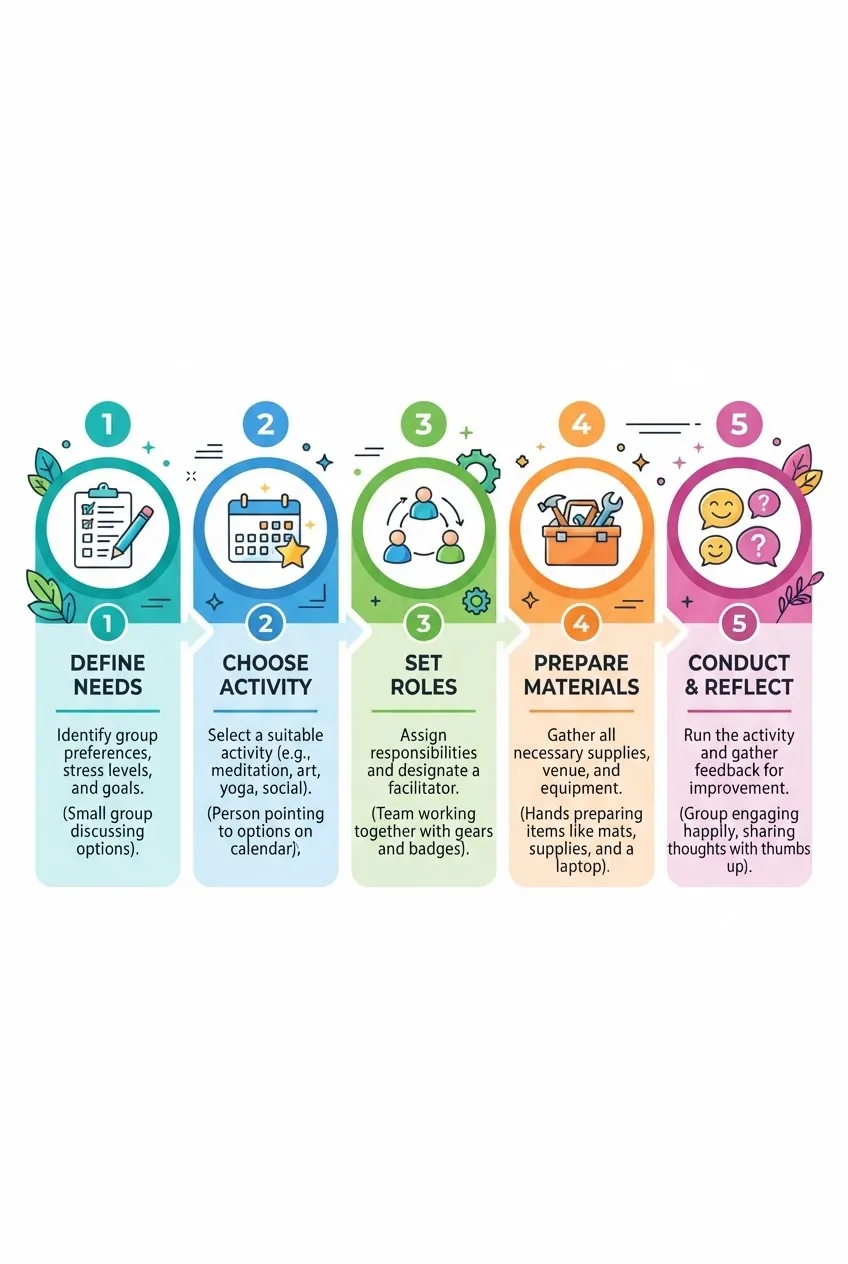
- Define group purpose and goals (15–30 minutes): Write 1–3 measurable goals—e.g., “reduce average group stress by self-report 1 point on a 5-point scale after three sessions” or “increase attendance to 10 regular members in eight weeks.” Use simple pre/post 1–5 mood scales for measurement.
- Assess group composition and accessibility (15–30 minutes): Note age range, mobility constraints, languages, cultural needs and any known mental health concerns. Include safety checks: are there members with trauma or severe anxiety? Offer opt-outs and alternate roles (observer, scriber). For facilitators needing individual supports, consult trusted self help resources.
- Choose activity types and a session template (30–60 minutes): Decide indoor vs outdoor, quiet vs active, and a standard session length (recommended 45–75 minutes). Mix a 5–10 minute grounding opener, a 20–30 minute core activity (movement, meditation or creative task), and a 10–20 minute closing reflection. Consider the balance of mindfulness, creative and physical practices.
- Assign facilitator roles and backup supports (15 minutes): Primary facilitator (guides flow), co-facilitator (manages logistics and check-ins), timekeeper, and a safety lead (first point for escalation). If running with volunteers, rotate roles every session to build ownership. Link to practical references for facilitator skills and practical self care tips participants can use independently.
- Prepare materials and the environment (30–60 minutes): Check seating for comfort (chairs or cushions), lighting (dim for meditation), and sound (speaker volume at 60–70% typical for a 10-person room). Prepare printed prompts or slides and have a quiet corner for participants who need a break.
- Run a short pilot session (45–75 minutes): Test with a small subgroup; collect rapid feedback via a single-sheet form (3 questions: What helped? What hindered? Would you return?). Iterate session flow based on that feedback.
- Set a reflection and follow-up system (15 minutes per session): After each session, send a one-question pulse (SMS or email) asking for one-word mood and one suggestion. Log attendance and use a single spreadsheet column for notes on triggers or accessibility adjustments.
- Plan long-term cadence and rituals (20–30 minutes): Decide frequency: weekly for high support (recommended for groups with mental health concerns), biweekly for community groups, monthly for larger networks. Build one repeatable ritual (breath countdown, shared song) so members recognise the practice and feel continuity; for self care goal setting, see self care goal setting.
- Document safety protocols and referrals (20–40 minutes): Have a clear escalation path for participants showing severe distress. Include local mental health hotlines and an internal agreement about confidentiality. Offer a resource pack or list of trusted self help resources for further support.
- Evaluate and iterate (10–20 minutes per review): Every 4–6 sessions, review goals vs outcomes (attendance, pulse surveys) and adapt content. Use simple success thresholds: 70% attendance retention, average mood improvement of 0.5–1.0 points on your scale, or qualitative reports of increased connection.
Common mistakes and how to avoid them (practitioner notes)
I once scheduled a 90-minute mixed session without breaks; participants checked out at 50 minutes. I now always include a 5–10 minute break after 30 minutes for movement or hydration. I also used an open sharing prompt too early; now I start with simple grounding and an opt-in for emotional sharing.
Checklist before you run a group session
- Pre-notified agenda and start/end times sent 48 hours prior.
- Materials prepared: one notebook and pen per person, name tags if helpful.
- Roles assigned: primary facilitator, co-facilitator, timekeeper.
- Accessibility: seating and audio tested; quiet corner set.
- Emergency plan and referrals printed.
- Consent or group agreement signed for groups with mixed vulnerabilities.
When to call in a professional
If participants disclose active suicidal ideation, severe self-harm, psychosis, or violent intent, pause the group and follow an escalation process: contact crisis services or a licensed mental health professional. For clinical groups, retain a licensed facilitator and follow recognised clinical guidelines.
Engaging Self Care Group Ideas Categorized by Type
Below are actionable, facilitator-ready activities grouped by purpose, setting and group size. Each idea includes timing, materials, facilitator prompts and adaptations for small (3–6), medium (7–12) and large (13–20+) groups.
Mindfulness and Meditation Activities for Groups
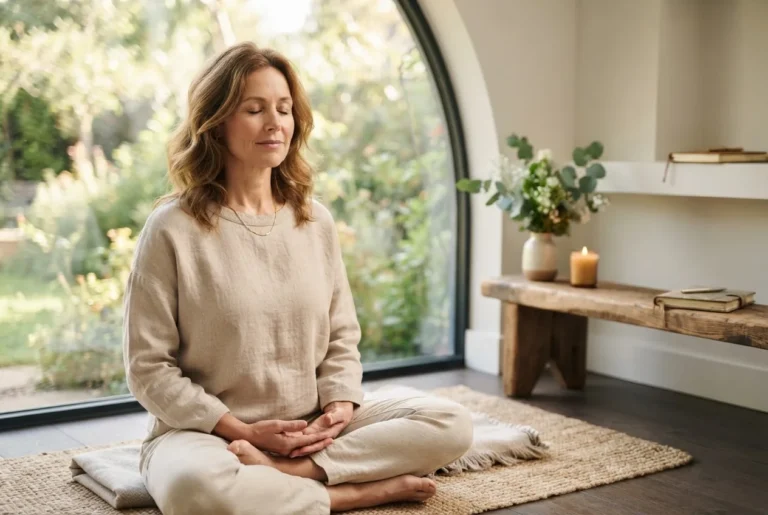
- Synchronized breathing (5–10 minutes): Everyone sits in a circle. Facilitator: “Breathe in for 4, hold 1, out for 6.” Use a soft bell or chime. Benefits: immediate co-regulation and lowered heart rate. Adaptation: for large groups, broadcast the count over a speaker. No equipment required.
- Guided group meditation (10–20 minutes): Use a recorded MBSR-style script or live guidance with a calm voice. Suggested length: 12 minutes for beginners. Facilitation tip: ask participants to label urges (“thinking”, “sensing”) and return to breath. For methodology reference, consider programs informed by Mindfulness-Based Stress Reduction; see Mindfulness-Based Stress Reduction resources.
- Walking meditation (15–25 minutes): Outdoors or through a long corridor. Guide participants to focus on feet, pace, and sensation. Works well for groups with low tolerance for sitting still.
- Group body-scan (15 minutes): Progressive attention through the body. Use dim lighting and encourage comfortable lying or sitting positions.
- Breathing ladder (3–5 minutes, energising): Quick rounds of 30-second breathing patterns to reset before a meeting or after a break.
Creative and Artistic Self Care Group Ideas
- Shared journaling pairs (20–30 minutes): Prompt: “Describe one small thing today that felt nourishing.” Pair up for 7 minutes each to read and reflect. Materials: one notebook per person. Benefit: practicing listening and noticing.
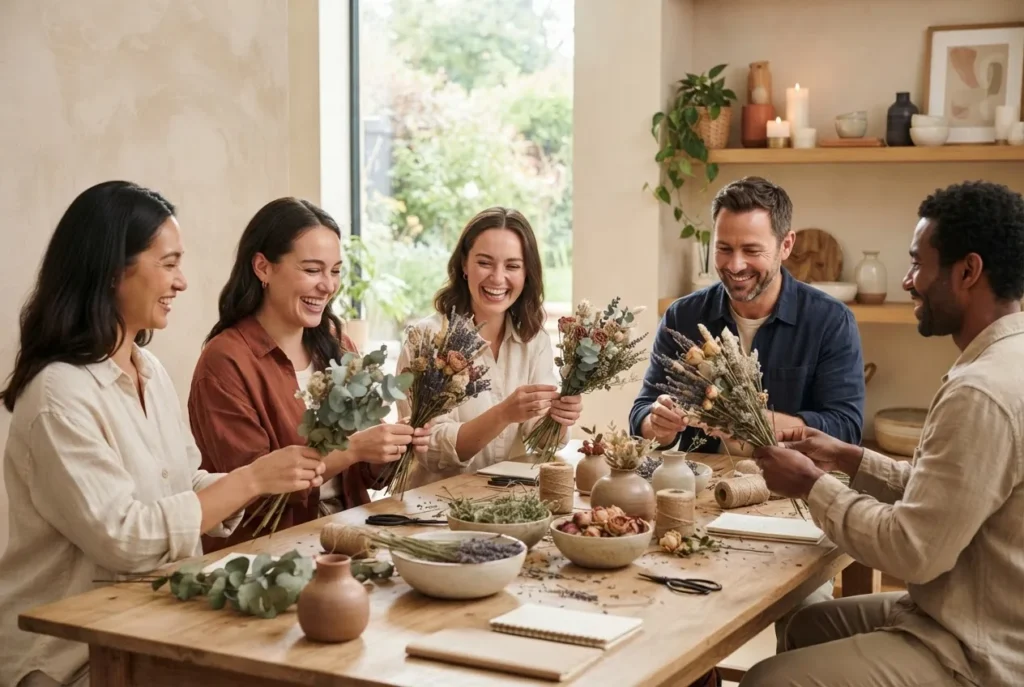
- Collaborative mural (45–75 minutes): Large paper, shared paints. Facilitator prompt: “Each person paints a symbol of a personal strength—then connect the symbols.” Great for team-building and visible group artifacts. Small group adaptation: each creates a postcard-sized tile then combine.
- Expressive drawing with prompts (20–40 minutes): Non-judgmental instruction: “Draw where stress sits in your body; use colour freely.” After, pair-share reflections if comfortable.
- Music and shared playlist creation (15–30 minutes): Each participant adds one song and explains why. Outcome: a communal soundtrack that supports mood regulation.
- Group poetry mash-up (30 minutes): Each member writes one short line, then assemble into a shared poem. Use as a closing ritual to build collective voice.
Physical and Movement-Based Group Activities
- Gentle group yoga (30–45 minutes): Focus on breath-linked movement. Use a certified instructor for groups with injuries. Consider one steady sequence and avoid complex transitions. Offer chair yoga options for limited mobility.
- Partnered relaxation drills (10–20 minutes): Simple hand-holding or mirrored breathing in pairs to foster calm connection and oxytocin release.
- Guided tai chi or Qigong (20–40 minutes): Slow-motion movement emphasising balance and breath; suitable for outdoor or indoor spaces.
- Cardio re-set walk (20–30 minutes): A brisk group walk around a block or park, led by a safety-aware walk leader. Count step goals (2,500–5,000 steps recommended for a 20–30 minute walk).
Outdoor and Nature-Focused Group Experiences
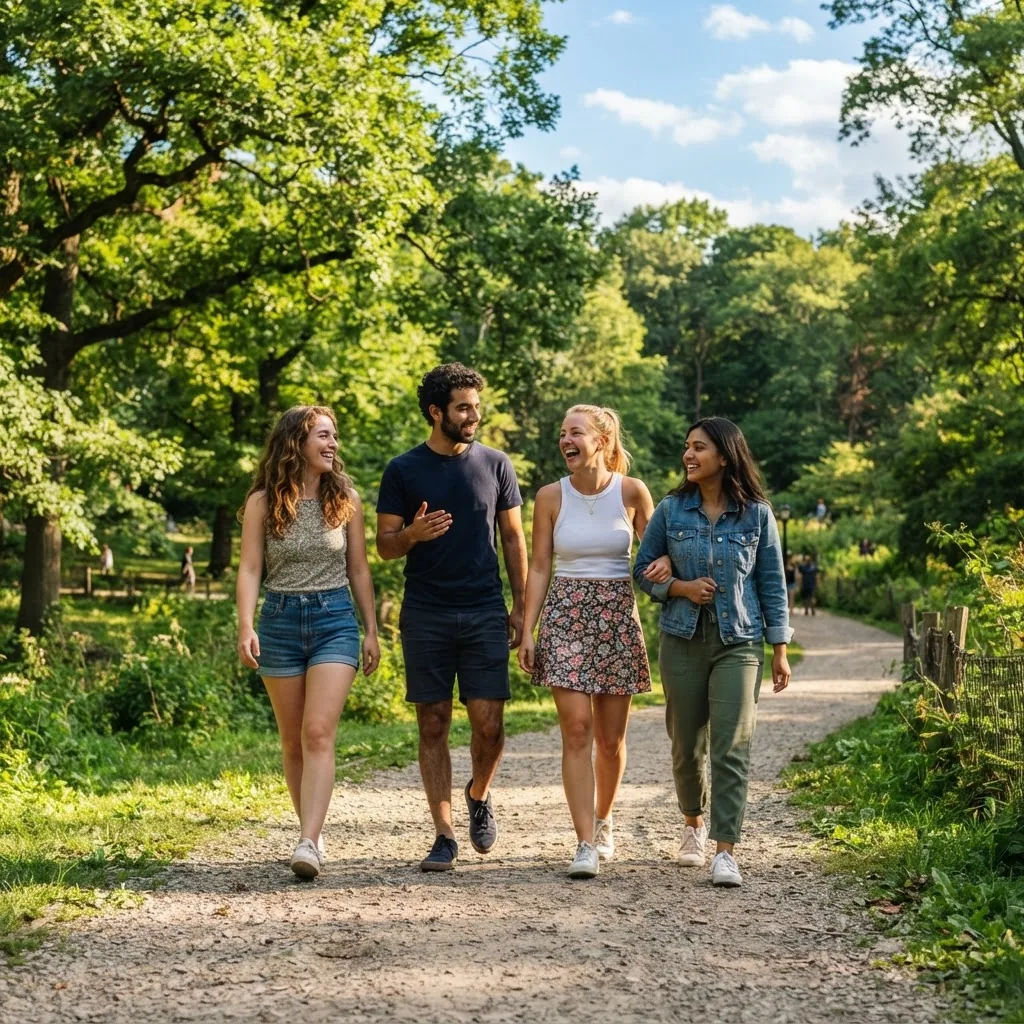
- Paced nature walks (30–60 minutes): Leader sets a comfortable pace; include 3 shallow stops for sensory check-ins (sight, sound, smell). Bring water and hats. Natural settings increase attention restoration.
- Forest bathing circle (30–45 minutes): Guided sensory immersion with silence and a closing share. Best in small groups (3–10) to maintain quiet.
- Community gardening session (60–120 minutes): Planting or weeding together builds tangibility and long-term collective care; assign roles and track tasks. Materials: gloves, tools, water.
- Outdoor creative session (45 minutes): Portable art kits for sketching trees or sky; finish with a sharing circle. Adapt for rain with covered pavilions.
Emotional Connection and Sharing Circles
- Check-in rounds (5–10 minutes): A simple prompt: “How are you on a scale from 1–5 and one word why?” Keep responses under 60 seconds. Use a talking object to manage time and safety.
- Guided emotional support circle (30–45 minutes): Structure: intention (2 min), check-ins (10–15 min), focused sharing with a timebox (10–20 min), gratitude close (5 min). Link gratitude practices for groups with deeper bonding—see
gratitude exercises for groups and
daily gratitude exercises. - Structured vulnerability pairs (20–30 minutes): Prompts that scale: Level 1 (light), Level 2 (meaningful), Level 3 (deep). Use clear opt-in and confidentiality agreement.
- Thankfulness sharing round (10–15 minutes): Each person names a small thing they’re thankful for; tie this to the longer resource on thankfulness activities for adults.
- Types of reflection cards (5–15 minutes): Pull a card with a prompt (e.g., “Who in your life helped you recently?”) and share in pairs or the full group. Use as a warm-close ritual. For framing where this fits into broader self care categories, see types of self care.
Note: For lighter, playful sessions and quick social bonding, you can adapt ideas from more gender-specific or playful collections; for more playful inspiration see fun group self care ideas, while ensuring inclusivity for your group.
Tips for Facilitating Meaningful Self Care Experiences in Groups
Facilitator skill matters more than perfect content. Apply these pragmatic tips to keep sessions safe, inclusive and effective.
- Create a safe space through clear agreements: Start each series with a short group agreement (confidentiality, non-judgment, time limits). Revisit at check-ins.
- Use active listening and reflective prompts: Model summarising what a speaker said before responding. This reduces misunderstandings and builds trust.
- Be trauma-aware: Offer opt-ins and low-stimulation alternatives. If unsure, consult clinicians and include referral pathways. For groups including people with depression or complex mental health needs, integrate guidance from a clinical resource on self care strategies for mental health challenges.
- Timebox sharing and use an object for turns: A visible timer set to 90 seconds per share keeps conversations balanced and equitable.
- Prioritise inclusivity: Offer materials in accessible fonts, provide captions for audio, and invite multilingual expression. Use sensory-friendly lighting and alternative seating.
- Encourage routine and micro-habits: Ask participants to perform a 3-minute practice daily and report back. For building these supports, reference daily self care habits and integrate them into session homework.
- Use simple measures for progress: Two quick metrics: attendance retention and a single-item mood before/after the session. Track these each session for trend spotting.
- Rotate leadership: Shared facilitation increases buy-in. Invite members to co-design a session once every 4–6 meetings.
- Balance containment and spontaneity: Rigid scripts can feel stifling; offer structure (open, core, close) but allow emergent sharing once safety is established.
- Encourage routine-building: Recommend integrating short rituals into daily life (one breath practice morning and evening). For templates, see self care routines.
Common Challenges and How to Overcome Them in Group Self Care
Below are frequent problems facilitators face and direct solutions you can implement in the next session.
| Problem | Solution |
|---|---|
| Low engagement or withdrawal | Use micro-tasks (1–2 minute activities), pair-sharing and choose energising openers. Offer observer roles and request optional low-effort tasks to re-engage. |
| Dominant participants monopolising talk | Use a visible timer, talking object and structured round-robin questions. Privately check-in with dominant members to invite them to hold space for others. |
| Conflict or heated discussion | Pause the session, use a grounding exercise (3-minute breath), then offer a mediated 1:1 or small group debrief. Revisit group agreements. |
| Scheduling conflicts and inconsistent attendance | Survey preferred times, rotate days, and keep each session to a predictable length (45–60 minutes). Consider a short weekly pulse to maintain connection between sessions. |
| Participant anxiety about joining | Offer a buddy system, pre-session orientation and a single simple role for first-timers (timekeeper, note-taker). Provide written scripts and expectations. |
If you need additional personal coping techniques to support participants, review supplementary trusted sources for individual approaches. For complementary individual methods, see trusted self care methods. For referral and resource lists, include trusted self help resources.
Conclusion and Encouragement to Try Group Self Care Activities
Group self care is a pragmatic way to build sustained wellbeing: it combines social support, measurable practices and low-cost rituals that scale. You now have a planning roadmap, a set of categorized activities for different settings and a facilitation checklist. Start small: run a 45-minute pilot using the session template in the How to Plan section, collect feedback and iterate.
Safety reminder: adapt activities to participants’ health and mental state. According to a 2023 CDC report on community mental health trends, peer-led supports and community-based activities can improve access and outcomes for many people (government health agency). For evidence linking group mindfulness to reduced stress and improved social outcomes, consult peer-reviewed literature (peer-reviewed psychological journals) and the Mindfulness-Based Stress Reduction framework (accredited program resource) for established protocols: WHO mental health facts, peer-reviewed study on group interventions, and MBSR program information.
Try one group activity this week and use the checklist to evaluate it. Invite one member to co-facilitate the next session so the practice becomes shared rather than delivered. Shared self care is an investment: the more consistent the ritual, the stronger the group’s resilience and connection.