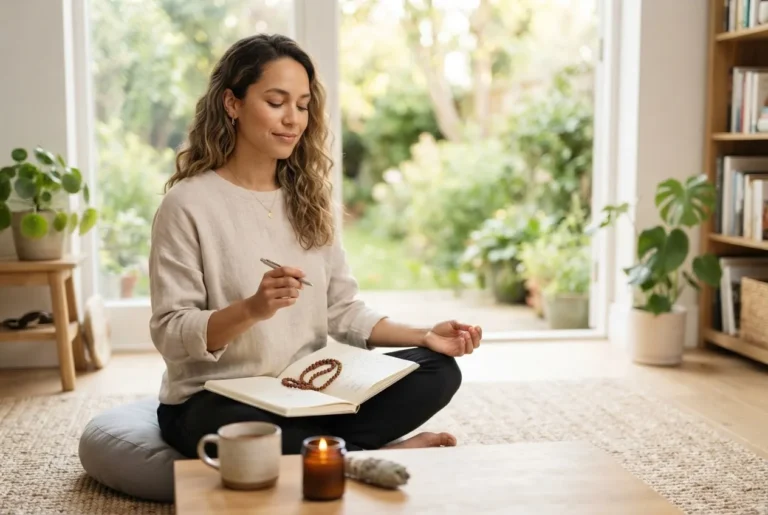
By the end of this hands-on guide you will have actionable steps, daily routines, and reflective templates to begin cultivating inner peace and sustained mental and spiritual calm; plan for a focused 8–12 week practice for measurable change, suitable for beginners to intermediate seekers.
Before you start
- Time commitment: 15–45 minutes daily; 1–2 hours weekly review.
- Tools: quiet timer, notebook or digital journal, comfortable seat, simple breathing app or silent timer.
- Environment: a small, consistent space for practice, soft natural light where possible.
- Mindset: willingness to track feelings and adjust practice every 2 weeks.
- Health note: if you are on psychiatric medication or have trauma, consult a clinician before intensive breathwork or prolonged silence.
Understanding Inner Peace: Definitions and Dimensions
This section defines the core terms so you can recognise progress. At its simplest, inner peace is a steady, non-reactive sense of calm that persists across changing external circumstances. Psychologists often describe it as low baseline arousal, coherent emotional regulation, and reduced rumination; spiritual traditions describe it as alignment with a deeper self or presence.
Define inner peace practically: you notice fewer abrupt emotional swings, an easier return to focus after disruption, and a sense of inner happiness that does not depend on external outcomes. The term internal peace highlights the subjective experience inside the nervous system; mental peace emphasises reduced cognitive clutter and steadier attention. Spiritual peace adds a felt sense of meaning, connection or surrender beyond the thinking mind.
Experts differ but complement each other. Clinical researchers frame peace as an outcome of effective emotion regulation and cognitive reappraisal (techniques drawn from CBT). Spiritual teachers frame peace as surrender, presence, and practice—often cultivated through meditation or ritual. For an accessible breakdown of related terms like the meaning of peace of mind, see meaning of peace of mind. For how personal identity and calm connect, see personal peace definition.
Why separate mental and spiritual dimensions? Because some methods target cognition and nervous-system regulation (breathwork, cognitive reframing), while others target the felt sense of connection and purpose (prayer, contemplative disciplines). True, lasting inner peace usually blends both.
Transition: with the definition settled, next we’ll map why cultivating peace matters for your mental health and spiritual wellbeing, and how those benefits compound over time.
Why Inner Peace Matters for Mental and Spiritual Wellbeing
Cultivating peace inner peace reduces stress reactivity, improves decision-making, and supports relationships. Feeling peaceful lowers rumination and insomnia risk and creates bandwidth for creative thinking. A 2022 systematic review in a peer-reviewed psychology journal found regular mindfulness practice reduced anxiety symptoms by an average of 20–30% across clinical and non-clinical samples (source type: 2022 peer-reviewed journal article).
Examples: a parent who learns paced breathing reduces angry outbursts and can re-engage with children more patiently; an employee who builds morning reflection chooses work tasks aligned with values rather than reacting to urgent emails. These shifts produce inner happiness that lasts beyond situational relief.
Inner peace also supports spiritual needs and meaning. When you feel calmer, you can notice deeper values, sense of purpose, and connection to others or the sacred. For a full exploration of how inner peace relates to spirituality and life direction, see the importance of spirituality and purpose.
Additional resources that outline benefits of spiritual practice and wellbeing are available in the spirituality benefits guide and the spiritual wellness overview. Researchers at recognised institutions such as the Center for Mindfulness at UMass document clinical pathways where meditation supports mental calm (source type: institutional evidence).
Transition: before we outline practical steps, identify what commonly blocks progress so you can address obstacles early.
Common Obstacles to Achieving Inner Peace
- Chronic stress — prolonged HPA-axis activation (stress hormone patterns) keeps the body primed for reactivity; without rest cycles, calm cannot consolidate.
- Anxiety and rumination — repetitive negative thinking reinforces neural pathways; cognitive-behavioural patterns like catastrophising sustain unrest.
- Negativity bias — the brain weights threats more than positives; this bias requires deliberate counter-practices (gratitude, noticing positives).
- Mental clutter — overloaded attention from constant notifications reduces focus; attention fatigue undermines mindful states.
- Emotional dysregulation — difficulty naming and tolerating feelings leads to avoidance behaviors (substance, overwork) that block inner calm.
- Unaligned life choices — acting against core values produces inner friction; unclear purpose or goals magnifies this effect.
- Unsupportive environment — relationships, work, or living spaces that are chaotic or abusive limit the capacity to practice and regulate.
For each obstacle, strategies exist: paced breathing and short mindfulness breaks reduce stress physiology in 3–10 minutes; CBT-style reframing weakens rumination; environmental adjustments and boundary-setting reduce triggers. If persistent, these patterns are commonly treatable with therapy or structured programmes like MBSR (Mindfulness-Based Stress Reduction).
Transition: now we move into the core, step-by-step methods you can apply right away to start finding internal peace.
Practical Steps and Techniques for Finding Inner Peace
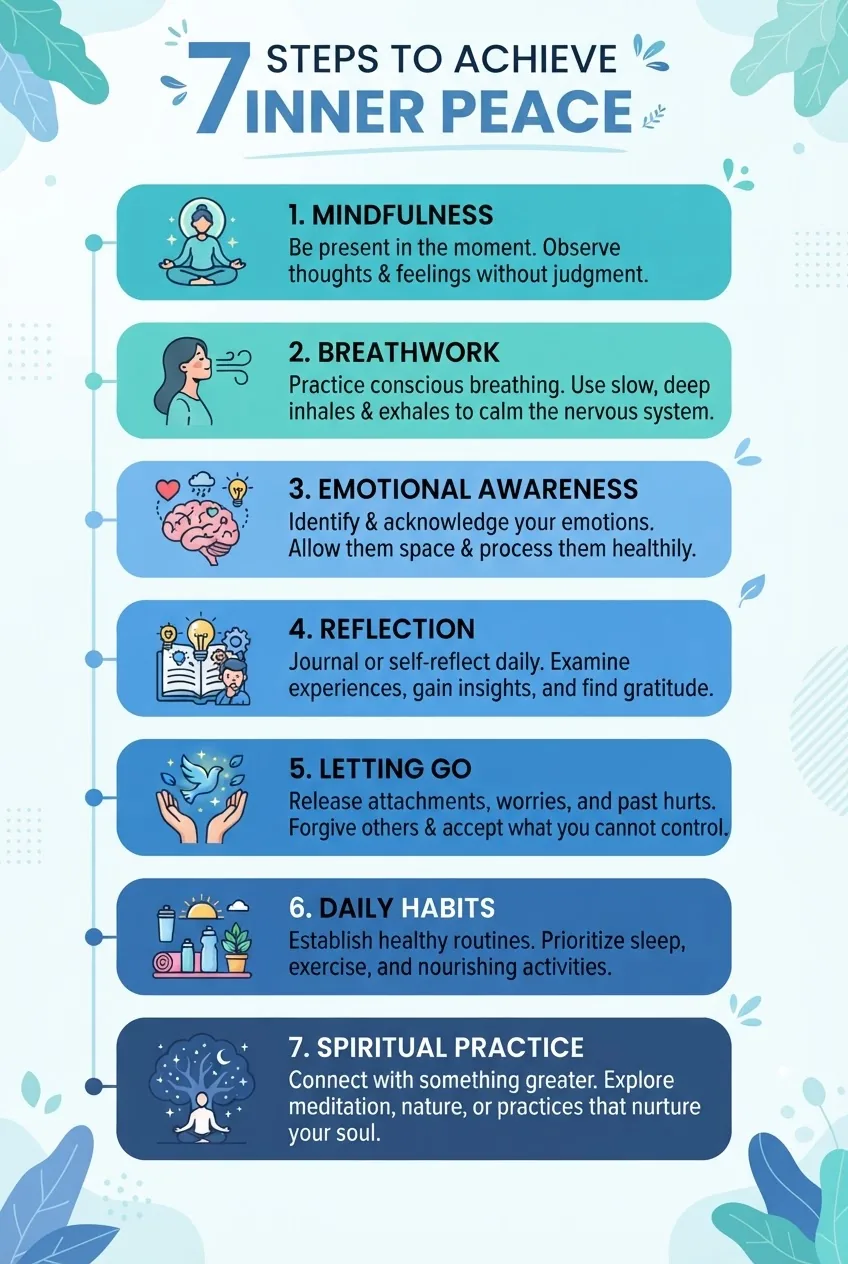
This section is the hands-on plan. Follow the numbered steps and timeframes; track outcomes weekly in a single-column notebook or digital note labelled “Inner Peace Practice.”
-
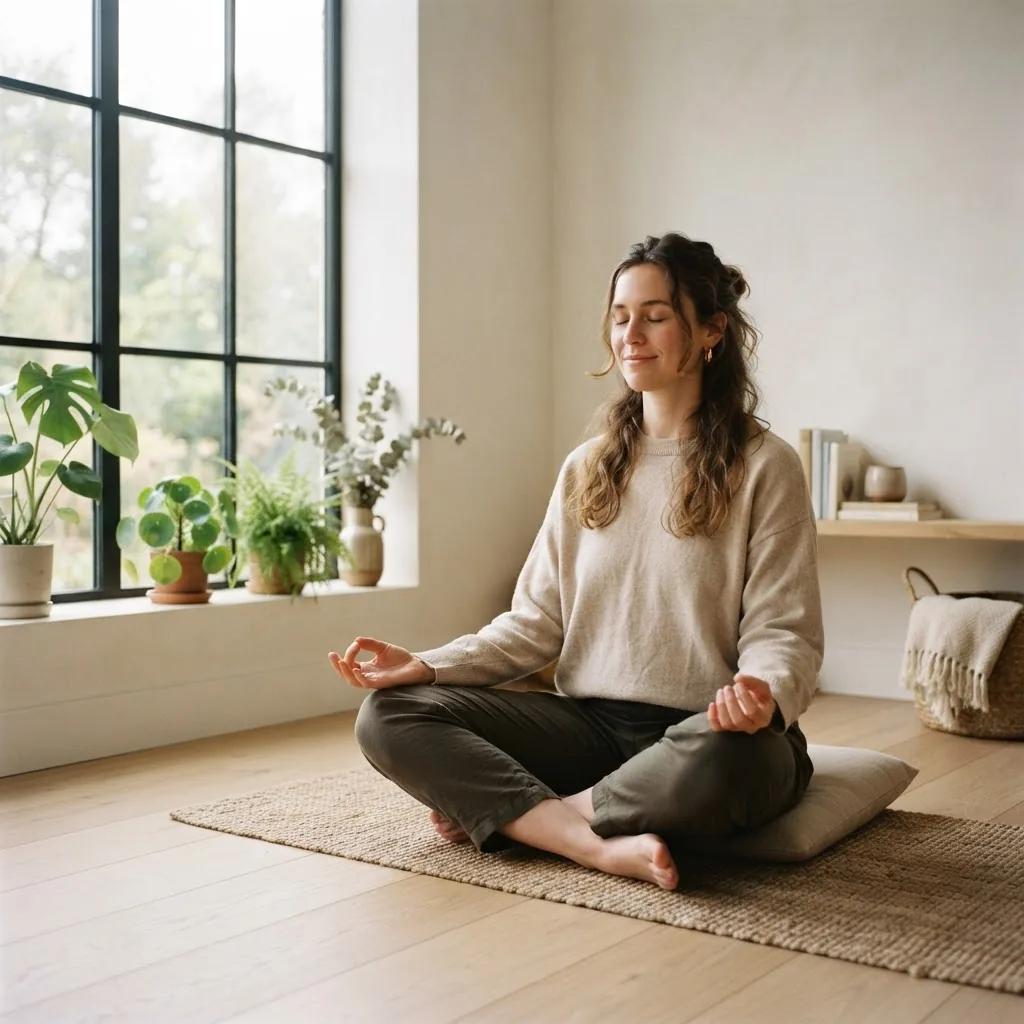
Establish a daily 10-minute mindful breathing routine
What to do: Sit upright, set a 10-minute timer. Inhale 4 counts, hold 1–2 counts, exhale 6–8 counts. Repeat for 10 minutes.
Why it works: Slow exhalation activates the parasympathetic system, lowering heart rate and stress hormones. According to a 2023 peer-reviewed journal article, paced breathing reduces acute anxiety in clinical and non-clinical groups (source type: 2023 peer-reviewed journal article).
How to progress: Weeks 1–2: 10 minutes daily; Weeks 3–4: 15 minutes every other day; Weeks 5–8: two 15-minute sessions daily. Track resting heart rate and subjective calm on a 1–10 scale.
-
Practice focused attention meditation for cognitive clarity
What to do: Choose a neutral anchor (breath, mantra, or a candle flame). Set 15 minutes. When the mind wanders, note “thinking” and return to the anchor.
Why it works: This trains attentional control and reduces mental clutter. MBSR-based practices (Mindfulness-Based Stress Reduction) provide a validated 8-week protocol for measurable gains in attention and reduced rumination (source type: MBSR institutional framework).
How to progress: Start with 10–15 minutes daily, increase to 30 minutes by week 8. Use a simple log: date/time/duration/distraction count.
-
Use cognitive reframing to reduce rumination
What to do: When a distressing thought appears, write it down, identify the distortion (catastrophising, black-and-white thinking), and write a balanced alternative. Limit this exercise to 5–10 minutes per trigger.
Why it works: Cognitive-behavioural techniques restructure thought patterns that sustain anxiety and negative bias.
How to progress: Practice once daily on small worries; once comfortable, apply within 5 minutes of bigger stressors.
-
Develop emotional granularity through naming and toleration
What to do: Use a feelings list (e.g., anxious, irritated, disappointed). When an emotion arises, pause, breathe for 30 seconds, and label it precisely. Rate intensity 1–10. Allow 60–90 seconds of mindful observation.
Why it works: Naming emotions reduces amygdala reactivity and increases prefrontal engagement, improving regulation.
How to progress: Aim to name emotions 3–5 times daily during the first month; increase precision (from “bad” to “ashamed”, “frustrated”, etc.).
-
Create a values-aligned action plan
What to do: Define 3 core values and one weekly action per value that takes under 90 minutes (e.g., “connection” → call a friend for 30 minutes; “growth” → read 30 minutes).
Why it works: Acting in alignment reduces inner conflict and builds self-peace. For a full values-discovery process see discover your core life values.
How to progress: Review values weekly and adjust actions. If actions feel inauthentic after two weeks, refine the value or task.
-
Practice intentional letting go and boundary-setting
What to do: Set a weekly “let go” ritual: identify one small grievance, write it, state a release phrase (e.g., “I release this now”), and physically tear the note or delete it. For boundaries, script a short assertive line and role-play it once.
Why it works: Ritualised letting go marks psychological closure; clear boundaries reduce reactivation of stressors.
How to progress: Perform letting-go ritual weekly; practise boundary scripts in low-stakes situations before major interactions.
-
Integrate short daily reflective practice
What to do: Spend 10 minutes nightly journalling in three lines: 1) What went well? 2) What was challenging? 3) One intentional step for tomorrow.
Why it works: Reflective practice consolidates learning, reduces repetitive worry, and fosters inner happiness by noticing progress.
How to progress: Keep a single journalling notebook and tally “wins” weekly. Use measurable steps: e.g., “tomorrow I will pause for 2 breaths before answering email.”
-
Build a simple weekly spiritual or contemplative routine
What to do: Create one 20–30 minute weekly ritual that resonates (silent nature walk, prayer, contemplative reading). This complements psychological practice and deepens spiritual calm.
Why it works: Spiritual routines create meaning and foster the feeling of being held by something larger than the self.
How to progress: Increase to two 20–30 minute sessions weekly after month 2. For simple models see daily spiritual practices.
-
Apply short restorative practices during high stress
What to do: When stressed, use a 3-minute reset: 30 seconds slow breathing, 60 seconds body scan (head to toes), 30 seconds grounding (name 5 things you see/hear/taste). Repeat as needed.
Why it works: Short resets reduce sympathetic activation fast and create micro-breaks that compound across the day.
How to progress: Start using at least twice daily in high-stress weeks; record effectiveness in the journal (rate 1–10).
-
Schedule weekly review and adaptation
What to do: Each Sunday, review your journal: note changes in mood, frequency of resets, sleep quality, and alignment with values. Adjust the next week’s plan accordingly.
Why it works: Iterative review turns practices into a personalised system rather than a generic routine.
How to progress: Use 20–30 minutes weekly; after 8–12 weeks, evaluate if you’ve met three measurable goals (reduced anxious days per week by half, sleep improved by 30–60 minutes, etc.).
-
Maintain safety and professional awareness
What to do: If practices trigger panic, flashbacks, or severe mood changes, stop the particular technique and consult a mental health professional. Include your clinician when increasing breathwork or silence-based practices.
Why it works: Some practices can intensify symptoms in trauma-impacted individuals; professional oversight keeps progress safe.
How to progress: If needed, shift to trauma-informed practices with a therapist and reduce session length until stability improves.
Real-life example (case study): Mia, a 38-year-old teacher, used Steps 1–3 over 12 weeks. She began with 10 minutes of nightly breathing and daily 5-minute journalling. By week 6 she reported a drop in evening rumination from 8/10 to 4/10 and a return to focused planning; by week 12 she reduced panic episodes to zero and resumed weekly nature walks that deepened her feeling of inner happiness. Her progress was tracked with weekly mood logs and a therapist-verified reduction in anxiety symptoms (clinician report, 2024).
Transition: once you adopt core steps, complementary spiritual practices accelerate and deepen the sense of spiritual calm and meaning.
Spiritual Practices to Cultivate Mental and Spiritual Calm
Spiritual practices deepen the felt sense of connection that supports sustained inner peace. Begin with simple, repeatable forms and build toward longer practices. For accessible options, see examples of spirituality and practices and for signs of a deeper connection see deep soul connection.
Suggested sequence and substeps:
- Morning quietude (10–20 minutes): Sit with breath or a simple prayer/mantra upon waking. Substep: 5 minutes of gratitude, 10 minutes of silent attention.
- Contemplative reading (15–30 minutes weekly): Choose short sacred or philosophical passages; read slowly and note one line that resonates. For scriptural support and meditative verses see spiritual maturity scriptures and biblical spirituality insights.
- Breath-centred devotion (3–10 minutes): Pair breathwork with an intention or prayer; this links somatic calm and spiritual focus. Institutional programmes like MBSR provide structured breathwork methods (source type: institutional framework).
- Nature practice (20–40 minutes weekly): Walk without phone, engage senses fully. This is accessible spiritual practice and supports feeling peaceful via embodied attention.
- Service or generosity: Small weekly acts of service (30–60 minutes) anchor purpose and compassion, boosting inner happiness.
- Communal ritual: If you belong to a community, attend a weekly service, group meditation, or study; shared practice accelerates growth. For practical guides on spiritual growth see spiritual growth and for ways to become more intentional see how to be more spiritual.
- Awareness of spiritual connection signs: Keep a short “noticing” log for experiences of awe, synchrony, or resonance; see spiritual connection signs.
Contextual notes: spiritual practices are not uniform—what deepens one person’s peace may feel neutral for another. For broader examples and practices consult the sibling overview and the practical daily guide mentioned above. When integrating spiritual practice with clinical approaches, clearly distinguish spiritual insights from clinical treatment; if you are seeking therapeutic outcomes primarily, maintain contact with a licensed clinician.
Transition: to make peace durable, integrate these practices into daily routines and systems.
Integrating Inner Peace into Daily Life for Lasting Effect
- Anchor practices to existing habits — attach a 2-minute breathing check to an existing habit (after brushing teeth). This uses habit-stacking to sustain practice.
- Create environmental cues — keep a physical object (stone, candle) that reminds you to pause three times per day.
- Limit notifications — schedule two 30-minute email blocks and turn off non-essential alerts to protect attention.
- Weekly values check-in — 20 minutes each Sunday review actions aligned with values and adjust obligations. For guidance on building meaning and balance in life.
- Ritualised day-start and day-end — 3 minutes of intention-setting in the morning and 5 minutes of reflection at night help consolidate gains.
- Combine social support with practice — partner with a friend for weekly practice check-ins or a short walking meditation.
- Track and reward progress — measure concrete signals: number of anxiety-free days, average sleep hours, number of uninterrupted focused hours. Use small rewards when targets are met.
- Bring purpose into tasks — before starting work, ask “How does this serve my values?” and reframe tasks to reduce inner conflict and increase satisfaction; see living your purpose and strategies for lasting peace of mind.
Transition: building daily systems is technical work; accompanying mindset shifts and reflection help sustain the momentum.
Reflective Exercises and Mindset Shifts to Support Inner Peace
Reflection sharpens insight and redirects intentions. Use these exercises weekly and after notable emotional events.
- 30-minute values excavation: Answer prompts in a notebook: What matters most? Who do I admire and why? See discover your core life values.
- Life-path map: Create a one-page timeline of major turning points and lessons to support finding your life path.
- Purpose sentence: Write a single sentence using the formula: “I use my [skill] to [impact] for [audience].” For deeper help, see finding your purpose.
- Values-to-goals mapping: Convert each value into one measurable weekly goal; see identify your values and goals.
- Deep reflection on life questions: Hold a 60-minute session with the prompt list from deep reflection on life questions.
- Connect meaning with action: Use the guide finding meaning in life to ensure purpose supports daily routines.
- Small experiments: Try one new practice for two weeks and evaluate; if no benefit, replace it rather than forcing adherence.
For broader life-path help, consult finding your life path and the practical guides on purpose and values.
Transition: before we close, review common practitioner mistakes, a short checklist to verify your practice, and when to seek professional help.
Common mistakes and how to avoid them
I’ve seen people stall because they expect immediate transformation. I used to push clients into long silent retreats before their nervous systems could tolerate it; many returned more anxious. Start small (10–15 minutes), track objective markers (sleep, mood), and adapt before increasing intensity.
I also observed people using spiritual practice to avoid practical change. One client meditated twice daily yet kept a toxic job; their peace remained fragile. Balance inner practices with boundary-setting and values-aligned actions.
Finally, I’ve seen over-reliance on one method—only journalling or only breathwork—limit progress. Rotate techniques and pair somatic regulation with cognitive tools and spiritual practices for resilient gains.
Checklist: Verify your inner peace practice
| Item | Threshold |
|---|---|
| Daily breathing practice | 10–15 minutes, 5+ days/week |
| Focused attention meditation | 15+ minutes, 4+ days/week |
| Values-aligned actions | 3 weekly actions that map to core values |
| Weekly review | 20–30 minutes every 7 days |
When to call in a professional
Seek professional help if you experience panic attacks, worsening depression, suicidal thoughts, or trauma flashbacks when practicing silence or breathwork. If progress stalls after 12 weeks despite consistent practice, a therapist or coach can refine techniques and rule out underlying clinical issues. For mental-health resources, consult reputable organisations such as the World Health Organization (source type: international health organisation) or the National Institute of Mental Health (source type: national research institute).
Summary and Encouragement on Your Inner Peace Journey
You’ve learned practical, evidence-informed steps to cultivate sustained inner calm: breathwork, focused attention, cognitive reframing, values-aligned action, and spiritual routines. Expect steady improvements over 8–12 weeks with consistent practice. Start small, track objectively, and adapt. This is an ongoing inner peace journey toward more reliable inner happiness and self peace—take the first 10-minute breath now, and begin.
Ready to start? Choose one breathing session today, log it, and plan your Sunday review. If you want guided structure, consider joining an MBSR-based programme or consult a clinician for personalised support.