
The spiritual Bible teaches that spirituality is a life of relationship with God—rooted in faith, transformed by the Holy Spirit, expressed in holiness and the fruits of the Spirit, and oriented toward God’s purpose for each believer (John 4:24; Galatians 5:22–23; Romans 12:1–2).
Understanding Spirituality According to the Bible
Answer: Biblical spirituality is a God-centered life defined by relationship with the Triune God, obedience to Scripture, transformation by the Holy Spirit, and living out holiness and love toward others.
spirituality: a lived orientation of the heart toward God, shown by faith, obedience, and transformation under the Spirit.
The Bible treats the spiritual Bible as the authoritative source of spiritual wisdom—Scripture shapes what God calls true spirituality through narrative, law, prophecy, psalm, wisdom literature, and apostolic teaching. According to 2011 NIV, John 4:24 states that God is spirit and seeks worshippers who worship in spirit and truth (John 4:24 NIV).
Biblical spirituality distinguishes between the soul (mind, will, emotions) and the spirit (the human faculty designed to commune with God): Term: soul and spirit distinction—soul refers to our inner life and personality; spirit refers to the part of humans that relates directly to God.
Scripture consistently links spirituality to:
- Faith and trust in God (Hebrews 11:1–6).
- Transformation and sanctification (Romans 12:1–2; 2 Corinthians 3:18).
- Fruitful living—love, joy, peace—evidenced by the Spirit (Galatians 5:22–23).
- Service and spiritual gifts for the common good (1 Corinthians 12:4–7).
For readers interested in how spiritual needs connect to biblical foundations, see spiritual needs and their importance.
Transition: Understanding the defining biblical passages helps us identify key verses that explicitly define spirituality.
Key Bible Verses That Define Spirituality
Answer: Key verses—John 4:24, Galatians 5:22–23, Romans 8:14–16, and others—define spirituality as worship in spirit and truth, the fruit produced by the Spirit, and life guided by God’s Spirit.
Term: fruits of the Spirit—qualities produced in believers by the Holy Spirit (Galatians 5:22–23).

-
John 4:24 (worship in spirit and truth)
Explanation: According to 2011 NIV, John 4:24 teaches that true spirituality is about genuine, Spirit-led worship—authentic inward connection to God that aligns with biblical truth (John 4:24 NIV). -
Galatians 5:22–23 (fruits of the Spirit)
Explanation: According to 1984 ESV, Galatians 5:22–23 lists the Spirit’s fruit—love, joy, peace, patience, kindness, goodness, faithfulness, gentleness, self-control—evidence of spiritual life and maturity (Galatians 5:22–23 ESV). -
Romans 8:14–16 (led by the Spirit)
Explanation: According to 2016 NIV, these verses show spirituality as being led by God’s Spirit—assurance of sonship and prayerful dependence on God’s guidance (Romans 8:14–16 NIV). -
1 Corinthians 12:4–7 (spiritual gifts)
Explanation: According to 2001 ESV, spirituality includes the distribution and use of spiritual gifts—diverse abilities given by the Spirit for building the church and serving others (1 Corinthians 12:4–7 ESV). -
Romans 12:1–2 (transformation and renewed mind)
Explanation: According to 2011 NIV, Paul calls believers to present their bodies as living sacrifices and be transformed by renewing the mind—spiritual holiness leading to discernment of God’s will (Romans 12:1–2 NIV). -
John 14:16–17 (Holy Spirit as Helper)
Explanation: According to 2011 NIV, Jesus promises the Helper—Hebrew Ruach, Greek Pneuma—who indwells believers to teach, testify, and empower spiritual life (John 14:16–17 NIV). -
2 Corinthians 3:18 (transformed into Christ’s image)
Explanation: According to 2001 ESV, believers are progressively transformed into Christ’s image by the Spirit—core to biblical spirituality (2 Corinthians 3:18 ESV). -
Hebrews 11:1–6 (faith as spiritual root)
Explanation: According to 2011 NIV, faith—conviction of things unseen—is the foundation of spiritual life and pleasing God (Hebrews 11:1–6 NIV).
Transition: Those verses point directly to the active role of God and the Holy Spirit in spiritual life, which we now unpack theologically and practically.
The Role of God and the Holy Spirit in Spiritual Life
Answer: God initiates and sustains spirituality; the Holy Spirit indwells, guides, convicts, equips with gifts, and transforms believers into Christlikeness, enabling genuine communion and spiritual growth.
Holy Spirit: the third Person of the Trinity who indwells believers, guides, convicts, and empowers spiritual life and transformation.

God’s presence is central: biblical spirituality begins with God reaching out (John 3:16; Titus 3:5). According to 2011 NIV, the Holy Spirit is promised as Helper (John 14:16–17), meaning spiritual life is not human effort alone but cooperation with God’s Spirit.
Key functions of the Holy Spirit in spiritual life:
- Indwelling: The Spirit lives in believers, creating immediate fellowship with God (1 Corinthians 6:19).
- Guidance: The Spirit leads and directs moral and spiritual choices (Romans 8:14).
- Conviction and sanctification: The Spirit convicts of sin and initiates the sanctifying process (John 16:8; 1 Thessalonians 5:23).
- Empowerment: The Spirit equips with spiritual gifts for ministry and service (1 Corinthians 12:7).
- Transformation: Progressive change into Christ’s likeness (2 Corinthians 3:18).
Practical examples and testimonies demonstrate these roles: historic figures such as Augustine, Teresa of Avila, and modern pastors report decisive Spirit-led conversions and life reorientations—real-life testimonies that show how biblical spirituality changes priorities, relationships, and purpose when Scripture is applied.
Scripture-based frameworks from evangelical seminaries define spiritual formation as growth in Christ through means of grace (Scripture, prayer, sacraments, community) combined with the Spirit’s work. For more on how biblical spiritual connection shows up personally, see spiritual connection signs and resources on The Gospel Coalition for theological frameworks.
Denominational note: Interpretations vary—some traditions emphasize Spirit-initiated mystical experience while others stress structured sacraments and disciplined study; a healthy approach acknowledges variations and tests experiences against Scripture (1 John 4:1).
Transition: Scripture also outlines how spiritual maturity grows over time; the Bible’s descriptions give practical signs and stages.
How the Bible Describes Spiritual Maturity and Growth
Answer: The Bible describes spiritual maturity as a progression from new birth and basic learning to visible fruit, obedience, sacrificial service, and leadership—demonstrated by the fruit of the Spirit, sound doctrine, and Christlike conduct.
sanctification: the ongoing process by which believers are made holy through the Spirit’s work and obedient living.
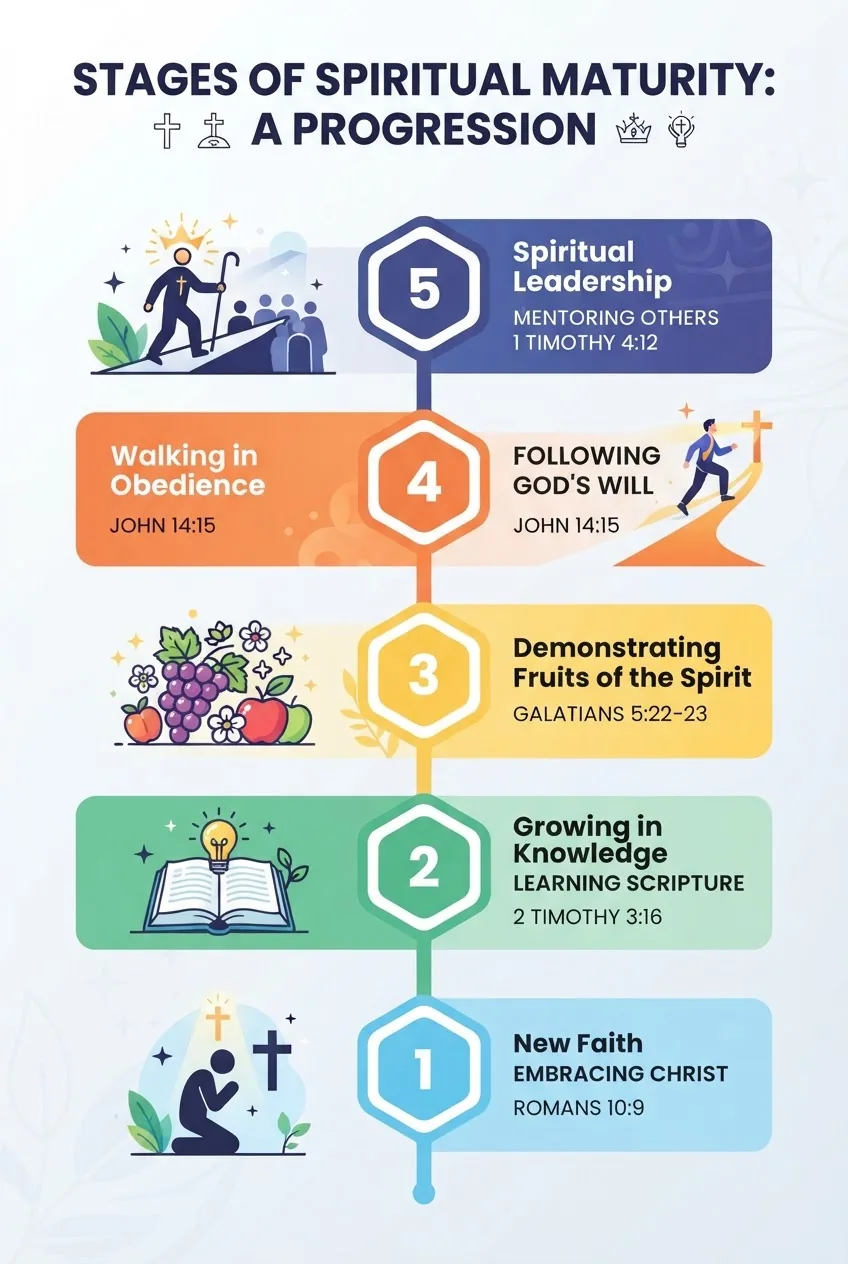
- New birth / initiation — Evidence: repentance and faith (John 3:3–8; Acts 2:38). New believers are rooted in the gospel and dependent on habituated practices.
- Growing in knowledge — Evidence: appetite for Scripture and doctrine (1 Peter 2:2; Hebrews 5:12–14). Learning is accompanied by teaching from mature Christians and disciplined study.
- Demonstrating the fruits of the Spirit — Evidence: consistent love, joy, peace, patience, and self-control (Galatians 5:22–23). Inner character transforms outer actions.
- Walking in obedience — Evidence: choices reflect Christ’s priorities, sacrificial service, and ethical integrity (Romans 12:1–2; James 2:14–26).
- Spiritual leadership and multiplication — Evidence: mentoring others, exercising gifts responsibly, and making disciples (2 Timothy 2:2; Matthew 28:19–20).
Signs of growth include increased humility, wisdom in trials, persistence in prayer, and consistency in community life. For practical steps to continue growth, see how to be more spiritual and scriptures on spiritual maturity.
Transition: Growth leads naturally into discovering God-given purpose and calling described throughout Scripture.
Spiritual Purpose and Calling According to Scripture
Answer: Scripture teaches that spiritual purpose is God-glorifying vocation—living for God’s kingdom through worship, vocation, service, and mission; believers discover calling through Scripture, prayer, spiritual gifts, and community confirmation.
Term: biblical calling—a God-given direction or role to serve His purposes in the world, unique yet anchored in the Great Commission (Matthew 28:18–20).
Examples in Scripture: Moses called to deliver Israel (Exodus 3), Esther called to intercede (Esther 4:14), Paul called to apostolic mission (Acts 9). These narratives show calling often combines an inner sense of direction, external opportunity, and confirmation through fruit and community.
Practical steps Scripture suggests for discovering calling:
- Seek God in prayer and Scripture for clarity (Psalm 25:4–5).
- Assess gifts and passions in light of biblical usefulness (1 Corinthians 12; Romans 12:6–8).
- Test opportunities by spiritual fruit and counsel from mature believers (Proverbs 15:22; 1 Thessalonians 5:21).
To deepen your understanding of how purpose connects to wellbeing, visit the pillar resource Why Spirituality Purpose Guide Importance and Wellbeing Benefits. For aligning values with calling, see core life values and resources on BiblicalTraining.org for structured guidance.
Additional practical links to life-direction resources include finding your path in life, finding meaning in life, and finding your purpose.
Transition: Clear distinctions exist between secular or New Age spirituality and the biblical model described above; the next section compares them directly.
Common Misconceptions About Spirituality vs. Biblical Spirituality
Answer: Common misconceptions include equating spirituality with feelings, self-centered enlightenment, or relativism—biblical spirituality centers on God, Scripture, objective truth, and Christlike transformation.
Use this table to compare popular secular/New Age spirituality with biblical spirituality:
| Aspect | Secular / New Age Spirituality | Biblical Christianity |
|---|---|---|
| Source of authority | Individual experience, intuition | Scripture and revealed truth (2 Timothy 3:16) |
| Goal | Self-realization, personal growth | Glorify God, love others, make disciples (Matthew 22:37–39) |
| Understanding of God | Impersonal force or many gods | Personal Triune God—Father, Son, Holy Spirit |
| Means of growth | Meditation, rituals, energy work | Scripture, prayer, community, sacraments, Spirit-led disciplines |
| Testing claims | Often subjective | Tested against biblical teachings and fruit (1 John 4:1; Galatians 5:22–23) |
Common misunderstandings to correct:
- Equating spiritual feeling with spiritual truth—feelings can mislead; Scripture is the measuring rod.
- Mistaking inward experiences for final authority—biblical spirituality submits experiences to Christ and Scripture.
- Confusing spiritual maturity with moral perfection—growth is progressive and involves sanctification.
For clarity on emotional or intuitive connections versus biblical teaching, see deep soul connections.
Transition: Knowing the differences helps us adopt faithful practices that align with God’s guidance.
Practical Ways to Align with God’s Spiritual Guidance
Answer: Align by prioritizing Scripture study, consistent prayer, intentional spiritual disciplines, community accountability, service, and testing guidance by biblical truth and the Spirit’s fruit.
Steps to align daily:
- Begin with Scripture—daily reading and meditation on passages that shape belief and action (Psalm 1:1–3).
- Practice focused prayer—adore, confess, give thanks, and ask (ACTS model) while listening for the Spirit.
- Engage in community—regular fellowship, worship, and submission to pastoral oversight.
- Use spiritual disciplines—fasting, sabbath, silence, and sacramental practices to increase receptivity.
- Serve and exercise gifts—apply spiritual gifts in practical ministry (1 Corinthians 12).
- Evaluate experiences by results—do actions produce the fruit of the Spirit and glorify God?
For hands-on routines and examples, consult the practical guides: daily spiritual practices, examples of spirituality and practices, and resources on strengthening habits for wellbeing such as enhancing spiritual health and wellness.
Practical health integration: According to a 2022 review of spiritual care in healthcare, spiritual practices correlate with improved coping and resilience—when aligned with faith traditions, spiritual disciplines support mental and emotional stability (source type: academic review).
Transition: Summarizing the biblical path encourages steady commitment to growth and purpose.
Summary and Encouragement to Grow Spiritually According to God’s Word
Answer: The Bible calls believers to a Spirit-led, Scripture-shaped spirituality that yields Christlike character, purposeful living, and faithful service—grow by practicing disciplines, relying on the Spirit, and engaging community.
Key takeaways:
- Spirituality, according to the spiritual Bible, centers on God, not self.
- The Holy Spirit is the active agent of growth, gifts, and transformation.
- Scripture defines and tests spiritual experience and calling.
- Purpose emerges as believers align gifts, values, and opportunities with God’s mission.
For practical support in building meaning and direction, consider resources on building meaning and balance in life, and reflect through guided questions from deep reflection on life questions.
Final encouragement: commit to consistent Scripture, prayer, and community; expect gradual transformation; and pursue God’s calling with humility and courage. If you want deeper help, explore the pillar resource linked earlier for wellbeing and purpose.