
Functional medicine near me means locating local practitioners who focus on root-cause, personalised care for chronic and complex conditions; this guide shows exactly where to look, how to vet credentials and insurance acceptance, what services to expect, and practical cost-saving options so you can book the right provider nearby.
What Is Functional Medicine and Why Seek It Near You?
Answer: Functional medicine is a patient-centred approach that looks for root causes of illness and offers personalised care; seeking it locally helps you access coordinated in-person testing, ongoing monitoring and community-based support faster than remote-only options.
Term: A functional medicine practitioner is a clinician who uses systems-based, personalized assessment—often combining medical, nutritional and lifestyle interventions—to treat chronic conditions while aiming to address underlying causes rather than only symptoms.
Functional medicine emphasises holistic health approach, root cause analysis and personalised care, often integrating conventional diagnostics with lifestyle, nutrition and targeted supplements. Patients commonly consult functional physicians for chronic disease management, complex hormonal issues, autoimmune conditions, digestive disorders and persistent fatigue. Choosing a local practitioner supports easier in-person testing (blood draws, imaging), hands-on procedures and faster follow-up.

Because functional medicine often relies on iterative testing and tailored treatment plans, proximity matters: local clinics can coordinate with nearby labs and specialists, schedule timely procedures, and offer in-person therapies that complement virtual care. For broader context on overlapping terminology and integrative care models, see Alternative Terms for Western Medical Practices: CAM and Integrative Care.
How to Find a Functional Medicine Doctor or Practitioner Near You
Answer: Use a step-by-step local search combining map tools, specialist directories, verified review sites, clinician credentials checks and direct insurance queries to shortlist nearby functional medicine doctors, then book a phone or virtual consult to confirm fit.

- Search local directories and maps: Begin with Google Maps, Healthgrades and specialty directories; add “functional medicine dr near me,” “functional wellness doctor near me” and city name to refine results. Use listings to note hours, services and whether telehealth is offered.
- Filter by credentials and specialities: Prioritise board-certified MDs or DOs with IFM training for complex medical issues, and include functional nurse practitioners and dietitians when appropriate.
- Read reviews and patient feedback: Look for consistent comments about thoroughness, follow-up and measurable outcomes; single negative reviews warrant a call, not immediate dismissal.
- Confirm insurance and costs: Ask practices if they are in-network, accept HSA/FSA, offer sliding scales or payment plans; verify with your insurer using the provider’s NPI or licence number.
- Book an initial consultation (phone or video): Use the first consult to assess communication style, treatment philosophy and realistic timelines for testing and follow-up.
- Check for local lab partnerships and referral networks: A functional practice that collaborates with local labs, endocrinologists or gastroenterologists improves coordination of care.
- Evaluate logistics and follow-up systems: Confirm how long appointments last, whether results are explained, and the frequency of check-ins—these are common differentiators among practices.
Using Online Resources and Local Directories
Answer: Online tools like Google Maps and health directories are your fastest way to find nearby functional medicine providers; combine map searches with niche directories to verify services and patient ratings.
Start with Google Maps for a geographic view, filter by ratings and read recent reviews. Use Healthgrades and specialised practitioner databases to see clinician bios, accepted insurances and clinical interests. For integrative-focused practitioners, check the Institute for Functional Medicine directory (IFM) for IFM-trained clinicians and confirm IFM certification details on IFM’s site.
Practical tips:
- Search multiple keyword variants: “functional medicine doctor”, “functional medical doctor”, “functional health practitioner” and “functional endocrinologist”.
- Cross-check phone numbers and addresses between Google Maps and clinic websites to avoid outdated listings.
- If listings are sparse in your area, expand search radius or include telehealth terms such as “virtual functional medicine clinics.”
When a directory lacks details, call the practice directly and request clinician CVs or linked publications. If you want to learn more about training pathways for clinicians, see alternative medicine degree programs online.
Checking Credentials and Certifications of Functional Medicine Practitioners
Answer: Verify formal medical licenses, board certifications and IFM training; prioritise clinicians who clearly list credentials and continuing education in integrative or functional medicine.
Credential checks are analogous to vetting any specialist: confirming licences and formal training ensures the practitioner can perform certain procedures and order diagnostic testing. Look for:
- State medical licence and board certification (e.g., Internal Medicine, Family Medicine, Endocrinology).
- IFM certification or completion of IFM training modules—IFM is a recognised body for functional medicine methodology. For more on credential paths, consult alternative medicine degree programs online.
- Membership in integrative medicine organisations or relevant professional bodies (listed on clinician CV).
- Published work or case reports that demonstrate clinical experience with complex cases.
Step-by-step verification walkthrough:
- Ask the practice for the clinician’s full name and licence number.
- Verify the licence on your state or national medical board website (government health departments or medical boards).
- Confirm board certification through the American Board of Medical Specialties or equivalent national board if applicable.
- Check IFM course completion or certification via the IFM directory or IFM site for public confirmation.
- If credentials are unclear, request references or recent patient outcome summaries (anonymised case highlights) to assess experience.
External authority for certification details: Institute for Functional Medicine (IFM) provides certification standards and clinician directories.
Considering Telehealth Functional Medicine Providers
Answer: Telehealth functional medicine visits are effective for intake, follow-up and many consults, but some tests and procedures require local lab partnerships or an in-person clinician for best outcomes.
Telemedicine increases access to experienced functional physicians beyond geographic limits and often lowers costs for initial consultations. Many functional medicine clinics offer hybrid models: a remote intake consult, followed by local lab orders and an in-person follow-up when needed.
Use telehealth when:
- You need access to an IFM-certified clinician outside your region.
- Ongoing communication and medication management can be handled virtually.
- Local labs will accept orders from the remote clinician for bloodwork or specialised testing.
Limitations:
- Procedures (e.g., joint injections) and some physical exams require in-person visits.
- Insurance coverage for telehealth varies by insurer and jurisdiction—confirm prior to booking.
For guidance on remote consults and billing, see our resource on Telehealth Visit: Remote Medical Treatment and Virtual Care Solutions.
What Services and Treatments Do Functional Medicine Providers Offer?
Answer: Functional medicine providers offer comprehensive assessments, targeted lab testing, personalised nutrition and lifestyle plans, hormone and metabolic optimisation, mental health supports, and coordinated referrals to specialists as needed.
Common services and treatments include:
- Comprehensive health assessment and detailed medical history intake.
- Advanced laboratory testing (hormones, comprehensive metabolic panels, GI microbiome, micronutrient panels, food sensitivity testing).
- Personalised treatment plans incorporating nutrition counselling, targeted supplementation, lifestyle prescriptions and stress-management strategies.
- Hormone balancing and metabolic optimisation—often involving endocrinology collaboration when needed.
- Chronic disease management with a systems-based approach for autoimmune, metabolic and persistent multisystem complaints.
Examples where functional medicine is applied:
- For prostate-related supportive care, functional approaches can be adjuncts; see alternative medicine for prostate cancer treatment options.
- Mental health support through nutrition, sleep and lifestyle interventions—see our coverage of mental health alternative treatments.
- Respiratory and allergy support using integrative approaches—refer to alternative therapies for asthma and allergies.
- Pain management strategies, often combining manual therapies and targeted nutrition—see alternative therapies for pain management and relief.
- Holistic oncology-supportive care options in coordination with specialist oncology teams: alternative to radiation cancer treatment, natural and holistic alternative treatment for ovarian cancer, and cancer natural cures treatments.
Clinical evidence: Peer-reviewed studies suggest certain integrative and lifestyle interventions can improve outcomes for chronic conditions when combined with standard care; for example, see a systematic review in a medical journal for evidence context: peer-reviewed research on integrative approaches.
Additional related resources: complementary therapies and broader lists of treatment modalities are covered in our guides on complementary therapies definition and use in alternative medicine and list of therapies.
Understanding Costs and Insurance: Is Affordable Functional Medicine Possible?
Answer: Affordable functional medicine is possible using a mix of in-network providers, telehealth, sliding-scale clinics, payment plans and selective testing; insurance acceptance varies, so verify coverage and ask practices for billing options before committing.
Overview: Many functional medicine clinics operate outside traditional insurance models because of extended visit times and non-standard testing; however, some clinicians accept insurance for medical visits while billing supplements, lifestyle coaching and certain labs as out-of-pocket items. According to a 2023 survey by a healthcare research institute, a growing minority of functional clinics report partial insurance participation, but out-of-pocket costs remain common for advanced testing (source type: 2023 industry survey).
| Option | Typical Cost Range | Insurance Likelihood |
|---|---|---|
| Initial in-person consult with functional MD | $150–$450 | Varies; possible if billed as primary care visit |
| Telehealth consult | $75–$250 | More likely to be covered |
| Advanced labs (per panel) | $100–$1,000+ | Often out-of-pocket |
| Nutrition counselling / coach | $60–$200/session | Usually out-of-pocket |
FAQ-style cost tips:
- Does insurance cover functional medicine? Coverage varies widely; some medical visits are covered if the clinician bills a standard medical code and is in-network. Always verify with your insurer using the clinician’s licence or NPI number (source type: government medical board and insurer guidelines).
- How can I reduce out-of-pocket costs? Ask for targeted essential testing only, choose telehealth when possible, request cash pricing for labs, and search for clinics offering sliding scale fees or payment plans.
- Are there affordable clinics? Community integrative centres and teaching clinics associated with training programmes occasionally offer reduced fees—search local integrative health centres or university-affiliated programs.
- Do HSA/FSA funds apply? Many out-of-pocket medical services and labs are eligible for HSA/FSA reimbursement; check your plan rules.
For authoritative guidance on insurance and licensing, consult your national health department or medical board; for Australian readers, see your government health department for licensing and coverage rules. Practices that accept insurance typically advertise in-network payers—verify by calling and obtaining written confirmation.
Tips for Choosing the Right Functional Medicine Practice for You
Answer: Choose a practice that matches your medical needs, communication preferences and budget by checking credentials, patient experience, treatment offerings and follow-up processes in a five-step checklist.
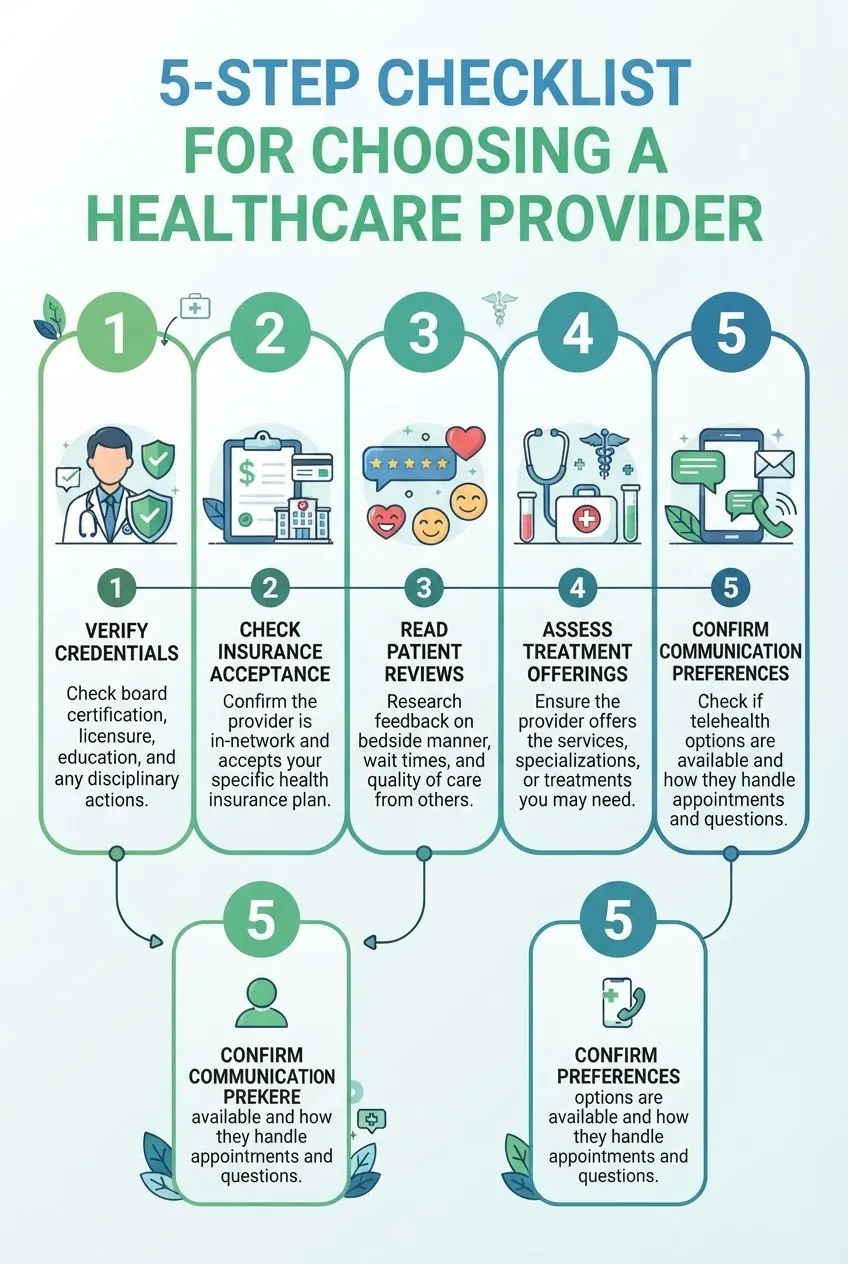
- Verify credentials and scope: Ensure the clinician’s licence, board certification and IFM or integrative training are current; ask for CV or training proof.
- Confirm insurance and pricing transparency: Request written confirmation of in-network status, expected costs for the initial visit and likely out-of-pocket lab expenses.
- Assess patient experience: Read recent reviews focusing on follow-up care, clear explanations and outcomes; ask the clinic for anonymised case studies or testimonials to gauge results.
- Match treatment offerings to needs: If you require hormone care, look for functional endocrinologists; for oncology adjunctive care, pick practices with established oncology collaboration—see our directory of centres in the Additional Resources section.
- Clarify communication and continuity: Ask how results are communicated, frequency of check-ins and whether coach support or group programs are included.
Checklist you can use on the phone:
- “What is the clinician’s medical licence and board certification?”
- “Are you IFM-certified or IFM-trained?”
- “Which insurances do you accept and are you in-network?”
- “What is the expected cost of the first 3 months of care, including labs?”
- “How often will I have follow-up appointments and who answers messages?”
Patient testimonial summary:
“After two months of coordinated testing and a tailored nutrition plan from a local functional doctor, my energy and digestion improved significantly.” — Patient A, anonymised case highlight.
When choosing, balance interpersonal fit with documented clinical experience. If you want to compare functional versus conventional approaches, see functional medicine vs conventional medicine and our piece on functional medicine vs integrative medicine.
Additional Resources and Centers for Functional Medicine Near You
Answer: Functional medicine services are found in specialised clinics, integrative health centres, academic teaching clinics and some primary care practices; search local wellness clinics, endocrinology centres and community integrative centres to find nearby providers.
Where functional medicine is commonly located:
- Dedicated functional medicine clinics and private practices.
- Integrative health centres that combine conventional specialists with nutritionists and therapists.
- Academic or teaching clinics associated with naturopathic or integrative medicine programmes offering reduced-fee services.
- Primary care practices with functional-oriented physicians or nurse practitioners.
- Telehealth-only functional medicine companies that partner with local labs for testing.
Representative local centre examples and related internal resources:
- alternative health care center services and benefits — overview of clinic types offering functional modalities.
- integrative health centers — examples of services and how centres coordinate multi-disciplinary care.
- primary care holistic centre — primary care practices that incorporate functional approaches.
- board certified integrative medicine — guide to certification and centre affiliations.
- functional medicine nurse practitioner certification and training — source for finding nurse practitioners in local clinics.
Frequency and distribution: Urban areas and major metro regions typically have multiple listed functional practices (city-specific guides such as Find a Functional Medicine Doctor NYC and Functional Medicine Doctor San Francisco), while smaller towns may rely more on telehealth and regional integrative centres.
Other useful internal resources for specialised conditions and therapies:
- Cancer Natural Treatment Centers
- Natural and Holistic Alternative Treatment for Ovarian Cancer
- Alternative Weed Therapy
- Careers in Alternative Medicine
- Evidence Based Complementary and Alternative Medicine
To find nearby centres quickly:
- Search “center of functional medicine” or “functional medicine clinic” in Google Maps and sort by distance and reviews.
- Use integrative centre directories and call to confirm services and clinician availability.
- Ask local primary care clinics for referrals to functional endocrinologists or functional wellness doctors near you.
Frequently Asked Questions About Finding Functional Medicine Near Me
Answer: Below are concise answers to common queries about locating local functional medicine services, expected wait times, safety, costs, telehealth and verifying qualifications.