

Alternative weed therapy uses medical cannabis—plant-derived products containing cannabinoids like THC and CBD—to treat symptoms (pain, seizures, anxiety) and support holistic care through regulated therapeutic dispensaries and integrative plans; patients follow prescribed protocols, select appropriate administration methods, and monitor outcomes with their care team under current legal frameworks.
Introduction to Alternative Weed Therapy
Answer: Alternative weed therapy is the targeted, therapeutic use of medical cannabis within complementary and alternative medicine (CAM) frameworks, employed to relieve symptoms and support holistic wellness alongside other non-conventional treatments.
Alternative weed therapy positions medical cannabis as an alternative therapy: a plant-based intervention used by patients seeking effects distinct from or complementary to pharmaceuticals. It is typically delivered via products engineered for predictable dosing and quality control, and often integrated with lifestyle, nutritional, and mind-body approaches.
Term: Medical cannabis refers to plant-derived cannabis products used under medical supervision for therapeutic purposes, often standardized for cannabinoid content.
In CAM integration, alternative weed therapy is treated as a tool within a broader plan that includes nutrition, acupuncture, physical therapies and psychological support. Patients report benefits when cannabis is matched to their symptom profile and administered with attention to dose, timing and interactions with other therapies.
Clinical adoption varies by region; evidence strength differs by indication. According to a 2023 clinical review published in Journal of Cannabis Research, controlled trials show promising symptom control in specific conditions but advise careful patient selection and monitoring (“According to a 2023 clinical review published in Journal of Cannabis Research”).
Transition: To evaluate how and why cannabis works in the body, we next examine the key components and mechanisms that underpin therapeutic effects.
Understanding Medical Cannabis – Key Components and Mechanisms
Answer: Medical cannabis produces therapeutic effects primarily through cannabinoids—chiefly tetrahydrocannabinol (THC) and cannabidiol (CBD)—interacting with the body’s endocannabinoid system to modulate pain, mood, appetite, inflammation and neuronal excitability.
Term: Cannabinoids are chemical compounds in cannabis (and the body) that bind to cannabinoid receptors to alter physiology.
Term: THC (tetrahydrocannabinol) is the main psychoactive cannabinoid that activates CB1 receptors, producing euphoria and analgesia at therapeutic doses.
Term: CBD (cannabidiol) is a non-intoxicating cannabinoid with anti-inflammatory, anxiolytic and anticonvulsant properties that modulates receptor signaling without strong CB1 activation.
Term: Endocannabinoid system (ECS) is a regulatory network of endogenous cannabinoids, receptors (CB1, CB2), and enzymes that maintains homeostasis in pain perception, immune response and nervous system excitability.
Mechanisms in brief:
- Receptor modulation: THC binds CB1 receptors in the brain and spinal cord, reducing nociception and altering neurotransmitter release.
- Anti-inflammatory signalling: CBD influences immune cells and cytokine production via indirect receptor activity and transient receptor potential (TRP) channels.
- Neuroprotective and anticonvulsant actions: CBD stabilizes neuronal excitability and has been demonstrated to reduce seizure frequency in specific epilepsies.
- Entourage effect: Minor cannabinoids and terpenes may modulate clinical effects when combined with THC and CBD, though the clinical relevance is still under study.
Pharmacology notes: onset and duration depend on administration route—smoking/vaporizing yields rapid onset (minutes) and shorter duration; oral forms like edibles have delayed onset (30–120 minutes) with longer, more variable effect profiles due to first-pass metabolism.
Dose-response and individual variability are significant: age, genetics, concurrent medications, liver function and prior cannabis exposure alter effects. According to a 2022 meta-analysis in Lancet Neurology, dosing evidence is clearer for select conditions (epilepsy, chemotherapy-induced nausea) than for others (“According to a 2022 meta-analysis in Lancet Neurology”).
Transition: With mechanisms clarified, the next section lists specific therapeutic uses supported by clinical and observational evidence.
Therapeutic Uses of Medical Cannabis
Answer: Medical cannabis is used therapeutically for multiple indications—pain management, anxiety, epilepsy, inflammation-driven diseases, and various neurological conditions—each supported by varying levels of clinical evidence and patient-reported outcomes.
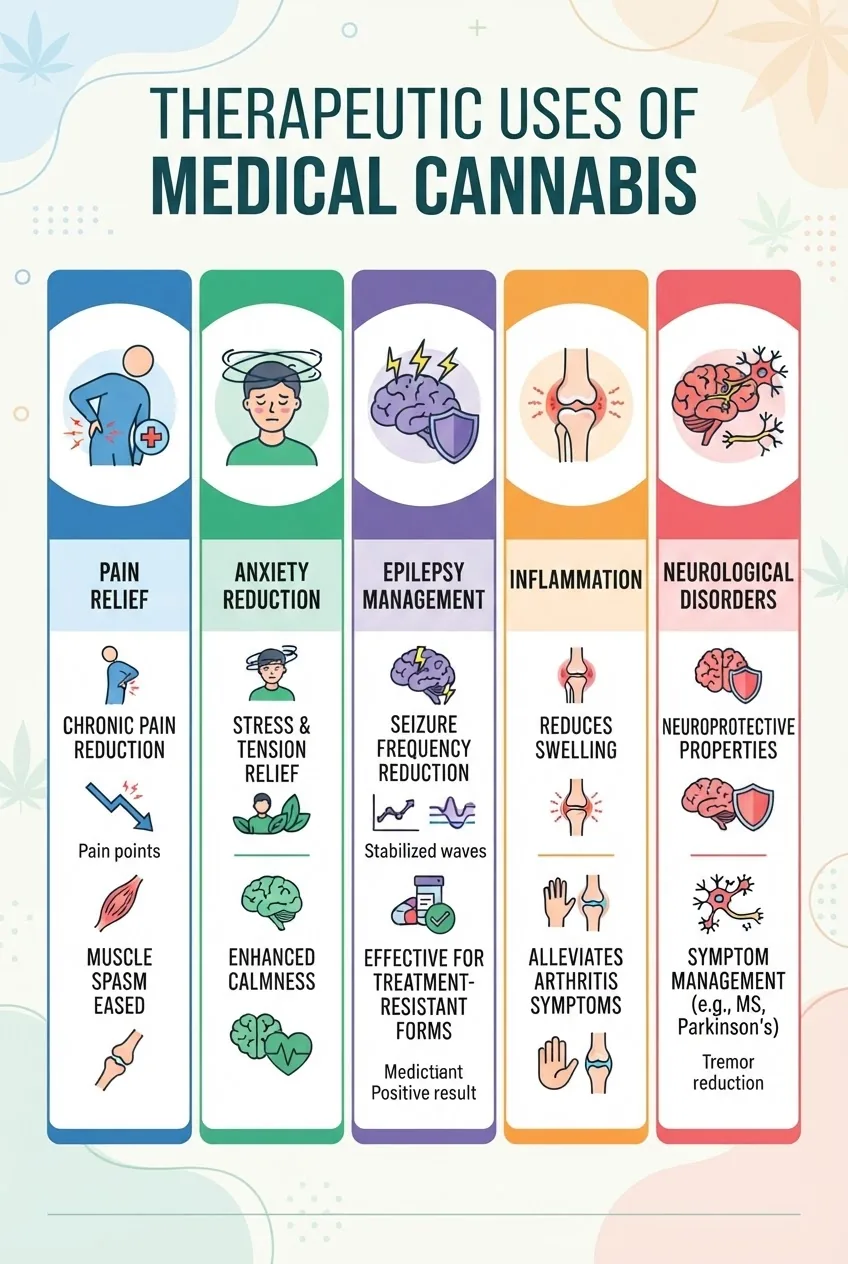
- Pain management — Medical cannabis, especially THC:CBD combinations, reduces chronic neuropathic pain and improves sleep in some patients; evidence: randomized trials and patient registries show moderate effect sizes. alternative therapies for pain management
- Anxiety and PTSD — CBD-dominant preparations can lower anxiety symptoms; THC can worsen anxiety at high doses; individualized regimens and psychotherapy integration improve outcomes. mental health alternative treatments
- Epilepsy — High-quality evidence supports CBD for certain treatment-resistant epilepsies (e.g., Dravet syndrome), often as adjunctive therapy; dosing guided by specialists and monitored for liver effects. Journal Complementary and Alternative Medicine
- Inflammatory conditions — Preclinical and small clinical studies indicate anti-inflammatory benefits for autoimmune and inflammatory pain syndromes; more trials are needed for firm recommendations.
- Neurological disorders — Symptom management roles for spasticity in multiple sclerosis and neuromuscular pain exist; cannabinoids may help sleep and spasticity-related discomfort.
- Chemotherapy-induced nausea and appetite stimulation — Synthetic and plant-derived cannabinoids reduce nausea and increase appetite in cancer patients as part of supportive care; see oncology cross-references. alternative to radiation in cancer care
- Cancer symptom support — Used adjunctively for pain, cachexia, nausea and mood; not a curative cancer therapy but a component of palliative and supportive care. natural cures and holistic alternatives for cancer
- Respiratory considerations — Inhalation routes may be contraindicated for asthma or COPD patients; oral or topical routes preferred for those with respiratory conditions. alternative therapies for respiratory conditions
- Reproductive and hormonal symptom relief — Emerging but limited data suggest benefit for menstrual pain and related symptoms as part of a holistic plan.
- Adjunctive cancer care — Cannabis may improve quality of life during cancer treatment but must be coordinated with oncology teams to avoid interactions with chemotherapy and targeted therapies. alternative medicine for cancer treatment
- Gynecologic cancer symptom support — Symptom management roles in ovarian cancer supportive care have been described in integrative plans. holistic treatments for ovarian cancer
Transition: Knowing the uses, many patients access medical cannabis through regulated therapeutic dispensaries—next we outline the practical steps to obtain and choose products safely.
Accessing Alternative Weed Therapy Through Therapeutic Dispensaries
Answer: Access to alternative weed therapy typically requires a qualified medical recommendation or prescription, a consultation at a therapeutic dispensary or clinic, patient education, and selection of appropriate products (oils, edibles, creams, vaporizers) based on condition, dosing and legal status.

Step-by-step access:
- Confirm eligibility: Review local regulations and determine if medical cannabis is permitted for your condition; some jurisdictions require specific diagnoses or specialist referral.
- Obtain a medical recommendation or prescription: Consult a clinician experienced with cannabis (GP, specialist or integrative medicine practitioner) who documents a treatment plan and dosing intent.
- Find a therapeutic dispensary or integrative clinic: Search for licensed dispensaries that provide patient consultations and product labelling; for broader integrative services, consider alternative health care center services that combine cannabis with other CAM modalities.
- Schedule a dispensary consultation: Pharmacist or patient consultant reviews medical history, medications, allergies, and goals, and recommends product types and starting doses.
- Select product and administration route: Choose between oils/tinctures (oral/sublingual), edibles (oral), topicals (creams/patches), and inhalation (vaporized flower or concentrates) depending on onset/duration needs.
- Start low, go slow: Begin with a low dose—especially for THC—and titrate gradually while tracking symptom changes and side effects.
- Follow-up and monitoring: Regularly review outcomes with your prescriber; adjust dose, product or adjunct therapies as needed.
How to choose products at a dispensary:
- Read certificates: Ask for a certificate of analysis (COA) showing cannabinoid profile, contaminants and potency.
- Match profile to goals: Use CBD-dominant for anxiety and anticonvulsant aims; balanced THC:CBD for pain and spasticity; high-THC for severe nausea or appetite stimulation under supervision.
- Prefer standardized formulations: Pharmaceutical-grade or standardized extracts offer more predictable dosing than informal products.
- Consider delivery method: For rapid symptom relief choose vaporization; for sustained overnight effect choose edibles or slow-release oils.
Costs and duration: medical cannabis costs vary by product and insurance coverage; treatment duration is symptom-driven—some use short-term for acute episodes, others use long-term maintenance under review. According to a 2024 industry report, average monthly out-of-pocket costs for medical cannabis patients vary widely by country and product class (“According to a 2024 industry report”).
Transition: With access processes defined, compare medical cannabis directly to conventional treatments to weigh therapeutic trade-offs.
Comparing Alternative Weed Therapy to Conventional Medical Treatments
Answer: Alternative weed therapy often offers symptom-specific benefits with different side-effect profiles and patient adherence patterns compared to conventional pharmaceuticals; choice depends on evidence strength per indication, safety, patient preference, and integrative care coordination.
| Feature | Medical Cannabis | Conventional Treatments |
|---|---|---|
| Mechanism | Modulates ECS, inflammation and neurotransmission via cannabinoids. | Targets specific receptors/enzymes (e.g., opioids, SSRIs, anticonvulsants). |
| Onset & Duration | Variable: minutes (inhaled) to hours (oral); titration required. | Often standardized dosing; pharmacokinetics well-established. |
| Efficacy (selected indications) | Moderate evidence for neuropathic pain, MS spasticity, certain epilepsies. | High-quality RCTs support many standard drugs for specific conditions. |
| Side-effect profile | Dizziness, sedation, cognitive effects (THC), GI upset; less risk of respiratory depression than opioids. | Specific to class: opioid dependence, SSRI sexual dysfunction, antiepileptic sedation, etc. |
| Addiction/Dependence Risk | Lower overdose risk than opioids; potential for cannabis use disorder in some users. | Variable: opioids high dependence risk; others lower but with distinct adverse profiles. |
| Regulatory oversight | Heavily regulated in many jurisdictions but variable product standards. | Generally consistent regulatory pathways for pharmaceuticals with standardized trials. |
Explanatory prose: Medical cannabis can be an effective option where conventional treatments are ineffective, poorly tolerated, or contraindicated. For example, some patients switch from opioids to cannabinoid combinations to reduce opioid dose, but evidence supports cautious tapering and multidisciplinary support. Efficacy varies by condition—see prior sections for indication-specific references.
Integration approach: best practice is a shared-decision model where clinicians discuss comparative benefits, likely side effects, monitoring plans and legal considerations. External guidance from national health agencies helps frame patient counseling; see the Australian Department of Health for regulatory context. Australian Department of Health
Transition: After weighing benefits and differences from conventional care, patients must consider safety, legal status and specific risks.
Safety, Risks, and Legal Considerations of Medical Cannabis Therapy
Answer: Medical cannabis therapy carries risks—acute adverse effects (dizziness, cognitive impairment), long-term harms (dependence, cognitive effects in adolescents), drug interactions, and variable legal restrictions—necessitating clinician oversight, quality control, and informed consent.
Term: Drug interaction is when one drug alters the effect or metabolism of another, raising safety concerns.
Key legal and regulatory considerations:
- Age restrictions: many jurisdictions restrict medical cannabis to adults or require guardian oversight for minors.
- Prescription protocols: some regions require specialist prescriptions for specific conditions.
- Travel and workplace rules: legal protections vary; patients should verify employment policies and travel laws.
- Quality control: insist on COAs and purchase from licensed therapeutic dispensaries to minimize contamination risks.
- Adverse events: dizziness/sedation reported in 10–30% of users in clinical trials (“According to a 2021 randomized trial report”).
- Dependence: cannabis use disorder prevalence among medical users estimated 5–10% in observational cohorts (“According to a 2020 cohort study”).
- Liver safety: CBD can alter liver enzymes when combined with other hepatically-metabolized drugs; monitoring recommended (“According to a 2019 safety review”).
Drug interactions of note: cannabinoids are metabolized by cytochrome P450 enzymes and can interact with warfarin, anticonvulsants and some antidepressants. Clinicians should check interactions before initiating therapy; see peer-reviewed sources for interaction lists. PubMed Central
Special populations: adolescents, pregnant or breastfeeding persons, and those with severe mental illness require extra caution: THC may exacerbate psychosis risk in vulnerable individuals. Regulatory guidance and specialist consultation are essential. For respiratory disease patients, avoid smoked routes; consult literature on alternative therapies for respiratory conditions.
Transition: To maximize benefit and minimize harm, cannabis is best delivered within an integrative care plan aligned with CAM principles.
Integrating Medical Cannabis into a Holistic Alternative Medicine Approach
Answer: Integrating medical cannabis into holistic care combines cannabinoid therapy with lifestyle interventions, nutritional support, mind-body therapies and multidisciplinary oversight to treat the whole person rather than isolated symptoms.
Term: Integrative medicine combines conventional medical treatments with evidence-informed CAM therapies to optimize patient outcomes.
Integration principles:
- Shared decision-making between patient and clinician about goals and tolerability.
- Coordination across practitioners: GP, specialist, dispensary pharmacist and CAM therapists.
- Ongoing monitoring and outcome measurement (pain scales, seizure logs, anxiety scores).
- Lifestyle alignment: sleep, exercise, nutrition and stress reduction to amplify therapeutic effects.
Clinical qualifications and referrals: patients benefit from practitioners trained in integrative care; consider referrals to board-certified integrative medicine clinicians for complex cases. board certified integrative medicine
Composite case study (fictional):
Patient: 58-year-old with chronic neuropathic back pain, insomnia and anxiety, previously on escalating opioid doses.
Plan: multidisciplinary intake at an integrative clinic, opioid taper supervised by pain specialist, initiation of low-dose THC:CBD oil (1:1) for pain and sleep, CBT for pain coping, physiotherapy and anti-inflammatory diet.
Outcome over 6 months: opioid dose reduced by 50%, pain scores improved by 30%, sleep quality improved; side effects included transient dizziness managed by dose adjustment. Monitoring included liver function tests and medication interaction review. This composite illustrates stepwise integration, monitoring and lifestyle adjuncts.
For more context on CAM frameworks and integrative terminology, see the pillar resource on CAM and Integrative Care.
Transition: Ongoing research will shape best practices; the next section surveys emerging directions and evidence gaps.
Future Perspectives and Research in Medical Cannabis Therapy
Answer: Future research aims to clarify dose-response relationships, long-term safety, standardized formulations, novel delivery systems, and policy frameworks; ongoing clinical trials and regulatory shifts will refine when and how cannabis is used therapeutically.
Current research trends:
- Randomized controlled trials focusing on chronic pain subtypes, psychiatric outcomes, and neurodegenerative disease symptom control.
- Pharmacogenomics to explain individual variability in cannabinoid response.
- Development of non-psychoactive cannabinoids and synthetic analogues with targeted receptor profiles.
- Innovation in delivery: transdermal patches, nanoemulsions and standardized oral formulations to improve bioavailability and dosing precision.
Policy and education: shifts in national frameworks and clinician training—such as expanded curricula in alternative medicine degree programs—are increasing clinical competence and research capacity. World Health Organization commentary and national regulatory updates will continue to influence practice (“According to WHO guidance and national updates”).
Evidence gaps and next steps: large, long-term pragmatic trials comparing cannabis-based regimens with standard care, plus safety surveillance registries, are priorities. For clinicians and students interested in formal training pathways that may include cannabinoid therapeutics, consider programs listed in the educational resources above.
Transition: Practical next steps for patients and clinicians are summarized in the conclusion.
Conclusion: Alternative weed therapy with medical cannabis offers targeted symptom relief and a complementary option within CAM and integrative care frameworks, but requires clinician oversight, quality-controlled products and informed, evidence-aware decision-making. If you’re considering this therapy, consult a qualified prescriber, verify product COAs, and pursue a coordinated plan with your health team. To explore local integrative services or begin a supervised plan, contact a licensed therapeutic dispensary or integrative clinic today.