
An alternative to radiation includes advanced systemic and localized therapies — most commonly immunotherapy, targeted therapy, precision medicine, and selected chemotherapies — used alone or in combination with integrative supportive care to treat or control cancer based on tumor biology, stage, clinical trials, and patient goals.
Immunotherapy: Treatments that stimulate or restore the immune system’s ability to detect and destroy cancer cells, including checkpoint inhibitors and CAR‑T cell therapy.
Targeted therapy: Drugs that act on specific molecular targets or biomarkers in cancer cells to block growth and survival pathways.
Precision medicine: An approach using genetic profiling and biomarkers to tailor treatments to an individual’s tumor.
Introduction to Alternatives to Radiation in Cancer Treatment
Answer: Alternatives to radiation are medical and supportive therapies used instead of—and sometimes alongside—radiation to treat cancer, chosen based on tumor biology, stage, expected benefits, side effect trade-offs, and patient preferences.
Cancer therapy options now extend well beyond external beam radiation to include systemic treatments, local ablation, surgery, and integrative approaches that aim to maintain quality of life. Radiation therapy is often used for local control; alternatives target disease systemically (whole-body) or locally with different toxicity profiles. The choice requires multidisciplinary evaluation by medical oncologists, surgical oncologists, radiation oncologists, pathologists and supportive care teams to align clinical evidence, biomarkers and patient values.
Patients exploring alternatives to radiation commonly ask about treatment effectiveness, side effects, and how new options compare to conventional radiation across different cancers. This guide synthesises evidence-informed alternatives — immunotherapy, targeted therapy, precision medicine, selected chemotherapies, advanced local techniques and integrative support — while clarifying when radiation remains the standard of care.
Note: Treatment suitability depends on diagnosis and individual circumstances; always consult your oncology team.
Understanding Radiation Therapy and Its Limitations
Answer: Radiation therapy uses ionizing energy to damage cancer cell DNA locally; its main limitations are damage to nearby healthy tissues, cumulative dose constraints, radioresistance in some tumors, and side effects that impact quality of life.
Radiation therapy: local treatment delivering ionizing radiation (x-rays, protons) to kill or damage cancer cells in a targeted area.
Radiation mechanisms rely on inducing DNA breaks in rapidly dividing cells, but nearby normal tissues can also suffer. Acute and chronic adverse effects vary by site (e.g., skin, mucosa, lung, bowel) and dose. Some tumors exhibit intrinsic or acquired treatment resistance, limiting effectiveness. Radiation is often contraindicated or high-risk for patients with prior high-dose exposure, poor wound-healing capacity, or certain genetic vulnerabilities.
Radiation side-effect prevalence (stat block):
- Fatigue: occurs in 60–90% of patients during treatment (According to a 2023 American Cancer Society summary).
- Skin irritation at site: 30–70% depending on location and dose (According to a 2023 National Cancer Institute overview).
- Long-term organ-specific effects (e.g., fibrosis, secondary malignancy risk): variable but clinically significant in 5–15% of long-term survivors (According to a 2022 peer-reviewed cohort study).
Radiation risks are dose-dependent and accumulate with repeat exposures. For curative intent, radiation is indispensable in many cancers (e.g., certain head and neck, cervical, and localized prostate tumors). For other cases, especially metastatic disease or tumors with predictive biomarkers for systemic options, alternatives can provide equal or superior outcomes with different toxicity profiles.
Transition: With those limits in mind, clinicians evaluate chemotherapy, targeted agents and immunotherapy as conventional or modern substitutes depending on disease biology — the next section compares these approaches to radiation.
Conventional Alternatives to Radiation: Chemotherapy and Its Modern Substitutes
Answer: Conventional alternatives include systemic chemotherapy, targeted therapy and immunotherapy; modern substitutes use molecular profiling to select therapies with higher specificity and often different side-effect patterns than radiation.
Systemic cancer treatment treats cells throughout the body and is often preferred when disease is widespread or driven by molecular targets. Below is a comparison that summarizes modality, mechanism, typical side effects and common clinical uses. This table helps patients and clinicians weigh trade-offs between radiation, chemotherapy and modern alternatives.
| Modality | How it works | Common side effects | Typical clinical uses |
|---|---|---|---|
| Radiation therapy | Local DNA damage via ionizing beams (external or internal implants). | Fatigue, local skin/mucosal reactions, organ-specific late effects (fibrosis). | Localized tumors for curative control; palliation of symptoms. |
| Traditional chemotherapy | Cytotoxic drugs targeting dividing cells systemically. | Nausea, hair loss, myelosuppression, neuropathy. | Systemic disease, adjuvant/neoadjuvant settings, some radiosensitizing roles. |
| Targeted therapy | Small molecules or antibodies against specific tumor drivers (e.g., EGFR, BRAF). | Rash, hypertension, liver enzyme changes, organ-specific toxicities depending on target. | Tumors with actionable mutations; often orally administered; sometimes combined with other treatments. |
| Immunotherapy | Modulates immune response (checkpoint inhibitors, CAR‑T) to attack tumor cells. | Immune-related adverse events: colitis, pneumonitis, endocrinopathies; can be severe but often reversible with steroids. | Metastatic disease across tumor types with predictive biomarkers (e.g., PD-L1, MSI‑High). |
| Ablative/local alternatives | Radiofrequency ablation, cryoablation, focused ultrasound or high-dose proton therapy to target lesions. | Procedure-related pain, local tissue damage; fewer systemic effects. | Small localized tumors or oligometastatic disease where surgery/radiation are alternatives. |
This comparison shows that targeted therapies and immunotherapy are conceptually “smarter missiles” aimed at tumor-specific vulnerabilities, whereas chemotherapy is a broader systemic attack that often carries wider systemic toxicity. Choice depends on patient factors, tumor biomarkers, and evidence for survival or local control in the specific cancer.
Transition: One of the most significant modern alternatives to radiation is immunotherapy — discussed in depth below with a case example and evidence context.
Immunotherapy: A Groundbreaking Alternative to Radiation
Answer: Immunotherapy leverages the immune system to target cancer and can replace or reduce radiation for certain cancers with actionable immune biomarkers, offering durable responses in subsets of patients.
Checkpoint inhibitors: monoclonal antibodies that block inhibitory signals (e.g., PD‑1/PD‑L1, CTLA‑4) allowing T cells to attack tumors.
CAR‑T therapy: a personalized cell therapy where a patient’s T cells are engineered to recognize and kill cancer cells.

Immunotherapy has transformed care for melanoma, non‑small cell lung cancer, bladder cancer, and select hematologic malignancies, among others. Its hallmark advantage is the potential for long-lasting remissions after treatment discontinuation in responsive patients. However, response rates are heterogeneous and depend on predictive markers such as PD‑L1 expression, tumor mutational burden, and mismatch repair deficiency (MSI‑High).
Case study synopsis
Answer: A 62‑year‑old patient with locally recurrent non‑small cell lung cancer avoided re‑irradiation by receiving pembrolizumab (a PD‑1 inhibitor) guided by high PD‑L1 expression, achieving sustained partial response for 24+ months with manageable immune-related toxicity.
Synopsis: Following prior curative radiation, the tumor recurred at the same site. Multidisciplinary review prioritized systemic therapy due to re‑irradiation risks. Molecular profiling showed PD‑L1 >50%; the patient commenced pembrolizumab, experienced tumor shrinkage within 8–12 weeks and sustained disease control with improved quality of life. Immune toxicity (grade 2 hypothyroidism) was managed with hormone replacement.
Evidence context: According to a 2023 National Cancer Institute review, PD‑1/PD‑L1 inhibitors produce durable responses in a subset of advanced lung cancer patients, and guidelines recommend immunotherapy for PD‑L1 high tumors as a radiation-sparing option when local control can be deferred.
Clinical trial example: A phase III randomized trial showed checkpoint inhibitors improved overall survival versus chemotherapy in PD‑L1 selected populations (According to a 2021 Journal of Clinical Oncology paper; subsequent meta-analyses in 2022–2023 expanded indications).
Advantages of immunotherapy versus radiation:
- Potential for systemic control of micrometastatic disease.
- Durable responses after treatment cessation in responders.
- Different toxicity spectrum, often without direct organ damage from radiation.
Limitations and trade-offs:
- Not all tumors respond; predictive biomarkers required.
- Immune-related adverse events can be severe and affect multiple organs.
- High cost and access issues for advanced cell therapies (CAR‑T).
Regulatory and evidence notes: Some immunotherapies have FDA approval for specific indications; others remain in clinical trials (According to FDA approval records and recent oncology publications). For many cancers, immunotherapy is now standard of care in first- or later-line settings where biomarkers predict benefit.
Transition: Where immunotherapy succeeds by harnessing host immunity, targeted therapies use tumor genetics to guide therapy — the next section explores precision approaches.
Advances in Targeted Therapy and Precision Medicine
Answer: Targeted therapies act on molecular drivers of cancer discovered via genetic profiling and biomarkers; precision medicine matches drugs to tumor alterations to maximize efficacy and minimize off-target toxicity compared with non‑selective approaches.
Targeted cancer therapies include small-molecule inhibitors (e.g., tyrosine kinase inhibitors) and monoclonal antibodies against specific receptors or pathways. These therapies require testing for biomarkers such as EGFR, ALK, BRAF, HER2, BRCA1/2, and others. When an actionable target is identified, targeted drugs can achieve high response rates analogous to “tailored solutions,” often with oral dosing schedules and predictable side-effect profiles.
Examples:
- BRAF V600E mutation in melanoma: BRAF inhibitors (e.g., vemurafenib) combined with MEK inhibitors demonstrate rapid tumor shrinkage and improved survival (According to a 2020 Journal of Clinical Oncology meta-analysis).
- EGFR mutations in non‑small cell lung cancer: EGFR tyrosine kinase inhibitors (e.g., osimertinib) produce superior progression‑free survival compared with chemotherapy or radiation for systemic disease (According to a 2019 National Cancer Institute clinical summary).
- HER2‑positive breast cancer: Anti‑HER2 monoclonal antibodies (trastuzumab) substantially improve outcomes, often allowing breast-conserving approaches that may reduce the need for extensive radiation in select settings (According to a 2022 American Cancer Society guideline update).
Precision medicine workflow:
- Obtain tumor tissue or circulating tumor DNA (ctDNA).
- Perform genomic profiling and biomarker testing.
- Match actionable alterations to available targeted agents or clinical trials.
- Monitor response and resistance; adapt therapy sequentially.
Practical considerations: Not all genomic alterations are actionable; access to drugs may require insurance approvals or trial enrollment. Some targeted therapies can be used to downstage tumors and avoid or limit radiation in selected cases, especially when systemic control is the priority.
Transition: Targeted and immune-based approaches often pair with supportive integrative therapies; the next section addresses holistic care that complements (but does not replace) oncologic treatments.
Integrative and Holistic Therapies Supporting Cancer Treatment
Answer: Integrative and holistic therapies provide symptom control, improve quality of life and support tolerance of anti-cancer treatments; they are complementary to, not substitutes for, evidence-based systemic or local cancer therapies.
Complementary vs alternative medicine: Complementary therapies are used alongside conventional treatments to ease symptoms; alternative therapies replace conventional care and can be dangerous when they delay evidence-based treatment. Integrative oncology blends both approaches under medical supervision.
- Nutrition counselling and medically supervised diets — Evidence notes: individualized nutrition reduces treatment-related malnutrition and improves recovery metrics (According to a 2022 systematic review in an integrative medicine journal).
- Acupuncture — Evidence notes: reduces chemotherapy-related nausea and some pain syndromes; clinical guidelines recognize acupuncture for symptom relief.
- Meditation and mind‑body practices — Evidence notes: mindfulness-based stress reduction lowers anxiety and fatigue and supports mental health during treatment.
- Exercise and physiotherapy — Evidence notes: tailored exercise programs improve functional status, reduce fatigue and support long-term survivorship.
- Massage and manual therapies — Evidence notes: short-term pain relief and improved quality of life; review safety with oncology team if thrombocytopenia or bone metastases present.
- Medical cannabis therapy — Evidence notes: can relieve nausea, pain, and appetite loss for some patients; legal status and dosing vary. medical cannabis therapy
- Pain management alternatives — Evidence notes: multimodal plans (nerve blocks, non-opioid pharmacology, integrative modalities) reduce opioid reliance. pain management alternatives
- Mental health alternatives — Evidence notes: psychotherapy, group support and psychiatric care reduce depression and anxiety burden during oncology care. mental health alternatives
- Integrative medicine certification — Evidence notes: seek board‑certified integrative physicians for coordinated care. integrative medicine certification
- Alternative health care centers — Evidence notes: centers combining oncology with supportive services improve coordination of care for patients seeking complementary therapies. alternative health care centers
- Alternative medicine education — Evidence notes: patients and caregivers can learn validated supportive practices; verify education sources and clinical applicability. alternative medicine education
- Natural cancer cures and natural treatment centers — Evidence notes: many “cures” lack rigorous evidence; if exploring complementary regimens, use integrative clinics that coordinate with oncologists. natural cancer cures natural treatment centers
- Allergy and asthma alternative therapies — Evidence notes: managing comorbid conditions optimizes tolerance of cancer treatments. allergy and asthma alternative therapies
When seeking holistic therapies, prioritize evidence-based interventions delivered by credentialed practitioners and ensure coordination with your oncology team to avoid interactions or contraindications. For training or career exploration related to these therapies, see accredited career programs and the role of integrative care.
Alternative Terms for Western Medical Practices: CAM and Integrative Care provides a useful framework for distinguishing complementary approaches that support oncologic care.
Transition: For patients considering alternatives as primary therapy, clinical trials and experimental options may offer access to cutting‑edge treatments — explained next.
Clinical Trials and Emerging Experimental Therapies as Alternatives
Answer: Clinical trials give access to experimental therapies that may serve as alternatives to radiation when standard options are unsuitable or exhausted; evaluate phase, endpoints, safety data and eligibility before enrolling.
Clinical trials assess novel drugs, combinations and modalities (e.g., bispecific antibodies, oncolytic viruses, cellular therapies). Participation is appropriate when potential benefits outweigh risks and when trials match tumor biology or unmet needs. Trials are categorized by phase: Phase I focuses on safety/dosing, Phase II on activity, Phase III compares to standard care.
How to evaluate and enroll in trials — stepwise guide:
- Ask your oncology team for trials that match your tumor type and biomarkers.
- Search registries: use National Cancer Institute clinical trials and ClinicalTrials.gov to identify studies.
- Review trial phase, inclusion/exclusion criteria, endpoints and known risks; ask for the protocol and informed consent forms.
- Discuss logistics: travel, costs, insurance coverage, and supportive care at the trial center.
- Consider a second opinion at a comprehensive cancer center if a promising trial exists off-site.
Emerging experimental therapies listed in recent oncology literature include personalized neoantigen vaccines, tumor-infiltrating lymphocytes (TILs), oncolytic viral therapies, and novel targeted small molecules. Regulatory status differs: some have accelerated approval while others require longer validation (According to a 2024 industry report and recent Journal of Clinical Oncology commentaries).
Transition: Understanding outcomes and quality-of-life implications helps weigh these alternatives against radiation — the next section compares outcomes directly.
Comparing Outcomes: Effectiveness, Side Effects, and Quality of Life
Answer: Comparative outcomes depend on cancer type and stage; radiation often offers reliable local control, while systemic alternatives can offer superior survival for biomarker‑driven or metastatic disease; side effects and quality-of-life trade-offs vary by modality.
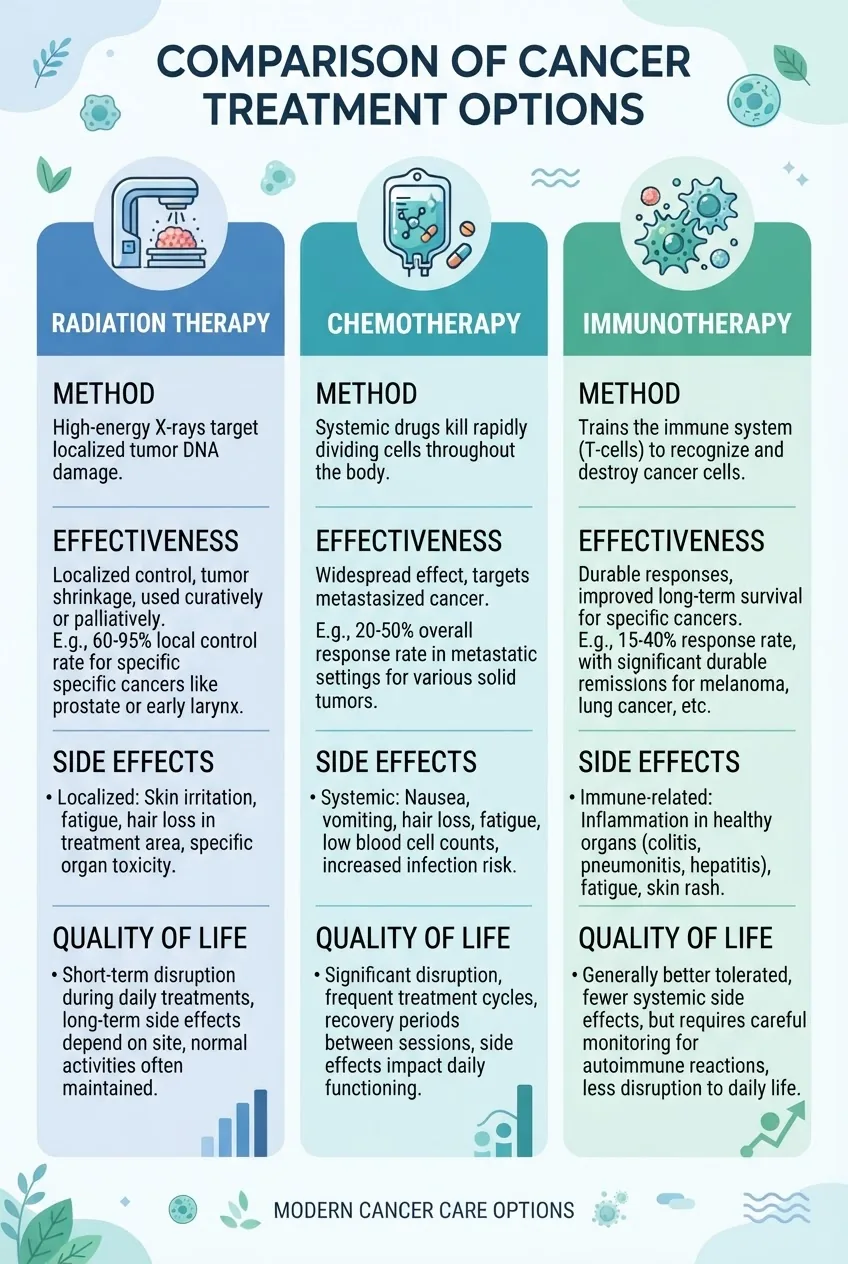
| Metric | Radiation | Chemotherapy | Immunotherapy/Targeted |
|---|---|---|---|
| Effectiveness (typical goal) | Local control or cure for site‑limited disease. | Systemic disease control; curative in some hematologic cancers. | High effectiveness when target/biomarker present; potential for durable responses. |
| Onset of response | Often rapid local symptom relief (days–weeks). | Variable; weeks to months depending on agent. | Some targeted drugs show rapid response; immunotherapy may take weeks to months for maximal effect. |
| Common long-term effects | Fibrosis, organ-specific dysfunction, secondary cancers in some cases. | Neuropathy, cardiotoxicity, endocrine dysfunction possible depending on agent. | Autoimmune toxicities; some irreversible (e.g., endocrinopathies) but often manageable. |
| Quality of life impact | Acute decline during treatment with potential long-term localized deficits. | Systemic side effects can significantly impair daily life during treatment cycles. | Variable: responders may return to good quality of life; non-responders can experience immune toxicities affecting daily function. |
Data sources and survival context: For many cancers, randomized trials and guideline panels (NCI, ACS) define when alternatives outperform radiation or serve as adjuncts. For example, in metastatic PD‑L1 incentivized lung cancer, checkpoint inhibitors improved survival compared with chemotherapy (According to a 2021 Journal of Clinical Oncology trial report). For localized head and neck cancers, radiation remains central to cure unless molecular drivers or comorbidities favor alternatives (According to a 2023 National Cancer Institute guideline summary).
Practical takeaway: Evaluate comparative outcomes in your specific cancer subtype, considering likelihood of cure, symptom relief, and long-term effects. Discuss predicted response rates, expected timelines for benefit, and quality-of-life priorities with your multidisciplinary team.
Transition: The next section provides concrete decision-making steps patients use to choose among these alternatives.
How to Choose the Best Alternative Treatment for Your Cancer
Answer: Choose by combining tumor biology (stage, biomarkers), evidence-based outcomes, multidisciplinary clinician input, patient values, and trial availability, following a stepwise shared decision-making process.
Here is a practical, clinician-aligned walkthrough patients follow when selecting non‑radiation therapies:
- Confirm diagnosis and staging. Obtain pathology review and appropriate imaging; accurate staging determines local versus systemic strategy.
- Pursue molecular profiling. Order genomic and biomarker testing (NGS, PD‑L1, MSI) to reveal targeted or immune options.
- Request a multidisciplinary tumor board review. Surgical, medical and radiation oncologists plus pathologists and palliative care should weigh in on alternatives and sequence of care.
- Compare evidence and guidelines. Ask for cited trials comparing outcomes of radiation versus alternatives in your cancer subtype (NCI or ACS guideline references help).
- Assess quality of life priorities. Clarify whether local control, systemic disease control, or symptom relief is primary.
- Evaluate eligibility for clinical trials. Trials may offer access to novel alternatives; discuss logistics and risks.
- Check comorbidity and safety. Consider prior radiation exposure, organ function, autoimmune history, and concurrent medications that affect therapy selection.
- Consider integrative support. Plan supportive care to manage side effects and maintain function during therapy.
- Get second opinions when uncertain. Especially for rare tumors or when proposed care would forgo standard-curative radiation.
- Document and revisit decisions. Treatment plans should be reviewed frequently and adapted as response data and new evidence emerge.
Specialized examples: For prostate cancer alternative options often include active surveillance, surgery, or systemic androgen-deprivation therapies rather than radiation depending on risk; see prostate cancer alternative options.
For ovarian disease-specific natural adjuncts and integrative support, consult ovarian cancer natural treatments during plan discussions with oncology teams.
Walkthrough example from patient experience: A patient with metastatic disease had NGS revealing ALK fusion. The team prioritized an ALK inhibitor rather than immediate palliative radiation; this decision followed tumor board review, insurance authorization for targeted drug, and a supportive integrative program for symptom control.
Disclaimer: This guidance is not individualized medical advice. Treatment suitability must be determined with your oncologist and care team.
Transition: Finally, we summarise what to expect next in the evolving landscape of non-radiation cancer therapies.
Conclusion and Future Outlook for Alternatives to Radiation
Answer: Alternatives to radiation are expanding rapidly through immunotherapy, targeted agents, precision medicine and better-integrated supportive care; ongoing research and trials will further personalize when radiation is necessary versus avoidable.
Research trends point to combination strategies that harness immunotherapy with targeted agents, adaptive therapies guided by real-time biomarkers and minimally invasive local ablation — all aimed at maximizing disease control while preserving quality of life. According to a 2024 industry report, investment and trial activity in cellular and immune-modulating therapies have accelerated, increasing options for patients over the next five years.
Key takeaways:
- Alternatives to radiation include systemic therapies (immunotherapy, targeted therapy), advanced local techniques, and integrative supportive measures that can reduce reliance on radiation in selected cases.
- Biomarker-driven precision medicine is central to identifying who benefits from these alternatives.
- Clinical trials remain vital for accessing cutting-edge options; use NCI and ClinicalTrials.gov resources to find eligible studies.
- Integrative therapies improve tolerance and quality of life but should be coordinated with oncology care.
For authoritative references, consult the National Cancer Institute and American Cancer Society for guidelines and clinical trial resources: National Cancer Institute and American Cancer Society. For peer-reviewed trial data, search the Journal of Clinical Oncology and other oncology journals.
Final note: Discuss alternatives with a multidisciplinary oncology team, weigh trial participation, verify biomarker testing, and plan supportive integrative care to align treatment with your goals.
If you want a tailored discussion of options for a specific diagnosis, request a multidisciplinary review or seek a second opinion at a comprehensive cancer center to explore radiation-sparing strategies and trial enrollment.