
Cancer natural treatment centers provide holistic, complementary, or alternative cancer care focused on nutrition, detoxification, mind‑body therapies and symptom management; many combine evidence‑informed complementary therapies with patient‑centred support while advising coordination with conventional oncology. This guide explains center types, common modalities, how to choose one, risks, regulation and integration steps.
Cancer Natural Treatment Centers: An Overview
Answer: Cancer natural treatment centers are facilities that offer non‑conventional or complementary approaches—such as nutritional oncology, mind‑body therapies and detoxification—either alone or alongside standard cancer care to improve quality of life, symptom control and overall wellbeing.
Term: CAM (complementary and alternative medicine) refers to medical products and practices outside standard Western medicine; integrative oncology blends evidence‑based CAM with conventional cancer treatments under coordinated care.
These centers vary from small local clinics to larger integrative hospital units. Some describe themselves as holistic cancer therapies providers emphasizing natural cancer remedies; others position as integrative cancer care centres where licensed oncologists and complementary practitioners collaborate. The core philosophies range from symptom-directed supportive care to whole‑system lifestyle and detoxification protocols intended to strengthen resilience and reduce treatment side effects.
Patient goals often determine the model chosen: symptom relief and quality‑of‑life support (common), adjuncts to active oncology care (integrative), or exclusive pursuit of alternative cancer treatment centers’ protocols (less commonly recommended by mainstream agencies). According to a 2024 report by the National Cancer Institute, use of complementary therapies among cancer patients is widespread, driven largely by symptom management and wellbeing goals (National Cancer Institute).
Practical note: these centers are part of the broader CAM landscape; a primer on how CAM fits with mainstream care is available on the pillar page under the heading CAM and integrative care.
Transitioning to the next section, the following numbered types clarify what to expect from different center models worldwide.
Types of Cancer Natural Treatment Centers
Answer: Natural cancer centers typically fall into discrete models—integrative oncology clinics, nutritional oncology clinics, detoxification therapy centers, holistic retreat‑style centers, energy‑healing and mind‑body therapy centers, and unregulated alternative cancer treatment centres—each with distinct philosophies and services.
Term: Detoxification therapy means protocols intended to reduce toxin load (diet, chelation, saunas, herbal protocols) and is defined differently across centres; scientific support varies by method.
-
Integrative oncology clinics (hospital-affiliated or multidisciplinary).
These centers explicitly combine conventional cancer treatments with complementary modalities under coordinated care plans; they commonly include oncologists, integrative medicine physicians, dietitians and licensed therapists. They emphasize evidence-based complementary therapies and safety when combining treatments with chemotherapy or radiation.
-
Nutritional oncology clinics.
Focus is on individualized nutrition plans, supplement management, metabolic support and research‑driven dietary interventions aimed at reducing treatment toxicity and supporting recovery. Some use metabolic or ketogenic protocols; credentialed dietitians and clinical nutritionists typically lead care.
alternative health care center services provide a fuller list of services often found in such clinics.
-
Detoxification therapy centers (retreat-style and outpatient).
Offer multi‑day detox protocols: juice or plant‑based diets, infrared saunas, lymphatic drainage, colon hydrotherapy and liver support. Philosophies vary: some frame detox as symptomatic support, others claim anti‑cancer benefits—evidence for clinical anti‑tumor effects is limited and method‑dependent.
-
Mind‑body and psycho‑social therapy centers.
Focus on meditation, mindfulness‑based stress reduction, yoga, expressive arts, group therapy and trauma‑informed counseling to reduce anxiety, depression and improve coping. These centers are often integrated into supportive care networks and can significantly improve patient reported outcomes.
-
Energy healing and spiritual retreat centers.
Offer Reiki, therapeutic touch, shamanic practices, and spiritual counselling. Models vary from adjunctive supportive care to primary care modalities; credentialing and regulation are inconsistent, so evaluation of practitioner experience and transparency is essential.
-
Herbal and naturopathic cancer clinics.
Provide individualized herbal formulations, high‑dose vitamins (e.g., IV vitamin C), homeopathy and naturopathic detoxification plans. Some interventions interact with conventional drugs and can alter chemotherapy metabolism; careful coordination with oncology is required.
-
Unregulated or exclusive alternative cancer centers.
These centers may recommend rejecting conventional oncology in favor of natural cures, experimental protocols, or unproven interventions; they are associated with higher risks of treatment delays and poorer outcomes in several observational studies.
According to a 2023 analysis in peer‑reviewed literature, patients who decline conventional therapy in favor of only alternative treatments face higher mortality risks in curable cancers (peer‑reviewed journals).
Geographic and legal contexts shape how these centers operate: some countries tightly regulate naturopathic or integrative medicine, while others have minimal oversight. Next, common modalities appear across many of these center types.
Common Modalities and Therapies Offered
Answer: Common modalities include nutritional oncology, acupuncture, herbal medicine, mind‑body therapies (meditation, guided imagery), manual therapies (massage), energy work, homeopathy in some clinics, IV nutrient therapy, and symptom‑focused medical cannabis therapy for pain and nausea.
Term: Nutritional oncology is the clinical use of dietary interventions, supplements and metabolic strategies to support cancer treatment and recovery.

Below is a concise listing of modalities commonly available and typical applications.
- Nutrition therapy: individualized meal plans, anti‑inflammatory diets, supplement protocols and metabolic strategies to support treatment tolerance and recovery.
- Acupuncture: used for pain, nausea, neuropathy and fatigue; some randomized trials show benefit for chemotherapy‑related nausea and pain management.
- Herbal medicine and botanical therapies: herbs used for symptom control (e.g., ginger for nausea) and immune support; herb‑drug interactions are a documented concern.
- Meditation, MBSR, guided imagery: reduce anxiety, improve sleep and may positively influence immune markers; widely recommended as adjunctive care.
- Massage and manual therapies: address pain, lymphedema (with trained therapists), and stress relief.
- Homeopathy: offered in some centers primarily for symptom relief; evidence is limited and controversial in oncology contexts.
- IV nutrient therapies (e.g., vitamin C): used by some clinics to reduce fatigue or support recovery; evidence is mixed and safety monitoring is essential.
- Medical cannabis therapy: used for pain, appetite stimulation and nausea management; legal status varies; see references on medical cannabis therapy in symptom control.
- Energy therapies (Reiki, therapeutic touch): primarily for anxiety and quality of life; evidence supports short‑term wellbeing improvements in some trials.
- Pain management techniques: non‑opioid alternatives, acupuncture, physical therapy and integrative approaches to chronic cancer pain.
Cross‑references: some modalities overlap with treatments for other illnesses—see resources on herbal and natural treatments and alternative pain management options for modality comparisons.
alternative treatments for prostate cancer — modality applications vary by cancer type and disease stage.
natural ovarian cancer treatments are an example of how centers adapt protocols to specific diagnoses.
medical cannabis therapy is frequently included for symptom control where legal.
Transitioning from modalities, the next section explains how to choose a reputable center and what credentials to prioritise.
Choosing the Right Cancer Natural Treatment Center
Answer: Choose a center by verifying accreditation, practitioner qualifications, documented safety protocols, transparent treatment plans and patient reviews, and by ensuring clear coordination with your oncology team.
Term: Accreditation means formal recognition by a regulatory or professional body indicating the center meets defined safety and quality standards.
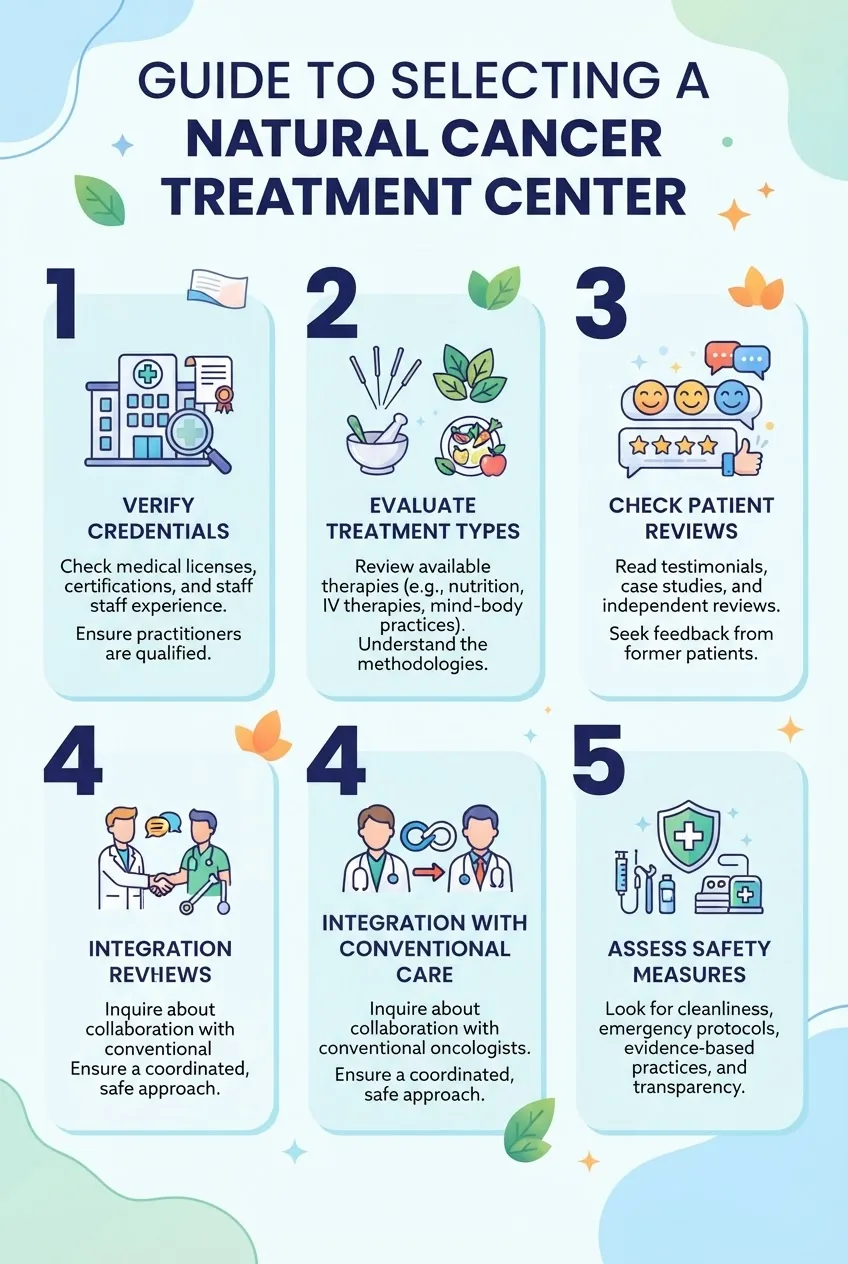
Follow this step‑by‑step evaluation process:
-
Verify credentials and licensing.
Ask for practitioner qualifications: medical licence, board certification, integrative medicine credentials, registered dietitian status, or naturopathic licence. Look for board-certified integrative practitioners when possible.
For practitioner education context, review programs in alternative medicine training and qualifications.
-
Assess evidence and treatment safety.
Request data, systematic reviews, or trial references for key interventions and inquire about known interactions with chemotherapy, targeted agents or immunotherapy. Cross‑check claims with authoritative sources such as the National Cancer Institute and WHO.
-
Review written treatment plans and informed consent.
Insist on written plans that state goals (symptom control, adjunctive care, experimental intent), likely benefits, risks, monitoring procedures and exit strategies if a therapy is not tolerated.
-
Check patient reviews and outcomes tracking.
Look for independently verified testimonials, third‑party reviews, and whether the center tracks patient‑reported outcomes and adverse events.
-
Confirm integration with conventional oncology.
Good centers will communicate with your oncologist, provide medical records promptly, and avoid recommending therapies that would conflict with standard treatments. If a center discourages standard care without documented rationale, consider that a red flag.
-
Evaluate facilities and safety procedures.
Inspect infection control, IV therapy protocols, emergency plans for infusion reactions, pharmacy handling of botanicals and sterile compounding standards if IVs are used.
-
Discuss costs and insurance coverage.
Obtain written cost estimates and ask about refund policies, expected number of sessions, and whether outcomes are tracked. Many natural therapies are out-of-pocket; clarify financial expectations upfront.
-
Trial period and measurable goals.
Agree on a time‑limited trial with specific measurable goals (pain score, nausea frequency, lab markers) and scheduled review points to decide continuation or adjustment.
Practical links: for broader context on practitioner education see alternative medicine training and qualifications.
Transition: after choosing a center, weigh its potential benefits and risks carefully.
Risks and Benefits of Alternative Cancer Treatment Centers
Answer: Alternative centers can improve symptom control, psychosocial wellbeing and supportive care, but risks include unproven claims, herb‑drug interactions, treatment delays, and variable regulation; balance benefits against documented evidence and safety monitoring.
Term: Treatment delay means postponing or declining standard cancer therapies in favour of alternative protocols, which observational studies link to worse outcomes in some cancer types.
| Aspect | Potential Benefits | Potential Risks |
|---|---|---|
| Symptom relief | Reduced nausea, pain, fatigue via acupuncture, cannabis, nutrition | Placebo effect or transient benefit without disease control |
| Quality of life | Improved mood, sleep, coping with mind‑body practices | Emotional burden if therapies fail to meet expectations |
| Biologic interventions | Supportive metabolic or immune support (varies by protocol) | Herb‑drug interactions, toxicity from unregulated supplements |
| Treatment decisions | Patient autonomy, individualized care plans | Risk of declining evidence‑based cancer therapy and worse survival |
Pros/cons summary:
- Pros: patient‑centred care, symptom control, improved wellbeing, lifestyle support, some evidence for acupuncture and MBSR.
- Cons: inconsistent evidence for many protocols, potential interactions with chemotherapy, variable regulation, and documented risks when conventional treatments are delayed or declined.
For a broader review of holistic alternatives and their evidence base, see natural cures and holistic alternatives.
Transition: integrating alternative approaches with standard care reduces many risks and is the subject of the next section.
Integration With Conventional Cancer Treatments
Answer: Integration—coordinated care between oncologists and complementary practitioners—lets patients combine evidence‑based alternative therapies with chemotherapy, radiation and surgery to improve symptom control while minimising interactions and delays.
Term: Integrative oncology is a clinical approach that uses evidence‑based complementary therapies together with conventional cancer treatments to optimize patient outcomes and safety.
Practical guidance for safe coordination:
- Open communication: Tell your oncologist and complementary providers about all medications, supplements and therapies to identify interactions.
- Shared care plans: Insist on written coordination plans that specify timing (e.g., avoiding certain herbs during chemotherapy), monitoring labs and contingency protocols for adverse events.
- Adjunctive uses: Use acupuncture for chemotherapy‑related nausea or peripheral neuropathy, evidence‑based nutrition to maintain weight and reduce toxicity, and MBSR for stress management.
- Radiation coordination: Some centers offer topical or systemic adjuncts to improve skin or mucosal healing—always discuss with radiation oncology before use. See resources on alternative therapies as adjuncts to radiation.
- Evidence checks: Compare center claims to peer‑reviewed literature and government guidance; integrate only those modalities with plausible mechanisms and safety data.
Coordination reduces the two biggest harms associated with alternative care: dangerous interactions and delays in effective conventional therapy. According to a 2024 industry summary, integrative programs that coordinate care report higher patient satisfaction and fewer adverse interactions (WHO publications on integrative care).
Transitioning from coordination to governance, the next section covers regulatory and ethical considerations that affect center reliability.
Regulatory and Ethical Considerations
Answer: Regulation of alternative cancer centers varies widely; check practitioner licensing, facility accreditation, informed consent practices, advertising claims and local legal standards to ensure ethical, lawful and safe care.
Term: Informed consent is the documented process of explaining benefits, risks and alternatives so a patient can make an informed treatment choice.
- Licensing and scope of practice: verify that clinicians practice within legally defined scopes (medical licence, dietitian registration, naturopathic licence).
- Facility accreditation: look for hospital affiliation or recognized accreditation body approvals where available.
- Advertising and claims: be cautious with centers promising cures or guaranteed outcomes—these may violate consumer protection laws.
- Informed consent and documentation: centers should provide clear consent forms describing experimental status, known evidence, and possible conflicts of interest.
- International standards: countries differ—research local law and whether therapies like IV chelation, hyperthermia or off‑label biologics are regulated.
- Ethical obligations: centers should not coerce patients to abandon conventional therapy; they must disclose conflicts and financial incentives.
For authoritative guidance on safety and prevalence of CAM use among cancer patients consult the National Cancer Institute and peer‑reviewed literature compiled at PubMed Central.
Disclaimer: Alternative therapies have limits; they should not replace proven cancer treatments without documented, informed discussions with oncology teams. If considering alternative centers, obtain written informed consent and follow safety monitoring.
Next, read anonymized patient experience summaries to understand what the care journey often feels like.
Patient Experiences and Testimonials: What to Expect
Answer: Patient experiences vary from meaningful symptom relief and improved wellbeing with integrative programs to disappointment or harm when therapies replace conventional care; expect individualized programs, measurable goals, and psychosocial support in reputable centers.
Term: Patient‑reported outcomes are measurements of symptoms, function and wellbeing collected directly from patients to evaluate treatment effects.
Example anonymized case summaries (hypothetical, representative):
-
Case A — Integrative supportive care:
A 58‑year‑old undergoing chemotherapy enrolled in an integrative oncology clinic for nausea and fatigue; after acupuncture, tailored nutrition and counseling over 12 weeks, nausea episodes dropped 60% and fatigue scores improved; care was coordinated with the oncology team and labs monitored.
-
Case B — Retreat-style detox as adjunct:
A 45‑year‑old attended a 10‑day detox programme focused on plant‑based diet, sauna and lymphatic massage to improve energy during adjuvant therapy; reported short‑term energy gains but required follow‑up with an oncologist to adjust supplement use after interaction with hormonal therapy was identified.
-
Case C — Exclusive alternative pathway (cautionary):
A 62‑year‑old with a resectable cancer delayed adjuvant chemotherapy while pursuing an exclusive alternative protocol; disease progression led to lost curative opportunity—an outcome mirrored by case series in peer‑reviewed analyses warning against rejecting evidence‑based care.
Many centers also provide mental health and supportive services; for resources on psychological supports see mental health support in cancer care.
Before finishing, review final practical takeaways and a clear call to action.
Conclusion
Answer: Cancer natural treatment centers offer diverse supportive and alternative options—integrative models are generally safest when coordinated with oncology; evaluate credentials, safety records, evidence for therapies, and insist on shared care plans to maximize benefit and minimize harm.
Key takeaways:
- Prefer integrative, evidence‑informed centers that communicate with your oncologist.
- Verify practitioner credentials, written informed consent and safety monitoring.
- Be cautious with exclusive alternative centres that advise rejecting conventional therapy.
- Track measurable goals and review progress at predefined intervals.
Ready to explore options? Start by discussing integrative therapies with your oncology team and request documented treatment plans and evidence summaries from any center you consider.