
A list of therapies catalogs clinical, complementary and alternative treatment modalities across physical, psychological, nutritional and energy-based practices; this guide defines each category, highlights common methods, and helps you compare options so you can match therapeutic approaches to health goals safely and effectively.
What are the definitions and core classifications of therapies?
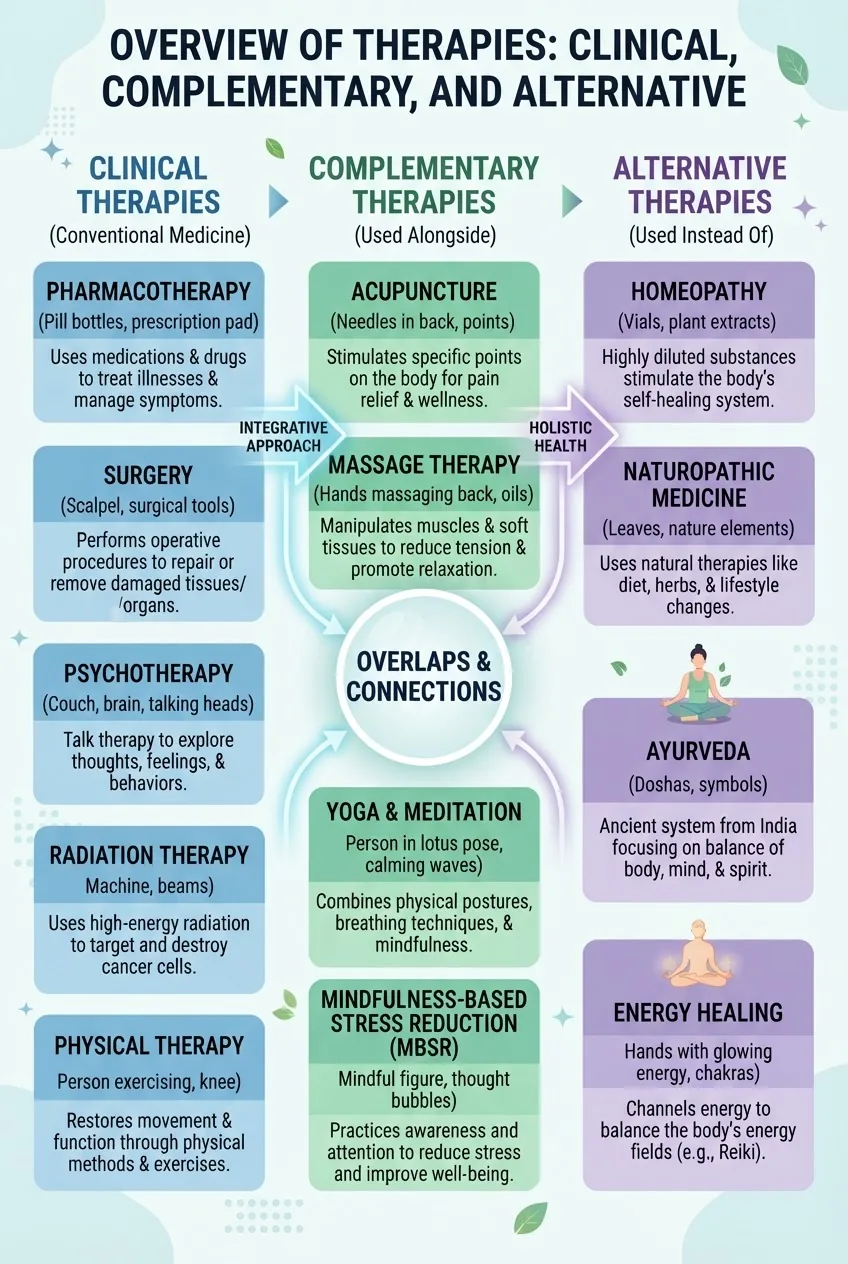
Answer: Therapies are organized into clinical, complementary and alternative categories that describe whether a treatment is part of conventional medicine, is used alongside it, or is an alternative approach; each category contains multiple modalities addressing body, mind and environment.
Therapy categories provide a practical taxonomy to compare treatment modalities by purpose, evidence base and care setting. This structured classification helps patients, clinicians and policymakers understand treatment intent (curative, palliative, rehabilitative or preventive) and how therapies can be combined for integrative care.
Term: Clinical therapies are conventional, evidence-driven medical treatments delivered by licensed healthcare professionals.
Term: Complementary therapies are non-mainstream practices used together with conventional medicine to support healing, symptom control or wellbeing.
Term: Alternative therapies are practices used in place of standard medical treatments; they often originate in traditional or holistic systems.
This guide presents a broad, structured taxonomy spanning: clinical therapies, complementary therapies, alternative therapies, integrative medicine, mind-body therapies, physical therapies, energy healing, herbal medicine, manual therapies, psychological/behavioral therapies, traditional medicine, evidence-based complementary medicine and preventative health therapies.
For a deeper review of terminology connecting conventional and alternative care, see alternative terms for Western medical practices.
What are clinical therapies and which conventional treatments are included?
Answer: Clinical therapies are evidence-based medical treatments provided in clinical settings—these include physical and occupational therapies, psychological and behavioral therapies, and pharmacological management; they focus on diagnosis, rehabilitation, symptom management and disease control.

-
Physical and Occupational Therapies
Answer: Physical therapy (physiotherapy) and occupational therapy are rehabilitative clinical therapies aimed at restoring mobility, function and independence after injury, surgery, or progressive conditions.
Term: Physical therapy is rehabilitation focused on movement, strength and pain reduction; occupational therapy focuses on restoring daily living and work-related activities.
Typical applications include post-orthopaedic rehabilitation, stroke recovery, chronic pain management and mobility improvement. Sessions combine assessment, graded exercise, manual techniques, assistive device training and home programs. According to a 2023 rehabilitation review report, multimodal physical therapy programs improve functional outcomes in many musculoskeletal disorders (source type: systematic review).
-
Psychological and Behavioral Therapies
Answer: Psychological and behavioral therapies are evidence-based treatments for mental health disorders, using structured techniques (e.g., CBT) to modify thoughts, emotions and behaviours.
Term: Psychotherapy (also called counseling) is a clinical approach using psychological methods to help clients change behaviour and manage mental health symptoms.
Common modalities include cognitive behavioral therapy (CBT), dialectical behavior therapy (DBT), acceptance and commitment therapy (ACT), exposure therapies and family therapy. These therapies are delivered in outpatient clinics, hospitals or via telehealth. For alternatives to conventional psychotherapy, see alternatives to conventional therapy for mental health.
-
Pharmacological Therapies (overview only)
Answer: Pharmacological therapies use medications to treat, manage or prevent disease; they require prescription, monitoring and evidence-based dosing strategies.
Term: Pharmacological therapy denotes drug treatments including small-molecule drugs, biologics and symptomatic medicines managed by prescribers.
Overview considerations include efficacy, side effects, drug interactions and patient adherence. Medication management often complements physical, occupational or psychological therapies. For a broader explanation, see conventional medical therapies explained.
Clinical therapies are commonly compared by purpose, duration, provider type and evidence level:
| Therapy | Primary goal | Typical provider |
|---|---|---|
| Physical therapy | Mobility improvement, pain reduction | Physiotherapists |
| Occupational therapy | Functional recovery for daily tasks | Occupational therapists |
| Psychotherapy | Mental health symptom control | Psychologists, psychiatrists, counselors |
| Pharmacological therapy | Disease management, symptom reduction | Physicians, pharmacists |
Clinical therapies are typically the first-line interventions for serious or acute conditions and are the benchmark against which complementary or alternative modalities are measured. Evidence summaries and clinical guidelines can be found at the CDC and peer-reviewed literature databases.
How do complementary therapies enhance conventional care?
Answer: Complementary therapies are adjunct treatments used alongside conventional medicine to improve symptom management, promote recovery, reduce side effects and support overall wellbeing.
Term: Complementary medicine refers to non-mainstream practices used together with standard medical care to enhance outcomes.
Complementary therapies span mind-body, manual, nutritional and herbal approaches; they are often integrated into rehab, oncology supportive care, chronic disease management and mental health programs. Clinical evidence varies by modality—some therapies (e.g., mindfulness-based stress reduction) have robust data, while others have limited or emerging evidence. According to a 2022 integrative care review report, selected complementary therapies can reduce symptom burden and improve quality of life in chronic conditions (source type: review article).
Mind-Body Therapies
Answer: Mind-body therapies use cognitive and behavioral techniques to influence physical health through stress reduction, improved coping and neurological regulation.
Term: Mind-body therapies include practices like meditation, yoga and biofeedback that modulate psychological and physiological responses.
- Meditation and mindfulness: Structured practices that reduce stress, improve mood and support chronic pain management; supported by multiple randomized trials.
- Yoga therapy: Therapeutic yoga adapts poses and breathwork to address back pain, anxiety and functional limitations; see professional training guidelines in integrative care literature.
- Biofeedback: Uses real-time physiological monitoring (e.g., heart rate variability) to teach self-regulation for headaches, hypertension and anxiety.
Manual Therapies
Answer: Manual therapies use hands-on techniques such as massage and spinal manipulation to relieve musculoskeletal pain and improve function when used alongside conventional care.
Term: Manual therapy describes hands-on modalities like massage, chiropractic adjustments and reflexology targeting soft tissues and joints.
Common uses include low back pain, neck pain and soft-tissue injuries. For clinical settings offering these services, see alternative health care center services. For pain-specific alternatives, consult alternative therapies for pain management.
Nutritional and Herbal Therapies
Answer: Nutritional therapies and herbal medicine support health through diet, supplements and botanicals, often used to complement medical treatment or address deficiencies.
Term: Herbal medicine uses plant-derived preparations; nutritional therapy focuses on dietary modification and supplements.
Applications include oncology supportive nutrition, management of metabolic syndrome and adjunctive strategies for mood disorders. Medical cannabis is a growing herbal therapy option; see medical cannabis and therapeutic use. For definitions and clinical contexts, see definition and use of complementary therapies.
Evidence for complementary therapies ranges from well-supported (e.g., acupuncture for some pain conditions in meta-analyses) to exploratory; professionals such as integrative medicine practitioners can help prioritize evidence-based options. The National Center for Complementary and Integrative Health provides overviews on safety and evidence—see NCCIH.
What are alternative therapies and which non-conventional practices exist?
Answer: Alternative therapies are non-conventional practices used instead of standard medical treatments and include energy healing, traditional systems (Ayurveda, TCM), naturopathy, homeopathy and aromatherapy—evidence and safety vary widely.

- Reiki and therapeutic touch: energy-focused practices that claim to manipulate a client’s subtle energy fields to promote relaxation and healing; clinical trials are mixed and often small-scale.
- Acupuncture: a component of Traditional Chinese Medicine involving needle insertion at specific points; acupuncture is sometimes classified as alternative or complementary depending on context and is supported for some pain and nausea conditions.
- Ayurveda and Traditional Chinese Medicine (TCM): comprehensive traditional systems using herbs, manual techniques, diet and lifestyle; they provide holistic frameworks and are culturally embedded forms of care.
- Naturopathy and homeopathy: naturopathy combines nutrition, lifestyle, and selective natural treatments; homeopathy uses highly diluted substances and is controversial due to weak evidence.
- Aromatherapy and essential oils: plant-derived volatile oils used for mood, sleep and mild symptom relief—safety depends on dilution and application method.
Energy Healing Therapies
Answer: Energy healing therapies like Reiki and therapeutic touch aim to influence the body’s ‘energy’ to reduce stress and promote relaxation; clinical evidence is limited and often subjective.
Term: Energy healing refers to non-physical interventions that practitioners claim modulate a biofield or subtle energy.
While many patients report subjective benefits (reduced anxiety, improved sleep), randomized controlled trials show mixed outcomes; these therapies are commonly integrated into holistic care centers. For broader context, see overview of alternative healthcare methods in related resources.
Traditional and Indigenous Medicine
Answer: Traditional systems such as Ayurveda and TCM, and indigenous healing practices, provide holistic frameworks combining herbs, manual therapies and ritual; their effectiveness varies across modalities and conditions.
Term: Traditional medicine denotes long-standing healing systems that are culturally transmitted and often include spiritual, herbal and manual elements.
These systems emphasize balance (doshas in Ayurveda; yin-yang and qi in TCM) and often include complex diagnostic models. For guides and examples of traditional healers, see Traditional Healers: Practices and Examples of Holistic Medicine.
Other Alternative Practices
Answer: Additional alternative modalities—naturopathy, homeopathy, aromatherapy—offer lifestyle-focused and botanical options but often lack consistent high-quality evidence.
For those exploring careers or formal education in these fields, consult careers in alternative medicine and alternative medicine degree programs.
Patients considering alternative therapies for serious conditions should consult clinicians and review evidence; explore condition-specific resources such as alternative treatment options for prostate cancer, holistic alternatives for cancer treatment, and alternatives to radiation therapy. For condition-specific complementary options, see alternative therapies for asthma and allergies and holistic alternatives for ovarian cancer.
For a broad contextual overview of alternative healthcare approaches, consult overview of alternative healthcare methods and peer-reviewed resources via NCCIH.
What does integrative and holistic care look like when therapies are blended for wellness?
Answer: Integrative and holistic approaches combine evidence-based clinical therapies with complementary and selected alternative practices in a coordinated, patient-centred plan to address biological, psychological and social factors affecting health.
Term: Integrative medicine is a coordinated model that blends conventional and complementary therapies to optimize outcomes and patient experience.
Integrative care emphasizes shared decision-making, individualised treatment plans and multimodal strategies. A practical example is oncology supportive care where chemotherapy (clinical) is combined with acupuncture (complementary) for nausea control, nutritional counseling for weight maintenance, and mind-body therapy for anxiety reduction.
Illustrative examples:
- Chronic pain program: Combines physical therapy, CBT, mindfulness training and tailored manual therapy to reduce reliance on opioids and improve function—evidence from interdisciplinary pain clinics shows better long-term outcomes (source type: clinical program evaluations).
- Cardiac rehabilitation: Integrates exercise physiotherapy, dietary counseling, stress management and smoking cessation support to lower recurrence risk and improve quality of life.
- Primary care integrative model: Uses lifestyle medicine, targeted supplements, evidence-based mind-body approaches and conventional pharmacotherapy as needed for metabolic syndrome management.
For professional certification and training pathways for clinicians practicing in these models, see board certified integrative medicine and for definitions see definition of integrative medicine.
How should I choose the right therapy for my health needs?
Answer: Choose a therapy by clarifying therapeutic goals, assessing evidence and risks, consulting qualified professionals, considering interactions with current treatments, and monitoring outcomes with objective measures and timelines.
Follow these step-by-step decisions and tips:
- Define goals: Specify whether you want symptom relief, functional recovery, disease modification or preventive care.
- Gather evidence: Search guidelines and reviews; ask providers for research supporting a modality. For disease-specific therapy options, consult resources on diseases treatable by various therapies.
- Check qualifications: Verify practitioner licences, certifications and association memberships (e.g., physiotherapy boards, integrative medicine boards).
- Assess safety and interactions: Review medication interactions for supplements/herbs and disclose all treatments to your clinician.
- Set measurable outcomes and timeframe: Agree on objective metrics (pain scores, mobility tests, mood scales) and reassess at pre-defined intervals.
- Seek second opinions: For serious illnesses consider multidisciplinary reviews and, if interested in non-conventional providers, research natural treatment centers via natural treatment centers for cancer when relevant.
If a therapy isn’t working within an agreed timeframe, re-evaluate the plan, escalate to or consult with a conventional specialist, and document changes. Practical decision frameworks increase safety and likelihood of measurable benefit.
What are current trends and future directions in health therapies?
Answer: Trends include growth in evidence-based complementary therapies, digital therapeutics, personalized and precision medicine, and integrated care models that combine clinical and holistic approaches.
Key trends and examples:
- Evidence-based complementary medicine: Increasing high-quality trials on modalities like mindfulness, acupuncture and certain herbal products; systematic reviews are refining clinical indications (According to a 2023 meta-analytic review report).
- Digital therapeutics and telehealth: Apps delivering CBT, remote physiotherapy sessions and biofeedback are expanding access—telehealth evidence demonstrates comparable outcomes in many contexts (According to a 2022 telehealth outcomes review report).
- Personalized and precision approaches: Integration of genomics, microbiome data and metabolic profiling to tailor nutritional, pharmacological and lifestyle interventions (According to a 2024 industry report on personalized medicine).
- Interdisciplinary care models: Hospitals and clinics increasingly offer integrative programs combining oncology, rehabilitation and supportive complementary services to improve patient-centred outcomes.
As the field evolves, authoritative guidance from government health agencies and professional bodies will remain essential; for research access, consult peer-reviewed journals and government institutions such as CDC and NCCIH.
What are the key takeaways and where can I learn more?
Answer: Therapies span clinical, complementary and alternative categories; prioritize evidence-based options, consult qualified professionals, and use integrative approaches judiciously to match therapies to your health goals.
Summary resources for further learning:
- Professional directories and peer-reviewed journals: search PubMed and specialty society pages for condition-specific guidance.
- Patient-centred guides and clinical overviews found on government and national health institute websites.
- Local integrative health centers and training programs for experiential learning—see Integrative Health Centers: Services and Alternative Treatment Guide.
Conclusion: Use this list of therapies to map options, verify evidence, coordinate with your healthcare team and choose safe, effective combinations of clinical, complementary and alternative treatments tailored to your goals. To explore specific professional training and practitioner directories, browse the related articles linked throughout this guide.