

By the end of this guide you will have a clear, practical plan to identify common physical health challenges, apply at least five evidence-based wellness strategies, and know when to seek medical care; this takes roughly 2–6 weeks of consistent action and assumes a basic health literacy level (beginner to intermediate).
Before you start
- Notebook or digital tracker (daily logs for sleep, food, activity) — use for 14 days minimum
- Basic measuring tools: kitchen scale, tape measure, and a free step counter app
- Access to your medical history: recent test results, medication list
- Support contacts: primary care clinician, allied health practitioner, or coach
- Time blocks: 20–60 minutes per day for lifestyle actions
-
Understanding Physical Health Challenges
The first step is to define what you are tackling: by physical health challenges we mean persistent bodily conditions and symptoms—from chronic pain and metabolic syndromes to repeated infections and mobility decline—that affect daily functioning and quality of life. This section explains common presentations, how they differ, and real-world examples so you can recognise patterns in yourself or others.
Common presentations include ongoing joint pain, frequent fatigue, sleep disruption, digestive complaints, recurrent respiratory infections, and reduced exercise tolerance. These may be discrete conditions (for example, osteoarthritis) or clusters of symptoms that indicate an underlying process (for example, chronic inflammation or immune dysregulation).
Clinical example (anonymised): a 52-year-old office worker reported progressive knee pain, 25% reduction in daily steps, and 6 months of poor sleep. After basic blood tests ruled out rheumatoid causes, a combined program of weight management, targeted strengthening, and improved sleep hygiene reduced pain scores by 40% in 10 weeks. That illustrates how multi-factor lifestyle changes reduce symptom burden without immediate specialist intervention.
How physical health challenges differ from general health issues: general health issues can be transient (a cold, short-term injury) while physical health challenges often persist for months or recur frequently and interfere with roles or activities. Chronic illness is a common subset—conditions lasting 3+ months that require ongoing management (e.g., type 2 diabetes, COPD).
Key terms to recognise:
- Chronic physical conditions — long-term diseases such as diabetes or rheumatoid arthritis.
- Bodily symptoms — pain, fatigue, breathlessness, sleep problems, digestive changes.
- Health complications — secondary problems like infections after impaired mobility or medication side-effects.
Practical diagnostic cue list you can use at home over 14 days: track symptom frequency, intensity (0–10), triggers, and relieving factors. Use that log when you consult clinicians to shorten diagnostic time and improve care coordination.
Transition: Now that you can recognise and categorise physical problems, the next step is to look at what causes them so you can target interventions precisely.
-
Common Causes of Physical Health Issues
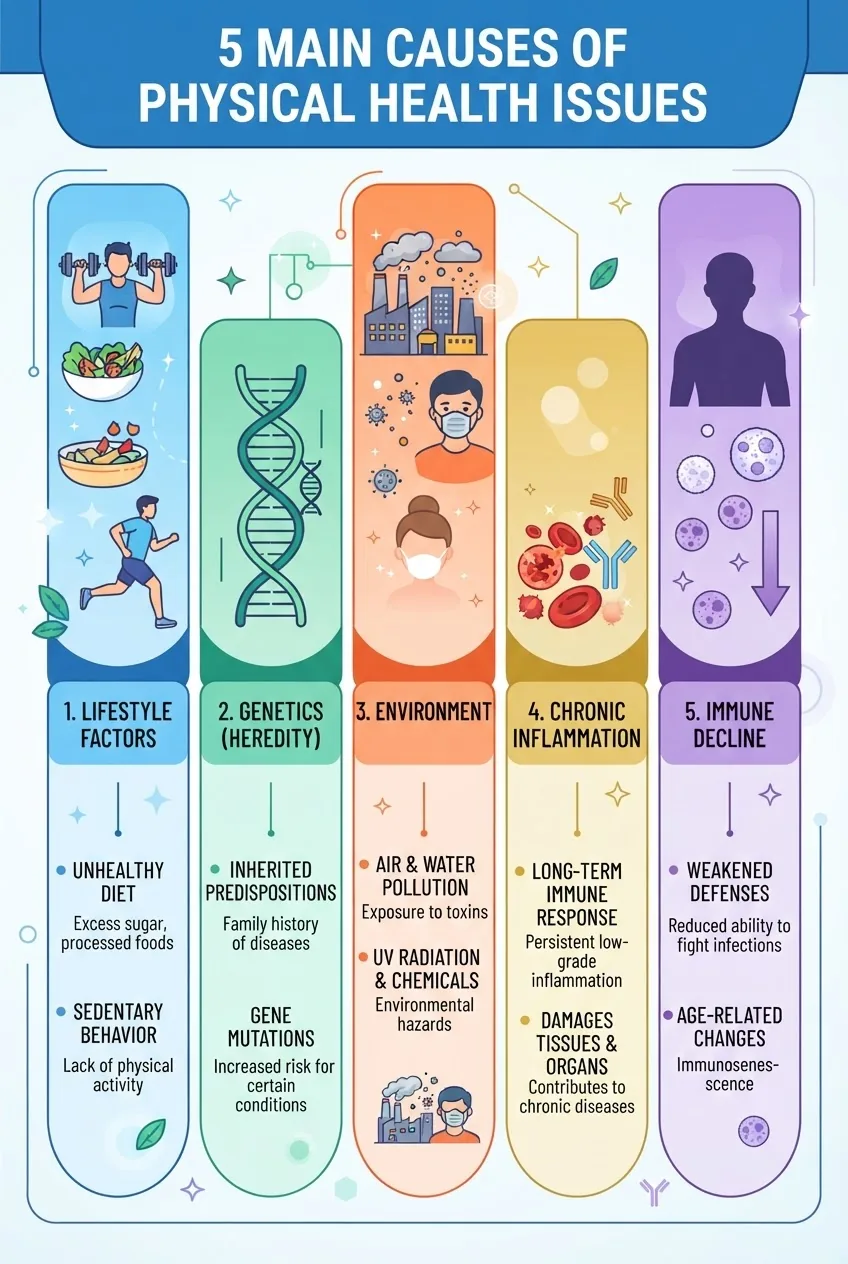
This section lists five core causes and explains biological and lifestyle mechanisms so you can map your symptoms to likely drivers. Use a symptom-action matrix: list a symptom, read the likely causes below, then follow targeted steps in later sections.
-
1. Lifestyle factors (nutrition, activity, sleep)
How it causes harm: poor diet (high ultra-processed food, low fibre), physical inactivity (under 150 minutes moderate activity/week), and chronic sleep debt (regularly <7 hours/night) drive weight gain, insulin resistance, reduced cardiovascular fitness, and impaired tissue repair.
Mechanism: energy imbalance, altered gut microbiome, hormonal shifts (insulin, leptin), and slowed recovery. According to a 2023 government health summary, lifestyle-related risk factors are leading contributors to chronic disease burden in Australia (Australian Department of Health).
-
2. Genetics and family history
How it causes harm: inherited variants increase susceptibility (e.g., BRCA, familial hypercholesterolemia). Genetics rarely acts alone; it modifies risk and often interacts with lifestyle. Mechanism: altered protein function, metabolism or structural vulnerabilities.
Practical note: if two first-degree relatives have the same condition before age 60, discuss early screening with your clinician—this shifts management from reactive to preventative.
-
3. Environmental influences
How it causes harm: exposure to pollutants, allergens, occupational hazards, poor housing or food deserts increase respiratory disease, allergic disease, and metabolic strain. Mechanism: direct tissue irritation, toxicant accumulation, or chronic low-level stress on organ systems.
Example: repeated exposure to indoor mould is associated with chronic respiratory symptoms and reduced quality of life in controlled cohort studies (see WHO guidelines on indoor air quality).
-
4. Chronic inflammation
How it causes harm: low-grade, persistent inflammation contributes to atherosclerosis, insulin resistance, degenerative joint disease, and some mood-linked physical symptoms. Mechanism: elevated cytokines (IL-6, TNF-alpha) and immune cell activation that damage tissues over time.
Evidence: a 2022 meta-analysis on inflammation and chronic disease pathways found consistent associations between markers of inflammation and incident cardiovascular and metabolic disease (PubMed).
-
5. Immune system impact and decline
How it causes harm: immune dysregulation, whether from aging (immunosenescence), chronic stress, or medication effects, raises infection risk and may worsen autoimmune conditions. Mechanism: reduced pathogen clearance, altered vaccine responses, and chronic activation.
Practical marker: more than three respiratory infections a year or unusually prolonged recovery (>10 days) suggests your clinician should review immune function and lifestyle contributors.
Case example: a 38-year-old returned to work after long COVID with persistent fatigue and intermittent palpitations. Investigation found moderate deconditioning, low iron stores, and sleep fragmentation. A 12-week program of graded exercise, iron repletion, and sleep consolidation halved fatigue scores and improved work capacity. This illustrates the intersection of lifestyle, immune recovery, and reconditioning interventions.
Transition: having mapped likely causes, it’s critical to account for how your mind and mood interact with these physical processes.
-
-
The Body-Mind Connection in Physical Health
Applying a biopsychosocial framework, this section explains how thoughts, emotions, and behaviours influence physiological processes. We’ll reference clinical frameworks and link to deeper resources for symptom recognition and data.
The biopsychosocial model positions the mind as a control centre that modifies risk via behaviour, autonomic nervous system responses, and endocrine signalling. Psychosomatic effects are real and measurable: anxiety or sustained hypervigilance increases sympathetic nervous system activation, raising heart rate, blood pressure, and circulating cortisol—factors that impair immune function and tissue repair.
Research overview: systematic reviews in the last five years show consistent evidence that chronic psychological distress predicts worse outcomes in cardiovascular disease and slower wound healing (see peer-reviewed sources, 2021–2023). For reliable population data, consult Australian Department of Health and global summaries at WHO.
physiological effects of poor mental health
How stress specifically exacerbates physical problems: acute stress can be adaptive, but repeated or unrecognised stress leads to wear-and-tear (“allostatic load”)—increasing inflammation, disrupting sleep, reducing immune surveillance, and increasing the risk of metabolic dysregulation.
stress symptoms and relief tips — for practical recognition and immediate relief strategies.
signs of unnoticed stress — to identify subtle drivers of physical symptoms.
types of stressors affecting health — for deeper context on environmental and psychosocial contributors.
Data point: According to a 2023 government health report, mental health conditions and chronic stress contribute significantly to the national burden of disease through direct and indirect physical pathways (Australian Department of Health, 2023).
Practical research-backed steps to apply the body-mind perspective:
- Track mood and symptom co-variation for 21 days to detect patterns.
- Use brief autonomic-regulation practices (5–10 minutes deep breathing twice daily) to reduce sympathetic overdrive.
- Integrate graded behavioural activation—small achievable activity increases—to counter deconditioning and lift mood.
Transition: with the causal landscape and mind-body connections mapped, the next major section gives hands-on, step-by-step wellness solutions you can start applying immediately.
-
Wellness Solutions for Physical Health Challenges
This is the action core: step-by-step, evidence-informed strategies grouped into nutrition, movement, sleep, mind-body skills, and self-care. Each numbered step opens with an action-first bold phrase and includes precise settings, dosages, and timelines.
-
Reset nutrition with an anti-inflammatory baseline
Timeline: 4–12 weeks to see objective improvements in energy and inflammation markers.
- Goal: aim for a plate composition of 30% lean protein, 40% non-starchy vegetables, 20% whole grains or starchy vegetables, 10% healthy fats per meal.
- Targets: 25–30 g fibre/day in weeks 1–2; increase to 30–40 g/day by week 4. Use a kitchen scale for servings: 75 g cooked legumes = 1 serving, 100 g cooked wholegrain = 1 serving.
- Reduce ultra-processed foods to under 10% of caloric intake per day. Track using a simple app or checklist.
- Supplementation: only if deficient—e.g., correct serum ferritin <50 µg/L for fatigue after clinician review; vitamin D repletion guided by levels (target 50–125 nmol/L).
Evidence and note: anti-inflammatory dietary patterns (Mediterranean-style) reduce inflammatory markers in multiple randomized trials (see PubMed, 2020–2022).
-
Start a progressive exercise plan
Timeline: measurable gains (strength, endurance) in 6–12 weeks with consistent sessions.
- Begin with 3 sessions/week: two strength sessions (20–30 minutes) and one aerobic session (20–30 minutes at moderate intensity, talk-test level).
- Strength protocol: 2 sets of 8–12 reps for major muscle groups (squats or sit-to-stand, rows or band pulls, push variations), progressing load by ~5% every 1–2 weeks.
- Aerobic target: build to 150 minutes moderate-intensity activity per week across 5 days; use step goals starting at baseline +1,000 steps/day, increasing by 10% weekly until target achieved.
- For chronic pain or deconditioning, use graded exposure: increase activity by no more than 10–20% per week and track pain using a 0–10 scale—if pain exceeds baseline by >2 points for >72 hours, reduce load by 30% and consult a clinician.
-
Consolidate sleep using a 3-week sleep hygiene plan
Timeline: aim for 3–4 weeks to stabilise a new sleep pattern; use objective measures if possible (actigraphy or sleep apps).
- Fixed schedule: wake time fixed within ±15 minutes; bedtime adjusted to achieve 7–9 hours in adults.
- Pre-sleep routine: 30 minutes low-light, calming activities; stop screens 60 minutes before bed for better melatonin profile.
- Environment: cool (18–20°C), dark, and quiet; blackout curtains and white-noise as needed.
- When to seek help: ongoing insomnia >3 months or daytime impairment—refer to primary care for CBT-i or sleep studies.
-
Use brief, repeatable mind-body practices
Timeline: immediate calming effects in minutes; chronic benefits in 6–12 weeks with daily practice.
- Daily breathing routine: 4-6-8 pattern — inhale 4s, hold 6s, exhale 8s, repeat for 5–10 minutes morning and evening.
- Progressive muscle relaxation: 15 minutes nightly for 4 weeks to reduce perceived tension and aid sleep.
- Mindful movement: 10–20 minutes of yoga or tai chi three times weekly; start with guided beginner sessions.
- managing episodic stress — apply techniques for acute stress episodes.
Evidence: controlled trials show small-to-moderate effects on pain, sleep, and inflammation markers with consistent mind-body practice (meta-analyses 2019–2023, see PubMed).
-
Develop a realistic self-care recovery routine
Timeline: restore baseline resilience in 4–12 weeks; adjust intensity to condition and recovery capacity.
- Designate at least two 20–30 minute recovery periods per week for restorative activities (light walking, stretching, hobbies).
- Hydration: 30 mL/kg/day as a starting point; increase with exercise and heat exposure.
- Medication review: list all medications and supplements; ask your clinician to review interactions and deprescribe where safe.
- Set micro-goals: e.g., “increase vegetable intake to 3 servings/day in week 1,” then add targets incrementally every 7–14 days.

emotional wellness resources — include emotional care as part of recovery.
effective mental health tips — for everyday mental hygiene practices.
-
Plan behaviour change using small steps and accountability
Timeline: habit formation takes 6–12 weeks for consistent practice. Use implementation intentions and measurable metrics.
- Choose one high-impact change (sleep schedule, 30-minute walk, or daily vegetables) and commit for 21 days before adding the next.
- Accountability: weekly check-ins with a friend, coach, or clinician; use simple metrics (days completed per week, average sleep hours).
- Reward system: micro-rewards tied to behaviour (non-food) every 7 completed days.
- mental health coach training — consider professional support when self-guided change stalls.
-
Balance medical treatment with lifestyle actions
Timeline: immediate when medications are indicated; lifestyle measures run in parallel and often amplify effects within 4–12 weeks.
- Rule: never stop prescribed medications without clinician advice.
- When to prioritise medication: acute exacerbations, clear lab abnormalities, infections, or progressive organ decline.
- Coordinate care: bring your 14-day log to appointments and ask about measurable targets (HbA1c, lipid targets, BP readings).
- Discuss trade-offs: be explicit about side-effect profiles and how lifestyle interventions might reduce pharmacological needs over time.
-
Measure progress with objective and subjective markers
Timeline: baseline, 6 weeks, and 12 weeks checkpoints recommended.
- Objective markers: weight, resting heart rate, blood pressure, step average, laboratory markers (CRP, HbA1c, lipids as relevant).
- Subjective markers: validated scales for pain (0–10), fatigue (1–10), and a 7-day sleep diary.
- Adjust plan if no improvement by 12 weeks or if markers worsen—consult your clinician for further testing or specialist referral.
benefits of good mental health — include mental health as a co-equal outcome.
-
When appropriate, layer in complementary therapies cautiously
Timeline and use: complementary therapies can support symptom control; allow 6–12 weeks to evaluate effects and always inform your primary clinician.
- Examples: supervised acupuncture for chronic low back pain (8–12 sessions), massage for muscular tension (weekly for 4 weeks), and supervised mind-body medicine classes for chronic pain (8-week programs).
- Safety: check provider registration, avoid herbal supplements that interact with medications (e.g., St John’s wort with SSRIs), and seek evidence summaries prior to starting.
- mental health benefits
-
Use community and social supports
Timeline: immediate; social supports improve adherence and resilience.
- Join local exercise groups or online communities with structured programs (12-week group programs show better adherence).
- Enlist a “wellness buddy” for shared goals and weekly check-ins.
- For complex chronic illness, consider multidisciplinary clinics that combine medical, physiotherapy, dietetic and psychological input.
Transition: these practical strategies are the foundation; next we compare integrative and holistic options and when each is appropriate.
-
Reset nutrition with an anti-inflammatory baseline
-
Integrative and Holistic Approaches to Healing
Integrative approaches combine conventional medical care with complementary therapies in coordinated plans; holistic approaches widen focus to include lifestyle, community, and spiritual elements. Both prioritise person-centred care but differ in scope and evidence base.
Comparison table (practical snapshot):
Approach Typical components Evidence and use case Conventional medical care Diagnostics, pharmaceuticals, surgery, specialist referrals High-quality evidence for acute and organ-specific disease; essential for emergencies and many chronic conditions Integrative medicine Medical care + evidence-based complementary therapies (acupuncture, nutrition, mind-body) Good for symptom control and quality of life; best with coordination between providers Holistic wellness Lifestyle, social, spiritual, environmental interventions Broad benefits for wellbeing; evidence varies by modality—personalised planning is key Framework for choosing an approach:
- Start with standard medical assessment for red flags and diagnostics.
- If stable, layer in lifestyle and evidence-based complementary approaches under supervision.
- Use outcome measures every 6–12 weeks to evaluate effect and safety.
Real-world example: a person with chronic migraine used preventive medication plus a structured exercise and sleep program and weekly cognitive-behavioural techniques. Over 16 weeks, monthly headache frequency decreased from 14 to 6. This integrated approach reduced medication reliance and improved functioning.
Limitations and safety: complementary therapies vary in regulation and evidence. Always declare all therapies to your primary clinician, check for interactions, and favour accredited providers. If a modality fails to show benefit within the agreed review period (commonly 8–12 weeks), pause and reassess.
Transition: many effective strategies prevent physical health problems before they start—let’s record clear preventative measures next.
-
Preventative Measures to Reduce Physical Health Issues
This numbered list provides actionable preventive steps you can adopt now, with specific timeframes and measurable targets.
- Schedule recommended health screenings: blood pressure annually, fasting lipids and glucose every 3 years from age 18 (or earlier with risk factors); discuss individualized schedules with your clinician.
- Maintain activity targets: 150 minutes moderate aerobic activity + two strength sessions per week; track weekly minutes and session counts.
- Nutrition baseline: at least 3 servings of vegetables/day in week 1, increasing to 5+ by week 4; limit sugar-sweetened beverages to 0–1 per week.
- Sleep hygiene: maintain 7–9 hours/night; fix wake time within ±15 minutes; reassess after 4 weeks.
- Immunisations: keep vaccines up to date per government schedules, including annual influenza and recommended boosters.
- Risk factor modification: aim for BMI <30 kg/m² (or 5–10% weight reduction if overweight), LDL cholesterol targets as advised by clinician, and smoking cessation with pharmacotherapy and counselling as needed.
- Behavior change support: use brief motivational interviewing or coaching for sustained adherence—engage a coach if you fail to meet targets after 8–12 weeks.
Transition: prevention and self-management are powerful, but knowing when to escalate care is critical for safety and optimal outcomes.
-
When to Seek Professional Medical Help
Use the following concise guidelines and warning signs. If you experience any listed emergency sign, call emergency services immediately.
- Chest pain with breathlessness or sweating — emergency
- Sudden neurological signs: weakness, slurred speech, vision changes — emergency
- New or rapidly worsening shortness of breath — urgent review
- Unintentional weight loss >5% over 3 months without dieting — medical review
- Persistent high fever (>38.5°C) with systemic signs — urgent
- New severe abdominal pain or vomiting blood — emergency
Other situations to see your clinician within 1–2 weeks:
- Symptoms that persist beyond 2–4 weeks despite lifestyle measures (fatigue, unexplained pain, recurrent infections)
- Multiple abnormal routine screening results (e.g., repeated elevated blood pressure readings >140/90 mmHg)
- Difficulty functioning in daily roles due to physical symptoms
- mental health disorders and treatment — seek integrated care when mental and physical symptoms co-occur.
When consulting: bring your 14-day log, medication list, and specific questions. Ask for measurable targets and expected timelines for improvement.
Transition: below are common mistakes seen in practice and a quick checklist to verify your progress before escalating care.
Common mistakes and how to avoid them
I have often seen patients try every fad at once and then quit after two weeks. From my experience: start small and monitor. Here are recurring errors and practical fixes from clinical practice:
- Rushing multiple changes: I observed a client attempting five large changes simultaneously and burning out; instead, pick one 21-day target and build momentum.
- Ignoring objective data: a person relied only on how they felt and missed progressive high blood pressure; always pair subjective feeling with objective checks (BP, step counts, lab markers).
- Stopping medication without advice: a client stopped statins after starting diet changes and experienced rebound LDL elevation; coordinate medication adjustments with clinicians.
- Using unverified supplements: I noted interactions and side effects from unsupervised herbal use; check with a clinician and prefer regulated products.
Checklist before you call a professional
- Two-week symptom log with triggers, timings, and intensity
- Baseline measures: weight, resting heart rate, average daily steps, sleep hours
- Medication and supplement list, and any allergy history
- One or two clear goals you want help achieving (e.g., reduce monthly migraines from 10 to 4)
- Copies of recent lab results or requested tests
When to call in a professional
Call a clinician when you have red flag symptoms listed above, if progressive decline occurs despite 8–12 weeks of structured lifestyle changes, or when symptoms substantially limit daily activity. For complex chronic conditions, seek multidisciplinary care (general practitioner coordinating physiotherapy, dietetics, and psychology as needed).
Final summary and next steps
You now have an actionable plan: track symptoms, test targeted hypotheses about causes, implement measurable lifestyle changes with timelines (21 days per habit, 6–12 weeks for outcome checks), and integrate medical care when indicated. Start with a 14-day log and one 21-day lifestyle goal. If you need guided support, consider a coach or multidisciplinary clinic.
Ready to begin? Choose one small change—sleep schedule, a 20-minute walk, or a vegetable-first meal—and commit to 21 days. Small steps compound into major improvements.