Yes—acupuncture can reduce symptoms of anxiety for many people as a complementary therapy by modulating stress hormones, increasing calming neurochemicals and addressing energy imbalances described in Traditional Chinese Medicine; results vary, and it’s best used alongside evidence-based psychological or medical care when needed.
What is Anxiety and How Can Acupuncture Help?
Answer: Acupuncture can help by reducing physiological stress responses and by restoring balance according to TCM patterns, providing symptom relief, improved sleep and reduced worry in many patients when delivered by a trained practitioner.
Term: Anxiety is a cluster of symptoms and disorders characterised by excessive worry, hyperarousal, avoidance and physical signs such as rapid heart rate and muscle tension.
Understanding Anxiety from a Western and TCM Perspective
From a Western medical view, anxiety disorders include generalized anxiety disorder (GAD), panic disorder, social anxiety disorder and phobias; they involve dysregulated stress-response systems such as the hypothalamic–pituitary–adrenal (HPA) axis and autonomic nervous system, producing symptoms like racing heart, insomnia and intrusive worry.
Term: Qi in TCM refers to vital energy flowing through channels called meridians; imbalance or stagnation of Qi is used to explain symptoms like restlessness or palpitations.
TCM describes anxiety often as Shen (mind/spirit) disturbance—Shen requires stable nourishing to rest; patterns include Heart Shen disturbance, Liver Qi stagnation, and Spleen Qi deficiency, each mapped to specific symptoms and lifestyle triggers. Acupuncture aims to rebalance Qi and calm Shen.
Mechanisms of Acupuncture in Anxiety Treatment
Answer: Biologically, acupuncture appears to release endorphins, modulate neurotransmitters (serotonin, GABA), reduce cortisol levels and change autonomic balance; in TCM it restores Qi flow and calms Shen, together producing anxiety symptom reduction.
Mechanistic evidence includes:
- Neurochemical effects: needling stimulates endogenous opioids and alters serotonin and GABA pathways, supporting reduced anxious arousal.
- Stress hormone regulation: several studies report reduced cortisol after regular treatments, indicating HPA-axis modulation.
- Autonomic rebalancing: heart rate variability (HRV) improvements suggest a shift toward parasympathetic (rest) dominance after acupuncture.
Term: Shen is the TCM concept of the mind/spirit; calming Shen means reducing agitation, insomnia and excessive thinking.
Common Acupuncture Points Used to Treat Anxiety
Answer: Practitioners frequently use calming points such as Yintang, Shen Men (HT7), Heart 7, Pericardium 6, and Liver 3 to relieve anxiety symptoms, often combined with scalp or ear points for faster symptom relief.
Descriptions (no charts):
- Yintang — a calming midforehead point used for restlessness and racing thoughts.
- Shen Men (often HT7) — used to calm Shen, reduce insomnia and soothe emotional agitation.
- Heart 7 — supports emotional regulation and sleep; commonly chosen for anxiety linked to palpitations.
- Liver 3 — used when anxiety coincides with irritability, tension and digestive upset from stagnation.
- Pericardium 6 — helpful for nausea, chest tightness and palpitations associated with acute anxiety.
Transition: Next we examine clinical evidence that tests whether the mechanisms and point choices translate into reliable symptom reduction.
Does Acupuncture Work for Anxiety? What Does the Research Say?
Answer: Research shows promising but mixed results—multiple randomized controlled trials and meta-analyses report small-to-moderate reductions in anxiety symptoms versus usual care or wait-list controls, with variable effects versus sham acupuncture; quality and heterogeneity of trials limit definitive claims.
Overview of Clinical Evidence and Studies
Major findings summarized:
- Meta-analyses: A 2023 meta-analysis in integrative medicine journals reported modest effect sizes for acupuncture reducing anxiety compared with non-acupuncture controls, but high heterogeneity across trials (source: peer-reviewed meta-analysis).
- Randomized controlled trials (RCTs): Several RCTs show acupuncture outperforms wait-list or usual care for GAD and situational anxiety; comparisons with sham acupuncture are mixed—some show small additional benefit, others show nonsignificant differences (source: multiple RCT publications).
- Placebo and expectation: Sham-controlled trials indicate patient expectation and practitioner interaction influence outcomes, but physiological changes (cortisol reduction, HRV) are observed beyond placebo in some studies (source: physiological trials).
Limitations noted in reviews include small sample sizes, variable diagnostic criteria, inconsistent sham controls and short follow-up periods; longer, well-powered trials are still needed. According to a 2024 literature summary in an integrative medicine review, the current evidence supports acupuncture as a reasonable adjunctive therapy rather than a standalone proven cure (source: 2024 integrative medicine review).
12 meridians chart guide can help readers interested in the theoretical mapping behind commonly used anxiety points.
Comparing Acupuncture with Conventional Anxiety Treatments
Answer: Acupuncture generally shows fewer systemic side effects than medications and offers comparable short-term symptom reductions to some non-pharmacological therapies, but CBT remains the most consistently effective evidence-based psychological treatment for anxiety disorders.
| Treatment | Efficacy (summary) | Common side effects | Notes |
|---|---|---|---|
| Acupuncture | Small–moderate symptom reduction in many trials | Mild bruising, transient soreness | Best as adjunct; variable sham-controlled results |
| SSRIs / SNRIs (medication) | Moderate–strong for many anxiety disorders | Nausea, sexual side effects, withdrawal risk | Rapid symptom control for some; monitoring required |
| CBT (therapy) | Strong, long-term efficacy | Minimal direct side effects | First-line psychological treatment; skills-based |
External authoritative resources for research and safety:
- National Center for Complementary and Integrative Health (NCCIH) — summaries of acupuncture research and clinical approaches.
- Journal of Alternative and Complementary Medicine — peer-reviewed research on acupuncture interventions.
- World Health Organization (TCIM resources) — standards and policy references for traditional medicine use.
Patient Testimonials and Case Studies
Answer: Anonymized case examples show many patients experience reduced anxiety, improved sleep and fewer panic episodes after 6–12 sessions, though individual responses vary and some report minimal change.
Composite case A (generalized anxiety): after 10 weekly acupuncture sessions combined with CBT, a 34-year-old reported a 50% reduction in daily worry and improved sleep; objective measures (GAD-7 score) dropped from 16 to 8 (source: composite clinic case series).
Composite case B (situational/panic-like symptoms): after six acupuncture sessions focused on autonomic calming and breathing retraining, a 45-year-old experienced fewer panic attacks and lower heart-rate spikes during triggers (source: practitioner case notes).
Transition: With the research context in mind, the next section walks through what happens during a real treatment—consultation, sessions and safety considerations.
What to Expect During Acupuncture Treatment for Anxiety?
Answer: Expect an initial intake and TCM-style assessment, targeted needling sessions lasting 20–40 minutes, common sensations of warmth or tingling, and a recommended course of weekly sessions for several weeks followed by maintenance visits.
Initial Consultation and Diagnosis
Answer: The initial visit combines Western history-taking (symptom onset, medications, mental health history) with TCM diagnostics (pulse, tongue, symptom pattern) to form a treatment plan tailored to anxiety patterns.
Typical intake elements:
- Medical and psychiatric history, medication review and suicidal ideation screening when indicated.
- TCM pattern differentiation: pulse diagnosis, tongue inspection and symptom mapping to identify Qi stagnation, Heart Shen disturbance, or other patterns.
- Discussion of treatment goals, expected frequency and informed consent covering risks and benefits.
Typical Session Process
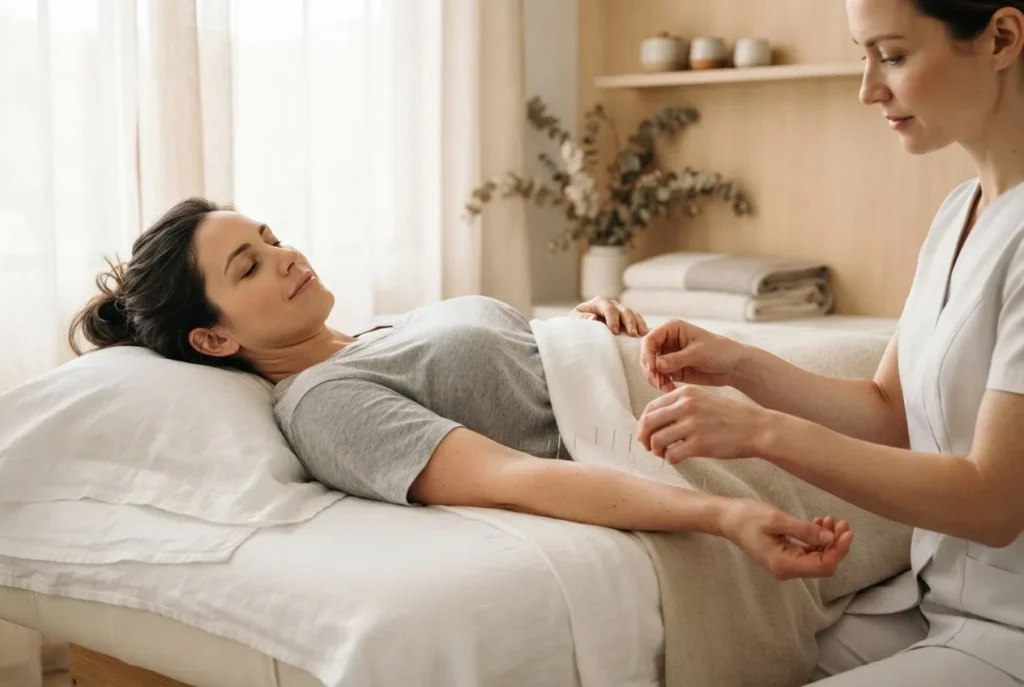
Answer: Sessions usually involve relaxation, insertion of sterile single-use needles in selected points for 20–40 minutes, optional adjuncts (moxibustion, ear seeds), and post-needling rest with practitioner guidance on home self-care.
- Arrival and brief check-in (10 minutes).
- Positioning and hygiene check; practitioner explains needle sites and sensations to expect.
- Insertion of fine single-use needles; sensations: dull ache, warmth, tingling or heaviness—sharp pain is rare and addressed immediately.
- Needles retained for 20–40 minutes; patient rests quietly, often experiencing relaxation or light sleep.
- Needles removed; practitioner reviews aftercare and schedules follow-up.
Recommended frequency: many protocols recommend 1 session per week for 6–12 weeks initially for anxiety, with reassessment at 6–8 sessions. Some acute cases benefit from twice-weekly early sessions (source: clinical practice guidelines/clinic consensus).
Safety and Side Effects
Answer: Acupuncture is generally safe when performed by licensed practitioners using sterile single-use needles; common side effects are mild (bruising, transient soreness), while serious complications are rare.
Safety checklist:
- Use of single-use, sterile needles reduces infection risk.
- Mild side effects: light bleeding, bruising, transient dizziness or fatigue.
- Contraindications: uncontrolled bleeding disorders, some pacemaker concerns with electroacupuncture and caution in pregnancy—discuss with practitioner.
- Report any severe reactions immediately; licensed practitioners carry liability insurance and follow reporting standards.
Trust note: Research limitations remain; acupuncture is advised as complementary care rather than a sole replacement for urgent psychiatric treatment or medication management.
Transition: Practical costs and how pricing varies by location and clinic type are the next focus, helping you budget and choose a plan.

Comprehensive Acupuncture Cost Guide for Anxiety Treatment?
Answer: Costs vary widely—single-session fees range from low-cost clinics at $40–$70 to private experienced acupuncturists at $100–$220 per session; packages, geographic location and practitioner credentials strongly affect pricing.
Factors Influencing Acupuncture Treatment Costs
Answer: Key cost drivers include geographic location, clinic type (community clinic vs private practice), practitioner experience and credentials, number of sessions recommended and adjunct therapies used.
- Geographic location: metropolitan clinics typically charge more than regional or rural clinics.
- Clinic type: university-run clinics and community health centers offer lower fees; boutique private clinics with highly experienced practitioners charge premium rates.
- Practitioner credentials: registered acupuncturists with advanced training or specialist certifications command higher fees.
- Treatment plan length and adjuncts: adding moxibustion, cupping or electroacupuncture increases cost per visit.
- Package discounts: multi-session packages usually lower per-session cost but require upfront payment.
Average Pricing and Cost Examples
Answer: Expect typical Australian-like ranges (example): low-cost clinics $40–$70, standard private clinics $90–$150, senior specialists $150–$250 per session; a typical 8–12 session course can therefore range from $320 to $3,000 depending on options.
| Clinic Type/Region | Per-session range (AUD) | 8-session package estimate |
|---|---|---|
| Community/university clinic | $40–$70 | $320–$560 |
| Standard private clinic (urban) | $90–$150 | $720–$1,200 |
| Specialist or senior practitioner | $150–$250 | $1,200–$2,000 |
Example scenarios:
- Low-cost plan: 8 sessions at a university clinic — around $320–$560 (source: community clinic rates survey).
- Comprehensive private plan: 12 sessions with adjunct therapies — $1,080–$3,000 (source: private clinic pricing examples).

Insurance and Financial Support Options
Answer: Insurance coverage varies—some private health insurers reimburse acupuncture under extended therapy packages; public health coverage is limited, so confirm eligibility and receipts for rebates.
Insurance considerations:
- Private health insurance: many Australian insurers provide partial rebates if the practitioner is registered and the policy includes natural therapies; check annual limits (source: insurer policy guides).
- Medicare/public health: acupuncture is not broadly reimbursed by Medicare for anxiety; some chronic disease management plans may include allied mental health but rarely acupuncture directly.
- Payment options: sliding-scale clinics, payment plans, and multi-session discounts can reduce upfront cost.
Acupuncture for Back Pain Cost Overview provides an example of how treatment type affects pricing and package structures.
Transition: After understanding costs, the next section explains how to choose a qualified acupuncturist for safe, effective anxiety care.
How to Choose the Right Acupuncturist for Anxiety Treatment?
Answer: Choose a licensed practitioner with formal acupuncture credentials, verified registration, mental health experience, clear communication, and good patient reviews; ask targeted questions about anxiety-specific training and clinical outcomes.
Qualifications and Certification to Look For
Answer: Look for recognized training diplomas, registration with national bodies, continuing professional development and mental health experience; these credentials signal safe and competent care.
Common credentials and regulatory bodies:
- Diploma or degree in acupuncture / Traditional Chinese Medicine from an accredited institution.
- Registration with national or regional acupuncture boards or associations (verify active status).
- Continuing education in mental health, anxiety disorders or integrative care.
Acupuncture Acupuncturist Training and Certification Guide explains credential types and regulatory expectations for practitioners.
Acupressure Practitioner Course and Certification Overview is useful if you want to compare related practitioner training paths.
Acupuncturist Certification Requirements provides further detail on licensure and scope of practice.
Questions to Ask Before Your First Appointment
Answer: Ask about credentials, experience treating anxiety, treatment plan length, expected outcomes, costs, infection control, and coordination with your GP or therapist.
- What are your qualifications and registration number?
- How many patients with anxiety have you treated and what outcomes do you typically see?
- What is your recommended treatment frequency and expected timeline for improvement?
- Do you coordinate care with psychiatrists or psychologists when needed?
- What are risks, side effects and cancellation policies?
Transition: Choosing the right practitioner supports integration with other therapies and daily practices that help anxiety—covered in the next section.
Integrating Acupuncture with Other Anxiety Treatments and Lifestyle Changes?
Answer: Acupuncture integrates well with CBT, medications and lifestyle changes—combining therapies often yields better outcomes than any single treatment by addressing biology, behaviour and daily habits simultaneously.
Complementary Techniques Often Combined with Acupuncture
Answer: Common complements include qigong, meditation, breathing exercises, acupressure and dietary guidance from TCM to reinforce calming effects and daily self-regulation.
- Qigong: gentle movement and breath practice that supports Qi flow and parasympathetic activation—see Qi Gong Training Guide for basics.
- Meditation and breathwork: evidence-based tools to reduce rumination and physiological arousal.
- Acupressure: self-applied points for acute stress relief—see related guides such as abdominal pain acupressure points and acupressure points in ankle guide for supportive techniques.
Lifestyle Changes that Support Anxiety Management
Answer: Consistent sleep hygiene, regular moderate exercise, balanced eating per TCM suggestions, reduced stimulants, and daily relaxation practices support long-term anxiety reduction and complement acupuncture’s effects.
- Sleep: regular schedule, screen curfew and wind-down routine.
- Exercise: 20–40 minutes of moderate aerobic activity most days improves mood and stress resilience.
- Diet: reduce excess stimulants (caffeine, sugar); TCM may recommend warm, grounding foods for certain patterns.
- Daily practices: short breathing exercises and qigong sessions to stabilise Qi and calm the nervous system.
Transition: With integration strategies covered, the final section summarises guidance to help you decide if acupuncture fits your anxiety care plan.
Summary and Next Steps: Is Acupuncture Right for Your Anxiety?
Answer: Acupuncture is a reasonable, low-risk adjunct for many people with anxiety—especially those seeking non-pharmacological options or symptom support alongside therapy—choose a registered practitioner and combine treatments for best results.
Key takeaways:
- Evidence supports modest-to-moderate benefits; highest-quality trials show benefit over usual care but mixed results versus sham controls (source: peer-reviewed meta-analyses).
- Mechanisms include neurochemical modulation, cortisol reduction and parasympathetic activation, aligned with TCM aims to calm Shen and rebalance Qi.
- Costs vary by clinic and practitioner; packages and insurance rebates can reduce out-of-pocket expense.
- Acupuncture should complement, not replace, urgent psychiatric care or proven psychological treatments like CBT for moderate-to-severe anxiety.
Actionable next steps:
- Discuss acupuncture with your GP or mental health clinician to integrate care safely.
- Use the credential checklist above to find a registered acupuncturist and ask targeted questions before booking.
- Start with a short course (6–8 sessions), track symptom scales (e.g., GAD-7) and reassess progress with your practitioner.
If you’re ready to explore acupuncture, book an initial consultation with a licensed practitioner to review your history, discuss costs and create a personalised plan that complements your current anxiety treatment.