

naturopathy and cancer can complement conventional oncology by focusing on symptom relief, immune support, nutrition, and stress management while coordinating with oncologists to avoid harmful interactions; integrative approaches aim to improve quality of life and support treatment tolerance, not to replace evidence-based cancer therapies.
Understanding Naturopathy’s Role in Cancer Care
Answer: Naturopathy supports cancer patients by using natural oncology principles—nutrition, herbal medicine, lifestyle and mind‑body therapies—to reduce side effects, improve recovery and coordinate with conventional oncology as part of integrative cancer care.
Term: naturopathy — a system of care that emphasizes natural therapies, prevention, and treating the whole person rather than only disease symptoms.
Naturopathy applies its principles to cancer by prioritising patient-centered, holistic cancer care: assessing nutritional status, detoxification burden, stress, sleep, and environmental factors that influence healing. Where possible, naturopathic clinicians create protocols that work alongside chemotherapy, radiation or surgery to manage side effects, restore resilience, and promote quality of life.
Naturopathic approaches differ from conventional oncology in focus and methodology: conventional oncology (surgery, chemotherapy, radiation, targeted therapy) targets tumor eradication based on clinical trials and standardized protocols; naturopathy emphasizes supportive care, symptom management and individualized lifestyle change. Naturopathy also differs from unlicensed or purely experimental “alternative” cancer treatments by generally aiming to integrate with, not replace, standard care.
Many cancer centers now recognize “integrative oncology”—a collaborative model combining evidence-based complementary therapies with mainstream oncology to improve outcomes. For foundational terminology on integrative care concepts, see
alternative terms for western medical practices: CAM and integrative care.

Clinical workflows in an integrative clinic typically begin with a detailed intake (medical history, treatments, labs), a collaborative plan agreed with the oncology team, and scheduled monitoring. A simple step-by-step example:
- Comprehensive intake and labs to identify deficiencies and interactions.
- Short-term interventions to manage symptoms (nausea, fatigue, mucositis).
- Longer-term nutrition and lifestyle plan for recovery and prevention.
- Regular communication with the oncology team for safety and adjustments.
Case example (anonymized): a 58‑year‑old breast cancer patient received nutrition support, acupuncture for chemo-induced nausea, and tailored supplements while continuing chemo; reported improved energy and adherence to treatment, documented in the integrative clinic record and communicated to her oncologist.
Overview of Integrative Cancer Care and Functional Medicine Oncology
Answer: Integrative cancer care combines conventional oncology with evidence-informed naturopathic and functional medicine oncology techniques to reduce side effects, support immune function, and address root causes through multidisciplinary collaboration.
Term: integrative cancer care — coordinated cancer treatment that blends standard medical therapies with validated complementary approaches to support outcomes and patient wellbeing.
Term: functional medicine oncology — an approach using systems-based assessment (metabolic, immune, microbiome, toxin exposure) to personalise supportive cancer care and rehabilitation strategies.

Integrative cancer medicine functions as a multidisciplinary model: oncologist, naturopathic doctor or integrative physician, dietitian, physiotherapist, and mental health provider meet to align goals. This model resembles “tuning an orchestra” where each clinician adjusts an instrument (therapy) to create coordinated care rather than conflicting interventions.
How naturopathy fits into integrative models
Naturopaths typically provide:
- Symptom management (nausea, neuropathy, fatigue)
- Nutrition therapy to support treatment tolerance and recovery
- Herbal and supplement recommendations with safety checks against drug interactions
- Mind‑body interventions and referrals to psychosocial supports
Functional medicine oncology approaches
Functional medicine oncology expands assessment to metabolic imbalances, chronic inflammation, gut health and toxin load; it may use targeted nutritional strategies, metabolic support protocols and biomarker-guided supplementation to support resilience.
Benefits of combining conventional and natural therapies
Current evidence and observational data suggest benefits including:
- Improved symptom control and quality of life (patient‑reported outcomes; see external reviews below)
- Potentially better treatment adherence due to reduced side effects
- Holistic support for survivorship planning and rehabilitation
Example multidisciplinary case: a patient with stage II colorectal cancer received surgery and chemo while enrolled in an integrative program that included anti-inflammatory nutrition, exercise prescription, acupuncture for neuropathy, and psychological counselling; the oncology team documented fewer dose reductions and faster functional recovery.
When integrative care is recommended
Integrative care is frequently recommended when:
- Patients want symptom relief beyond what standard regimens provide
- There is a need to mitigate long-term treatment effects
- Patients require tailored survivorship and prevention strategies
For patients exploring alternatives to radiation, integrative teams can discuss symptomatic and supportive options, but should not substitute proven curative radiation protocols without oncologist agreement; for context on options see
alternative to radiation therapy.
External resources for evidence and guidelines:
- National Cancer Institute — evidence summaries and integrative oncology overviews (government source).
- American Association of Naturopathic Physicians — clinical practice standards and certification information (professional association).
- Journal of Alternative and Complementary Medicine — peer‑reviewed research on integrative therapies (journal).
Common Natural and Alternative Treatments Used in Naturopathy for Cancer
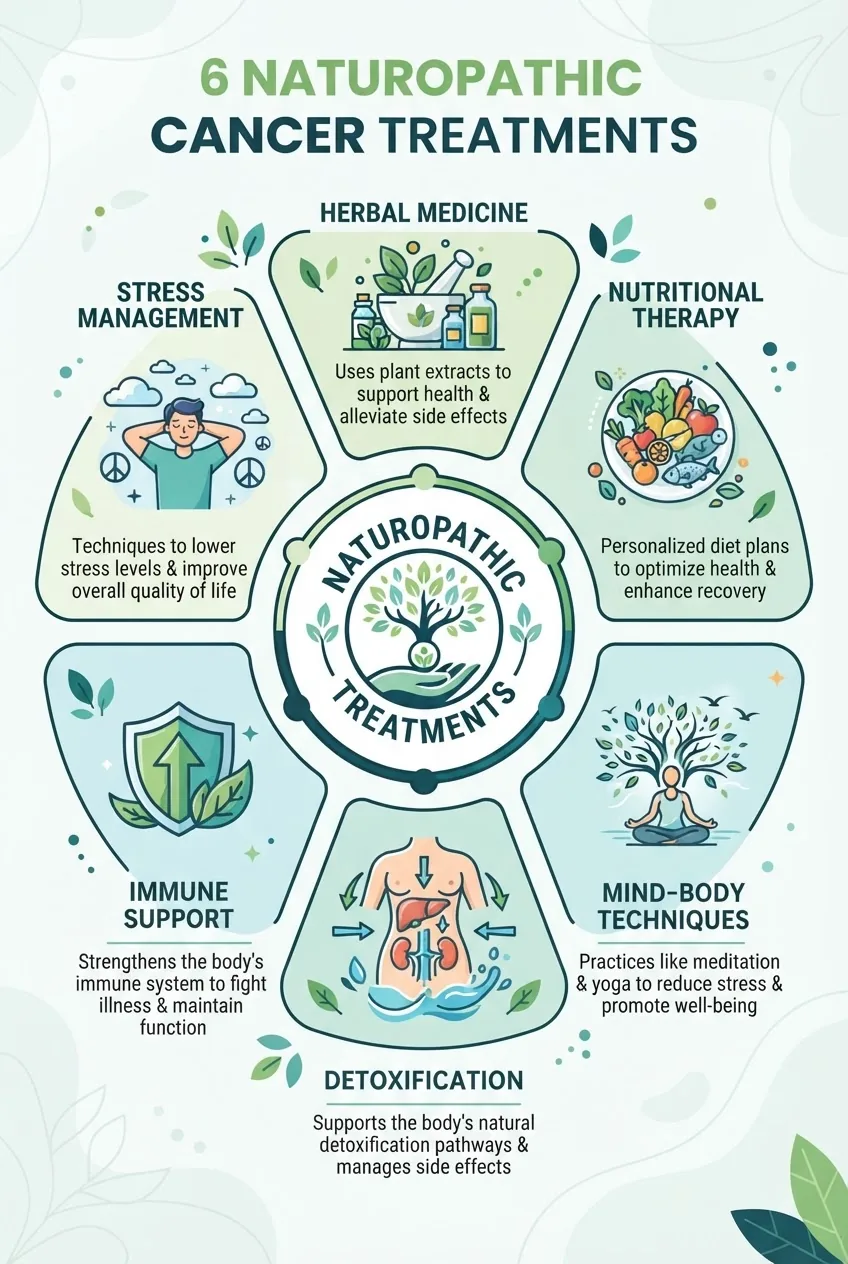
Answer: Naturopathic cancer care commonly uses herbal medicine, nutritional therapy, supplements, mind‑body modalities, detoxification supports and immune support—each selected and monitored for safety with conventional treatments.
Term: natural oncology therapies — therapeutic approaches using non‑pharmaceutical, nature‑derived or lifestyle-based interventions intended to support cancer care.
-
Herbal Medicine — targeted botanicals to ease symptoms, support liver metabolism, or reduce inflammation. Naturopaths select herbs with known safety profiles and check for interactions with chemotherapy drugs. See specialised guidance on dosing and monitoring in clinic workflows; for modality crossover examples, consult resources like holistic cancer cures and treatments.
-
Nutritional Therapy — personalised anti‑inflammatory, protein‑rich and micronutrient‑dense plans to support healing, weight maintenance and immune function. Typical elements: adequate protein, omega‑3 fatty acids, vitamin D optimisation, and individualized caloric plans.
For cancer-type specific naturopathic nutrition strategies, see examples such as natural treatment for ovarian cancer and alternative medicine for prostate cancer.
- Dietary Supplements — vitamins, minerals, antioxidants and phytochemicals used to correct deficiencies and support recovery. Naturopaths rely on lab markers and current evidence; some supplements (e.g., high‑dose antioxidants) are avoided during certain chemo protocols due to interaction risks discussed below.
-
Mind‑Body Techniques — meditation, guided imagery, mindfulness-based stress reduction, and breathing techniques aimed at reducing anxiety, improving sleep and enhancing pain control. These approaches are evidence‑backed for symptom improvement and adherence support; see mental health alternatives at
mental health alternative treatments. - Acupuncture and Manual Therapies — for nausea control, neuropathy, pain and fatigue. Many oncology centers offer acupuncture as part of integrative programs; always coordinate with the oncology team before initiating.
-
Detoxification and Liver Support — protocols that support hepatic metabolism and phase I/II detox processes using foods, targeted nutrients (e.g., glutathione precursors), and lifestyle adjustments; used cautiously and individually, with attention to kidney/liver function tests.
Some clinics offer structured detox pathways; evaluate benefits vs. risks carefully and monitor labs regularly.
- Immune Support — nutritional and lifestyle strategies to support immune competence (sleep, exercise, vitamin D, omega‑3s). Immunomodulatory herbal agents are used selectively; immunotherapy patients require careful coordination due to immune system implications.
-
Medical Cannabis — used for pain, nausea and appetite stimulation; dose and strain selection should be supervised by a clinician familiar with oncology. See further reading on
medical cannabis for cancer. -
Pain Management Alternatives — massage, TENS, therapeutic touch and targeted manual therapy can reduce discomfort; coordinate with pain specialists for complex cancer pain. For practical guides, see
alternative therapies for pain management. - Adjunctive Physical Activity and Rehabilitation — personalised exercise plans to restore function and reduce fatigue; rehab is an established part of integrative care.
Some naturopathic tools have strong clinical support for symptom control, whereas others remain investigational. For cross-condition benefits that may also be relevant to oncology patients, see
alternative therapies for asthma and allergies.
For targeted information on natural options by cancer type, clinics often provide tailored protocols; examples include resources for breast cancer, colon cancer, and liver cancer.
For patients exploring specific natural protocols or claims of “cures,” refer to clinical evidence and reputable summaries; speculative or singular case claims should be treated cautiously.
Finding and Choosing Alternative Doctors and Cancer Clinics
Answer: Choose practitioners who are appropriately trained, licensed when applicable, experienced with oncology, and who coordinate care with your oncologist; verify certifications, ask targeted questions, and watch for red flags.
Term: alternative cancer treatment doctor — a clinician offering non‑conventional therapies for cancer, which may include naturopathic doctors, integrative physicians, and specialists in functional medicine oncology.
Step-by-step guide:
- Search for clinicians with oncology experience and recognised credentials (licensed naturopathic doctor, MD with integrative medicine fellowship, or board-certified integrative physicians). Ask for sample treatment plans and oncology collaboration examples.
-
Verify certification and training. Helpful certificate pages include:
board certified integrative medicine doctors. - Request references or patient outcome summaries (anonymised), and check patient reviews for transparency and realistic expectations.
- Confirm how the clinic communicates with your oncology team and whether they provide medication interaction checks, lab monitoring and emergency protocols.
- Evaluate cost models (insurance, private pay) and clarify what services are included (lab tests, supplements, therapies).
Checklist — what to ask during the first consult:
- What are your oncology credentials and experience with patients on chemo/radiation?
- How will you coordinate with my oncologist and share records?
- Which certifications and training programmes did you complete?
- Do you perform labs and how often will you monitor safety markers?
- What evidence supports the recommended therapies and what are the known risks?
- What is the expected timeline and measurable goals for my plan?
Red flags to avoid:
- Practitioners who demand you stop conventional treatment without oncologist oversight
- Claims of guaranteed cures or use of high‑risk experimental agents without evidence
- Lack of documented collaboration with oncology or refusal to share records
For deeper orientation on clinic services, types of offerings and how centres structure care, review
alternative health care center services and benefits.
To understand practitioner training pathways, including online and advanced degrees, consult
alternative medicine degree programs and
careers in alternative medicine.
For locating centres with natural care options, review directories such as
cancer natural treatment centers.
Safety, Risks, and Evidence Considerations in Natural Oncology
Answer: Natural oncology carries benefits and risks—interactions with chemotherapy, variable evidence quality and unregulated supplements are main concerns; ensure evidence-based choices, lab monitoring and open oncology integration to maintain safety.
Term: evidence-based complementary medicine — complementary therapies that have been evaluated using clinical research and are selected based on proven benefit and safety.
Major safety considerations:
- Drug-herb and drug-supplement interactions that can alter chemotherapy metabolism or increase toxicity.
- Unstandardised supplements with variable potency or contamination risk.
- Delaying or refusing curative conventional treatments in favour of unproven alternatives.
Specific evidence context: According to a 2023 National Cancer Institute review, several integrative therapies (acupuncture for nausea and neuropathy, mindfulness for distress) have supportive evidence, while many herbal or high-dose supplement strategies lack robust randomized trial data (government report).
Safety tips:
- Always disclose all supplements and herbs to your oncology team and integrative clinician.
- Use only practitioner-grade supplements with third-party testing.
- Schedule pre-treatment labs (liver, renal, coagulation, electrolytes) and repeat monitoring per protocol.
- Avoid high-dose antioxidants during certain chemotherapies unless supported by evidence and oncologist approval.
- Prefer therapies with documented safety data in oncology populations (e.g., acupuncture, exercise, nutrition).
Interaction examples and clinical caution:
| Natural Modality | Potential Benefit | Known Risk/Interaction |
|---|---|---|
| St. John’s Wort | May improve mild depression | Induces CYP enzymes; can lower chemo drug levels |
| High‑dose Vitamin E | Antioxidant support | May interfere with oxidative chemo mechanisms |
| Omega‑3 (fish oil) | Anti‑inflammatory, supports cachexia | May increase bleeding risk at very high doses |
Assessing evidence: consider the hierarchy—systematic reviews and randomized controlled trials offer stronger support than case series or lab studies. According to a 2022 peer‑reviewed review in the Journal of Alternative and Complementary Medicine, acupuncture and mindfulness have consistent benefit signals for symptom control, while many herbal regimens require more high‑quality trials (journal review).
If you experience side effects from natural therapies, stop the product and seek medical advice; labs and medication level checks can help identify causes. For suspected serious interactions, emergency contact with your oncology team is essential.
Patient Support and Holistic Lifestyle in Cancer Recovery
Answer: Holistic lifestyle interventions—nutrition, exercise, sleep, stress management, and psychosocial supports—are core naturopathic strategies that improve recovery, reduce recurrence risk factors, and enhance wellbeing during and after conventional treatment.
Term: patient support and holistic care — integrated services addressing emotional, physical and social determinants of health that affect cancer recovery.
Practical lifestyle components commonly prescribed:
- Nutrition: personalised meal plans to prevent weight loss, correct deficiencies, and reduce inflammation.
- Exercise: graded activity plans to rebuild strength and reduce fatigue.
- Sleep hygiene: protocols to restore circadian rhythm and immune function.
- Stress management: MBSR, CBT referrals, breathwork and meditation to reduce anxiety and support coping.
Example patient workflow: initial three-month naturopathic program for a chemo patient might include baseline labs, weekly nutrition coaching, twice-weekly mind‑body sessions, and monthly safety reviews with oncology—progress is measured via symptom inventories and functional scales.
Holistic doctors often work with community resources such as support groups and complementary therapists. For mental health alternatives relevant to cancer patients, consult
mental health alternative treatments.
Emotional energy healing and somatic approaches can help patients process trauma and fear; evidence for specific modalities varies, so licensed or certified practitioners and transparent goal-setting are recommended. See procedural guides on emotional approaches in related resources like emotional energy healing.
For pain, integrate non‑medication options with medical pain management; a useful resource is
alternative therapies for pain management.
Future Directions in Naturopathy and Integrative Cancer Medicine
Answer: Growth in integrative oncology research, improved certification standards, and rising patient demand are driving more evidence-based naturopathic integration with conventional cancer care and innovation in personalised supportive protocols.
Current trends include:
- More randomized trials of specific integrative interventions focused on survivorship outcomes (according to a 2024 industry report summarising trial registrations).
- Improved credentialing pathways and hospital-affiliated integrative programs, increasing trust and standardisation (professional association reports).
- Use of biomarker-guided functional medicine to tailor nutrition and supplement regimes, supported by growing observational evidence.
Patients will likely see broader access to integrative services in oncology centers, greater emphasis on safety protocols, and a research shift toward pragmatic clinical trials that measure quality of life and functional endpoints alongside tumor outcomes.
Key takeaways: naturopathy and cancer care can be complementary, but safety, evidence and open coordination with oncology teams are essential; seek qualified clinicians, baseline labs, and follow transparent, measurable plans.
If you’re considering naturopathic support, request a consultation that includes evidence review, interaction checks and a clear communication plan with your oncology team to ensure safe, effective integrative care.