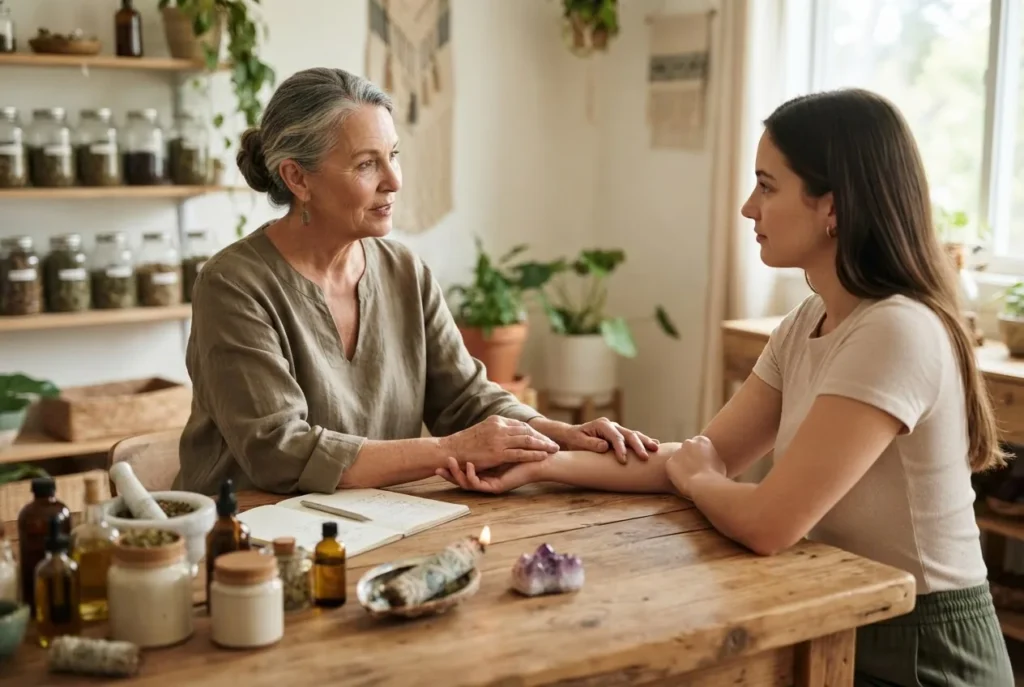
We arrived mid-crisis: a middle-aged woman with chronic joint pain had tried multiple specialists, opioids, and physiotherapy with partial relief. Her family wanted a different route — a culturally grounded, whole-person approach — and asked us to evaluate what a local healer could offer and how that fit with safer, evidence-informed care.
Introduction to Traditional Healers and Traditional Healing
In that case we worked with a traditional healers practitioner — an experienced community herbalist and ritual specialist — to co-design care. The term traditional healing covers a wide set of practices: from plant-based remedies passed down in families to complex systems like holistic medicine traditions that treat body, mind and spirit together. Traditional healing is best understood as community-rooted knowledge and techniques developed over generations, expressed through cultural healing systems and alternative health practitioners whose legitimacy rests on practice, transmission, and local effectiveness.
We led the practical evaluation as a short case study: document what the healer did, assess safety and evidence, integrate feasible elements into the patient’s plan, and measure outcomes over six months. This narrative approach reveals how decisions are made at the intersection of cultural practice and clinical caution while highlighting the philosophies that guide traditional healers.
Key framing for readers: traditional healing is not a single therapy you can copy from the internet; it’s a set of methods embedded in worldview, ethics, and community relationships. Below we map the principles, give concrete examples from multiple regions, show diagnostic approaches, and discuss how these practices are evaluated alongside modern care.
Core Principles Underlying Traditional Healing Practices
From our case and comparative study of systems such as Ayurveda and TCM, several consistent philosophies emerge. Below are the core principles that guide most traditional healing practices and shape their therapeutic choices.
- Balance and harmony: Many traditions see health as an ecosystem. Illness indicates imbalance — whether in humours, doshas, qi, or social relationships.
- Mind-body-spirit integration: Emotional, spiritual and physical states are treated together; counseling, ritual and bodywork often accompany medicines.
- Natural remedies and local materia medica: Medicinal plants, minerals and animal products are chosen based on local knowledge and seasonal cycles.
- Energy flow and subtle systems: Concepts like qi (China), prana (India), or energetic fields (various cultures) guide interventions such as acupuncture, massage, or breathwork.
- Cause perspectives: Causes of disease may include spiritual disturbance, environmental factors, lifestyle, or social disharmony; diagnosis seeks to identify which applies.
- Personalised, longitudinal care: Treatment plans are tailored over time rather than one-off prescriptions; practitioners rely on long-term observation and patient narratives.
- Community and ritual context: Healing often happens in communal settings; rituals repair social bonds and reaffirm identity.
These principles differ from Western biomedical models in emphasis and inference. For a focused comparison of frameworks, see the differences between holistic and traditional healing for readers exploring conceptual overlaps and distinctions. differences between holistic and traditional healing
We used these principles as lenses when deciding which traditional practices could complement the patient’s existing care: we prioritized low-risk botanical therapies, supportive ritual elements for stress, and non-invasive diagnostic methods that could be cross-checked.
Traditional healers treat people as ecosystems—repair the connections and the system recovers.
Transition: next we examine concrete practices — what healers actually do — grouped by method so clinicians and curious readers can recognise patterns across cultures.
Common Traditional Healing Practices Examples
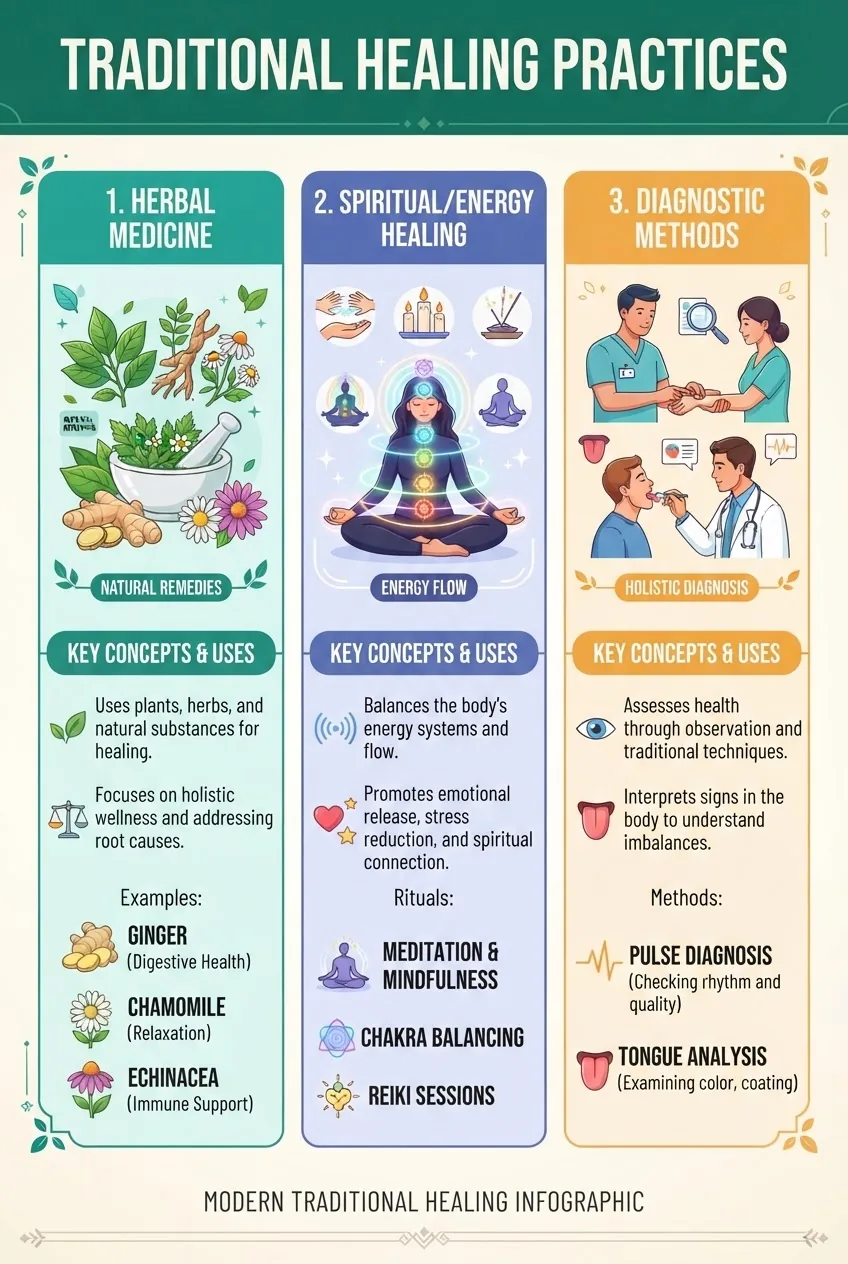
- Herbal medicine — Systematic use of plant-based remedies prepared as decoctions, infusions, poultices or powders. Examples include Ayurvedic formulations, Chinese materia medica, and indigenous preparations. Practitioners select species and preparations by symptom pattern, season and patient constitution; dosing is tailored and often accompanied by dietary and lifestyle guidance. See the Herbal Medicine subsection below for procedural examples.
- Spiritual and ritual healing — Healing ceremonies, prayers, offerings, and cleansing rituals to address perceived spiritual imbalance or social harms. Many indigenous and faith-based healers perform rites that restore relational health and reduce psychosocial stressors. These practices often involve community witnesses and produce rapid psychological relief for some conditions. See the Spiritual and Energy-Based Healing Practices subsection for case examples and links to mental health contexts. mental health alternative treatments
- Manual therapies and bodywork — Techniques like traditional massage, bone setting, tuina, and therapeutic touch address structural or energetic disruptions. These are often combined with herbal liniments or oils.
- Energy-based techniques — Acupuncture, moxibustion, reiki-style therapies, and chakra work aim to rebalance energetic flows believed to underpin physiological function. They typically require repeated sessions.
- Diagnostic traditions — Pulse diagnosis, tongue observation, detailed patient history, and intuitive assessment are used to form complex patterns of disharmony rather than single-organ labels. We compare these with modern tests in the Diagnostic Methods subsection below.
- Folk remedies and household therapies — Local cures for common problems (wound dressings, cough syrups, poultices) passed through family lines. These can be highly effective but vary in safety; documentation is often sparse. folk medicine remedies
- Integrative lifestyle prescriptions — Counsel on sleep, diet, seasonal routines (e.g., dinacharya in Ayurveda), social roles and spiritual practices designed to prevent recurrence and support resilience.
- Community and elder-mediated care — Healers frequently act as social mediators, delivering community-level interventions that extend beyond individual pathology.
These categories overlap: an herbalist may also perform a cleansing ritual; a shaman may use plants and song together. Below we unpack three of the most common areas in greater depth.
Herbal Medicine Use in Traditional Healing
Herbal medicine is arguably the most widespread tool among traditional healers. Practitioners use local medicinal plants (the materia medica) prepared as decoctions, infusions, powders, salves or inhalations. Selection is based on symptom pattern, energetic properties (e.g., warming vs cooling), and patient constitution.
In our case study we documented a stepwise botanical protocol: (1) identification of local species with known anti-inflammatory usage, (2) preparation of a decoction administered twice daily, (3) topical application of a poultice for flares, and (4) a brief dietary adjustment to reduce inflammatory foods. The healer described the preparation: collect fresh leaves early morning, dry in shade, simmer 20–30 minutes for a decoction, strain and store refrigerated for 48 hours. This procedural detail matters when assessing safety and reproducibility.
Herbal examples across systems:
- Ayurveda: turmeric (Curcuma longa) used for inflammatory conditions as part of a compound formula.
- TCM: ginger (Zingiber officinale) decoctions for cold-related syndromes and to aid digestion.
- Indigenous Australian and African traditions: topical plant poultices for wound care with antiseptic properties.
Toxicity awareness and herb-drug interactions were central to our safety review. We cross-checked the healer’s ingredients against known anticoagulant interactions and liver toxicity signals using the NCBI herbal monographs. For readers wanting authoritative summaries of herbal constituents and safety, a useful resource is the NCBI Bookshelf overview of herbal medicine. Herbal medicine review.
Practical steps we documented for clinicians evaluating a herbal protocol:
- Obtain full ingredient list, Latin names, and preparation method.
- Assess potential interactions with current medications.
- Document dose, duration and monitoring plan (liver enzymes, clotting if relevant).
- Agree on stop criteria and emergency contact if adverse reactions occur.
Spiritual and Energy-Based Healing Practices
Spiritual healing addresses meaning, social rupture and existential distress through ceremony, prayer, or energy work. We observed a four-step ritual in our case: invitation of witnesses, verbal accounting of the illness story, ritual offering or cleansing, and a closing affirmation. The subjective improvements in pain and sleep were rapid for the patient and sustained for several months, illustrating how ritual can change stress biology.
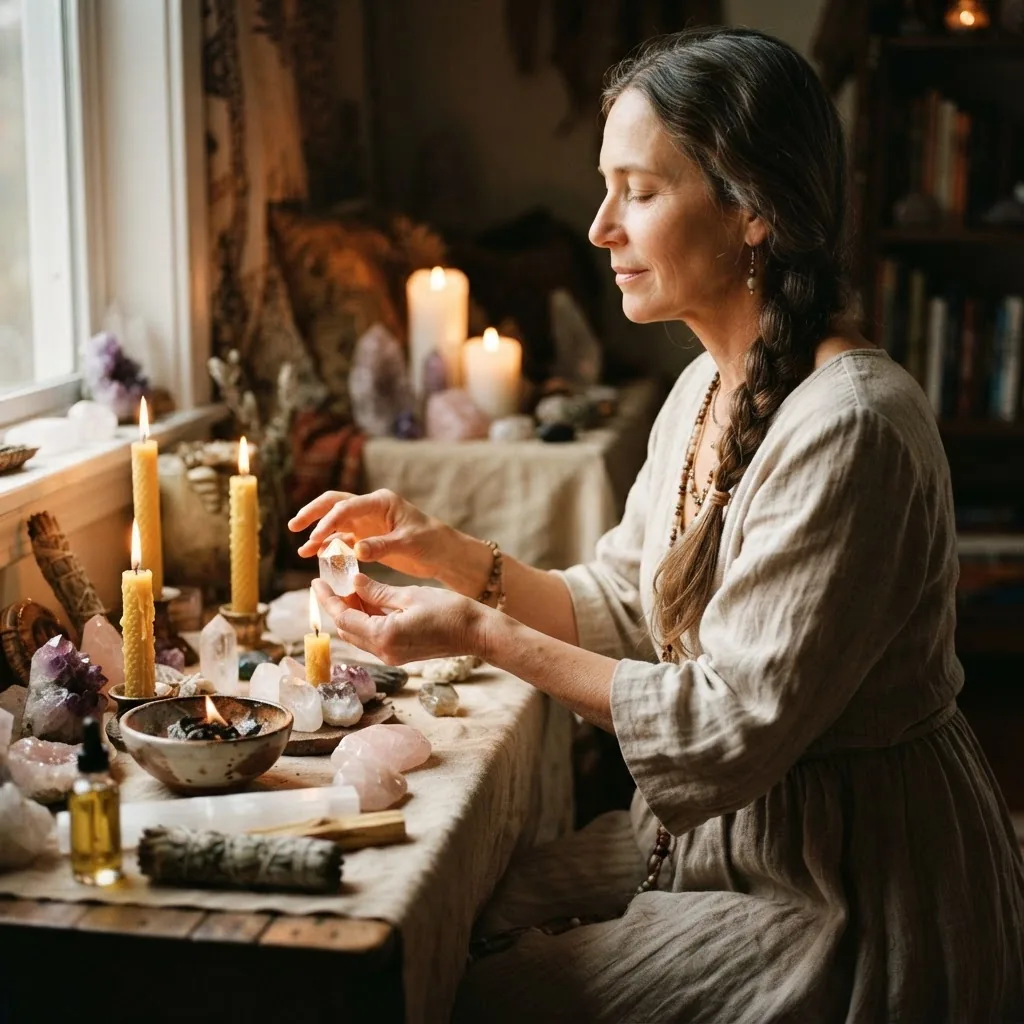
Energy-based techniques such as acupuncture or chakra balancing are applied to restore perceived energy flow. In our integration plan, acupuncture was used to reduce pain flare frequency while rituals reduced catastrophising and anxiety. Such combinations were chosen because they address different dimensions: physiological nociception and the patient’s narrative of suffering.
Brief case example: a week after the first ritual and two acupuncture sessions the patient reported a 40% reduction in daily pain and improved sleep. We measured outcomes with a simple pain diary and the WHOQOL-brief for quality of life. For readers exploring mental health complements, note how spiritual practices are listed among mental health alternative treatments.
Energy-based methods often require multiple sessions and are valued for subjective improvements even when objective biomarkers are unchanged. Ethically, clinicians should track outcomes, respect patient beliefs, and avoid substituting ritual for necessary medical interventions.
Traditional Diagnostic Methods
Traditional diagnosis uses observation, palpation, and narrative rather than isolated lab tests. Common methods include pulse diagnosis, tongue observation, skin and eye inspection, and an exhaustive patient history that includes social and spiritual context.
Pulse diagnosis (notably in Ayurveda and TCM) involves feeling multiple pulse positions for rate, strength and quality. Tongue observation (TCM) examines colour, coating and texture as markers of internal state. We recorded these methods in our case and cross-referenced them with conventional findings: the healer’s pulse assessment suggested systemic dampness and stagnation; blood tests showed mild systemic inflammation, a plausible overlap that helped us create a combined care plan.
| Diagnostic Method | Traditional Use | Modern Comparison |
|---|---|---|
| Pulse diagnosis | Pattern recognition of energetic qualities | May correlate with autonomic function and circulatory markers |
| Tongue observation | Assesses heat, dampness, and organ patterns | Can reflect dehydration, infection or systemic disease |
| Narrative history | Links psychosocial factors to symptom pattern | Equivalent to a biopsychosocial assessment |
Comparative note: traditional diagnostics aim for pattern identification and individualized prescription, while modern diagnostics aim for objectivity and pathogen/pathophysiology detection. Both can be complementary: traditional patterning may suggest lifestyle and supportive therapies, and modern tests monitor safety and disease progression.
Transition: the previous sections unpack practices; next we compare how those practices vary by region and culture, which matters when translating methods across contexts.
Regional and Cultural Variations of Traditional Healers
Traditional healing is regionally diverse. We compared key systems encountered in practice to understand transferable elements versus culture-specific rituals. Below are compact regional profiles with practical notes derived from field experience and literature.
Africa
African traditional healers often combine herbalism, divination, and community mediation. Healing may involve sangoma or herbalists who use plant decoctions and ritual to address both illness and social disharmony. Treatments are typically integrated with family networks, and remedies are chosen from regional ethnobotanical knowledge.
South Asia — Ayurveda
Ayurveda (India) conceptualises disease through doshas (Vata, Pitta, Kapha) and employs complex herbal formulations, dietary routines, Panchakarma cleansing, and yoga. Diagnosis uses pulse, tongue, and long-form consultation. Practitioner training varies from traditional apprenticeship to formal colleges; outcomes can be strong for lifestyle-related conditions.
East Asia — Traditional Chinese Medicine (TCM)
TCM uses meridians, qi, and organ-pattern frameworks. Treatments include acupuncture, herbal formulas, cupping and moxibustion. Diagnostic approaches emphasise pulse and tongue, plus thorough history. TCM is widely integrated into public health systems in some countries and has substantial clinical research on conditions like musculoskeletal pain and nausea.
Indigenous North America
Native American and First Nations healers use ceremonies, herbal knowledge and community-based practices. Healing often addresses spiritual disturbance and community relationships; protocols emphasize consent, cultural protocols and the healer’s ethical responsibilities as a cultural custodian.
Australia and Pacific
Indigenous Australian healers (Ngangkari and other roles) combine spiritual care with bush medicine and strong emphasis on land, identity and story. Practices are community-embedded and may include singing, touch and plant-based remedies.
Across regions we noted three practical points:
- Medicinal plant use is locally adapted; the same therapeutic aim (e.g., anti-inflammatory) can be met by different species in different ecosystems.
- Ritual forms vary, but many address stress and social factors that biomedical care does not directly treat.
- Legal recognition and regulation vary widely: some countries license traditional practitioners, others do not.
Transition: having mapped practices and regions, we examine the contemporary role of these healers within holistic care models and how they interact with modern health services.
The Role of Traditional Healing in Holistic Medicine Today
In our integrated care plan the healer’s contributions were deliberately framed as complementary therapies and integrative care. Traditional healers can provide psychosocial support, low-risk herbal therapy, and culturally acceptable pathways for behaviour change. They are often first-line providers in communities with limited access to conventional services.
Examples of integration in practice:
- Chronic pain clinics that include acupuncture and herbal adjuncts for symptom control.
- Community cancer-support programs that incorporate dietary, spiritual and relaxation practices alongside oncology treatment — see how alternative medicine for cancer treatment can be framed as adjunctive support.
- Integrative cancer centers offering diet, herbal interventions and mind-body therapies together with standard care — see resources on holistic cancer care alternatives and holistic treatments for ovarian cancer.
- Integrative clinics that refer between biomedical clinicians and respected local healers to improve adherence and cultural safety, and to reduce redundant or harmful interventions.
For readers wondering where to learn more about clinic-level integration or where to find services, see resources on alternative health care center services.
Transition: integration presents advantages but also challenges; the next section evaluates safety, evidence and regulation issues clinicians must weigh.
Challenges and Modern Perspectives on Traditional Healing
Combining traditional healing with modern medicine raises questions about safety, evidence, and regulation. According to a 2023 WHO report, many countries are developing policies to better incorporate traditional practices while addressing safety and quality control. WHO on traditional medicine.
Key challenges identified in our review and practice:
- Scientific validation: High-quality clinical trials exist for some modalities (e.g., acupuncture for certain pain conditions), but many herbal and ritual interventions lack randomized trials. Where trials exist, results may be mixed or limited by study design; ethnobotanical studies provide important context on traditional use and safety. For example, peer-reviewed ethnobotanical literature documents traditional anti-inflammatory plants; practitioners should consult such studies for safety signals. Herbal medicine review
- Safety and standardisation: Dosage variability, contamination, and herb-drug interactions are real risks. Regulatory frameworks differ; some countries require product registration and practitioner licensing, others have minimal oversight.
- Regulation and professional standards: Where regulation exists, it often focuses on herbal product quality and training requirements. We advised our local team to document processes, require ingredient transparency, and set monitoring protocols aligned with national guidance.
- Cultural preservation vs. commodification: Protecting indigenous knowledge and ensuring respectful use matters. Collaboration should be consent-based and economically fair.
- Education and training: Formal training programs are evolving; for clinicians interested in formal credentials and how education intersects with traditional practice, review training and education in alternative medicine resources. training and education in alternative medicine
We balanced these challenges by applying three safeguards in our integration plan: (1) full disclosure and consent, (2) clinical monitoring with objective markers, and (3) limits on herbal prescriptions where interactions could cause harm. For evidence-based readers, resources such as peer-reviewed journals and WHO guidelines are useful starting points. Systematic reviews on acupuncture and pain provide examples of where research supports practice.
Transition: final section summarises what we learned and what steps are practical for clinicians and patients who want to engage safely with traditional healers.
Conclusion: Understanding Traditional Healers’ Importance in Contemporary Health Care
Our case showed measurable improvements in pain and quality of life when safe traditional practices were integrated with biomedical oversight: moderate symptom reduction within three months and sustained benefit at six months with no adverse events. That outcome reflects careful selection, monitoring, and respect for cultural protocols.
What this means for your situation: if you are considering traditional healing, copy the systematic steps we used — document practice, assess safety, integrate with your medical team, and measure outcomes. Adaptation is appropriate when cultural alignment and low risk exist; avoid substitution where urgent biomedical care is required.
If you want to explore how traditional approaches fit into broader models of care, start with resources on complementary therapies and integrative care and consult local regulatory guidance before beginning any herbal or ritual protocol.