
Health care practices encompass the range of actions, systems and professional services used to maintain or restore health; this article provides a clear, evidence-aware overview of alternative healthcare methods, their main categories, how they compare to conventional medicine, key benefits and practical guidance for safe use.
Introduction to Health Care Practices?
Answer: Health care practices are the organised activities, therapies and professional approaches aimed at preventing disease, managing symptoms and promoting well-being; this overview focuses on alternative health care practices — non-conventional or complementary methods used alongside or instead of Western medical approaches.
Term: Alternative health care practices are health approaches outside the dominant Western biomedical model, including complementary therapies, traditional systems and natural remedies used for prevention, symptom management, or wellness.
Alternative health care practices include a spectrum from evidence-supported mind-body therapies to culturally rooted traditional medicine; they are often patient-centered, emphasise holistic health practices (addressing physical, mental and social dimensions), and can be delivered by licensed clinicians or traditional healers. The World Health Organization describes traditional and complementary medicine as a significant part of many health systems globally and encourages safe integration with national health services. WHO traditional and complementary medicine resources provide strategic context for national policies and practice integration.
Typical users seek alternative care for chronic pain, stress reduction, chronic conditions management, or to complement conventional treatments. This guide prepares readers to recognise categories, weigh evidence, find qualified practitioners, and make informed decisions consistent with clinical care.
Defining Alternative Health Care Practices?
Answer: Alternative health care practices are therapies and systems not traditionally part of mainstream Western medicine; they range from scientifically studied complementary therapies to culturally entrenched traditional medicine and folk remedies used for wellness and disease management.
Term: Complementary and Integrative Medicine (often shortened to integrative care) refers to combining conventional medical treatments with evidence-informed alternative approaches to address whole-person needs.
Definitions vary by source: the U.S. National Institutes of Health’s National Center for Complementary and Integrative Health (NCCIH) defines complementary health approaches as those used together with conventional medicine and integrative medicine as coordinated, patient-centred care that includes both conventional and complementary approaches in a safe, evidence-informed way. NCCIH: Complementary and Integrative Health definitions.
Alternative practices often emphasise prevention, lifestyle, and the patient’s active role. Key distinctions within the category:
- Complementary therapies: used together with mainstream treatments (e.g., acupuncture used alongside chemotherapy to reduce nausea).
- Alternative therapies: used instead of mainstream treatments (less common and higher risk in serious disease contexts).
- Integrative medicine: an approach that intentionally coordinates mainstream and complementary care under clinical oversight.
Examples illustrate the range and usage:
- Herbal medicine used for symptomatic relief (e.g., chamomile for mild anxiety) — common in natural remedies.
- Mind-body therapies such as mindfulness-based stress reduction for chronic pain and stress.
- Traditional systems like Ayurveda or Traditional Chinese Medicine (TCM) framed as whole-system approaches, often including diet, herbs, and manual therapies.
- Energy healing practices (e.g., Reiki) focused on non-physical modalities and patient relaxation.
Evidence levels vary: some practices have robust clinical-trial support (e.g., mindfulness for anxiety, cognitive-behavioural informed approaches; acupuncture for certain pain conditions), while others are primarily supported by observational, cultural or anecdotal data. This article differentiates evidence-based from anecdotal practices and recommends consulting healthcare professionals before substituting conventional treatments.
Major Categories of Alternative Health Care Practices?
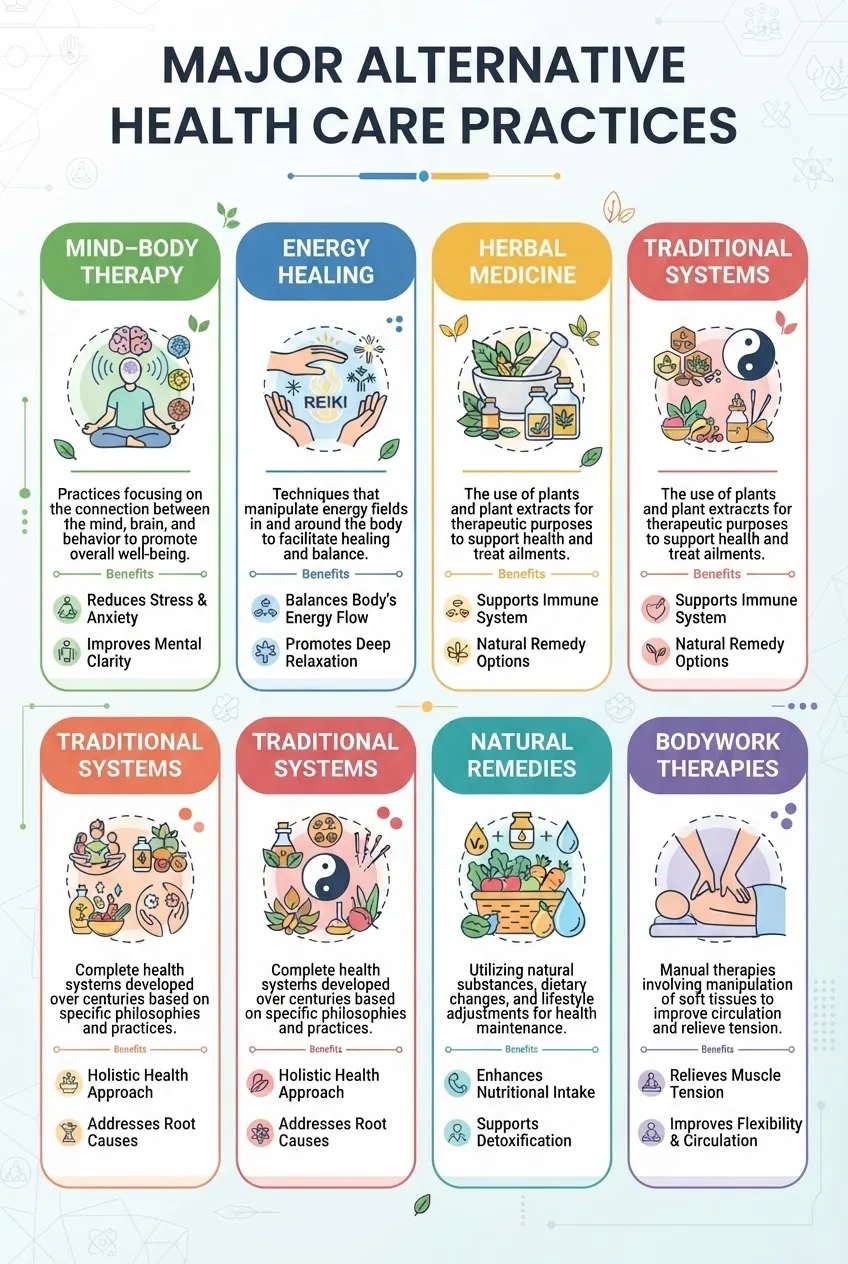
Answer: Alternative healthcare methods cluster into several major categories — mind-body therapies, herbal and natural remedies, traditional healing systems, energy healing, bodywork and manual therapies, nutrition and lifestyle medicine, and clinical integrative approaches — each with distinct mechanisms, evidence profiles and practical uses.

-
Mind‑body therapies — practices that use mental, emotional or behavioural techniques to influence physical health.
Examples: mindfulness meditation, guided imagery, biofeedback, yoga.
Evidence profile: Several randomized controlled trials support mindfulness-based approaches for anxiety and chronic pain; a 2023 systematic review in peer-reviewed journals reports moderate effect sizes for mindfulness in reducing anxiety symptoms (source type: peer-reviewed journal).
Related resources: mental health alternative treatments
-
Herbal medicine and botanical remedies — use of plant extracts, teas, tinctures and supplements for symptom relief or health support.
Examples: St. John’s wort for mild depression, turmeric for inflammation support, and adaptogenic herbs for stress resilience.
Evidence profile: Some botanicals have strong clinical evidence for specific uses; others lack standardisation and robust trials — dosing and interactions matter clinically.
-
Traditional healing systems — coherent medical models developed in specific cultures, often combining diet, herbs, manual therapies and lifestyle rules.
Examples: Traditional Chinese Medicine (acupuncture, herbal formulas), Ayurveda, Indigenous and folk medicine traditions.
Evidence profile: Certain components (e.g., acupuncture) have targeted evidence; whole-system evaluations are more complex and often limited to observational data (source type: WHO policy reports).
-
Energy healing and subtle‑energy practices — therapies based on manipulating or channeling “energy” fields to improve well-being.
Examples: Reiki, therapeutic touch, qigong.
Evidence profile: Research frequently reports benefits for relaxation and subjective wellbeing; rigorous biological mechanisms remain debated, and high-quality trials are fewer (source type: peer-reviewed journal).
-
Bodywork and manual therapies — physical manipulation and hands-on treatments to relieve pain and improve function.
Examples: massage therapy, chiropractic adjustments, osteopathic manipulative treatment.
Evidence profile: Good evidence for short-term relief in some musculoskeletal conditions; integration with exercise and education often yields better outcomes.
Related resources: alternative therapies for pain management
-
Nutrition, lifestyle and functional approaches — therapeutic diets, targeted nutrition, sleep, movement and stress management as clinical interventions.
Examples: elimination diets, Mediterranean-style patterns for chronic disease risk reduction, functional medicine assessments.
Evidence profile: Strong epidemiological and clinical evidence supports dietary and lifestyle interventions for prevention and management of chronic disease; these approaches are commonly integrated into both conventional and integrative care.
-
Natural remedies and over-the-counter supplements — vitamins, minerals and supplements used to prevent deficiency or support health.
Examples: vitamin D for bone health, probiotics for certain gastrointestinal conditions.
Evidence profile: Evidence varies by substance and indication; quality control and potential interactions with prescription drugs require professional oversight.
-
Clinical integrative services — multi-disciplinary programs that combine conventional clinical care with selected complementary practices under medical oversight.
Examples: integrative oncology clinics offering acupuncture, nutrition counselling, and mind-body therapy alongside chemotherapy support.
Evidence profile: Growing evidence and institutional uptake; randomized and pragmatic trials are increasingly available in integrative oncology and pain clinics (source type: peer-reviewed journal).
-
Medical cannabis and regulated botanical therapeutics — plant-derived medicines used under clinical guidance for specific conditions.
Examples: medical cannabis for neuropathic pain and chemotherapy-related nausea in jurisdictions where regulated.
Evidence profile: Supported for some indications (source type: clinical guidelines and peer-reviewed trials). medical cannabis as an alternative therapy
Each category contains heterogeneous practices: some are low-risk and complement conventional care well, while others require caution, licensing oversight or should not replace life-saving treatments. Later sections explain safety, certification and how to choose services.
How Alternative Health Care Practices Differ from Conventional Medicine?
Answer: Alternative approaches typically prioritise whole‑person care, prevention, and lifestyle integration, while conventional (Western) medicine emphasises disease-specific diagnosis, standardized treatments and evidence from randomized trials; integrative models bridge these paradigms by coordinating both.

Term: Conventional medicine (often called Western medicine) is a biomedical model focusing on diagnosis, pathology and standardized interventions such as surgery, pharmaceuticals and acute care.
| Feature | Conventional Medicine | Alternative / Integrative Practices |
|---|---|---|
| Primary focus | Disease diagnosis and targeted interventions | Holistic wellness, prevention and symptom management |
| Evidence standard | High-level randomized controlled trials and systematic reviews | Mixed — from RCT-supported to anecdotal and historical use |
| Regulation and licensing | Strict professional licensure and regulated pharmaceuticals | Variable; some practitioners are licensed, others follow traditional certification |
| Typical interventions | Surgery, prescription drugs, diagnostics | Herbs, manual therapy, mind-body, nutrition |
| Patient role | Provider-led with patient compliance | Shared decision-making and self-care emphasis |
Language also differs: alternative frameworks may use concepts like energy balance, doshas, or qi, which represent whole-person models rather than discrete pathophysiology. Where possible, integrative clinicians translate traditional concepts into measurable outcomes and coordinate care to avoid harmful interactions.
If you want a technical framing and terminology that contrasts models, see alternative terms for Western medical practices: CAM and integrative care.
Benefits and Considerations of Using Alternative Health Care Practices?
Answer: Alternative practices can offer symptom relief, improved quality of life, lifestyle support and patient empowerment, but benefits vary by therapy and evidence; safety considerations include interactions, variable practitioner training and skipping essential conventional treatments.
Key benefits:
- Symptom management: Mind-body therapies and acupuncture can reduce chronic pain and improve sleep (source type: peer-reviewed journal).
- Improved wellbeing and function: Nutrition, exercise and stress management programs reduce cardiovascular risk factors (source type: epidemiological studies).
- Patient empowerment: Emphasis on self-care and lifestyle change increases adherence and long-term health behaviours.
- Complementing conventional care: Integrative approaches can reduce medication side effects and improve tolerability of treatments such as chemotherapy (source type: clinical trial).
Considerations and risks:
- Evidence variability: Some practices are strongly evidence-based; others rely on historical or anecdotal support. Distinguish evidence-based practices from low-evidence claims.
- Safety and interactions: Herbal supplements can interact with prescription medications (e.g., St. John’s wort and certain anticoagulants); consult a clinician before use.
- Regulation gaps: Licensing and oversight vary by jurisdiction; product quality (supplements, herbs) may be inconsistent.
- Delaying effective care: Replacing proven treatments for serious conditions can cause harm; coordinated integrative plans mitigate this risk.
Practical scenario: a 58-year-old man with chronic low-back pain adds acupuncture and a graded exercise program to his prescribed analgesic regimen; after 12 weeks he reports reduced pain and improved mobility, with fewer analgesics used. This illustrates complementary use under medical supervision leading to functional gains (source type: case series and randomized trial evidence).
Cancer care considerations: patients sometimes seek alternative approaches for symptom relief or to complement oncology care. Explore evidence carefully before substituting standard treatments. See targeted resources on alternative medicine options for prostate cancer, alternatives to radiation therapy, and natural and holistic ovarian cancer treatments. Clinical teams should coordinate any adjunctive therapies with oncology providers (source type: clinical guidelines).
Condition-specific supplements and alternatives: some respiratory conditions use adjunctive approaches — see evidence summaries for alternative therapies for asthma and allergies.
Regulatory and evidence resources include the NCCIH and peer-reviewed journals; according to a 2024 NIH report summary, utilization of complementary therapies increased across several populations as integrative services expanded in clinical settings (source type: government report).
How to Choose and Access Alternative Health Care Practices?
Answer: Choose qualified, certified practitioners, verify their training and licensing, review evidence for proposed therapies, coordinate with your primary clinician, and prepare for costs and session expectations before starting care.
Term: Certification and regulation refers to formal training credentials, board certification, and licensure that indicate practitioner competence and scope of practice.
- Identify your goal: symptom relief, wellness support, or adjunctive care — goals guide modality choice and practitioner type.
- Check credentials: Ask about formal training, licenses, and certifications. For integrative medical oversight, consider board certified integrative medicine practitioners.
- Ask specific questions at consultation: typical session length, expected outcomes, evidence for your condition, contraindications, costs and refund policies.
- Coordinate with existing clinicians: inform your GP or specialist to avoid interactions and ensure comprehensive care.
- Verify products and safety: if supplements or herbs are recommended, choose products with third-party testing and clear dosing instructions.
- Assess cost and coverage: check insurance, sliding scales, and clinic packages. Some integrative health centers offer bundled services.
- Where to find practitioners: university integrative medicine centers, accredited programs, licensed clinics and community health centers. For service overviews, review alternative health care center services and benefits.
- Training and careers: if you plan to enter the field, explore alternative medicine degree programs online and accredited certification pathways.
Practical consultation checklist (bring to first appointment): current medications, medical history, recent lab results, clear symptom goals, and a list of questions about safety and alternatives. A responsible practitioner will obtain informed consent and coordinate care as needed.
The Future of Alternative Health Care Practices?
Answer: The future points toward greater integration, standardized certification, increased research funding, and technology-enabled access; policy and clinical practice will likely emphasise safety, comparative-effectiveness research and patient-centred integrative models.
Term: Evidence-based complementary and alternative medicine refers to applying rigorous research methods to evaluate safety and efficacy of non-conventional approaches.
Trends and data:
- Integration into mainstream systems: According to a 2023 WHO policy review, many countries are developing frameworks to integrate traditional and complementary medicine into national health systems (source type: WHO report).
- Research growth: Funding for complementary and integrative research has increased in recent years; a 2024 industry report summarised expanding clinical trials in integrative oncology and pain management (source type: industry report).
- Digital and telehealth adoption: Telehealth platforms are increasingly offering virtual mind-body programs, remote nutrition counselling and supervised herbal consultations, expanding access and follow-up care.
- Standardisation and certification: Credentialing bodies and professional boards are moving toward clearer standards, improving patient safety and insurance coverage options.
Innovation areas: personalized nutrition driven by metabolomics, digital mindfulness and biofeedback devices, and pragmatic trials combining conventional and complementary care pathways. Peer-reviewed journals and registries are publishing comparative-effectiveness data that will refine best-practice guidelines (source type: peer-reviewed journal).
Policy and patient demand will continue to shape service availability; patients and clinicians benefit when practice evolution emphasises evidence standards, transparent regulation and integrated care pathways.
Conclusion – Empowering Your Health Care Choices?
Answer: Use a balanced, evidence-aware approach: clarify goals, verify practitioner credentials, coordinate with conventional care, and prioritise safety; alternative health care practices can enhance wellbeing when chosen and applied responsibly.
Summary takeaways:
- Understand the category and evidence level of any therapy before starting.
- Prioritise certified practitioners and coordinated care for complex conditions.
- Use reliable sources such as NCCIH and WHO for guidance and stay current with peer-reviewed research.
If you want practical next steps, consult your primary clinician about integrative options and consider an initial consult at an accredited integrative clinic to build a coordinated care plan.