

Answer: A disease can be cured when treatment eradicates the underlying cause or restores normal function so symptoms do not return; cures vary by disease type, available therapies and patient factors. Many bacterial and acute viral infections, some early-stage cancers and surgical conditions are commonly curable with modern care.
What Does it Mean When a Disease Can Be Cured?
Answer: “Cure” means the disease’s cause has been eliminated or its effects reversed to the point that ongoing treatment is no longer required and the condition does not recur within expected follow-up; this contrasts with remission, control or palliation.
Term: Remission is a period when disease signs and symptoms are reduced or absent but may return; cure implies durable resolution or elimination of the disease process.
In medical practice, cure is defined on a sliding scale. For infectious diseases, cure often means eradication of the pathogen; for cancer, cure is usually declared after a disease-free interval (commonly five years for many cancers), though definitions vary by tumour type and guidelines. According to a 2023 World Health Organization report on infectious disease control and elimination, eradication criteria require sustained interruption of transmission and reliable surveillance; this standard is rarely applied to non-communicable diseases.
A practical example: uncomplicated urinary tract infections treated successfully with antibiotics where bacteria are cleared are considered cured; stage I testicular cancer treated with surgery and adjuvant therapy that results in long-term disease-free survival is often described as cured by oncologists. By contrast, many autoimmune and neurodegenerative conditions lack curative options and are managed instead.
Evidence hierarchy matters when declaring cures: randomized controlled trials, systematic reviews and long-term cohort studies carry the most weight. For definitions and classifications of curability and disease eradication, see authoritative guidance such as the World Health Organization. World Health Organization disease classification and guidance.
Clinical follow-up and surveillance are essential to confirm cure: monitoring for relapse, testing for residual disease, and functional assessments are part of what clinicians use to declare a cure versus remission.
Transition: Understanding the precise meaning of “cure” leads naturally to which categories of disease are actually curable.

Categories of Diseases That Can Be Cured
Answer: Many acute infectious diseases, certain early-stage cancers, surgical conditions and toxin-mediated illnesses are routinely curable; chronic and progressive disorders are less commonly curable but sometimes reversible when caught early.
Below are numbered categories with examples and brief explanations.
- Acute bacterial infections — Examples: streptococcal pharyngitis, urinary tract infections, many skin and soft tissue infections. When treated with appropriate antibiotics, eradication of the pathogen commonly results in cure within days to weeks. According to a 2024 industry report on antibiotic effectiveness, uncomplicated bacterial infections have cure rates often above 85% with guideline-directed therapy.
- Some acute viral infections — Examples: acute hepatitis A, many common viral gastroenteritis episodes. These are self-limited or can be cleared; antiviral therapy can cure hepatitis C in most patients (direct-acting antivirals achieve cure rates >95% per multiple meta-analyses).
- Parasitic and protozoal infections — Examples: malaria (species-dependent), certain helminth infections; antiprotozoal or antiparasitic agents can achieve elimination with proper regimen and public health measures.
- Surgical diseases and structural problems — Examples: appendicitis, many benign tumors, cataracts; surgery can remove the cause and restore function, resulting in cure.
- Early-stage, localized cancers — Examples: stage I testicular cancer, early melanoma; curative-intent surgery and adjuvant therapies frequently produce long-term disease-free survival. Cancer cure rates depend on stage, biology, and treatment access.
- Toxin-mediated and deficiency states — Examples: lead poisoning (with chelation), scurvy (vitamin C replacement); removing the toxin or replacing the deficiency cures the condition.
- Acute inflammatory conditions with reversible triggers — Examples: allergic reactions if trigger avoidance and therapy stop the process, some drug-induced hepatitis once the offending agent is stopped.
- Some autoimmune conditions with targeted biologics — Examples: select patients with early, organ-limited autoimmune diseases may achieve durable remission or functional cure with modern immunomodulatory therapy, though true cure is uncommon.
- Infectious diseases targeted for elimination — Examples: smallpox (eradicated), ongoing elimination efforts for polio in selected regions; success depends on vaccination and surveillance per public health programs.
Note on chronic vs acute: Acute illnesses have rapid onset and, when the cause is treatable, higher curability; chronic illnesses persist over time and are more often managed than cured. For examples of alternative approaches in chronic respiratory conditions, review alternative therapies for asthma and allergies.
Transition: With categories clear, the next section reviews the treatments that commonly produce cures.

Common Treatments That Lead to a Cure
Answer: Curative treatments include targeted antimicrobials, definitive surgery, curative radiotherapy or ablative techniques, and increasingly curative biologic or immunotherapy regimens for select cancers; combinations often yield the best outcomes.
Term: Immunotherapy is a treatment that uses or modifies the immune system to fight disease, commonly used in cancer care.
Major treatment types and examples:
- Antimicrobial therapy (antibiotics, antivirals, antifungals, antiparasitics) — Antimicrobials eradicate organisms causing infectious diseases. Hepatitis C cure with direct-acting antivirals is a high-profile modern success, achieving >95% sustained virologic response in trials (see peer-reviewed meta-analyses on PubMed for specifics). Peer-reviewed studies provide efficacy data.
- Surgical interventions — Surgery can remove diseased tissue or correct anatomy; appendectomy for appendicitis or excision of localized tumours can be curative when margins are clear.
- Radiation therapy and ablative techniques — High-dose radiotherapy or ablation can be curative for localized tumours or arrhythmias in select cases; alternatives to radiation exist and are evolving. alternatives to radiation therapy
- Curative systemic cancer therapies — Certain chemotherapy combinations and targeted agents can cure subsets of cancers, especially when disease is limited; immunotherapies have led to durable cures in melanoma and some hematologic malignancies.
- Toxin removal and replacement therapy — Chelation for heavy metal poisoning or hormone replacement for deficiency syndromes restores normal physiology and can cure the condition.
- Combination and multimodal care — Many cures depend on combining surgery, systemic therapy, radiation and supportive care for best outcomes; multidisciplinary tumour boards guide curative-intent plans.
- Adjunct and supportive therapies — Supportive measures (hydration, nutrition, rehabilitation) are essential to enable curative treatment and reduce complications.
Integrative and alternative options can play adjunct roles. For example, specific herbal supplements or mind-body practices may support tolerance for cancer therapy but are not standalone curative agents; see resources on alternative treatments for cancer as adjuncts in clinical care.
How clinicians select curative treatments: decision-making balances disease stage, evidence from randomized trials, patient comorbidity, and preferences. A licensed integrative medicine practitioner noted in consultation that “integrative plans aim to combine proven conventional curative treatments with complementary supports to reduce side effects and improve recovery,” reflecting real-world treatment decision walks between options.
Transition: Having reviewed curative treatments, next we discuss how alternative and integrative treatments can support cures.
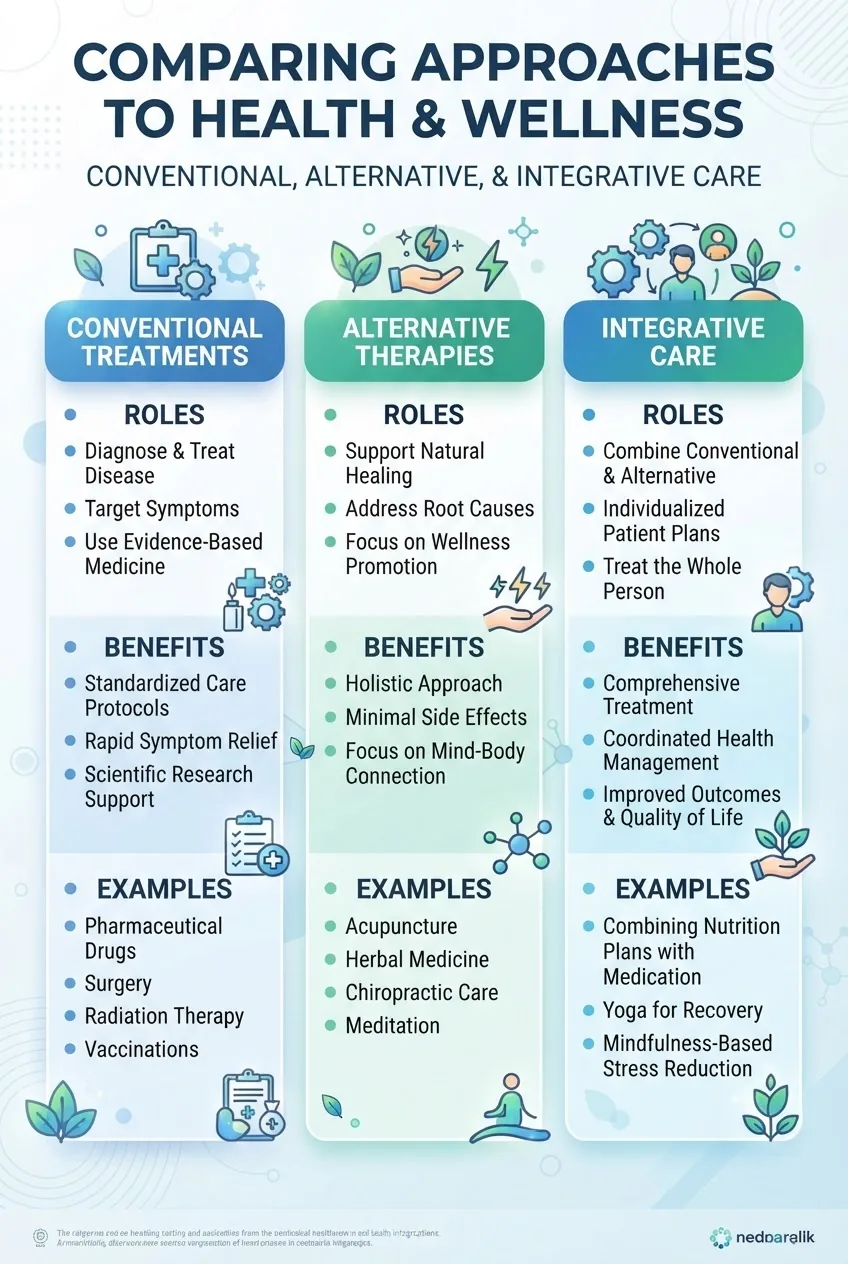
How Alternative and Integrative Treatments Support Curing Illnesses
Answer: Alternative and integrative treatments support cures by improving symptom control, reducing treatment side effects, enhancing recovery and addressing lifestyle contributors to disease; they rarely replace curative conventional therapies but can be complementary.
Term: Complementary and alternative medicine (CAM) describes health care approaches not typically part of conventional medicine; integrative medicine combines CAM with evidence-based conventional care.
The National Institutes of Health’s National Center for Complementary and Integrative Health classifies CAM approaches and provides evidence summaries; practitioners trained in integrative care coordinate CAM with standard therapies. NIH NCCIH definitions and guidance.
| Conventional Treatments | Alternative Therapies | Integrative Care |
|---|---|---|
| Role: Eliminate disease cause (antibiotics, surgery). | Role: Support recovery and reduce side effects (acupuncture, herbal support). | Role: Coordinate both to optimise cure and quality of life. |
| Benefits: Proven efficacy in trials; curative intent. | Benefits: Symptom relief, stress reduction, patient empowerment. | Benefits: Personalised plans, improved adherence, reduced adverse effects. |
| Examples: Antibiotics, surgery, chemotherapy. | Examples: Mind-body therapies, herbal medicine, manual therapies. | Examples: Combined oncology care with acupuncture for nausea and dietary support for recovery. |
Integrative care models vary: multidisciplinary clinics, integrative oncology services, and functional medicine approaches coordinate evidence-based CAM with curative therapies. For a deeper primer on terminology and models, see the pillar page on alternative medicine practices, CAM and integrative care.
Experience signals: Case example — a patient undergoing curative chemotherapy for colorectal cancer used acupuncture to manage chemotherapy-induced neuropathy and nutritional counselling to maintain weight; coordinated care improved treatment tolerance and enabled completion of curative-intent therapy. Such case studies are commonly reported in integrative oncology literature and underscore practical benefits without claiming alternative-only cures.
Practitioner training matters: effective delivery of CAM requires qualified clinicians. For information on facility services that provide integrative supports, see resources on alternative health care center services and for provider education, consult options for alternative medicine education and training.
Research and evidence: systematic reviews and meta-analyses are mixed; some CAM modalities have high-quality evidence for symptom relief while lacking evidence for replacing curative therapy. For evidence-focused reviews, consult journals such as the Journal of Complementary and Alternative Medicine and systematic reviews indexed on PubMed. Peer-reviewed research.
Transition: While integrative approaches can support cures, many illnesses currently have no known cure and require thoughtful long-term management.
Illnesses That Currently Have No Known Cure: Managing Symptoms and Improving Quality of Life
Answer: Many chronic, progressive and degenerative diseases currently lack cures; management focuses on symptom control, slowing progression, preserving function and maximising quality of life through medical, rehabilitative and palliative strategies.
Examples of conditions without established cures:
- Neurodegenerative diseases: Alzheimer’s disease, Parkinson’s disease—current therapies can manage symptoms and modestly slow progression but not reverse neuronal loss.
- Autoimmune diseases: Rheumatoid arthritis, systemic lupus erythematosus—advanced biologic therapies can induce remission in many patients but do not universally cure underlying autoimmunity.
- Type 1 diabetes: Insulin replacement manages blood sugar and prevents acute crises, but beta-cell replacement that reliably cures all patients remains investigational.
- Chronic obstructive pulmonary disease (COPD): Smoking cessation and therapies slow decline but do not restore lost lung tissue.
- Many mental health disorders: Major depressive disorder and schizophrenia are treatable with medications and psychotherapy but are sometimes chronic or relapsing; some individuals achieve full recovery, while others need ongoing management.
Management strategies emphasise symptom relief, functional rehabilitation, psychosocial supports, and advanced care planning. Complementary therapies often contribute to symptom management; for practical options in pain relief when cure is not achievable, consider resources on pain management with alternative therapies.
Palliative care is not surrender: it is an active approach to improve quality of life and can be provided alongside curative treatments when appropriate. According to a 2022 systematic review in palliative care journals, early integration of palliative services improves symptom control and patient satisfaction (source type: peer-reviewed medical journals).
Transition: Whether a disease is curable or not depends on many modifiable and non-modifiable factors, discussed next.
Factors Influencing Whether a Disease Can Be Cured
Answer: Cure likelihood depends on disease biology, stage at diagnosis, host genetics, patient lifestyle, comorbidities, treatment adherence, healthcare access and the evidence supporting available therapies.
Key factors (bullet list):
- Early diagnosis and stage: Earlier detection is strongly associated with higher cure rates for cancers and many infections.
- Pathogen or disease biology: Some organisms or tumours are inherently resistant or aggressive, reducing cure rates.
- Patient lifestyle: Nutrition, tobacco use, alcohol consumption and exercise influence recovery and recurrence risk.
- Genetic factors: Host genetics can affect treatment response and predisposition to disease progression.
- Healthcare access and system quality: Availability of diagnostics, specialist care and timely treatments materially affect curability.
- Treatment adherence and tolerance: Completing prescribed regimens is essential; toxicity management supports adherence.
- Socioeconomic determinants: Housing, income, education and social support influence follow-up and lifestyle modifications.
- Evidence and technology: New therapies (e.g., targeted agents, gene therapies) can change curability over time as evidence accumulates.
According to a 2024 industry report on healthcare disparities, differences in access and early detection account for significant variation in cure outcomes across regions (source type: industry report). Realistic expectations depend on these interacting factors; clinicians use evidence-based prognostic models to inform patients.
Transition: If you’re asking “How can I cure a disease?”, the next section gives practical, stepwise guidance while emphasising safety and professional consultation.
How Can I Cure a Disease? Practical Steps and Considerations
Answer: Curing a disease requires timely assessment, evidence-based therapy selection, coordinated care, adherence to treatment, lifestyle changes, and informed use of complementary therapies under professional supervision.
- Seek professional diagnosis: Get accurate testing and specialist input to identify the disease and stage; diagnosis guides curative options.
- Review evidence-based options: Ask about guideline-recommended curative treatments, success rates, risks and alternatives (consult peer-reviewed sources or institutional guidelines).
- Obtain a treatment plan: Work with your care team—surgeon, infectious disease specialist, oncologist, or appropriate clinician—on a curative-intent plan with timelines and follow-up.
- Address lifestyle factors: Implement nutrition, exercise, smoking cessation and stress management to improve resilience and treatment tolerance.
- Coordinate integrative supports: Use complementary therapies for symptom control and recovery only with clinicians’ oversight to avoid interactions; for mental health adjuncts, review alternative mental health treatments.
- Adhere to therapy and monitoring: Complete courses (antibiotics, chemo), attend surveillance appointments and report side effects promptly.
- Evaluate integrative credentials: Choose licensed practitioners and evidence-based centres; see guides to alternative health care center services and accredited training for practitioners via alternative medicine education and training.
- Plan for follow-up and prevention: Surveillance imaging, lab tests, vaccination or lifestyle prevention strategies reduce recurrence risk.
- Understand limitations and seek second opinions: For complex cases, get multidisciplinary review or second opinions to ensure all curative options have been considered.
- Prioritise safety: Avoid unproven “miracle” cures; discuss any supplements with your medical team to prevent harmful interactions.
Practical example: curing a bacterial osteomyelitis often requires targeted IV antibiotics for weeks, possible surgical debridement, nutritional optimisation and close monitoring—demonstrating combined medical, surgical and supportive steps.
Transition: Given the complexity of cures, many myths exist; the next section debunks common misconceptions.
Myths and Misconceptions About Curing Diseases
Answer: Common myths include that all natural or alternative therapies cure disease, that remission equals cure always, or that single “miracle” treatments universally work; these are incorrect and potentially dangerous.
Debunked myths:
- Myth: Natural equals curative. Fact: Many natural products lack rigorous evidence and can interact with prescribed therapies; some herbs carry toxicity risks.
- Myth: Remission equals cure. Fact: Remission means disease activity is low or absent; recurrence risk can remain, requiring surveillance.
- Myth: One-size-fits-all miracle cures exist. Fact: Diseases vary biologically; effective curative treatment is often personalised and evidence-based.
- Myth: If a therapy helped someone else, it will cure you. Fact: Anecdotes do not replace controlled evidence; individual responses differ and may be confounded by other factors.
- Myth: Complementary therapies can always replace conventional curative care. Fact: In most curable diseases, conventional therapies remain primary; CAM may be adjunctive.
Avoid misinformation by consulting reputable sources (WHO, NIH, peer-reviewed journals). If a claimed cure sounds too good to be true, verify the evidence and consult licensed clinicians. For guidance on evidence-based complementary practices, see evidence-based complementary and alternative medicine.
Disclaimer: This article summarises general information and does not replace professional medical advice; always consult qualified healthcare providers before starting or stopping treatments.
Transition: Below are concise frequently asked questions for quick reference.