
Holistic healing methods are integrated practices that treat the whole person—mind, body, and spirit—by combining evidence-supported natural therapies, traditional systems, and lifestyle interventions. This guide explains major modalities, how they work, practical steps to start, and pathways for training or integrating holistic care alongside conventional medicine.
Understanding Holistic Healing: Meaning and Core Principles?
Answer: Holistic healing is a whole-person health approach that addresses physical, mental, emotional, and spiritual factors together, prioritising balance, prevention, and naturalistic healing alongside conventional care.
Term: Holistic healing — an approach to health that considers the whole person (physical, emotional, social, spiritual) rather than isolated symptoms.
Holistic healing meaning centers on the idea that health emerges from balanced systems — like a garden where roots, stems, and leaves all need tending. Core principles include whole-person health, prevention, individualized care, and the mind-body-spirit connection. Practitioners integrate lifestyle, nutrition, manual therapies, traditional medicine systems, energy work, and counseling to restore balance.
The philosophy borrows from many traditions and modern research. According to a 2024 NCCIH summary report on integrative approaches, holistic strategies often show measurable benefits for chronic pain, stress reduction, and quality of life when combined with standard care. NCCIH defines complementary and integrative modalities and summarizes evidence for common therapies.
Common language in this field includes naturalistic healing (use of nature-derived remedies and lifestyle changes), holistic health systems (organized frameworks like Ayurveda or Traditional Chinese Medicine), and complementary and alternative medicine (CAM), which refers to practices outside mainstream Western medicine but increasingly integrated into it.
For a complete resource on practices and modalities, see the pillar guide: Holistic Healing Methods Guide: Practices and Modalities Explained.
Explore the benefits and clinical framing further in the companion piece about outcomes: benefits of holistic medicine.
If terminology is unfamiliar, review clear definitions here: holistic health definitions and terminology and this deeper conceptual piece on worldview: definition of holistic view and approach.
Key Holistic Healing Modalities Explained?
Answer: Key holistic healing modalities span energy-based healing, herbal and natural remedies, mindfulness and meditation, traditional medicine systems (Ayurveda, TCM), and physical body approaches like chiropractic and massage; each has distinct mechanisms, cultural contexts, and practical benefits.
This section breaks down principal modalities, how they operate, training norms, and practical benefits. Use the internal links below for mental-health-specific and spiritual-session resources where noted.

Energy-Based Healing Techniques
Answer: Energy healing techniques aim to balance subtle energy fields to support physical and emotional wellbeing using hands-on or hands-off methods such as Reiki, therapeutic touch, and chakra work.
Term: Energy healing — therapies premised on manipulating an organism’s subtle energy fields, often called qi, prana, or biofield.
Common practices:
- Reiki — practitioner channeling universal life energy with light touch or near-touch.
- Therapeutic Touch — structured assessment and balancing of the biofield without direct contact.
- Prayer/spiritual healing sessions — culturally bound approaches often integrated into care.
Benefits (evidence and cautions):
- Reported short-term reductions in anxiety, stress, and perceived pain (see peer-reviewed summaries via PubMed).
- Low physical risk when delivered by trained practitioners; not a replacement for medical treatment for acute conditions.
- May work best as adjunctive therapy that enhances relaxation and coping resources.
Practical application: start with a single session to assess response; ask about practitioner training and hygiene, and combine with breathwork or counseling for measurable outcomes.
spiritual healing sessions and techniques is a helpful resource for session expectations and practitioner questions.
Herbal and Natural Remedies
Answer: Herbal and natural remedies use plant-based compounds, nutraceuticals, and lifestyle-based supplements to support physiology and prevention; efficacy varies by herb, dose, and condition.
Term: Herbal remedies — preparations derived from plants used to prevent or alleviate health conditions, including teas, tinctures, and standardized extracts.
Common examples and uses:
- Turmeric/curcumin for inflammation support.
- St. John’s wort for mild-moderate depression (drug interactions important).
- Chamomile and lavender for sleep and anxiety support.
Benefits and safety notes:
- Can provide symptomatic relief and preventative support; evidence ranges from strong (some herbal extracts) to mixed (many traditional formulas).
- Herbs interact with prescription drugs; always check with clinicians or pharmacists.
- Quality, standardization, and source matter—prefer products with third-party testing.
Mindfulness and Meditation Practices
Answer: Mindfulness and meditation are mental training practices that cultivate focused attention, emotional regulation, and stress resilience through structured techniques like breath awareness, body scan, and loving-kindness meditation.
Term: Meditation — a set of practiced techniques to train attention and awareness for mental clarity and emotional calm.
Popular techniques:
- Mindfulness-Based Stress Reduction (MBSR) — secular, evidence-backed program for chronic pain and stress.
- Concentration meditation (focus on breath or object).
- Open-monitoring (noting thoughts and sensations without judgment).
- Loving-kindness (metta) for empathy and mood support.
Benefits (evidence-based): According to a 2022 meta-analysis in peer-reviewed journals, structured mindfulness programs reduce anxiety and depression symptoms and improve quality of life. Programs are low-cost, low-risk, and scalable for self-practice or clinician-guided formats.
Traditional Medicine Systems (Ayurveda, TCM, etc.)
Answer: Traditional systems like Ayurveda and Traditional Chinese Medicine are comprehensive frameworks combining diagnostics, herbal pharmacopoeia, diet, manual therapies, and lifestyle prescriptions based on systemic balance.
Term: Ayurveda — a traditional Indian medicine system emphasizing dosha balance (Vata, Pitta, Kapha) through diet, herbs, and rituals.
Term: Traditional Chinese Medicine (TCM) — a Chinese medical system centered on qi flow, meridians, acupuncture, herbal formulas, and diagnostic pattern differentiation.
How they function:
- Ayurveda uses individualized dietary and daily routines (dinacharya), pulse diagnosis, and herbal formulas to restore doshic balance.
- TCM diagnoses patterns (e.g., liver qi stagnation) and applies acupuncture, herbal formulae, and qigong to restore qi and organ harmony.
Evidence and cultural context:
- Both systems are recognized by the World Health Organization for their role in traditional medicine frameworks; see WHO summaries on traditional medicine integration at WHO.
- Some components (acupuncture, select herbs) have strong evidence for specific indications; others require more rigorous study.
Physical Body Approaches (Chiropractic, Massage)
Answer: Physical body approaches use manual techniques to restore musculoskeletal alignment and tissue health, commonly including chiropractic adjustments, therapeutic massage, and myofascial release.
Term: Chiropractic care — manual spinal manipulative therapy focusing on joint alignment and nervous system functioning.
Typical uses and benefits:
- Chiropractic adjustments and manual therapies can reduce certain types of back and neck pain and improve function when performed by licensed practitioners.
- Massage aids circulation, reduces muscle tension, and supports recovery from soft-tissue injuries.
- Integrating manual therapy with exercise, posture education, and ergonomic changes yields better outcomes than single modalities alone.
Cautions: avoid aggressive spinal manipulations in patients with unstable conditions; always disclose full medical history to practitioners.
Across modalities, trade-offs include variable evidence strength, cultural specificity, practitioner variability, and need for coordinated care with medical providers. For mental-health-specific modalities, consult this guide: holistic mental health treatment approaches.
Holistic Wellness Practices for Everyday Health?
Answer: Everyday holistic wellness practices combine nutrition, movement, stress management, sleep hygiene, and small daily rituals (meditation, herbs, community connection) to prevent disease and sustain whole-person balance.
Term: Holistic wellness practices — routine behaviors and rituals that support integrated health across physical, mental, and social domains.
Follow these step-by-step how-to actions and practical tips to integrate holistic care into daily life:
- Start with a baseline assessment. Track sleep, diet, stressors, and movement for two weeks to identify patterns. Use a simple journal or app.
- Prioritise foundational habits. Small wins: consistent sleep schedule, 20–30 minutes of daily moderate movement, and three real food meals per day.
- Add a daily mindfulness practice. Begin with five minutes of breath awareness and increase to 20 minutes over weeks; use guided MBSR or apps for structure.
- Use targeted natural supports. Introduce one evidence-supported supplement or herbal remedy at a time (e.g., magnesium for sleep), checking for interactions.
- Build a weekly body-care routine. Include one session of restorative movement (yoga, qigong), one manual therapy (massage, foam rolling), and at least one nature-based activity.
- Integrate social and spiritual nourishment. Connect with community, regular reflective practice (journaling, gratitude), or spiritual rituals that align with personal beliefs.
- Create a preventative health plan. Schedule regular check-ins with a primary care clinician, and document responses to any holistic interventions.
Practical tips:
- Use habit stacking: attach a 5-minute meditation to an existing routine (after brushing teeth).
- Batch-cook whole-food meals to reduce decision fatigue and improve nutrition.
- Set micro-goals for stress management: 3 deep breaths before email, 10-minute walk after lunch.
Case study (realistic example):
Case: Sarah, 42, chronic neck pain and insomnia. She tracked habits two weeks, began daily 10-minute breathwork, swapped nightly screens for chamomile tea, started weekly massage, and consulted a nutritionist. Within eight weeks pain improved 40% and sleep latency decreased; she continued integrative follow-ups.
Step-by-step walkthrough (how Sarah started):
- Week 1: Baseline tracking and 5-minute breathing practice.
- Week 2–3: Introduced magnesium glycinate at night and chamomile tea; arranged massage.
- Week 4–8: Added 20 minutes of gentle yoga after work and cognitive behavioral strategies for sleep; coordinated care with her GP.
For nutrition certification resources and clinical nutrition guidance, consider formal training: holistic nutrition certification and counseling.
Contextual resource on wellness models and frameworks: holistic well-being and wellness models.
How to Get Into Holistic Healing: Education, Training, and Career Paths?
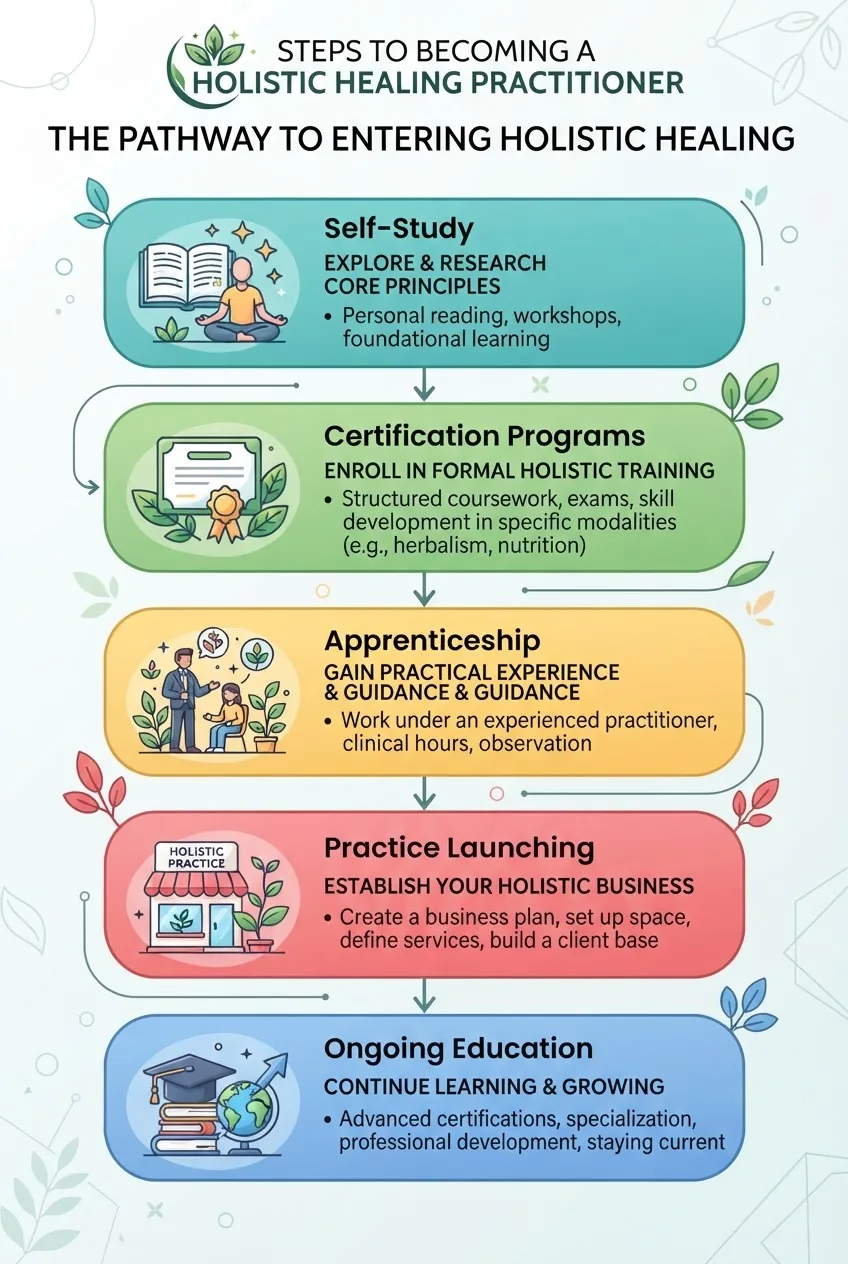
Answer: Entering holistic healing typically follows pathways like self-directed study, certificate programs, accredited diplomas, apprenticeships, supervised clinical placements, and continuing professional development leading to careers as coaches, therapists, or practitioners.
Term: Certification programs — structured courses awarding credentials that demonstrate competency in a modality or practice.
Common pathways (numbered list with detail):
- Self-study and micro-credentials. Short courses, books, and workshops build foundational knowledge and allow exploration before committing to formal training.
- Certificate and diploma programs. Usually 6–18 months; combine theory, practical skills, and supervised practice. These are common for yoga therapy, herbalism, and energy healing.
- Accredited degree programs. Bachelor’s or master’s degrees in integrative medicine, naturopathy, or holistic health provide deep clinical grounding and research literacy.
- Apprenticeships and supervised clinical training. Work under an experienced practitioner to gain hands-on skills and clinical judgment.
- Professional certification and membership. Join associations that set ethical standards and offer continuing education to maintain credentials.
- Launch and business skills. Training in practice management, telehealth delivery, and insurance navigation are essential for sustainable practice.
Comparison table: common training options, typical duration, and approximate costs
| Program type | Typical duration | Approx. cost (USD/AUD) | Outcome |
|---|---|---|---|
| Short certificate / micro-credential | 4–12 weeks | $200–$2,000 | Introductory skills, CPD points |
| Diploma / practitioner certificate | 6–18 months | $2,000–$12,000 | Practice-ready, insurance eligibility |
| Undergraduate / graduate degree | 1–4 years | $10,000–$70,000+ | Clinical roles, advanced credentials |
How long does it take? Typical timelines:
- Coach or wellness facilitator: 3–12 months to credential.
- Practitioner (herbalist, acupuncturist): 1–4 years depending on accreditation.
- Degree-level clinicians: 3–6 years including supervised practice and licensing.
If you want certification options in health coaching, review comprehensive online pathways: online health coach certification programs. For local coach training courses: holistic wellness coach training.
When you’re ready to start practicing and need to connect clients to clinical services, consult the guide to locating practitioners and navigating insurance: finding alternative practitioners with insurance.
Practitioner perspective (paraphrased interview): “Start with supervised practice early, document client outcomes objectively, and build referral relationships with conventional clinicians to ensure safety and credibility,” advises a multidisciplinary practitioner with 12 years’ clinical experience.
Integrating Holistic Healing into Conventional Health Care?
Answer: Integrative medicine combines evidence-based holistic methods with conventional care to create a coordinated, patient-centered approach that improves outcomes, emphasizes prevention, and respects patient values.
Term: Integrative medicine — a coordinated care model combining conventional medical treatments with complementary therapies supported by evidence and tailored to the patient.
Integration models range from:
- Collaborative care teams where conventional clinicians and complementary practitioners co-manage patients.
- Referrals and co-treatment agreements with clear communication and shared records.
- Institutional programs offering integrative services (e.g., cancer centers offering acupuncture for chemotherapy-related nausea).
Comparison: conventional vs integrative approaches
| Feature | Conventional medicine | Integrative (holistic) medicine |
|---|---|---|
| Primary focus | Disease/pathology | Whole-person health, prevention |
| Interventions | Pharmacologic, surgical | Nutrition, mind-body, manual therapies + conventional |
| Patient role | Often directive | Shared decision-making |
Frameworks for safe integration:
- Evidence-first triage: use modalities with supportive research for the indication.
- Communication and referrals: shared records and informed consent.
- Patient-centred holistic care: follow the patient-centered holistic care approach to coordinate goals and monitor outcomes.
Institutional guidance from bodies like the WHO supports incorporating traditional medicine into national health systems when safety and efficacy are established; see WHO guidance on integration. According to a 2023 NCCIH report, integrative programs that combine cognitive-behavioural strategies, physical rehabilitation, and complementary modalities reduce opioid use for chronic pain in several clinical settings. NCCIH offers frameworks to evaluate risks and benefits of common CAM therapies.
Common Myths and Misconceptions About Holistic Healing?
Answer: Many myths exist—holistic healing is not uniformly unscientific, nor is it always a replacement for medical care; understanding evidence strengths, limitations, and proper integration clarifies realistic expectations.
- Myth: Holistic equals unscientific.
Fact: Some holistic modalities (e.g., mindfulness, acupuncture for specific pain conditions) have robust evidence; others need more study. Assess therapies by evidence and context; see peer-reviewed literature for specifics. - Myth: Natural means safe.
Fact: Natural substances can interact with drugs or be contraindicated; consult clinicians for safety checks. - Myth: Holistic healing cures all chronic disease.
Fact: Holistic care supports management and prevention but is rarely a standalone cure for advanced disease; it often complements conventional treatment. - Myth: All practitioners have the same training.
Fact: Training varies widely; verify credentials, supervised hours, and insurance eligibility before long-term engagement. - Myth: Holistic practices require religious beliefs.
Fact: Many practices are secular and adaptable to individual beliefs; spiritual options exist for those who want them.
Evidence note: When discussing clinical claims, consult peer-reviewed meta-analyses and systematic reviews—searchable via PubMed—and refer to national summaries such as NCCIH for current evidence syntheses.
Resources and Next Steps for Exploring Holistic Healing?
Answer: Start with curated books, accredited courses, practitioner directories, and supportive communities; sample modalities safely, document outcomes, and consult medical providers for coordinated care.
Practical resource list with brief explanations:
- finding holistic healing centers near you — directory-style guide to local programs and what to expect at intake.
- Holistic Products Guide: Health Supplies and Wellness Essentials — quality-check points for supplements and supplies.
- Holistic Health Practitioner Certification and Training Programs — overview of credentialing paths.
- Holistic Health Coach Certification: Training and Program Guide — courses for coaching careers.
- Holistic Medicine Degree Programs and Accredited Schools Guide — academic pathways and accreditation markers.
- Holistic Mental Health Treatment Centers — integrated care centers specializing in mental health.
- community groups and lifestyle guides — practical community-run programs and lifestyle planning tools.
External authority sources for continued study:
- NCCIH — evidence summaries and consumer guides on CAM and integrative health.
- WHO — guidance on traditional medicine and system-level integration.
- PubMed / peer-reviewed journals — primary research and systematic reviews on modality effectiveness.
Next steps checklist:
- Choose one practice to test for 6–8 weeks and track outcomes.
- Confirm practitioner credentials and ask about contraindications.
- Coordinate with your primary clinician for safe integration and documentation.
- Consider formal training if you plan to practice professionally.
Conclusion: Key takeaways and CTA
Holistic healing methods offer a wide toolbox for whole-person care: energy techniques, herbal supports, mindfulness, traditional systems, and body therapies all play roles when used appropriately and with clinical coordination. Start small, prioritize evidence and safety, and explore accredited training if you aim to practice. Ready to begin? Review a nearby centre or course and schedule an initial assessment with a qualified practitioner.