
Holistic mental health treatment centers are specialized care facilities that combine clinical psychiatry and psychotherapy with complementary mind‑body and lifestyle therapies to treat the whole person—mental, physical and social—through personalized, coordinated treatment plans focused on long‑term wellness and relapse prevention.
Introduction to Holistic Mental Health Treatment Centers
Answer: Holistic mental health treatment centers are care facilities that use a whole-person approach integrating evidence-based psychiatric and psychotherapeutic treatments with complementary modalities—like mindfulness, nutrition and movement—to address mental disorders alongside physical, social and spiritual contributors to health.
Term: Holistic mental health care — a whole-person approach that treats psychological symptoms together with physical, social and lifestyle factors rather than focusing solely on diagnosis or symptoms.
These centers differ from single-discipline clinics by intentionally blending conventional and alternative models into an integrated care model. An integrated care model coordinates psychiatrists, licensed therapists, nutritionists and complementary practitioners to create a unified care plan that aligns medication management, psychotherapy and supportive therapies such as yoga, acupuncture and nutritional counseling.
Holistic centers typically serve patients with anxiety disorders, depressive disorders, trauma-related conditions, chronic stress, and co-occurring physical health issues such as chronic pain or sleep disorders. Entry points vary: direct referral from primary care, psychiatric referral, or self-referral.
According to a 2023 report by the Australian Institute of Health and Welfare, integrated and community‑based mental health services are increasingly incorporating non‑pharmacological supports alongside clinical care, reflecting rising demand for whole-person options (source: government report).
The remainder of this guide explains facility types, core treatment modalities, staff roles, assessment and care planning, the therapeutic environment, measurable outcomes, and considerations for selecting a program.
Types and Settings of Holistic Mental Health Treatment Facilities
Answer: Holistic mental health treatment facilities operate in residential, outpatient and day-program settings, each offering different intensity, duration and combinations of clinical and complementary therapies to match patient needs.
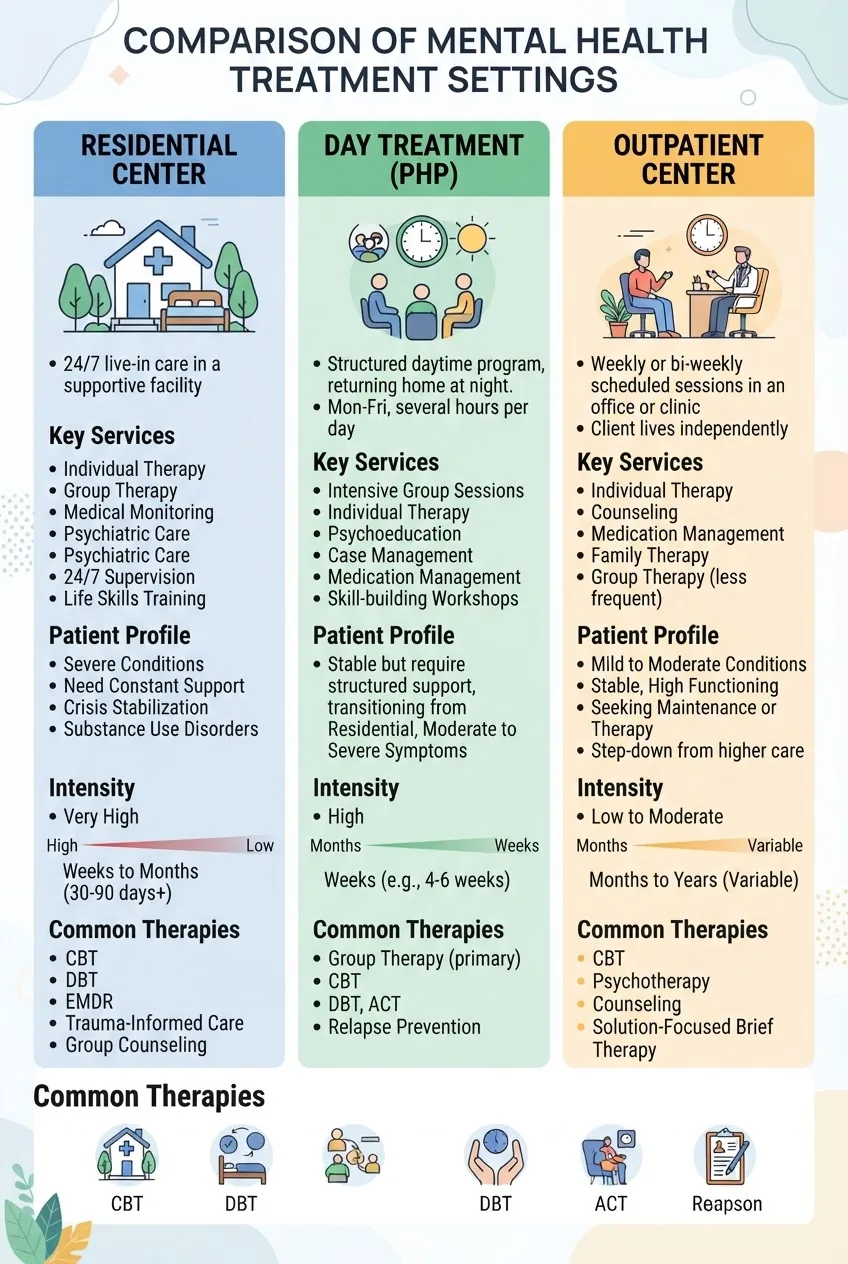
- Residential treatment center — 24/7 live‑in programs for moderate-to-severe cases needing structured routines, intensive psychotherapy, medication management and daily holistic therapies (yoga, nutrition, group skills work). Typical stay: weeks to months. Best for individuals needing immersive care and stabilization.
- Outpatient programs — part-time clinical and holistic therapies scheduled around daily life: psychiatric visits, individual therapy, nutrition counseling, mindfulness groups and coaching. Typical care ranges from weekly to several times per week over months. Ideal for those with community supports and lower acuity.
- Day treatment / partial hospitalization — daytime, high-intensity programs that provide multi-hour therapeutic days without overnight stay: group therapy, experiential sessions, medical oversight, and integrative workshops. Commonly used for transitional care after inpatient stays or for acute needs without 24/7 admission.
- Wellness retreats and residential short-stay programs — shorter-term, recovery-focused stays emphasizing stress reduction, psychoeducation, lifestyle changes and complementary modalities; typically less clinical intensity, used for prevention or early intervention.
Use this table to compare intensity, typical duration and common therapies across settings:
| Setting | Intensity | Typical Duration | Common Therapies |
|---|---|---|---|
| Residential | High (24/7 care) | Weeks–months | Individual & group therapy, medication management, yoga, nutrition, acupuncture |
| Day treatment / Partial hospitalization | High (daytime) | Days–weeks | Intensive groups, skills training, experiential modalities, medical oversight |
| Outpatient | Low–moderate | Months+ | Psychotherapy, psychiatry, nutrition, coaching, mindfulness classes |
| Wellness retreat / Short-stay | Low–moderate | Days–weeks | Psychoeducation, movement, meditation, nature immersion |
Many centers offer hybrid programs that move patients across settings as they progress—for example, residential to day treatment, then outpatient maintenance. To find local options, see the holistic healing centers and wellness programs resource for directory-style guidance.
Core Treatment Modalities Used in Holistic Mental Health Centers
Answer: Core modalities blend evidence-based psychiatric and psychotherapeutic interventions (CBT, DBT, medication management) with complementary therapies—mindfulness meditation, acupuncture, nutritional counseling, yoga therapy and expressive arts—delivered as coordinated elements of a personalized plan.

Term: Mindfulness meditation — a mental training practice that cultivates present-moment awareness with non-judgmental attention.
Psychiatric care and medication management
Psychiatric care provides diagnostic clarification, evidence-based medication options, and safety monitoring. Medication remains a core component where indicated (e.g., major depressive disorder, bipolar disorder, severe anxiety, psychotic disorders). Holistic centers emphasize shared decision-making and combine pharmacotherapy with non‑pharmacological supports to reduce side effects and enhance adherence.
Psychotherapies (individual, group, and trauma-focused)
Therapies include cognitive behavioral therapy (CBT), dialectical behavior therapy (DBT), acceptance and commitment therapy (ACT), and trauma-focused approaches (e.g., EMDR, trauma‑informed CBT). These evidence-based psychotherapies address core symptoms, teach coping skills and are often integrated with somatic and experiential techniques in therapy sequences.
Mindfulness and meditation
Mindfulness-based interventions (MBIs), such as Mindfulness-Based Stress Reduction (MBSR) and Mindfulness-Based Cognitive Therapy (MBCT), are used to reduce rumination, improve emotion regulation and prevent depressive relapse. Methodology: guided group and individual practice, psychoeducation, home practice assignments and integration into daily routines. Evidence basis: multiple meta-analyses show MBIs reduce symptoms of anxiety and depression (source: peer-reviewed meta-analyses).
Yoga and movement therapies
Yoga therapy combines breathwork, movement and relaxation to improve autonomic regulation, reduce stress reactivity and support somatic processing of trauma. Many centers use trauma‑sensitive yoga protocols to avoid re-triggering. Physiological effects include improved heart rate variability and reduced cortisol in controlled studies.
Nutrition and metabolic supports
Term: Nutritional counseling — assessment and individualized dietary strategies to support mood, sleep and cognitive function.
Nutritional approaches evaluate deficiencies (e.g., vitamin D, B12, omega‑3 status), metabolic contributors (blood sugar dysregulation), and gut‑brain links. Interventions include food‑first plans, targeted supplementation where indicated, and psychoeducation to modify eating behaviors. Methodology: lab-informed assessments, coordinated plans with psychiatrists (to avoid interactions), and behavioural support to implement changes.
Acupuncture and traditional modalities
Acupuncture is offered for symptom relief (e.g., anxiety, insomnia) and somatic regulation; protocols are adapted to mental health aims. Centers that include acupuncture ensure licensed practitioners and interprofessional communication. Evidence: randomized trials and systematic reviews show moderate effects for anxiety and chronic pain when used adjunctively (source: peer-reviewed clinical trials).
Herbal medicine and botanical supports
Herbal interventions (e.g., St. John’s wort for mild-moderate depression, herbs for sleep) are used cautiously with clinician oversight due to medication interactions. Licensed herbalists or naturopaths collaborate with psychiatrists to ensure safety and evidence-informed dosing.
Expressive and experiential therapies
Art therapy, music therapy, drama therapy and equine-assisted activities facilitate nonverbal processing, emotional regulation and identity work. These modalities are evidence-supported for trauma and adolescent treatment when integrated into broader therapeutic frameworks.
Somatic and body‑based therapies
Somatic experiencing, sensorimotor psychotherapy and breathwork directly address dysregulated stress systems by working with bodily sensations and movement patterns. Methodology typically involves titrated exposure to bodily cues, grounding skills, and integration with talk therapy.
Health coaching and lifestyle interventions
Health coaches support behavior change—sleep hygiene, physical activity, stress management—and provide accountability. For clinician pathways, see recommended health coach certification programs for professionals entering these roles.
For readers seeking a deeper catalog of modalities and implementation details, consult the holistic healing methods guide.
Each modality has benefits and limitations: mindfulness aids relapse prevention but requires practice commitments; herbs can be effective but carry interaction risks; acupuncture offers symptom relief yet effects vary between individuals. Integrated plans sequence modalities to maximize synergy and safety.
Staff Composition and Holistic Practitioner Roles in Treatment Centers
Answer: Staff are interdisciplinary teams combining licensed psychiatrists and therapists with nutritionists, nurses, licensed complementary practitioners and coordinators who create and manage patient-centered care plans in collaboration.
Typical roles and common qualifications:
- Psychiatrist — MD or DO, board-certified in psychiatry; responsible for psychiatric diagnosis, medication management and collaborating on integrated treatment decisions.
- Licensed psychotherapist — clinical psychologist (PhD/PsyD), clinical social worker (MSW), or counsellor (MA) with licensure; provides individual and group psychotherapies (CBT, DBT, trauma therapy).
- Registered nurse / psychiatric nurse — RGN/RN with mental health training; provides medication administration, medical monitoring and patient education.
- Registered dietitian / nutritionist — accredited dietitian or clinical nutritionist for lab-informed nutrition plans and dietary interventions.
- Integrative or holistic physician — MD with integrative medicine training or fellowship; coordinates medical and complementary approaches within safety parameters.
- Licensed complementary practitioners — credentialed acupuncturists, licensed naturopaths, herbalists or massage therapists with recognized certifications and registration.
- Health coach / wellness coach — certified via accredited programs; supports behaviour change and maintenance. For training pathways see health coach certification programs.
- Occupational therapist / art/music therapist — registered clinicians delivering experiential and skills-based interventions.
- Care coordinator / case manager — manages communication across the interdisciplinary team, family engagement and aftercare planning.
- Peer specialists / support workers — people with lived experience who provide recovery-oriented support and community linkage.
Staff credentialing standards vary by jurisdiction; reputable centers require state or national licensure for clinical staff and documented certifications for complementary practitioners. Centers typically maintain ongoing supervision, continuing professional development and cross-discipline case conferences to ensure integrated, evidence-informed care.
Patient Assessment, Personalized Treatment Planning, and Care Coordination
Answer: Holistic assessment uses a biopsychosocial assessment to create personalized care plans that coordinate interdisciplinary treatments, set measurable goals, schedule modalities and define outcomes with ongoing review.
Term: Biopsychosocial assessment — a comprehensive evaluation that assesses biological, psychological and social factors affecting health and functioning.
- Intake and triage: Initial screening collects history, current symptoms, safety risk assessment and immediate needs. This often includes brief medical workup, psychiatric risk evaluation and insurance/administrative checks.
- Comprehensive intake assessment: An extended interview by a multidisciplinary team covering psychiatric history, medical conditions, substance use, sleep, nutrition, social supports, occupational functioning and readiness for change. Standardized instruments (PHQ‑9, GAD‑7, ACEs, substance screens) are used where appropriate.
- Diagnostic clarification and labs: Medical labs, sleep studies or metabolic panels are ordered when indicated to identify treatable biological contributors (thyroid dysfunction, deficiencies, withdrawal risks).
- Goal setting and shared decision-making: Patient and team co-create short- and long-term goals (symptom reduction, functional restoration, relapse prevention). Goals are measurable, time-bound and prioritized.
- Personalized care plan development: The interdisciplinary team drafts a plan that sequences interventions—for example: stabilization via medication + daily group therapy in a residential phase, followed by outpatient nutritional and coaching supports. Plans list responsible clinicians, session frequency, and expected milestones.
- Care coordination and communication: A dedicated care coordinator facilitates team meetings, documents progress, liaises with external providers (GPs, specialists), and arranges family involvement or community resources.
- Implementation and progress monitoring: Routine outcome measures (symptom scales, functional assessments) are tracked weekly or monthly; lab results and side-effect profiles are monitored for safety.
- Discharge and aftercare planning: Plans include stepped-down services, community referrals, relapse prevention strategies and clear instructions for crisis escalation.
Case study (anonymized, illustrative): A 34‑year‑old with recurrent major depressive disorder and metabolic syndrome entered a residential holistic program. Baseline PHQ‑9 = 18. Intervention sequence: medical stabilization (psychiatrist), daily CBT groups, mindfulness practice, individualized nutrition plan addressing insulin resistance, gentle yoga and acupuncture for sleep. After 8 weeks PHQ‑9 dropped to 6, sleep improved, and metabolic markers (fasting glucose, HBA1c) showed measurable improvement. This real‑world example demonstrates how coordinated modalities address both psychiatric symptoms and physical contributors under clinical oversight.
Documentation standards: quality centers keep clear informed consent for complementary therapies, record rationale for each modality, and maintain communication with external primary care providers. For a broader framework of integrated approaches, review the holistic mental health care overview.
Facility Environment and Supportive Wellness Features
Answer: Facilities intentionally design healing environments—nature immersion, meditation rooms, art studios and group therapy spaces—to reduce stress, increase safety and encourage restorative routines that complement clinical treatment.
Key environmental elements:
- Nature-based healing: gardens, walking paths and access to natural light to promote circadian regulation and reduce rumination.
- Meditation and quiet spaces: dedicated rooms for guided mindfulness, breathwork and reflective practice.
- Group therapy and communal areas: flexible rooms for skills groups, psychoeducation and community meals that foster social connectedness.
- Art and expressive studios: equipped spaces for art, music or movement therapies to facilitate nonverbal healing.
- Nutrition and kitchen facilities: demonstration kitchens and on-site dietetic sessions to teach practical food skills aligned with treatment plans.
- Movement and sleep-support areas: yoga studios, relaxation plazas and sleep-hygiene resources to improve regulation and restorative sleep.
Facility design is treated as a therapeutic tool: naturalism, reduced clinical sterility and communal ritual help re-establish safety and daily structure—critical elements for recovery and relapse prevention.
Safety features include private clinical rooms for trauma work, on-call medical staff, secure medication handling, and clear emergency procedures; centers must balance openness with clinical safeguards.
Benefits and Outcomes of Holistic Mental Health Treatment Centers
Answer: Holistic centers can improve symptom reduction, patient empowerment, relapse prevention and quality of life by addressing interconnected biological, psychological and social factors—outcomes are best measured with standardized symptom scales, functional metrics and long-term follow-up.
Stat block (key outcome measures):
- Symptom reduction: Many programs report clinically significant reductions on PHQ‑9 and GAD‑7 within 8–12 weeks (source: peer-reviewed program evaluations).
- Relapse prevention: Mindfulness-based programs show reduced depressive relapse rates in multiple randomized trials (source: peer-reviewed meta-analyses).
- Functional gains: Return-to-work and social engagement metrics improve with coordinated vocational and psychosocial supports (source: program data and government service reports).
For broad health advantages of complementary and integrative approaches, see the sibling piece on key health advantages of holistic medicine, which details mechanisms and evidence across conditions.
Evidence and limitations:
- Evidence base: Systematic reviews demonstrate benefit for mindfulness and certain lifestyle interventions in mood and anxiety disorders; acupuncture and nutritional interventions show supportive but variable results depending on study design (source: peer-reviewed clinical journal articles).
- Limitations: Heterogeneity in program designs and outcomes measurement makes cross-center comparisons difficult; not all modalities have high-quality randomized control trial support, and individualized response varies.
- Safety: Integrated oversight reduces risks—especially for herbal therapies or supplements that can interact with psychotropic medications.
According to a 2024 industry report, patient demand for integrative modalities has increased markedly, with many centers reporting higher patient engagement and lower readmission rates when aftercare and community supports are prioritized (source: industry report).
Outcomes are best understood using a combination of quantitative scales (PHQ‑9, GAD‑7, WHO‑QOL) and qualitative measures (patient-reported empowerment, functional status). For how holistic care specifically supports wellness outcomes, see holistic care and patient wellness.
Considerations for Choosing a Holistic Mental Health Treatment Center
Answer: Choose a center by verifying accreditation, clinician licensure, evidence-informed approach fit, insurance and payment options, location and patient reviews to ensure safety, quality and practical accessibility.
- Confirm clinical credentials and licensure (psychiatrists, psychologists, nurses).
- Check accreditation (e.g., The Joint Commission) and documented clinical governance—see external resources for accreditation standards: The Joint Commission.
- Assess treatment approach fit—does the center combine therapies you value and have evidence for your condition?
- Verify insurance coverage and payment models; for help locating in-network holistic providers, consult finding alternative practitioners with insurance.
- Read patient reviews and request outcome data or references where available.
Ask for a clear explanation of safety protocols, emergency procedures and how the center coordinates with your existing health providers before enrolling.
Conclusion
Answer: Holistic mental health treatment centers offer integrated, patient-centered care that combines clinical psychiatry and psychotherapy with complementary modalities to treat the whole person—improving symptom control, function and long-term wellness when programs are evidence-informed and clinically supervised.
Key takeaways: verify licensure and accreditation, assess program fit and measurable outcomes, ensure coordinated care and safety, and plan aftercare. If you’re exploring options, request intake documentation, sample care plans and outcome measures before committing.
Ready to learn more about modalities and local programs? Explore the linked resources in this guide or contact a center directly to request a program brochure and intake assessment.