

Meaning of holistic living: Holistic living is an approach that cares for your physical, emotional, mental and spiritual needs together, aiming for balance and prevention through lifestyle choices rather than isolated fixes. It’s about everyday decisions—sleep, food, movement, relationships and environment—that support whole-person wellness.
What Is the Meaning of Holistic Living?
Answer: Holistic living means caring for the whole person—mind, body and spirit—so choices in one area support the others to create stable, preventive well-being.
Term: Holistic describes an approach that treats the whole rather than separate parts.
In plain terms, think of holistic living like maintaining a bicycle: you don’t only pump the tyres—you oil the chain, tighten the brakes, and store it cleanly; each small action keeps the whole system working. Holistic living applies the same idea to your life: nutrition, sleep, movement, emotional awareness and environment all matter together.
Examples make this concrete: choosing consistent sleep and nutritious meals often improves mood and focus; a short daily mindfulness practice can lower stress and reduce headaches. Those outcomes demonstrate the mind-body-spirit connection and show how integrated choices compound into better health.
holistic healing methods and practices
To learn more about specific modalities that some people use within a holistic approach, see the linked resource above for an expanded overview.
holistic view and its examples
holistic and holistically definitions
Transition: Now that the meaning is clear, the next section breaks the main components of a holistic lifestyle into clear, usable parts.
Components of a Holistic Lifestyle Explained
Answer: A holistic lifestyle is built from interconnected components—physical health, emotional balance, spiritual meaning, nutrition, environment and social connection—that together sustain whole-person wellness.
Term: Whole person health refers to health approaches that consider physical, mental, emotional and social factors together.

- Physical health: Regular movement, restful sleep, and preventive care (vaccinations, screenings) keep the body resilient and reduce risk of chronic illness.
- Nutrition: Mindful eating and balanced food choices support energy, immunity and mood; nutrition connects directly to gut health and brain chemistry.
- Mind-body connection: Practices like breathwork, gentle exercise and mindful awareness show how thoughts and stress affect bodily systems.
- Emotional wellness: Emotional regulation, therapy or supportive relationships help process feelings rather than letting stress accumulate into physical symptoms.
- Spiritual well‑being: Spirituality here means personal meaning and purpose—activities such as reflection, nature time or ritual that replenish inner resources.
- Environmental mindfulness: A supportive home, safe neighbourhood, and reduced toxins create a living space that enables healthy choices.
- Social and community connection: Healthy relationships and community participation buffer stress and improve longevity and quality of life.
- Preventive health approach: Choosing small daily habits—hydration, sun exposure, screening appointments—reduces future health burdens.
- Balance and harmony: Prioritising rest, work, and play prevents burnout and supports consistent function across life’s areas.
- Holistic wellness practices: Simple routines—sleep hygiene, short meditations, nutritious meals, nature walks—are practical tools to apply the above components.
Transition: With the components clear, read on to see exactly how these areas show up in everyday routines and choices.
How Holistic Living Affects Everyday Life
Answer: Holistic living shifts everyday habits—sleep, food, stress management, work-life balance and social time—so daily choices support long-term health and emotional balance.
Term: Daily habits are repeated actions that shape long-term health and behaviour patterns.
Morning routines and energy
Starting the day with functions that support body and mind—consistent wake times, hydration, a short breathwork or mindfulness practice—sets metabolic and emotional tone. A 5–10 minute morning breathing exercise can lower morning anxiety and improve focus.
Nutrition and mindful eating
Mindful eating means paying attention to hunger, fullness and food quality; practical actions include choosing whole foods, eating without screens and preparing simple balanced meals. These small habits reduce energy crashes and support steady mood.
Movement and physical health
Movement need not be intense: regular walking, stretching or short strength sessions maintain mobility, support mood, and improve sleep—simple practices that integrate with daily life.
Emotional care and relationships
Practices like naming feelings, brief check-ins with a friend, and scheduling downtime prevent emotional overload. When relationship tensions arise, holistic living prioritises repair, boundaries, and seeking appropriate professional help when needed.
Work-life balance and boundaries
Setting clear work hours, regular breaks and digital boundaries keeps stress from accumulating. Holistic work-life harmony means aligning your job, rest and relationships so one area doesn’t constantly undermine the others.
Stress management and sleep
Stress reduction techniques—progressive muscle relaxation, breathwork, brief guided meditations—lower physiological arousal. Good sleep hygiene (consistent schedule, wind-down ritual) is central to recovery and cognitive clarity.
Real-life example: Sarah, a full-time teacher, added a 7-minute evening routine—light stretch, 5-minute breathing and a short gratitude note. Within six weeks she reported better sleep, calmer evenings and fewer headaches, showing small integrated habits can have measurable effects.
Transition: The next section contrasts holistic living with related concepts so you can see where it aligns and where it differs.
Differences Between Holistic Living and Related Concepts
Answer: Holistic living is a lifestyle focusing on whole-person balance; integrative and naturopathic care are health-care approaches that may include holistic ideas but differ in scope and clinical application.
Term: Integrative medicine blends conventional medical care with complementary approaches under clinical oversight.
| Concept | Focus | How it relates to daily life |
|---|---|---|
| Holistic living | Whole-person lifestyle choices | Daily habits across diet, sleep, movement, stress and environment. |
| Integrative medicine | Combines conventional treatments with validated complementary therapies | Applied clinically by healthcare teams; may recommend lifestyle changes alongside treatments. |
| Naturopathic care | Natural therapies and prevention within a clinical framework | Often includes herbal, dietary and lifestyle guidance supervised by practitioners. |
| Lifestyle medicine | Evidence-based lifestyle interventions to prevent or treat disease | Prescriptive lifestyle changes (diet, exercise) commonly used in clinical care. |
Short explanation: Holistic living is broader as a daily philosophy; integrative, naturopathic and lifestyle medicine are healthcare approaches that may use or recommend holistic practices but operate within clinical or professional settings.
Transition: If you want to adopt holistic living, simple, stepwise actions are the easiest way to begin—see the next section for practical steps.
Practical Tips to Adopt a Holistic Lifestyle Simply
Answer: Start with six simple, repeatable steps: sleep routine, hydration and nutrition, short daily movement, a 5-minute mindfulness practice, decluttering your environment, and regular social check-ins.
Term: Mindful eating is paying attention to hunger cues and the sensory experience of food.
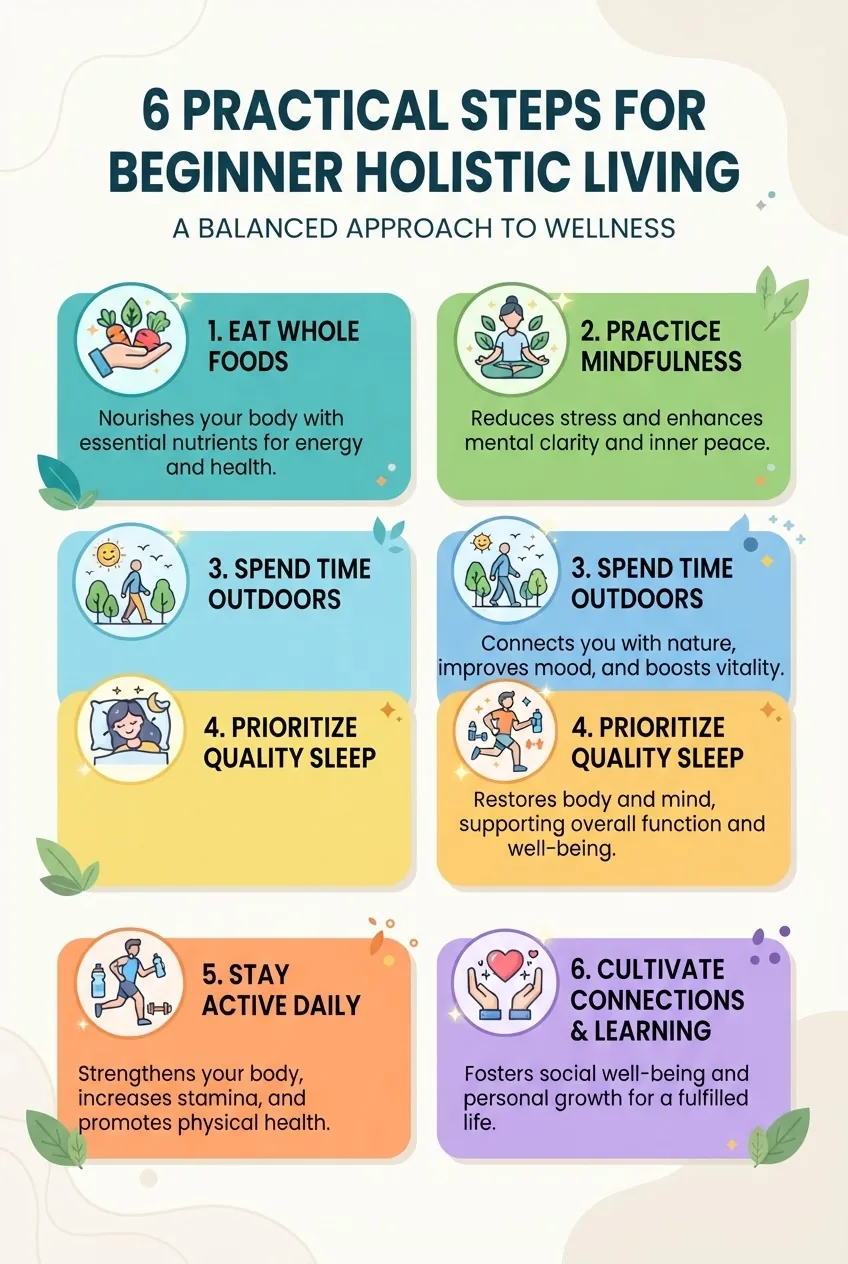
- Fix a sleep window: Go to bed and wake at consistent times; aim for 7–9 hours—consistency improves mood and healing.
- Hydrate and simplify meals: Start each day with water, include vegetables and protein at meals, and avoid heavy processing to stabilise energy.
- Move daily: Commit to 20–30 minutes of walking, stretching or functional movement to maintain mobility and lift mood.
- Five-minute mindfulness: Use a short breathing or grounding practice morning or evening to reduce stress and sharpen focus—try box breathing (4-4-4-4).
- Clean your immediate environment: Reduce clutter, add natural light and plants to support calm and indoor air quality.
- Schedule social and recovery time: Weekly contact with friends and planned rest days prevent isolation and burnout.
For those considering professional support as part of adopting holistic habits, consider resources on finding appropriate practitioners and training. Professional help can guide safe, personalised steps.
finding alternative practitioners near you
health coach certification programs
holistic wellness coach training
Practical checklist you can use today:
- Set reminders for sleep and movement.
- Keep a water bottle and simple meal staples on hand.
- Use a 5-minute app or timer for mindfulness practice.
- Declutter one small space per week.
- Plan weekly social contact and a restorative day.
Transition: Newcomers often bring questions or doubts—next we address common misconceptions with concise facts.
Common Misconceptions About Holistic Living
Answer: Holistic living is not unscientific, a quick cure, or a replacement for medical care; it’s a lifestyle complement that uses everyday practices backed by evidence to reduce risk and improve wellbeing.
Term: Evidence-based means supported by research or recognised health authorities.
Myth vs Fact:
Myth: Holistic living rejects conventional medicine.
Fact: Holistic living complements conventional care; it supports prevention and everyday management while serious conditions require medical treatment. Always consult healthcare professionals for diagnosis and treatment.
Myth: Holistic methods are purely anecdotal and unproven.
Fact: Many lifestyle practices—sleep hygiene, exercise, nutrition and stress management—have strong evidence for reducing disease risk; see reputable bodies like WHO and NIH for preventive guidance. World Health Organization.
Myth: Holistic living fixes everything quickly.
Fact: Benefits accumulate over weeks to months; small changes steady over time matter more than one-off fixes. If symptoms persist, seek medical advice.
Myth: Holistic means expensive or time-consuming.
Fact: Many core practices are low-cost: walking, mindful breathing, sleep routines and simple whole-food meals are accessible ways to start.
Evidence caveat: While many lifestyle practices are evidence-based, some alternative treatments vary in quality—verify claims and consult licensed professionals. For general preventive recommendations, see NIH public health guidance.
Transition: The next section summarises measured benefits and points to supporting sources.
Benefits of Embracing a Holistic Lifestyle
Answer: Embracing a holistic lifestyle can improve mental clarity, emotional balance, energy levels, and preventive health markers like blood pressure and glucose regulation through sustained daily habits.
Term: Preventive health refers to actions that reduce the risk of future illness.
Several measurable benefits are frequently reported when people adopt holistic lifestyle changes:
- Improved mental clarity and reduced anxiety: Regular mindfulness and sleep hygiene reduce rumination and improve focus; short daily practices show measurable reductions in perceived stress over weeks.
- Better emotional balance: Emotional regulation and social support are linked to lower rates of depression and improved coping with life stressors.
- Increased energy and physical resilience: Consistent movement and balanced nutrition improve cardiovascular health, stamina and recovery from daily stressors.
- Preventive health gains: Small daily choices—healthy meals, sleep, exercise—lower risk factors for chronic disease such as hypertension, type 2 diabetes and obesity.
Supporting evidence and authoritative references:
- According to a 2023 WHO report (major health organization), lifestyle and preventive measures are central to reducing the burden of noncommunicable diseases such as heart disease and diabetes.
- According to a 2022 government health summary (NIH), sleep and physical activity are strongly correlated with improved mental and physical health outcomes.
- According to peer-reviewed research in systematic reviews (peer-reviewed study), mindfulness-based practices consistently reduce anxiety and improve quality of life when practiced regularly; see aggregated literature on public repositories such as PubMed Central for study examples.
key health benefits of holistic medicine
holistic wellness models and practices
holistic care and patient wellness
Balanced perspective: Many benefits are gradual and depend on consistency. If symptoms persist or conditions are severe, combine lifestyle measures with professional medical care—holistic living complements but does not replace evidence-based medical treatment.
Transition: The following FAQ answers common specific queries in short, extractable formats.
Final takeaway: Holistic living is a practical, everyday way to invest in long-term wellbeing through simple, integrated choices across nutrition, movement, rest, relationships and environment. Begin with one small habit and build gradually for compound benefits.
Call to action: Try one of the six beginner steps above for two weeks, notice changes, and consider consulting a trusted practitioner if you want personalised guidance.