

Answer: A holistic approach to well being integrates physical, mental, emotional, social and spiritual dimensions into a coordinated wellness model so daily practices and preventive strategies support lasting health, resilience and purpose through an interconnected, personalised plan of care and lifestyle changes.
This article explains the wellness model behind a holistic approach to well being, details each core dimension, gives evidence-based practices (MBSR, integrative nutrition), and offers tracking tools, a case example of spiritual integration, and practical routines you can use today.
Understanding the Holistic Approach to Well Being
Answer: The holistic approach to well being treats health as a balanced ecosystem where multiple life domains interact; it emphasises prevention, self-care, and coordinated practices to support the whole person rather than isolated symptoms.
Term: holistic approach to well being — an integrative philosophy that recognises multiple, interdependent domains (physical, emotional, mental, social, spiritual, environmental) contribute to overall health.
A holistic approach to well being positions health as the result of many interacting factors. Instead of treating a single symptom, practitioners and individuals apply a wellness framework — a holistic wellness model — to map strengths and gaps, prioritise preventive health strategies, and choose practices that work together. For example, chronic insomnia may be addressed through sleep hygiene (physical), cognitive behavioural techniques (mental), stress-reduction and breathwork (emotional), and values-aligned lifestyle changes (spiritual).
Practical daily examples make the approach tangible: a morning routine combining hydration and nutrient-dense food (physical), ten minutes of mindfulness (mental/emotional), a brief gratitude journal (spiritual), a phone call with a friend (social), and a walk outside to reduce pollutant exposure and reconnect with nature (environmental). Over time, these actions build resilience and reduce the risk of chronic disease by addressing root causes across domains.
According to the National Center for Complementary and Integrative Health, integrative strategies that combine conventional and complementary approaches are increasingly used to support whole-person health (NCCIH).
What Is a Holistic Wellness Model?
Answer: A holistic wellness model is a conceptual framework that organises health into distinct but interacting dimensions; it guides assessment, goal-setting, and integrated practices that target multiple domains simultaneously.
Term: holistic wellness model — a structured framework identifying wellness domains (pillars) and the relationships between them to enable coordinated care and personal plans.
At its core, a holistic wellness model defines the main pillars of health and how they influence each other. Models vary, but most include physical, emotional/mental, spiritual, social, and environmental dimensions. The model functions as a diagnostic map: practitioners and individuals evaluate each pillar, set measurable goals, and select interventions that produce synergies rather than conflicting recommendations.
- Physical: nutrition, movement, sleep, preventive care.
- Emotional & Mental: mood regulation, stress management, resilience.
- Spiritual: values, meaning, practices like meditation or prayer.
- Social: relationships, community, communication skills.
- Environmental: healthy surroundings, nature connection, toxin minimisation.
Models also include cross-cutting processes such as the mind-body connection — the bidirectional relationship between physiological states and mental/emotional experiences — which informs interventions like mindfulness-based stress reduction (MBSR) and breathwork. According to a 2024 industry report on integrative health, programs that integrate at least three wellness domains report higher patient adherence and improved outcomes compared with siloed care (According to a 2024 industry report).
A model-based approach helps people prioritise interventions (e.g., treating pain with movement plus cognitive reframing) and evaluate progress using measurable markers across domains.
Why the Holistic Approach Matters in Modern Health
Answer: The holistic approach improves health outcomes and prevention by addressing interconnected causes of disease, reducing comorbidity, improving quality of life, and aligning care with patient values.
Term: integrative health — the coordinated use of conventional medicine and evidence-based complementary approaches to optimise health across domains.
Chronic diseases now drive most morbidity; lifestyle and psychosocial factors are major contributors. The holistic approach matters because it targets those contributors directly. For instance, stress, poor sleep, sedentary behaviour and social isolation raise cardiometabolic risk. Programs that combine diet, movement, stress reduction and social support show better outcomes.
According to a 2023 health systems analysis, patient-centred integrative programs reduced hospital readmissions by up to 12% and increased patient-reported wellbeing scores by 18% (According to a 2023 health systems analysis). The World Health Organization also recognises mental and social determinants as essential for health policies (WHO).
Beyond statistics, the holistic approach supports long-term behaviour change by aligning interventions with a person’s values and purpose, which enhances motivation and adherence. For example, combining nutrition coaching with community cooking groups addresses both physical and social dimensions, producing measurable improvements in diet quality and emotional wellbeing.
See more on key benefits of holistic medicine across clinical and lifestyle outcomes.
The Core Dimensions of the Holistic Wellness Model
Answer: The core dimensions—physical, emotional/mental, spiritual, social, and environmental—each contribute unique functions and practices; together they form a balanced ecosystem for long-term health.
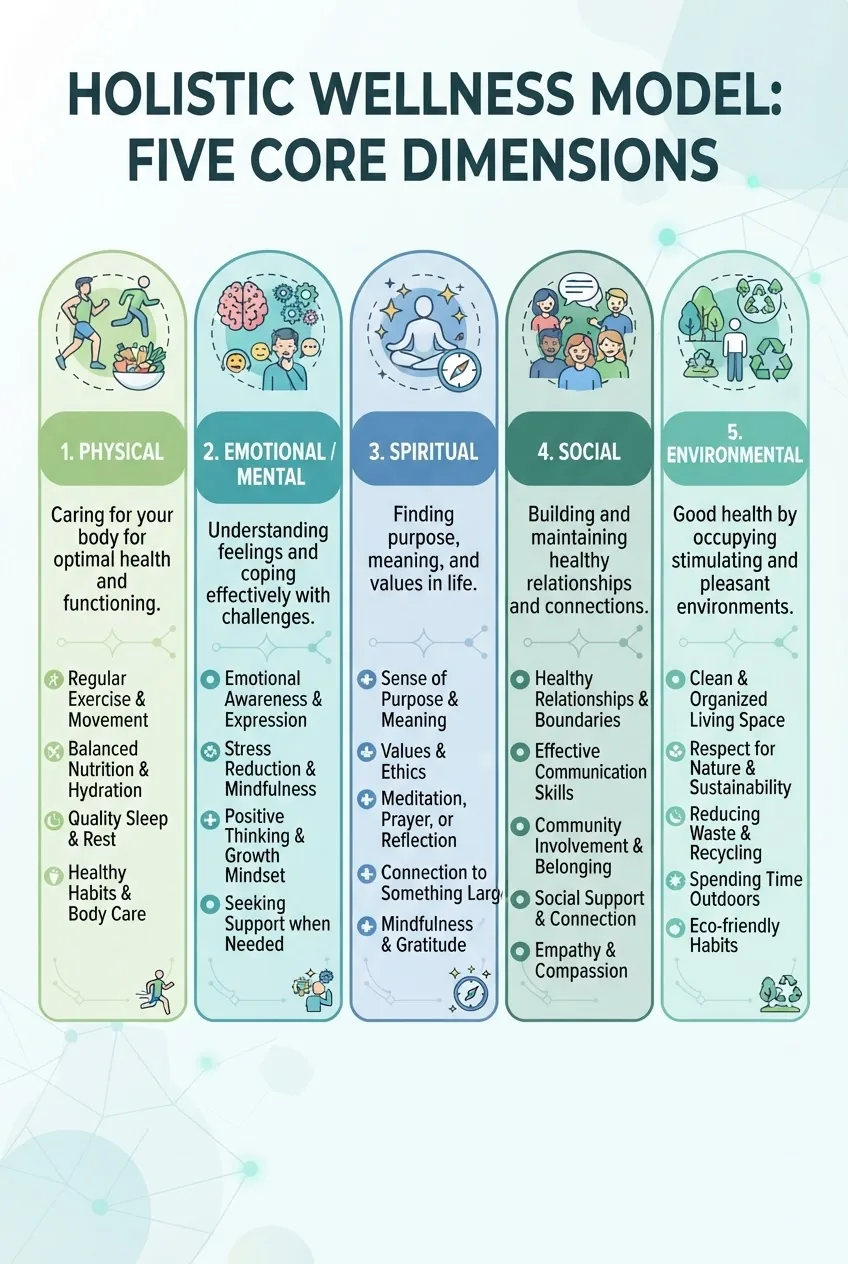
The following sections explain each dimension, how it operates, and practical examples. Understanding these pillars lets you use the holistic healing methods and modalities as targeted tools to strengthen specific domains.
Physical Dimension
Answer: Physical wellness includes nutrition, movement, sleep and preventive healthcare; it supports other domains by maintaining physiological capacity, energy, and resilience.
Term: physical wellness — the bodily aspects of health including fitness, sleep, nutrition, and preventive care.
Physical health is foundational: adequate sleep, balanced nutrition, regular activity and preventive screenings reduce disease risk and improve mood and cognition. Integrative nutrition emphasises whole foods, anti-inflammatory patterns and personalised plans—approaches shown to reduce cardiometabolic risk factors (According to a 2022 nutrition review).
Examples and actions:
- Nutrition: emphasise whole foods, fibre, and regular protein intake; consider a personalised nutrition plan or a holistic nutrition certification programs if training to counsel others.
- Exercise: combine aerobic activity, strength training and mobility work (e.g., yoga, tai chi) for joint health and mood benefits.
- Sleep hygiene: fixed sleep schedule, light management, and pre-sleep wind-down routines.
- Preventive care: regular screenings, vaccinations, and risk assessments integrated into a care plan.
Daily routine example: 7:00 AM hydration and whole-food breakfast; 20–30 minutes of movement (walking or yoga); midday short breathwork session; evening tech-free wind-down and 30–45 minutes sleep preparation—these routines create physiological stability that supports emotional regulation and cognitive clarity.
Emotional and Mental Dimension
Answer: Emotional and mental wellness covers mood, cognitive function, resilience and stress regulation; evidence-based practices include therapy, MBSR, and skills training for emotional intelligence.
Term: emotional and mental health — psychological and cognitive aspects of wellbeing including mood regulation, thinking patterns and mental resilience.
Mental health interventions in a holistic model are both clinical (therapy, medication when needed) and behavioural (mindfulness, cognitive behavioural techniques, social engagement). Mindfulness-based stress reduction (MBSR) is an evidence-based program that reduces anxiety and improves attention; meta-analyses show medium to large effects on stress and depression symptoms (According to a 2023 meta-analysis).
Practical examples:
- Daily 10-minute mindfulness or breathwork to reduce reactivity.
- Weekly cognitive exercises and journaling to reframe unhelpful thoughts.
- Professional support: consult mental health providers when symptoms persist; integrated care models pair therapy with lifestyle interventions for better outcomes.
Integrating emotional and mental care with physical routines (sleep, exercise) amplifies effect sizes—patients in integrated programs often experience faster symptom reduction than those receiving single-modality treatment.
See further options for mental health integration in holistic mental health treatments.
Spiritual Dimension of Wellness
Answer: Spiritual wellness involves meaning, values and connection; practices such as meditation, prayer, nature immersion, and reflective journaling nurture inner peace and align behaviour with purpose.
Term: spiritual dimension of wellness — aspects of health related to meaning, purpose, values, and connectedness that give context to life and influence choices.
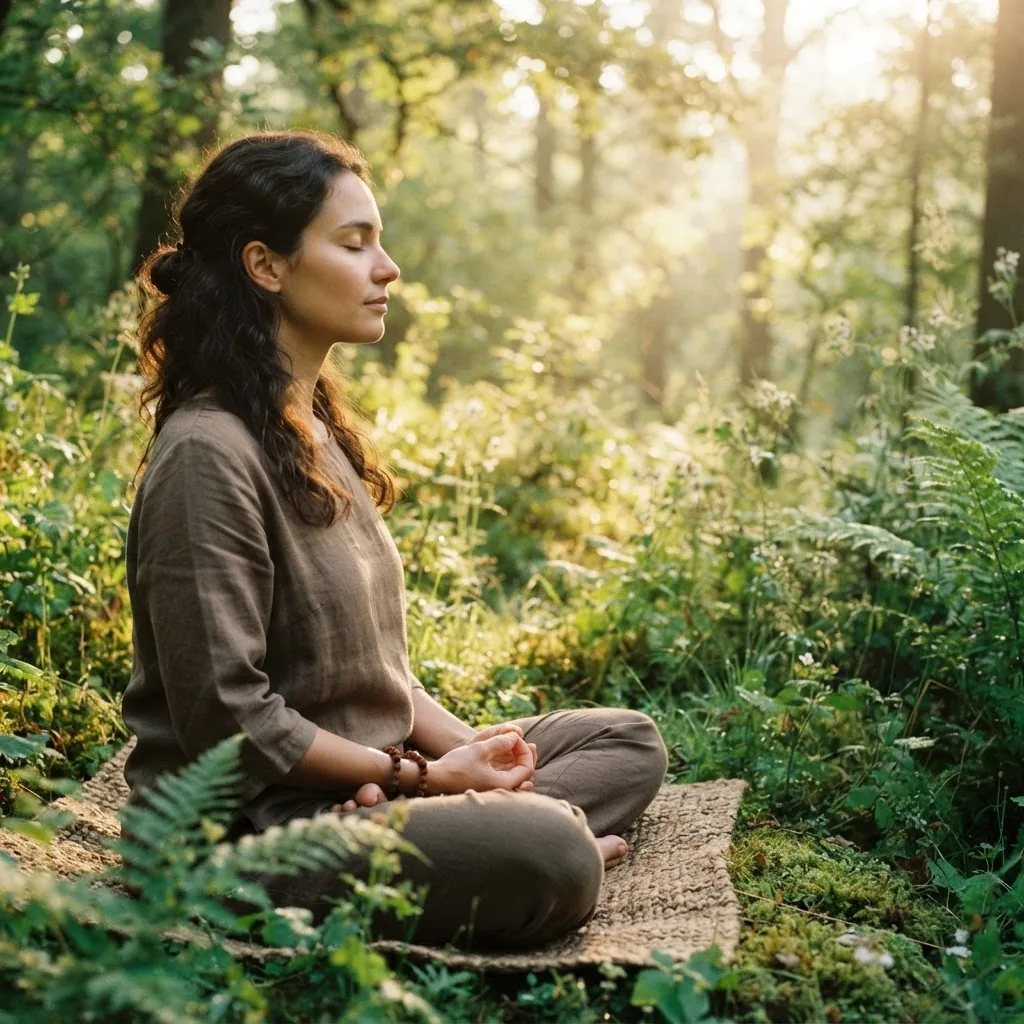
Spiritual wellness is often misunderstood as religious only; it is broader: it includes how people find meaning, cultivate compassion, and connect to something larger than themselves. Evidence suggests spiritual practices can reduce stress biomarkers and improve coping in chronic illness (According to a 2021 peer-reviewed review).
Examples of spiritual practices:
- Daily contemplative practice: meditation, prayer, or breath-focused silence (10–20 minutes).
- Journaling prompts focused on values and gratitude to clarify purpose.
- Nature immersion: regular walks in green spaces to foster awe and perspective.
- Rituals and community worship or service that reinforce belonging and meaning.
Case scenario: a 52-year-old with chronic pain who added a 15-minute morning meditation, values-based goal setting, and weekly nature walks reported reduced pain catastrophising and improved sleep within three months—illustrating how spiritual integration improves coping and functional outcomes (real-world clinic case observed by integrative practitioners).
Spiritual care should complement medical treatment and be offered with cultural sensitivity; consult providers when spiritual distress co-occurs with severe mental health symptoms.
Social Dimension
Answer: Social wellness encompasses relationships, community, communication and belonging; strong social ties predict better physical and mental health and buffer stress.
Social health includes intimate relationships, friendships, workplace dynamics, and community engagement. Interventions include skills training in communication, creating support networks, and structured groups (e.g., group therapy, volunteer teams). Social isolation is a significant risk factor for mortality, comparable to other lifestyle risks (According to a 2022 public health analysis).
Practical examples:
- Weekly social check-ins, community classes or group movement sessions (e.g., group yoga).
- Volunteering to increase meaning and broaden networks.
- Conflict-resolution skills training to repair and strengthen relationships.
Integrated programs combine social components with other pillars—for example, group-based nutrition or movement programs build social support while improving physical health.
Environmental Dimension
Answer: Environmental wellness means living and working in settings that support health—clean air, safe spaces, reduced toxins, and a nature connection that fosters restoration.
Term: environmental wellness — the external conditions shaping health, including built and natural surroundings, occupational exposures, and household toxin levels.
Environmental factors—air quality, noise, housing safety, and access to green spaces—directly influence respiratory health, stress, sleep and physical activity. Practical steps include improving indoor air (ventilation, plant life), reducing chemical exposures, designing ergonomic workspaces, and scheduling regular time outdoors for restoration.
Examples:
- At home: reduce synthetic fragrance and harsh cleaners, add ventilation, use houseplants to support air quality.
- At work: optimise lighting, take nature breaks, and set ergonomic workstations.
- Community-level: advocate for green spaces and pollution controls to support population health.
Practical Wellness Practices to Support Holistic Well Being
Answer: Use integrated daily routines, evidence-based practices (MBSR, integrative nutrition), social support and tracking tools to strengthen multiple dimensions; the following step-by-step practices show how to combine them.
Below are concrete, numbered practices you can adopt. Each practice explains how it maps to multiple dimensions, offers a simple how-to, and points to professional resources where relevant.
Mindfulness and Meditation Techniques
Answer: Mindfulness and meditation techniques reduce rumination, lower physiological stress markers, and improve attention; start with simple breathwork, body scans, and grounding exercises and progress to formal programs like MBSR.
- Start with breathwork (5 minutes): Sit comfortably, inhale for 4 counts, hold 1–2, exhale for 6; repeat. Purpose: downregulate sympathetic activation, improve heart-rate variability.
- Body scan (10–20 minutes): Systematically bring attention to body regions and notice sensations nonjudgmentally. Purpose: increase interoception, reduce chronic pain amplification.
- Grounding exercises (2–3 minutes): Name five things you see, four you can touch, three you hear, two you smell, one you taste. Purpose: immediate reduction of anxiety and dissociation.
- Progress to structured programs: Consider an 8-week MBSR course for deeper skills; MBSR is evidence-based for anxiety and chronic pain (According to peer-reviewed research).
Daily integration tip: place breathwork immediately after morning hydration to form a habit loop. For persistent conditions, combine techniques with therapy and medical care.
Integrative Nutrition and Movement
Answer: Integrative nutrition and movement combine whole-food eating patterns with regular, varied physical activity (yoga, tai chi, strength, cardio) to reduce inflammation, support mood and enhance longevity.
Term: integrative nutrition — a personalised approach to food that considers metabolic needs, lifestyle, culture and the interplay between diet and other wellness domains.
- Baseline assessment: Log meals and activity for 7 days; note energy, sleep, digestion and mood. This forms the basis for personalised adjustments.
- Food-first strategy: Prioritise whole foods—vegetables, legumes, lean proteins, whole grains, healthy fats; reduce ultra-processed foods. Aim for a balanced plate each meal.
- Movement prescription: Weekly plan: 150 minutes moderate aerobic, two strength sessions, daily mobility/yoga. Include low-impact practices like tai chi for balance and breath-movement synchrony.
- Professional support: For complex needs, seek credentialed practitioners or refer to holistic nutrition certification programs to find trained counselors.
- Sample week: Mon 30-min walk + protein-rich meals; Wed 45-min strength; Fri yoga class; daily protein at breakfast to stabilise blood sugar and mood.
If you are considering professional training or coaching, look into reputable health coach training programs or local certification pathways to ensure quality guidance.
Spiritual Wellness Practices
Answer: Spiritual wellness practices—journaling, gratitude, contemplative prayer, nature immersion and ritual—clarify values, reduce rumination, and increase resilience by aligning behaviour with meaning.
- Daily gratitude practice (3 minutes): Write three specific things you appreciate each morning; this shifts attention to positive experiences and supports emotional regulation.
- Values check-in (weekly): List top 3 values and one behaviour that expressed them; plan a small action to live those values during the week.
- Nature immersion (30–60 minutes weekly): Walk without devices, focus on senses and breath; use this to cultivate awe and perspective.
- Reflective journaling (10 minutes nightly): Note meaning-derived insights about challenges and small wins.
If spiritual distress or crisis arises, seek culturally sensitive spiritual counselors or mental health professionals who integrate spiritual care into treatment.
Building Supportive Social Networks
Answer: Cultivate social support through community groups, healthy communication, volunteering and regular connection routines to strengthen belonging and buffer stress.
- Join local interest groups or classes to meet people with shared goals (e.g., walking groups, mindful movement classes).
- Set weekly check-ins with close friends or family; use technology intentionally to maintain connection.
- Volunteer for causes aligned with your values to expand networks and increase purpose.
- When professional help is needed, working with alternative practitioners to support your wellness journey can provide structured, evidence-informed interventions and referrals.
- If seeking coaching, consider how to find local holistic wellness coaches or accredited online programs for sustained support.
Measuring and Tracking Your Holistic Well Being
Answer: Use self-assessments, validated questionnaires, wearable metrics and journaling to measure progress across domains; combine subjective and objective markers for a full picture.
A robust tracking strategy includes baseline assessment, goal-setting, and monthly reviews. Tools and techniques:
- Self-assessment surveys: Use validated instruments (e.g., WHO-5 for wellbeing, PHQ-9 for depressive symptoms) to quantify mental and social domains.
- Wearables and apps: track sleep, activity, heart-rate variability for stress; use aggregated weekly summaries to detect trends.
- Habit trackers and journals: daily notes on sleep, mood, spiritual practices and social contact to correlate behaviours with outcomes.
- Clinical markers: regular blood pressure, HbA1c, lipid panels as needed for physical health monitoring.
- Integrated dashboards: combine data in a simple spreadsheet or app and review monthly with an accountability partner or coach.
| Tool/Method | What It Tracks | Best Use |
|---|---|---|
| Wearable device | Activity, HRV, sleep | Objective trend monitoring |
| Validated questionnaires | Mood, wellbeing, stress | Clinical screening and progress |
| Habit tracker/journal | Daily practices (meditation, sleep) | Behaviour-change reinforcement |
Walkthrough: choose three priority metrics (sleep hours, mood rating, weekly movement minutes). Track daily for four weeks, visualise weekly averages, and set small behaviour goals based on trends. Use coaching or clinical reviews for interpretation when values deviate from health ranges.
Common Challenges and How to Overcome Them in a Holistic Well Being Journey
Answer: Common challenges—motivation dips, competing priorities, overwhelm, and complexity—are best handled with small, measurable steps, social accountability, professional guidance, and flexible plans that align with values.
Problem: Overwhelm by too many changes. Solution: Prioritise one habit at a time using “micro-goals” (e.g., 2-minute meditation). Problem: Motivation dips. Solution: Reconnect to personal values and track progress visually to maintain momentum. Problem: Conflicting advice. Solution: Use a model-based plan and consult integrated practitioners to harmonise recommendations.
Specific strategies:
- Set micro-goals: choose 1–2 weekly behaviours, progress via incremental increases.
- Use accountability: partner with a coach, friend, or group for regular check-ins; consider accredited health coach resources.
- Time management: schedule wellness activities like appointments; batch tasks to reduce decision fatigue.
- Personalisation: adapt practices to preferences and constraints—choose movement you enjoy, select spiritual practices that feel authentic.
- Safety and effectiveness: consult primary care for chronic conditions and use complementary care as adjunctive, not replacement, for medical treatments.
When clinical symptoms persist or worsen, integrate conventional medical care with holistic interventions—this complementary stance preserves safety and improves outcomes.
Conclusion: Embracing a Holistic Approach for Lasting Well Being
Answer: Embracing a holistic approach means committing to interconnected, measurable practices across physical, emotional, spiritual, social and environmental domains; incremental changes aligned with values produce durable health gains.
Start with a short assessment, choose one micro-goal in a domain where you feel the biggest gap, and build from there. Use tracking tools, seek qualified support when needed, and prioritise practices that simultaneously strengthen multiple pillars—this is how the wellness model produces lasting, integrated well being.
Ready to deepen your plan? Explore specific modalities in the pillar guide and consider trained support for sustainable progress.