

An ayurvedic diet is a personalized nutritional system that uses dosha balancing, the six tastes (shad rasa), and support for agni (digestive fire) to strengthen digestion, reduce ama (toxins), and promote long-term wellness; it prioritizes fresh, seasonal, sattvic foods with mindful meal timing and routine.
Introduction to Ayurvedic Diet Principles
Answer: The core principles of an ayurvedic diet are to support strong digestion (agni), balance the three doshas, include all six tastes each day, eat fresh seasonal foods, and align eating with daily rhythms to sustain health and longevity.
Term: dosha — biological energies (Vata, Pitta, Kapha) that describe physiology and temperament.
Term: agni — digestive fire; the metabolic force that digests food and impressions.
Term: sattvic — a food quality meaning pure, light, and life-supporting.
Ayurvedic theory originates in classical texts such as the Charaka Samhita and Sushruta Samhita; it frames food as medicine and daily routine (dinacharya) as the scaffold for nutrition. Foods are evaluated by qualities (guna), energetics (virya), post-digestive effect (vipaka) and taste (rasa). The goal is to maintain balanced agni so nutrients assimilate and ama (undigested residue or toxins) does not accumulate.
Practically this means prioritizing minimally processed, freshly prepared foods suited to season and individual constitution, choosing spices to kindle or soothe agni, and favoring preparation methods that ease digestion (e.g., cooked grains, warm broths). The dietary framework is flexible: the same principles guide someone seeking vitality, better sleep, or chronic-condition support.
To apply these principles, start by observing digestion and energy patterns, then adjust tastes, textures, and timings—this article provides the practical roadmap. Next we unpack how core Ayurvedic nutrition concepts influence health and digestion.
Core Ayurvedic Nutrition Concepts and How They Influence Health
Answer: Ayurvedic nutrition centers on agni (digestive fire), prevention of ama (toxins), food qualities (gunas), and individualized diet to balance doshas—this influences metabolism, immunity, mental clarity and chronic-disease risk through digestion-centered interventions.
Term: ama — metabolic residue or toxins that form when agni is weak or digestion is incomplete.
At the heart of Ayurvedic nutrition is agni: a strong agni digests food efficiently into usable nutrients, while weak agni leads to ama, lethargy, and disease. Agni is metaphorically a kitchen oven—if it’s too low food remains raw (ama); if it’s too high, food is overcooked or burned (inflammation).
How agni, ama and diet interact
- Strong agni supports nutrient absorption and clear mental energy; diet should support and not overwhelm agni.
- Ama forms from heavy, incompatible or poorly chewed foods and from irregular meal timing; reducing ama aims at improved resilience and elimination.
- Food qualities (gunas) such as dry/oily, heavy/light, cold/hot are used to rebalance doshic tendencies and agni.
Food qualities and metabolic effect
Ayurveda classifies foods by rasa (taste), virya (heating or cooling energy), vipaka (post-digestive effect) and guna (attributes like heavy/light, oily/dry). Practically, choose foods with opposite qualities to a current imbalance: for excess heat, use cooling virya; for sluggishness, use warming, light foods.
Digestion-centered interventions
Common nutrition-based strategies in Ayurveda include:
- Eating warm, cooked meals to ease digestion for those with weak agni.
- Using carminative spices (e.g., cumin, coriander) to stimulate agni gently.
- Maintaining consistent meal timing to entrain metabolic rhythm and circadian digestion.
Ayurveda pairs diet with detoxification where needed; for targeted cleansing of ama and resetting agni, see Complete Ayurveda Detox Guide and Panchakarma Treatments.
Clinical perspectives: According to a 2024 integrative medicine review of dietary interventions and traditional medicine, digestion-focused lifestyle changes often correlate with improved gastrointestinal symptoms and quality of life (source: peer-reviewed integrative medicine review). Such reviews emphasize methodological variability and call for standardized trials assessing long-term outcomes.
Transition: Understanding these core concepts clarifies why Ayurveda emphasizes the six tastes; next we explain each taste and its role.
The Six Tastes (Shad Rasa) and Their Role in an Ayurvedic Diet
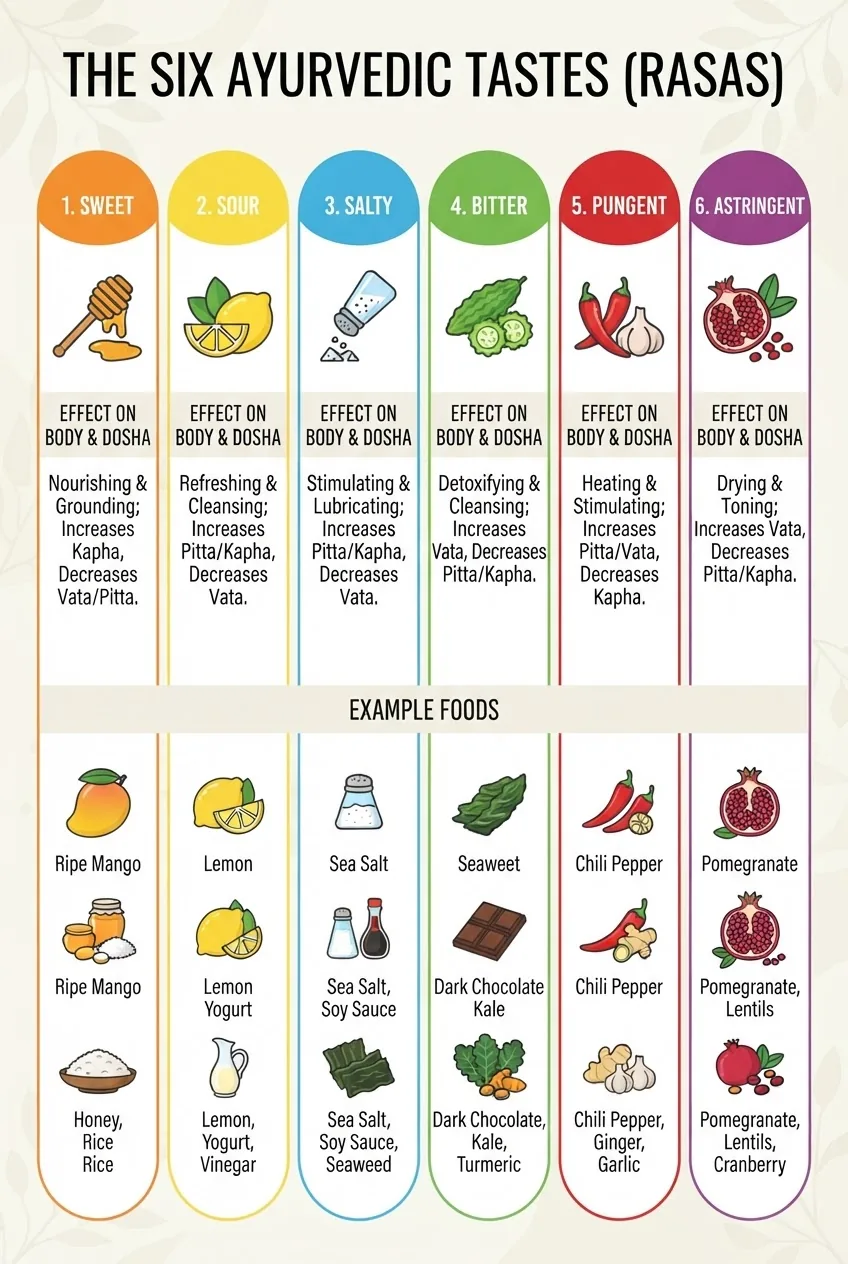
Answer: The six tastes—sweet, sour, salty, bitter, pungent, astringent—are used to balance appetite, satisfy cravings, and influence doshas and digestion; a daily balance of tastes supports complete nutrition and prevents imbalances.
Term: Shad Rasa — Sanskrit term for the six tastes used therapeutically in Ayurveda.
-
Sweet (Madhura) — calming, building and grounding; increases Kapha, balances Vata when needed.
- Examples: whole grains (rice, oats), dairy (milk, ghee), root vegetables (sweet potato, carrot).
- Use: post-exertion recovery, pregnancy, convalescence; avoid in Kapha excess and uncontrolled insulin issues.
-
Sour (Amla) — stimulates digestion and appetite; increases Pitta and Kapha.
- Examples: yogurt (fermented in moderation), citrus, tamarind, pickles (sparingly).
- Use: helps kindle agni but can aggravate acidity in Pitta-prone people.
-
Salty (Lavana) — stimulating, moistening and grounding; increases Kapha and Pitta.
- Examples: natural salts (sea salt), miso, olives.
- Use: small amounts improve digestion and electrolyte balance; excessive salt can elevate Pitta and fluid retention.
-
Bitter (Tikta) — detoxifying and lightening; reduces Kapha and Pitta, can increase Vata.
- Examples: bitter greens (kale, dandelion), turmeric (bitter notes), neem (herbal use).
- Use: supports cleansing and liver function; include in salads, light sautés or teas.
-
Pungent (Katu) — hot, stimulating and drying; reduces Kapha, increases Pitta and Vata.
- Examples: ginger, black pepper, chilli, mustard.
- Use: invigorates digestion and circulation, useful for colds and sluggish digestion; avoid excess if Pitta is high.
-
Astringent (Kashaya) — binding and drying; reduces Pitta and Kapha, increases Vata.
- Examples: legumes, unripe fruits, green tea, raw bananas.
- Use: helps control secretions and supports detox pathways; pair with warming spices if Vata is high.
Practical rule: aim to include most tastes across the day rather than forcing all in every meal; balance choices to the season and your digestion. Transition: with tastes defined, learn how doshas shape dietary tailoring below.
Understanding Your Dosha and Tailoring Your Diet for Balance
Answer: Identify your dominant dosha (Vata, Pitta, Kapha) and adjust foods, tastes, and meal patterns to counteract excess qualities—use warming, grounding, cooling or drying foods respectively to restore balance.
Term: Vata — air and ether qualities; mobile, dry, cool. Pitta — fire and water qualities; hot, sharp, oily. Kapha — earth and water qualities; heavy, stable, moist.
A brief summary of dietary tilts by dosha:
- Vata: Favor warm, cooked, slightly oily, grounding foods (sweet, sour, salty); avoid raw cold salads and erratic meal times. For detailed Vata guidance see Vata dosha diet tips.
- Pitta: Favor cooling, less spicy, moderate salt and sour; include sweet and bitter tastes, more hydration. For deeper Pitta strategies see Pitta dosha diet guide.
- Kapha: Favor light, warm, dry, stimulating foods (pungent, bitter, astringent); reduce heavy dairy, fried and sweet foods. For Kapha-specific tips see Kapha dosha diet and tips.
If you want to identify your body type precisely, consult a structured assessment or professional evaluation; try this self-assessment resource: dosha test for Ayurvedic body types and the comprehensive types overview at dosha types and Ayurveda body types.
Note: this article intentionally avoids deep, prescriptive dosha diets; sibling guides provide detailed meal plans and therapeutic herbs. For individualized plans consult a qualified practitioner or certified training; see options for formal learning at Ayurveda certification and training courses.
Transition: after tailoring to your dosha, choose foods and avoid incompatibilities explained in the next section for optimal wellness.
Ayurvedic Foods: What to Eat and Avoid for Optimal Wellness
Answer: Eat fresh, seasonal, predominantly sattvic foods—whole grains, cooked vegetables, warming spices and moderate dairy—and avoid stale, overly processed, incompatible (Viruddha Ahara) or heavy cold foods that weaken agni and create ama.
Term: Viruddha Ahara — food incompatibilities that create metabolic disturbance or toxins when combined improperly.
Ayurvedic food categories emphasize freshness and seasonality. Sattvic foods nurture clarity and stability; rajasic foods stimulate activity; tamasic foods (stale, overprocessed) dull body and mind. Examples of sattvic choices include cooked rice and dal, steamed vegetables, fresh fruit, ghee and mild spices.
| Category | What to Eat | What to Avoid |
|---|---|---|
| Sattvic | Fresh fruits, cooked grains, steamed veg, ghee, mild spices | Stale foods, processed snacks, excess caffeine |
| Rajasic | Spices, stimulants, pungent foods in moderation | Overstimulation, excessive fried foods |
| Tamasic | Occasional comfort food if needed | Stale leftovers, heavy processed meats, alcohol |
Common Viruddha Ahara (incompatible combinations) to avoid:
- Milk with fish or sour fruit; milk is cooling and has specific post-digestive effects that clash with certain foods.
- Fruit with heavy proteins (e.g., fruit after a large meat meal) — fruit digests faster and can ferment.
- Mixing incompatible heating and cooling preparations that confuse agni (e.g., cold dairy with hot spices in excess).
Spices and herbs are central: they adjust agni, preserve food, add taste balance and deliver therapeutic qualities—use ginger, cumin, coriander, turmeric and fennel wisely. For a primer on therapeutic powders and supplements see Ayurvedic herbs and supplements guide and for formulas consult the Ayurvedic herbal formulas.
Nutrition for specific concerns: for hair health, focus on nourishing, iron and protein-rich sattvic foods—see Ayurvedic hair care nutrition tips.
To deepen understanding of herbs and their role in nutrition and clinical support, consult the pillar resource on Ayurvedic supplements and herbal medicine.
Transition: matching foods to routine and mindful habits amplifies these nutritional choices—next section covers meal timing and practices to support digestion.
Dining Habits and Lifestyle Practices Supporting Ayurvedic Nutrition
Answer: Support Ayurvedic nutrition with consistent meal times, mindful eating, proper hydration, morning routines and sleep; these lifestyle practices synchronize agni, improve absorption and reduce stress-related digestive disturbance.

- Regular meal timing: Eat main meals at consistent times to entrain agni—breakfast within an hour of waking, lunch when the sun is higher (peak agni), lighter dinner at least 2–3 hours before bed.
- Mindful eating: Sit down, chew thoroughly, avoid screens and eat until comfortable, not full; this preserves digestive energy and reduces ama formation.
- Warm foods and beverages: Favor warm or room-temperature foods and sipping warm water or herbal teas to support agni rather than iced drinks which can dampen digestion.
- Hydration pattern: Drink moderate amounts between meals rather than large volumes during meals; use warm water with lemon or ginger in the morning to stimulate digestion.
- Daily routine (dinacharya): A balanced morning routine (waking early, dry brushing, tongue cleaning, light oil massage) supports elimination and appetite regulation.
- Sleep and rest: Adequate sleep stabilizes Vata and Pitta; avoid heavy late-night meals which burden agni and disturb restorative sleep.
- Complementary therapies: Periodic massage, seasonal cleansing and therapies like Shirodhara support relaxation and digestive balance—find local options for Ayurvedic massage and Shirodhara therapy when desired.
Anecdotal/practitioner insight: many Western clients reporting chronic bloating benefit from a month of warm, cooked breakfasts plus daily ginger tea and consistent lunch timing—this reduces irregular snacking and re-sets agni. Transition: with habits in place, what does science say about legitimacy?
Is Ayurveda Legit? Scientific Perspectives on Ayurvedic Diet and Wellness
Answer: Ayurveda offers coherent, digestion-centred frameworks that align with some modern findings on diet, microbiome and lifestyle medicine; evidence varies, with promising small trials and systematic reviews but a need for standardized large-scale clinical trials for definitive claims.
Public and academic interest in Ayurveda and integrative medicine is growing. According to a 2023 systematic review in peer-reviewed journals, several Ayurvedic interventions—especially dietary and lifestyle approaches—show beneficial effects on metabolic health and quality-of-life measures, but methodological heterogeneity limits certainty (source: peer-reviewed integrative medicine review).
Representative references and institutions:
- Journal of Ayurveda and Integrative Medicine — publishes clinical reports and systematic reviews on Ayurvedic interventions.
- National Institute of Ayurveda — a recognized institute advancing research and education in Ayurvedic medicine.
- World Health Organization resources on traditional and complementary medicine offer guidance on safety and integration.
Evidence types often include small randomized controlled trials, observational cohorts, mechanistic laboratory studies and case reports. While some herbs and diets show measurable effects (for inflammation, glycemic control, digestive symptoms), reproducibility and standardized product quality remain obstacles. According to a 2024 integrative medicine review, rigorous randomized trials with well-characterized interventions are needed to move from promising findings to clinical recommendations (source: peer-reviewed integrative medicine review).
Professional pathways and regulation: to receive qualified care or advanced training, explore certified pathways such as Ayurvedic practitioner training or accredited courses at national institutions.
If you seek clinical care, locate professionals and centres offering integrated services: Ayurveda centers for treatment and wellness and consult listings for qualified physicians: find Ayurvedic doctors for consultation.
Transition: with benefits and limits clear, the next section addresses frequent myths and facts about the ayurvedic diet.
Common Questions and Misconceptions About the Ayurvedic Diet
Answer: Ayurveda is often misunderstood as rigid or purely herbal; in reality it is a flexible, individualized framework—evidence supports digestion-centred benefits, but professional guidance is recommended for complex conditions and pregnancy.
Myth vs Fact — Selected clarifications:
- Myth: Ayurveda forbids modern medicine. Fact: Many practitioners use Ayurveda as complementary to conventional care when indicated.
- Myth: Ayurvedic diet is a single universal menu. Fact: Diet is personalized to dosha, season and individual needs.
- Myth: All Ayurvedic herbs are safe without oversight. Fact: Safety depends on dose, purity and interactions; consult qualified providers, especially for pregnancy or children.
Transition: below are practical, stepwise tips to help you adopt Ayurvedic diet principles without overwhelm.
Practical Tips for Incorporating Ayurvedic Diet Principles into Daily Life
Answer: Start gradually—assess digestion, adjust one meal at a time (warm breakfasts, balanced lunch with most calories), use spices to support agni, maintain consistent meal times, and seek professional advice for complex needs.
- Assess digestion for one week: Note energy after meals, bloating, bowel regularity and cravings to identify weak agni or food triggers.
- Begin with breakfast: Swap cold cereal for a warm cooked porridge or kichari to stabilize morning agni.
- Make lunch the largest meal: Aim for a balanced plate with grain, protein and cooked vegetables at midday when agni peaks.
- Bring in the six tastes: Add a small element of each taste across the day—e.g., cooked grain (sweet), lemon in salads (sour), a pinch of salt, bitter greens, a dash of black pepper (pungent), and legumes (astringent).
- Use spices tactically: Start with ginger, cumin and coriander for digestion; add turmeric for inflammation support and fennel for bloating.
- Plan weekly meals: Batch-cook simple kichari, soups and stews for convenience to avoid processed options.
- Transition gradually: Make one change every 3–7 days to observe effects rather than an abrupt overhaul.
- When weight goals are relevant: For guided strategies on using Ayurvedic principles for weight management see weight loss with ayurvedic diet tips.
Example meal day (simple, flexible):
- Breakfast: Warm millet porridge with ghee, cinnamon and stewed apple (sweet + pungent).
- Lunch: Cooked brown rice, mung dal, sautéed seasonal vegetables with cumin-turmeric and a small salad (balanced tastes, cooked for digestion).
- Snack: Warm ginger tea and a small handful of soaked almonds.
- Dinner: Light vegetable kitchari or soup with a cooling side of steamed greens; finish early to support sleep.
Transition: we close by summarizing key takeaways and inviting deeper exploration.
Conclusion: Embracing Ayurvedic Nutrition for Long-Term Wellness
Answer: Embracing Ayurvedic nutrition focuses on strengthening agni, balancing doshas through tastes and food qualities, prioritizing fresh seasonal foods and aligning eating with daily rhythms to support digestion, mental clarity and longevity.
Key takeaways: support your digestive fire through warm, minimally processed foods; incorporate the six tastes across the day; tailor choices to your dosha and season; and pair diet changes with consistent routines. Scientific evidence is promising for digestion-centered interventions but is still developing—use certified practitioners for clinical needs.
For a deeper look at Ayurveda’s broader health benefits beyond diet, explore Ayurveda benefits for overall wellness.
Ready to try a practical change? Start with one warm, cooked meal each day for two weeks and track digestion and energy. If you want professional guidance, consider certified training or local clinics: see Ayurveda certification and training courses or search Ayurveda centers for treatment and wellness.