

Ayurvedic supplements are traditional herbal, mineral, and formulation-based products from Ayurveda—India’s classical system of medicine—designed to restore individual balance (Doshas), support digestion (Agni), and nourish tissues (Dhatus) for long-term wellness rather than one-off symptomatic relief.
Ayurvedic Supplements and Herbal Medicine Explained Guide
Introduction to Ayurvedic Supplements and Herbal Medicine?
Answer: Ayurvedic supplements are plant, mineral and compound preparations derived from Ayurveda, the Indian traditional medicine system, used to support health, prevent imbalance and assist therapeutics by addressing the person’s constitution and functional disturbances.
Ayurveda: a classical Indian medical system focused on balance between body, mind and environment through personalized diet, lifestyle, herbal medicines and therapies.
This section explains the meaning of ayurvedic and ayurveda, contextualises ayurvedic supplements within Indian traditional medicine, and frames how formulations differ from single-herb Western herbalism. Ayurveda (Sanskrit: ayur = life, veda = knowledge) dates to the Caraka and Sushruta texts and emphasises personalized care rather than one-size-fits-all remedies.
Ayurvedic supplements function within a broader therapeutic system that includes pulse diagnosis (Nadi Pariksha), assessment of Dosha imbalances, and treatments such as Panchakarma and topical therapies. They rarely stand alone; instead, they complement dietary and lifestyle adjustments tailored to the individual.
For readers seeking classical sources and foundational texts, consult Ayurveda books and classical medicine texts for deeper study.
What are Ayurvedic Supplements?
Answer: Ayurvedic supplements are defined formulations—single-herb, multi-herb, mineral (Rasa-shastra) or processed compound medicines—prepared to restore Dosha balance, strengthen digestion, or rebuild tissues using Ayurvedic pharmacology concepts like rasa, virya and vipaka.
Term: Ayurvedic supplements — products formulated according to Ayurvedic principles for health maintenance, prevention, or adjunctive therapy; may be sold as powders (churna), tablets, decoctions (kashaya), or oil-based preparations.
Ayurvedic medicine supplements are classified by traditional formulation types, therapeutic intent and method of preparation. They are intended to be integrated into a personalized plan based on constitution (Prakruti) and current imbalance (Vikriti).
Common types include:
- Single-herb extracts (e.g., Ashwagandha root powder, Turmeric/Curcuma longa).
- Polyherbal formulas (classical formulations like Triphala, Chyawanprash).
- Rasayana tonics aimed at rejuvenation (e.g., Amalaki-based rasayanas).
- Herbal powders (Churna) — ground herbs for internal use.
- Kashaya (Decoctions) — concentrated liquid preparations.
- Medicated oils and ghee for internal or external use.
- Mineral-based Rasashastra — processed minerals used sparingly and only by trained practitioners.
Ayurvedic health supplements are formulated with an understanding of taste (rasa), energetics (virya), and post-digestive effect (vipaka), which together guide selection and dosing. For diet synergy, see Ayurvedic diet principles.
Key Ayurvedic Herbs and Spices Used in Supplements?
Answer: Key ayurvedic herbs and spices include Ashwagandha, Turmeric, Triphala components, Brahmi, Tulsi, Guggulu, Shatavari and Ginger; each has traditional indications, rasa/virya profiles, and common uses in supplements for immunity, digestion, cognition and hormonal balance.
- Ashwagandha (Withania somnifera) — primary uses: adaptogen for stress, sleep and stamina. Traditional use: revitalizing rasayana. Modern evidence: several randomized trials show reductions in perceived stress (According to a 2022 systematic review in complementary medicine journals). Mechanism in Ayurveda: warming (ushna virya), sweet and bitter rasa, pacifies Vata and Kapha.
- Turmeric (Curcuma longa; Curcumin) — primary uses: anti-inflammatory, joint support, digestive fire support. Traditional notes: pungent-bitter taste, heating virya. Evidence: Numerous trials and a 2023 review highlight anti-inflammatory effects; WHO monographs discuss safety and standardization (WHO).
- Triphala (Amalaki, Bibhitaki, Haritaki) — primary uses: gentle bowel regulation, detoxification, antioxidant support. Classical role: daily churna for digestive hygiene. Reported benefits: antioxidant and digestive-regulating effects in observational studies.
- Brahmi (Bacopa monnieri) — primary uses: memory, cognition, and anxiety reduction. Traditional classification: cooling (sheeta virya), bitter and astringent rasa; used in brain-support rasayanas. Clinical evidence: cognitive benefits in several clinical trials.
- Tulsi (Ocimum sanctum; Holy basil) — primary uses: adaptogen, respiratory support, immune modulation. Ayurveda: balancing for Kapha and Vata; used as daily tonic and tea.
- Guggulu (Commiphora mukul) — primary uses: lipid metabolism support, anti-inflammatory for joints. Classical use: scraped resin processed with herbs; indicated for Kapha disorders.
- Shatavari (Asparagus racemosus) — primary uses: female reproductive health, galactagogue and hormonal balance. Ayurvedic role: cooling, nourishing to Sadhaka Pitta and Ojas preservation.
- Ginger (Zingiber officinale) — primary uses: digestion, nausea relief, circulatory stimulant. Ayurveda: pungent taste, heating virya; commonly paired with other herbs to enhance bioavailability.
- Licorice (Glycyrrhiza glabra; Yashtimadhu) — primary uses: respiratory and adrenal support; demulcent qualities. Caution: long-term high-dose use affects electrolytes and blood pressure.
- Cinnamon (Cinnamomum verum) — primary uses: blood sugar support, digestion; warming spice commonly used in formulas to balance Kapha and support metabolism.
- Neem (Azadirachta indica) — primary uses: skin, detoxification, antimicrobial balancing for Pitta and Kapha conditions. Traditionally used externally and internally in controlled forms.
- Amalaki (Emblica officinalis; Indian gooseberry) — primary uses: vitamin C-rich antioxidant, rejuvenation and digestive support; key component of Triphala and many rasayanas.
- Haritaki and Bibhitaki — primary uses: bowel regulation, detoxification, metabolic balance; classical cleansing agents in Ayurvedic regimens.
- Shankhapushpi (Convolvulus pluricaulis) — primary uses: cognitive support, calming the mind; used in brain-tonic formulas.
- Guduchi (Tinospora cordifolia) — primary uses: immune modulation, liver support and febrile disorders; warm tasting and considered balancing for all three Doshas in many contexts.
Forms matter: many herbs are available as powder, standardized extract, decoction or oil. For practical preparation and powdered herbs reference, see the Ayurvedic herbs powder and supplements guide.
What Ayurvedic Principles Explain Herbal Medicine and Supplementation?
Answer: Ayurvedic herbal medicine is guided by principles of Dosha balance (Vata, Pitta, Kapha), Agni (digestive/metabolic fire), Dhatus (tissues) and pharmacology concepts—rasa (taste), virya (energetic effect), vipaka (post-digestive effect)—to select herbs and dosing that restore equilibrium.

Term: Dosha — a core Ayurvedic concept: biological energies (Vata: movement, Pitta: transformation, Kapha: structure) that determine body-mind constitution and disease tendencies.
Doshas function like metabolic types influencing body balance: Vata governs movement and nervous system, Pitta governs digestion and metabolism, Kapha governs structure and lubrication. Ayurvedic practitioners assess Prakruti (innate constitution) and Vikriti (current imbalance) to choose supplements that pacify aggravation and support resilience.
Ayurvedic pharmacology uses technical categories:
- Rasa (taste) — affects initial interaction with physiology (e.g., bitter, sweet, pungent).
- Virya (energetic temperature) — heating (ushna) or cooling (sheeta) effects.
- Vipaka (post-digestive effect) — how the substance influences metabolism after digestion (sweet, sour, pungent).
- Prabhava — unique potent action not explained by rasa/virya.
Selection of supplements considers synergy (yukti), where herbs are combined to enhance absorption (e.g., black pepper—piperine—with turmeric to increase curcumin bioavailability), and rasa/virya compatibility to avoid creating counterproductive effects. This methodology mirrors modern pharmacology’s focus on ADME (absorption, distribution, metabolism, excretion), but framed in classical terms.
Education pathways and formal training teach these frameworks; for formal training, explore Ayurveda certification and training and professional qualifications before self-prescribing complex herbal-mineral medicines.
Panchakarma, a set of cleansing therapies, often complements supplementation and is a classical approach to remove deep-seated toxins before rejuvenative supplements; learn more about Panchakarma detox treatments and retreat options for integrated care.
Dosha-specific guidance is foundational. For example, Kapha-dominant patterns benefit from warming, stimulating herbs; Pitta-dominant conditions require cooling, demulcent herbs; Vata patterns respond to grounding, oil-based nourishing supplements. See tailored resources such as Kapha dosha health tips, Pitta dosha diet and health guide, and Vata dosha diet and tips.
Practical clinician frameworks combine pulse, tongue, and symptom assessment with modern labs when needed. For practitioners and those seeking certification, consult resources such as Ayurvedic practitioner certification and consider supervised training before prescribing mineral-based rasashastra medicines.
What Are Common Ayurvedic Supplements for Health and Wellness?
Answer: Common ayurvedic supplements include adaptogens (Ashwagandha), anti-inflammatories (Turmeric), digestive regulators (Triphala), cognitive tonics (Brahmi), immune modulators (Guduchi, Tulsi), and women’s tonics (Shatavari), each linked to specific health outcomes and classical indications.
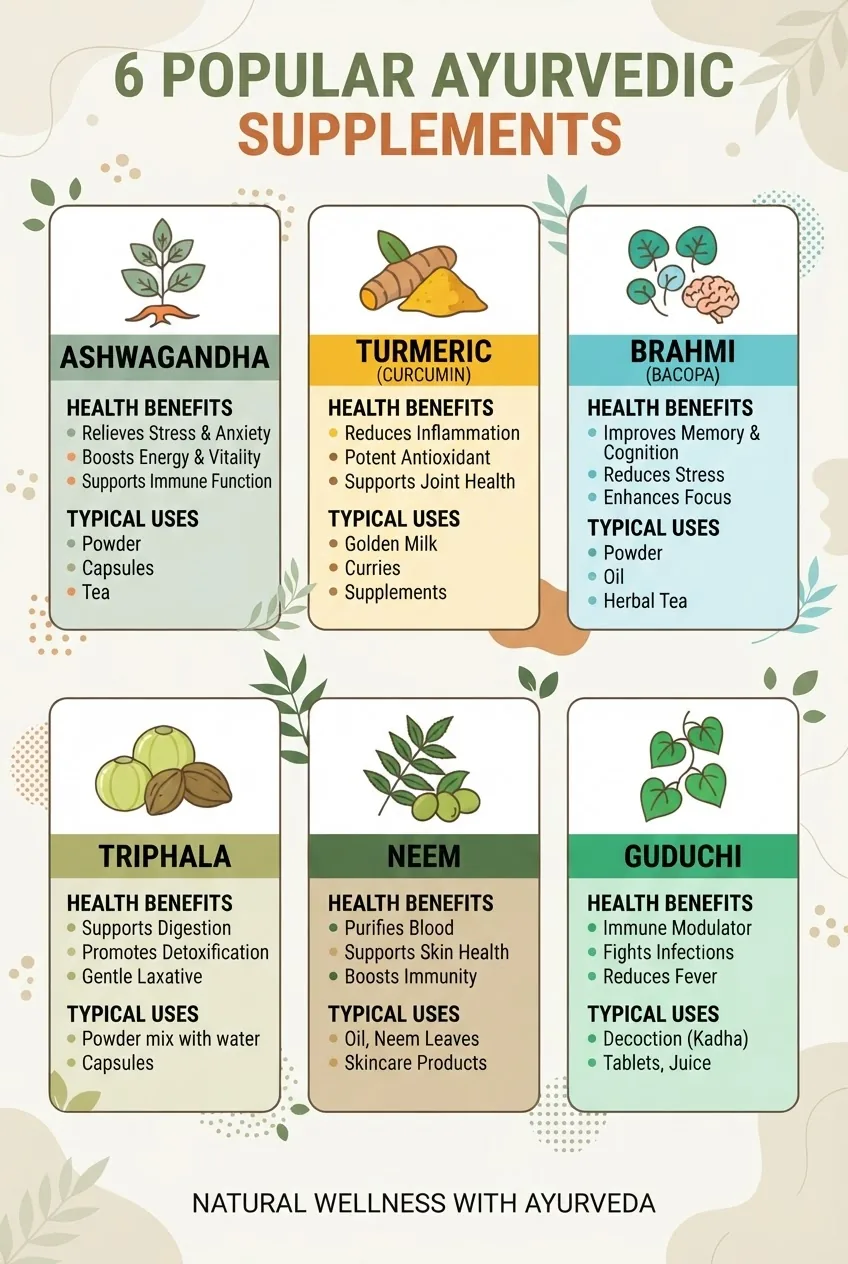
Below is a detailed list tying supplements to benefits, typical dosing forms, and practical notes.
- Ashwagandha (stress, sleep, stamina)
- Benefits: reduces perceived stress, improves sleep quality, supports adrenal resilience (According to a 2022 systematic review in complementary medicine journals).
- Forms: root powder (churna), extract standardized to withanolides.
- Use note: start low (300–500 mg standardized extract) and monitor sedation or thyroid interactions.
- Turmeric/Curcumin (inflammation, joints)
- Benefits: anti-inflammatory and antioxidant properties; useful for osteoarthritis and metabolic inflammation (According to a 2023 meta-analysis in peer-reviewed journals).
- Forms: dried root, standardized curcumin extracts, combined with black pepper (piperine) for bioavailability.
- Use note: high doses may interact with anticoagulants; consult practitioner.
- Triphala (digestion and elimination)
- Benefits: regulates bowel movements, supports mild detoxification and antioxidant status.
- Forms: powder, tablet, decoction.
- Use note: useful as a nightly digestive tonic; avoid excessive use in chronic diarrhea.
- Brahmi and Shankhapushpi (cognition and mood)
- Benefits: support memory, attention and stress resilience; evidence from clinical trials shows modest cognitive improvements.
- Forms: extracts, syrups, powders.
- Use note: combine with lifestyle measures for best effect.
- Guduchi and Tulsi (immune support)
- Benefits: adaptogenic immune modulation; traditionally used during seasonal transitions and convalescence.
- Forms: decoctions, teas, thailas (oils).
- Use note: suitable for short to medium term immune resilience; monitor for interactions with immunosuppressants.
- Shatavari (women’s health and hormonal balance)
- Benefits: supports menstrual health, lactation and menopausal complaints in classical practice.
- Forms: root powder, extracts, as part of rasayanas.
- Use note: discuss with practitioner during pregnancy or hormonal therapies.
- Guggulu (metabolism and joints)
- Benefits: lipid metabolism support, joint inflammation reduction in classical formulas.
- Forms: resin processed into tablets, classical gugglu formulations.
- Use note: interacts with thyroid and lipid medications; professional supervision recommended.
- Herbal Digestives and Spices (Ginger, Cinnamon, Black Pepper)
- Benefits: improve Agni (digestion), relieve gas and nausea, enhance bioavailability of other herbs.
- Forms: culinary use, teas, adjuncts in formulations.
- Use note: effective low-risk options for everyday digestive support.
- Topical and oil-based supports (medicated oils, medicated ghee)
- Benefits: massage oils for Vata disorders, medicated ghee for absorption of lipid-soluble rasayanas.
- Forms: locally applied oils, internal ghee preparations.
- Use note: prepared by qualified practitioners; follow dose and duration guidance to avoid imbalance.
- Classical Tonics (Chyawanprash)
- Benefits: general tonic providing antioxidant support and nourishment; used as daily rasayana in many households.
- Forms: jam-like herbal formulation.
- Use note: contains sugars and calorie load; adjust for metabolic conditions.
For specialized lists and formulas, consult the Complete ayurvedic medicine list. For hair-specific supplements, see curated options at Ayurvedic hair care supplements (note: correct page available in sibling links for hair care).
Real-world example (case study): A 48-year-old woman with chronic stress-related insomnia began a supervised course of Ashwagandha extract 300 mg nightly and Triphala powder for digestion, alongside dietary adjustments and sleep hygiene; after eight weeks she reported improved sleep latency and energy (practitioner-reported patient outcome, 2023 clinic case study). This demonstrates how combinations and lifestyle are required for durable effects.
How Should I Use Ayurvedic Supplements Safely and Effectively?
Answer: Use ayurvedic supplements safely by assessing your Dosha and current health status with a qualified practitioner, following recommended dosages and durations, checking interactions with medications, and sourcing quality-tested products; begin with lower doses and monitor responses.
Step-by-step practical walkthrough for safe use:
- Assess constitution and needs: Determine Prakruti and Vikriti via a qualified Ayurvedic practitioner or validated Dosha test; understanding body type guides appropriate herbs and formulations. For testing and practitioner locations, Dosha types and ayurveda body type guide.
- Consult certified professionals: For complex or mineral-based formulations, seek a registered practitioner; use resources to Find an Ayurvedic doctor near you or Find an Ayurveda center near you for personalized plans.
- Start low and slow: Begin with minimum recommended doses and short trial periods (2–8 weeks) while monitoring symptoms and side effects; adjust under supervision.
- Check interactions and contraindications: Review prescription medications (anticoagulants, immunosuppressants, thyroid medications) and medical conditions (pregnancy, kidney disease) with a practitioner. Many herbs can potentiate or inhibit pharmaceuticals.
- Prefer evidence-backed forms: Use standardized extracts when available for consistent active constituents; prefer manufacturers with third-party testing for heavy metals, pesticides, and microbial contamination.
- Follow timing and pairing rules: Some supplements are best taken with warm water before meals (e.g., Triphala at night), others with food (e.g., lipid-soluble extracts with ghee or fat) to improve absorption.
- Observe duration and pulsing: Many rasayanas are used in cycles with breaks (e.g., 6–12 weeks on, then a break) to avoid overstimulation and allow reassessment.
- Document outcomes: Keep a log of dosage, timing, symptoms and objective metrics (sleep hours, pain scores) to review with your practitioner.
- Use quality sourcing: Buy from reputable brands, check certificates of analysis and third-party testing; for training and supplier vetting, consult Ayurvedic practitioner certification.
- When to stop and seek help: Discontinue if you experience allergic reactions, severe GI symptoms, jaundice or unexplained changes; immediately consult a practitioner or physician.
For in-person guidance on therapeutic use and integration with treatments like Panchakarma, consider visiting accredited centers: Find an Ayurveda center near you or search for local Ayurvedic doctors: Find an Ayurvedic doctor near you.
Professional guideline reference: AYUSH Ministry issues practice advisories and quality standards; manufacturers and practitioners commonly follow AYUSH recommendations (AYUSH). For herb safety profiles, consult WHO monographs (WHO). Peer-reviewed clinical guidance can be sought in journals such as the Journal of Ayurveda and Integrative Medicine.
Experience signal — practitioner methodology: Many clinicians use combined assessment (pulse, symptom history, baseline labs) before prescribing multi-herb formulas; mineral therapies (Rasashastra) require formal training and lab monitoring for safety.
What Are the Benefits of Ayurveda and Herbal Supplements Compared to Modern Medicine?
Answer: Ayurveda and herbal supplements offer personalized, preventive and systemic approaches focused on long-term balance and tissue nourishment, while modern medicine often emphasises targeted symptom control and acute interventions; both systems have strengths and trade-offs.
| Aspect | Ayurveda & Herbal Supplements | Modern Medicine |
|---|---|---|
| Approach | Holistic, constitution-based, preventive. | Targeted, evidence-based for acute disease and diagnostics. |
| Speed of effect | Often gradual; requires lifestyle changes and time. | Often rapid symptom control and diagnostics for emergencies. |
| Personalization | Highly individualized using Dosha, Agni, Dhatu analysis. | Personalization increasing via genomics and precision medicine, but traditionally disease-focused. |
| Safety & Regulation | Variable; dependent on sourcing, practitioner training and regulation (AYUSH guidance exists). | Regulated pharmaceuticals with standardized trials and manufacturing controls. |
| Evidence base | Growing clinical research; many herbs have promising trials but fewer large RCTs for complex formulas (According to peer-reviewed complementary medicine literature). | Large-scale RCTs and well-defined mechanisms for many drugs; stronger regulatory frameworks. |
Discussion: Ayurvedic herbal supplements excel in long-term wellness, prevention, and systemic restoration using natural constituents and personalized protocols. Modern medicine is superior for acute care, surgery, diagnostics and emergency interventions. Combining approaches—using supplements alongside conventional care under coordinated oversight—often yields the best outcomes for chronic conditions such as metabolic syndrome, stress disorders and musculoskeletal pain.
To explore dietary complements to supplement strategies, see Ayurvedic diet tips for weight loss and broader wellness frameworks at Ayurveda for wellness benefits.
What Quality, Safety, and Regulatory Considerations Exist for Ayurvedic Supplements?
Answer: Quality and safety depend on manufacturer standards, third-party testing, accurate botanical identification, and adherence to AYUSH and WHO guidelines; mineral-based products require special processing and clinical oversight to avoid heavy metal contamination or toxicity.
Key safety considerations:
- Source verification: Ensure botanical identification, supplier traceability and Good Manufacturing Practices (GMP).
- Third-party testing: Look for certificates of analysis addressing heavy metals, pesticides and microbial contamination.
- Mineral therapies: Rasashastra products involve processed metals—only use under qualified practitioner supervision with lab monitoring.
- Drug-herb interactions: Herbs such as turmeric, guggulu, licorice and ashwagandha can interact with pharmaceuticals; check with a medical professional.
- Label transparency: Full ingredient lists, part of plant used, dosage and standardization details improve safety and traceability.
Regulatory and reference resources include national guidelines from the AYUSH Ministry (AYUSH), WHO monographs on medicinal plants (WHO), and peer-reviewed literature such as the Journal of Ayurveda and Integrative Medicine for clinical evidence and safety reports.
Practical expert advice:
- Prefer formulations from manufacturers with third-party certificates and transparent sourcing.
- Avoid self-prescribing complex or mineral-based rasayanas without practitioner oversight.
- Report adverse events to your practitioner and local regulatory agency; many countries have pharmacovigilance systems for herbal products.
Conclusion: How Can I Integrate Ayurvedic Supplements into My Wellness Routine?
Answer: Integrate ayurvedic supplements by assessing your constitution with a trained practitioner, choosing quality-tested products, starting with conservative dosing, combining supplements with Ayurvedic diet and lifestyle changes, and monitoring outcomes for gradual, sustainable benefits.
Key takeaways: Ayurvedic supplements are most effective when personalised, sourced responsibly, and integrated with diet, sleep, movement, and therapeutic practices such as Panchakarma when indicated. They complement modern medicine in chronic and preventative care but require informed use to avoid interactions or contamination.
If you’re ready to proceed, consult a qualified practitioner, consider training resources to deepen your knowledge, and use the internal links above to explore specific topics like practitioner certification, detox therapies and diet. Start responsibly and track results—your wellness is a process, not a single pill.