
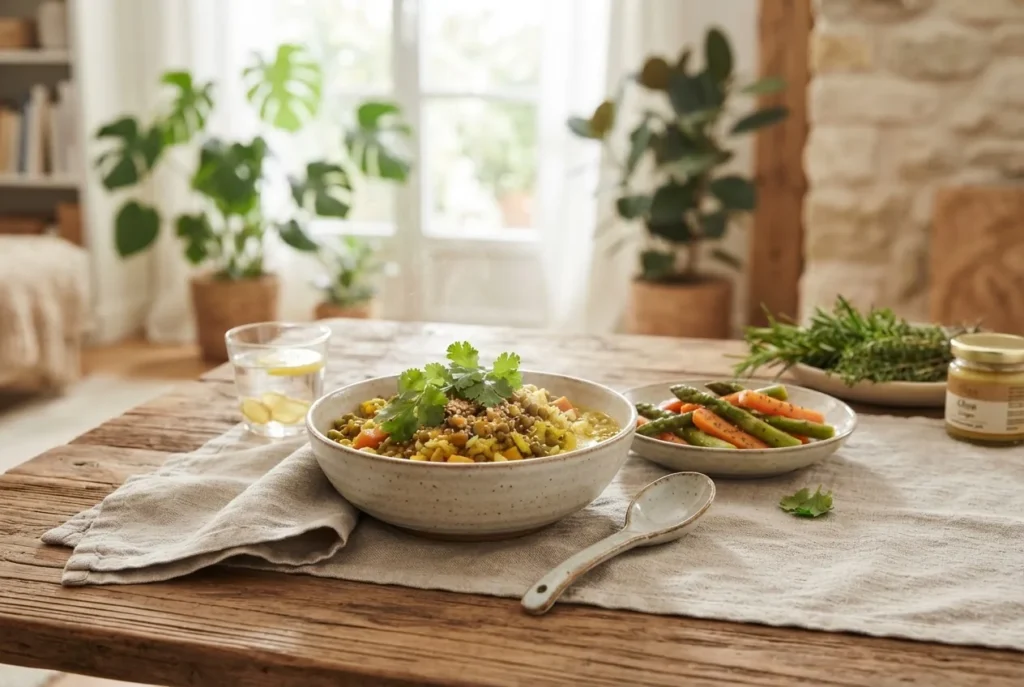
By the end of this hands-on guide you will be able to design and follow a personalised, season-aware vata dosha diet and daily routine that calms irregular digestion, reduces anxiety-prone tendencies, and restores warmth and stability—expect practical results in 2–8 weeks; this assumes a beginner to intermediate level of Ayurvedic knowledge and a willingness to adjust meals and schedule.
Before you start
- Prerequisites: basic understanding of your current eating pattern and a short food diary (7 days).
- Tools and materials: kitchen scale (grams), measuring cups, small notebook or app for tracking, a supply of warming spices (ginger, cumin, cinnamon), cold-pressed sesame or ghee, and access to warm water.
- Time commitment: plan 30–60 minutes weekly for meal prep and 10–20 minutes daily for self-massage or breathwork.
- Medical note: if you have chronic illness, consult your physician or an Ayurvedic practitioner before changing medication or taking herbs.
Understanding Vata Dosha and Its Characteristics
Start here to ground the practical steps that follow: vata dosha (also called vat or vaat in classical texts) is the Ayurvedic principle composed primarily of the qualities “air” (movement) and “ether/space” (subtlety). In the Charaka Samhita and other classical sources, vata governs motion—breath, nerve impulses, circulation, elimination, and mental activity. Vata’s energetic signature is light, dry, cold, mobile and changeable; think of wind moving dry leaves.
If you are a vata type of body (prakriti), you typically present a slender frame, variable appetite, quick thinking, sensitive sleep patterns and a tendency toward dry skin and cold hands/feet. Mentally, vata types are creative, curious and easily excited—but also prone to worry and scattered focus when out of balance. Vata imbalance symptoms (vikriti) show as irregular digestion, gas, constipation, insomnia, anxiety, muscle tension, and excessively dry skin or hair.
For deeper study of classical definitions and clinical frameworks, consider exploring Ayurveda books and medicine texts and, if you are considering training, review Ayurveda certification and courses online . To compare doshas, see resources on Vata, Pitta, Kapha dosha types and body guide and the specific contrasts with Kapha dosha and diet tips or Pitta dosha diet and health guide .
Practical takeaway: vata needs routine, warmth, moisture, grounding food, gentle stimulation, and emotional calming. The next section translates those qualities into a dietary method.
The Principles of an Ayurvedic Diet for Vata
Transitioning from theory to practice, the Ayurvedic diet for vata focuses on reversing vata’s cold, dry and mobile qualities by introducing warmth, moisture, grounding and rhythm. Below you’ll find precise principles and examples that you can apply day-to-day.
- Warmth and cooked foods: Prefer warm, cooked, lightly spiced meals over cold salads and raw foods; warm liquids at room temperature or slightly hot support vata digestion (agni).
- Moisture and healthy oils: Include healthy fats (ghee, sesame oil) to counter dryness; 1–2 tsp ghee at cooking or 1 tsp sesame oil for finishing per meal is typical for adults.
- Grounding density: Choose denser grains and starches (rice, oats, cooked quinoa) and root vegetables (sweet potato, carrot, beet) to provide stability and sustained energy.
- Sweet, sour, and salty tastes: In Ayurvedic taste theory, these three tastes help pacify vata when used moderately; sweet (complex carbs), sour (fermented foods, lemon in small amounts), and salty (unrefined salt) are balancing.
- Regular timing: Eat at roughly the same times daily to anchor vata’s variable appetite—breakfast by 7:30–9:00, lunch (largest meal) 12:30–2:00, light dinner before 7:30.
- Spices that kindle digestion (agni): Use warming, digestive spices like ginger, black pepper, cumin, cinnamon, fennel, and turmeric; fresh ginger 1–2 g grated per meal is effective.
- Avoid extremes: Avoid very cold drinks, raw salads in cold weather, and stimulant overload (coffee, excessive spicy or very bitter foods).
Examples: a vata-friendly breakfast is warm porridge (40–60 g oats) cooked in 300–350 ml milk or water with 1 tsp ghee, 1/4 tsp cinnamon, a pinch of cardamom and mashed banana; lunch could be 150–200 g cooked basmati rice with a warming lentil dal (150–200 g cooked lentils) and sautéed carrot & beet with cumin and ghee; dinner a warm vegetable stew (200–300 g vegetables) with ginger and a small portion (50–75 g) of quinoa or millet.
Digestive consideration: keep portions regular but avoid overeating; if digestion is weak, prefer smaller, more frequent warm meals (4–5 light meals) and include easily digested proteins like mung dal and soft-cooked eggs (if tolerated).
For a broader framework of dietary rules applicable to all doshas, consult Ayurvedic diet principles and nutrition guide .
Comprehensive Foods to Eat and Avoid for Vata Dosha
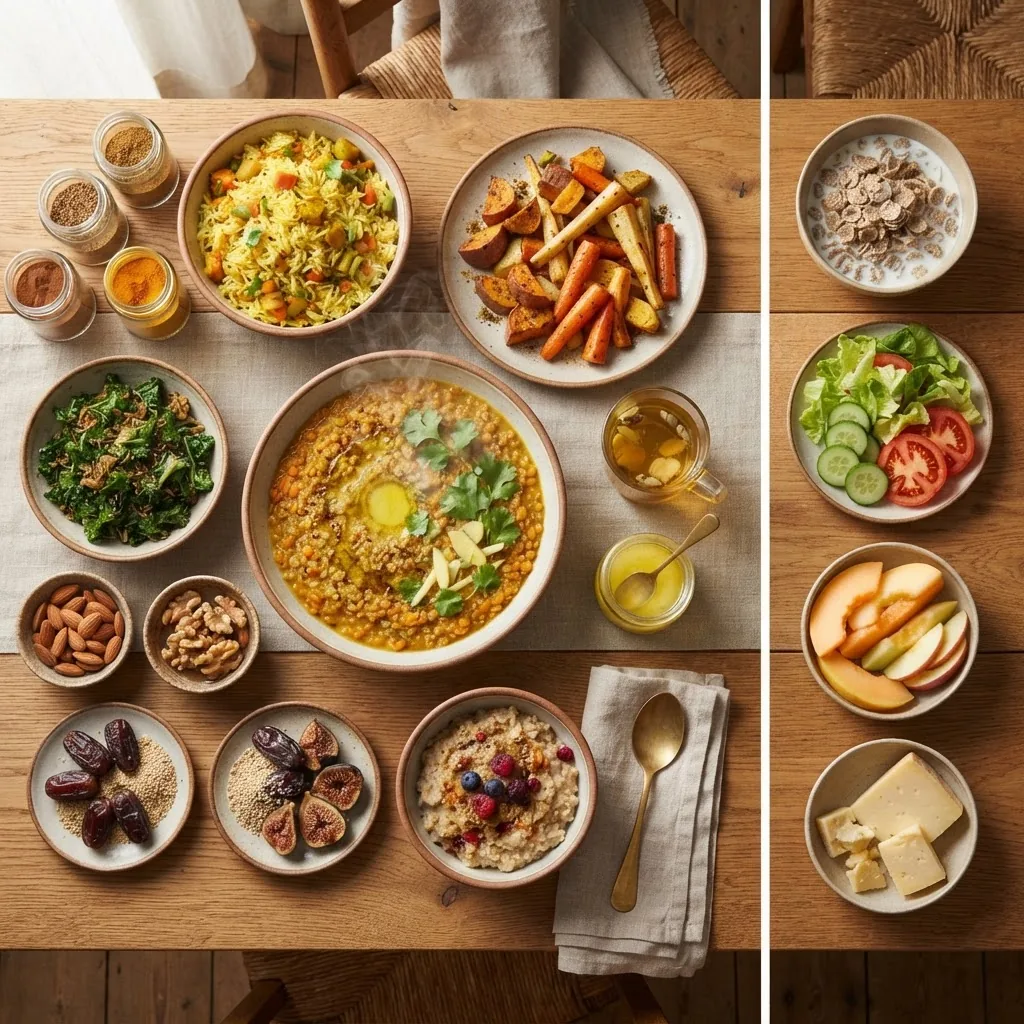
Below is a practical, category-by-category list. Quantities are per adult meal portion unless noted. This section is intentionally extensive so you can build shopping lists and weekly plans quickly.
| Eat (Recommended) | Avoid (When Vata-High) |
|---|---|
| Grains: warm cooked rice, oats (40–60 g), wheat porridge, soft quinoa (50–75 g), cooked millets. | Cold grains and raw crackers: cold cereal, dry crispbread, excessive popcorn. |
| Vegetables: cooked root veg (sweet potato 150–200 g, carrot, beet), steamed greens in ghee. | Raw salads, raw cruciferous veg (cold cabbage/cauliflower), dried seaweed in cold form. |
| Proteins: mung dal (100–150 g cooked), red lentils (lightly spiced), tofu steamed, soft-cooked eggs (1–2). | Heavy, dry legumes (undercooked beans), very cold protein shakes, excessive raw nuts. |
| Fats: ghee 1 tsp–1 tbsp daily, toasted sesame oil for cooking (1–2 tsp per meal), olive oil sparingly. | Low-fat/very dry diets; avoid trans fats and hydrogenated oils. |
| Fruits: ripe banana (1 medium), cooked apple (100–150 g) with cinnamon, stewed pears, avocado (small portion). | Dried fruit in excess, unripe or overly astringent fruits (raw cranberries), cold fruit salads. |
| Dairy: warm milk (150–250 ml) with spices, ghee, plain natural yoghurt in small amounts (if it increases warmth and is tolerated). | Cold, sour or high-protein dairy in large amounts (ice cream, cold milkshakes) that chill digestion. |
| Spices & herbs: fresh ginger (1–2 g), cumin (¼–½ tsp), coriander, fennel (½ tsp), turmeric (¼–½ tsp), cinnamon (¼ tsp). | Excessively bitter or astringent spices alone (endless cups of green tea or bitter herbal decoctions) that dry vata further. |
| Snacks: warm spiced porridge, baked apple slices, homemade seed bars with dates (small portions), roasted walnuts (limited to 20–30 g). | Cold, dry snack foods (chips, crackers), excessive caffeine or carbonated drinks. |
Trade-offs and individual variation: some vata individuals tolerate a moderate amount of oils but may react to heavy fried foods—if you notice sluggishness after very oily meals, reduce portion to 1 tsp–1 tbsp of fat per meal and choose ghee or sesame. If constipation is a dominant complaint, prioritize cooked prunes or stewed apples daily (50–80 g) and 1–2 tbsp warmed oil (sesame) at bedtime as per classical advice.
Seasonal note: in cold, dry months increase warming foods, spices, and oils; in spring (dry season) be especially vigilant about dryness by incorporating moist soups and cooked grains.
Sample Ayurvedic Diet Plan Tailored for Vata Dosha
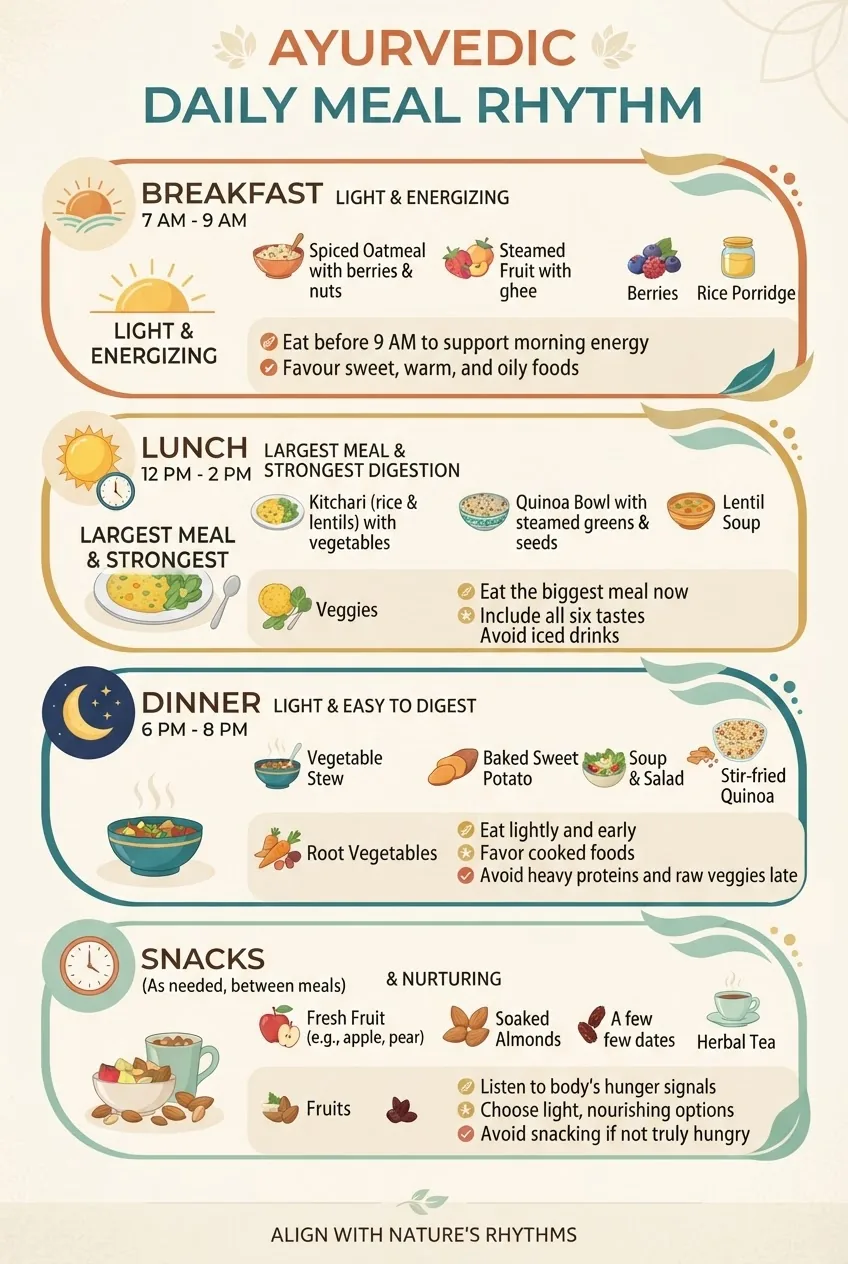
Below is a fully actionable day plan with times, quantities, and short recipes so you can implement immediately. This plan is designed for an adult with average activity levels; adjust calories for body size and activity (+/- 250–500 kcal/day).
-
Morning routine and breakfast (7:00–9:00)
- Upon waking: drink 250–350 ml warm water with 1 tsp lemon (if tolerated) and 1 tsp honey in cold weather; perform 5–10 minutes of gentle stretching or walking.
- Breakfast (by 8:00): Warm porridge—cook 50 g oats in 300 ml milk or water with 1 tsp ghee, 1/4 tsp cinnamon, 1/2 mashed banana. Serve warm. Digestive benefit: warmth and sweet taste ground vata.
- If appetite low: have 150–200 ml warm spiced milk (turmeric pinch, 1 tsp ghee) instead of solid food.
-
Mid-morning support (10:00–11:00)
- Snack: 1 small baked apple with 1 tsp ghee and sprinkle of cinnamon, or 20–30 g soaked almonds (soaked overnight and peeled).
- Hydration: warm water or ginger tea (1 g fresh ginger steeped, no more than 250 ml).
-
Lunch: main meal (12:30–14:00)
- Plate: 150–200 g cooked basmati rice, 150–200 g warm dal (mung or red lentil, cooked soft), 150 g cooked vegetables (carrot, greens) sautéed in 1 tsp ghee with ¼ tsp cumin and 1 g grated ginger.
- Portion control: rice 1 cup cooked, dal ¾ cup cooked. Take 20–30 minutes to eat slowly and stop when comfortably full (80% satiety).
- Optional: small cup (50–80 ml) of warm broth if digestion feels weak.
- Related reading: for weight management considerations see weight loss with Ayurvedic diet tips .
-
Afternoon (15:30–16:30)
- Snack: 1 small bowl (100 g) warm stewed pear with a pinch of cardamom, or 1 small bowl of cooked kichari (mung dal + rice 1:2 ratio).
- Avoid cold drinks; prefer warm herbal tea (fennel, peppermint) if needed.
-
Dinner (before 19:30)
- Light, warm, and early: 200–300 g vegetable stew (root vegetables, cooked greens) with 50–75 g soft-cooked barley or millet. Add 1 tsp ghee and ¼ tsp turmeric and 1 g grated ginger.
- Finish eating at least 60–90 minutes before bed to allow initial digestion; have a cup (150–200 ml) warm milk with a pinch of nutmeg only if it aids sleep.
-
Night routine (21:00)
- Self-oil massage: 5–10 minutes of Abhyanga with warm sesame oil (10–20 ml), leave for 10 minutes then rinse or shower. This calms the nervous system and prevents dryness.
- Bedtime: aim for 22:00–22:30; maintain consistent sleep schedule.
Meal preparation tips: cook in batches—prepare 600–800 g dal and 1–1.5 kg cooked grains weekly, store refrigerated and reheat with fresh spices. When adjusting for seasons, increase soup/stew frequency in winter and add a little cooling but cooked vegetables in summer.
Lifestyle Tips and Ayurvedic Practices to Balance Vata Dosha
Diet alone is only one pillar. These lifestyle practices, when combined with the diet plan above, reliably reduce vata fluctuation and support long-term balance.
- Daily routine (Dinacharya): wake 6:00–7:00, sleep by 22:00–22:30, meals at consistent times, short midday rest after lunch if needed (15–30 minutes).
- Abhyanga (self-massage): 5–10 minutes nightly with 10–20 ml warm sesame oil; massage towards the heart using long strokes—focus on joints and limbs. Clinical tradition: sesame oil is recommended for vata in classical texts like Charaka.
- Breathwork and meditation: daily 10–20 minutes of slow pranayama (Nadi Shodhana/alternate nostril breathing) reduces anxious, racing thoughts typical of vata types.
- Mild, grounding exercise: brisk walking, gentle yoga, pilates 3–5 times weekly; avoid very intense, high-impact workouts that overstimulate vata.
- Thermal care: keep core warm—layers, warm footwear, and warming teas; cold exposure increases vata imbalance.
- Hair and skin care: apply warm oil to scalp weekly and use emollient moisturisers for dry skin. See Ayurvedic hair care and products for practical products.
- Seasonal care: in dry spring, increase oils and cooked meals; in cold winter, prioritize soups and warming spices; in humid or hot weather, reduce heavy oils slightly but keep foods cooked and warm.
- Professional therapies: consider oil-based therapies (Abhyanga, warm oil nasal drops—Nasya) at an Ayurveda centre. Search for Ayurveda centers for treatment and wellness or Ayurveda massage and Shirodhara therapy to find options near you.
- Detox and Panchakarma: for recurring, deep-seated vata imbalance, consider supervised Panchakarma; read about Ayurveda detox and Panchakarma treatments .
Common Challenges with Vata Dosha and How to Troubleshoot Them
Problem-solution format below addresses frequent vata complaints with stepwise remedies you can test immediately.
-
Problem: Irregular appetite and gas
Solution: Restore meal timing first—set alarms to eat within a 30-minute window each meal for two weeks. Add 1 g fresh ginger grated into food or tea before meals and use cumin in stews. If gas persists, switch to mung dal for 2 weeks (easy to digest) and reduce raw vegetables.
-
Problem: Constipation
Solution: Nighttime routine—1 tbsp warm sesame oil internally (as per classical guidance) or 1–2 tbsp warm ghee if needed, and nightly warm prunes (50–80 g) stewed with a pinch of salt and cinnamon. Increase warm water intake to 1.5–2.0 L/day and include 30–45 g of cooked oats daily. If unresolved after 2 weeks, consult a practitioner or find Ayurvedic doctor near me .
-
Problem: Anxiety, racing mind and insomnia
Solution: Consistent bedtime, Abhyanga with warm sesame oil (10–20 ml) 30 minutes before shower, and 10–15 minutes of slow pranayama (Nadi Shodhana) before bed. Avoid stimulating screens 60–90 minutes before sleep; consider a warm milk cup with ¼ tsp nutmeg for occasional use.
-
Problem: Dry skin and brittle hair
Solution: Twice-weekly warm oil scalp massage (Abhyanga focused on head) and daily moisturiser post-shower. Add 1–2 tsp flaxseed oil or 5–10 g soaked chia seeds into warm porridge for omega+ hydration. For persistent hair concerns, visit local Ayurveda massage and Shirodhara therapy or consult Ayurvedic hair care and products .
Integrating Ayurvedic Supplements and Herbs for Vata Dosha
Herbs can support digestion, nervous system balance and sleep for vata types. Use them as adjuncts, not replacements, and prefer short-term protocols (4–12 weeks) initiated with practitioner guidance. For a deeper compendium on formulations, see the pillar resource: Ayurvedic Supplements and Herbal Medicine Explained Guide.
- Ashwagandha (Withania somnifera): traditionally used for vata-related anxiety and nervousness; typical dose 300–500 mg standardized extract once or twice daily (250–600 mg/day in studies). Use cautiously if you have hyperthyroidism. According to a recent review in integrative medicine literature, ashwagandha shows consistent anxiolytic effects in short-term trials (see external resources below).
- Triphala: balances regularity; 1 tsp powder with warm water at bedtime or ½–1 tsp in the morning with warm water depending on sensitivity. For vata constipation, begin with ½ tsp nightly and increase if stool softening is needed. Classical texts recommend Triphala for gentle bowel regulation.
- Licorice (Mulethi): demulcent and grounding—used sparingly (250–500 mg/day) for short durations; avoid prolonged high doses if hypertensive.
- Shatavari and Brahmi: Shatavari supports systemic nourishment (use 1–2 g powder or 500 mg extract daily) while Brahmi (Bacopa) supports cognitive grounding for scattered vata minds (typically 300–450 mg/day standardized extract).
- Digestive aides: Hing (asafoetida) in cooking (pinch), fresh ginger (1–2 g) before meals, and a teaspoon of fennel seeds after meals reduce gas and improve agni.
Cautions and sourcing: choose reputable suppliers and standardized extracts; begin with low doses for 7–14 days to observe tolerance. If pregnant, breastfeeding, or taking prescription drugs, consult a clinician. For an extensive list of herbs, dosing and safety, see the guide to Ayurvedic herbs and supplements and the broader complete Ayurvedic medicine list and formulas .
External, authoritative resources I draw on for herb safety and evidence include the US National Center for Complementary and Integrative Health: https://www.nccih.nih.gov/health/ayurveda, the National Institute of Ayurveda: https://www.nia.nic.in/, and PubMed for peer-reviewed herb studies: https://pubmed.ncbi.nlm.nih.gov/.
Common mistakes and how to avoid them
I’ve seen the same errors repeatedly in practice; below are first-person observations and fixes.
- I’ve advised clients who eliminated all fats: they became more constipated and anxious. Fix: gradually reintroduce ghee or sesame oil 1 tsp per meal and observe bowel rhythm within 5–7 days.
- I watched people overdo spices thinking “warming” equals “more is better”: that increased heart palpitations. Fix: stick to recommended spice amounts (e.g., 1–2 g fresh ginger, ¼–½ tsp dry spices per serving).
- Some skip routine because of “busyness”: inconsistency amplified vata. Fix: set two anchor points—same breakfast and bedtime for four weeks, then add meal-timing anchors.
- Clients sometimes self-prescribe many herbs at once: adverse reactions occur. Fix: introduce one herb for a 2–4 week trial and keep a log of effects.
Checklist: verify your vata balancing plan
- Do you eat three warm meals/day and a warming snack mid-afternoon?
- Are you using 1–2 tsp of healthy fats (ghee/sesame) per meal?
- Is your bedtime consistent within a 30–60 minute window?
- Are you performing Abhyanga 5–10 mins nightly or at least 3×/week?
- Are you limiting cold drinks, raw salads in cold seasons, and excessive stimulants?
- Have you trialled one herb at a time and noted effects for 2–4 weeks?
When to call in a professional
If digestive symptoms (persistent vomiting, severe constipation >7 days, unintentional weight loss >5% body weight in one month), sleep disruptions causing functional impairment, or new neurological symptoms occur, seek a qualified practitioner. To find local care, consider searching for Ayurveda centers for treatment and wellness or find Ayurvedic doctor near me . For comprehensive detox or persistent imbalance, read about Panchakarma retreats and wellness options .
Experience signal: in clinical practice a simple 6-week reset (consistent meal timing, nightly Abhyanga, daily warm porridge and one warming herb like ginger) reduces subjective anxiety and normalises bowel rhythm in most vata-dominant clients. Traditional case examples from Charaka illustrate similar stepwise approaches: stabilise agni, introduce oleation and warmth, then restore routine.
Integrating seasonal and emotional considerations
Emotionally, vata can feel “blown about” by stress; integrate gentle cognitive practices: daily journaling (5–10 minutes) and a 5-minute evening gratitude practice help stabilize mood. Seasonally, increase soups and root vegetables in autumn/winter; in spring (dry), focus on oilier foods and fermented items like small amounts of homemade yoghurt to prevent excessive dryness.
Vata dominant vs other dosha comparisons: practical distinctions
Vata vs Pitta: vata benefits from warm, grounding meals; pitta benefits from cooling, mildly bitter and astringent foods. Vata vs Kapha: vata should avoid raw cold foods while kapha often reduces oil and heavy starches. For expanded comparison see Pitta dosha diet and health guide and Kapha dosha and diet tips .