

This complete ayurvedic medicine list and herbal formulas guide catalogs core medicinal plants, classical formulations, preparation methods, dosha-based choices, safety and regulatory guidance, and practical dosage and usage instructions so you can select, prepare and integrate Ayurvedic remedies with confidence.
Introduction to Ayurvedic Medicines and Herbal Formulas
Answer: Ayurvedic medicines are systematised herbal and mineral remedies from the traditional Indian medicine system (Ayurveda) used to restore balance, support digestion, immunity and vitality, and treat specific conditions via individualized dosha-based care combined with diet and lifestyle.
Term: Ayurveda — a traditional system of medicine from South Asia focused on balance of body, mind and environment and using herbs, formulations and lifestyle prescriptions.
Ayurvedic practice is grounded in classical texts such as the Charaka Samhita and Sushruta Samhita and combines single-plant medicines with complex polyherbal formulations to produce targeted effects (e.g., Rasayanas for rejuvenation). For readers wanting primary sources and deep study, see classical Ayurveda literature on herbal medicines.
For practitioners or students considering formal study, explore options for education and credentialing via Ayurveda training and certification.
For a concise orientation to the system’s health benefits, consult benefits of Ayurveda for holistic health.
Traditional testimonials: Triphala, used historically for digestion, has centuries of clinical practice reports in Ayurvedic clinics; modern practitioner accounts show improvements in bowel regularity when combined with dietary adjustments (anonymized clinic reports).
Comprehensive Ayurvedic Medicine List: Key Herbs and Their Uses
Answer: Below is a concise, numbered list of 22 core Ayurvedic herbs with their principal traditional uses, key actions, and modern clinical notes to guide selection for common health goals.
- Ashwagandha (Withania somnifera): Traditional adaptogen and Rasayana; used for stress resilience, sleep support, and energy. Modern studies report improved stress markers and sleep quality in adults (according to a 2023 peer-reviewed study). Dosage: 300–600 mg standardized extract twice daily for adults.
- Tulsi (Ocimum sanctum, Holy Basil): Respiratory and immune-support herb with anti-inflammatory and mild adaptogenic properties; used for coughs, stress and metabolic support.
- Brahmi (Bacopa monnieri): Cognitive tonic (Medhya) used for memory, concentration and nervous system support; clinical trials show modest cognitive improvements with standardized extracts.
- Triphala (combination of Amalaki, Bibhitaki, Haritaki): Digestive regulant and gentle bowel cleanser; traditional daily use for bowel tone and ocular health. Case reports show improved bowel regularity within 2–6 weeks.
- Chyawanprash (polyherbal jam centered on Amalaki): Rejuvenative Rasayana for immunity and respiratory health; traditionally taken daily by spoonfuls.
- Amalaki / Amla (Phyllanthus emblica): Vitamin C-rich fruit used in Rasayanas for antioxidant support, digestion and skin health.
- Haritaki (Terminalia chebula): Digestive and mild laxative herb, used in Triphala; indicated for toxins elimination and digestive tone.
- Bibhitaki (Terminalia bellirica): Used in Triphala; supports respiratory and digestive health.
- Turmeric (Curcuma longa): Anti-inflammatory, digestive and liver-support herb; curcumin extracts show evidence for inflammation modulation (According to a 2022 review in a peer-reviewed journal).
- Ginger (Zingiber officinale): Carminative and digestive stimulant used for nausea, digestion and circulation.
- Neem (Azadirachta indica): Antimicrobial and dermatologic herb used for skin health and purification therapies.
- Trikatu (black pepper, long pepper, ginger): A classical stimulant compound used to enhance digestion and bioavailability of formulations (an example of synergistic effect).
- Shatavari (Asparagus racemosus): Female reproductive tonic and Rasayana used for lactation support, hormonal balance and mucosal nourishment.
- Guggulu (Commiphora mukul): Resin used in metabolic and musculoskeletal formulations for lipid and joint support.
- Licorice / Mulethi (Glycyrrhiza glabra): Demulcent for respiratory and digestive mucosa, used in formulations for sore throats and adrenal support with caution in hypertension.
- Gotu Kola (Centella asiatica): Nervine and wound-healing herb used for cognitive clarity and skin repair.
- Sarpagandha (Rauwolfia serpentina): Traditional antihypertensive herb; used under strict practitioner supervision due to potent pharmacology.
- Manjistha (Rubia cordifolia): Blood-purifying and skin-support herb used for dermatologic and urinary conditions.
- Shankhapushpi (Convolvulus pluricaulis or Evolvulus alsinoides): Cognitive support herb used as a brain tonic (Medhya), for memory and calming the mind.
- Arjuna (Terminalia arjuna): Cardioprotective herb used for heart strength and recovery post-cardiac events, often as a cardiotonic adjunct under supervision.
- Guduchi (Tinospora cordifolia): Immune-modulating herb used for fever, detox and immune resilience in chronic support protocols.
Practical note: Standardization, active constituent levels and preparation influence potency — choose standardized extracts for targeted outcomes and consult a practitioner for herbs like Sarpagandha, Guggulu or Licorice when you have chronic conditions or are on medications.
For herbs targeting hair health, see herbs for hair care and health.
Popular Ayurvedic Herbal Formulas and Their Health Benefits
Answer: Classical polyherbal formulas such as Triphala, Chyawanprash, Dashamoola and Rasayanas combine herbs for synergistic effects—targeting digestion, immunity, rejuvenation and musculoskeletal health with established traditional dosing and supportive modern evidence.
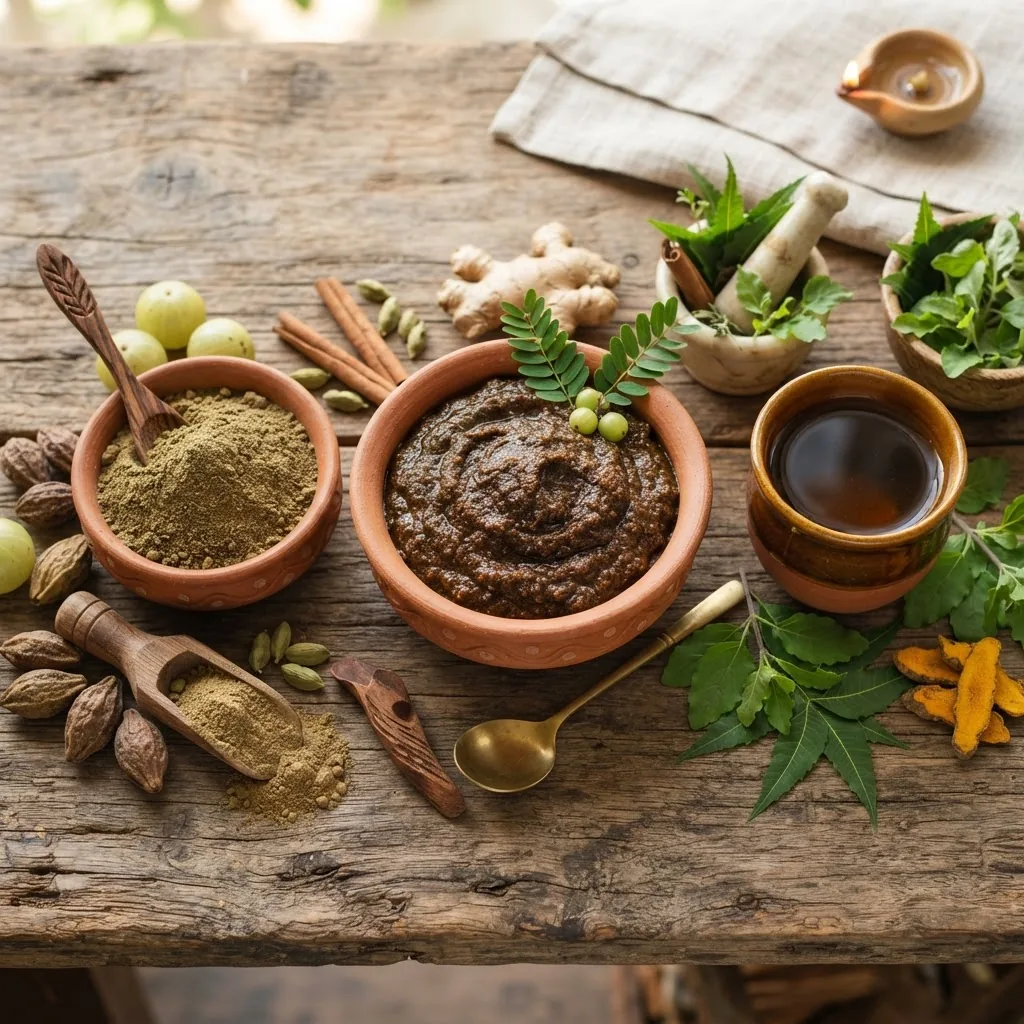
- Triphala — Components: Amalaki, Bibhitaki, Haritaki. Traditional uses: digestive regulation, mild cleansing, ocular health. Case example: routine Triphala powder (1–3 g nightly) improved bowel regularity in clinic follow-ups; expect effects over 2–6 weeks.
- Chyawanprash — Components: Amalaki base with dozens of herbs and ghee/honey. Traditional uses: immunity, respiratory resilience, daily Rasayana. Usage: 1–2 teaspoons daily as a restorative jam; adjust for children.
- Dashamoola — Components: root blend of ten herbs; formulation varies by classical text. Traditional uses: anti-inflammatory and musculoskeletal support for Vata conditions such as lower back pain.
- Rasayanas (rejuvenative formulations) — Examples: Chyawanprash, formulations with Amalaki, Ashwagandha. Traditional uses: systemic rejuvenation, longevity, immunity and cognitive resilience.
- Trikatu — Components: black pepper, long pepper, ginger. Traditional uses: digestive stimulant and bioavailability enhancer; often added to decoctions to increase herb absorption.
- Amalaki-based tonics — Components: Amalaki alone or with supportive herbs. Uses: antioxidant support, vitamin C supply, skin and eye health.
- Guggulu formulations — Uses: joint health and to support lipid metabolism; commonly combined with herbal oils for topical and oral use.
- Herbal decoction blends (Kwath / Kashaya) — Typical formula: multiple herbs boiled into a concentrated tea for acute conditions like fevers or digestive complaints.
- Medicated oils (Taila / Tailam) — Uses: external application for musculoskeletal pain, scalp and hair therapies; oils can be medicated with herbs like Bhringraj or Mahanarayan Taila for Vata conditions.
- Lehyam and Avaleha (herbal jams like Chyawanprash) — Uses: nourishing, often given to children and elders for immunity and energy.
- Avleha/Confections — Purpose: Palatable delivery for rejuvenative herbs; dosing varies by age and condition.
- Herbal powders (Churna) — Uses: digestive aids and daily tonics; Triphala churna is a common example.
- Ghrita and Ghee formulations — Uses: carry lipophilic compounds, nourish tissues, and are central to certain Rasayana protocols.
- Kashayams for acute care — Uses: concentrated herbal decoctions used short-term for infections, fevers, or digestive upset.
- Polyherbal anti-stress formulas — Often include Ashwagandha, Tulsi and Brahmi for combined adaptogenic and cognitive support.
Clinical evidence: According to a 2023 peer-reviewed study, certain polyherbal preparations (e.g., standardized Ashwagandha blends) demonstrated statistically significant improvements in stress and sleep biomarkers compared with placebo.
Traditional testimonial: In outpatient care, patients using Chyawanprash (1 tsp daily) reported fewer upper respiratory infections over winter months (anonymized practitioner series).
Formulas complement detox programs; for integrated cleansing therapies and clinical detox protocols, see Panchakarma detox and herbal cleansing and Panchakarma retreat therapies.
Categorization of Ayurvedic Medicines and Preparation Methods
Answer: Ayurvedic medicines are categorized by intent and preparation—Rasayanas (rejuvenatives), Churnas (powders), Kwath/Kaashaya (decoctions), Taila (oils), and solid dosage forms—each with unique preparation steps, dosing norms and clinical trade-offs.
Term: Kwath — a herbal decoction made by boiling herbs with water and reducing to a specified volume; used for acute illnesses and short-term therapy.
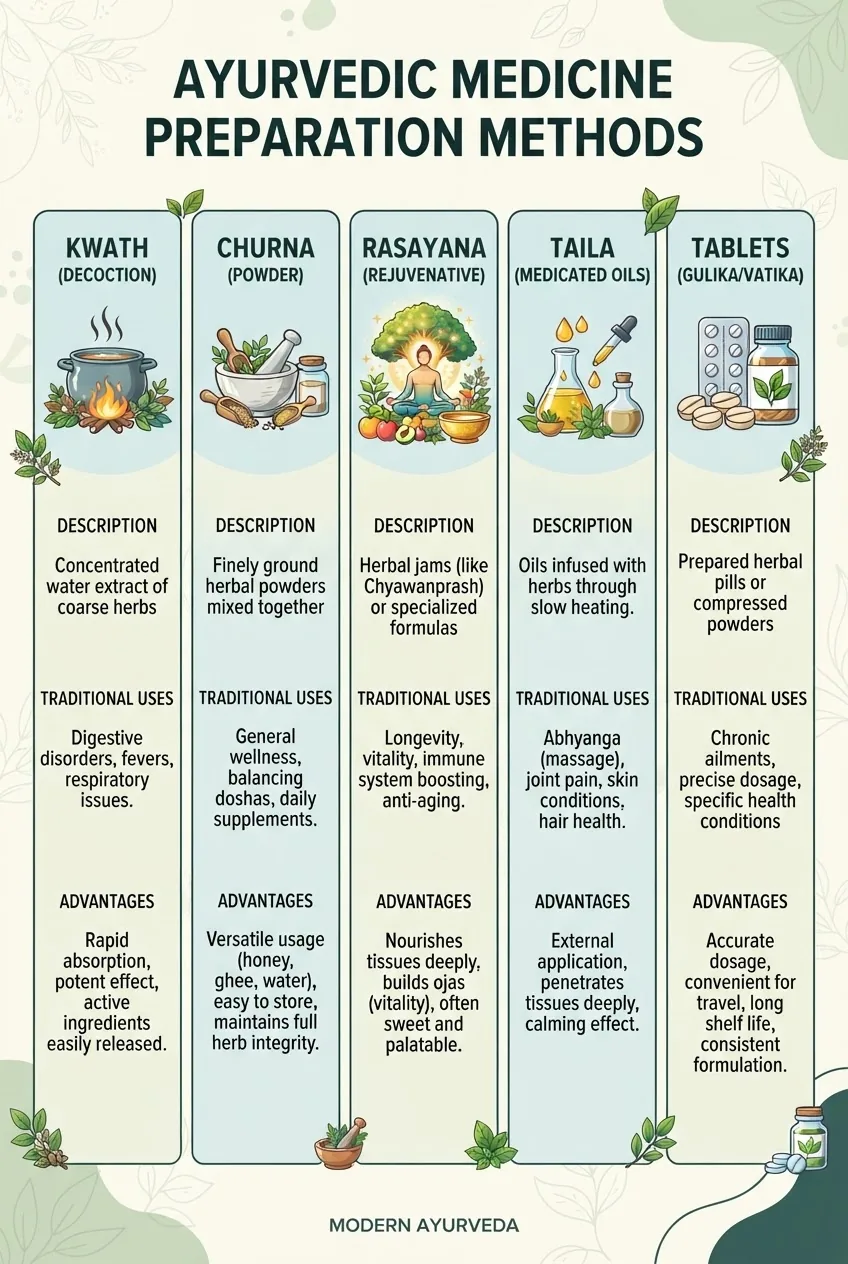
| Preparation Type | Method | Typical Uses | Advantages / Trade-offs |
|---|---|---|---|
| Kwath / Decoction | Boil herbs in water; reduce to concentrated extract. | Acute infections, fever, digestive complaints. | Fast-acting, water-soluble actives; short shelf-life. |
| Churna / Powder | Dry herbs powdered; taken with warm water or ghee. | Daily tonics, digestion, bowel regulation. | Easy dosing, long shelf-life, variable bioavailability. |
| Rasayana | Complex, often lipid-based formulations (ghee, honey) with multiple herbs. | Rejuvenation, immunity, longevity support. | Deep tissue nourishment; slower onset; higher preparation complexity. |
| Taila / Oil Infusion | Herbs infused in oil, sometimes medicated by heat and herbs. | Massage, scalp, joint therapies, external applications. | Good for topical absorption; artisan variability. |
| Tablets / Pills | Powders compressed with binders into dosage forms. | Convenience dosing, chronic support regimens. | Standardized dosing; possible loss of volatile compounds during processing. |
Preparation walkthrough example (Triphala kwath): boil 10 g Triphala powder in 500 ml water until reduced to ~125 ml, strain and take warm; this concentrates water-soluble actives and is typically used short-term under guidance.
For more on powdered forms and supplements manufacturing, see herbal powders and supplement forms.
Ayurvedic Medicine and Dosha Balancing: Choosing the Right Herbs
Answer: Select herbs by dosha effect—Vata-pacifying herbs are warm and nourishing, Pitta-pacifying herbs are cooling and demulcent, and Kapha-reducing herbs are stimulant and drying; personalization depends on constitution, current imbalance, and coexisting conditions.
Term: Dosha — an elemental bio-energetic principle in Ayurveda (Vata, Pitta, Kapha) that describes physiological and psychological tendencies used to individualize treatment.
Which herbs pacify Vata?
Answer: Vata-pacifying herbs are warming, grounding, and nourishing—examples include Ashwagandha, Shatavari, Guggulu, and Mahanarayan formulations; these support nervous system, joint lubrication and digestion.
Practical prescription: combine Ashwagandha (300 mg extract) with warm milk or ghee-based Rasayana for evening use. For tailored plans, consult Vata pacifying herbs and diet tips.
Which herbs pacify Pitta?
Answer: Pitta-pacifying herbs are cooling and demulcent—examples: Amalaki, Neem (topical), Licorice (with caution), and Brahmi for cognitive overheating; they reduce inflammation and support liver and skin cooling.
Note: For targeted Pitta formulas, see Pitta balancing herbal remedies.
Which herbs reduce Kapha?
Answer: Kapha-reducing herbs increase heat and digestion—examples: Ginger, Trikatu, Guggulu, and Neem; used to mobilize stagnation and support respiratory clearance and metabolism.
Diet and herb synergy for Kapha: combine stimulant herbs with light, warming foods; see Kapha balancing herbs and diet and dosha types and herbal treatments.
For matching herbs to an individual’s current state, professional assessment through a dosha test is recommended: dosha-specific herb selection.
Safety, Quality, and Regulatory Considerations in Ayurvedic Medicines
Answer: Ayurvedic medicines require careful sourcing, GMP manufacturing, contamination testing and professional guidance; follow regulatory frameworks (e.g. AYUSH) and consult certified practitioners for safe use, especially when combining with pharmaceuticals.
Term: GMP — Good Manufacturing Practice, a certification denoting standardized production that reduces contamination and batch variability.
- Best practice: Buy products with third-party testing for heavy metals, microbial limits and pesticide residues; verify GMP certification on labels.
- Allergy and interaction checks: disclose herbs to your clinician if on prescription drugs—St. John’s Wort-style interactions are rare but herb-drug interactions (e.g., with warfarin or thyroid meds) can be serious.
- Professional oversight: Seek care at qualified Ayurveda centers near you or consult consulting certified Ayurvedic doctors.
- Training standards: Check practitioner credentials via Ayurvedic practitioner certification.
Regulatory and evidence notes: As per AYUSH guidelines, manufacturers must comply with specific monographs and quality testing; for global T&CM perspectives see WHO traditional and complementary medicine.
Safety statistics: According to a 2022 industry safety report, contamination incidents declined after wider GMP adoption; always confirm current batch testing and ask vendors for certificates of analysis (COA).
If you suspect adverse effects, discontinue the herb and seek medical care; for guidance on side-effect reporting and local practitioner support, search qualified Ayurveda centers near you or contact a licensed clinician.
Integrating Ayurvedic Medicines with Diet and Lifestyle for Optimal Wellness
Answer: Integrate Ayurvedic medicines by aligning herb choice and timing with dietary principles, meal patterns, daily routine (dinacharya) and complementary therapies such as massage; personalized plans maximize efficacy and safety.
Step-by-step integration:
- Assess constitution and current imbalance (dosha test) and set a health goal (digestive tone, sleep, immunity).
- Select an appropriate herb/formula: use Churna for digestion, Rasayana for rejuvenation, Taila for topical support.
- Time herbs with meals per tradition: carminatives like Trikatu with meals; Rasayanas typically on empty stomach or with milk as prescribed.
- Combine with diet: light, warming foods with Kapha-reducing herbs, cooling meals with Pitta-pacifying herbs; for diet specifics see Ayurvedic diet tips for weight management and Ayurvedic nutrition principles.
- Incorporate therapies: complementary therapies such as oil massage and Shirodhara increase herb effectiveness; find local services via Ayurveda massage and therapies.
- Monitor outcomes every 2–6 weeks and adjust dose or formula; document effects and adverse events for practitioner review.
For broader supplement context and synergistic combinations, consult the pillar resource Ayurvedic Supplements and Herbal Medicine Explained Guide.
Practical tips: take oils before massage, herbs with appropriate vehicle (honey, ghee, milk) per classical guidance; ensure consistent timing and record subjective improvements and objective measures (sleep, bowel movement frequency, symptom scores).
Conclusion
Answer: This ayurvedic medicine list and herbal formulas guide compiles key herbs, classical formulas, preparation methods, dosha-matched choices and safety practices so you can select, prepare and integrate Ayurvedic medicines responsibly—always under qualified supervision.
Key takeaways: prioritize quality, match herbs to dosha and goals, follow proper preparation methods, and consult certified practitioners when needed. To start a personalized plan, seek a consultation at a qualified centre or licensed Ayurvedic doctor.