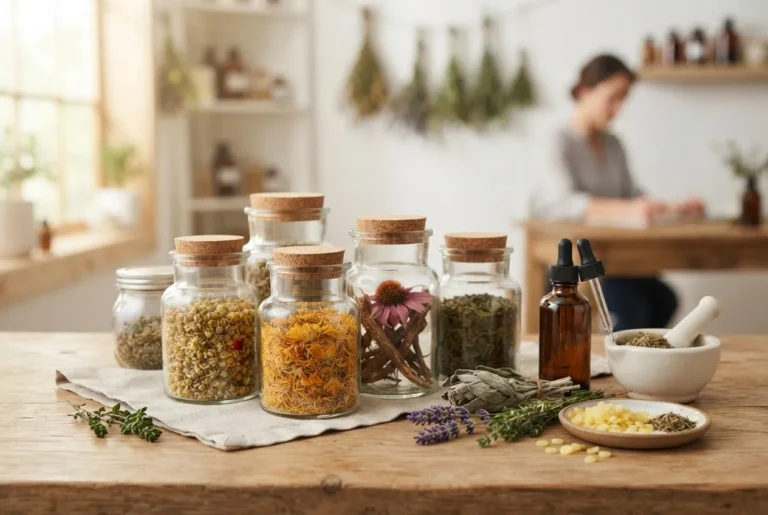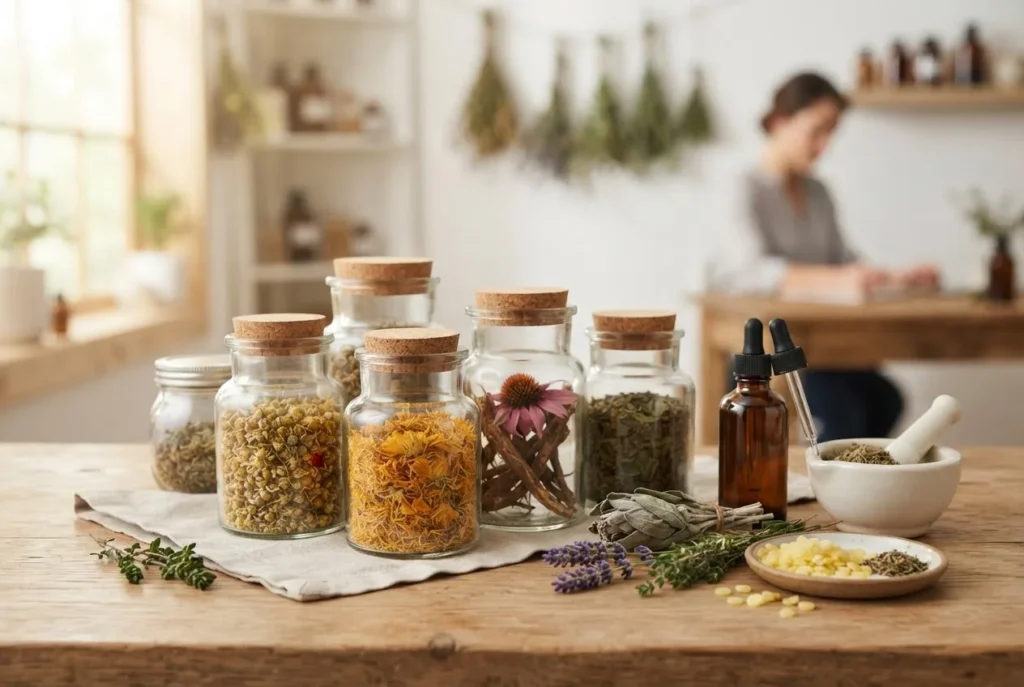
What is herbal therapy? Herbal therapy is the intentional use of plant-based preparations and holistic compounds to support health, symptom relief, and resilience; it combines traditional knowledge with evidence-informed practice to personalize plant medicines, dosing, and lifestyle strategies for wellness and chronic-care support.
Introduction to Herbal Therapy?
Answer: Herbal therapy introduces plant-based medicine and holistic compounds as practical tools for prevention, symptom support, and chronic-care adjuncts, framed by principles of whole-person care and personalization.
Term: herbal therapy — the therapeutic use of whole plants, extracts, or preparations to prevent or alleviate symptoms and support health.
This introduction explains the central idea, scope and common contexts where herbal therapy appears in everyday natural health practice. Herbal therapy is both a set of remedies and a practice philosophy: it uses herbs (leaves, roots, flowers) and holistic compounds (oils, extracts, minerals) alongside diet, lifestyle and practitioner assessment to support resilience and recovery.
Key themes you will see across this guide: plant-based medicine overview, basic preparation methods, safety and regulation, practitioner roles, and practical starting steps. If you want to study more formally, see herbalism and botany training for herbalists and study of herbalism and herbalist definition for a deeper path into plant study and practice.
What Is Herbal Therapy? Definition and Core Principles?
Answer: Herbal therapy is defined by its use of botanicals and holistic compounds chosen to interact with physiology, relieve symptoms, and enhance resilience; core principles include whole-person assessment, individualized formulations, minimal effective dosing, and respect for evidence and safety.
Term: holistic compounds — a broad category including plant extracts, essential oils, minerals and nutritional complexes used to support systemic health.
Herbal therapy blends several overlapping concepts:
- Plant pharmacology: herbs contain active constituents (alkaloids, flavonoids, glycosides) that produce measurable physiological effects.
- Preparative forms: how an herb is prepared (decoction, tincture, capsule) changes its chemistry and use profile.
- Therapeutic framing: herbs are used for acute symptom relief, chronic-condition support, or preventive resilience based on practitioner assessment.
- Person-centred care: dosing, combination and duration are adjusted to the individual’s constitution, medications, and goals.
This section clarifies common language so later recommendations are precise and actionable.
Term: tincture — an alcohol-based herbal extract that concentrates water- and alcohol-soluble constituents for dosing in drops.
How selection works: Practitioners evaluate symptoms, medical history, current medications, diet and lifestyle, then choose single herbs or combinations (formulas) to target mechanisms such as inflammation modulation, adaptogenic support, or mucosal soothing. Personalization is central: the same herb may be contraindicated or recommended at different doses depending on drug interactions, pregnancy status, or liver function.
Below are core philosophical and safety principles herbal practitioners use:
- Start with the least invasive effective form (tea, topical, single extract) and escalate only if needed.
- Prefer whole-plant preparations when the therapeutic aim is broad systemic support; prefer standardized extracts for targeted, evidence-based interventions.
- Combine lifestyle and nutrition interventions with herbal prescriptions to enhance outcomes.
- Monitor for adverse effects and interactions; reassess after 2–6 weeks depending on condition.
For readers wanting clarifying definitions of common preparation terms, see herbal preparation definitions and meaning.
What Are Common Herbal and Holistic Compounds Used in Therapy?
Answer: Therapists commonly use tinctures, teas, capsules, liquid extracts, essential oils, topical salves, and standardized extracts—each chosen for extraction method, dose control, onset, and safety profile.
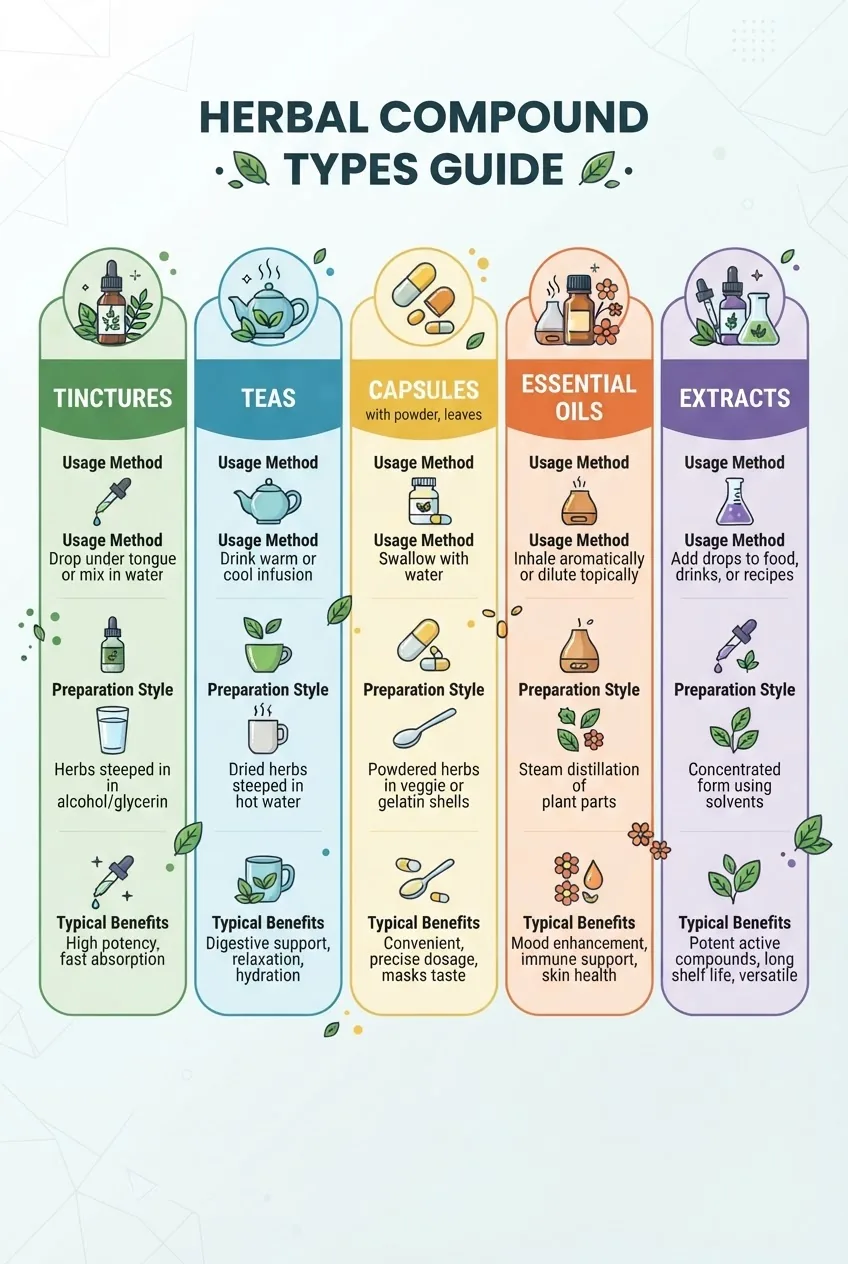
This section lists compound types, short descriptions, examples, typical use-cases and practical notes for home or clinic use.
| Compound Type | What it is | Typical uses |
|---|---|---|
| Tinctures | Alcohol or glycerine extracts concentrating active compounds. | Rapid absorption for anxiety, sleep, digestive complaints. |
| Teas / Decoctions | Water infusions of leaves (teas) or simmered roots/barks (decoctions). | Mild, safe uses: calming, digestion, respiratory support. |
| Capsules / Tablets | Powdered herbs or standardized extracts in pill form for dosing convenience. | Chronic conditions, standardized dosing (e.g., standardized ginkgo). |
| Essential oils | Volatile aromatic extracts used aromatically or topically (diluted). | Stress relief, sleep support, topical analgesia (with dilution). |
| Standardized extracts | Extracts quantified to contain a specific % of active marker compounds. | Used when clinical trials require consistent dosing (e.g., 0.3% hypericin in St John’s wort studies). |
Examples and practical notes
- Tincture example: Valerian root tincture (1:5 in ethanol) is used for short-term insomnia; drops under the tongue or in water allow rapid absorption.
- Tea example: Chamomile tea infusion soothes mild digestive upset and supports sleep with gentle onset; steep 2–3 teaspoons in hot water for 10 minutes.
- Capsule example: Standardized milk thistle capsule (silymarin standardized) for liver-support protocols offers consistent dosing in longer-term regimens.
- Topical salves: Calendula or comfrey-containing ointments to support wound healing and local inflammation (use clinically approved preparations for broken skin).
Term: herbal extract — a concentrated preparation made by removing active plant constituents into a solvent such as alcohol, water, or oil.
Making a basic tincture (walkthrough)
Answer: A simple home tincture can be made by macerating chopped dried herb in 40–60% ethanol for 4–6 weeks, then straining; this concentrates both water- and alcohol-soluble constituents for precise drop dosing.
Practical step-by-step (common clinic/home method):
- Choose herb (dried preferred for predictable ratio) and chop to increase surface area.
- Fill a jar: typical ratio 1:5 (1 part herb : 5 parts solvent) by weight/volume for tinctures.
- Pour ethanol (vodka 40–60%) to cover herb, seal and store in a dark place; shake daily for 4–6 weeks.
- Strain through muslin and bottle in amber dropper bottles; label with herb, ratio and date.
- Typical adult dose varies 10–60 drops 1–3 times daily depending on herb and condition; consult a practitioner for dosing.
This walkthrough is illustrative; sterile technique and knowledge of herb-specific contraindications (e.g., hepatotoxic herbs) are essential before making or using tinctures.
For a full comparative reference on capsule formats and benefits, see capsule herbal supplements and health benefits.
To explore dietary supplement formulations in more detail, including manufacturing standards, see botanical dietary supplements overview and our detailed herbal supplements guide with benefits and natural medicine uses for extended compound-by-compound benefits and natural usage.
Traditional systems such as Chinese herbal medicine use formula-based decoctions; learn more about those approaches at traditional Chinese herbal remedies.
For popular medicinal herbs and their described benefits, see top medicinal herbs and their benefits.
How Does Herbal Therapy Fit within Holistic and Naturopathic Health?
Answer: Herbal therapy is a core tool within naturopathy and integrative medicine: it complements nutritional, lifestyle, manual and physical therapies by offering botanicals tailored to the person’s health picture, while practitioners coordinate with conventional care.

Term: naturopathy — a primary-care medical philosophy combining natural therapies (nutrition, herbal medicine, hydrotherapy) with conventional diagnostic approaches where appropriate.
Comparison table: Herbalism vs Naturopathy
| Feature | Herbalism | Naturopathy |
|---|---|---|
| Scope | Focus on plant medicines and related preparations. | Broader primary-care approach including herbs, nutrition, physical therapies. |
| Training | May be informal or certificated herbalist training. | Often requires naturopathic medical training and licensing in some jurisdictions. |
| Integration with medicine | Works collaboratively; varies by practitioner. | Often integrates diagnostics and conventional referrals as part of care plans. |
In practical clinics, herbal therapy is nested inside integrative care plans that include diet, exercise, stress-management and when needed, conventional referrals. Many organisations provide practice standards; for accreditation and educational standards refer to recognised naturopathic associations such as naturopathy schools and certification in Canada for regional guidance and to resources about whether naturopathic doctors and medication prescription applies in your area.
For integration with supplement strategies and broader integrative health planning, review integrative health with herbal and dietary supplements and consider practitioner credentials such as herbalist doctor qualifications and training.
Typical practitioner workflow:
- Comprehensive intake: medical history, medication list, labs, lifestyle.
- Goal setting: symptom reduction, improved biomarkers, prevention.
- Selection of herbal forms and dosing with attention to interactions.
- Follow-up plan: monitoring, lab checks and mission-specific outcomes.
Whether you consult a medical herbalist or a naturopathic doctor, verify credentials and how they coordinate with your GP or specialist; if you need help locating a practitioner, see find a certified naturopathic doctor near you.
What Are the Benefits of Herbal Therapy: What Can It Help With?
Answer: Herbal therapy can provide symptom relief (sleep, digestion, pain), immune and stress support, and adjunctive care for chronic conditions when used appropriately alongside conventional treatment.
Common benefits supported by clinical or traditional evidence include:
- Stress, anxiety and sleep regulation (e.g., valerian, passionflower, lavender).
- Digestive support (e.g., peppermint, ginger) for nausea, bloating or dyspepsia.
- Immune resilience and respiratory symptom support (e.g., elderberry, echinacea for short-term use).
- Inflammation modulation and musculoskeletal relief (e.g., turmeric/curcumin formulations).
- Hormonal balance support in menopausal symptoms (e.g., black cohosh, red clover in selected protocols).
Evidence levels vary by herb and indication. For cancer support and symptom management rather than cure, herbal therapy can play an adjunct role; for more on oncology contexts see natural cancer treatments with herbal remedies and Herbs for Cancer Guide for supportive strategies (note: herbs are supportive adjuncts, not replacements for oncology care).
For practical, symptomatic approaches and quick relief strategies, explore natural ways to relieve symptoms with herbal remedies.
Real-life anonymised example: A 47‑year-old client with chronic insomnia and mild anxiety received a personalized plan combining a low-dose valerian tincture at night (20 drops), chamomile tea in the evening, sleep-hygiene coaching and a short course of magnesium. After four weeks sleep latency reduced from 45 to 20 minutes and subjective anxiety scores improved—illustrating combined herbal and lifestyle effects under practitioner oversight.
Benefits often accrue gradually; some herbs act quickly (e.g., peppermint tea for nausea), while others need weeks (e.g., adaptogens such as ashwagandha for HPA-axis support). For targeted supplement benefits and more compound-specific information, see herbal supplements benefits and natural uses and our botanical supplement overview botanical dietary supplements overview.
What Are Safety, Quality, and Regulatory Considerations?
Answer: Safety requires checking interactions, product quality and regulatory status: consult healthcare providers, use tested products, and use interaction checkers for concurrent medications.
Term: contraindication — a specific situation where a drug or treatment should not be used because it may be harmful.
Key safety points:
- Herb–drug interactions can be clinically significant (e.g., St John’s wort induces CYP enzymes and can lower levels of many medications).
- Product quality varies: look for third‑party testing (e.g., USP, TGA certification in Australia), batch numbers and clear labeling.
- Pregnancy, breastfeeding, liver disease, and immunosuppression require specialist supervision; some herbs are contraindicated in pregnancy.
- Standardised extracts provide dose consistency; whole herb powders vary in potency batch-to-batch.
For regulation and guidance on safety and claims, see authoritative government resources such as the FDA’s dietary supplement information: FDA: Dietary Supplements and the U.S. National Center for Complementary and Integrative Health herb summaries: NCCIH: Complementary and Integrative Health.
Before starting herbs with prescription medicines use a tool such as herbal drug interaction checker and guidelines and discuss results with your prescribing clinician.
Product quality checklist:
- Manufacturer transparency: source, batch testing, ingredient list.
- Certificate of Analysis (CoA) availability for active markers and contaminants.
- Third-party seals (USP, NSF, or local regulators such as TGA in Australia).
According to a 2021 regulatory analysis report, adulteration and mislabeling occur in a small but non-negligible share of international herbal products; always favour suppliers with testing transparency (source: industry/regulatory report, 2021).
Adverse reaction plan: Stop the product, keep the label, seek medical attention for severe reactions, and report to the local medicine regulator to improve safety data collection.
How Do I Get Started with Herbal Therapy: Practical Tips?
Answer: Start by documenting goals and medications, consult a qualified practitioner for a personalized plan, begin with low-risk forms (teas, topical), and monitor effects over 2–6 weeks.
Step-by-step starter plan:
- Write a baseline: symptoms, current meds, allergies, labs and goals.
- Consult a professional: book an appointment with a certified herbalist or naturopath; to find local clinicians see find a certified naturopathic doctor near you or explore certified herbalism classes near me if you want basic training.
- Start small: choose a single, low-risk herb (e.g., chamomile for sleep/digestion) as a trial under guidance.
- Document response diaries: symptom scales, sleep logs, side effects.
- Review after 2–6 weeks and adjust dosing, form or combination as needed.
Insurance and cost considerations: check coverage for naturopathic visits; for insurance specifics see insurance coverage for naturopathic care. If you plan DIY remedy-making, start with a vetted kit and course such as herbalist starter kit for remedies and consider online training via online herbalist certification courses.
What to expect in a typical consultation:
A practitioner collects medical history, current medicines, diet, sleep, stressors, and lab results; performs a targeted physical assessment; then proposes a short-, medium- and long-term plan that may include herbs (form, dose), diet, lifestyle changes, and monitoring intervals. The practitioner outlines expected timeframes and safety monitoring, and provides written instructions and follow-up.
DIY caution: Follow trusted recipes and avoid herbs contraindicated with your medications or conditions. For home-curation skills and recipes, consider structured courses such as herbal potions making and home remedies.
What Are Current Scientific Perspectives and Limitations?
Answer: Scientific evaluation shows promising results for some herbs and indications, but evidence quality varies—strongest for specific standardized extracts, weaker or mixed for many traditional uses; more rigorous trials and standardization are needed.
Summary of evidence landscape:
- High-quality randomized controlled trials (RCTs) exist for a few herbs and indications (e.g., St John’s wort for mild–moderate depression in some meta-analyses).
- Systematic reviews often highlight heterogeneity: different extracts, doses and outcome measures limit pooled conclusions.
- Mechanistic studies show flavonoids and alkaloids can modulate inflammation, neurotransmission and oxidative stress, but translating to clinical endpoints requires dose-controlled trials.
Representative peer-reviewed sources and agency perspectives include a general review of herbal medicine in clinical practice at PubMed Central: herbal medicine clinical review (peer-reviewed summary) and national health agency guidance such as NCCIH: NCCIH resources.
Example study citations:
- Meta-analyses show St John’s wort has efficacy for mild–moderate depression compared with placebo in several trials (systematic review, varying quality).
- Curcumin (turmeric extract) trials demonstrate modest effects on inflammatory markers and pain in osteoarthritis in randomized trials, with improved outcomes using standardized extracts and bioavailability enhancers.
Limitations noted by researchers:
- Product heterogeneity—different extracts produce different outcomes.
- Small sample sizes and short follow-ups in many studies.
- Insufficient safety data in complex chronic disease populations.
Practically, clinicians rely on graded evidence: use well-studied standardized extracts when evidence supports them, and use traditional whole-plant approaches for broader, symptomatic aims where clinical experience and safety track records exist. For regulators and best-practice frameworks, consult national guidance such as the FDA dietary supplement pages: FDA.
Conclusion: Integrating Herbal Therapy into Your Wellness Journey?
Answer: Integrating herbal therapy means combining plant medicines with lifestyle and clinical oversight: choose evidence-informed products, consult qualified practitioners, monitor effects and prioritise safety to make herbal therapy a practical, personalized part of long-term wellness.
Key takeaways:
- Herbal therapy is both practical (teas, capsules, tinctures) and philosophical (whole-person care and personalization).
- Evidence supports specific herbs/standardized extracts for certain conditions; many applications rely on traditional use plus practitioner experience.
- Safety and quality must guide product choice—use tested suppliers and check interactions.
- Work with qualified practitioners when managing chronic disease, pregnancy, or concurrent medications.
Next steps: if you are curious, start with a consultation and a simple, low-risk herbal trial under supervision; learn more about product specifics in our herbal supplements guide with benefits and natural medicine uses and consider training options if you want deeper skills such as History of Herbalism Course.
Safety reminder: Always consult your healthcare provider before starting herbal therapy, particularly if you are on prescription medications, pregnant, breastfeeding, or have chronic health conditions.