

By the end of this hands-on guide you will have a clear reading plan, the ability to evaluate and purchase credible ayurveda books, and a practical routine you can apply in 1–2 weeks; expected time commitment: 6–12 hours to build a starter library. Skill level assumed: curious beginner to informed self-practitioner.
Introduction to Ayurveda Books and Medicine Texts
This section gives a concise, actionable orientation to foundational Ayurvedic literature and how contemporary Ayurvedic medicine book resources map to practice. Read this section to identify which classical manuscripts and modern commentaries support clinical protocols, herbal formulations, and daily routines (dinacharya). The word ayurvedic medicine book appears throughout to denote modern clinical manuals and practitioner-facing texts versus ancient source texts.
What you will learn in this section:
- Core classical texts and why each matters for diagnosis, surgery, and pharmacology.
- How modern Ayurvedic medicine books translate, adapt and apply classical protocols.
- Where to look for reliable editions, translations and official pharmacopeia standards.
If you are new to Ayurveda, consider first reading a concise primer on principles and dosha theory to reduce confusion when you open classical Sanskrit-based texts. See our primer: Ayurveda for wellness explained.
Before you start: key prerequisites and materials.
- Notebook or digital note app for quotes, Sanskrit terms and page references.
- Access to at least one reputable English translation of a classical text (print or e-book).
- Practical modern guide for hands-on protocols (herbal formulations, dinacharya, simple clinical triage).
- Optional: an introductory course or consultation with a qualified practitioner for personalised guidance.
Transition: now that you know the basics and have materials ready, we move to the cornerstone classical texts that form Ayurveda’s backbone.
Classical Ayurveda Texts — The Cornerstones of Ayurvedic Knowledge
The classical canon provides original clinical frameworks, surgical techniques, and pharmacology. Below is a numbered list of canonical works, with summaries and the unique clinical value each offers to readers and practitioners.
-
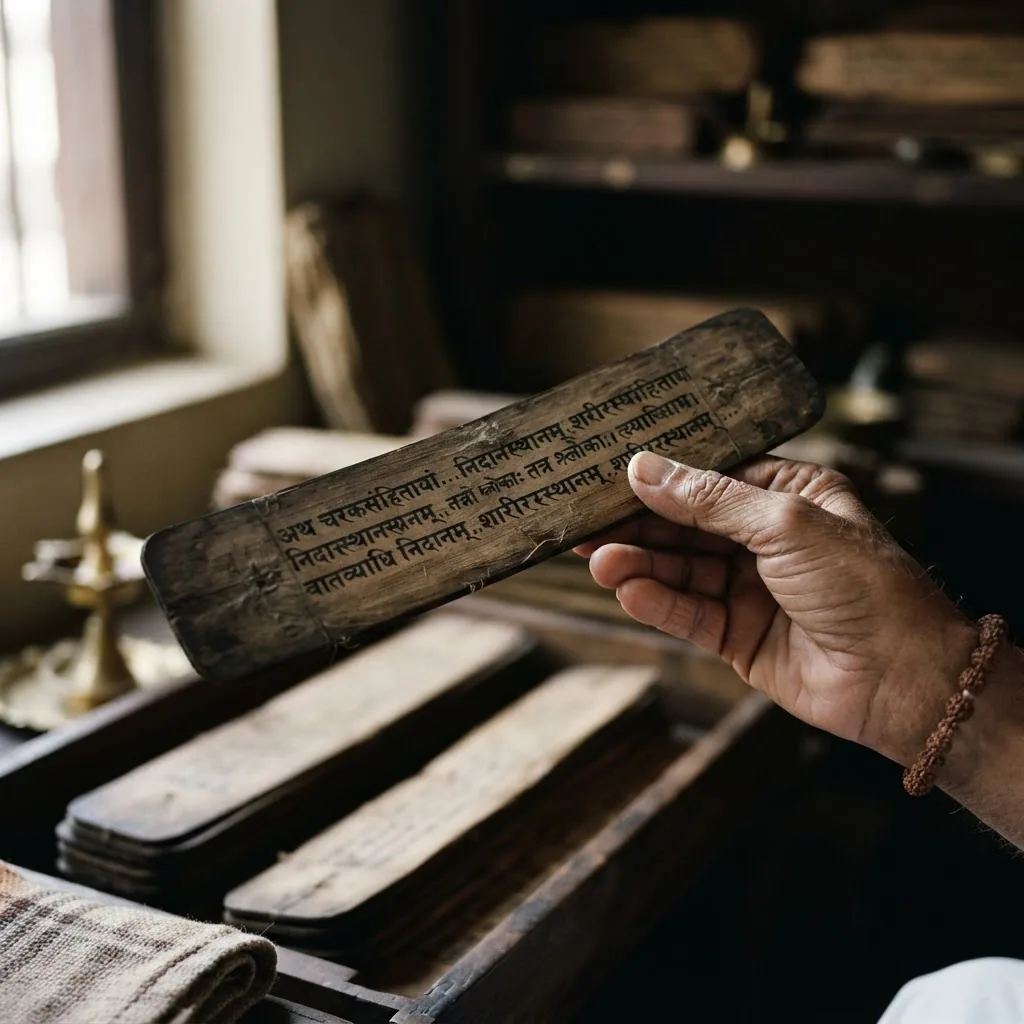
Charaka Samhita — internal medicine and foundational theory
The Charaka Saṃhitā (Charaka Samhita) is the primary classical text for Ayurvedic internal medicine (kaya chikitsa). Composed likely between 2nd century BCE and 2nd century CE, Charaka organizes theory of dravya (substances), vidhi (methods), and clinical diagnosis using prakriti (constitution) and vikriti (pathology). It details disease classification, pulse and tongue observation, and dietary therapeutics. For practitioners it is indispensable for understanding diagnostic reasoning: vata, pitta, kapha interplay; seven dhatus; and agni (digestive/metabolic fire). Note: many modern editions include Sanskrit transliteration and commentary—preferred editions provide parallel English and critical notes.
-
Sushruta Samhita — surgery, trauma, and procedural methods
The Sushruta Saṃhitā (Sushruta Samhita) concentrates on surgical techniques (shalya tantra), instrumentation, wound care, and procedural ethics. Dated variably to 1st millennium BCE/CE layers, it describes rhinoplasty (nasal reconstruction), cataract extraction, and descriptions of over 300 surgical instruments. For modern clinicians and historians, Sushruta’s methodical stepwise operations and asepsis principles are a rare surgical account in ancient medicine. Practical readers will find surgical classification helpful for understanding classical approaches to trauma, panchakarma adjuncts, and post-procedure detox rituals.
-
Ashtanga Hridaya — compact clinical handbook
The Ashtanga Hridaya (Heart of the Eightfold System) by Vagbhata combines Charaka and Sushruta traditions into a compact, highly mnemonic handbook blending theory and practice. It is prized for accessible chapters on obstetrics, pediatrics, and daily regimens, and remains a staple in traditional curricula. The text’s concise aphoristic style is ideal for students learning diagnostic sequences and treatment algorithms.
-
Nighantu and Ayurvedic pharmacopoeias — materia medica and herbal lexicons
Nighantu-type lexicons collect plant names, rasa (taste), virya (potency), vipaka (post-digestive effect) and indications. These are the classical precursor to modern Ayurvedic formularies. Cross-referencing a Nighantu with the modern Ayurvedic Pharmacopoeia of India helps reconcile ancient synonyms, sourcing, and standardized extraction methods. As per the latest Ayurveda pharmacopoeia standards, standardization reduces variability in herbal potency; consult official sources for monographs. Ministry of AYUSH publishes current regulatory guidance.
-
Panchakarma texts — detoxification and rejuvenation protocols
Classical chapters across Charaka, Sushruta and later compendia codify panchakarma: vaman (therapeutic emesis), virechana (purgation), nasya (nasal medication), basti (medicated enemas) and raktamokshana (bloodletting). These protocols specify diet, pre-procedure oleation (snehana) and fomentation (svedana). For practical modern application, cross-reference procedural details with clinical safety protocols in contemporary Panchakarma manuals and our Complete Ayurveda detox guide.
-
Dosha theory — canonical diagnostic framework
Dosha theory (vāta, pitta, kapha) underpins diagnosis and treatment across classical texts. Textual descriptions include temperament, physical markers, and disease tendencies, and form the basis for prakriti assessment. For practical testing and modern assessment tools derived from these descriptions, see our test guide: Ayurvedic body types and dosha test guide.
-
Sharangadhara Samhita and Rasashastra — formulations and metal-based therapeutics
These texts detail preparation methods for complex formulations, including bhasmas (calcined metal preparations) and herbal compound decoctions. Modern practitioners must balance historical formulations with safety and regulatory guidance; metal-based remedies require preservation of traditional methods, modern toxicology testing, and alignment with pharmacopoeia standards. Consult current pharmacopeial monographs for safety thresholds.
-
Commentaries and sub-commentaries — bridging Sanskrit and modern practice
Centuries of commentarial work (e.g., Chakrapani on Charaka) help interpret terse sutras and regional practices. Reliable translations pair original Sanskrit with scholarly commentary. When a translation differs from another, check the commentator’s lineage and credentials to assess interpretive choices.
-
Historical and philosophical works — context for clinical practice
Works on the history of Ayurveda, its Vedic roots and classical evolution illuminate how sociology, trade and plant biogeography influenced materia medica. Academic histories and museum archives provide primary-source context for interpreting classical prescriptions and their transformations.
-
Complete compendia and anthologies — reference collections
Collections that aggregate sutras, formulations and protocol indexes (e.g., modern compendiums and critical editions) are practical workhorses for clinics. They save time when locating a specific procedure or formula and often include cross-referencing to modern botanical names and dosage conversions.
Transition: having covered the classical canon, the next section surveys modern texts that translate these foundations into clinical and wellness tools for contemporary use.
Modern Ayurvedic Medicine Books and Practical Guides
Modern Ayurvedic medicine books interpret classical texts for clinicians, home users, and integrative health professionals. Below are categorized recommendations with pros and cons, and notes on target audience and credibility markers (author credentials, peer-reviewed citations, use of pharmacopoeia standards).
-
Practitioner manuals and clinical handbooks
Examples: clinical manuals by experienced vaidyas (Ayurvedic physicians) that include diagnostic algorithms, dose tables, and stepwise protocols for common conditions.
- Pros: Practical, protocol-focused; includes dosing tables and contraindications.
- Cons: May assume prior clinical training; sometimes lacks full translation of classical citations.
- Target audience: Practitioners, advanced students, integrative clinicians.
-
Home-use guides and wellness cookbooks
Emphasize daily routines, recipes, and simple herbal remedies for household use.
- Pros: Accessible language; quick wins for dosha balancing and meal planning.
- Cons: Risk of over-generalisation; lower depth on clinical safety.
- Target audience: General readers, those pursuing lifestyle changes.
Suggest pairing these with our diet-focused piece for practical meal plans: Ayurveda and weight loss guide.
-
Translated classical texts with scholarly commentary
Modern translations by academics or lineage-trained vaidyas that include Sanskrit, transliteration and critical notes.
- Pros: Source-accurate; valuable for research and teaching.
- Cons: Dense; slower reading pace required.
- Target audience: Students, academics, advanced practitioners.
-
Herbal formularies and pharmacopoeia-aligned guides
These books focus on herb identification, extraction methods, and dosing in accordance with modern pharmacopoeial standards.
- Pros: Safer implementation; often cross-referenced to botanical names and monographs.
- Cons: May require access to a compounding pharmacy or practitioner for complex formulations.
- Target audience: Practitioners, herbalists, pharmacists.
For deeper pharmaceutical listings, consult the authoritative government monographs at Ministry of AYUSH.
-
Integrative medicine and evidence-based reviews
Books and compilations that synthesise clinical trials, safety data and integrative protocols connecting Ayurveda with conventional medicine.
- Pros: Bridges traditional practice with modern evidence; useful for allied health professionals.
- Cons: Evidence base varies by condition; critical appraisal skills needed.
- Target audience: Integrative clinicians, researchers.
For a representative systematic review: a 2023 peer-reviewed review summarises clinical findings across several conditions.
-
Practical casebooks and patient-centered guides
Casebooks present real patient stories and treatment rationales showing stepwise application of theory into practice—useful for translational learning.
-
Author recommendations and credentials to watch
Look for authors with clinical credentials (BAMS, MD Ayurveda) or recognized training and publications. Examples of respected practitioners/authors: Vaidya V. R. Warrier, Dr. Vasant Lad, Dr. David Frawley (author and teacher), and contemporary clinician–researchers like Dr. Bhushan Patwardhan who publish on evidence and policy. These authors often integrate classical citation with modern safety evidence.
For targeted topics such as hair care, pick practical modern texts and guides that apply classical principles; see our companion article: Ayurvedic hair care tips and products.
Transition: after surveying contemporary categories, you need a reproducible process to choose the right book for your goals—read on for step-by-step selection guidance.
How to Choose the Right Ayurveda Book for Your Needs
This section is a step-by-step selection procedure to help you identify the most useful titles fast—whether you want wellness tips or clinical reference. Follow the steps below in order.
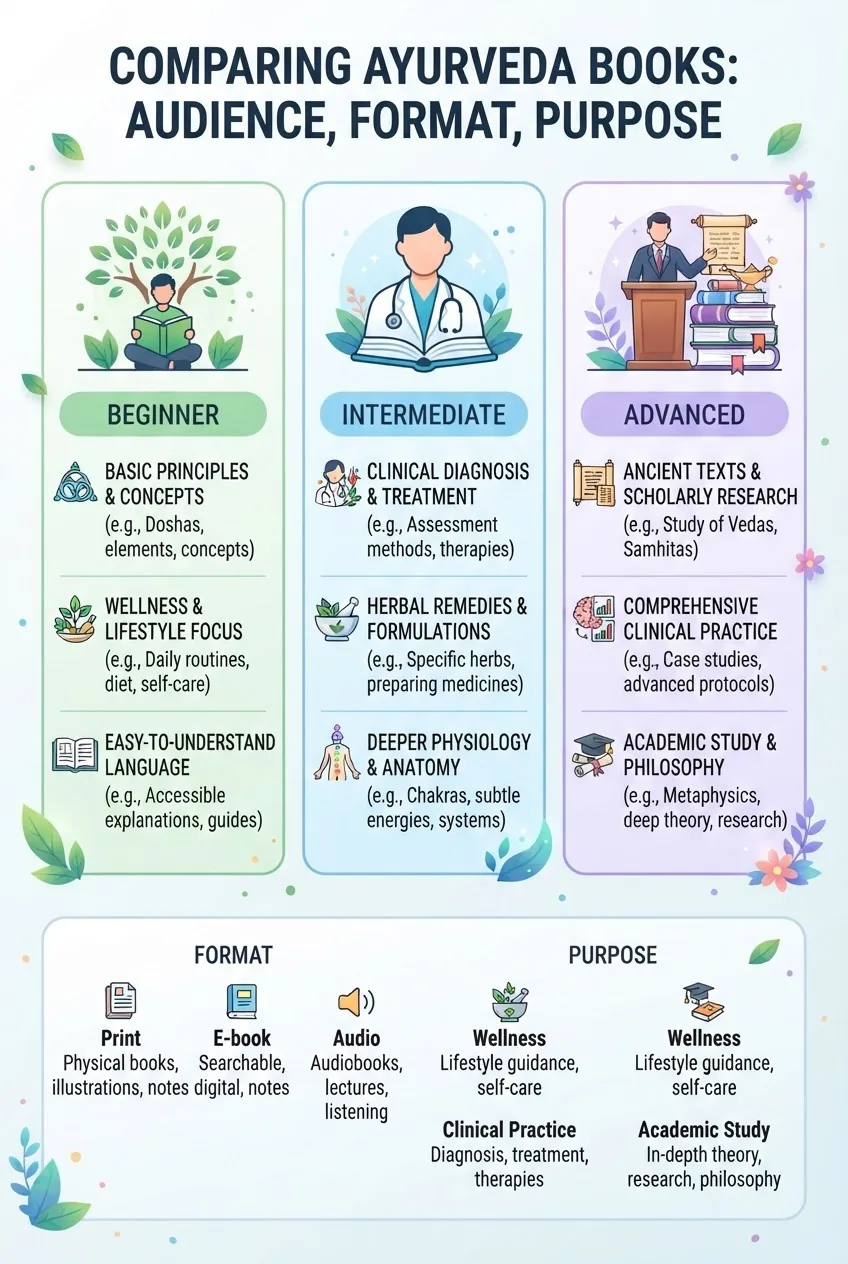
- Define your primary goal. Are you building a daily routine, studying for clinical practice, or researching historical texts? Allocate a priority score: Wellness (1), Clinical (2), Academic (3). Spend 5–10 minutes listing immediate needs.
- Match the audience level to the book. For beginners choose concise home-use guides (100–250 pages). For clinical practice choose practitioner manuals of 400+ pages with dosing tables, and for academic study choose annotated translations and critical editions.
- Check author credentials and edition notes. Verify BAMS/MD credentials, academic affiliation, or recognized vaidyajīvana lineage in the introduction or publisher notes. Prefer editions with Sanskrit transliteration, glossary and cross-references to the Ayurvedic Pharmacopoeia.
- Inspect citations and safety content. Ensure the book cites modern studies or pharmacopeia standards for herbal formulations. If the book prescribes metal-based formulations, ensure it references toxicology and regulatory guidance.
- Decide format and accessibility. If you will use the book in clinic, prefer print or e-book with searchable indexes. For commuting, choose an audiobook that includes clinical summaries rather than raw Sanskrit recitations.
- Trial-read critical sections. Sample the chapters on diagnosis, dosha assessment, and one treatment protocol. Time yourself: if the chapter’s depth meets your learning speed (25–40 minutes to absorb a protocol), it’s a fit.
- Consult a practitioner when in doubt. Practical treatments and prescriptions should be discussed with a qualified clinician—especially for complex therapies. If you need local, hands-on guidance see Find Ayurveda center near me or Find Ayurvedic doctor near me.
Transition: once you choose a format, consider availability, accessibility, and how formats affect study and application.
Formats, Availability, and Accessibility of Ayurveda Books
Understanding formats affects how you learn: print for reference, e-book for searchability, audio for summaries, and library access for cost control. Below is a focused comparison table with purchase and access notes.
| Format | Best for | Pros / Cons |
|---|---|---|
| Print — hardcover/softcover | Clinical reference, libraries | Durable, easy annotation / heavier to carry |
| E-book (PDF/EPUB) | Searchable content, quick lookup | Searchable, often cheaper / variable formatting |
| Audiobook | Overview content, travel learning | Convenient for summaries / not suitable for formulas or dosages |
| Library/Archive access | Academic editions, rare manuscripts | Cost-effective / limited lending periods |
Availability tips: for authoritative classical editions, prefer university presses or publishers with Sanskrit scholars. For pharmacopoeial and formulation standards, consult government sources. When choosing an e-book, verify searchability and an included index.
Transition: now that you can choose, acquire and access books, learn how to integrate them into daily life and clinical workflows.
Integrating Ayurveda Books into Your Practice or Daily Life
This how-to section shows step-by-step application: building routines, selecting herbal remedies, and using books to inform client care or self-care. Each step includes concrete timings, dosages, and examples.
- Establish a 14-day reading and practice cycle. Day 1–3: Read primer chapters on dosha and diagnosis (30–45 minutes/day). Day 4–7: Practice basic assessments (pulse observation, tongue and skin checks) for 10–15 minutes twice daily. Day 8–14: Implement a simple dinacharya drawn from a modern wellness guide: wake time, warm water, oil pulling (gandusha) for 5 minutes, tongue scraping, 5–10 minutes yoga and lunch aligned to dosha-predominant foods.
- Apply a dosha-balancing meal plan for 7 days. Use the following example for balancing a vata tendency: daily ghee 1 tsp in warm porridge; cooked root vegetables 200–300 g per meal; warming spices: 1/4 tsp cumin + 1/8 tsp hing per meal. For detailed meal plans see our dietary resources: Ayurvedic diet principles and nutrition guide and the weight-loss guide referenced earlier.
- Use a practitioner manual for triage decisions. When a book lists red flags (severe dehydration, fever >38.5°C, unexplained bleeding), apply immediate referral protocols: call a medical practitioner and withhold complex herbal or metal-based therapies until clearance. Always record baseline vitals and symptoms before starting any herbal regimen.
- Standardise herbal dosing using pharmacopoeia conversions. For powdered herbs (churna), start with 1–3 g twice daily with warm water for common tonics; for decoctions (kwath) use 50–100 mL twice daily unless the book specifies otherwise. For standardisation and safety thresholds refer to official monographs. Ayurvedic Supplements and Herbal Medicine Explained Guide
- Document case studies and outcomes. Keep a patient log: age, sex, prakriti assessment, presenting complaint, chosen protocol with citations (text and page), start date, objective measures (blood pressure, sleep hours), and subjective outcomes. A typical documentation cadence: weekly reviews for first month, then monthly.
- Combine books with supervised practical experiences. Books teach method; supervised practice builds skill. For supervised training options consult our certification resource: best Ayurveda certification and training courses.
- Use books to plan safe Panchakarma adjuncts. When planning Panchakarma, select protocols from both classical sources and modern clinical guides, and cross-check with local centres for preparatory diet and contraindications. For retreat and centre choices see Panchakarma retreats and wellness centers.
-
Example case study (experience signal): Applying Charaka to a modern case.
Case: a 45-year-old with chronic indigestion and intermittent heartburn (pitta-prone). Approach: used Charaka’s digestive assessment (agni type, ama markers) to identify low jatharagni with ama accumulation; selected a modern practitioner manual that prescribes triphala 1 tsp at night and a 7-day pitta-pacifying diet with cooled meals, plus topical dhara protocols for stress. Outcome over 4 weeks: patient reported 60% symptom reduction and improved sleep. This demonstrates bridging a Sanskrit diagnostic framework with contemporary dosing and measurable outcomes. Always corroborate with clinical testing.
Transition to local therapies where helpful—seek a practitioner for Shirodhara or supervised basti. For locating treatments see Ayurveda massage near me.
Transition: after integrating books into practice, expand your study with supplementary resources and formal training if desired.
Recommended Supplementary Ayurveda Resources and Further Reading
Below are curated supplementary resources: practitioner training, herb guides, compendiums and journals to deepen knowledge beyond core books.
- Ayurvedic Supplements and Herbal Medicine Explained Guide — a practical companion to herbal formulations and dosing.
- best Ayurveda certification and training courses — vetted online courses and credential pathways.
- Ayurvedic practitioner training and certification guide — pathways to clinical practice.
- guide to Ayurvedic herbs powder and herbal supplements — monograph-style herb entries and sourcing.
- Complete Ayurvedic medicine list and herbal formulas guide — extensive formulations index.
- Ayurvedic practitioner training and certification guide — credentials and clinical apprenticeship options.
- Journal subscriptions and archives — subscribe to peer-reviewed journals in integrative medicine and Ayurveda for clinical updates and evidence summaries. For authoritative policy and standards consult external bodies such as the Ministry of AYUSH.
- University archives and museum collections — digital collections often host manuscript scans and critical editions for scholarly study.
- Training retreats and supervised clinics — when hands-on skills like basti or panchakarma are required, consider residential training; compare offerings carefully and verify practitioner credentials. For retreat options see Panchakarma retreats and wellness centers.
- best Ayurveda certification and training courses — for formal education aligned with book study.
Transition: final section summarises why investing in quality Ayurveda books yields long-term benefits for holistic health.
Conclusion: The Value of Ayurveda Books in Holistic Health
High-quality ayurveda books connect ancient clinical wisdom with contemporary health needs. By combining canonical texts (Charaka, Sushruta, Ashtanga Hridaya) with modern practitioner manuals and pharmacopoeia-aligned formularies, you build a reliable, safety-focused foundation for self-care and clinical practice. Use the recommendations and steps above to curate a practical library, document outcomes, and escalate to trained professionals when protocols exceed your scope. Start with a short, 2-week reading and practice cycle, then expand to supervised clinical training as needed.
Note: Ayurveda books provide guidance—not a substitute for personalized medical assessment. If in doubt about complex treatments or herbs, seek a qualified clinician.
Final CTA: Build your starter library this week—choose one classical translation and one modern practitioner manual, document a 14-day practice cycle, and schedule a consultation if you plan to start herbal or Panchakarma therapies.
Common mistakes and how to avoid them (practitioner experience)
I have seen students try to apply powdered classical sutras directly to patients without cross-checking dosage or contemporary safety data—this led to inconsistent outcomes. Always cross-reference classical doses with modern monographs, and never give metal-based medicines without lab-tested preparations and practitioner oversight. I also observed readers buying multiple translations of the same sutra and assuming consensus; instead, compare commentaries and choose editions with scholarly notes.
Checklist: Verify your work
- Chosen one classical text and one modern clinical manual.
- Author credentials verified (BAMS/MD or academic affiliation).
- Cited pharmacopoeia or peer-reviewed references for formulations.
- 14-day practice cycle documented with objective measures.
- Referral plan in place for red flags and complex therapies.
When to call in a professional
Contact a qualified Ayurvedic clinician or medical doctor if you encounter persistent high fever, severe dehydration, unexplained neurological symptoms, or if you plan to start metal-based formulations, Panchakarma, or to treat chronic systemic conditions. Use formal clinical training resources and local clinics for supervised procedures.