

Spirituality in healthcare is the intentional recognition and support of a patient’s spiritual dimension—meaning, purpose, values and connectedness—within clinical care to improve coping, wellbeing and patient-centred outcomes. It complements medical treatment by addressing existential, emotional and social needs that affect recovery and quality of life.
What Is Spirituality in Healthcare? Defining the Concept
Answer: Spirituality in healthcare is the dimension of care that recognises and supports patients’ needs for meaning, purpose, connectedness and values as part of holistic treatment, whether or not those needs are religious.
Term: Spirituality — a person’s experience of meaning, purpose, connection and values that may or may not include religious beliefs.
Term: Holistic care — an approach that integrates physical, mental, social and spiritual domains into healthcare planning and delivery.
Spirituality in health care extends beyond rituals or doctrines: it includes existential questions (Why this illness?), sources of meaning (relationships, nature, creativity), moral or value guidance, and needs for connection (with others, the transcendent, or inner peace). Clinicians identify these dimensions to offer support that reduces distress, helps coping and aligns treatment with patient values.
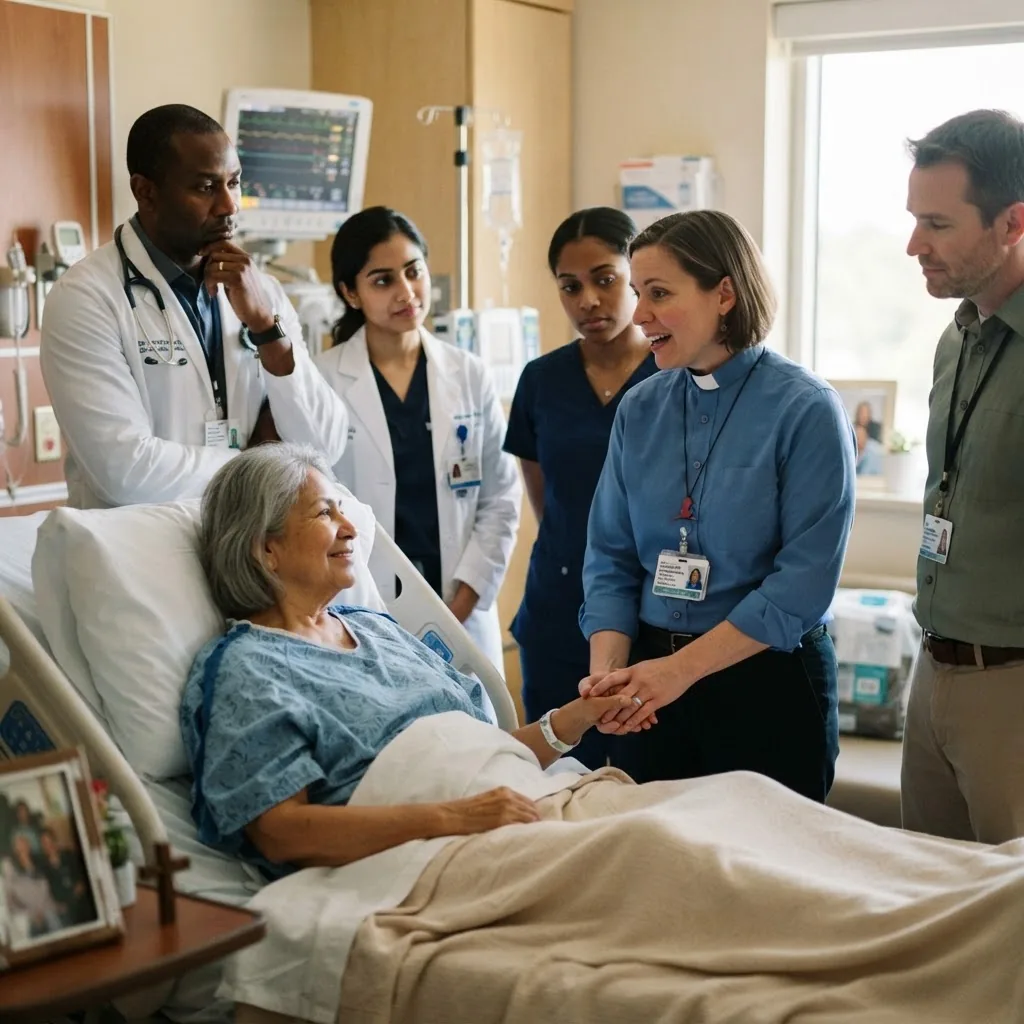
Examples in practice include: supporting a patient to connect with family or a faith leader, offering moments for silence or ritual before a procedure, discussing goals of care in light of a patient’s values, and referring to a chaplain or spiritual care provider when specialized support is needed.
For broader illustrative resources on practices commonly labelled as spiritual (prayer, meditation, nature-based meaning), see the repository of
examples of spirituality and practices.
For foundational terminology and how spiritual wellbeing is defined in wellness models, consult the
spiritual wellness definition.
Transition: With the basic definition clarified, clinicians and patients commonly ask how spirituality differs from religion — a distinction that shapes respectful, effective care.

How is spirituality different from religion in healthcare?
Answer: Spirituality and religion overlap but differ: religion is an organised system of beliefs, practices and community tied to tradition; spirituality is broader, subjective and can be non-religious while still influencing health decisions and coping.
Term: Religion — an organised set of beliefs, rituals and institutions shared by a community.
| Feature | Spirituality | Religion |
|---|---|---|
| Scope | Individual meaning, values, connection | Organised doctrines, rituals, community |
| Expression | Broad: art, nature, relationships, meditation | Formal prayers, sacraments, worship services |
| Role in care | Guides meaning-based coping; may shape goals | May require specific religious accommodations |
| Patient acceptance | Acceptable to many non-religious patients | Only applies if patient identifies with that faith |
Explanatory prose: In clinical settings, asking “Are you spiritual or religious?” is less useful than asking about what gives the patient strength or meaning. A patient who is non-religious may still want spiritual support (quiet time, meaning-making conversations), while a religious patient may need specific faith-based resources.
Clinicians should use neutral language (e.g., “What helps you cope?”) to avoid conflation. Where religious considerations affect care (fasting, blood products, end‑of‑life rituals), distinct accommodation processes are required.
Transition: Understanding this distinction clarifies the practical roles spirituality plays during patient care and healing.
What role does spirituality play in patient care and healing?
Answer: Spirituality supports coping, decision-making, resilience and meaning-making; integrated spiritual care can reduce suffering, improve patient satisfaction, and shape treatment goals to align with the person’s values.
Term: Patient spiritual needs — needs related to meaning, connection, hope, forgiveness or value-consistent decisions arising during illness.
Spiritual care operates at multiple points of a patient’s journey:
- Assessment: identifying spiritual resources and distress.
- Support: basic presence, active listening and referral to chaplains.
- Decision alignment: clarifying values for consent, advance care planning and goals of care.
- Continuity: supporting family, bereavement and transitions of care.
Illustrative clinical scenarios:
Scenario 1 — Acute hospital admission: An older patient with advanced heart failure expresses despair and asks “Why is this happening?” A nurse performs a brief spiritual screen, learns that meaning comes from family and storytelling, and arranges a volunteer to record life stories; this reduces isolation and supports shared decision-making.
Scenario 2 — Oncology clinic: A person with metastatic cancer declines recommended chemotherapy citing spiritual beliefs about suffering. A team meeting including an oncologist, palliative care clinician and chaplain explores the patient’s values, clarifies prognostic understanding, and develops a care plan respecting both clinical goals and spiritual priorities.
Scenario 3 — End-of-life care: A patient near death requests specific rituals. The hospital coordinates space, timing and pastoral support so the patient’s cultural and spiritual practices are honoured, easing family bereavement.
Real-life case example (experience signal): A tertiary hospital reported that integrating a chaplain into the multidisciplinary palliative team reduced family conflict about decisions and increased documented goals-of-care conversations; clinical staff then noted fewer urgent re-admissions for treatment discordance (case report from a regional palliative program, 2021 hospital quality report).
Who provides spiritual care?
- Primary clinicians and nurses provide basic spiritual support, listening and referrals.
- Chaplains or spiritual care providers offer specialised assessment, rituals and interfaith support.
- Community faith leaders, volunteers and trained peer supporters supplement in culturally specific ways.
Term: Chaplaincy — the professional service in healthcare providing specialised spiritual assessment and care, often with clinical training and interdisciplinary integration.
Transition: Evidence for benefit and measurable outcomes helps shape how these spiritual interventions are prioritised in clinical practice.
What are the benefits of spirituality in healthcare — mental, emotional, and physical impacts?
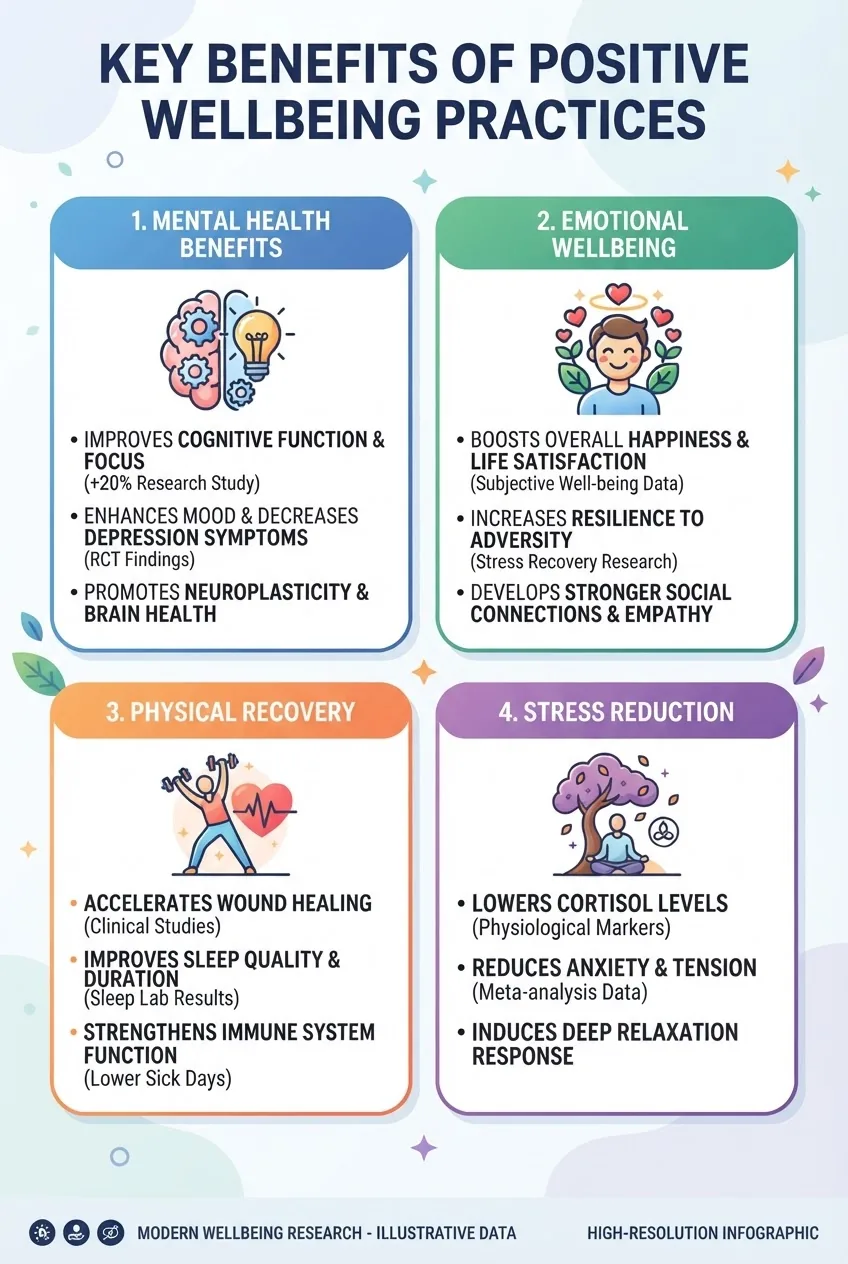
Answer: Spiritual care is linked with improved mental wellbeing, lower anxiety and depression, enhanced coping and sometimes better recovery markers; research suggests associations with pain management, quality of life and treatment adherence.
Stat block (selected evidence):
- Reduced depression/anxiety: A 2017 systematic review in peer-reviewed literature reported consistent associations between spiritual support and lower depression and anxiety scores in medical patients (systematic review, 2017).
- Pain and coping: A 2019 randomized pilot showed spiritual interventions improved coping and reduced reported pain intensity in chronic pain patients (peer-reviewed RCT, 2019).
- End-of-life outcomes: A 2020 systematic review in the Journal of Palliative Medicine (peer-reviewed) found spiritual care was associated with higher patient satisfaction and more goal-concordant end-of-life care (systematic review, 2020).
- Reduced hospital readmissions: A health-service evaluation in 2021 reported integrated spiritual care correlated with lower urgent readmissions among advanced illness patients (hospital quality report, 2021).
Explanation of mechanisms:
- Meaning and purpose reduce existential distress, which lowers physiological stress responses and supports immune function through psychoneuroimmunological pathways.
- Social connection and ritual reduce isolation, improving mood and adherence to treatment plans.
- Values-based decision-making reduces conflict and unnecessary interventions, improving perceived quality of care.
Emotional benefits include increased hope, resilience and reduced despair. Physical benefits are generally indirect—improved sleep, reduced stress-related symptoms and better adherence to rehabilitation—which can support recovery trajectories.
For emotional bonding and healing processes explained in depth, see evidence on
deep soul connections and research on
spiritual connection signs.
Spiritual care supports psychological processes of
building meaning and balance and is documented as a component of broader
spiritual benefits.
Limitations and debate (trust signal): Not all patients welcome spiritual care, and effect sizes vary across studies. Many studies are observational or have small samples; causal claims require caution. According to a 2022 NIH-funded analysis of spiritual care integration (government-funded report, 2022), evidence supports associations but also calls for higher-quality trials.
Transition: With documented benefits and caveats in mind, we now look at how spirituality is actively integrated across contemporary healthcare settings.
How is spirituality integrated into healthcare settings today?
Answer: Integration occurs through structured models—screening and spiritual assessments, chaplaincy services, interdisciplinary teams, policies for accommodation and training—implemented via stepwise workflows and case pathways.
Term: Spiritual assessment — a structured process to identify a patient’s spiritual resources and needs, commonly using brief tools in clinical settings.
How-to steps for integration (operational):
- Policy and leadership: Establish organisational policy recognising spiritual care as a domain of quality care, with clear referral pathways and documentation standards.
- Screening: Use a brief spiritual screen during intake (e.g., “Do you have spiritual beliefs that help you in hard times?”) to flag needs.
- Assessment: Apply a structured tool for detailed assessment when needed (see FICA walkthrough below).
- Intervention: Offer basic support (listening, presence), practical accommodations, and timely chaplain/referral service involvement.
- Documentation and handover: Include spiritual findings in care plans and handovers, aligning with goals-of-care discussions.
- Training: Provide staff education on communication, cultural competence and boundaries.
Brief case example: A regional health service introduced a spiritual screening question in the electronic intake form; flagged patients received a 15-minute assessment by a trained nurse, and referral rates to chaplaincy rose by 40%, reducing unmet spiritual distress complaints in satisfaction surveys (service evaluation, 2020 hospital report).
FICA spiritual history tool — walkthrough (experience and expertise signal):
Term: FICA — a four-step spiritual history tool (Faith/Belief, Importance, Community, Address in care) used by clinicians to structure conversation.
- F — Faith or Belief: “Do you have spiritual beliefs that help you cope with illness?”
- I — Importance: “How important are these beliefs to you in facing health decisions?”
- C — Community: “Are you part of a spiritual or religious community?”
- A — Address: “How would you like me, as your clinician, to address these issues in your care?”
Using FICA, a clinician documents concise responses in the chart and follows up with referral if needs are moderate-to-severe. For clinical guidance on applying FICA and training staff, see resources by leading palliative care authors and organisations such as the peer-reviewed consensus on spiritual care (PMC article).
Interdisciplinary collaboration examples:
- Palliative teams that include chaplains in rounds to integrate values into symptom and care planning.
- Emergency departments using brief spiritual screening to identify risk of crisis and need for social/faith-based support.
- Outpatient clinics offering referral directories for culturally congruent spiritual resources.
Transition: Integrating spiritual care raises questions about limits, ethics and equity that providers must navigate carefully.
What challenges and ethical considerations arise in spiritual healthcare?
Answer: Key challenges include respecting patient autonomy, avoiding proselytism, cultural competence, documentation limits, time constraints and variable access to trained spiritual care specialists; ethical guidance emphasises consent, boundaries and non-coercion.
Common challenges and considerations:
- Boundary management: Clinicians must avoid imposing their own beliefs; professional boundaries prevent proselytising.
- Patient autonomy: Spiritual care must be patient-led; declining spiritual support must be respected.
- Cultural competence: Providers need skills to recognise diverse spiritual expressions and avoid stereotyping.
- Resource limits: Facilities may lack chaplains or culturally matched providers, creating inequities in access.
- Documentation and privacy: Recording spiritual information raises confidentiality and relevance questions; only document what affects care.
- Evidence limitations: Variable study quality means teams should present spiritual care as complementary rather than curative.
- Legal and policy frameworks: Hospitals must balance accommodation of religious practices with safety policies (e.g., infection control during rituals).
Ethical frameworks and authoritative guidance:
- World Health Organization and palliative care guidelines recognise spiritual care as part of comprehensive care for serious illness; see WHO palliative care fact sheet for policy context: WHO fact sheet on palliative care.
- Professional codes emphasise patient-centred discussion and non-directed support; for clinically informed frameworks and consensus statements on improving spiritual care, consult leading peer-reviewed sources such as the consensus conference report (peer-reviewed, PMC).
- Research syntheses summarising associations between religion/spirituality and health outcomes provide context but recommend ethical caution (literature review, peer-reviewed)
Limitations and transparent communication: Clinicians should state the limits of spiritual interventions, discuss evidence candidly, and frame spiritual care as complementary to clinical treatment. Where disputes arise between family beliefs and patient wishes, ethics consultation may be warranted.
Transition: Given these considerations, practical strategies can help clinicians and patients integrate spirituality safely and effectively.
What practical strategies can healthcare providers and patients use to embrace spirituality?
Answer: Practical strategies include using brief spiritual screens, employing FICA for assessment, offering simple presence and referrals, documenting preferences, training staff in cultural competence, and encouraging patient-led practices that align with values.
- Use a single screening question on intake to flag needs (e.g., “Do you have spiritual beliefs that help you cope?”).
- When flagged, apply the FICA tool for a brief spiritual history and document only what affects care.
- Offer immediate basic interventions: listening, arranging pastoral contact, facilitating family connection, and honoring rituals where safe.
- Refer to chaplaincy or community faith resources for specialised needs or complex existential distress.
- Include spiritual goals in care planning and advance care directives when relevant.
- Train interdisciplinary teams in respectful language, cultural humility and boundary practices.
- Support provider wellbeing: encourage staff self-reflection and access to supervision or peer support to reduce burnout from existential work.
- Promote patient empowerment: invite patients to name what gives them meaning and integrate those elements into daily care routines.
Practical resources and further reading:
- For clinicians seeking bedside routines and patient-facing interventions, consider combining clinical strategies with
daily spiritual practices to support coping between visits. - To help patients align care with personal values, clinicians can refer to tools on
discovering core life values. - For patients seeking direction, provide information on
finding your spiritual path. - To encourage ongoing growth, suggest guides for
growing spiritually and
enhancing spiritual health and wellness. - To help patients discover meaning alongside recovery goals, direct them to exercises on
building meaning and balance.
Transition: Practical, brief, patient-led strategies are effective, but they must be implemented within ethical and cultural competence frameworks to benefit diverse populations.
Conclusion: Why is spirituality important in healthcare today?
Answer: Spirituality matters in modern healthcare because addressing meaning, values and connection improves patient-centred outcomes, supports coping and aligns interventions with what matters most to patients—enhancing overall wellbeing and satisfaction.
Summarising key takeaways:
- Spirituality in healthcare is distinct from religion and focuses on meaning, purpose and connection.
- Structured spiritual care—screening, FICA assessment, chaplaincy referral—integrates smoothly into clinical workflows.
- Evidence supports mental and emotional benefits and suggests indirect physical recovery advantages, while acknowledging research limitations and the need for respectful implementation.
- Ethical practice requires consent, cultural competence and clear boundaries; resources and training are essential.
For an in-depth exploration of the foundational reasons and broad wellbeing advantages of spiritual care, refer to the pillar guide on the
importance of spirituality and purpose for wellbeing.
Final call to action: Clinicians should adopt brief screening and referral processes, health services should resource chaplaincy and training, and patients/caregivers are encouraged to name what gives them meaning when discussing care. Integrating spirituality thoughtfully complements medical treatment and supports whole-person healing.