

Ayurveda and weight loss — by the end of this hands-on guide you will have a personalised, dosha-based meal and lifestyle plan, a simple herbal ritual to support digestion, and a 12-week action roadmap. Estimated time: 2–3 hours to prepare your plan and 12 weeks to reliably measure progress. Skill level: beginner to motivated self-manager.
This guide is written as a step-by-step practitioner brief so you can act on the principles immediately and safely.
Before you start
- Tools: kitchen scale (grams), measuring spoons, notebook or digital tracking app, basic spice set (cumin, coriander, turmeric, black pepper, ginger)
- Materials: reliable Triphala powder and standardized Guggul extract if using supplements (see precautions below)
- Baseline measures: weight, waist circumference, resting pulse, daily food log for 7 days
- Medical checks: current medication list, pregnancy/breastfeeding status, known thyroid or metabolic issues
Understanding Ayurveda and Its Role in Weight Loss
Ayurveda frames weight as an outcome of digestion, lifestyle and individual constitution. In Ayurvedic terms, weight gain commonly arises from weakened Agni (digestive fire) and accumulation of Ama (undigested metabolic residue), which alter metabolism and appetite. Classical texts such as the Caraka Samhita and Sushruta Samhita describe weight and constitution through the three doshas and emphasize personalised diet, routine and herbs as therapeutic tools.
Practically, Ayurveda treats weight loss as restorative: strengthen Agni, reduce Ama, and balance the individual’s dosha-specific tendencies. This reduces cravings, improves nutrient partitioning and supports gradual, sustainable fat loss rather than rapid depletion.
What follows is a concrete, stepwise path to apply these principles, with examples and measurements you can follow immediately.
Ayurveda texts and foundational literature are excellent deeper reads if you want theoretical background or primary sources for dosha theory.
Ayurveda training and certification options are listed for readers who want clinical competency beyond self-care.
The Three Doshas and Their Influence on Weight
The three doshas—Vata, Pitta and Kapha—are constitutional patterns that shape digestion, appetite, fat distribution and psychological drivers of eating. Identifying your dominant dosha (Prakriti) lets you select the most effective dietary and lifestyle levers.
| Dosha | Metabolic tendencies | Weight tendencies | Practical diet focus |
|---|---|---|---|
| Vata | Irregular appetite, variable Agni, fast moving systems | Hard to gain; weight fluctuates, muscle loss risk | Grounding, warming, regular meals; healthy oils |
| Pitta | Strong digestion but with heat; efficient metabolism | Moderate weight; can gain visceral fat with excess heat | Cooling foods, moderate portions, avoid inflammatory spices |
| Kapha | Slow digestion, stable but heavy, slow metabolism | Easily gains weight, particularly lower body and fluid retention | Light, dry, warm foods; reduce heavy carbs and dairy |
dosha test for body constitution helps you identify dominant patterns—take the test before changing diet.
dosha body type guide offers detailed phenotype descriptions if you want a quick cross-check.
Next we move from diagnosis to dietary rules that restore Agni and clear Ama—essential for measurable fat loss.
Core Ayurvedic Diet Principles for Effective Weight Loss
These five principles are actionable: each includes quantities, timings and the reason it matters for metabolism.
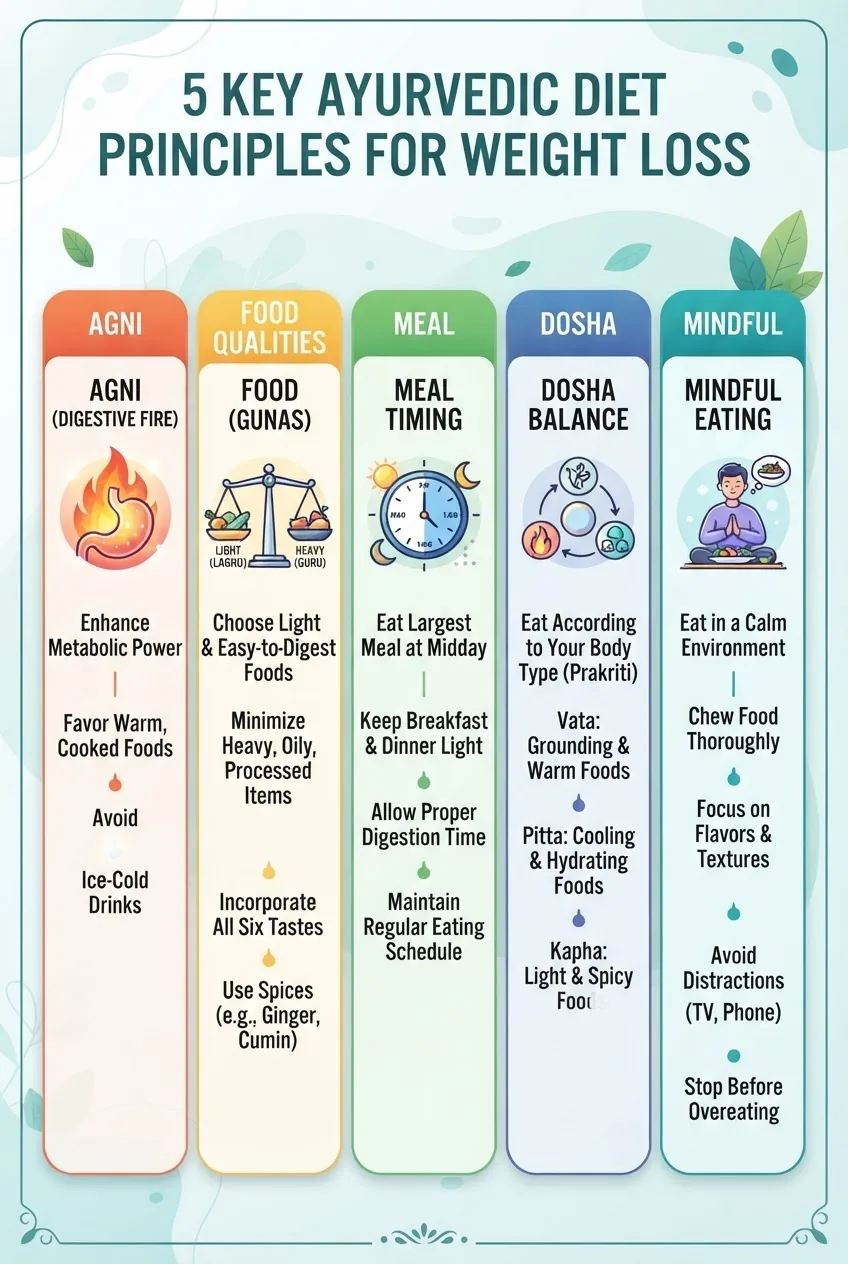
- Prioritise warm, cooked meals to strengthen Agni. Have a warm, spiced breakfast (example: 200 g porridge cooked with 250 ml water, ½ tsp turmeric, ½ tsp ginger) between 7:00–9:00. Warm foods improve enzymatic digestion and nutrient absorption compared with cold/raw meals, reducing Ama.
- Eat on a schedule and stop before full. Meal timing: breakfast 7–9am, lunch (main meal) 12–1:30pm, dinner by 7pm. Use the 80% rule—stop at 80% satiety (about 2/3 to 3/4 cup servings per food group depending on body size).
- Use food qualities (gunas) to choose thermogenic vs. cooling foods. For Kapha reduction favour pungent, bitter, astringent tastes; for Pitta favour sweet, bitter, astringent cooling foods; for Vata favour sweet, sour, salty grounding foods. Example: Kapha dinner plate: 100 g lean lentils, 150 g roasted vegetables, 1 tsp ghee, spices (cumin, black pepper).
- Balance macronutrients with dosha-appropriate emphasis. Aim for 20–30% protein, 30–40% healthy fats, 30–50% low-GI carbohydrates by meal. Practical portion: palm-sized protein, cupped-hand carbs, thumb-sized fat per meal (adjust for body size).
- Mindful eating and digestion rituals. Begin each meal with 1 tsp warm water with lemon for Kapha or plain warm water for Vata/Pitta to awaken digestion. Chew 20–30 times per bite; remove screens during meals. Post-meal: walk 10 minutes at a gentle pace to aid glucose handling.
Ayurvedic diet and nutrition principles expand on macros, portions and substitutions for each dosha.
With those rules in place, you’ll design dosha-specific menus next.
Dosha-Based Ayurvedic Diet Tips for Weight Loss
The following segmented recommendations are practical meal and spice selections you can use for 12-week plans. Each section includes exact spices, portion examples and a sample 1-day menu.

Vata: stabilise and nourish
- Goal: increase grounding calories, regular meals, healthy oils
- Portions: add 1–2 tbsp ghee or sesame oil daily; include 1 cup warm porridge at breakfast (oats or rice), 150 g cooked legumes for lunch, 200 g stewed root vegetables for dinner.
- Spices: ginger ½–1 tsp fresh or powdered with meals; cumin ¼–½ tsp to support digestion.
- Sample 1-day menu: breakfast: warm barley porridge (200 g cooked) + 1 tsp ghee; lunch: mung dal (150 g) + 100 g basmati rice; snack: handful almonds (20 g); dinner: baked sweet potato (200 g) + steamed greens.
- Vata dosha diet recommendations
Pitta: cool and steady
- Goal: reduce heat, moderate portions, emphasise cooling foods
- Portions: avoid spicy fried food; lunch should be the largest meal (~40% of daily calories). Include 150 g cooling vegetables and 100 g whole grains.
- Spices: coriander, fennel and turmeric in small amounts; avoid excess chili and sour pickles.
- Sample 1-day menu: breakfast: rice porridge (200 g) with cardamom; lunch: barley salad (150 g barley) with cucumber and mint; dinner: steamed fish (100 g) or lentil stew with vegetables.
- Pitta dosha diet guide
Kapha: stimulate and lighten
- Goal: increase thermogenesis, reduce heavy carbs, time eating earlier in the day
- Portions: reduce breakfast carbs to 1 small bowl (150 g) of spiced millet porridge; avoid late-night starches — finish dinner by 7pm and limit to 350–450 kcal.
- Spices: black pepper, mustard seeds, turmeric, and ginger to increase metabolic rate. Use 1–2 tsp per meal as a spice blend.
- Sample 1-day menu: breakfast: warm millet with ginger (150 g); lunch: spiced salad with 100 g chickpeas; dinner: sautéed greens with 80 g tofu.
- Kapha dosha-specific diet tips
Practical note: if you are mixed-dosha (e.g., Vata-Kapha), combine the gentle stabilising approach for Vata with light, warming foods for Kapha—prioritise the dominant imbalance.
Pitta dosha diet guide and Vata dosha diet recommendations give extended menus and substitution lists.
Next, herbs and supplements that support these dietary changes are described with safe dosage examples and references.
Key Ayurvedic Herbs and Supplements to Support Weight Management
Herbs support Agni, reduce Ama and can modestly increase metabolic rate. Use them as adjuncts to diet and routine, not as replacements.
According to a 2023 clinical review in the Journal of Ethnopharmacology, some Ayurvedic herbs show measurable effects on lipid metabolism and weight markers, although study sizes vary and effects are modest. Journal of Ethnopharmacology review
- Triphala — use: 1/2–1 tsp (2–3 g) Triphala powder in 150 ml warm water at bedtime, or as a 5 g morning decoction 20 minutes before breakfast twice weekly for 8–12 weeks. Benefits: gentle bowel regulation, supports elimination of Ama. Caution: may increase bowel frequency; avoid during pregnancy without supervision.
- Guggul (Commiphora mukul) — typical standardized extract dose: 250 mg twice daily with meals for 8–12 weeks to support lipid metabolism. Evidence: several trials report improvements in serum lipids; use with monitoring if you have thyroid disease or on statins. According to regulatory guidance, monitor liver function when using concentrated extracts. FDA guidance on supplements
- Ginger and black pepper (Thermogenic duo) — 1/4–1/2 tsp powdered ginger plus a pinch of black pepper with warm water before meals increases digestive heat; safe in culinary amounts.
- Trikatu (black pepper, long pepper, ginger) — traditional thermogenic formula; follow packaged dosing (commonly 500–1000 mg/day in divided doses) and consult a practitioner for higher doses.
Ayurvedic herbal supplements guide provides practical notes on sourcing powders and reading labels.
Ayurvedic herbal formulas lists multi-herb formulations used for metabolic balance.
Ayurvedic supplements and herbal medicine is the pillar resource for dosing ranges, sourcing and contraindications.
Practical herbal ritual (example): Triphala nightly rinse — mix 1/2 tsp Triphala powder (approx. 2–3 g) in 150 ml warm water, steep 5 minutes, strain and sip 20 minutes after dinner only 3–4 nights per week. Track bowel frequency and stool form; reduce use if you experience cramping. This ritual supports gentle elimination and can reduce morning bloating within 2–4 weeks.
For safety, consult authoritative resources: the NCCIH provides integrative medicine overviews and national-level safety guidance. NCCIH Ayurveda resources
When using supplements, follow these rules: start low (50–75% of recommended dose), use for 8–12 weeks, stop if adverse effects, and review interactions with a clinician.
Next: daily habits that reinforce digestion, sleep and movement.
Lifestyle and Daily Practices to Complement Ayurvedic Weight Loss
Ayurvedic daily routine (Dinacharya) harmonises sleep, movement and digestion; adopt the following practical steps to complement diet.
- Wake and hydrate: rise 30–45 minutes before breakfast; drink 200–300 ml warm water with a squeeze of lemon (Kapha) or plain warm water (Vata/Pitta) to stimulate Agni.
- Morning movement: 30–45 minutes of brisk walking or Kapha-reducing cardio for Kapha, 20–30 minutes moderate strength or yoga for Vata and Pitta; aim for 5 sessions per week. Example: Kapha plan — 40-minute interval walk at 6.0–7.0 km/h.
- Massage (Abhyanga): self-massage with 2 tbsp warm sesame oil for Vata twice weekly; 1 tbsp cooling coconut oil for Pitta weekly; 1 tbsp warm mustard or sesame oil for Kapha weekly before shower for 7–10 minutes to increase circulation and lymphatic drainage. Ayurveda massage and therapies
- Sleep schedule: lights out by 10:00pm, wake by 6:00–6:30am; aim for 7–8 hours. For Kapha, prefer slightly earlier activity in the morning to combat inertia.
- Meditation and stress: 10 minutes daily breathwork or mindfulness after dinner reduces emotional eating. Use a 4-6-8 breathing pattern for Pitta calming and a 4-4 box breath for Vata stability.
- Professional guidance: if you have chronic conditions or wish to integrate herbal formulas, consult an Ayurvedic doctor or practitioner for personalised prescriptions.
- Example daily schedule (Kapha weight-loss day): 6:00 wake + warm water; 6:30–7:15 walk; 8:00 breakfast millet porridge; 12:30 lunch main meal; 16:00 small spiced tea; 18:30 light dinner; 19:00 short walk; 22:00 sleep.
- Local centre for tailored care: for on-site lifestyle planning, consider visiting Ayurveda wellness centres near you.
Next we cover common plateaus and how to troubleshoot them with targeted Ayurvedic interventions.
Common Challenges and How Ayurveda Addresses Weight Loss Plateaus
Plateaus commonly arise from persistent Ama, slowed Agni, hormonal shifts or emotional eating. Below are diagnostic checks and targeted interventions.
- Check for Ama: symptoms—morning heaviness, coated tongue, foul breath, sluggish bowel. If present, implement a 7–14 day Ama-clearing protocol: warm water upon waking, light kitchari (mung and rice) for two meals, Triphala at night 3x/week. If Ama persists beyond 2 weeks, consider professional detox options: Panchakarma detox treatments.
- Address slow metabolism: increase thermogenic spices (1–2 tsp trikatu per day in food), add resistance training twice weekly (3 sets x 8–12 reps) to preserve lean mass, and ensure protein at every meal (~20–30 g per meal).
- Emotional eating: keep a 48-hour food and mood log. If emotional patterns emerge, add 10 minutes of morning journaling and consult a therapist or practitioner for mind-body support.
- Medication or endocrine causes: review medications and thyroid labs. If you suspect a medical cause, seek a clinician. For stubborn plateaus, Panchakarma-based intensive detox or tailored herbal protocols may be beneficial—Panchakarma retreats for detox provide deeper interventions under supervision.
Illustrative anonymised case study (practitioner-observed):
“A 42-year-old female with dominant Kapha followed the Kapha-targeted plan (reduced evening carbs, daily brisk walk 45 minutes, spice blend 1 tsp per meal) and a Triphala nightly ritual. Over 12 weeks she lost 7 kg, waist reduced by 6 cm, and reported stable energy. Key change: consistent meal timing and early dinner.” — Senior practitioner case note.
Next, a compact wrap-up and practical checklist to verify your plan.
Conclusion and Integrating Ayurveda Holistically for Sustainable Weight Loss
Ayurveda offers a pragmatic roadmap: identify your constitution, strengthen Agni, reduce Ama, and adopt dosha-appropriate diet, herbs and routine. Small, measurable changes—meal timing, portion control, spice use and daily movement—compound into sustainable weight loss and improved metabolic health. For broader wellness concepts beyond weight, review Ayurveda wellness principles.
Actionable next steps (short checklist):
- Complete a dosha test and baseline measures this week.
- Set meal schedule and prepare a 7-day dosha-appropriate menu.
- Begin a Triphala ritual and ginger-before-meals routine as described.
- Track weight, waist, energy and bowel pattern weekly for 12 weeks.
- If progress stalls, apply the Ama protocol for 7–14 days and review herbs with a practitioner.
Common mistakes and how to avoid them
I’ve seen many clients skip consistent meal timing; they expect herbs alone to work. That fails because herbs assist a weakened Agni—without scheduled food and movement, Ama returns. I also observed people using high-dose supplements without monitoring; I now always advise starting at half dose and recording symptoms for 7 days. Finally, people over-exercise and skip adequate healthy fats—this can raise stress hormones and stall weight loss; aim for 30–45 minutes most days and include 1–2 tbsp of healthy oil daily depending on dosha.
When to call a professional
- Unintentional weight gain/loss >5% body weight in 3 months — see clinician.
- Complex medical history (diabetes, thyroid disorder, pregnancy) — consult an Ayurvedic doctor and your GP before herbal use.
- Persistent digestive pain, severe constipation/diarrhoea, or abnormal lab results — stop supplements and get medical advice.