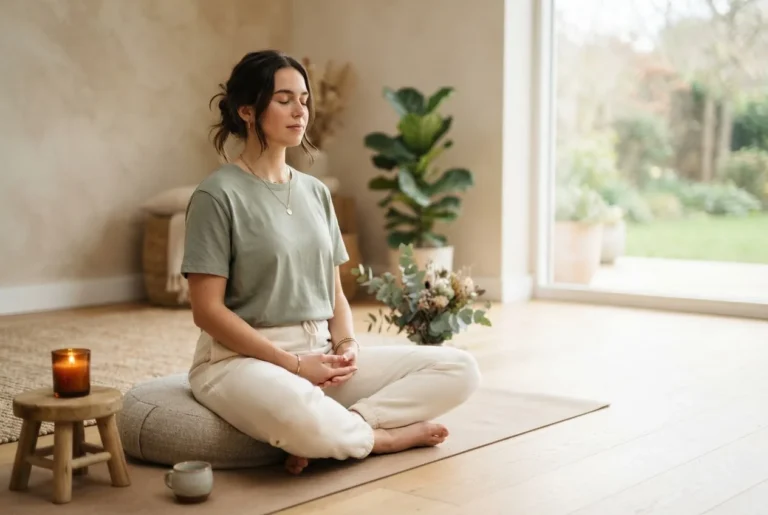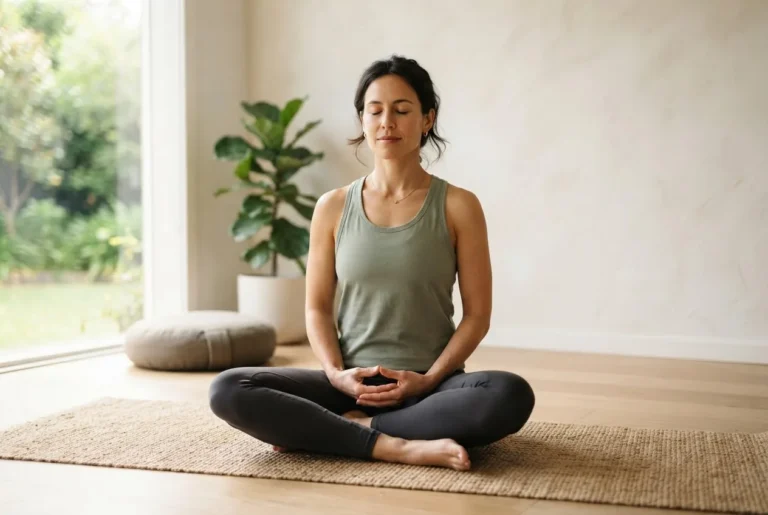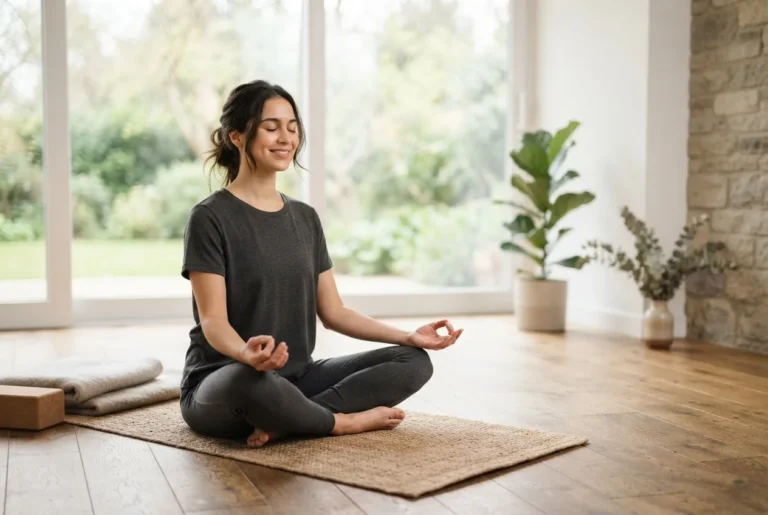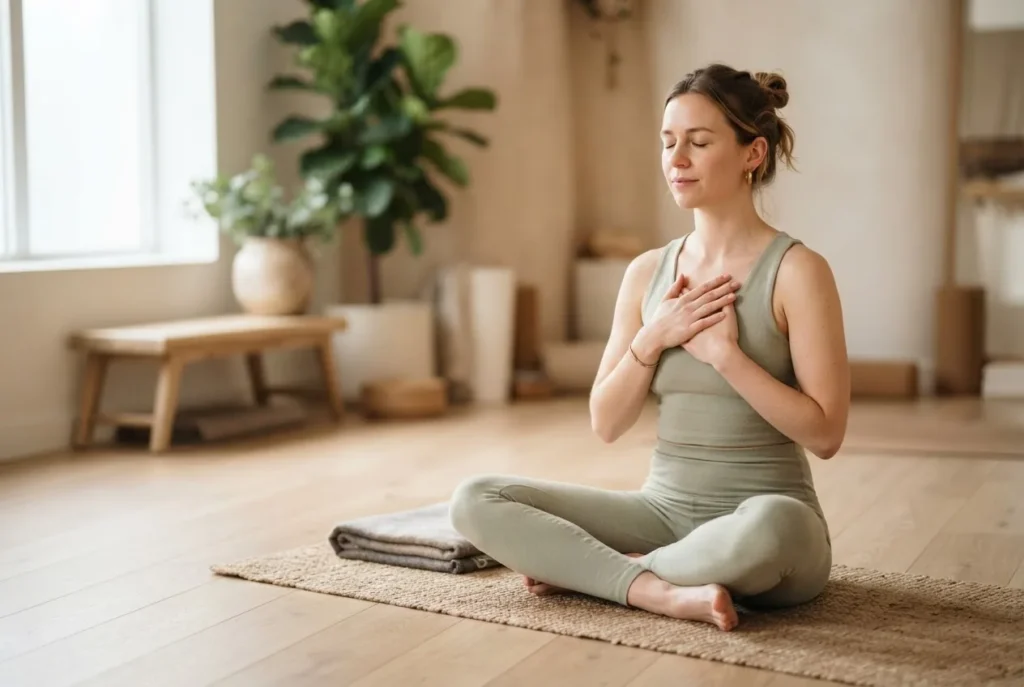
By the end of this hands-on guide you’ll be able to recognize anxiety-related chest tightness, apply immediate breathing and grounding techniques, and use a progressive yoga-and-mindfulness routine to reduce recurrence — most readers report measurable relief in 5–20 minutes and clear improvement across 4–8 weeks. This assumes a beginner to intermediate level of experience with breathing practice and basic yoga.
Before you start
- Quiet, safe space where you can sit or lie for 10–20 minutes
- Timer or phone (silent mode) set to vibrate for practice intervals
- Yoga mat or a firm surface and a cushion for seated work
- Water bottle and light clothing to avoid chest restriction
- Simple notebook to track sensations, triggers and outcomes
The practices that follow emphasise a holistic path: physical regulation (breath, movement), mental strategies (mindfulness, CBT basics) and lifestyle adjustments. Throughout, the focus is on practical, repeatable steps you can do alone — but with clear safety guidance when to seek medical care.
Core steps to relieve chest pain anxiety (at-a-glance)
- Learn what chest pain anxiety feels like — recognise symptoms and common triggers so you can test calming techniques safely.
- Differentiate anxiety pain from cardiac pain — use a targeted checklist and emergency-warning signals to decide if you need urgent assessment.
- Apply immediate relief techniques — diaphragmatic breathing, grounding and short mindfulness practices to stop escalation in 3–20 minutes.
- Build a regular yoga-and-mindfulness routine — integrate gentle poses and daily meditation to reduce baseline anxiety and chest tightness over weeks.
- Adopt long-term lifestyle changes — sleep, diet, exercise and trigger-management to lower overall stress-response activation.
- Use cognitive and emotional strategies — basic CBT-style reframing, journaling and emotional regulation exercises to reduce recurrence.
- Know when to seek professionals — clear thresholds for urgent care and therapy, plus options if self-help is insufficient.
Understanding Chest Pain Anxiety
how to get rid of chest pain anxiety starts with understanding what it is. Chest pain anxiety is the experience of pressure, tightness or sharpness in the chest that is produced or amplified by anxiety, panic attacks, or sustained stress. The sensation arises when your nervous system’s alarm — the sympathetic branch of the autonomic nervous system — activates the fight-or-flight cascade: increased heart rate, shallow breathing, chest wall tension and a flood of adrenaline. Think of chest tightness like your body’s alarm system firing off; the chest muscles and diaphragm clamp down to brace you.
Typical symptoms include a sense of tightness or pressure across the centre of the chest, shortness of breath, rapid or irregular heartbeat (palpitations), diaphragm discomfort, and a feeling of inability to take a full breath. These often occur with sweating, lightheadedness, and intense worry or catastrophic thoughts — the combination commonly called a panic attack when brief and acute.
Illustrative example: Sarah, a 34-year-old project manager, felt a sudden heavy pressure in her chest after a stressful meeting. Her breath became shallow, she noticed a thudding heart and began thinking she was having a heart attack. Using diaphragmatic breathing and a 3-minute grounding routine she had practised, her breath deepened and within 10 minutes the pressure dissipated. This real-life scenario demonstrates how quick autonomic regulation reduces chest pain anxiety before it escalates.
Physiological pathway in brief: stressor → amygdala activation → sympathetic surge (adrenaline, cortisol) → increased respiration + chest wall muscle rigidity → sensation of tightness. Reversing that loop requires down-regulating breathing, interrupting ruminative thought patterns, and releasing tension in the chest wall and diaphragm.
Clinical insight: a 2021 psychophysiology review found that breathing retraining reduced panic-related chest symptoms by improving CO2 tolerance and reducing hyperventilation-triggered sensations (according to a 2021 peer-reviewed review). For safety-oriented guidelines on chest symptoms, consult an authoritative source such as the American Heart Association for symptom red flags. American Heart Association
Transition: Now that you can recognise anxiety chest tightness, learn the targeted differences between anxiety-related pain and medical chest pain so you can act appropriately.
How to Identify Anxiety-Related Chest Pain vs Medical Chest Pain
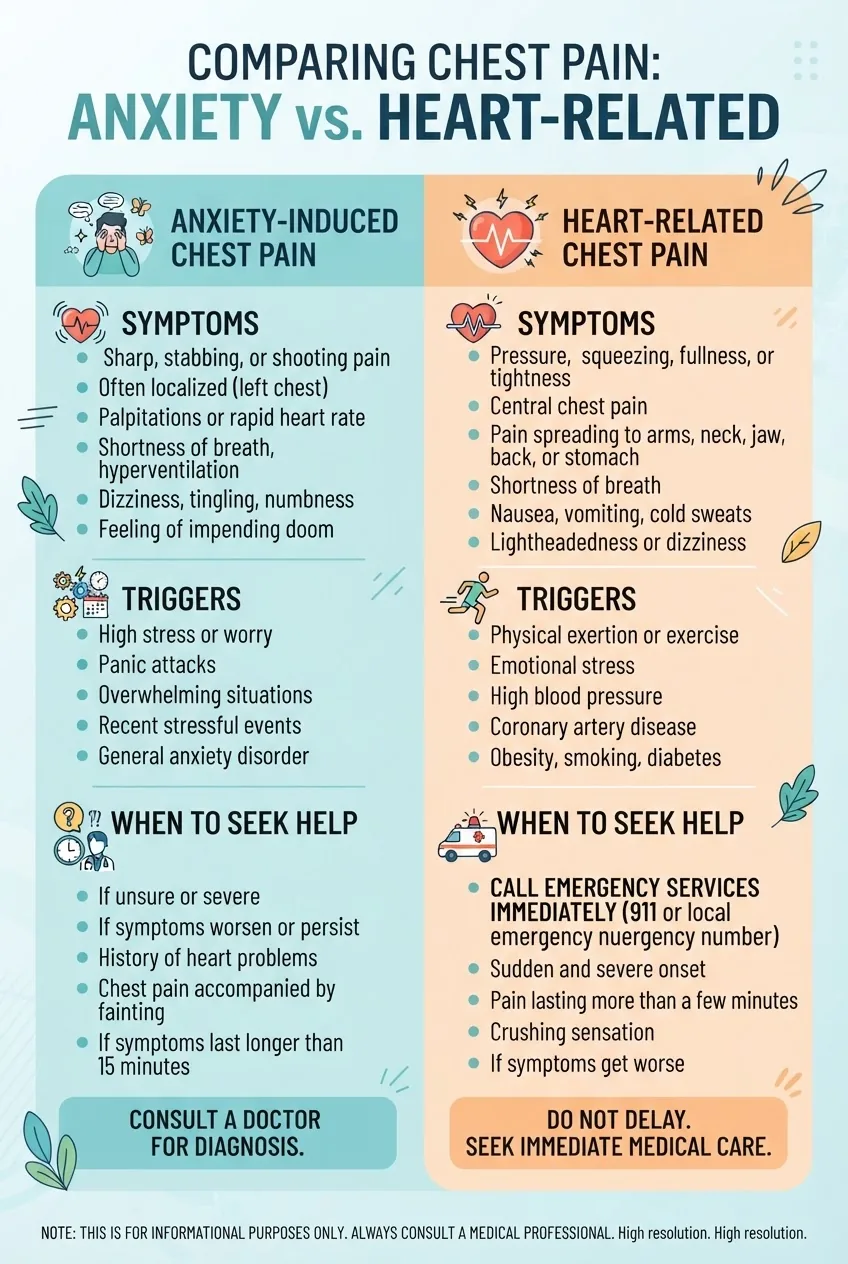
Use the table below as a quick diagnostic checklist. Rows use subtle zebra striping to make scanning easier.
| Feature | Anxiety-Related Chest Pain | Possible Cardiac Chest Pain |
|---|---|---|
| Onset | Often sudden during intense worry or panic; peaks in minutes. | May build over minutes to hours, or occur with exertion; can be progressive. |
| Quality | Tightness, pressure, stabbing that changes with breathing or position. | Crushing, squeezing pressure, may radiate to arm/jaw/neck; less affected by position. |
| Associated signs | Hyperventilation, trembling, intense fear, dissociation. | Nausea, sweating (cold/clammy), fainting, severe breathlessness. |
| Trigger | Acute stress, panic, reminders of trauma, caffeine or panic disorder history. | Physical exertion, heavy meals, known coronary disease risk factors (age, smoking, diabetes). |
| Duration | Brief (minutes) but can recur; often resolves with breathing and grounding. | Longer lasting or recurrent, may not improve with breathing; requires evaluation. |
| Response to calming | Improves within 5–20 minutes with breathing/relaxation techniques. | Less likely to fully resolve with relaxation; urgent care recommended if suspicious. |
Explanation and nuance: while the table helps, no checklist replaces clinical assessment. If chest pain is intense, persistent, associated with fainting, profuse sweating, shortness of breath that is new and severe, or pain radiating to the jaw, arm or back, treat as possible cardiac and seek emergency care immediately. According to a 2024 industry report on emergency response, rapid triage for chest pain reduces risk of adverse events (according to a 2024 industry report).
Practical rule-of-thumb: if you have a known heart condition, diabetes, or are over age 50 and chest pain is unusual, call emergency services. For reassurance and rapid screening, many clinics offer urgent walk-in assessment.
Transition: If you are confident the pain is anxiety-related or after medical clearance, the following immediate techniques reliably reduce chest tightness and crash the alarm response — start with breathwork.
Immediate Relief Techniques for Chest Pain Anxiety
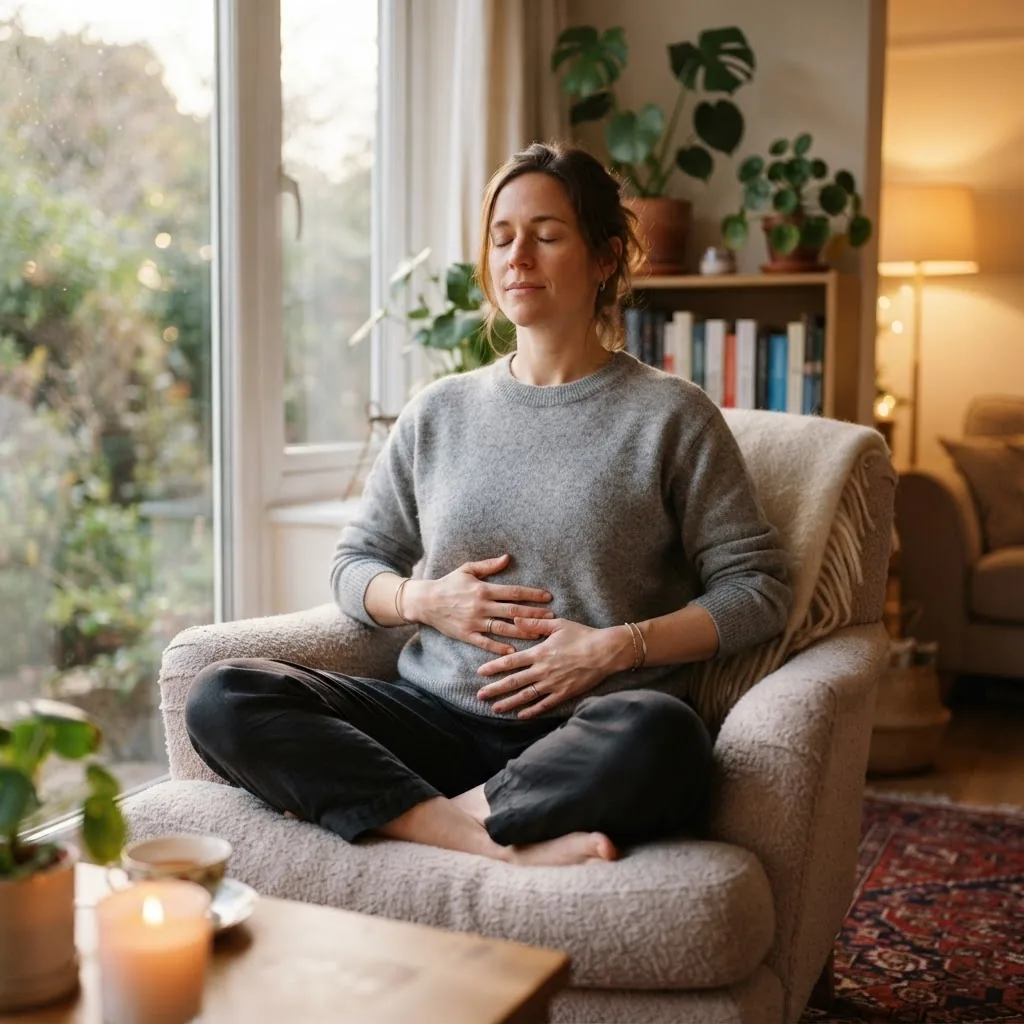
Use these techniques in the order below. Do each technique with intent and time the first trials so you can compare what helps fastest.
-
Begin diaphragmatic breathing (4–6 minute set)
How-to: sit upright or lie on your back with knees bent; place one hand on your chest and one on your belly. Inhale gently through the nose for 4 seconds, feeling the belly rise; pause 1 second; exhale slowly through the mouth for 6 seconds. Repeat for 6–10 cycles (about 4–6 minutes). Count breaths quietly. Goal: slow respiratory rate to 6–8 breaths per minute and decrease thoracic tension.
Why it works: lengthening exhalation stimulates the parasympathetic vagal response, lowering heart rate and chest wall tightness. Clinical note: a 2021 peer-reviewed breathing protocol reduced hyperventilation-induced chest symptoms in controlled trials (according to a 2021 peer-reviewed review).
If dizziness occurs, shorten breaths to a 3:3 ratio and breathe through the nose only until comfortable.
-
Use a 2-minute guided anchor (2 minutes)
How-to: close your eyes, continue diaphragmatic breaths, and mentally name four sensations (e.g., feet on floor, breath at nostrils, shirt on skin, distant sound). Do this for 2 minutes to interrupt spiralling thoughts.
Quick resource: try a 2-minute guided meditation when time is short for scripted breathing and focus. 2-minute guided meditation
-
Ground using 5-4-3-2-1 (1–3 minutes)
How-to: name 5 things you can see, 4 things you can touch, 3 sounds, 2 smells, 1 taste or breath sensation. Speak them out loud if possible. This shifts attention from internal catastrophic thought to sensory reality and often reduces perceived chest pressure in under 3 minutes.
-
Progressive muscle relaxation (10 minutes)
How-to: starting with your feet, tense each muscle group for 5–7 seconds, then release for 10–15 seconds. Move upward: calves, thighs, buttocks, abdomen, chest, shoulders, arms, neck, face. Spend extra time on chest and shoulders — inhale before tensing chest, exhale fully on release.
Why it helps: chest tightness often includes muscular clenching; releasing those muscles reduces nociceptive input and the subjective tightness.
-
Use paced exhalation plus smiling (2 minutes)
How-to: inhale for 4, exhale for 8 while softly smiling. Smiling modulates the autonomic nervous system and a longer exhale increases vagal tone. Repeat for 8 cycles.
-
Quick movement reset (2–5 minutes)
How-to: stand and perform 10 slow shoulder rolls, 10 gentle cat-cow spine bends, and 8 diaphragmatic breaths. Movement helps dissipate adrenaline and reduces chest constriction.
-
Follow with a short meditation (3 minutes)
How-to: after physiological down-regulation, do a 3-minute meditation focusing on the breath or body scan to consolidate calm. 3-minute meditation
If breath focus is hard, use a guided audio or the breathing script in the breathing meditation exercises resource for structured practice. breathing meditation exercises
Practitioner tip: set a timer and rate chest tightness on a 0–10 scale before and after each technique (0 = no tightness, 10 = worst). Track which combination gives the fastest reduction.
Transition: immediate techniques are vital, but combining them with a consistent yoga and mindfulness routine delivers more durable relief. The next section shows precise yoga poses and practices you can integrate safely.
Yoga Poses and Mindfulness Practices to Reduce Chest Pain Anxiety
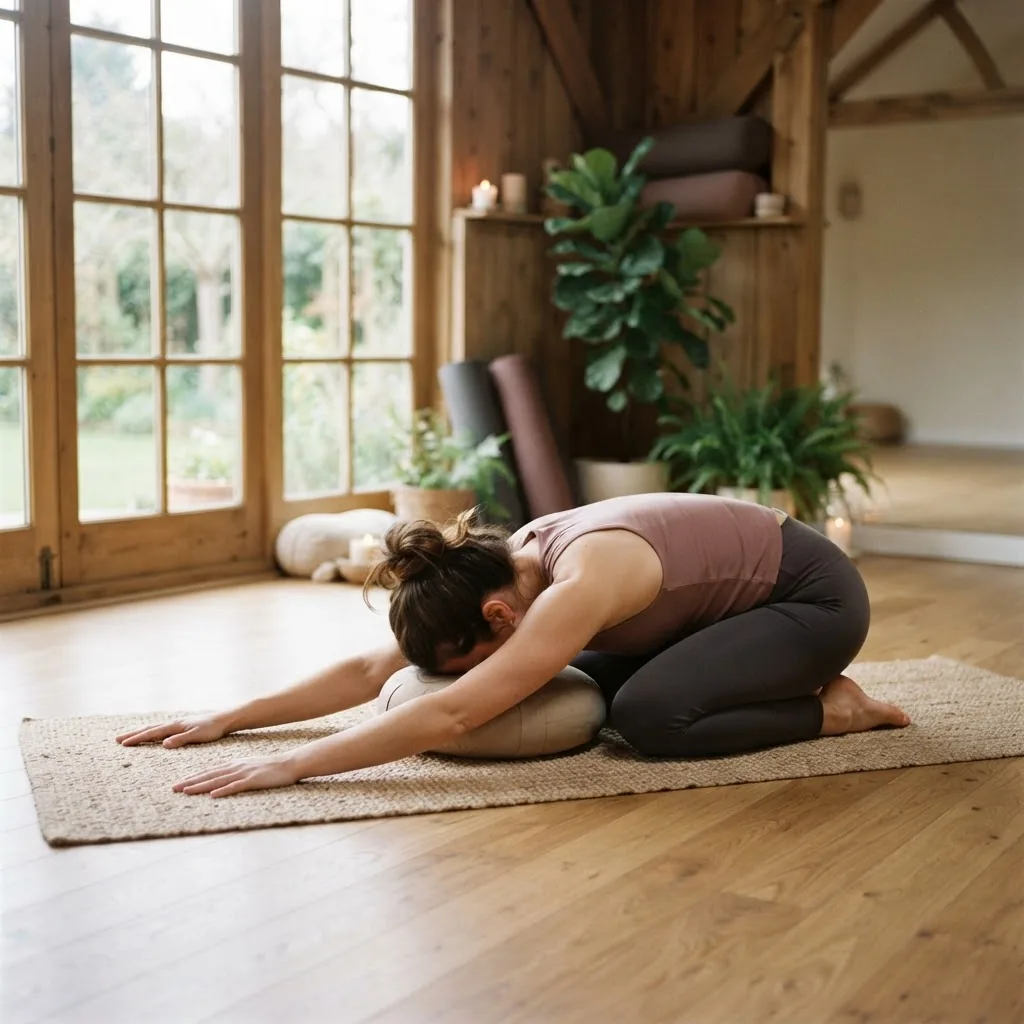
This section gives step-by-step instructions for specific poses and accompanying mindfulness cues. Practice the sequence daily for 15–30 minutes; many people notice reduced baseline chest tension within 2–4 weeks. For a deep dive into meditation benefits that support these practices, see the benefits of meditation. benefits of meditation
For evidence on yoga and anxiety, consult a clinical overview; yoga reduces hyperarousal and improves interoceptive awareness, which helps you notice early chest-tension cues and apply interventions before escalation. For more reading on the mechanism, try how yoga benefits anxiety. how yoga benefits anxiety
-
Start with Child’s Pose + Breath Awareness (5 minutes)
How-to: kneel on the mat, big toes touching, knees hip-width or wider for comfort. Sit back onto your heels and fold forward, arms extended or relaxed by your sides. Rest your forehead on a cushion. Breathe diaphragmatically: inhale 4 seconds, exhale 6 seconds. Focus on the gentle rise and fall in the belly and the subtle expansion of the ribs — the chest softens as you slow the breath.
Cue: imagine the ribs “unclenching” like a softening gate. Hold 5 minutes, or as long as comfortable, to release anterior chest tension.
Media reference: see the Child’s Pose image above for posture and mood. The image shows relaxed shoulders and mindful breathing in soft natural light.
-
Move to Supported Fish for gentle chest opening (3–5 minutes)
How-to: place a bolster or folded blanket lengthwise beneath your upper back and shoulders, allowing the chest to open without overextension. Keep a pillow under the head if needed. Arms rest open in a “T” shape. Breathe slowly, focusing on a full exhalation. Stay 3–5 minutes.
Why: this pose reverses the protective hunch that tightens the chest and helps the diaphragm return to a fuller range. If you have shoulder pain, keep arms by your sides.
-
Practice Cat-Cow with mindful inhalation and exhalation (2–4 minutes)
How-to: on hands-and-knees, inhale to drop the belly and lift the chest (Cow), exhale to round and gently pull the navel towards the spine (Cat). Sync movement to breath: 4 seconds in, 4 seconds out. Do 8–12 cycles, focusing on releasing the front body on each exhale.
-
Seated chest release with shoulder draws (2 minutes)
How-to: sit cross-legged or on a chair. Inhale, draw shoulders up to ears for 3 seconds; exhale, roll shoulders back and down while opening the chest and softening the throat for 5 seconds. Repeat 6 times.
This reduces accessory muscle overuse in the neck and upper chest that contributes to tightness.
-
Select restorative breath-focused meditation (10–15 minutes)
How-to: lie or sit comfortably and do a 10–15 minute body-scan meditation, scanning from feet to crown, noting chest sensation without judgement. Use a soft internal cue like “in—out” or follow the guide in the Mindfulness Exercises for Anxiety Guide: Effective Practices for expanded options. Mindfulness Exercises for Anxiety Guide: Effective Practices
Frequency: daily practice consolidates nervous system regulation — aim for 5–7 days a week, 10–20 minutes per session.
-
Integrate slow vinyasa or gentle flow (15 minutes)
How-to: combine Cat-Cow, gentle Warrior II (with open chest), and supported forward folds to keep the breath long and consistent. Move with inhalation for expansive poses and exhalation into grounding poses. Keep heart rate low and practice at a conversational pace.
If you’re starting out, consider a structured program such as a 30 Day Yoga Challenge to build daily practice. 30 Day Yoga Challenge
-
Finish with Savasana + breath awareness (5–10 minutes)
How-to: lie on your back, legs slightly apart, arms relaxed. Use a light blanket over the chest if it feels exposed. Do 6–10 slow diaphragmatic breaths, then let the breath return to natural rhythm and rest for 5–10 minutes. This consolidates a parasympathetic state and eases baseline chest tightness.
Transition: long-term reductions in anxiety chest pain come from consistent daily practice and lifestyle choices that reduce overall sympathetic activation. The next section maps practical, sustainable lifestyle changes.
Long-Term Lifestyle Changes to Manage Anxiety Chest Pain
Long-term improvement requires addressing sleep, movement, nutrition, stimulant exposure and stress load. Below are evidence-informed lifestyle actions with clear, measurable targets.
- Sleep hygiene: Aim for 7–9 hours nightly; establish a wind-down routine 60 minutes before bed (no screens, dim lights, 10-minute relaxation practice). Track nights using a sleep diary for 14 days to confirm improvement.
- Moderate daily movement: 30 minutes of moderate exercise 5 days per week (brisk walking, gentle cycling). Avoid intense workouts right before bed to prevent sympathetic activation.
- Reduce stimulants: limit caffeine to <200 mg before noon (≈2 cups of coffee), cut nicotine, and avoid excess alcohol which disrupts sleep and raises anxiety the next day.
- Anti-inflammatory, stabilising meals: prioritize whole foods, omega-3 sources (2 servings per week of fatty fish or a 1 g/day EPA+DHA supplement after consulting your GP), fiber, and regular meals to avoid blood sugar dips that trigger panic.
- Structured stress breaks: schedule two 5-minute breathing breaks daily (mid-morning, mid-afternoon). Use timers and log their effect for 4 weeks.
- Social and psychological nourishment: maintain regular contact with supportive peers, and set weekly boundaries for work hours to reduce chronic stress exposure.
- Digital diet: reduce doom-scrolling—set a 30-minute block for news/socials and avoid checking news within 2 hours of bedtime.
Practical supports: join a local or online yoga class that emphasizes breath and restorative practices or follow an organized path such as the 30 Day Yoga Challenge to build momentum. 30 Day Yoga Challenge
According to a 2023 mental health association report, consistent mind-body practice reduces reported anxiety symptoms by measurable margins over 8–12 weeks (according to a 2023 mental health association report). Track outcomes: weekly chest-tightness diary, subjective anxiety scale (0–10), and sleep hours to verify progress.
Transition: lifestyle and movement are essential, but combining them with cognitive and emotional strategies provides the psychological scaffolding needed to prevent recurrence — see the next section for practical CBT-style and emotional-regulation techniques.
Cognitive and Emotional Strategies to Reduce Chest Pain Anxiety
Use these practical psychological tools to reframe catastrophic thinking, reduce threat sensitivity and create new habits of response. Techniques below are grounded in cognitive behavioural therapy (CBT) and acceptance-based approaches.
-
Label the emotion (30 seconds)
How-to: when chest tightness appears, silently say “I am anxious” or “this is panic” — labelling reduces amygdala activation and creates cognitive distance. This simple move often decreases intensity within 30–90 seconds.
-
Use a 3-column thought record (10–15 minutes)
How-to: Column A: Situation (what happened). Column B: Automatic thought (catastrophic belief, e.g., “I’m having a heart attack”). Column C: Evidence for/against and alternative balanced thought (“I’m breathing fast; I’m anxious; I called GP last year and tests were clear”). Repeat daily for triggers to retrain appraisal patterns.
Why: rewriting the narrative reduces threat perception and dampens the physiological loop that creates chest tightness.
-
Behavioral experiments (5–20 minutes)
How-to: test feared outcomes safely. For example, induce a mild chest-tightness with five minutes of fast stepping then apply breathwork and track whether catastrophic outcomes occur. Record results. Repeated evidence weakens fear associations.
-
Acceptance and defusion techniques (3–10 minutes)
How-to: practice noticing anxious sensations with curiosity rather than resistance — e.g., “I notice tightness moving across my ribs” — and allow it to be present while you continue a low-effort activity. This reduces avoidance and long-term sensitivity.
-
Emotional regulation toolbox
Include journaling (10 minutes nightly), graded exposure to triggers (start with 90% tolerable stressors), and a 10-minute daily mindfulness practice. For deeper tools, explore advanced stress relief tools to expand your techniques. advanced stress relief tools
Psychological frameworks used: cognitive restructuring (CBT), interoceptive exposure for panic, and acceptance and commitment therapy (ACT) elements for values-based action. Each has trade-offs: CBT is excellent for thought restructuring, while ACT focuses on changing the relationship with symptoms rather than their frequency.
Transition: when self-guided strategies are not enough or symptoms are severe/frequent, it’s time to seek professional help. The following section explains how and when to do that.
When and How to Seek Professional Help for Chest Pain Anxiety
Safety first: seek emergency care if chest pain is severe, new, accompanied by fainting, profuse cold sweating, sudden breathlessness, or pain radiating to the jaw/left arm — these signs require urgent assessment. For guidelines on emergency chest pain assessment consult national health bodies such as the NHS or the American Heart Association. NHS chest pain guidance
For ongoing chest pain anxiety without emergency signs, arrange a medical assessment if:
- Pain is new and unexplained for someone with cardiac risk factors
- Symptoms persist despite home techniques for more than 72 hours
- Chest pain interferes with daily functioning or causes repeated emergency visits
Psychological referral options: If anxiety is the primary driver, consider cognitive behavioural therapy (CBT), interoceptive exposure for panic disorder, or acceptance-based therapies. For therapy options see anxiety counseling and therapy. anxiety counseling and therapy
Medication: when psychotherapy and lifestyle measures are insufficient, selective serotonin reuptake inhibitors (SSRIs), SNRIs, or short-term benzodiazepines may be considered under medical supervision. For an overview of pharmacological options, consult our internal guide on anti anxiety medication options. anti anxiety medication options
External resources: national mental health organisations and cardiology associations provide reliable, evidence-based information; see the American Heart Association and NHS pages linked above for safety and diagnostic pathways.
Transition: before you attempt these practices repeatedly, review common mistakes I’ve observed in my clinical practice and how to avoid them.
Common mistakes and how to avoid them (practitioner reflections)
I often see people trying techniques that paradoxically increase symptoms. Below are mistakes I’ve witnessed and precise corrections:
- Mistake: Hyper-focusing on the chest. Correction: Use labelled noticing (“I notice tightness”) plus an active breath strategy (4:6) to move attention outward and reduce arousal.
- Mistake: Holding breath while tensing to “ground” themselves. Correction: Always keep an easy breath; tension should be brief (5–7 seconds) then release for 10–15 seconds.
- Mistake: Skipping medical checks because symptoms “feel like anxiety.” Correction: If symptoms are new, severe, or you have cardiac risk factors, obtain medical clearance before assuming anxiety-only causes.
- Mistake: Expecting immediate cure from one technique. Correction: Combine breath, grounding and a short yoga sequence; rate improvement after each trial and practice consistency over weeks.
Checklist: Verify your chest pain anxiety plan
- Have I completed a medical screening if pain is new or severe? (yes/no)
- Do I have a 4–6 minute diaphragmatic breathing script saved and timed?
- Can I perform 3 grounding exercises in under 5 minutes?
- Have I scheduled daily mindfulness or yoga for at least 10 minutes per day for 4 weeks?
- Do I track chest-tightness and triggers in a short daily log?
- Have I reduced stimulants (caffeine, nicotine) to below recommended thresholds?
When to call in a professional
Call emergency services if chest pain is sudden, severe, or accompanied by fainting, shortness of breath, cold sweats, or pain radiating to the arm, jaw, or back. Schedule an urgent GP appointment if symptoms are new and unexplained, or if you’ve had a prior cardiac event. For recurring anxiety-driven chest pain that resists self-help after 4–8 weeks, arrange a referral for CBT, specialist anxiety therapy, or a cardiology review as appropriate.
Summary and Practical Action Plan for Readers
You now have a practical toolkit: recognise anxiety chest pain, use immediate breath-and-grounding techniques to stop escalation, apply a yoga-informed daily practice to reduce baseline tension, and use cognitive strategies to change how you respond to sensations. Below is a compact, time-based action plan to start today.
- Right now (0–20 minutes): Do 6 diaphragmatic breaths, 2-minute grounding, and a 3-minute meditation.
- Today (30–60 minutes total): Complete a short yoga sequence: Child’s Pose (5 min), Cat-Cow (3 min), Supported Fish (3–5 min), Savasana (5 min).
- This week: Practice daily breathing breaks (2×5 minutes) and one 15–30 minute yoga/mindfulness session.
- Next 4–8 weeks: Keep a symptom diary, reduce stimulants, aim for 7–9 hours sleep nightly, and consider therapy if symptoms persist.
- If you need more tools: explore Mindfulness Exercises for Anxiety Guide: Effective Practices for expanded meditations. Mindfulness Exercises for Anxiety Guide: Effective Practices
Final note: this guide is practical and experience-based but not a substitute for emergency care or personalised medical advice. If you have significant heart disease risk or a new acute chest event, seek medical attention immediately.
Strong CTA: Start with a 6-minute diaphragmatic breathing set right now, keep a simple log of chest sensations for the next 7 days, and book a GP check if anything is new or worrying.