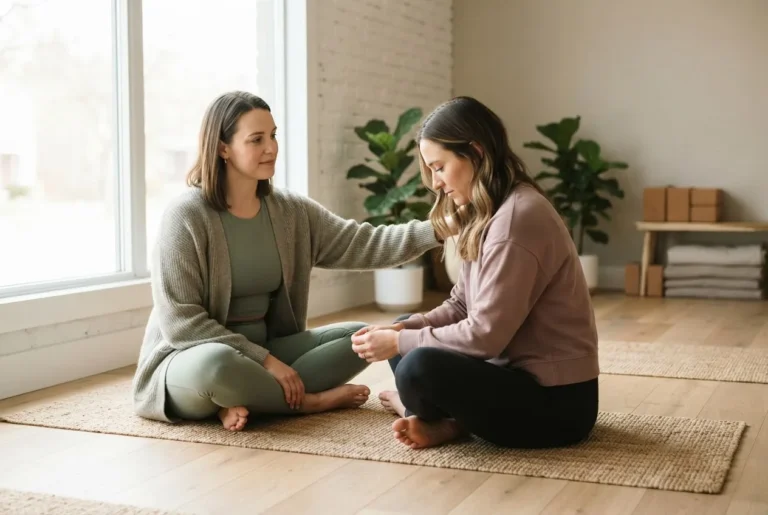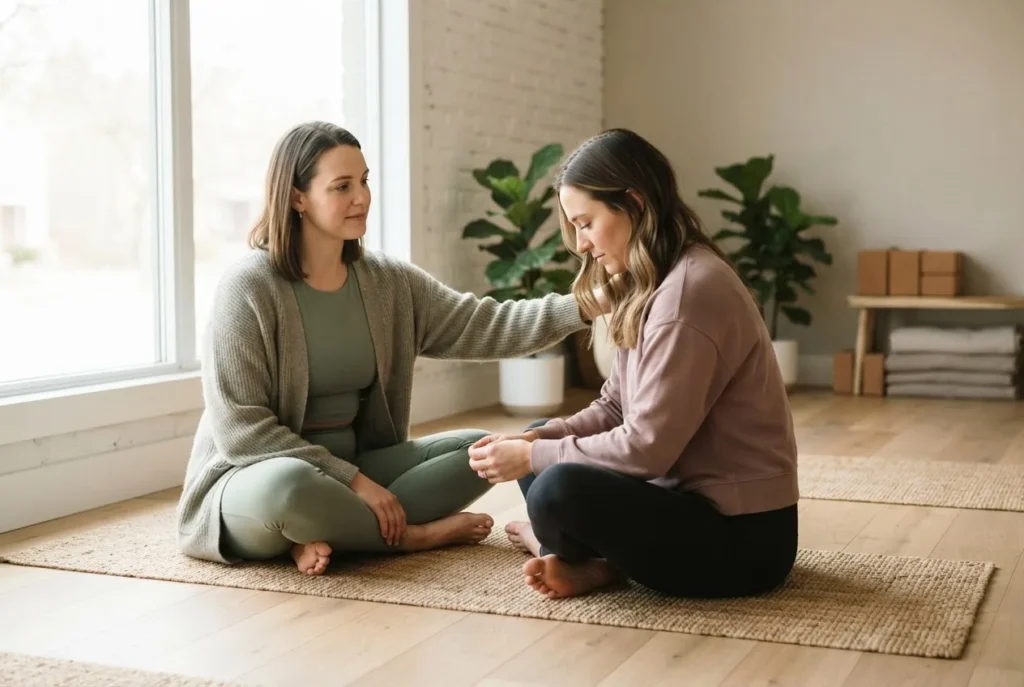
how to help someone with anxiety: by the end of this hands-on guide you’ll be able to provide immediate calming support, use proven communication steps, and set up a practical long-term support plan. Expect to read and practise the core steps in about 60–90 minutes; skill level required: beginner (no clinical training needed).
Before you start
- Comfortable, private space (quiet room or corner)
- Phone with emergency numbers saved (local crisis line, 000/112 if in imminent danger)
- Timer or watch (for timed breathing and grounding steps)
- Water and a lightweight blanket or shawl
- Notebook for follow-up notes and observations
Core actions are organised so you can practice them step-by-step. Use the numbered plan below as your operating checklist, then read the expanded H2 sections for background, how-to details, and resources.
- Notice early signs and act — observe physical and behavioural cues, approach gently within 30–60 seconds, and ask permission to help.
- Create immediate safety and grounding — use space, touch (if consented), and a simple 3–5 minute breathing routine to reduce activation.
- Use active listening and validation — reflect content and emotion, avoid minimizing language, guide to small next steps.
- Apply short-term calming tools — grounding, breathing, and gentle movement tailored to the person’s needs for 5–15 minutes.
- Plan follow-up — agree on next actions: rest, longer practice, professional referral, or check-in time within 24–72 hours.
- Support ongoing management — help set routines, encourage evidence-based practices, and maintain boundaries to avoid caregiver burnout.
Transition: First, understand anxiety as a condition so you can spot warning signs reliably and respond with confidence.
Understanding Anxiety and Its Impact
Anxiety is the body’s alarm system reacting to perceived threat; sometimes the alarm goes off when there is no real danger. Common anxiety symptoms include racing heart, shallow or rapid breathing, sweating, trembling, stomach upset, and difficulty concentrating. Emotional effects often include excessive worry, irritability, feelings of dread, or an urge to escape a situation.
Physical signs of anxiety can look like a panic attack: chest tightness, shortness of breath, lightheadedness and a strong sense of impending doom. I use the analogy that “anxiety is like a smoke alarm going off unnecessarily” — loud and urgent but not always signalling fire. That helps caregivers separate urgency from actual medical danger.
According to a 2023 report by the National Institute of Mental Health, anxiety disorders affect a substantial percentage of adults annually; observe frequency and severity to decide between supportive care and professional intervention. For acute risk indicators (self-harm, inability to care for self), escalate immediately to emergency services.
Examples of common anxiety triggers include crowded spaces, deadlines, unexpected change, health concerns, and sensory overload. Some people show avoidance behaviours (cancelled appointments) while others become hypervigilant or irritable. Recognising patterns helps you tailor support rather than delivering generic comfort.
Transition: Next, learn a concise checklist to recognise when someone needs help so you can move from observation to action quickly and clearly.
How to Recognize When Someone Needs Help with Anxiety
- Rapid physiological change — heart racing over 100 bpm, breath rate >20/min, shaking or sweating. These are immediate cues to slow things down.
- Behavioural changes — sudden withdrawal, pacing, fidgeting, or cancelling plans repeatedly; note frequency and context.
- Verbal cues — statements such as “I can’t do this,” “I’m going to lose control,” or repeated catastrophising. Treat these as invitations to listen, not to argue.
- Cognitive symptoms — inability to focus, persistent worry, intrusive “what if” thoughts that interfere with decision-making for 30+ minutes.
- Functioning decline — missed work, sleep disruption over several days, or neglecting self-care; these suggest the need for longer-term support.
- Signs of panic attack — breathlessness, choking sensation, chest pain combined with severe fear; if uncertain, treat as medical until ruled out.
- Safety red flags — talk of self-harm, suicidal ideation, or harm to others; call emergency services immediately.
Transition: Once you recognise the need, move into immediate calming steps designed to reduce physiological arousal safely and respectfully.
Immediate Ways to Calm Someone with Anxiety
This is a hands-on, step-by-step rescue kit for the first 0–20 minutes when someone is anxious or having a panic attack. For each step use timing and clear, simple language.
-
Approach calmly and get consent (0–30 seconds)
– Step: Stand at a respectful distance, speak softly: “I’m here. Can I sit with you?” If they say no, offer to be nearby. Consent preserves control and reduces escalation. -
Assess safety and medical risk (30–60 seconds)
– Step: Ask two quick questions: “Are you safe right now?” and “Do you need medical help?” If they mention chest pain or fainting, call emergency services. -
Ground the person in the present (1–3 minutes)
– Step: Use a 5-item grounding script: “Name five things you can see, four you can touch, three you can hear, two you can smell (or like), one thing you can taste.” Keep it gentle and paced. Repeat once if needed.
– Tip: Use visible objects rather than abstract prompts for faster effect. -
Guide 4-7-8 style breathing or box breathing (3–6 minutes)
– Step: Offer a timed breathing: inhale 4 seconds, hold 4 seconds, exhale 6–8 seconds; repeat for 4 cycles. If 4-7-8 feels too long, use box breathing: inhale 4, hold 4, exhale 4, hold 4.
– Resource link: breathing exercises for relaxation -
Create a safe micro-environment (3–10 minutes)
– Step: Reduce stimulation—dim lights, move away from crowds, remove strong smells. Offer water and a blanket. Keep speech low and slow.
– If helpful, offer a tactile anchor (squeeze a stress ball or hold their hand) only with explicit permission.
-
Use progressive attention redirection (5–15 minutes)
– Step: Shift attention in small, manageable steps: counting backwards from 100 by 7s (stop if it frustrates), describing an object in detail, or naming favourite songs. Keep each exercise 2–5 minutes max. -
Apply a grounding touch sequence (if consented, 1–3 minutes)
– Step: Place your hand on their shoulder or hold their hand for 30–90 seconds. Say, “I’m here — you’re safe with me right now.” Stop if they withdraw. -
Offer micro-choices to restore agency (2–5 minutes)
– Step: Give two simple options: “Would you like water or breath with me?” or “Do you want to sit in silence or talk about what happened?” Limiting choices reduces overwhelm. -
Document immediate responses and plan a follow-up (5 minutes)
– Step: After things calm, note what triggered the episode, what worked, and agree a check-in time (suggest within 24–72 hours). This helps pattern recognition and planning. -
Escalate if needed (anytime)
– Step: If symptoms persist past 20–30 minutes, or there is chest pain, fainting, confusion, or suicidal ideation, call emergency services or take them to a hospital.
– External resource: National Institute of Mental Health provides crisis guidance and exit strategies.
Transition: With immediate interventions in hand, refine your communication—what you say and avoid can make or break recovery during and after an anxious episode.
Effective Communication: What to Say and What to Avoid
Clear, validating communication reduces shame and supports emotion regulation. Below is a practical comparison table: do’s with examples versus don’ts with suggested alternatives.
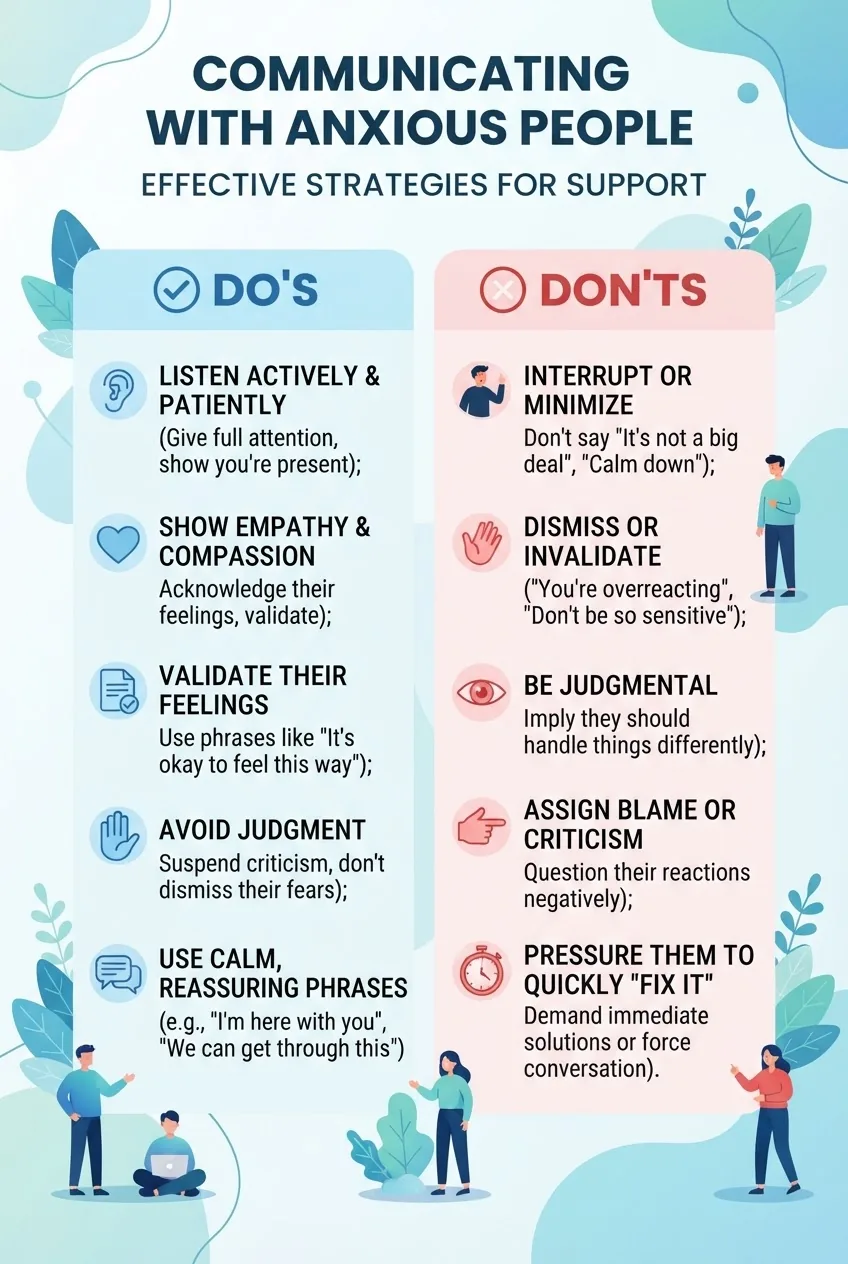
| Do’s (examples) | Don’ts (what to avoid) |
|---|---|
| Validate feelings: “I can see this feels really big for you.” | Minimise: “It’s not that bad” — this shuts down sharing. |
| Reflect content and emotion: “You’re worried about X and you feel panicked.” | Give solutions immediately: “You should just calm down” — avoids listening. |
| Offer choices: “Would you like water or to sit outside?” | Demand explanations: “Why are you acting like this?” — increases shame. |
| Use simple, present-focused language: “Right now we can…” | Use future catastrophising: “You’ll never get over this” — reinforces fear. |
| Check-in and set limits: “Can I sit with you for 10 minutes?” | Lecturing about coping: “You should have managed this by now.” |
Transition: Beyond single episodes, sustained support requires systems and behaviour change — the next section covers practical ways to help someone manage anxiety over time.
Supporting Someone’s Long-Term Anxiety Management
Long-term support is a blend of practical assistance, encouragement of evidence-based care, and healthy boundary-setting. Begin with routine-building: consistent sleep (7–9 hours), regular movement (20–45 minutes moderate activity, 3–5 times weekly), and meal regularity (no more than 4–5 hours between meals).
Encourage therapy options gently: cognitive behavioural therapy and exposure-based approaches show strong results. For more on professional pathways, see therapy options for anxiety. If medication is a consideration, discuss anti-anxiety medication options with a prescriber.
Introduce structured practices incrementally: short daily mindfulness and weekly yoga sessions are sustainable starting points. See mental health benefits of meditation for evidence summaries and 30 day yoga challenge for stress relief as a commitment pathway.
Practical tips:
- Help them schedule one small, measurable habit: 3-minute morning breathing, or a 15-minute evening walk, for 21 consecutive days.
- Use shared accountability: agree on a weekly check-in and celebrate small wins.
- Assist with logistics: finding a clinician, arranging transport, or setting reminders for appointments.
- Keep records: note triggers and helpful interventions in a shared, private document to support therapy work.
For specialized techniques beyond everyday supports, explore advanced stress relief strategies. Also consider workplace adjustments, academic accommodations, or family therapy when anxiety impairs daily functioning.
Transition: Yoga and mindful movement are powerful adjuncts — the next section gives practical, non-prescriptive ways to integrate them as support tools.
Using Yoga and Mindfulness Techniques as Support Tools
Yoga and mindfulness help regulate the nervous system through breath, movement and steady attention. Below are accessible, safe steps you can guide someone through; these are supportive tools, not therapy sessions.
-
Introduce gentle breath-synced movement (5–10 minutes)
– Step: Ask permission, then guide two seated rounds of slow neck rolls or shoulder rolls timed to the breath: inhale for 3 counts, exhale for 4 counts. Keep movements small and comfort-first.
– See research summaries on how these practices reduce physiological arousal: peer-reviewed studies. -
Offer restorative poses with consent (5–12 minutes)
– Step: If in a quiet space, suggest supported child’s pose or reclining with knees bent and a cushion under legs. Keep the session under 12 minutes for first trials.
– For deeper program design, consider a how yoga helps with anxiety resource.
-
Start with short, guided mindfulness (1–5 minutes)
– Step: Offer a brief guided check-in: “Notice your feet on the floor, the weight of the body, and the breath for three rounds.” Keep eyes open if panic is high.
– For immediate scripts, see quick mindfulness meditation scripts and short meditation practices. -
Teach a single breath anchor (3–5 minutes)
– Step: Use a simple cue: “Breathe in for 3, out for 4. As you exhale, say silently ‘calm’.” Practice 6 cycles. If the person becomes lightheaded, return to normal breathing.
– For structured breathing routines, see breathing exercises for relaxation. -
Encourage a short daily practice (5–15 minutes)
– Step: Start with 3–5 minutes daily for two weeks, then increase by 2 minutes each week until reaching 15 minutes. Suggest tracking days completed to build momentum.
– For commitment programs, link them to a structured plan like a 30 day yoga challenge for stress relief. -
Frame expectations and safety (ongoing)
– Step: Explain that breathing and yoga are supportive tools, not quick cures. Some practices can briefly increase anxiety in early stages; stop and switch to grounding if this happens.
– For more on meditation benefits, see mental health benefits of meditation and mindfulness exercises for anxiety. -
Recommend short practice options for acute moments
– Step: Offer the person a menu: a 1–2 minute box-breath, a 3-minute body-scan, or a 2-minute grounding checklist. See short meditation practices and quick mindfulness meditation scripts.
– Also link to how yoga helps with anxiety.
Transition: While you help others, you must protect your own energy and wellbeing — the following section is a concise self-care protocol for supporters.
Taking Care of Yourself While Helping Others with Anxiety
- Set time limits: schedule support periods of 20–60 minutes with breaks; avoid marathon sessions.
- Keep recovery routines: 10 minutes of your own breathing practice daily, 30 minutes of moderate exercise 3 times per week.
- Maintain emotional boundaries: use phrases like “I can sit with you for X minutes, then I need to rest.”
- Use peer support: check in with a friend or supervisor after a difficult episode.
- Recognize burnout signs: persistent fatigue, irritability, sleep disruption; if present, seek support from a therapist or supervisor.
- Have emergency backstops: a crisis number or local service you can call if the person needs intensive help beyond your capability.
Transition: If anxiety is persistent or severe, encourage professional help — learn when and how in the next section.
When and How to Encourage Professional Help
Encourage professional assessment when anxiety causes clear functional impairment (missed work or school for more than a week), when panic attacks are frequent (more than 1 per week), or when thoughts of self-harm or harm to others appear. According to a 2024 guideline summary by the American Psychological Association, early referral to evidence-based therapy improves outcomes.
How to make the suggestion: use collaborative language — “I can help you find a clinician and go through options if you’d like.” Offer specific referrals: primary care for assessment, or a therapist specialising in CBT. For a full guide to professional options, see therapy options for anxiety and anti-anxiety medication options.
Prepare for the referral: bring notes on symptom frequency, triggers, and what helped in the past. If there is immediate danger, call emergency services. For medication evidence and when to discuss it, consult a prescribing clinician or review the anti-anxiety medication options resource.
Transition: Before you finish, learn common mistakes I’ve seen and how to avoid them in practice.
Common mistakes and how to avoid them
I once insisted someone “calm down” during a panic attack and they shut down completely — that taught me to prioritise validation over instruction. I have also overpromised availability and burned out; now I set strict 30–60 minute check-ins. I used complex grounding prompts too quickly; I now start with the simplest 5-item sensory check.
Checklist: Verify your work
- Did you gain consent to assist within 30 seconds?
- Did you reduce stimulation and offer water/blanket within 3 minutes?
- Did you guide at least one grounding or breathing technique for 3–6 minutes?
- Did you validate feelings using reflective language at least twice?
- Did you agree a follow-up plan (check-in or referral) before leaving?
- Did you document the incident and schedule your own recovery time?
When to call in a professional
Call emergency services immediately for chest pain, fainting, severe confusion, or suicidal intent. Encourage formal assessment when anxiety disrupts daily life for more than two weeks, or when panic attacks occur repeatedly. For therapy options, see therapy options for anxiety. For medication information, review anti-anxiety medication options.
Closing summary: you now have a practical, time-bound plan to recognise anxiety, apply immediate calming tools, communicate effectively, and support longer-term management while protecting your own wellbeing. Use the checklist before you finish each support session and call professionals when safety or functioning is compromised.
Next step: practice the 3–6 minute breathing and grounding steps twice this week, and set one small habit (3-minute daily check-in) with the person you support. If you want guided scripts and short practices to hand them, explore quick mindfulness meditation scripts and short meditation practices.