

Well being examples are everyday habits and states that support physical, mental and emotional health—regular movement, balanced nutrition, sufficient sleep, meaningful relationships, mindfulness and consistent self-care. These routines and states improve resilience, mood, cognitive functioning and long-term health by preventing decline and promoting recovery and vitality.
Understanding Well Being and Its Importance
Answer: Well being describes a balanced state of physical, mental, emotional and social health that enables daily functioning, life satisfaction and resilience; understanding it helps you prioritize practical actions that improve personal health and wellness.
Well being: a multidimensional state of health and functioning covering physical, mental, emotional and social domains that together determine quality of life and resilience.
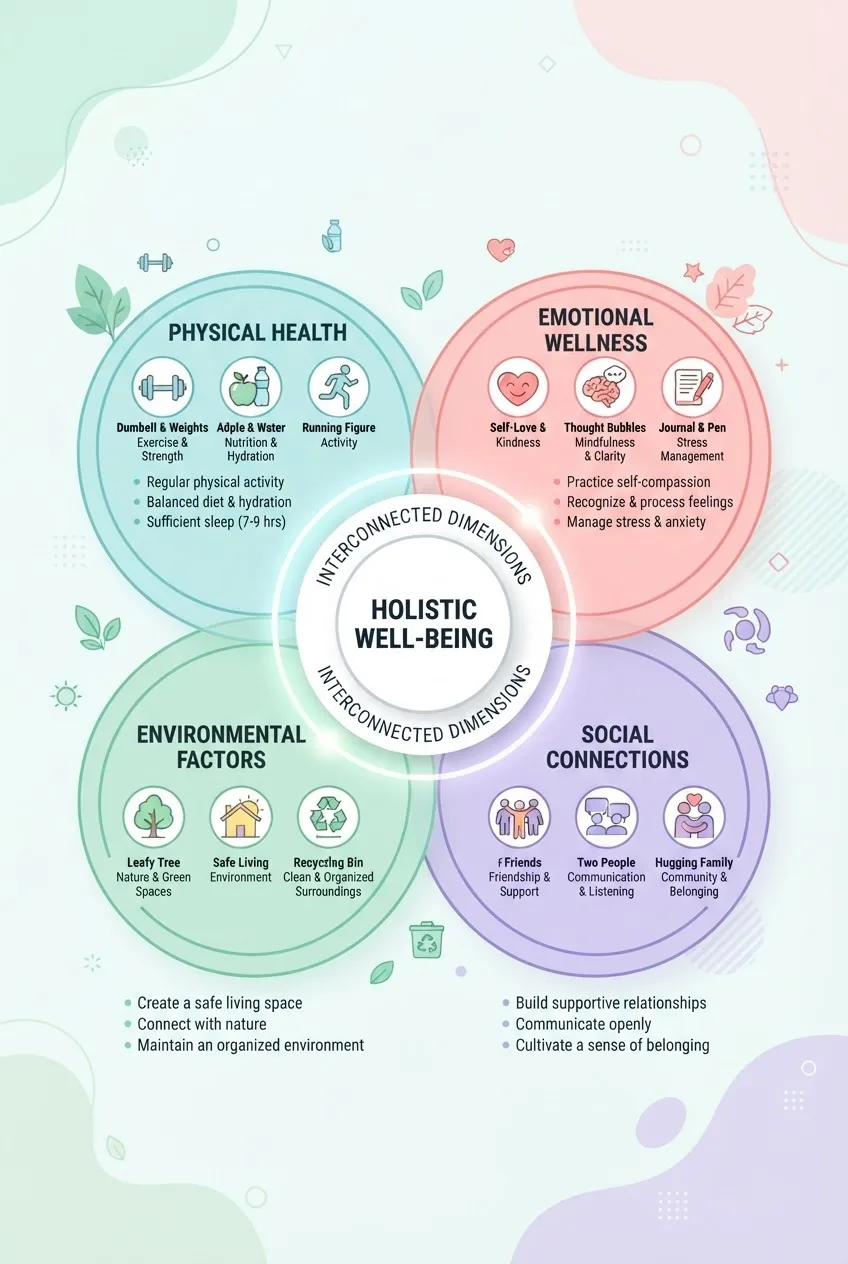
The term overall wellbeing refers to the combined outcome of these parts — how well they work together to support a person’s functioning and life satisfaction.
Overall wellbeing: the net effect of physical, emotional, mental and social health on a person’s quality of life.
Why this matters: people with stable well being tend to have better immune function, clearer thinking and more consistent energy. According to a 2023 report by WHO, holistic approaches that combine lifestyle habits with social support produce the strongest, longest-lasting improvements in health (WHO overview of mental health).
Examples clarify the concept: think of well being like routine car maintenance—small, regular practices (fuel, oil, tyres) keep the system running; skipping them increases risk and reduces performance. The rest of this article lists practical examples and explains how each contributes to personal health and wellness.
Next: concrete, everyday examples you can try this week.
Examples of Personal Well Being Practices
Answer: Personal well being practices are concrete daily and weekly activities—exercise, sleep routines, nutrition, mindfulness, social connection and environment management—that jointly sustain healthy wellbeing.

-
Daily movement and exercise — A mix of aerobic, strength and mobility work improves cardiovascular health, mood and energy. Practical examples:
- 30 minutes brisk walking, 5 days a week
- Two 20–30 minute strength sessions weekly (bodyweight or light weights)
- Daily 5–10 minute mobility or stretching routine on waking
-
Consistent sleep hygiene — Regular sleep schedules and pre-bed routines improve cognition and emotional regulation. Practical examples:
- Same wake and sleep window within 60 minutes each day
- Wind-down routine: 20–30 minutes without screens, calming activity (reading, light stretching)
- Bedroom cues: cool, dark, and quiet environment
-
Nutritious eating and hydration — Balanced meals and adequate fluids support physical recovery, concentration and mood. Practical examples:
- Daily plate model: vegetables, lean protein, whole grains, healthy fats
- Hydration habit: a glass of water on waking and regular sips throughout the day
- Batch-cooking simple meals to reduce reliance on processed options
-
Mindfulness and short meditation — Brief practices build attention and reduce reactivity. Practical examples:
- 5–10 minutes of mindful breathing in the morning
- Single-tasking for focused 25-minute work blocks with short breaks
- Body-scan before sleep to ease transition to rest
-
Regular social connection — Purposeful relationships provide emotional support and meaning. Practical examples:
- Weekly check-ins with close friends or family
- Volunteering once a month in a community group
- Scheduling social time and protecting it like an appointment
-
Structured self-care routines — Predictable, repeatable habits reduce decision fatigue and maintain wellbeing. Practical examples:
- Morning: light movement, hydration, five-minute planning
- Midday: a short walk and balanced lunch
- Evening: wind-down, journaling, sleep preparation
-
Preventive healthcare — Routine checks and vaccinations prevent avoidable decline. Practical examples:
- Annual health review and age-appropriate screenings
- Dental care every six months
- Vaccinations as recommended by local health authorities
-
Emotional regulation skills — Techniques for noticing and shifting emotional states. Practical examples:
- Labeling emotions (name it to tame it)
- Gratitude or three good things journaling each evening
- Short breathing patterns to down-regulate intensity (4-4-8 breathing)
-
Healthy environment and boundaries — Design surroundings and limits that support habits. Practical examples:
- Decluttered workspace to reduce cognitive load
- Clear start/end work routines for work-life balance
- Noise and light adjustments to improve sleep and focus
-
Lifelong learning and purpose activities — Engaging the mind sustains cognitive health. Practical examples:
- Monthly hobby classes or book clubs
- Small skill projects with measurable progress
- Volunteering or mentoring roles that align with values
Below are focused categories with more detailed examples and tips you can apply right away.
Physical Health Examples
Answer: Physical health examples are specific routines—exercise, balanced nutrition, hydration, sleep hygiene and preventive care—that maintain body function and reduce disease risk.
Start with simple, repeatable activities: walk daily, use stairs, prepare balanced meals and prioritise sleep. These small actions compound to maintain mobility, cardiovascular health and metabolic balance.
- Exercise routine: 150 minutes of moderate aerobic activity weekly or 75 minutes vigorous, combined with two strength sessions (CDC guidelines support activity for health; see CDC physical activity).
- Nutrition habits: focus on whole foods, consistent meal timing and adequate protein to support recovery.
- Sleep hygiene: fixed sleep windows, limiting caffeine after midday, screens off 60 minutes before bed.
- Hydration importance: aim for regular fluid intake—habit cues like a water bottle at your desk help stability.
- Preventive healthcare: schedule routine check-ups and follow screening recommendations for age and risk factors.
| Practice | Typical Benefit | Trade-offs/Considerations |
|---|---|---|
| High-intensity training | Cardio fitness, time-efficient | Requires recovery, not ideal daily for beginners |
| Moderate daily movement | Sustainable, low injury risk | Slower fitness gains without added intensity |
| Strict dieting | Rapid weight change | May harm mood and adherence long-term |
Practical tip: balance intensity and recovery—if you’re starting, prioritise consistency over intensity, then gradually increase load.
Emotional and Mental Well Being Examples
Answer: Emotional and mental well being examples include mindfulness, emotional regulation exercises, gratitude, journaling and activities that build psychological resilience and clarity.
Emotional regulation: the ability to notice, label and modulate emotional responses to fit the situation and long-term goals.
Examples and practical tips:
- Mindfulness practices: short breathing exercises, body scans and single-tasking sessions that build attention and lower reactivity.
- Gratitude and reflection: three-thing journaling each night to shift focus toward positive experiences.
- Structured problem-solving: write one small next action for each worry to convert rumination into plan.
- Creative outlets: drawing, music or gardening to express and process emotion without analysis.
If you think hidden stress is affecting you, review common signals and how they appear in daily life; see signs of hidden stress.
Causes often arise from recurrent pressures; learn more about their routes and effects in impact of common stressors.
For more concrete examples and resources specifically targeting emotions, see emotional wellness examples.
For episodic or short-term spikes of stress that need specific handling, review targeted strategies at episodic stress management.
Practical tip: when emotions feel overwhelming, use a 3-step check: Name it, breathe for 60 seconds, choose one small action to move forward.
Social and Environmental Well Being Examples
Answer: Social and environmental well being examples include building supportive relationships, community involvement, healthy work-life boundaries and designing living spaces that support recovery and focus.
Examples:
- Scheduled social time: weekly calls or meetups that reinforce belonging and reduce isolation.
- Community involvement: volunteering or participating in local groups to build purpose and social networks.
- Supportive relationships: clear, reciprocal friendships with honest communication and boundaries.
- Work-life balance practices: fixed work hours, commute-like routines for remote work, clear stop/start rituals.
- Healthy environment: home lighting, indoor plants, ergonomic workspace and reduced clutter to support focus and calm.
Practical tip: protect one social appointment per week and treat it as essential; relationships are a high-return investment in wellbeing.
Next: how these practices aggregate into measurable benefits for overall wellbeing.
How Healthy Wellbeing Contributes to Overall Wellbeing
Answer: Healthy wellbeing practices improve overall wellbeing by enhancing physical health, cognitive function, emotional stability and social resilience—reducing illness risk and improving life satisfaction.
Physiological links: regular activity improves cardiovascular and metabolic markers; good sleep supports immune function and memory consolidation. According to a 2024 industry report, integrated lifestyle approaches reduce the incidence of chronic conditions and support recovery (CDC physical activity resources).
Mental and cognitive effects: activities such as exercise, meditation and quality sleep improve attention, problem-solving and mood regulation—core components of sustained productivity and life satisfaction. For key data and context see mental health statistics and insights and benefits of good mental health.
Case summary: a workplace wellness programme that combined movement breaks, flexible schedules and brief mindfulness training reported higher employee engagement and fewer sick days in a 12-month evaluation (program case summary; results vary by population and design).
Trade-offs: while intensive interventions can speed gains, sustainable, lower-intensity habits tend to produce longer adherence. Choose a plan that fits your life—consistency outweighs sporadic intensity for long-term wellbeing.
External authority: for definitions of mental health and global guidance, see WHO materials; “According to a 2023 report by WHO…” describes how integrated approaches produce better population outcomes (WHO mental health resources).
Transitioning habits into daily life requires structure; the next section gives an actionable routine and steps to embed these examples into your day.
Practical Tips for Enhancing Your Well Being Daily
Answer: Start with simple, repeatable actions—morning routines, movement breaks, hydration, brief mindfulness and social check-ins—and use habit stacking, planning tools and observable metrics to maintain healthy wellbeing.

-
Design a morning anchor (5–20 minutes)
- Example routine: wake, hydrate (one glass), 5 minutes gentle movement, 5 minutes planning or intention setting.
- Why it works: sets physiological cues and reduces decision load for the day.
-
Use habit stacking
- Attach a new habit to an existing one (e.g., after your morning coffee, do 2 minutes of stretching).
- Small wins build momentum and make habits sticky.
-
Schedule micro-breaks for movement and focus
- Example: 25-minute focused work + 5-minute walk or stretch.
- Evidence: frequent breaks sustain attention and reduce fatigue.
-
Track two simple metrics
- Pick one physical metric (steps, sleep hours) and one wellbeing metric (mood scale, energy). Review weekly.
- Use data to adjust intensity and rest balance.
-
Build an evening wind-down
- Turn off bright screens 60 minutes before bed, do a light relaxation or journaling exercise, and keep the bedroom for sleep only.
-
Prepare simple, reliable meals
- Batch-cook staples and pre-portioned snacks to reduce decision fatigue and encourage balanced eating.
-
Intentional social time
- Block time weekly for a friend or family connection and protect it from work overruns.
-
Apply short mental health exercises
- Start with 3–5 minute mindfulness sessions or grounding techniques during stressful moments.
- For more detailed strategies on managing stress as part of improving wellbeing, see relief tips for stress.
-
When emotion interferes, use targeted emotional-health tips
- Combine naming the emotion, breathing, and choosing a single next action; for complementary strategies see tips for emotional health improvement.
-
Plan for setbacks and review fortnightly
- Accept lapses are part of behaviour change; treat them as data and adjust the plan rather than abandoning it.
Sample daily self-care schedule (practical example):
- 6:30 — Wake, drink water, 5-minute stretch
- 7:00 — Breakfast with protein and fruit
- 9:30 — Short walk break
- 12:30 — Balanced lunch; 10-minute mindful breathing
- 17:30 — 30-minute movement session
- 21:00 — Wind-down routine: screens off, journaling, sleep
Case example: a 42-year-old who added a 15-minute evening walk and nightly gratitude journaling reported improved sleep and reduced evening anxiety after six weeks (self-report case summary).
Practical safety note: if stress or mood symptoms are persistent or worsening, seek professional support; for immediate strategies and resources, consult local health services or specialist guidance.
Next: how these daily practices relate to the body-mind integration.
Relationship Between Personal Well Being and Body-Mind Connection
Answer: Personal well being and the body-mind connection are interdependent—physical health affects mental state and vice versa; improving one domain usually benefits the other through physiological and behavioural pathways.
The mind and body connection describes how mental states influence bodily systems (immune, endocrine, autonomic) and how physical conditions affect thoughts and emotions. See mind and body connection for an expanded guide.
To contrast benefits of healthy wellbeing with risks, learn how poor mental health can produce physical effects; see physiological effects of poor mental health.
Mechanisms: stress hormones (cortisol, adrenaline) alter sleep, digestion and immune responses; conversely, inflammation or poor sleep can worsen mood and cognition. According to a 2023 WHO summary, integrated treatment addressing both mind and body yields stronger recovery trajectories than single-domain approaches (WHO guidance).
Practical implication: choose balanced plans—pair physical activity with cognitive or social practices to compound benefits. For example, group walks build aerobic fitness and social support simultaneously.
Next: sustaining these practices long-term requires motivation, planning and periodic review.
Summary and Encouragement for Sustaining Healthy Wellbeing
Answer: Sustaining healthy wellbeing comes from small, consistent practices—consistent sleep, movement, nutritious eating, mindfulness and supportive relationships—combined with realistic planning, regular review and professional guidance when needed.
Key takeaways:
- Well being is multidimensional—address physical, emotional, social and environmental domains.
- Small, repeatable habits compounded over weeks produce measurable improvements.
- Balance intensity with recovery and adapt routines to your life stage and needs.
Encouragement: start with one habit you can reliably complete for seven days (a 10-minute walk, consistent bedtime, or nightly journaling). Track it, celebrate consistency, and add the next habit when the first feels stable. If you have complex medical or mental health needs, consult a qualified professional for tailored advice; this article provides general educational guidance, not medical advice.
Final call to action: pick one well being example from this article, commit to seven days, and review your progress—small actions compound into lasting change.