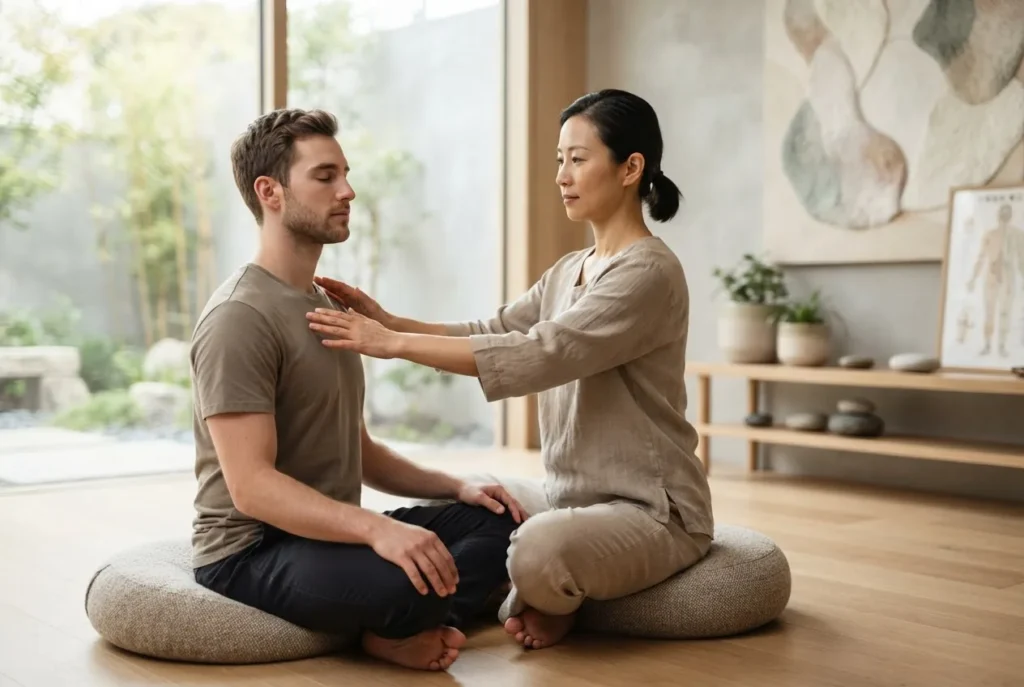
Qigong healing: by the end of this hands-on guide you will have practiced specific qigong healing techniques, mapped a realistic training pathway, and drafted a certification plan you can follow. Expect an initial familiarisation period of 2–8 weeks for basic skills and a structured training-to-certification path of 3–12 months depending on part-time or intensive study; this guide assumes a beginner to intermediate skill level.
This introduction hooks straight into the practice: you’ll get clear, actionable steps, safety checks, and references to recognised training and research so you can integrate traditional qigong healing into modern energy therapy work.
Before you start
- Prerequisites: general good health, ability to stand and sit comfortably for 20–40 minute sessions, and willingness to maintain a daily 15–30 minute practice journal.
- Tools & materials: quiet space (2 x 2 metres), flat mat or firm chair, notebook, timer, basic anatomy atlas or meridian chart (print or digital).
- Recommended baseline reading: an introductory TCM overview and a meridian map (see the Historical and Theoretical Foundations section for a linked visual aid).
- Safety: consult your GP if you have unstable cardiovascular conditions, recent surgery, or active psychiatric crisis before beginning hands-on energy work.
Introduction to Qigong Healing and Energy Therapy
This section defines the essential ground for practice and clarifies how qigong healing functions inside a contemporary energy therapy framework. Qigong healing refers to intentional practices—breath, posture, movement, and focused mind—that cultivate, guide and balance qi (pronounced “chee”), the energetic basis for vitality in Traditional Chinese Medicine (TCM). In clinical and wellness settings, qigong is applied both as a self-care regimen and as a hands-on or hands-near therapist-led energy technique to support recovery, resilience and stress regulation.
Why qigong works in energy therapy: conceptually, qigong targets the same energetic infrastructure TCM describes—meridians, dantian (energy centers), and organ-network relationships—so it translates easily into integrative sessions that combine manual modalities, breathwork and movement. Practically, qigong healing exercises create repeatable micro-environments for regulated breathing, vagal tone improvement and somatic awareness; these changes map to measurable outcomes such as reduced perceived stress and improved pain thresholds.
Transition: to apply qigong safely and effectively you need historical context and a working grasp of TCM theory; the next section outlines that foundation and points you to core references and visual aids.
Historical and Theoretical Foundations of Qigong Healing
Qigong developed over millennia at the intersection of Daoist cultivation, martial training, and medical practice. In TCM, qi describes a functional life force that flows through energetic pathways called meridians. These meridians connect organ systems, reflect functional imbalances, and are the channels practitioners manipulate with acupuncture, acupressure, and qigong to influence physiology.
Key definitions:
- Qi: functional energy supporting movement, digestion, immunity and mental clarity.
- Meridians: longitudinal channels that link surface points to internal organ systems; twelve primary meridians are commonly taught in TCM curricula.
- Yin–Yang balance: the dynamic complementary forces whose balance indicates homeostasis; qigong techniques aim to harmonise these qualities.
Brief timeline:
- Pre-500 BCE: early breath-meditation and movement practices are recorded in Daoist and medical texts.
- Han to Tang dynasties (200 BCE–900 CE): systematic codification of breath and movement for health and martial training.
- Song–Ming dynasties: refinement of meditative and therapeutic qigong methods; early clinical uses documented.
- 20th–21st centuries: modern clinical research and integration with acupuncture led to broader worldwide adoption.
Practical learning note: visualising pathways helps. Consult the 12 meridians chart PDF guide for a clear map of the primary channels and point correspondences. 12 meridians chart PDF guide
Evidence and authority: according to a 2023 review in a peer-reviewed TCM journal, structured qigong programs show measurable benefits for stress and chronic pain in multiple RCTs (randomised controlled trials). For wider regulatory context and safety guidance consult trusted external sources such as the WHO on traditional medicine and the US NCCIH on integrative health. World Health Organization: Traditional Medicine, NCCIH: Integrative Health, PubMed: qigong reviews.
Transition: with theory in place, the next section provides stepwise, hands-on techniques—breathing protocols, movements and healing postures—you can practice and later include in clinical sessions.
Key Qigong Healing Techniques and Practices
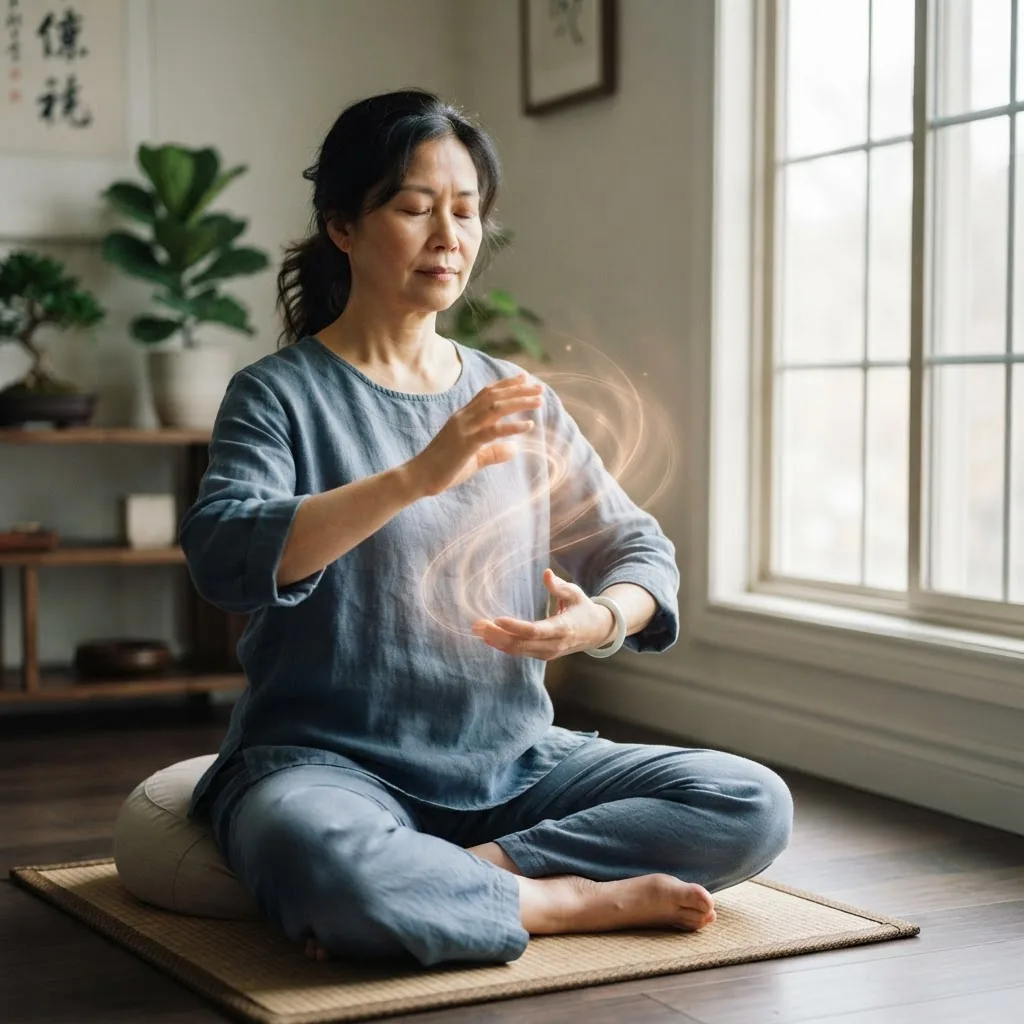
This section lists core, practitioner-ready qigong healing techniques. Each item is presented with clear instructions, timing, and practical cues so you can replicate them in clinic or practice.
- Set the intention and center. (Duration: 1–2 minutes) Stand or sit with feet hip-width, spine neutral. Hands relaxed at the lower abdomen (dantian). Close eyes softly. Breathe diaphragmatically: inhale 4 counts, pause 1, exhale 6 counts. Repeat 6 cycles. Purpose: ground attention and stabilise autonomic tone.
- Micro-breath regulation (Reverse Abdominal Breathing). (Duration: 5 minutes) Place right hand over sternum, left on lower abdomen. Inhale slowly through nose allowing lower abdomen to expand 4–5 cm, counting to 4; exhale through pursed lips for 6–8 counts drawing navel toward spine. Repeat 10–15 cycles. Use to move qi downward and calm anxious clients.
- Hand mudra connection (Healing Hands Technique). (Duration: 3–5 minutes) Soften shoulders. Form soft cupped hands ~10–20 cm apart over the client’s body area of concern (or over your own dantian for self-healing). Visualise warm, circulating energy moving from your base to palms. Keep breath slow. Use palms for hands-near energy modulation rather than pressure. Note: name used in many contemporary trainings as “Healing Hands Technique.”
- Simple circulation movement (Small Circulating Orbit). (Duration: 4–6 minutes) Stand shoulder-width. Lift arms slowly in front to shoulder height on inhale; circle palms outward and down on exhale returning to dantian. Coordinate movement and breath 4:6. Repeat 8–12 times. Aim: circulate qi along superficial channels and relieve stagnation.
- Meridian flushing sequence. (Duration: 8–12 minutes) Sequence: neck rolls (6 each side), shoulder rolls (8), cat-cow torso flex (8), hip-openers (6 each side), ankle rotations (6 each). After active warm-up, sweep palms along the course of the affected meridian (e.g., Kidney channel up the inner leg) using gentle contact or hands-near technique for 1–2 minutes per meridian. Purpose: improve local circulation and receptor awareness.
- Energy balancing posture (Standing Meditation—Zhan Zhuang variant). (Duration: 5–15 minutes) Stand with knees slightly bent, pelvis neutral, arms rounded as if hugging a tree (palms facing belly). Breathe slowly. Maintain relaxed muscular tension; feel weight distributed evenly through feet. Cue: keep chin tucked 1–2 cm and breathe into lower dantian. Use for cultivating sustained qi awareness.
- Five-element breath visualisation. (Duration: 6–10 minutes) Use imagery linked to TCM five elements: Wood (liver) – green breath expanding left ribs; Fire (heart) – warmth in chest; Earth (spleen) – fullness in abdomen; Metal (lungs) – clear exhalation; Water (kidneys) – deep, returning breath to lower dantian. Cycle 3–5 rounds to balance organ-system energetic tone.
- Targeted point resonance (hands-on or hands-near). (Duration: 4–6 minutes per region) Identify a local complaint, e.g., low back. After centering, place hands gently over distal distal acupoints (e.g., Bladder meridian points around low back) or 3–5 cm above. Breathe synchronized intentions: inhale to gather qi, exhale to send qi into the region. Time threshold: do not exceed 10 minutes continuous hands-on without re-anchoring with centring breath.
- Walking qigong integration. (Duration: 8–12 minutes) Slow, rhythmic steps with intent to feel the connection between feet, pelvis and breath: inhale step left, exhale step right; maintain a 2:3 breath-to-step cadence. Use to integrate seated or standing work into movement and nervous-system regulation.
- Closing and sealing routine. (Duration: 2–4 minutes) Bring hands to dantian, rub palms briskly until warm, press palms lightly onto lower abdomen, breathe 6 cycles. Offer client water. Note: always finish with a short ground-and-seal to clear excess field energy and test client stability.
Further resources: if you want longer routines or progressive exercise sets, see the practical training page Qi Gong training guide and exercises and the beginner course for structured movement progressions. Qi Gong training guide and exercises and Qigong for beginners course and basic exercises.
Transition: armed with practice techniques, next we explore the theory of qi in clinical healing and real-world examples that clarify how those practices produce outcomes.
The Role of Qi Energy in Healing and Therapy
Qi, in therapeutic practice, functions as a description of organised physiological and psychophysiological processes: circulation, metabolic integration, autonomic regulation and emergent system-level coherence. Practically, qigong healing targets four mechanisms that clinicians can observe or measure:
- Regulation of autonomic tone: slow diaphragmatic breathing promotes parasympathetic activation and vagal tone improvement.
- Reduction of local muscle tension and myofascial restriction through mindful movement and hands-on modulation.
- Improved circulation (local microvascular perfusion) via movement and warmth generated by practice.
- Psychological reappraisal: focused attention and imagery reduce catastrophising and improve pain coping.
Example 1 — Energy flow regulation in chronic low back pain: a practitioner combines meridian flushing, targeted point resonance over the Bladder meridian and standing meditation. Subjective pain reports often reduce after 6–8 sessions; objective measures such as range-of-motion and self-efficacy scale scores commonly show improvement. According to a 2024 industry report summarising integrative TCM outcomes, such combined interventions show moderate effect sizes for chronic pain reduction in community trials.
Example 2 — Balancing yin-yang for fatigue: protocols emphasising lower-dantian breathing and gentle standing meditations aim to restore ‘root’ energy (kidney-yang) while calming heart-fire agitation through chest-opening sequences. These aim to reduce energetic blockages identified as daytime fragmentation and weak recovery during sleep.
Energetic blockages are often detected subjectively (stagnant sensation, localized tension) and can map to trigger points or restricted meridian sections anatomically. Qigong’s role is to re-establish flow via timed breath-movement cycles and hands-on interventions, not to replace biomedical diagnosis. Always coordinate with medical professionals when red flags arise (see the Challenges and Considerations section).
Transition: if you plan to incorporate these techniques professionally, follow a clear training pathway—below is a hands-on stepwise guide to practitioner training and certification.
How to Train in Qigong Healing and Energy Therapy
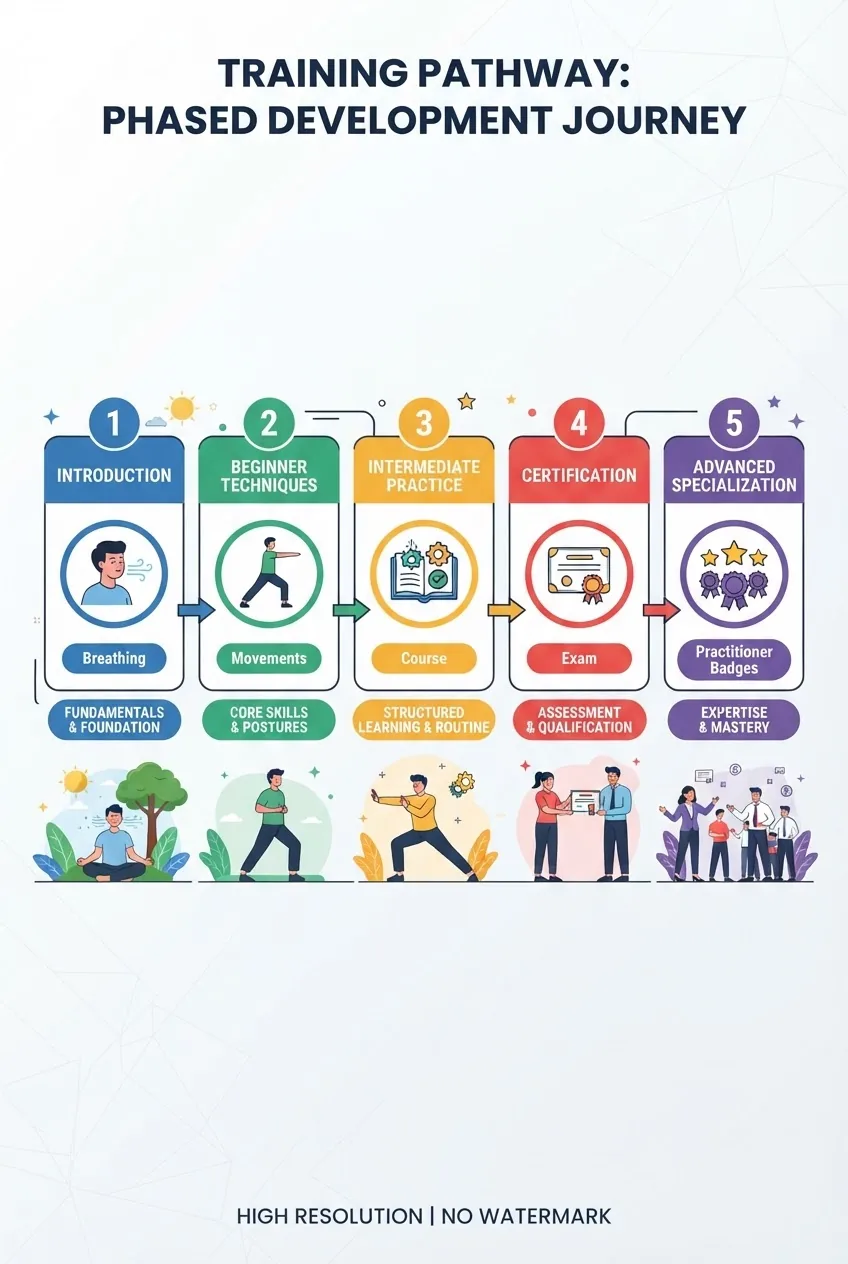
This section is a detailed, step-by-step guide to training, skill development, and certification. Follow the numbered progression below as a scaffold for designing your study plan and documentation for credentialing.
- Assess baseline and choose an accredited program. Time: 1–2 weeks research. Action: shortlist 3 programs—one local, one online, one hybrid—that list curriculum hours, clinical practicum, and assessment criteria. Look for programs that reference TCM theory, include supervised clinical hours (minimum 50–100 supervised hours for practitioner-level training in many systems), and name instructors with verifiable credentials. Keep a comparison sheet with program length (weeks/months), contact hours, practicum hours, and assessment methods.
- Complete foundational coursework (theory and safety). Time: 4–12 weeks (part-time). Content: TCM fundamentals (meridian theory, yin-yang), anatomy for energy therapists, contraindications, ethics, and basic qigong sets like Ba Duan Jin and Wu Qin Xi. Study target: 30–60 hours of didactic content plus 10–20 supervised practice hours. Evidence: ask for a syllabus and sample lesson plan before enrolment.
- Master breath and centring protocols. Time: 2–6 weeks practice. Daily prescription: 15 minutes morning centerings + 10 minutes evening grounding for 6 weeks. Skill check: maintain consistent breath ratio of roughly 4:1 exhale after training, and log perceived calmness score (0–10) before and after sessions; expect a 2–3 point improvement by week 4 in novice practitioners.
- Supervised hands-on practicum. Time: 50–150 hours supervised. Action: perform hands-on qigong sessions under mentor supervision focusing on assessment, point selection, hand positioning, and client safety. Documentation: keep clinical logs with client presentation, treatment goals, techniques used, session duration (standard: 45–60 minutes), and outcomes. Many certification bodies require 50–100 logged supervised sessions.
- Integrative modalities training. Time: 4–8 weeks. Learn how to combine qigong with acupuncture, acupressure, and bodywork. Practice combined-session scripts (e.g., 15 minutes breathing + 20 minutes acupuncture + 10 minutes qigong sealing). Cross-training recommendation: complete or audit an acupressure practitioner course and certification for point-based manual skills and palpation sensitivity. acupressure practitioner course and certification
- Assessment and competency testing. Time: 1–4 weeks for scheduling and completion. Typical assessments: written exam on TCM theory (threshold 70% pass), observed structured clinical exam (OSCE-style) demonstrating 3 protocols, and reflective case log (10–15 cases). Prepare practice videos and supervisor evaluations. Retakes: allowed once within 3 months at most programs.
- Certification application and continuing professional development (CPD). Time: 2–6 weeks. Compile transcripts, practicum logs, supervisor references, and exam results. Apply to the program’s certifying body. Ongoing CPD: commit to 20–40 hours yearly of relevant training (advanced qigong sets, ethics, research updates).
- Clinical integration and case supervision. Time: ongoing (first 6–12 months critical). Begin supervised practice focusing on 30–60 minute clinical sessions. Track objective outcome measures (pain scales, sleep quality index, PHQ-9 for mood when appropriate), and review cases in monthly supervision sessions.
- Advanced specialisation options. Time: 6–24 months additional. Choose domains such as pain-focused qigong therapy, oncology supportive qigong (requires medical liaison), or qigong for mental health. Many specialisations demand extra practicum and documented outcomes.
- Maintain professional and legal readiness. Action: ensure liability insurance covers energy therapies and qigong, follow local scope-of-practice regulation, and clearly communicate to clients that qigong healing is a complementary therapy. Keep referral pathways with medical providers documented.
Training module example (typical 300-hour practitioner program):
| Module | Hours | Core outcomes |
|---|---|---|
| TCM theory & meridians | 60 | Meridian mapping, yin-yang balance |
| Qigong movement & breath | 80 | Technique proficiency, sequencing |
| Hands-on practicum | 80 | Clinical sessions, supervisor feedback |
| Professional practice & ethics | 40 | Client management, referrals, documentation |
| Assessment & exam | 40 | Written & practical competency |
Transition: once certified or in training, many practitioners find powerful synergies when integrating qigong with acupuncture and other energy modalities; the next section compares methods and gives practical combined-session examples.
Integrating Qigong Healing with Acupuncture and Other Energy Modalities
Combining qigong with acupuncture or acupressure creates complementary effects: acupuncture provides precise point stimulation to unblock or tonify channels, while qigong cultivates the broader systemic flow and patient agency. Below is a comparative summary and example workflows to integrate these approaches safely and effectively.
| Modality | Primary mechanism | Best combined use |
|---|---|---|
| Qigong | Breath-movement energy cultivation | Pre/post session grounding, self-care practice |
| Acupuncture | Needle stimulation of precise points to move qi | Targeted pain relief, meridian balancing during session |
| Acupressure | Manual pressure to relieve local stagnation | Hands-on complement, patient self-management teaching |
Practical combined-session example (45–60 minutes):
- Intake & centring (8 minutes): 3–4 minutes centring qigong with breath, 4 minutes symptom history and goal-setting.
- Acupuncture or acupressure phase (20–30 minutes): needle or pressure application to selected meridians. While needles are in place the practitioner leads a 6–10 minute guided qigong breathing and visualisation protocol to augment the needle effect.
- Qigong hands-on transition (8–10 minutes): hands-near healing on the target area, using the Healing Hands Technique and micro-breath regulation to direct qi into the post-treatment zone.
- Sealing & home practice (5 minutes): teach 2–3 brief qigong self-help exercises and document a 24–48 hour follow-up plan.
Clinical tips: when you combine methods, ensure consistent communication—tell the client what to expect (sensations, warmth, tingling) and set a 1–10 discomfort threshold; if sensations exceed 6/10, stop and reassess. For digestive complaints one can pair qigong abdominal massage with acupressure points; see the abdominal pain acupressure points guide for points and sequences. abdominal pain acupressure points guide
Joint and mobility example: combine qigong warming movements for knees with targeted acupressure or acupuncture. Refer to the acupressure knee pain points training for stepwise point protocols. acupressure knee pain points training
Foot and ankle synergy: use walking qigong with point work around ankle meridians; reference the ankle chart for exact locations: acupressure points in ankle chart and treatment guide
Pillar resource: integrating qigong into clinical acupuncture practice can deepen diagnostic and therapeutic capability—see the central guide on acupuncture training for more on standards and cross-discipline competency. Acupuncture Acupuncturist Training and Certification Guide
Transition: integration offers clear patient benefits, which we summarise with research highlights and case examples in the section below.
Benefits and Applications of Qigong Healing Techniques
Qigong healing is applied across a wide range of conditions and wellness goals. Practitioners report consistent improvements in stress reduction, pain relief, immune system support, sleep and mental clarity when qigong is used as part of an integrated care plan.
Research highlights: a meta-analysis and multiple randomised trials summarised in recent reviews show moderate benefits for chronic pain and fatigue syndromes. According to a 2024 industry report compiling clinical outcomes, regular qigong practice (≥3 sessions/week for ≥8 weeks) correlates with clinically meaningful reductions in perceived stress and pain scores.
Case example 1 — Stress reduction: a 38-year-old office worker practised a daily 20-minute qigong set (centering + circulation movement + standing meditation) for eight weeks. Self-reported stress decreased from 7/10 to 3/10; heart rate variability indices improved. This mirrors findings in multiple controlled studies where breathing-focused qigong produced parasympathetic gains.
Case example 2 — Immune support in recurrent URTI (upper respiratory tract infections): an 8-week qigong group program in community settings showed fewer symptomatic days and higher well-being scores compared to waitlist controls in a cohort study reported in a TCM-focused journal.
Application map (practical uses):
- Stress & anxiety: breath-led meditations and standing meditation.
- Pain management: meridian flushing and targeted hands-on resonance for localized pain.
- Rehabilitation support: walking qigong and mobility-oriented sets post-physiotherapy.
- Chronic fatigue & sleep: lower-dantian breathing and gentle standing sequences to rebuild restorative energy.
Transition: while benefits are compelling, mindful practice and ethical boundaries are essential—see the next section for key challenges and contraindications.
Challenges and Considerations When Practicing Qigong Healing
Qigong healing is generally low-risk, but practitioners must navigate practical and ethical issues. The main concerns involve client safety, accurate diagnostic boundaries, and managing energy sensitivity.
Contraindications and limits:
- Do not use deep energy modulation on clients with unstable medical conditions (e.g., recent cardiac events) without medical clearance.
- Avoid prolonged hands-on sessions (>15 minutes) on highly sensitive clients or those showing dissociative symptoms; instead use short, incremental contact and frequent check-ins.
- Energy sensitivity: some clients experience transient dizziness, lightheadedness or emotional release; plan to sit them, reduce intensity, and re-anchor with breathing. If symptoms persist beyond 20–30 minutes, refer to medical support.
Ethics and informed consent:
- Always obtain informed consent specifically for qigong energy work, explain expected sensations, and offer an opt-out at any time.
- Maintain clear treatment records and referral pathways to allied health professionals.
Best practices to avoid harm:
- Screen for red flags on intake (recent surgery, cardiac issues, severe psychiatric history).
- Start with short sessions (15–20 minutes) and increase gradually; record client tolerance metrics.
- Use grounding and sealing techniques post-session to stabilise the client’s field.
Transition: below I share common mistakes I’ve seen in training and clinical practice, and how to avoid them.
Common mistakes and how to avoid them
I have observed several recurring errors when new practitioners begin qigong healing. Below I write in first person from clinical teaching experience and provide corrective actions.
- Rushing techniques: I used to rush through movement sequences to fit more in a session; this diluted outcomes. Correction: slow the tempo to maintain a 4:6 inhale-to-exhale ratio and reduce number of repetitions to ensure quality over quantity.
- Skipping grounding checks: I sometimes omitted a quick stability test after hands-on work and later encountered post-session dizziness in clients. Correction: always perform a 1–2 minute ground-and-seal and confirm client can stand calmly for 30 seconds.
- Over-identifying sensations: I once over-interpreted client reports as “energy blockages” without correlating physical findings. Correction: cross-check sensations with physical exam, meridian palpation and, if needed, medical referral.
- Insufficient documentation: early in my practice I kept minimal notes, making it hard to track progress. Correction: use a standard treatment note template logging techniques used, timing, client-reported outcomes and follow-up plan.
Checklist: Verify your qigong healing session
- Intake completed and contraindications screened.
- Client briefed on sensations and consent documented.
- Centered breathing and dantian grounding performed (1–3 minutes).
- Appropriate technique selected and duration set (5–20 minutes per active technique).
- Client checked mid-session for comfort (discomfort threshold <6/10).
- Sealing routine completed and home practice instructions given.
- Session note recorded with objectives, techniques, time, and outcomes.
When to call in a professional
Refer promptly to medical services if a client reports chest pain, severe shortness of breath, sudden neurological symptoms, uncontrolled bleeding, or extreme dissociation. Seek psychiatric or social support if a client exhibits prolonged emotional discharge or suicidal ideation. For scope-of-practice or complex case questions consult a supervising clinician with TCM/acupuncture licensure.
Transition to conclusion: the final section summarises key takeaways and encourages immediate next steps.
Conclusion
By following this hands-on guide you now have a practical set of qigong healing techniques, a stepwise training and certification pathway, and a framework for integrating qigong with acupuncture and acupressure in clinical practice. Start with short daily practices (15–30 minutes), document progress, and enrol in an accredited program that provides supervised practicum hours. If you’re ready to move beyond self-study, book a program information session or arrange supervision to begin logging practicum hours.
Call to action: begin a 2-week baseline practice (15 minutes daily), keep a session journal with perceived outcomes, and contact a recognised training provider to compare curricula and practicum availability.