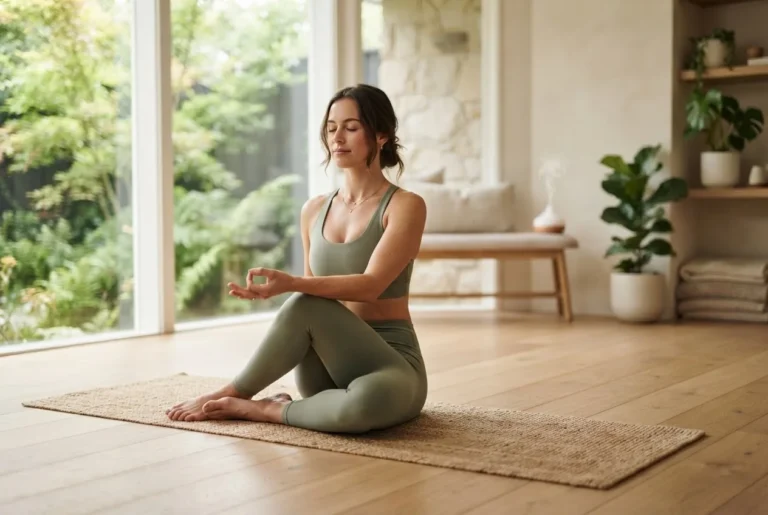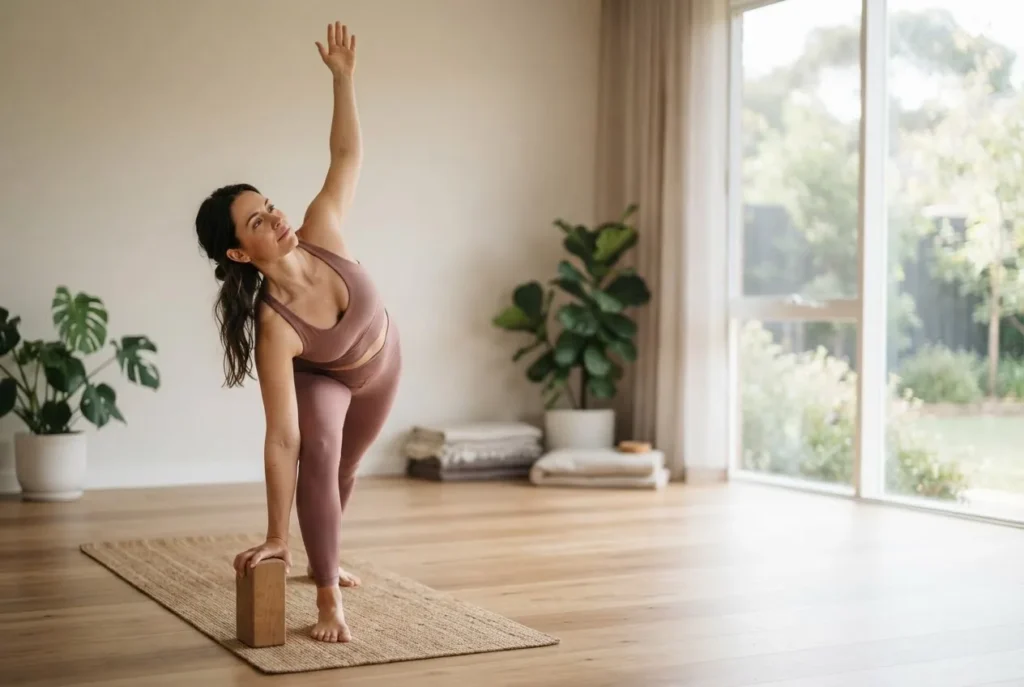
By the end of this hands-on guide you will have a complete, practical toolkit to use yoga and depression and anxiety techniques at home—clear sequences, breath practices, pose tutorials and safety rules. Plan 20–45 minutes per session; this guide assumes beginner to intermediate yoga experience.
Before you start
- Quiet 2×2.5 m space, non-slip yoga mat, two blocks, strap, folded blanket
- Comfortable clothes, water bottle, timer (set to 20–45 minutes)
- Medical clearance if you have cardiovascular conditions, recent injury, or are pregnant
- Journal and pen for mood tracking (before and after each session)
Transition: First we need context: what depression and anxiety look like in practice and why a targeted yoga approach matters.
Understanding Depression and Anxiety: Overview and Symptoms
Depression and anxiety are overlapping but distinct mental health disorders that affect mood, cognition and the body’s stress response. Common symptoms of depression include persistent low mood, loss of interest in previously enjoyable activities, slowed thinking, fatigue, sleep disturbance and appetite changes. Anxiety often presents as excessive worry, heightened physiological arousal (racing heart, sweating), difficulty concentrating and avoidance behaviours.
From a physiological perspective, both disorders involve dysregulation of the stress response system: the hypothalamic–pituitary–adrenal (HPA) axis, sympathetic nervous system activation and altered neurotransmitter signalling. Emotional regulation becomes harder because the body stays in a heightened state of alert or in a low-energy, withdrawn state.
Clinically, many people experience comorbid symptoms — for example, someone with major depressive disorder often has clinically significant anxiety symptoms and vice versa. Recognising the overlap helps us design practices that target both the arousal (anxiety) and low-mood/low-energy (depression) poles.
Practical signs to track before and during practice: self-rated mood (0–10 scale), resting heart rate, sleep hours, and frequency of catastrophic thoughts. Tracking these provides measurable feedback so you know whether a practice is shifting physiology or cognition.
Typical thresholds I use as a practitioner: if resting heart rate is consistently 10+ bpm above your usual baseline during rest, prioritise grounding and breathwork first. If apathy or low energy prevents movement, start with 10 minutes of restorative poses plus diaphragmatic breathing.
Transition: With symptoms in mind, let’s look at the science that explains how yoga affects body and brain.
How Yoga Impacts Depression and Anxiety: Scientific Insights
The physiological and psychological pathways by which yoga reduces symptoms of depression and anxiety involve stress hormone regulation, neurotransmitter modulation, improved autonomic balance and neuroplasticity-driven mood changes. Below are key mechanisms supported by clinical research and institutional findings.
Stress hormone regulation (cortisol reduction)
Regular yoga practice downregulates the HPA axis and reduces circulating cortisol in many studies. According to a 2022 meta-analysis of randomized controlled trials (peer-reviewed clinical research), participants practising yoga 3× per week for 8–12 weeks showed significant reductions in salivary cortisol compared with wait-list controls.
Neurotransmitters: serotonin, GABA, dopamine
Yoga and associated breathing/meditation boost levels of gamma-aminobutyric acid (GABA), a major inhibitory neurotransmitter that calms neural circuits linked to anxiety. A controlled trial measured increased GABA after a single 60-minute yoga session versus walking (peer-reviewed clinical research). Serotonin pathways implicated in depression are also influenced indirectly through improved sleep and circadian regulation.
Autonomic nervous system and heart-rate variability (HRV)
Practices that emphasise slow, diaphragmatic breathing and extended exhales increase parasympathetic tone and HRV — markers of better stress resilience. According to a 2021 physiological study (peer-reviewed clinical research), consistent pranayama practice increased resting HRV in adults with anxiety symptoms.
Neuroplasticity and mood networks
Movement, breath and focused attention promote structural and functional brain changes, especially in prefrontal-amygdala circuits responsible for emotion regulation. Functional MRI studies suggest increased prefrontal activity and reduced amygdala reactivity after sustained combined yoga and mindfulness programmes (peer-reviewed clinical research).
| Outcome | Typical effect | Study type / source |
|---|---|---|
| Cortisol | Reduction after 8–12 weeks | Meta-analysis (peer-reviewed clinical research) |
| GABA levels | Acute increase after session | Randomised controlled trial (peer-reviewed clinical research) |
| HRV / parasympathetic tone | Improved with pranayama | Physiological study (peer-reviewed clinical research) |
Clinical application: when anxiety is dominant, prioritise breath-first practices to shift autonomic balance. When depression and low energy dominate, prioritise gentle movement and heart-opening sequences to stimulate arousal and positive affect.
For broader context on treatment options beyond yoga, yoga is one of many peer-reviewed studies showing measurable benefit. For institutional mental health guidance see the National Institute of Mental Health. For clinical use of yoga, refer to standards from the International Association of Yoga Therapists.
According to a 2023 WHO report, the global prevalence of anxiety and depression increased over the previous decade, reinforcing the need for accessible adjunctive tools such as yoga (global public-health report).
Transition: With mechanisms clarified, now follow step-by-step practices you can use immediately.
Key Yoga Practices Beneficial for Depression and Anxiety
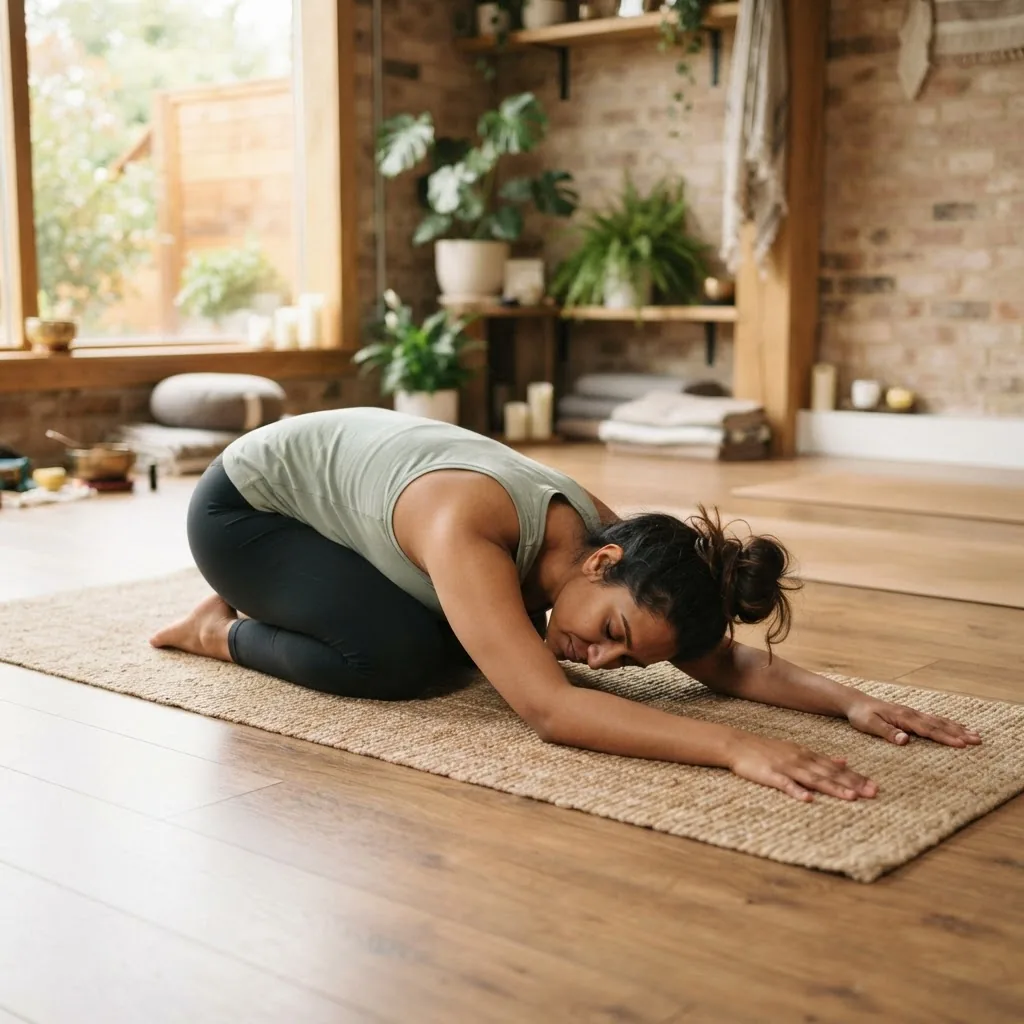
- Start with breath-first grounding: 5–10 minutes of diaphragmatic breathing to lower heart rate. Sit upright or lie supine; inhale 4 counts, exhale 6 counts. Repeat for 5 minutes. Use the breath to shift the nervous system before movement.
- Use restorative shapes for low-energy depression: 15–25 minutes of supported Child’s Pose, Reclined Bound Angle (Supta Baddha Konasana) and Legs-Up-The-Wall to reduce rumination and invite parasympathetic activation.
- Practice gentle backbends for mood uplift: Bridge Pose (Setu Bandha), supported Cobra (Bhujangasana) 3–5 rounds to open the chest and stimulate the vagus nerve indirectly.
- Include forward bends for anxiety calming: Standing Forward Fold (Uttanasana) and Seated Forward Fold (Paschimottanasana) for 5–10 breaths each to quiet the nervous system.
- Add balancing postures for confidence and focus: Tree Pose (Vrikshasana) or Eagle (Garudasana) — hold 30–60 seconds per side to train attention and reduce catastrophic thinking.
- Finish with mindful relaxation: 8–12 minutes of Savasana (corpse pose) with body-scan cues or 5 minutes of guided imagery to consolidate changes in mood.
- Integrate short meditations: 2–5 minute breath awareness practices between movement blocks to reset attention and reduce spiralling thoughts. For complementary relaxation practices, explore mindfulness exercises for anxiety.
- Use progressive dosing: Start with 10–20 minutes daily for 2 weeks, then increase to 30–45 minutes 3–5× weekly depending on energy and schedule. Track mood changes weekly.
- Choose style by need: Restorative, therapeutic Hatha and gentle Yin suit depression; Vinyasa or Power can help when you need activation—mix styles but keep breath central.
- Build consistency signals: Anchor practice to daily cues (wake time or evening wind-down). Small, regular sessions produce larger cumulative changes than intermittent long classes.
Practical note: combine movement and breath: five rounds of Sun Salutations at a slow pace with a focus on exhale lengthening can bridge activation and calm simultaneously. Some practices also offer strength benefits—see strength-building yoga.
Transition: Next we’ll break down specific poses with step-by-step instructions tailored by target symptom.
Specific Yoga Poses for Managing Depression
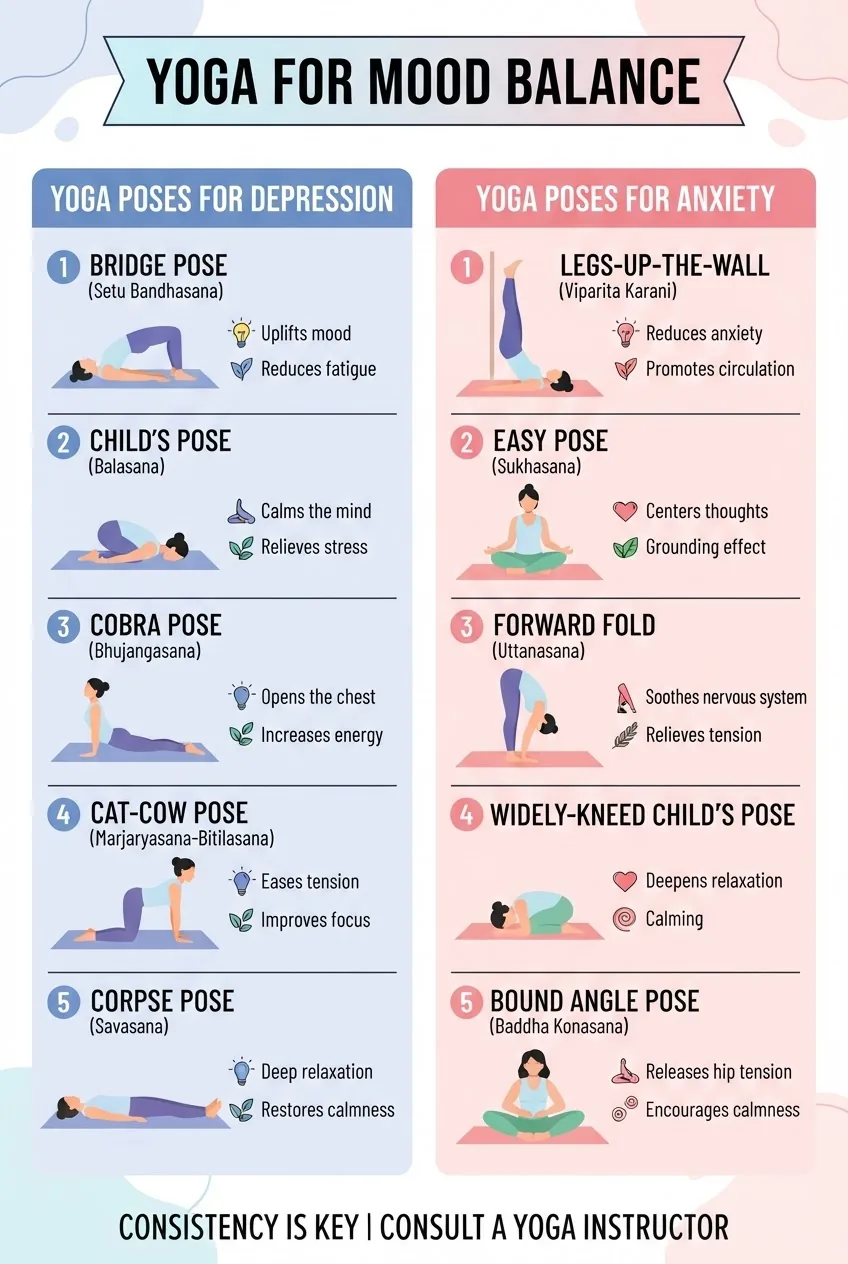
-
1. Supported Bridge Pose (Setu Bandha Sarvangasana) — 3 sets of 30–45 seconds
How-to: Lie on your back with knees bent, feet hip-width and parallel. Place a block at mid-back height and lift hips onto the block, pressing feet into the mat. Keep shoulders relaxed. Breathe slowly for 30–45 seconds, release with control.
Benefits: Chest opening stimulates positive affect and counteracts stooped posture common in depression. Use two blocks for higher support if you feel neck strain.
-
2. Reclined Bound Angle (Supta Baddha Konasana) — 5–12 minutes
How-to: Place bolsters or folded blankets along your spine, lie back with soles together and knees dropping wide. Support knees with blocks if they don’t comfortably lower. Place one hand on belly, one on heart, breathe slowly for 5–12 minutes.
Benefits: Deeply restorative, encourages vagal activation and gentle hip release. Ideal when energy is low; set a timer to avoid checking phone mid-practice.
-
3. Gentle Camel (Supported Ustrasana) — 3–5 rounds of 5–10 breaths
How-to: From kneeling, place hands on lower back or blocks, inhale to lift chest and create a gentle backbend, keep neck neutral. If full backbend is intense, use a block at sacrum and lean back onto it for support.
Benefits: Stimulates anterior body and breath; counteracts closed posture and signals energy uplift. Maintain awareness of low back; stop if pain appears.
-
4. Seated Cat-Cow with Breath — 1–2 minutes
How-to: Sit cross-legged or on a chair. Inhale, arch the spine and lift chest (Cow); exhale, round spine and tuck chin (Cat). Match movement to breath for 8–12 cycles.
Benefits: Easy to do when motivation is low; increases interoceptive awareness and helps release chest tightness that suppresses mood.
-
5. Standing Forward Fold to Chair Pose Flow — 6–10 rounds
How-to: From standing, hinge into Forward Fold (Uttanasana) for 3–5 breaths, then inhale to Chair Pose (Utkatasana) for 3 breaths, exhale back to fold. Move slowly with breath for 6–10 rounds.
Benefits: Alternates grounding forward folds with invigorating chair to increase circulation and wake up the body, breaking depressive inertia.
Transition: For anxiety, the pose selection shifts toward calming and breath-integrated postures. The infographic above contrasts both sets.
Specific Yoga Poses for Managing Anxiety
-
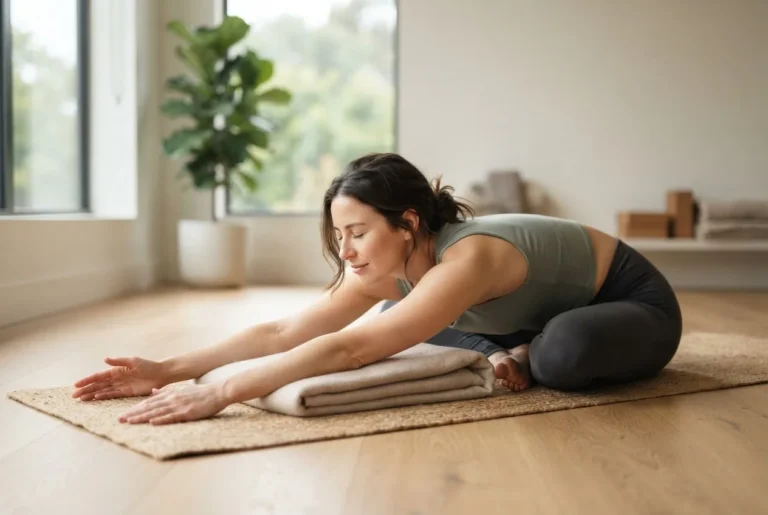
1. Child’s Pose (Balasana) — 1–5 minutes
How-to: Kneel, sit back on heels, fold forward with chest to thighs and forehead to mat or block. Extend arms forward or rest alongside the body. Breathe slowly, focusing on 6-count exhales.
Calming effect: Lowers sympathetic arousal through a flexed, protective posture; effective as an immediate anxiety pause. Use a bolster for torso support if breathing is restricted.
-
2. Seated Forward Fold (Paschimottanasana) — 3–8 minutes
How-to: Sit with legs extended; hinge from hips and fold forward, using a strap over feet if needed. Keep spine long; rest head on a bolster if necessary. Slow diaphragmatic breaths while holding.
Calming effect: Engages the parasympathetic system and reduces rumination by shifting attention to interoception and breath.
-
3. Legs-Up-The-Wall (Viparita Karani) — 8–12 minutes
How-to: Lie on your back with hips near the wall and legs extended up vertically. Place a folded blanket under hips if comfortable. Breathe in long, slow cycles, soften jaw and shoulders.
Calming effect: Reverses blood flow, reduces sympathetic tone and speeds recovery after panic or high arousal episodes.
-
4. Standing Forward Bend with Hands on Hips — 4–8 breaths
How-to: Hinge forward from the hips with hands resting on hips or a block, soften knees slightly. Focus on long exhalations. Return slowly to standing, engaging core slightly.
Calming effect: Forward folding reduces sensory input and calms the mind; practice slowly to avoid dizziness.
-
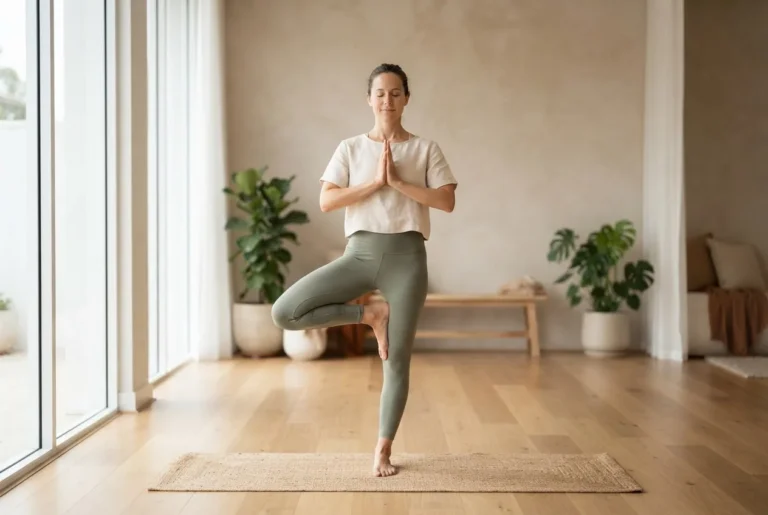
5. Slow Tree Pose (Vrikshasana) with 6-count breaths — 2×30–60 seconds per side
How-to: Stand tall, place foot on inner calf or thigh (avoid knee), hands at heart or overhead. Breathe with a 6-count exhale. Use a wall for support as needed.
Calming effect: Improves focus, reduces cognitive rumination and anchors attention to present-moment balance. For more on the general advantages, see benefits of yoga for anxiety.
Transition: Breath is the quickest lever for both states—below are three pranayama techniques you can learn now.
Breathing Exercises (Pranayama) for Depression and Anxiety Relief
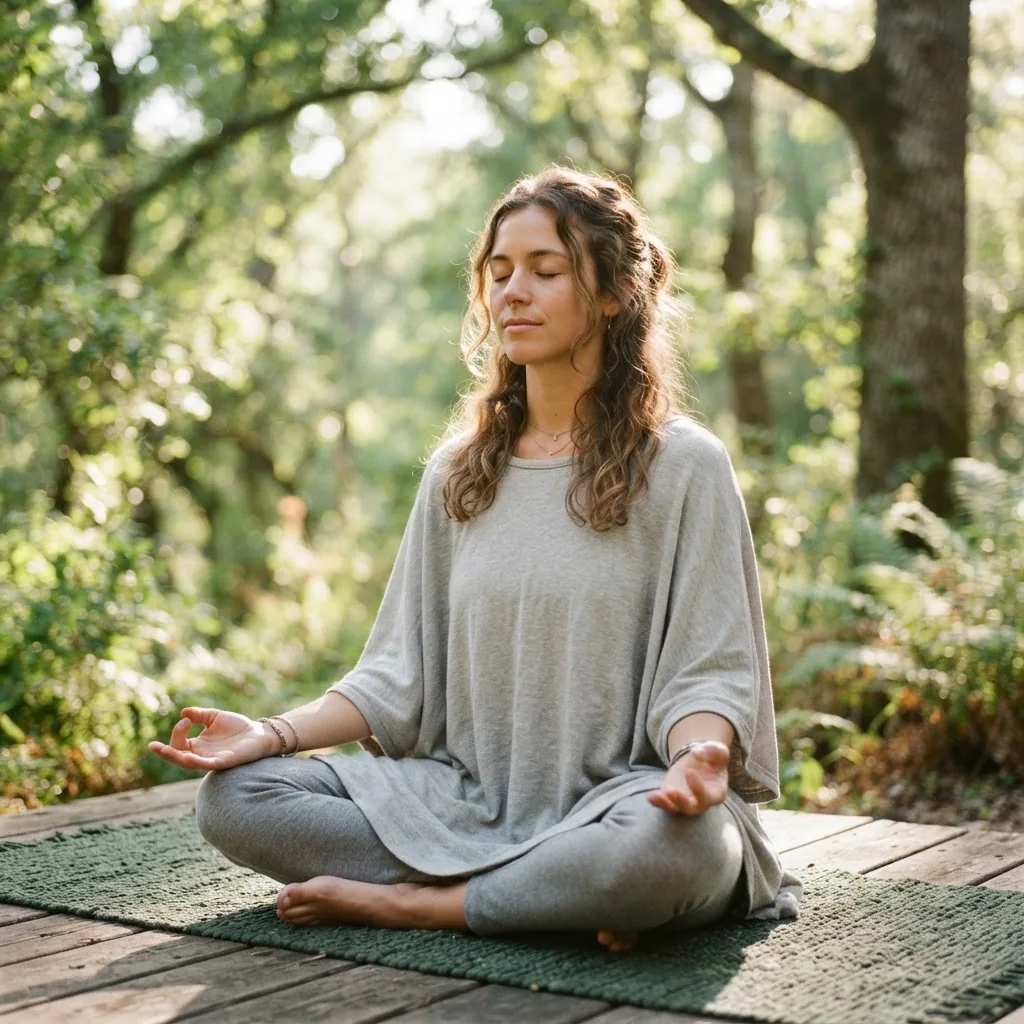
For complementary relaxation practices, explore mindfulness exercises proven to reduce anxiety: mindfulness exercises for anxiety.
-
Diaphragmatic Breathing (Belly Breath) — 5–10 minutes
- Sit or lie comfortably. Place one hand on chest, one on belly.
- Inhale slowly through the nose for 4 counts, feel belly rise; exhale for 6 counts, feel belly fall.
- Repeat for 5–10 minutes. Threshold: reduce counts if lightheaded (try 3 in / 4 out).
Effect: Immediate reduction in heart rate and sympathetic tone; good first-line tool when anxiety spikes.
-
Alternate Nostril Breathing (Nadi Shodhana) — 5–8 minutes
- Sit upright. Use right thumb to close right nostril; inhale left for 4 counts.
- Close left nostril with ring finger, release right nostril, exhale right for 6 counts.
- Inhale right 4 counts, switch to exhale left 6 counts. Complete 8–12 rounds. Stop if dizzy.
Effect: Balances autonomic activity, reduces anxious rumination and improves attention. In my experience this calms racing thoughts within 3–5 minutes.
In addition to breathing exercises, quick guided meditations can help calm the mind effectively.
-
4-7-8 Rhythm (Relaxing Breath) — 4–6 minutes
- Inhale quietly through nose for 4 counts.
- Hold gently for 7 counts (only if comfortable).
- Exhale completely through mouth for 8 counts.
- Repeat 4 cycles. If hold is uncomfortable, skip the hold and do 4/8 inhalation/exhalation ratios.
Effect: Quick parasympathetic activation for acute anxiety and pre-sleep use. Use only while seated or lying down.
Short mindfulness meditations can complement pranayama: short mindfulness meditations. Also, explore breathing meditation techniques to deepen practice.
Transition: Now apply these elements into a structured home routine you can commit to reliably.
Creating a Home Yoga Routine for Mental Wellness
Building a routine requires clear sequencing, time budgeting and consistency. Below is a stepwise plan you can implement in 20–45 minutes slots.
- Design a 20-minute starter sequence: 5 minutes breath (Diaphragmatic), 8 minutes movement (gentle Sun Salutations or chair flow), 7 minutes restorative/Savasana. Repeat daily for 14 days.
- Progress to a 30–45 minute balanced session: 8 minutes breath and centering, 20–25 minutes targeted asanas (mix of heart-openers and forward folds), 7–12 minutes relaxation/meditation. Practice 3–5× weekly.
- Schedule and anchor: Choose morning for activation or evening for wind-down. Consistency rule: at least 10 sessions within 14 days to notice initial shifts.
- Use brief boosters: If you can’t commit to a full session, do 3–7 minute breath work or a single restorative pose. Quick interventions reduce symptom spikes and prevent escalation. For building habit consider the 30 day yoga challenge.
- Track and adapt: Log mood scores before and after practice, hours slept, and perceived stress. If no improvement after 6 weeks, adjust dose or consult a clinician.
- Integrate micro-meditations: Add 2-minute guided sessions during the day to keep nervous system shifts active. Explore quick guided meditations and short mindfulness meditations.
Practical tips: set a visible cue (yoga mat rolled out), pick three core poses you can do anywhere, and allow sessions to be flexible: better a 10-minute consistent practice than an irregular 60-minute one.
Transition: Yoga is broadly safe, but you must understand contraindications and when to get professional help.
Safety, Limitations, and When to Seek Professional Help
Yoga is an effective adjunct to professional treatment but is not a guaranteed standalone cure for moderate to severe depression or anxiety. Always disclose your mental health history to instructors or yoga therapists and adapt practice for medication side effects or physical limitations.
Contraindications and safety notes:
- Avoid intense inversions or prolonged breath-retention if you have uncontrolled hypertension or cardiovascular disease.
- If prescribed benzodiazepines or sedating medications, start with short, supported poses to avoid imbalance or dizziness.
- Pregnancy: avoid deep twists and supine poses after the first trimester without specialist instruction.
Therapy integration: Yoga works well alongside psychotherapy and pharmacotherapy. If your symptoms include suicidal thoughts, severe anhedonia, psychosis, or you’re unable to function at work/home, seek urgent professional help and combine yoga with clinical care.
For medication guidance, consult qualified prescribers and consider this resource on anti-anxiety medications. For therapy options that pair well with yoga, explore anxiety counseling options.
If you experience increased panic, significant dissociation during practice, or persistent intensification of symptoms for more than one week after starting yoga, stop the practice and contact a mental health professional.
Transition: Before wrapping up, learn from common practical mistakes I’ve observed and how to avoid them.
Common mistakes and how to avoid them
I’ve seen students push through long, vigorous classes when they’re severely depressed, which increased fatigue and disengagement; instead I now recommend 10–20 minute restorative sessions first. I’ve also seen anxious students hold breath during challenging poses—practice breath-matched movement and reduce intensity until breath stays smooth.
Another mistake: expecting immediate remission. I advise tracking small wins (sleep quality, 0–10 mood change, reduced panic episodes) rather than waiting for large mood shifts.
Checklist: Verify your home practice
- Have you warmed up with 5 minutes of diaphragmatic breathing?
- Does your session include at least one grounding forward fold and one heart-opener (3–5 minutes each)?
- Is breath smooth, with exhales equal or longer than inhales for calming effects?
- Do you finish with 8–12 minutes of Savasana or restorative pose?
- Are you tracking pre/post mood scores and sleep for each week?
When to call in a professional
Contact your GP, psychiatrist or a certified yoga therapist if you experience suicidal thoughts, severe functional impairment, persistent worsening despite six weeks of consistent practice, or physical pain/injury during yoga. To find clinical-grade yoga therapy, look for programs meeting International Association of Yoga Therapists standards and consult your clinician.
Final transition to close with key takeaways and a call to action.
Conclusion: Combining Yoga with Other Mental Health Tools
Yoga offers a practical set of tools—targeted postures, breath techniques, and mindful relaxation—that complement psychotherapy and medication. Use short, consistent sessions (10–20 minutes daily) progressively building to 30–45 minutes, prioritising breath and tracking objective markers like mood scores and sleep. When anxiety dominates, emphasise breath-first, grounding practices; when depression dominates, prioritise gentle activation and heart-opening shapes.
Start with today’s session: 5 minutes diaphragmatic breathing, 10 minutes gentle movement, and 8 minutes restorative relaxation. If you want guided quick sessions, try the linked short meditations and practical challenges to build momentum. Take responsibility for small, measurable steps—try this plan for two weeks and evaluate changes.
CTA: Start a 14-day trial of the 20-minute sequence outlined above and track mood daily—if symptoms persist or worsen, seek professional care immediately.