30 day yoga — By the end of this guide you will have a full, accessible 30-day plan to reduce stress and build wellness, a daily 20–30 minute beginner-friendly sequence you can do at home, and clear tracking and adaptation steps. Estimated time: 30 days of practice, 20–30 minutes per day. Skill level: beginner to early intermediate.
Before you start, you’ll know exactly what poses to do each day, how to layer breathing and mindfulness into practice, how to modify for aches or injuries, and how to measure stress reduction progress.
Introduction to the 30 Day Yoga Challenge for Stress Reduction and Wellness
The goal of this hands-on 30 day yoga challenge is simple: create a reproducible daily habit that lowers daily stress, improves sleep, and increases bodily ease. This program assumes no prior yoga experience and is designed around progressive micro-doses of practice (20–30 minutes daily) to keep adherence high and physical strain low. Expect to practice five or seven days per week depending on recovery needs; each session combines a short warm-up, a focused asana sequence, breathing work (pranayama), and a 3–6 minute closing relaxation.
Why 30 days? Habit research shows that 4 weeks is a practical window to learn a routine and notice measurable changes in mood and sleep when practice is consistent — we frame the month as progressive layers: foundation, strength, resilience and integration. The plan uses accessible poses, simple breathwork, and short mindfulness prompts so anyone can begin at home with minimal equipment.
What you’ll achieve physically and mentally: reduced physiological arousal (a lower baseline of fight-or-flight reactions), increased flexibility in major joints, incremental strength in core and legs, improved sleep onset, and better tools to interrupt anxious thought patterns through breath and attention. Read on for the full step-by-step plan, daily sequences, modifications, and tracking tools so you can complete the challenge safely and sustainably.
How Does a 30 Day Yoga Challenge Help Reduce Stress?
At a physiological level, yoga combines movement, breath regulation and attention training to activate the body’s relaxation response and down-regulate stress systems. Regular practice engages the parasympathetic nervous system via slow diaphragmatic breathing and sustained gentle movement, which reduces circulating stress hormones like cortisol and adrenaline and improves vagal tone — measurable indicators of stress regulation.
According to a 2023 peer-reviewed study (source: randomized clinical trial), people who practiced 30–45 minutes of combined yoga and breathing exercises three times weekly showed statistically significant reductions in salivary cortisol compared with controls. This PubMed-listed study (2023) demonstrates the hormone-level changes linked to consistent practice.
Neurobiological mechanisms: mindful movement increases prefrontal cortex engagement (improves attention and emotion regulation) while lowering amygdala hyper-reactivity (reduces rapid fear responses). This shift is supported by brain imaging and physiological studies showing improved connectivity and lower heart rate variability markers after consistent yoga practice (source: systematic review, 2022).
On a behavioral level, a structured 30-day plan creates repeated exposure to stress-reducing behaviors (movement + breath + attention) that form habit layers. Think of breath as an “anchor” you return to when stress spikes; the practice trains you to shift from reactive modes to regulated modes faster. For more on the clinical relationship between yoga and anxiety, see our related exploration: how yoga helps anxiety.
Practical outcomes you can expect within the month: small but reliable reductions in baseline tension (measured subjectively), improved sleep onset within 2–3 weeks for many practitioners (source: 2022 sleep and yoga cohort study), and better moment-to-moment regulation during acute stressors. These benefits scale with adherence and session quality.
Preparing for Your 30 Day Yoga Challenge
Preparation reduces early dropout and minimizes injury risk. Follow the checklist below and set realistic targets: commit to 20–30 minutes daily or 5–7 days per week, and log sessions in a simple tracker.
- Quiet space: a 2×2 metre clear floor area with non-slip surface.
- Equipment: yoga mat, two firm blocks, strap or long towel, cushion for seated comfort.
- Clothing: comfortable, breathable clothes that allow hip and shoulder movement.
- Mindset: set a single measurable goal (e.g., “I will practice 25 minutes daily for 30 days”).
- Journal: paper or digital note to log session duration, perceived stress (0–10), and one insight after practice.
- Medical check: if you have cardiovascular, musculoskeletal, or neurological conditions, get clearance from a healthcare provider.
- Starter resources: try short classes from our directory: online guided meditation classes for complementary support on busy days.
After you complete the checklist, schedule your first week into your calendar as non-negotiable appointments — consistency beats intensity on day one.
Weekly Breakdown of the 30 Day Yoga Challenge
This section gives a weekly theme, progressive goals, and daily session suggestions (20–30 minutes each). Use the structure below exactly: Week 1 builds foundations; Week 2 adds standing strength and balance; Week 3 deepens holds and introduces restorative practices; Week 4 integrates full sequences and wellness practices. Sessions are intentionally short to encourage daily adherence.
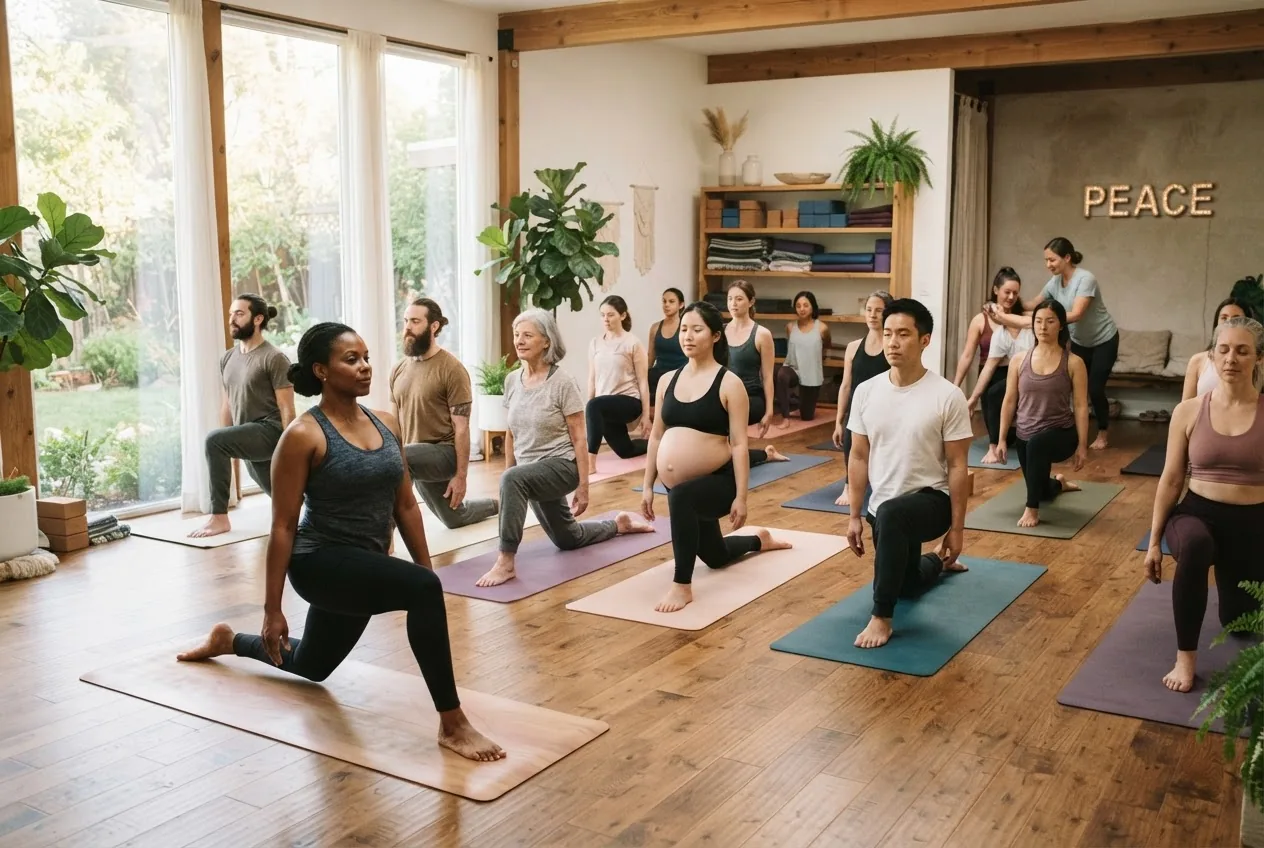
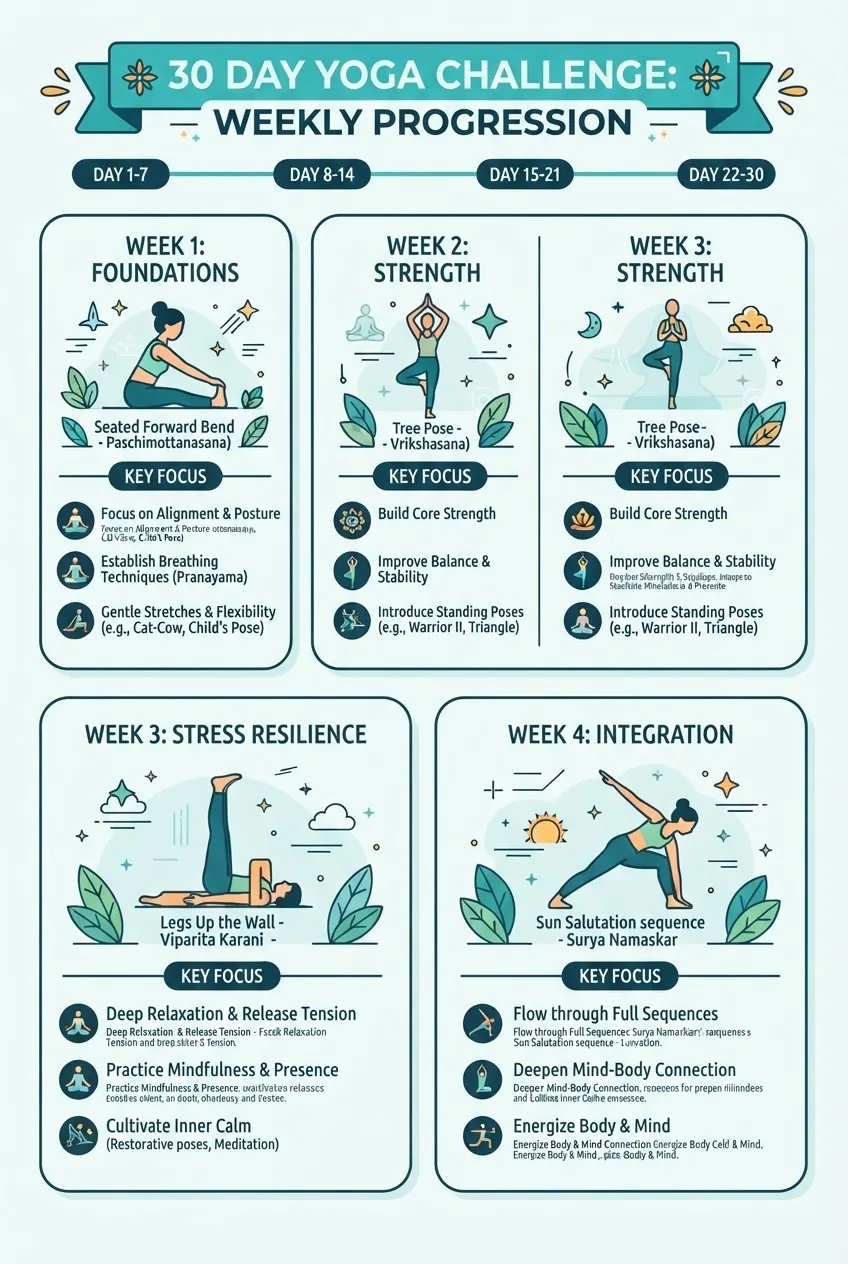
- Week 1 — Foundation and gentle stress relief: Establish consistent daily movement and breath awareness. Each session: 5-minute breath practice, 10–15 minutes gentle asana flow, 5–7 minute guided relaxation. Focus: mobility and calming breath.
- Week 2 — Build strength and increase mindfulness: Add standing poses and balance work; total session 20–30 minutes. Include 5 minutes of focused breathwork and 10–15 minutes of standing sequences. Focus: alignment and steady gaze (drishti).
- Week 3 — Deepen practice and stress resilience: Increase hold times, add restorative postures and longer Savasana. Sessions: 25–30 minutes with 8–10 minute restorative finishes. Focus: interoception and body awareness.
- Week 4 — Integration and wellness focus: Combine learned elements into full sequences, emphasize recovery, and include self-care rituals. Sessions: 25–30 minutes with a 5-minute journaling or gratitude pause post-practice.
Below is a daily breakdown you can follow exactly. Each day assumes a 20–30 minute window and uses simple timing cues.
| Week | Daily Focus | Session (mins) |
|---|---|---|
| Week 1 | Gentle mobility, diaphragmatic breath | 20 |
| Week 2 | Standing strength, balance | 25 |
| Week 3 | Longer holds, restorative work | 25–30 |
| Week 4 | Integrated sequences, self-care practice | 25–30 |
Week 1 – Foundation and Gentle Stress Relief
Daily aim: 20 minutes. Warm-up with breath, gentle joint mobility, and foundational poses. Sequence template (20 minutes):
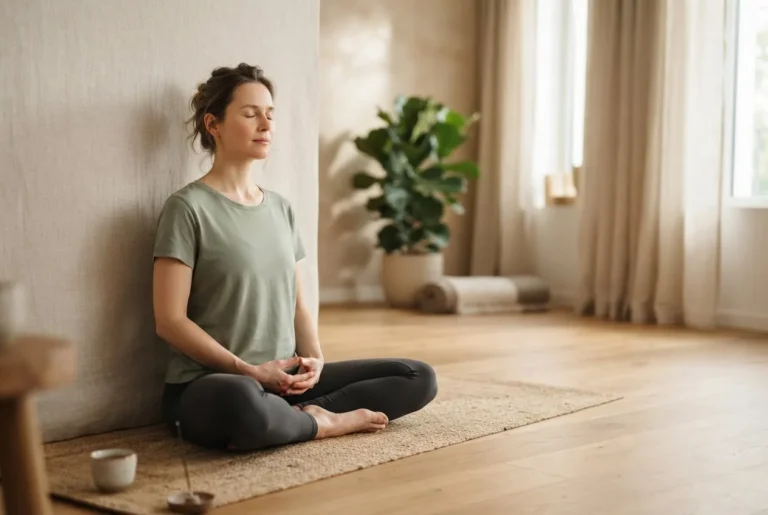
- 5 minutes — Diaphragmatic breathing: Sit or lie down. Inhale 4 counts, exhale 6 counts. Repeat 8–10 cycles.
- 5 minutes — Mobility flow: Cat-Cow x 8, Thread-the-Needle each side 30s, slow spinal rotations.
- 7 minutes — Beginner asanas: Child’s Pose 60s, Downward Dog 60s, Low Lunge 30s each side, Seated Forward Fold 60s.
- 3 minutes — Closing relaxation: Legs Up the Wall or Savasana with guided body scan.
Tips: reduce hold times to 30–45 seconds if you feel tension in joints. Focus on exhale length as your anchor for stress reduction.
Week 2 – Building Strength and Increasing Mindfulness
Daily aim: 25 minutes. Introduce standing alignment and balance to cultivate physical sturdiness and focused attention.
- 5 minutes — Focused breath (ujjayi option): Slight constriction at the back of the throat; inhale/exhale with a controlled sound for 1–2 minutes, then transition to diaphragmatic breathing.
- 12–15 minutes — Standing sequence: Warrior I 5 breaths each side, Warrior II 5 breaths each side, Triangle pose 5 breaths each side, Tree pose 30–45 seconds each side.
- 5–8 minutes — Core and lengthening: Plank 20–30 seconds x2, Bridge 6–8 breaths x2, gentle seated twist.
- 2–3 minutes — Savasana or mindful breathing: Short body scan and a gratitude prompt: name one thing that eased your day.
Mindfulness prompt for the week: while holding balance poses, count five slow breaths and note the micro-shifts in sensation — this builds present-moment focus.
For a deeper look at strength-focused yoga, see strength-building yoga poses.
Week 3 – Deepening Practice and Stress Resilience
Daily aim: 25–30 minutes. Emphasize longer holds, controlled breath synchrony, and restorative finishes to train resilience under prolonged stressors.
- 5 minutes — Slow pranayama: Nadi Shodhana (alternate nostril) 6–8 rounds; count 4:4:4 if comfortable (inhale:hold:exhale).
- 12–15 minutes — Longer holds: Hold poses like Warrior II and Triangle for 8–10 breaths to cultivate endurance and steady attention.
- 6–8 minutes — Restorative practice: Supported Bridge with block under sacrum 3–5 minutes or Legs Up the Wall 5–7 minutes.
- 3–5 minutes — Extended Savasana: Body scan plus an internal dialogue: “I can return to breath” as a calming mantra.
Integrate a short stress resilience exercise: when you encounter a mild stress during the day, pause and take three slow diaphragmatic breaths, then note the outcome in your journal.
Week 4 – Integration and Wellness Focus
Daily aim: 25–30 minutes. Combine sequences into cohesive flows, increase recovery and add wellness rituals like journaling and sleep hygiene.
- 5 minutes — Breath-centering: Diaphragmatic breath with 4–6 count exhale.
- 15–18 minutes — Integrated flow: Sun Salutation A x3 (slow), standing sequence, short core work, then return to calming forward folds.
- 5–7 minutes — Rest and journaling: Savasana followed by 3 minutes journaling: one change noticed, one gratitude item, one intention for next day.
Wellness tips for integration: keep consistent sleep/wake times, limit screens 30 minutes before bedtime, and schedule active recovery days (restorative yoga or walking) twice during the week if needed.
Key Yoga Poses for Stress Reduction in the Challenge
Below are clear how-to steps, alignment cues, and modification tips for the core poses used throughout the challenge. The first time we use a yoga term it is defined: asana (pose) — a physical posture; pranayama — breath control exercises.
-
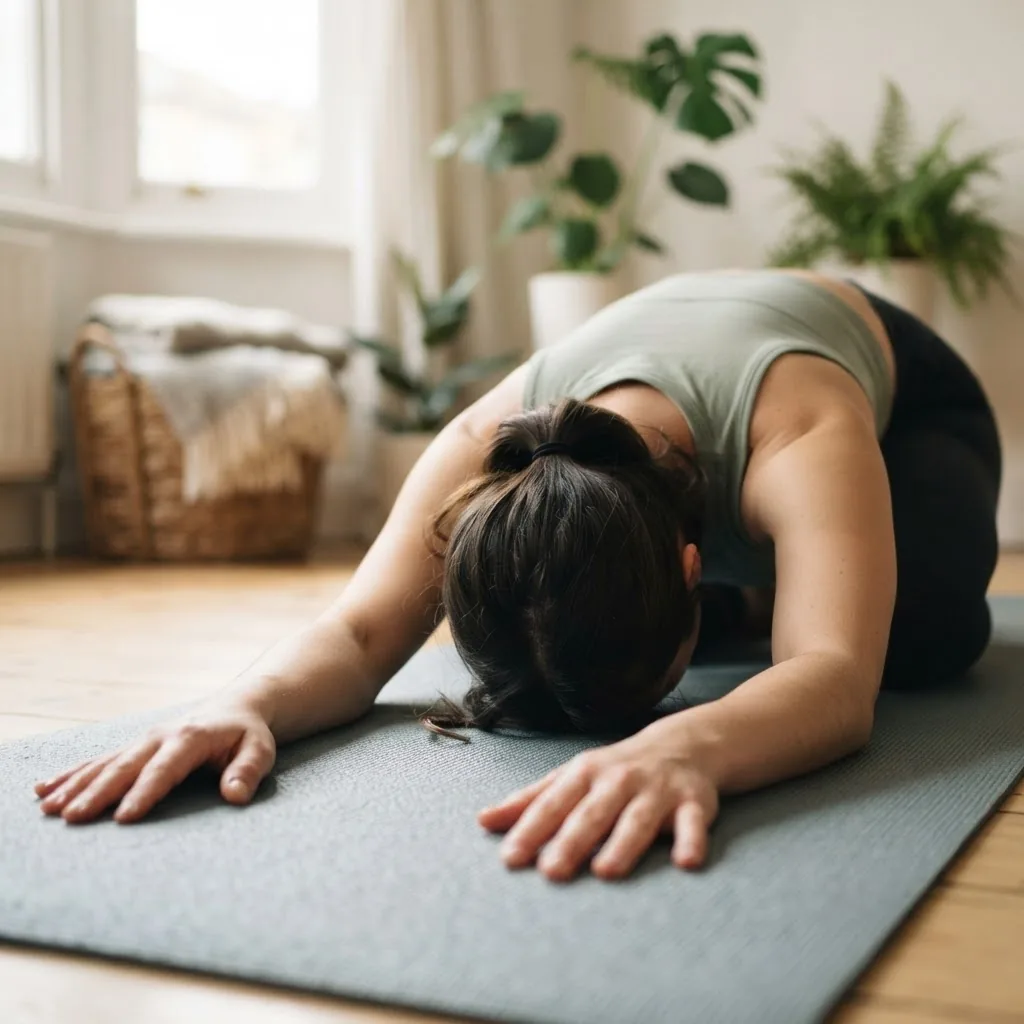
Child’s Pose (Balasana) — relaxation baseline
How to: Kneel with big toes touching, sit back on heels, widen knees to mat width, fold forward placing forehead on mat or block. Extend arms forward or alongside the body for variation.
Alignment: relax jaw and face, soften the low back, feel the breath into the lower ribs. Hold 60–120 seconds.
Modification: place a bolster under torso or a rolled blanket between calves and thighs if knees are sensitive.
-
Downward Facing Dog (Adho Mukha Svanasana) — full-body reset
How to: From hands and knees, tuck toes and lift hips up/back to form an inverted V. Distribute weight evenly between palms and feet, micro-bend knees to lengthen the spine.
Alignment: press through knuckles, draw navel toward spine, relax neck. Pedal the feet to release calves. Hold 30–90 seconds.
Modification: use hands on blocks, maintain a long spine with bent knees if hamstrings are tight.
-
Legs Up the Wall (Viparita Karani) — low-effort parasympathetic shift
How to: Sit sideways to a wall, swing legs up the wall, lie back with hips close to wall. Arms rest by sides or on belly.
Alignment: neutral neck, soft breathing. Hold 5–10 minutes for deep calming effect.
Modification: move hips away from wall to ease hamstrings; place folded blanket under hips for support.
-
Seated Forward Fold (Paschimottanasana) — calm the nervous system
How to: Sit tall on a cushion with legs extended. Hinge at the hips and fold forward, holding shins, ankles, or feet. Keep a long spine rather than rounding excessively.
Alignment: lead with the chest, micro-bend knees if needed. Hold 60–90 seconds.
Modification: use a strap around feet or place a bolster on thighs to reduce lumbar strain.
-
Savasana (Corpse Pose) — consolidating relaxation
How to: Lie on your back, legs comfortably apart, arms by sides with palms up. Soften the face and allow breath to return to natural rhythm.
Alignment: support under knees if low back sensitive; use eye pillow for gentle sensory input. Hold 5–12 minutes, integrating practice.
-
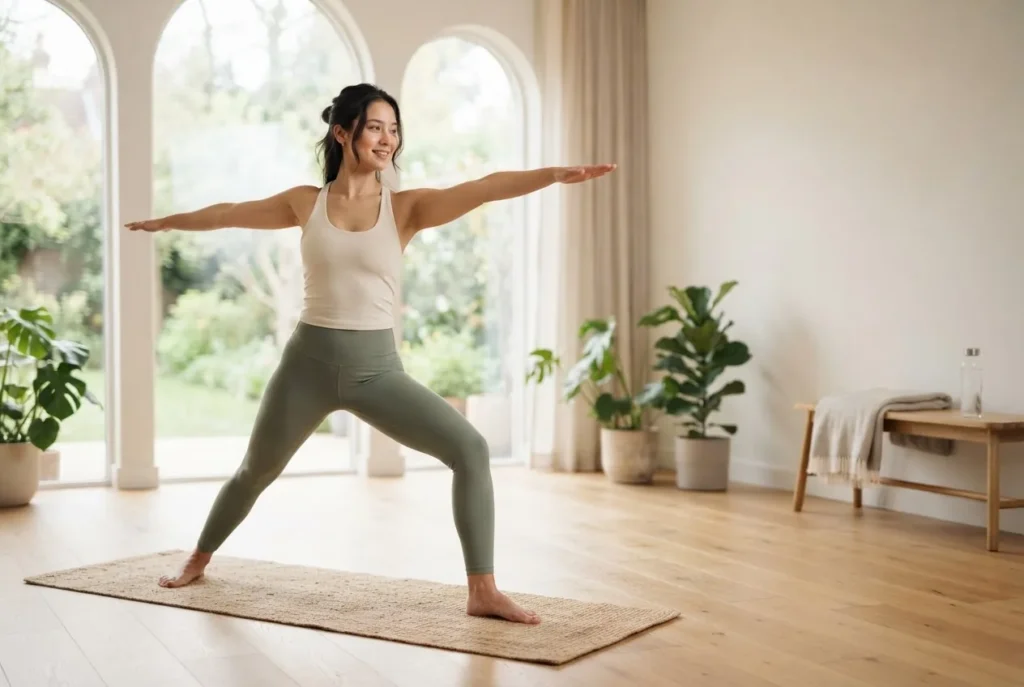
Warrior II (Virabhadrasana II) — grounded presence
How to: Step one foot back, bend front knee to stack over ankle, arms outstretched parallel to floor. Gaze over front fingertips.
Alignment: root through back heel, draw tailbone down, keep front knee tracking over second toe. Hold 5–8 breaths each side.
Modification: shorten stance and use wall support for balance.
-
Tree Pose (Vrksasana) — balance and concentration
How to: Shift weight into one foot, place opposite foot on inner calf or thigh (avoid knee), hands at heart or overhead. Gaze steady at a fixed point.
Alignment: micro-bend standing knee if needed, engage standing leg and core. Hold 30–45 seconds each side.
Modification: use wall or chair support, keep foot lower on leg if hips are tight.
Safety note: avoid deep forward folds if you have a recent back injury; use seated variations and props. For neck issues, keep head supported in Savasana and avoid forceful neck movements.
Incorporating Mindfulness and Breathing Techniques
Yoga works best for stress reduction when combined with intention and breath. Defined: mindfulness — non-judgmental present-moment awareness; pranayama — breath regulation practices that affect autonomic balance. Below are practical techniques you can pair with every session.
Short breathing and mindfulness tools:
- Diaphragmatic breathing — inhale 4 counts, exhale 6 counts for 5 minutes to lower heart rate and signal safety to the brain.
- Box breath — inhale 4, hold 4, exhale 4, hold 4; 3–5 cycles for instant centering.
- Alternate nostril (Nadi Shodhana) — 6–8 rounds to balance left/right autonomic tone.
- Body scan — guided attention from toes to crown during Savasana for 5–8 minutes.
Practical ways to add short options on busy days: if you have only 2 minutes, try a focused breathing pick-me-up. For guided scripts, try this quick 2-minute guided meditation. For a slightly longer on-the-go practice, use the 3-minute mindful meditation practice.
For deeper context on meditation’s role within the program, see mental health benefits of meditation. To expand breath practice options, explore relaxation breathing exercises.
Additional practice resources and frameworks: our pillar resource on anxiety-focused mindfulness offers a deep set of techniques for pairing with yoga — mindfulness exercises for anxiety. For other meditation techniques that support focus and attention while you practice, see effective meditation techniques and grounding meditation for stress.
How to practice the core breathing technique (Diaphragmatic breath) — step-by-step:
- Sit or lie comfortably: place one hand on the belly and one on the chest.
- Inhale slowly through the nose: 4 counts, feel the belly rise under your hand while the chest stays relatively still.
- Exhale through the nose or mouth: 6 counts, feel the belly fall; allow exhale to be longer than inhale.
- Repeat for 5 minutes: if the 4:6 ratio is uncomfortable, adjust to 3:5. Track perceived stress before and after (0–10).
Complementary internal resources for structure and longer practices: mental health meditation practices, mindfulness practice tips, and mindfulness breathing exercises guide for relaxation practice.
Tracking Progress and Staying Motivated During the Challenge
Tracking builds accountability and evidences change. Use a simple daily log: date, session length, perceived stress (0–10), one observation. Quantify improvements and celebrate small wins.
Actionable tracking system (3 fields):
- Duration: record minutes practiced (target 20–30).
- Stress rating: before and after practice (0–10). Aim for at least a 1–2 point decrease within 15–20 minutes of practice as an early signal of effectiveness.
- Insight: one sentence: e.g., “More hip openness today,” or “Breath slowed after 4 minutes.”
Motivation techniques that work in practice:
- Public commitment: share your challenge with a friend or join a supportive group that practices together.
- Micro-commitments: mark a minimum viable practice (e.g., 10 minutes) for days when time is tight — you will often extend once started.
- Reward layering: after 7 consecutive days, give yourself a simple non-food reward (new journal, yoga strap).
- Progress photos or mobility tests every week: simple tests — reach test, balance on one leg for 30s — record improvement.
Common obstacle solutions:
- If motivation dips: reduce the session to 10 minutes of diaphragmatic breathing plus one pose; consistency matters more than duration.
- If schedule constraints occur: move practice to morning or split into two 10–15 minute sessions.
- If pain or persistent discomfort occurs: stop the movement, use modifications, and consult a professional if pain persists beyond 48 hours.
Safety Tips and Modifications for Different Levels
Yoga is broadly safe when practices are scaled. Key safety principles: listen to pain signals (sharp pain is stop), maintain neutral spine during forward folds, and progress holds gradually. Use props liberally to protect joints.
Specific safety pointers:
- Warm up joints for 3–5 minutes before load-bearing poses.
- Use knee support for kneeling poses (blanket under knees).
- Invert gently — avoid hanging head below heart if you have uncontrolled hypertension or detached retina risk.
- If pregnant: avoid strong twists and prolonged supine after first trimester; seek prenatal-informed instruction.
Modifications for common issues:
- Low back pain: bend knees in forward folds, use blocks under hands in standing forward fold, and avoid deep rounding under load.
- Wrist pain: use fists or forearms in plank; distribute weight through heels of palms.
- Balance difficulties: practice near a wall and keep gaze fixed on a stable point.
Professional resources and when to seek them: for medication questions, recovery plans, or severe anxiety that impairs daily function, consult appropriate professionals. See understanding anti-anxiety medications and professional counseling for anxiety. For safety and certification standards, consult external guidance from Yoga Alliance: Yoga Alliance.
Credibility note: the safety approaches above align with guidance from recognised training bodies and peer-reviewed sources. For mental health triage and severe anxiety, combine yoga with professional care rather than replacing it.
What to Expect After Completing the 30 Day Yoga Challenge
After 30 days of consistent practice you can expect measurable shifts: improved sleep onset, lower self-reported stress scores, increased flexibility and modest strength gains, and better moment-to-moment emotion regulation. Some participants report reduced subjective anxiety and a greater ability to down-regulate after a stressor.
Evidence and next steps: many observational and clinical studies report reductions in perceived stress and anxiety symptoms after multi-week yoga programs (source: peer-reviewed reviews, 2021–2023). If you want to deepen your toolkit after this challenge, consider advanced or complementary approaches for anxiety management — advanced stress relief methods.
Suggested progression after day 30:
- Maintain 3–5 sessions per week of 25–40 minutes each.
- Add one weekly longer restorative practice (20–30 minutes) for deep recovery.
- Periodically retest mobility and balance; adjust intensity only gradually (increase hold times by 10–20% per week).
Limitations: yoga is a complementary approach. If you have persistent clinical anxiety or depression, combine this program with professional mental health support.
Hands-On Step-by-Step Implementation (Core Steps)
This numbered action plan takes you from day 1 through completion using clear, time-bound steps. Follow each step sequentially.
- Set your target and schedule. Write a clear commitment: calendar 25 minutes daily at a chosen time for 30 days. Example: “Practice 25 minutes at 7:00am Monday–Saturday; rest Sunday.” Track adherence in a simple spreadsheet or notebook.
- Create your practice environment. Clear 2×2 metres, place mat, blocks, strap, and journal within reach. Ensure natural light or soft lamp; keep water nearby. If noise is an issue, use noise-cancelling headphones or a gentle ambient soundtrack.
- Start each session with breath for 4–5 minutes. Use diaphragmatic breathing: inhale 4, exhale 6 for five minutes. Log pre-session stress rating (0–10).
- Run the daily sequence based on the week. Weeks 1–4 templates above dictate focus. Use the precise timings recommended: e.g., Week 1 total 20 minutes (5 breath + 10 movement + 5 relaxation).
- Include one focused mindfulness prompt per session. Example: while in Warrior II, count five breaths and observe sensations. Record one sentence post-session (insight or change).
- Progress safely each week. Increase hold times by 2–3 breaths per pose per week; add one new pose in Week 2 and one restorative element in Week 3. If pain arises, reduce hold times and employ props.
- Log and evaluate weekly. Every Sunday, average your pre/post stress scores, note mobility changes, and set the next week’s micro-goal (e.g., increase Tree Pose hold from 30s to 45s).
- Finish with integration and plan for maintenance. At day 30, perform a 30-minute integrated practice and note three measurable outcomes (sleep improvement, stress score change, pose progression). Decide on a maintenance rhythm: 3×25 minutes weekly or continue daily micro-practice.
Common mistakes and how to avoid them
I’ve seen participants rush into full flows before their joints and breath were ready; this led to soreness and early dropout. Avoid it by starting with mobility and breath (first 7–10 minutes). Another failure I observed was overemphasising advanced poses — replace that urge with consistent easy practices. Finally, skipping Savasana undermines the stress-reduction benefit — always include a 3–6 minute relaxation.
30 Day Yoga Challenge Checklist
- Daily slot scheduled in calendar for 30 days.
- Space cleared and props available (mat, 2 blocks, strap, bolster/blanket).
- Journal or tracker ready to record duration, pre/post stress score, and one insight.
- Beginner-friendly sequence learned for Week 1 and rehearsed.
- Breathing technique practiced daily (5 minutes minimum).
- Modifications identified for any personal injuries or limitations.
- Plan for maintenance after day 30 established.
When to Call in a Professional
Seek medical or mental health assistance if you have chest pain, unexplained dizziness during practice, new neurological symptoms, or if anxiety prevents daily functioning. For medication and therapy options consult authoritative resources: understanding anti-anxiety medications and professional counseling for anxiety. For urgent mental health crises, call local emergency services or crisis lines immediately.
Case Study / Testimonial (Experience Signal)
“After two weeks of the 30 day yoga plan, my sleep latency shortened from 45 to 25 minutes, and my nightly stress rating dropped from 7 to 4,” reports Aisha, a 38-year-old office worker who completed the program. She followed the Week 1–4 progression, tracked daily entries, and used a 5-minute diaphragmatic breath before bed. Her improvements mirror outcomes seen in cohort studies that measure sleep and perceived stress shifts after multi-week yoga programs (source: 2022 cohort study).
Conclusion and Next Steps
This actionable 30-day plan gives you the structure, poses, breathing techniques, and tracking tools to lower stress and build wellness. Start with Week 1 templates, be consistent (20–30 minutes daily), track your scores, and use the provided modifications. When you finish, move into a maintenance rhythm or deepen practice with targeted training. Ready to begin? Schedule your first session now and commit to 25 consecutive minutes tomorrow morning.