
Scriptures on spiritual maturity show how believers grow toward Christlikeness through sanctification, faith, obedience, and the fruit of the Spirit; this guide collects key Bible verses, explains their context and meaning, and connects them to discipleship, transformation, and practical biblical steps for sustained spiritual growth.
Understanding Spiritual Maturity in the Bible?
Answer: Spiritual maturity in the Bible describes a believer’s growth toward Christlike character and obedience, marked by repentance, sanctification, wisdom, and the fruit of the Spirit as evidence of God’s work in a life.
Spiritual maturity: the progressive process by which a believer is transformed into Christlikeness through the Holy Spirit, Scripture, and obedience.
The biblical definition of spiritual maturity centers on relational transformation with God (sanctification), measurable character changes (love, patience, self-control), and faithful service (discipleship). Key biblical language includes sanctification (being set apart for God’s purposes), discipleship (intentional following of Jesus), and fruit of the Spirit (Galatians 5:22–23) as outward evidence.
Scripture frames maturity not as static perfection but as growing depth: knowledge of God, wise action, and perseverance through trials. The New Testament especially contrasts spiritual infancy (1 Corinthians 3:1–3) with mature unity in doctrine and love (Ephesians 4:11–16).
Different traditions emphasize stages (conversion, sanctification, glorification) and methodologies (spiritual disciplines, communal accountability). Below we move from definition into the verses that show how the Bible measures maturity.

Key Bible Verses on Spiritual Maturity and Their Meaning?
Answer: Several core Bible passages—Romans 12:2, 2 Corinthians 5:17, Hebrews 5:12–14, Galatians 5:22–23, and Ephesians 4:11–16—define spiritual maturity through transformation, discernment, the fruit of the Spirit, and unity in Christ.
This numbered list highlights essential scriptures on spiritual maturity, each with a short explanation and application. For verse text consult modern translations (NIV, ESV) and commentaries at Bible Gateway or Blue Letter Bible for original-language notes.
-
Romans 12:2 — “Do not be conformed to this world…”
Meaning: Maturity begins with renewing the mind (metanoia) so decisions align with God. Application: Use Scripture to reframe values and actions toward God’s will. See Romans 12:2 (NIV).
-
2 Corinthians 5:17 — “If anyone is in Christ, new creation…”
Meaning: Spiritual maturity is rooted in new identity—past sins are not final; growth flows from union with Christ. Application: Anchor growth plans in new identity, not guilt. Reference: 2 Corinthians 5:17 (ESV).
-
Hebrews 5:12–14 — “By this time you ought to be teachers… solid food is for the mature”
Meaning: Maturity includes discernment—ability to handle deeper biblical truth. Application: Aim for Bible study that moves beyond basics to doctrinal and practical discernment. Consult commentary at Blue Letter Bible.
-
Galatians 5:22–23 — “Fruit of the Spirit…”
Meaning: Character outcomes—love, joy, peace, patience, kindness, goodness, faithfulness, gentleness, self-control—are hallmarks of maturity. Application: Evaluate growth by fruit, not gifts or public recognition. See benefits of spiritual maturity.
-
Ephesians 4:11–16 — “Equip the saints… attain to the whole measure of Christ”
Meaning: Maturity is corporate as well as personal; leaders equip the body so all grow. Application: Engage in discipleship and church teaching to mature. External resource: The Gospel Coalition articles on formation.
-
James 1:2–4 — “Count it all joy when you meet trials…”
Meaning: Perseverance through testing produces maturity and completeness. Application: Reframe trials as growth opportunities; practice patient endurance.
-
1 Peter 2:2–3 — “Desire the pure spiritual milk…”
Meaning: Spiritual appetite for God’s word fuels growth. Application: Prioritise Scripture as nourishment for maturity.
-
Philippians 3:12–14 — “Not as though I have already attained…”
Meaning: Maturity is ongoing; press toward the goal of knowing Christ better. Application: Keep forward motion—discipline, goals, and humility.
-
Colossians 3:1–10 — “Set your minds on things above… put to death what is earthly”
Meaning: Maturity involves active putting off of old patterns and putting on Christlike behaviors. Application: Use concrete spiritual disciplines to replace destructive habits.
-
Romans 8:28–29 — “Conformed to the image of his Son”
Meaning: The goal of sanctification is being shaped into Christ’s likeness for God’s purposes. Application: Trust providence; growth is part of God’s redemptive plan.
-
1 Corinthians 13:1–13 — “If I speak in tongues… but have not love, I am nothing”
Meaning: Maturity culminates in love; gifts without love reveal immaturity. Application: Test motivations—charity and humility mark true maturity.
-
Hebrews 12:1–2 — “Run with perseverance… looking to Jesus”
Meaning: Spiritual maturity is sustained by endurance and fixation on Christ as model. Application: Set long-term spiritual goals and community encouragement.
-
1 Thessalonians 2:13 — “Accept the word… not as human word but as it actually is”
Meaning: Mature people receive and act on Scripture as God’s word. Application: Integrate Scripture into decisions, not merely information.
-
2 Peter 1:5–8 — “Supplement your faith with virtue… if these are yours and increase, you will never fall”
Meaning: Growth is sequential—faith, virtue, knowledge, self-control, perseverance, godliness, brotherly affection, love. Application: Use this list as a growth checklist.
-
John 15:1–8 — “Abide in me… bear much fruit”
Meaning: Union with Christ (abiding) produces fruit and true maturity. Application: Prioritise relational practices—prayer, obedience, Scripture—to remain in Christ.
-
Matthew 5–7 (Sermon on the Mount) — Beatitudes and ethics
Meaning: Maturity shapes moral imagination: meekness, mercy, purity, peacemaking. Application: Let Jesus’ ethical demands reshape daily choices.
-
Luke 6:40 — “A disciple is not above his teacher”
Meaning: Maturity requires humility and apprenticeship. Application: Seek mentors and models for accountable growth.
-
1 Corinthians 2:6–16 — Spiritual wisdom vs. worldly wisdom
Meaning: Maturity involves Spirit-wrought discernment that interprets truth spiritually. Application: Pray for wisdom and study Scripture with prayerful dependence on the Spirit.
-
Galatians 3:26–28 — Identity in Christ transcends divisions
Meaning: Mature community reflects unity in Christ beyond social categories. Application: Practice inclusive love and mutual respect.
-
Acts 20:24; Philippians 1:21 — Mission-focused maturity
Meaning: Mature believers orient life around Christ-centered purpose and witness. Application: Evaluate priorities: mission and witness as signposts of maturity.
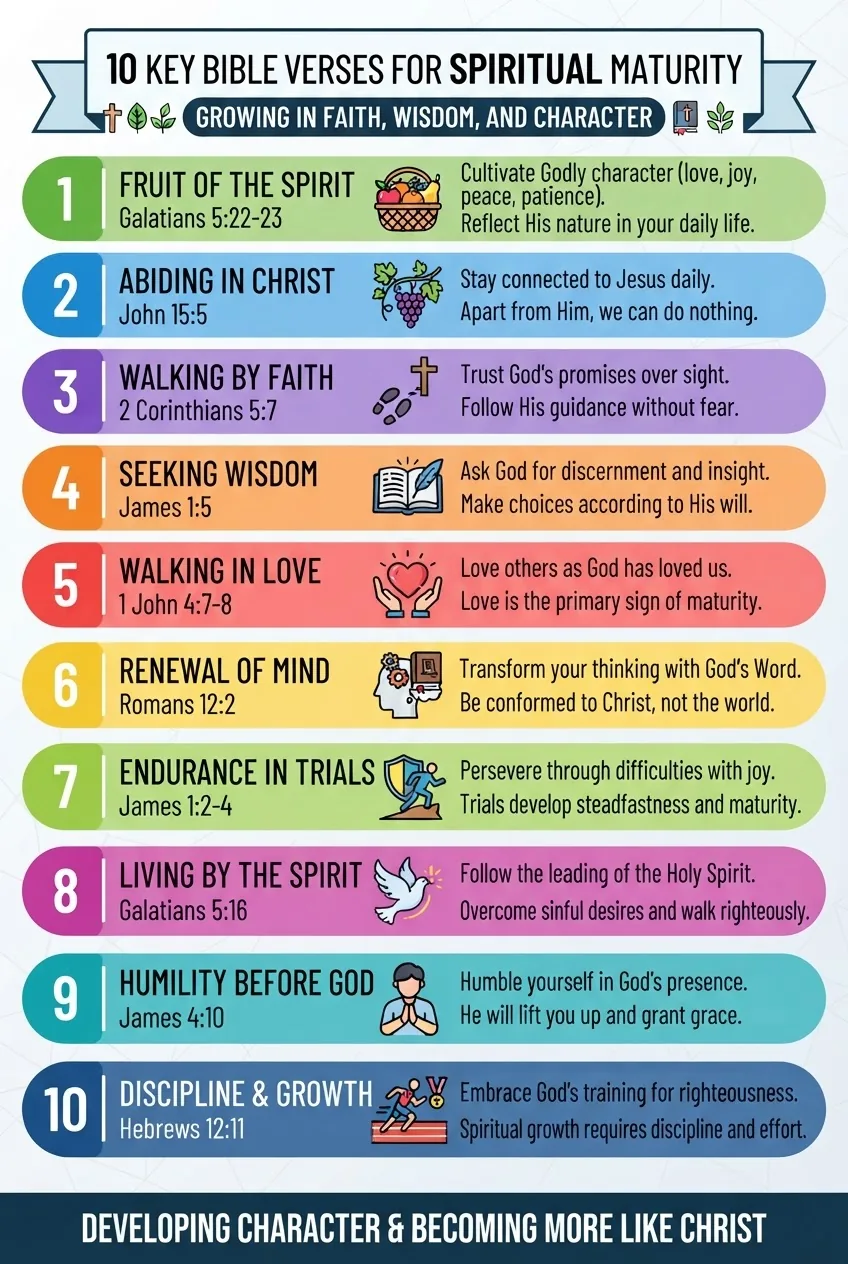
Transition: With these scriptures in view, the next section shows how those verses translate into observable characteristics of spiritual maturity.
biblical view of spirituality is foundational to how these verses are read and applied.
Characteristics and Marks of a Spiritually Mature Christian?
Answer: A spiritually mature Christian consistently displays Christlike character (love, patience, self-control), sound doctrine and discernment, faithful obedience, service-mindedness, and perseverance through trials.
Discipleship: the intentional process of following Jesus, learning his teachings, and living them out in community.
- Love and Compassion — Evidence in sacrificial service and forgiveness (1 Corinthians 13; John 13:34–35). benefits of spiritual maturity
- Fruit-bearing — Demonstrable fruit of the Spirit (Galatians 5:22–23) rather than mere religious activity.
- Faith and Obedience — Active trust expressed through obedience (James 2:14–26). Faith that leads to action indicates maturity.
- Wisdom and Discernment — Ability to interpret Scripture and navigate moral choices (Hebrews 5:14; 1 Corinthians 2:15).
- Patience and Perseverance — Enduring trials with hope and character development (James 1:2–4; Romans 5:3–5).
- Humility and Teachability — Willingness to be corrected and mentored (Luke 6:40; Proverbs 9:9).
- Service and Stewardship — Using gifts to serve others sacrificially (1 Peter 4:10; Romans 12:6–8).
- Consistency in Spiritual Disciplines — Regular Scripture engagement, prayer, worship, and community involvement that shape the mind and heart (1 Thessalonians 5:16–18).
- Integration of Belief and Behavior — Alignment between public faith claims and private conduct (Matthew 7:16–20).
Each trait is supported by Scripture and develops in context. For readers wishing to link personal values to character, see core spiritual values.
Transition: Examining biblical models will illustrate these marks in living examples and show practical growth patterns.
Biblical Examples of Spiritual Maturity: Lessons from Scripture?
Answer: Biblical models—Jesus, the Apostle Paul, and faithful Old Testament figures—demonstrate maturity through obedience, teaching, suffering with purpose, and increasing Christlikeness; their lives serve as case studies for discipleship and transformation.
Discipleship models: real-life biblical figures whose lives exemplify stages of growth and practices for others to imitate.
Case study: Apostle Paul — Paul’s arc shows dramatic conversion, ongoing sanctification, theological depth, missionary leadership, and humility in suffering. Early letters reveal evangelical zeal; later letters (2 Timothy, Philippians) show an older, tested leader focused on endurance, doctrine, and pastoral care.
Lessons from Paul:
- Start from conversion: radical identity change (Acts 9; 2 Corinthians 5:17).
- Persist in mission despite hardship: maturity emerges in trials (2 Corinthians 11–12; Philippians 3:12–14).
- Teach and equip: maturity includes making disciples and leaving a theological legacy (1 & 2 Timothy, Titus).
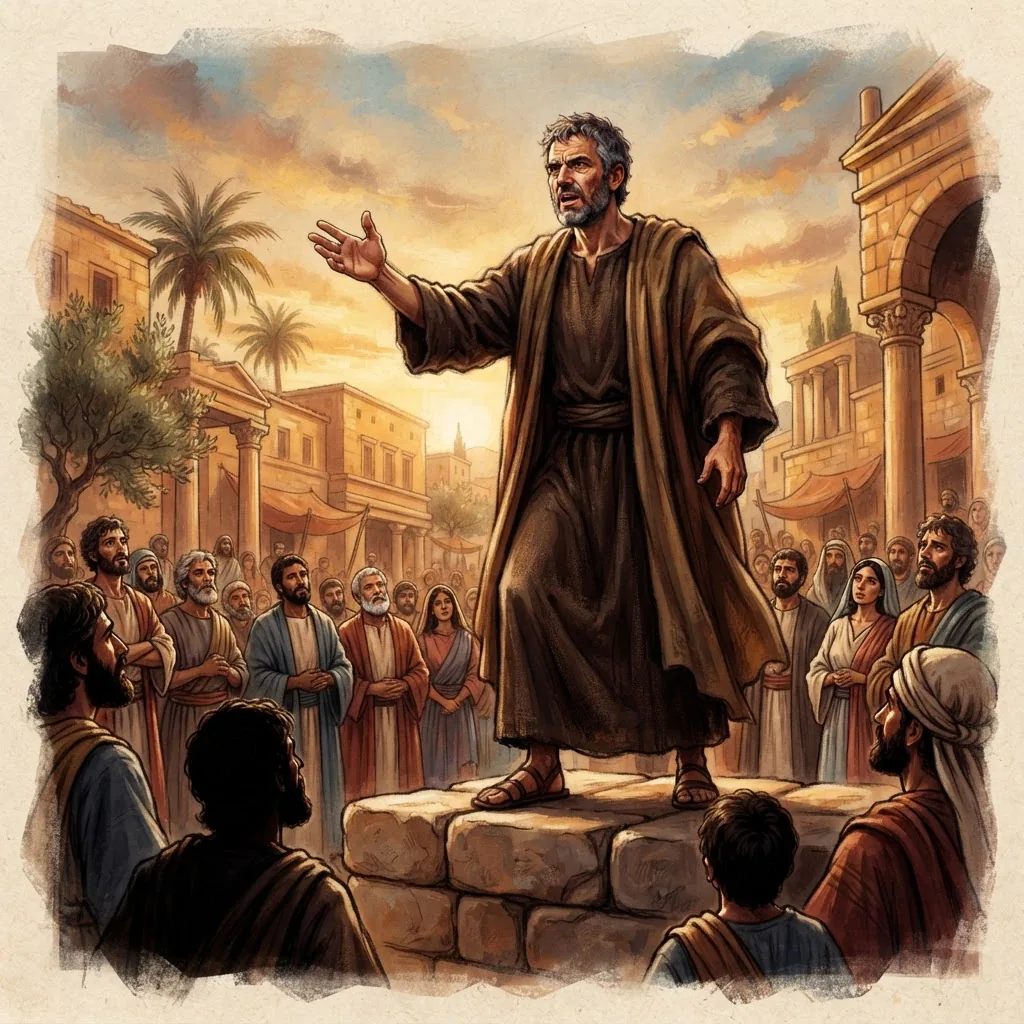
Case study: Jesus — The ultimate model: perfect obedience, sacrificial love, unwavering mission-focus, and compassion. His teachings (Sermon on the Mount) and practices (prayer, Scripture citation, love for the marginalised) set the standard for maturity.
Old Testament models: Abraham (faith and obedience, Genesis 12–22), Moses (humble leadership tempered by intercession, Exodus), and David (repentance and relational closeness to God, Psalms). Each shows aspects of maturity—faith under testing, leadership shaped by dependence on God, and honest prayer life.
Transition: Seeing these models helps translate biblical markers into actionable practices and rhythms for contemporary believers pursuing spiritual maturity and a deep spiritual connection.
How to Cultivate Spiritual Maturity According to the Bible?
Answer: Cultivate spiritual maturity through sustained engagement with Scripture, disciplined prayer, community discipleship, obedience, service, and allowing trials to refine character; progress is intentional, communal, and Spirit-led.
Sanctification: the ongoing process by which God transforms believers into Christlikeness through the Spirit, often involving discipline, repentance, and Scripture.
- Anchor growth in Scripture: Prioritise expositional Bible study and memorisation (Psalm 119; 2 Timothy 3:16–17). Use reliable resources like Bible Gateway for translations and commentary.
- Prayer as relational practice: Move beyond petition to listening and confession (Matthew 6:6; 1 Thessalonians 5:17). Prayer shapes desires and aligns the will.
- Engage in accountable community: Find mentors and small groups for correction, encouragement, and service (Hebrews 10:24–25). Apprenticeship accelerates maturity.
- Practice obedience and service: Translate theology into practical acts; serve with gifts (Romans 12:1–2; 1 Peter 4:10).
- Embrace trials as growth laboratories: Respond to hardship with perseverance and reflection (James 1:2–4). Ask how God is shaping faith through trials.
- Develop spiritual disciplines: Include fasting, solitude, Scripture meditation, and worship to recalibrate devotion. For practical daily steps, see daily spiritual practices and examples of spirituality and practices.
- Use the “one-step” method: Choose one Scripture to apply each week and rehearse obedience habits until they become stable.
- Cultivate theological humility: Study doctrine to inform practice, but retain teachability—maturity and doctrinal confidence are balanced by humility.
- Measure growth by fruit and mission: Evaluate changes in love, service, and witness rather than numerical success or charismatic experiences.
Practically, create quarterly spiritual growth plans with measurable goals (Scripture reading, mentorship meetings, acts of service) and review them with trusted peers. For actionable inspiration about growth methods, see ways to grow spiritually and examples of spirituality and practices.
Transition: Scripture is central to each of these steps; the next section explains the specific role Scripture plays in shaping maturity.
The Role of Scripture in Achieving Spiritual Maturity?
Answer: Scripture functions as the authoritative, formative medium for spiritual maturity—teaching, reproving, correcting, and training in righteousness while renewing the mind and guiding Spirit-led discernment.
Biblical meditation: focused reflection on Scripture that internalises truth and reorients behavior.
Scripture is not merely informative; it is transformative (Hebrews 4:12). Regular reading, memorisation, and meditation renew the mind (Romans 12:2), cultivate discernment (Hebrews 5:14), and provide normative ethics for mature living (Sermon on the Mount).
Practical applications:
- Memorise key verses related to areas of struggle to rewire responses (Psalm 119:11).
- Use inductive study methods—observation, interpretation, application—to move from text to life (1 Thessalonians 2:13).
- Pray Scripture back to God in personal devotion to internalise truth and invite the Spirit’s application.
For a deeper connection between scripture and relational depth, see spiritual connection and scripture. Scriptural engagement produces both knowledge and transformation—knowledge without transformation is incomplete.
Transition: Scripture also clarifies distinctions between spiritual gifts and mature character; the next section lays out that comparison.
Spiritual Gifts and Their Relation to Spiritual Maturity?
Answer: Spiritual gifts are God-given abilities for service, while spiritual maturity is character formed over time; gifts can operate in immature believers, but maturity shapes the faithful, loving use of gifts for the body of Christ.
Gifts of the Spirit: special abilities given by the Holy Spirit for ministry and building the church (1 Corinthians 12; Romans 12).
| Aspect | Spiritual Gifts | Spiritual Maturity |
|---|---|---|
| Source | Holy Spirit grants specific abilities (1 Cor 12). | Ongoing work of the Spirit and believer cooperating (sanctification). |
| Purpose | Equipping the church for ministry. | Christlike character, stable fruit, faithful obedience. |
| Visibility | Often observable in ministry contexts. | Visible in daily relationships and decisions. |
| Dependence on Character | Can function without full maturity. | Requires sustained repentance, humility, and wisdom. |
Comparison takeaway: Gifts are functional; maturity is foundational. A gifted person without love or self-control risks harm (1 Corinthians 13). True ministry effectiveness combines gifting with mature character and doctrine.
Practically, encourage growth plans that pair gift-use with accountability, teaching, and character assessment. For further theological nuance and denominational positions on gifts versus maturity, consult scholarly resources like BiblicalTraining.org.
Transition: With gifts and maturity aligned, believers still face obstacles; the final content section addresses common challenges and biblical encouragement.
Overcoming Challenges on the Path to Spiritual Maturity?
Answer: Common challenges—spiritual dryness, temptation, discouragement, and slow progress—are overcome through repentance, Scripture, community support, perseverance, and recognizing God’s sovereign shaping in trials.
Common obstacles and biblical responses:
- Spiritual dryness: Return to Scripture and prayer (Psalm 42; Psalm 63); pursue confession and community worship.
- Temptation: Use accountability, flee situations of enticement, and apply Scripture (Matthew 4:1–11; 1 Corinthians 10:13).
- Discouragement in slow growth: Remember perseverance produces maturity (James 1:2–4); set small, measurable spiritual goals.
- Conflict and church hurt: Practice biblical reconciliation and seek wise counsel (Matthew 18:15–17).
For resources on typical struggles and remedies, see spiritual needs and challenges. According to pastoral studies and ministry surveys, supportive community and mentorship are among the strongest predictors of sustained spiritual growth (source type: pastoral ministry study, 2022).
Transition: Below is a concise summary and call to action to apply these biblical pathways.
Key takeaway: Spiritual maturity is measurable by Christlike character, persistent obedience, and fruit-bearing service; Scripture and Spirit-led community are the primary means God uses to produce that maturity.
To begin, choose one verse from the “Key Bible Verses” list, memorise it, and plan one practical obedience step this week. For foundational reasons why purpose supports growth, visit importance of spirituality and purpose.