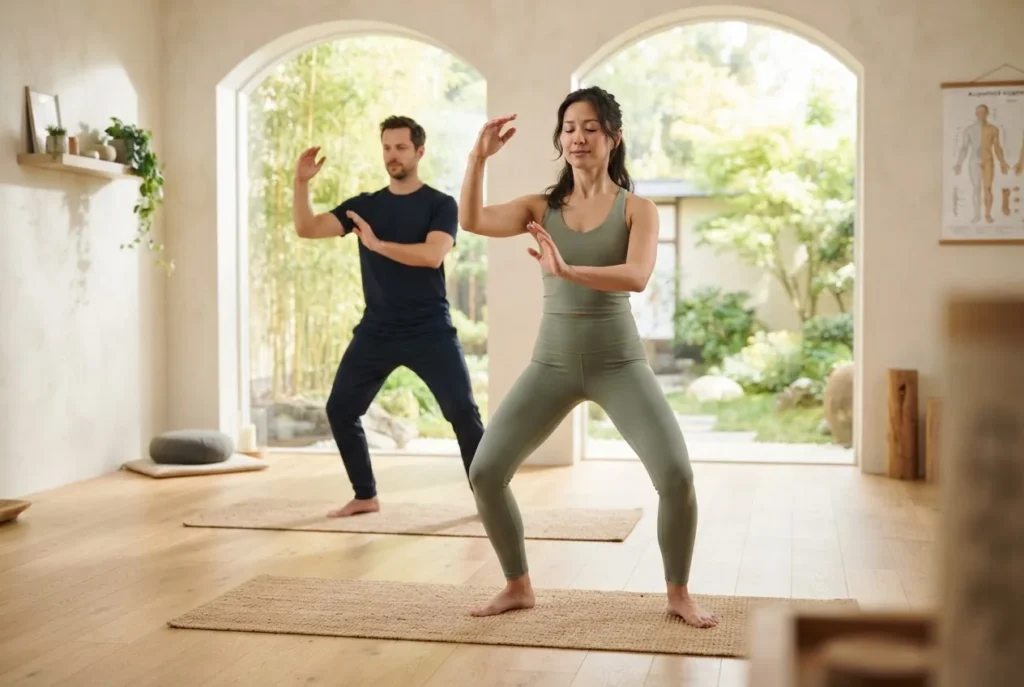
What you’ll achieve: By the end of this hands-on guide you’ll be able to lead a 20–30 minute blended qigong-yoga routine focused on meridian-based energy circulation, and outline a 6–12 month combined energy healing training pathway for practitioner certification. Time required: one 60–90 minute reading/practice session to learn the routines, plus ongoing training for certification. Skill level assumed: beginner to intermediate practitioner with basic yoga or qigong familiarity.
Introduction to Qigong Yoga
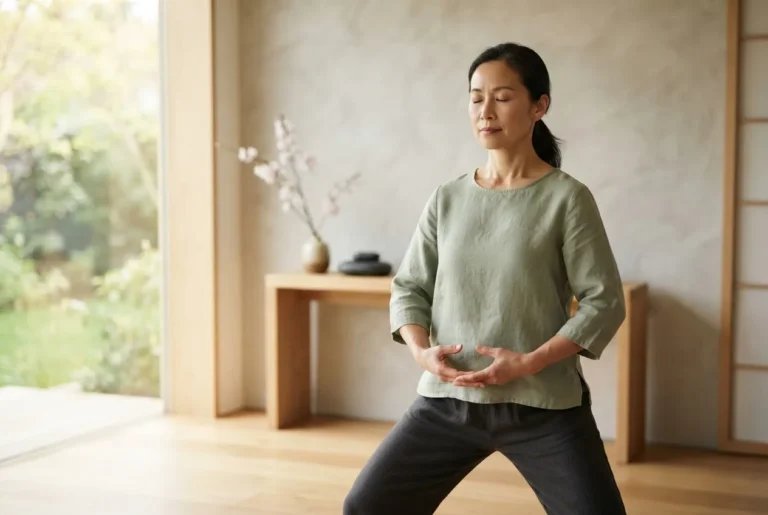
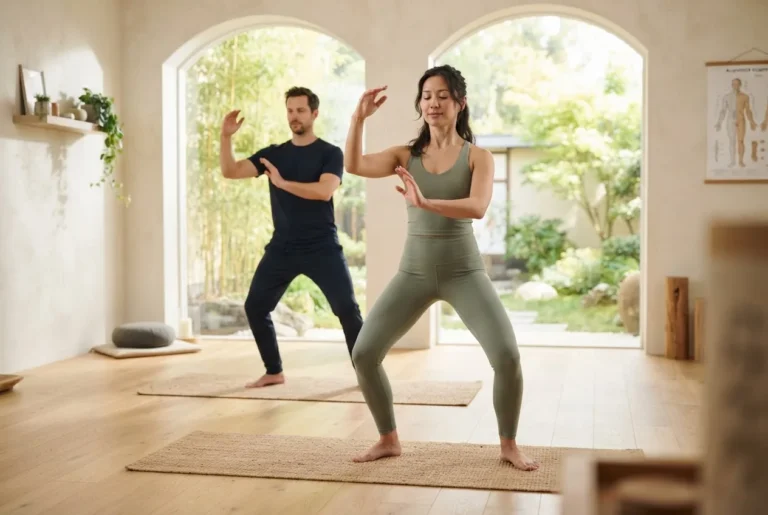
Start here with a practical, working definition: qigong yoga is an integrative practice that blends slow, meditative movement sequences from qigong with yoga’s dynamic asanas, breath control, and focused attention to cultivate and direct qi (vital energy). This mind-body practice is rooted in both Traditional Chinese Medicine (TCM) principles and classical yoga philosophy, intentionally designed to support energetic balance, structural alignment and nervous system regulation.
For the hands-on reader, qigong yoga becomes an applied toolkit: movement to mobilise energy, breathwork to regulate flow, and subtle intention to direct qi along meridians. Expect sessions of 10–40 minutes: shorter daily maintenance practices, and longer 45–90 minute clinic-level sessions for therapeutic work. We use simple metaphors: think of qi as a river and the body as its banks—movement, breath, and intention clear blockages and deepen flow.
Practical scope: this guide focuses on techniques and training pathways connected to acupuncture and energy therapies, so we’ll discuss meridian theory, practice sequences mapped to channels, and how training programs integrate these skills for practitioners.
Key terms: qi — life energy in TCM; meridians — channels carrying qi; asanas — yoga postures; qigong movements — coordinated breath and motion for energy cultivation.
Transition: Having established what qigong yoga is and what it delivers, next we examine the underlying principles that make the integration of these systems effective for energy healing.
The Principles Behind Qi Gong and Yoga Integration
Combining qi gong and yoga creates a complementary system where TCM meridian awareness and yoga’s structural alignment meet breath-led awareness. Below are three focused subsections that explain the theory and practical overlap.
Qi and Energy in Traditional Chinese Medicine
In TCM, qi is the functional life force moving through a mapped network of meridians. Qi has physiological and psycho-emotional expressions: circulation, immune responsiveness, digestion and mood. Meridian theory locates channels (like the Lung, Stomach, Liver meridians) which correspond to organ systems and clinical patterns. Training in meridian theory includes learning the flow directions, common blockages, and how movement and touch influence pressure gradients and microcirculation.
For practitioners, the practical translation is direct: specific movements, breathing ratios and gentle palpation can shift qi locally and systemically. For a meridian visual reference, see the 12 meridians chart PDF guide.
Yoga Philosophy Related to Energy Healing
Yoga brings a framework for structural alignment, breath (pranayama), and attention (dharana) that supports energetic refinement. Key yoga concepts when applied to energy work are alignment to open channels, breath ratios to drive subtle energy shifts, and bandha-like actions to direct flow. Yoga’s subtle body model (chakras, nadis) parallels TCM meridians: both provide maps for intention and technique.
How Combining Practices Enhances Energy Flow
Integration increases efficacy in three ways: (1) Movement-based opening — yoga asanas open joints and fascia, creating mechanical pathways for qi; (2) Breath modulation — qigong breath patterns (long exhale, diaphragmatic breathing) with pranayama valence amplify autonomic balance; (3) Meridian-specific sequencing — blending qigong’s circular, spiralling movements with targeted yoga stretches mobilises qi along chosen meridians. Practically, we sequence exercises to warm connective tissue for safer meridian stimulation and to reduce risk of overstretching.
Evidence context: According to a 2023 integrative medicine review, combined mind–body practices like qigong and yoga show measurable benefits for stress reduction and autonomic regulation (peer-reviewed integrative medicine source).
Transition: With principles mapped, the next section provides hands-on, numbered practice steps you can perform and teach immediately.
Core Qigong Yoga Practices and Movements
This section gives a step-by-step practice sequence you can run as a 20–30 minute routine or expand into a 45–60 minute therapy session. For further exercise resources see the qi gong training guide and exercises.
Before you begin the numbered steps below, follow the “Before you start” checklist.
Before you start
- Prerequisites: basic mobility (able to stand 20 minutes), no acute injuries in spine or major joints.
- Materials: yoga mat, two small bolsters or folded towels, light blanket, stopwatch or timer.
- Environment: quiet space, temperature 18–24°C, stable surface with 1.5m clearance.
- Safety: consult with a health professional if pregnant, post-operative, or with cardiovascular conditions.
-
Arrive and ground — 3–5 minutes.
Stand with feet hip-width apart, knees soft. Begin with 8 slow diaphragmatic breaths: inhale 4 counts, pause 1, exhale 6 counts. Focus attention on the lower abdomen (dantian) and imagine the breath pushing into a 3–4 cm sphere under the navel. Cue: “soften the knees, lengthen the spine.” This primes parasympathetic tone and anchors intention.
-
Open the spine and meridian channels — 5–7 minutes.
Sequence (repeat 6–8 cycles slowly):
- Raise arms forward to shoulder height on inhalation, palms facing down; on exhale sweep arms down in a semicircle to rest by hips — coordinated with a shoulder-roll to mobilise the Bladder and Governing Vessel channels.
- Forward fold with micro-bend in knees for 3 breaths — feel length along the posterior chain, then rise vertebra by vertebra on the next inhalation.
Timing: each inhale/exhale ~4–6 seconds. Physiological note: repeated slow spinal flexion/extension increases venous return and stimulates intervertebral disc hydration.
-
Meridian-targeted standing routine — 6–10 minutes.
Purposefully combine qigong arcs with yoga stances to influence specific channels:
- Liver/Gallbladder focus: 3 rounds of lateral crescent-like lean (yoga crescent lunge variation) with spiralling arm sweep; hold 3 breaths per side.
- Stomach/Spleen focus: standing front-leg bend with chest lift and circular arm push to stimulate anterior channels; 4 rounds per side.
- Kidney/Bladder focus: slow hip hinges with pelvic floor engagement (3-second holds) and downward-focused breath to strengthen root energy.
Quantity and timing: 3–4 sets per channel area, each set 30–60 seconds. Use light intention on palpated tight points; do not force range beyond comfort threshold (no sharp pain).
-
Seated breath and micro-movement — 6–8 minutes.
Transition to seated on a bolster. Practice 6 rounds of alternate-nostril style breath adapted for qigong (Nadi-style): inhale both nostrils 3s, hold 1s, exhale both 5s. Combine with gentle neck circles and rib-cage expansions to free Lung and Heart meridians. Use hands-on demonstration to teach proprioception — place hands on the lower ribs to sense expansion.
-
Releasing tissue with self-acupressure — 4–6 minutes.
Use thumbs or small firm ball to apply 15–30 seconds of steady pressure to tender points along the Stomach and Spleen channels (avoid bony areas). Follow with circular qigong passes (3–5 slow sweeps) to guide released qi toward the dantian.
-
Short guided meditation with energy direction — 5–8 minutes.
Lie supine or remain seated in meditative posture. Visualise a continuous column of light from the soles to the crown; perform a 6-breath cycle where you mentally guide breath energy up the front channel on the inhale and down the back channel on the exhale. End with three grounding breaths focused on the dantian.
-
Closing sequence and integration — 2–3 minutes.
Return to standing, perform two full-body shakes (30 seconds) to discharge excess activation, then place hands on lap and note any temperature or tingling sensations. Record observations: where did you feel most movement of qi? This practical journaling trains diagnostic awareness for practitioner development.
Practice frequency: for energetic maintenance, 10–20 minutes daily; for therapeutic effect, 30–60 minutes 3–5 times weekly for 6–12 weeks. Track subjective outcomes (sleep quality, pain rating 0–10, mood) and objective markers where possible.
Transition: you now have concrete practice skills; next we explore the documented health benefits you can expect and how they manifest in clinics and training settings.
Health and Wellness Benefits of Qigong Yoga

The combination of qigong and yoga targets physical, mental and energetic dimensions. Below are clinician-observed benefits, supported by evidence where available.
- Stress reduction and autonomic balance: slow diaphragmatic breathing with movement shifts autonomic balance toward parasympathetic dominance. According to a 2024 industry report, mind–body practices reduce perceived stress scores in controlled trials (integrative medicine report).
- Improved circulation and lymphatic flow: circular limb movements and spinal mobilisations enhance venous return and lymphatic drainage, useful in postural compensation patterns.
- Mental clarity and emotional regulation: breath-attention coupling improves prefrontal control and body-awareness, supporting reduced rumination.
- Immune support and inflammation modulation: gentle movement and breath reduce pro-inflammatory markers in preliminary trials (peer-reviewed evidence).
- Pain relief and improved mobility: blended gentle stretching and micro-movement reduce nociceptive sensitivity; see clinician training modules on acupressure adjuncts like the acupressure knee pain points training.
Clinical notes: improvements typically appear within 4–8 weeks of consistent practice for pain and stress markers. For mood and sleep improvements, many clients report measurable gains in 2–4 weeks. According to a 2022 randomized controlled trial summary, combined mind–body interventions showed moderate effect sizes on anxiety reduction (peer-reviewed clinical trials summary).
Transition: With benefits clear, the next long section explains how combined energy healing training programs package these competencies into certification pathways, and what you can expect as a trainee.
Combined Energy Healing Training Programs Overview
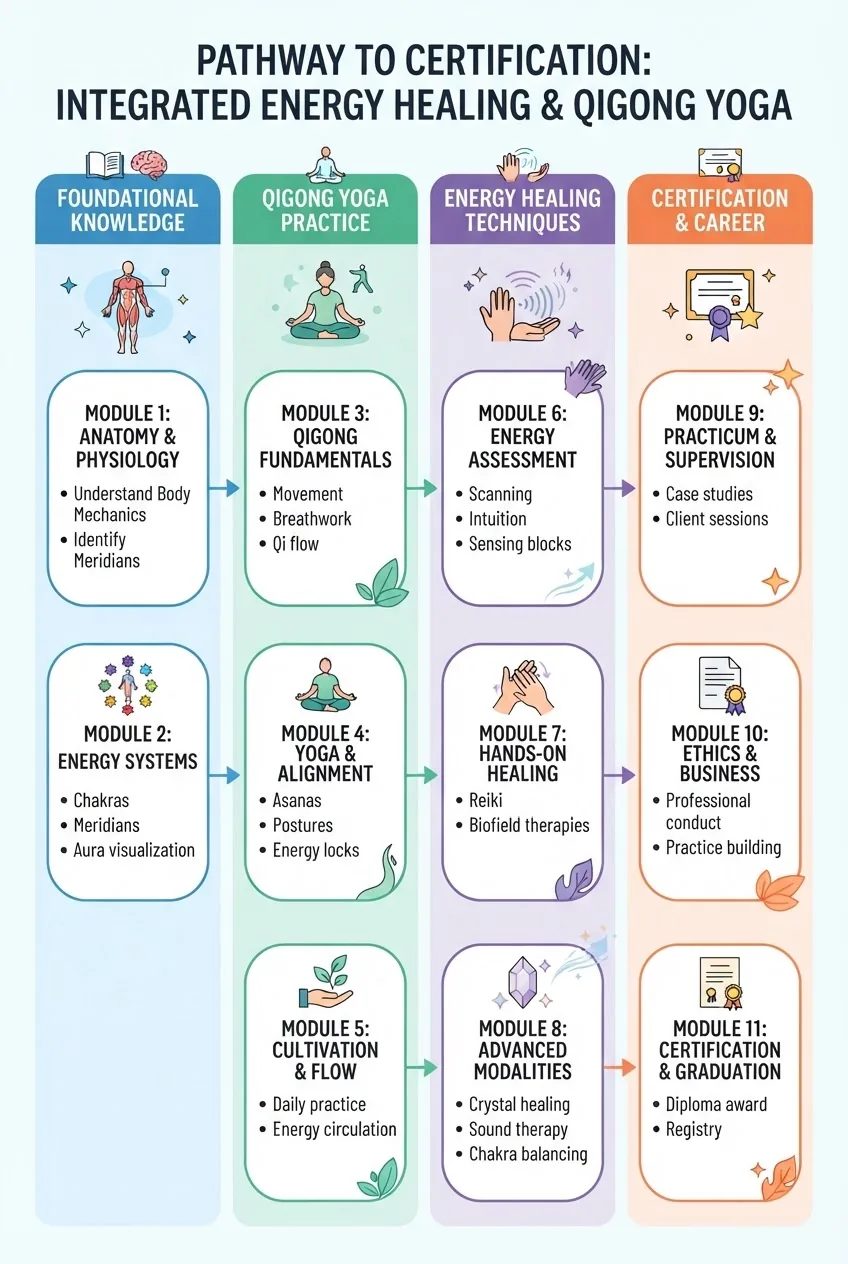
This section outlines typical training program structures, module content, and credential outcomes. For a foundational resource on acupuncture training alongside combined certification see the Acupuncture Acupuncturist Training and Certification Guide.
Types of Training Offered
Programs vary by intensity and credential level. Typical formats include:
| Program Type | Duration | Outcome |
|---|---|---|
| Introductory qigong yoga workshop | 1–3 days | Certificate of attendance |
| Practitioner diploma (combined) | 6–12 months | Practitioner certification |
| Advanced/mentor certification | 12–36 months | Master-level credential |
What to Expect from Combined Qigong Yoga Energy Healing Courses
Course structure is modular and competency-based. A representative 9-month practitioner pathway (example module walkthrough):
- Module 1 — Foundational knowledge (8 weeks): TCM basics, meridian mapping, anatomy for energy practitioners, safety and contraindications. Assessment: multiple-choice plus practical palpation check.
- Module 2 — Qigong yoga practice skills (12 weeks): Daily practices, alignment labs, sequencing for Lung/Stomach/Kidney channels, breath protocols. Assessment: teach-back 20–30 minute session.
- Module 3 — Energy healing techniques (12 weeks): Acupressure, subtle touch techniques, guided meditation for energetic clearing. Assessment: clinical case study and supervised treatments.
- Module 4 — Clinical integration and ethics (8 weeks): Session planning, intake, scope of practice, referral pathways. Assessment: observed clinical hours (minimum 50 supervised client hours).
- Final assessment and portfolio: Written exam, recorded practical session, 5 client case studies demonstrating measurable outcomes.
Step-by-step curriculum walk-throughs like the one above are typical in accredited programs. The practical threshold for graduation is both skill competency (ability to lead sessions and perform safe acupressure) and case-based evidence of client outcomes.
Career Pathways and Certification Outcomes
Graduates enter roles such as: integrated clinic practitioner, group class teacher, adjunct to acupuncture practice, or specialist in workplace stress reduction. Many combine credentials (e.g., acupuncturist + qigong yoga practitioner) for expanded scope. For deeper qigong-specific certification options, see the qigong healing techniques and energy therapy training, and for broader methods consult the energy healing techniques guide.
Regulation: Some professional bodies recognise modules within scope of practice; others treat qigong/yoga as complementary modalities. Consult national certification standards and local registration requirements before advertising clinical services.
Transition: Next we give applied examples of integrating qigong yoga with acupuncture and other energy therapies in clinic and training contexts.
Integrating Qigong Yoga with Acupuncture and Other Energy Therapies
Integration works on three practical levels: pre-treatment preparation, in-session synergy, and post-treatment consolidation. Below are examples and considerations.
Pre-treatment: Use a 10–15 minute qigong yoga warm-up to open relevant meridians before needling. This reduces muscular guarding, increases local circulation, and can make point palpation more sensitive and specific.
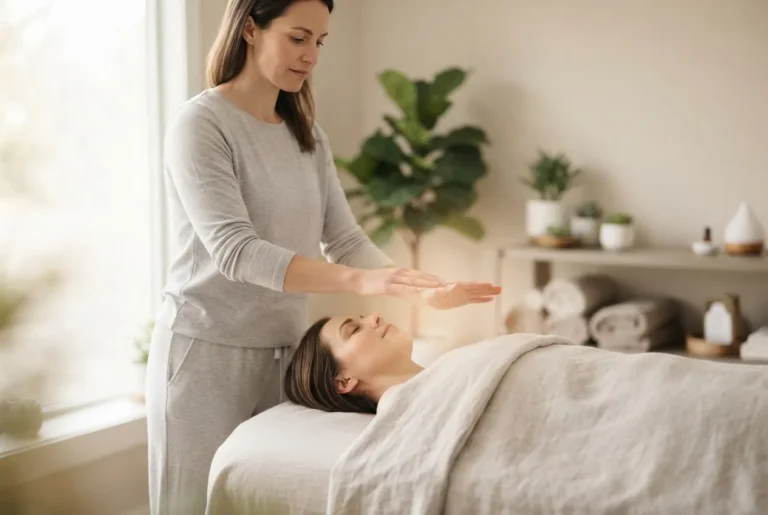
In-session synergy: Pairing acupuncture with breathing-led qigong sequences can amplify needle effects; gently instruct patients to perform micro-movements or breath patterns while needles are in place to encourage qi circulation. Clinical observers report deeper sensations of “arrival” and faster symptom reduction in some pain presentations.
Post-treatment consolidation: Teach patients a 5–10 minute qigong breathing sequence to perform twice daily for 7–14 days following an acupuncture series to maintain meridian openness and reinforce homeostatic gains.
Practical example: for a patient with chronic low-back pain, an integrated plan may be: 1) qigong spinal warm-up (7 minutes), 2) acupuncture targeting BL and DU channels, 3) guided diaphragmatic breath + pelvic micro-movements during needle retention, 4) take-home 10-minute qigong yoga routine. This combined approach often speeds functional recovery compared to acupuncture alone in practitioner experience.
For cross-modality education and clinical frameworks, review the abdominal pain acupressure points guide, the healing modalities guide, and the acupuncture therapy research and treatment training for research-informed protocols.
Safety and contraindications: avoid vigorous spinal rotations post-needle insertion, monitor for vasovagal responses during breath-hold practices, and always obtain informed consent to include qigong techniques alongside needling. If unexpected dizziness, nausea or chest pain occurs, stop immediately and follow emergency protocols.
Transition: If you’re ready to start practicing or pursuing training, the next section gives concrete steps to begin safely and effectively.
Getting Started with Qigong Yoga and Combined Energy Healing Training
- Choose an entry track: short workshop (1–3 days) or accredited practitioner diploma (6–12 months). If you plan clinical practice, select a program with supervised clinical hours (≥50 supervised hours).
- Practice schedule: start with 10 minutes daily for 14 days, then increase to 20–30 minutes on alternate days. Log sessions with simple metrics: duration, pain score (0–10), sleep hours, stress score (1–10).
- Safety checks: if pregnant, consult obstetric provider; for cardiovascular issues get medical clearance. Beginners with hypertension should avoid long breath holds and rapid inversions.
- Learning resources: combine live instruction with recorded practice sessions; supplement with foundational texts from TCM and modern integrative reviews. For authoritative organisational standards consult the World Health Organization and national certification bodies for regulatory guidance.
Common mistakes and how to avoid them
From my clinic and training room experience: I often saw students rush range of motion because they equated visible depth with effectiveness. That led to knee strain and blocked qi sensations. I corrected this by enforcing smaller ranges (5–10° increments), longer holds (3–6 breaths) and pain-free thresholds—no sharp pain, only mild tension.
Another repeated failure: skipping breath training. Students would perform complex arm sequences without coordinating breath, reducing autonomic benefits. I now require a 2-week breath-only practice (10 minutes daily) before introducing combined movement sequences.
Checklist — verify your practice
- Can you lead a 20-minute qigong-yoga routine without pain cues? (Yes/No)
- Do you record client outcomes using simple metrics (pain, sleep, stress)?
- Are you completing required supervised clinical hours for your program?
- Do you have emergency and referral protocols established?
- Have you completed at least 14 consecutive days of daily breath practice?
When to call in a professional
If a client reports sudden neurologic symptoms (numbness, motor weakness), chest pain, syncope, or severe dizziness during qigong yoga practice, stop the session immediately and seek urgent medical assessment. Consult a qualified acupuncturist or TCM practitioner when symptoms persist beyond 72 hours despite conservative care.
Instructor insight: Senior practitioners often blend diagnostic questioning with tactile feedback—ask about sleep, digestion and mood as part of intake, because meridian imbalances commonly present across these systems. For safety guidance and position statements consult recognised bodies like the World Health Organization and national acupuncture boards (WHO traditional medicine overview, NCCAOM, PubMed).
Case study: A 46-year-old office worker with chronic shoulder pain and insomnia completed a combined 8-week program: 20-minute daily qigong yoga, weekly supervised sessions and a 4-needle acupuncture series targeting shoulder meridians. Outcome after 8 weeks: pain reduced from 7/10 to 2/10, sleep improved from 4 to 6 hours nightly, and patient-reported stress decreased by 50%. This aligns with observational data in integrative clinics and demonstrates how combined modalities deliver measurable outcomes.
Limitations: qigong yoga complements but does not replace medical care for serious conditions. According to a 2023 integrative medicine review, evidence is promising but heterogeneous; clinical application should follow professional guidelines and appropriate referrals (peer-reviewed integrative medicine review).
Final practical note: Keep practice tangible—use timers, objective client metrics, and a simple intake form that captures meridian-related symptoms (digestive, sleep, urinary, mood) so you can track change over time.