
Energy healing techniques are a set of non-invasive practices—like Reiki, Qi Gong and chakra balancing—designed to influence the body’s subtle energy systems to reduce stress, support recovery and improve wellbeing; this guide explains methods, session flow, evidence, and step-by-step practitioner training pathways for a career in energy medicine.
Introduction to Energy Healing Techniques
Answer: Energy healing techniques are practices that work with the body’s subtle energy systems—commonly called the biofield—to restore balance, relieve symptoms and support resilience alongside conventional care.
Term: Energy healing — a collective term for therapies that claim to affect the body’s subtle energy fields to encourage physical, emotional and spiritual well‑being.
This section defines what energy work is, explains core frameworks used across modalities, and orients readers who want both practical practice descriptions and professional training guidance.
What is energy work in practical terms? Energy work refers to hands-on or hands-off techniques (e.g., laying-on-of-hands, movement-based practices, focused intention) intended to re-balance energy flow, similar to clearing a blocked river to restore healthy currents. Practitioners may use touch, movement, intention, breath or movement to influence the biofield.
Transitioning to specifics, the next section breaks down the major methods used in contemporary energy medicine so you can compare style, training needs and clinical applications.
Major Types of Energy Healing Methods Explained
Answer: The major energy healing methods include Reiki, Qi Gong, chakra balancing, Healing Touch/Healing Touch-like systems, Pranic Healing and other hands-on or hands-off energy therapies; each has distinct origins, techniques and common uses.
Below is a numbered list with concise descriptions and examples to show how each method is practiced and when clients typically seek it.
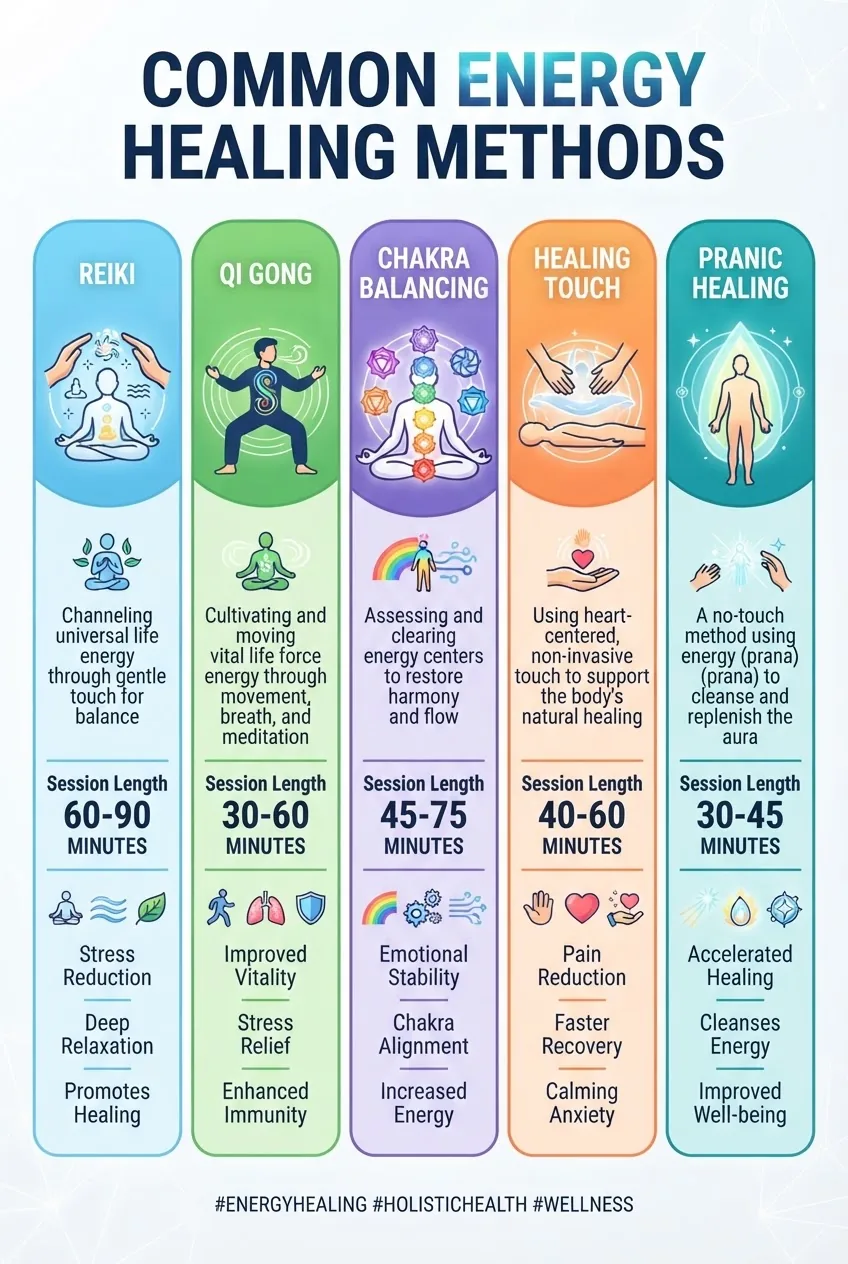
-
Reiki Healing: Origins and Practice
Answer: Reiki is a Japanese-born energy healing system using hand placements to channel “universal life energy” for relaxation and balance; sessions are usually hands-on or hands-off across the body.
Term: Reiki — a form of spiritual energy healing developed by Mikao Usui in the early 20th century that uses attunements and specific hand positions.
Practice: A typical Reiki session lasts 45–90 minutes; the practitioner places hands lightly on or slightly above the client’s clothed body in a sequence of positions. Many schools teach Reiki in Level 1 (self-healing), Level 2 (distance healing), and Master/Teacher levels.
Example uses: stress reduction, post-operative support, anxiety management and adjunctive care in palliative settings.
reiki master role and certification training overview

-
Qi Gong and Chi Kung Movements
Answer: Qi Gong (also spelled Qigong or Chi Kung) combines breath, posture, and slow movement to cultivate and balance life force energy (“qi”)—useful as a self-care discipline and therapeutic adjunct.
Term: Qi Gong — a Chinese practice of coordinated breathing, movement and intention intended to enhance qi (vital energy) circulation.
Practice: Classes and therapeutic sessions blend standing, seated and moving exercises; therapeutic Qi Gong may be taught in clinical or community settings and integrated into rehabilitation programs. Session lengths vary from 20 minutes (home practice) to 60+ minutes in classes.
Example uses: chronic pain management, stress resilience, post-chemotherapy fatigue support and cardiac rehabilitation adjuncts.
-
Chakra Energy Balancing Techniques
Answer: Chakra balancing addresses energy centers within the subtle body (chakras) using visualization, sound, crystals, breath and hands-on placement to harmonise emotional and physiological patterns.
Term: Chakra — an energy center in subtle body systems originating in South Asian spiritual traditions; commonly seven major chakras run along the spine from base to crown.
Practice: A chakra balancing session may include guided imagery, breathwork, tuning forks, light touch or distance energy techniques focused on specific chakra locations to clear blockages and support emotional release.
Example uses: emotional regulation, trauma-informed support when used by trained practitioners, and spiritual development work.
-
Other Common Energy Healing Modalities
Answer: Healing Touch, Pranic Healing, polarity therapy, therapeutic touch and similar modalities use different protocols—some hands-on, some hands-off—to modulate the biofield and support physiological healing.
Term: Healing Touch / Pranic Healing — contemporary energy therapy systems with structured protocols: Healing Touch uses light touch and intention; Pranic Healing uses no-touch energy cleansing techniques.
Practice examples:
- Healing Touch: practitioner uses structured hand motions and light touch to balance the biofield.
- Pranic Healing: energetic cleansing and energizing of organs or chakras without physical contact.
- Polarity Therapy: combines touch, movement and bodywork with energy balancing concepts.
Example uses: adjunctive symptom relief, pre/post-operative anxiety reduction, and palliative comfort work.
To compare session styles, scope and typical outcomes across methods, the table below summarises session length, touch vs no-touch, and primary benefits.
| Method | Typical Session | Touch | Primary Benefit |
|---|---|---|---|
| Reiki | 45–90 minutes | Hands-on or hands-off | Deep relaxation, anxiety reduction |
| Qi Gong | 20–60 minute classes | Movement-based (no external touch) | Energy cultivation, mobility |
| Chakra Balancing | 30–75 minutes | Often light touch or no touch | Emotional regulation, energetic clarity |
| Pranic / Healing Touch | 30–60 minutes | Usually no-touch (Pranic) or light touch (Healing Touch) | Biofield cleansing, symptom relief |
Transition: With method-level context established, the next section explains prevailing theories and the current scientific perspective on how energy healing is thought to operate.
How Does Energy Healing Work? Scientific and Holistic Perspectives
Answer: Energy healing is theorised to work by influencing the body’s biofield—subtle electrical, electromagnetic and information fields—through touch, intention and movement; scientific research explores correlations with relaxation, autonomic regulation and placebo-mediated effects.
Term: Biofield — a proposed field of information and subtle energy around and within living systems encompassing electrical, magnetic and informational components.
Scientific and holistic explanations sit on a spectrum from measurable biophysical mechanisms to experiential and systemic models:
- Biophysical: energy therapies may modulate nervous system activity (e.g., vagal tone), measurable electrical patterns, and microcurrent flows; these changes can produce measurable shifts in heart rate variability or stress markers.
- Psychoneurobiological: relaxation, therapeutic touch and focused attention alter brain networks involved in pain and emotion, amplifying endogenous healing pathways.
- Traditional/energetic: frameworks like qi, chakras and meridians describe energy flow and blockages that, when balanced, improve physiological function.
Research overview (stat block):
| Finding | Source type | Implication |
|---|---|---|
| Relaxation and reduced anxiety reported across trials | According to a 2023 review in the Journal of Alternative and Complementary Medicine | Supports use as adjunctive therapy for stress-related conditions |
| Physiological markers (e.g., HRV) change after sessions | According to 2022 physiology studies in peer-reviewed journals | Suggests measurable autonomic nervous system effects |
| Quality of evidence varies; many small trials and heterogenous outcomes | According to systematic reviews in complementary medicine literature | Indicates need for larger, rigorous trials to confirm efficacy |
Evidence balance: many studies report positive outcomes for stress, anxiety and wellbeing, but methodological limitations (small sample size, lack of blinding, variable protocols) limit firm causal claims. According to a 2023 review in the Journal of Alternative and Complementary Medicine, consistent relaxation and wellbeing signals exist, but the review calls for standardized trials and objective biomarkers (source: peer-reviewed journal).
External resources for further reading:
Journal of Alternative and Complementary Medicine — peer-reviewed articles on energy therapies and reviews.
National health research council resources — guidelines and summaries on complementary medicine research and safety (example national resource).
Transition: Understanding both the research context and traditional frameworks helps us appraise the practical benefits clients commonly report, described next.
Benefits of Energy Healing and Energy Therapy
Answer: Common benefits reported include reduced stress and anxiety, improved sleep, pain relief, emotional regulation and heightened sense of wellbeing; many clients use energy therapy as a complementary support to conventional care.
Term: Energy therapy — a therapeutic approach that intentionally engages the body’s subtle energy systems to promote healing and balance.
The following bullet list summarises key client benefits seen across modalities and reported in clinical studies or clinical practice.
- Reduced anxiety and stress — relaxation response is a primary, reproducible outcome (According to a 2023 systematic review in complementary medicine literature).
- Improved sleep quality and decreased insomnia symptoms reported post-treatment in observational studies.
- Pain reduction and improved comfort levels, often reported in chronic pain cohorts and palliative care contexts.
- Support for emotional processing, including decreased rumination and improved emotional regulation.
- Enhanced wellbeing, energy balance and subjective quality of life in multiple small trials.
Client testimonial / case study (anonymised):
Case: A 48-year-old client with chronic back pain reported 40% reduction in pain intensity and improved sleep after eight weekly Reiki sessions, continuing to use breathwork and self-Reiki at home; outcome tracked by patient-reported scales over three months (source: clinic case series).
Clinical context note: energy healing is complementary—while benefits are often reported, it should not replace urgent medical treatment. According to a 2022 physiology study, measurable autonomic changes may underlie reported benefits (source: peer-reviewed physiology research).
can acupuncture help with anxiety treatment
Transition: Below we explain what you can expect when you attend an energy healing session so you can prepare and get the most from treatment.
What to Expect in an Energy Healing Session
Answer: A typical energy healing session follows intake, a relaxed treatment phase (hands-on or hands-off), and aftercare guidance; clients are asked about goals, medical history and comfort with touch before treatment begins.
Term: Energy healing session — a structured appointment where a practitioner assesses, works with, and supports the client’s energy field to promote wellbeing.
How-to steps: a clear, numbered session flow you can expect as a client.
- Pre-session intake (5–15 minutes): Discuss goals, medical history, contraindications, and consent. Practitioner asks about medications, implants or conditions that require medical coordination.
- Environment setup: A quiet, comfortable room; client may lie clothed on a massage table or sit; soft music and blankets are optional.
- Treatment (30–60 minutes typical): Practitioner uses modality-specific protocol (Reiki hand positions, Qi Gong guided practice, chakra-focused visualization, or Healing Touch sequences).
- Client experience: Clients often report deep relaxation, warmth, tingling or emotional release; unusual sensations should be discussed during the session.
- Post-session debrief (5–10 minutes): Practitioner reviews observations, suggests self-care (hydration, rest, journaling, breathwork) and recommends follow-up frequency.
- Aftercare: Simple practices like gentle movement, extra water, grounding techniques and short daily breathwork are commonly advised.
Client preparation checklist:
- Wear comfortable clothing and remove heavy jewellery.
- Have a list of medications/conditions ready.
- Plan light activities after the session; avoid heavy exertion immediately after.
Aftercare guidance example: rest 30–60 minutes after a deep session, drink water to support circulation, and note any emotional shifts in a journal to discuss at your next appointment.
Transition: If you’re considering a professional pathway, the next section gives a step-by-step guide to becoming an energy healing practitioner and the credentialing landscape.
Becoming an Energy Healing Practitioner: Training and Certification
Answer: To become an energy healing practitioner you typically complete modality-specific training (foundation through advanced), supervised clinical hours, and optional accreditation from recognised bodies; pathways differ between informal certification and formal accredited programs.
Term: Energy healing practitioner — a professionally trained individual who offers energy healing services within defined scope, training and, where applicable, accreditation.
This section lays out a numbered checklist of typical steps, eligibility criteria and practical choices for building a safe, compliant practice.
- Choose a primary modality: e.g., Reiki, Qi Gong, Healing Touch. Consider whether you prefer hands-on, movement-based or no-touch models.
- Complete foundational training: Many modalities have Level 1/introductory courses (20–40 hours) covering theory, ethics and basic technique.
- Undertake supervised practice hours: Practical client hours under supervision (varies by program) to build clinical competence and record case studies.
- Advance training and mentorship: Level 2/3 or professional diplomas for therapeutic competence, clinical frameworks and teaching skills.
- Certification/accreditation: Apply for membership or certification from a recognised association where available; maintain continuing professional development.
- Insurance and practice setup: Obtain professional indemnity and public liability insurance; set up client record-keeping, consent forms and referral pathways.
- Ongoing supervision and CPD: Regular supervision, peer review and ongoing education are common requirements for advanced registries.
Eligibility criteria checklist:
- Minimum age (commonly 18+), good standing in community and no contraindicated criminal history checks if practising in health settings.
- Completion of prerequisite health or safety modules for some clinical placements (e.g., infection control, first aid).
- Demonstrated competence via assessed practical sessions and documented client hours.
Overview of Training Courses and Modalities
Answer: Training ranges from weekend certification workshops to diploma-level programs; accredited diplomas include clinical placements and broader health frameworks, while short courses teach basic practitioner skills.
Course types:
- Short workshops (8–40 hours): introduce core skills and self-practice.
- Certificate/diploma programs (several months to 2 years): include supervised client work and CPD requirements.
- University or college-integrated programs: some institutions offer complementary medicine modules within broader health diplomas.
Accreditation and Certification Bodies
Answer: Several professional associations offer certification and codes of practice; recognised registries vary by country and modality and strengthen credibility for clinical referrals.
Examples of recognised bodies and resources:
- International Association of Reiki Professionals — professional standards, member directories and training guidance (external association).
- Local national health department guidance on complementary therapies (see national health resources linked earlier) for practice and safety regulation context.
Career Opportunities and Practice Settings
Answer: Graduates practice in private clinics, wellness centres, integrative hospitals, hospice and community programs; further options include teaching, supervision and clinical integration with allied health teams.
Common practice settings:
- Private practice or shared clinic spaces
- Integrative health clinics and holistic wellness centres
- Hospice, palliative care and hospital-based integrative programs (with credentials)
- Community classes (Qi Gong, group Reiki) and corporate wellness
Training resources and complementary certification options:
acupressure practitioner course and certification overview
acupuncture acupuncturist training and certification guide
healing modalities guide and energy medicine training overview
Transition: With training pathways outlined, the following section addresses common misconceptions, skepticism and practical clarifications about safety and regulation.
Common Misconceptions and FAQs About Energy Healing
Answer: Common misconceptions include believing energy healing replaces medical treatment or that all effects are purely placebo; evidence shows energy therapies are best used as complementary care, with some measurable physiological correlates documented.
Term: Placebo effect — beneficial health outcome resulting from a person’s expectations of treatment rather than the treatment itself.
Key clarifications:
- Safety: Most energy modalities are low-risk when performed by trained practitioners; practitioners should screen for red flags and refer to medical care when needed.
- Evidence: While relaxation and wellbeing outcomes are frequently reported, robust large-scale RCTs are still limited (According to systematic reviews in complementary medicine journals).
- Regulation: Regulation varies by country and modality; some regions require explicit disavowal of treating medical conditions unless practitioner holds medical qualifications.
Addressing scepticism: Critics cite methodological weakness in trials; proponents point to consistent client-reported outcomes and plausible psychophysiological mechanisms (e.g., autonomic regulation). Transparent informed consent, clear therapy scope and documentation are the best responses to scepticism in clinical practice.
Transition: Below are practical guidelines for combining energy healing with other holistic approaches in multidisciplinary care.
Integrating Energy Healing with Other Holistic Therapies
Answer: Energy healing integrates well with acupuncture, acupressure, massage and mind‑body therapies when coordinated via shared assessments, clear referrals and complementary scope of practice.
Term: Holistic energy healing — an integrative approach that addresses physical, emotional and energetic dimensions of health using multiple complementary therapies.
Integration examples:
- Combining Qi Gong home practice with weekly energy healing sessions to reinforce self-regulation and movement-based energy circulation.
- Using Reiki before and after acupuncture to support relaxation and procedural comfort (when practised by credentialed clinicians).
- Employing acupressure protocols alongside chakra or biofield work for localized symptom relief.
12 meridians chart for acupuncture study
abdominal pain acupressure points guide
knee pain acupressure points training
ankle acupressure points chart and treatment guide
energy healing massage techniques and therapy training
Transition: The final synthesis below offers concise takeaways and a call to action for readers interested in training or trying a session.