

By the end of this hands-on guide you will have practiced a full signature energy healing massage sequence, learned five to seven core techniques, and mapped two clear training pathways to practitioner certification. Expect 90–180 minutes to run the full sequence; prior basic massage or bodywork experience recommended (beginner to intermediate).
Introduction to Energy Healing Massage
Energy healing massage blends therapeutic touch with intentional work on the body’s subtle energies—bioenergy, the aura, and meridian pathways—to reduce tension, balance emotions, and support physiological healing. Think of energy flow like a gentle current: when it moves freely, tissues and mood respond more easily; when blocked, pain and stagnation can follow. This form of holistic therapy sits at the intersection of hands-on bodywork and energetic modalities such as Reiki and Qigong, and uses both direct contact and non-contact techniques (palm hover, light touch, vibration) to modulate the client’s biofield.
This guide defines terms at first use: a chakra is an energy center associated with organ systems and emotional states; a meridian is a channel through which qi (or life force) travels. Where modern interpretation meets tradition, we also reference clinical evidence and professional practice standards so you can work safely and credibly.
Practical outcomes you will achieve here: a step-by-step signature sequence, client intake and assessment checklist, contraindication screening, and an actionable plan for training and certification. Expect pragmatic instructions with timings, pressure ranges (light to moderate), and recommended course lengths if you choose to pursue professional accreditation.
Before you start:
- Prerequisites: basic anatomy familiarity, CPR/first-aid current, and a clear screening form for medical contraindications.
- Tools and materials: treatment table or firm bed, two folded towels, a bolster (20–25 cm), neutral oil (10–20 mL per session), timer, notebook.
- Environment: quiet room, 22–26°C, soft lighting, minimal clutter; client lying prone and supine as needed.
Transition: The practical core follows. Read all steps once, then practice them in sequence with the timings given.
Core Techniques in Energy Healing Massage
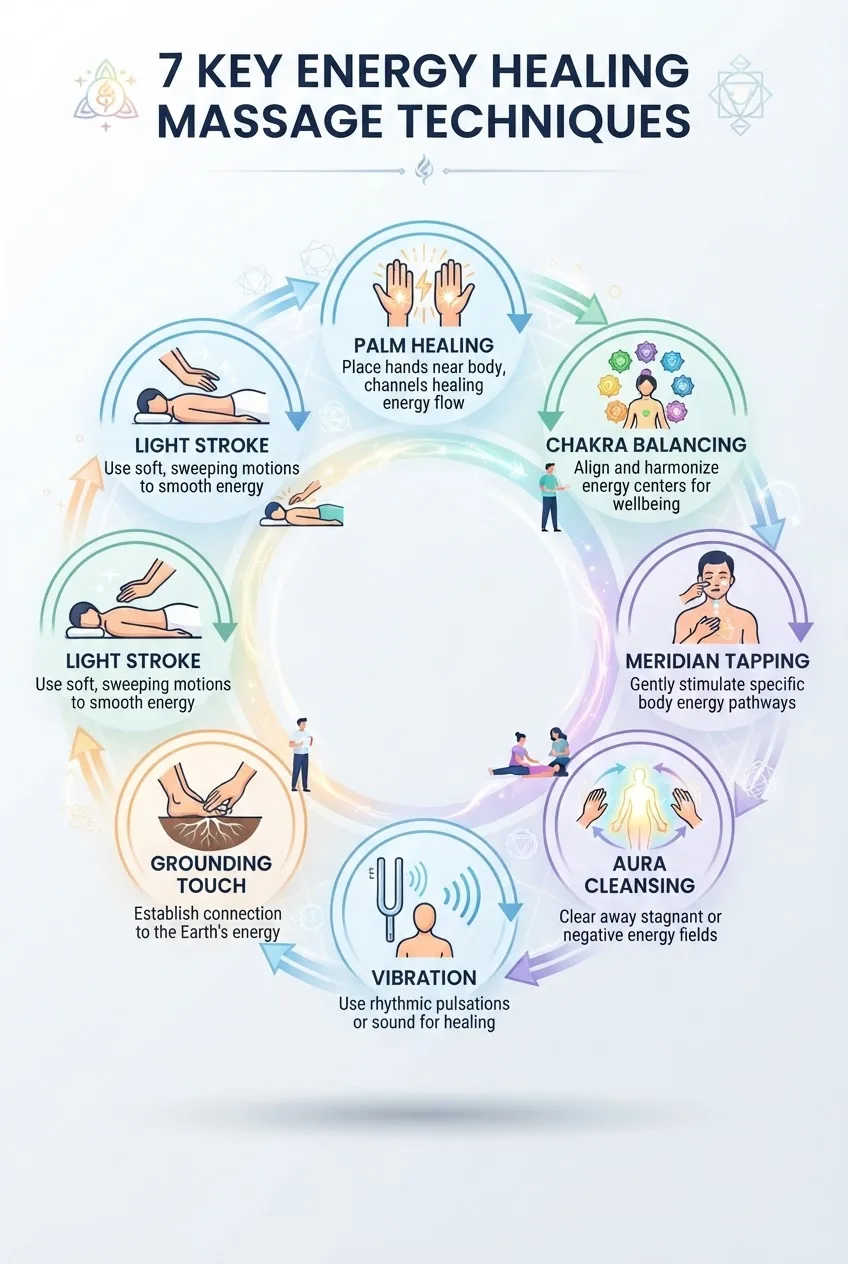
The techniques below are presented as numbered procedural steps to practice and integrate. Each item opens with an action-first phrase and includes timing, hand placement, and energetic intention. These seven foundational techniques combine hands-on touch with energetic modulation (grounding, clearing, balancing).
-
Set intention and centre (2–3 minutes)
Action: Sit at the head of the table, breathe deeply with the client for 2–3 full breaths. Ask the client to state one primary goal (pain reduction, sleep, anxiety). Energetic cue: visualise a downward flow of grounding energy from your feet into the floor and upward through your spine.
Practical tip: keep palms relaxed and slightly cupped; maintain a neutral, non-judgmental focus. Use a timer to keep this short but deliberate.
-
Scan the field with a non-contact palm hover (90 seconds)
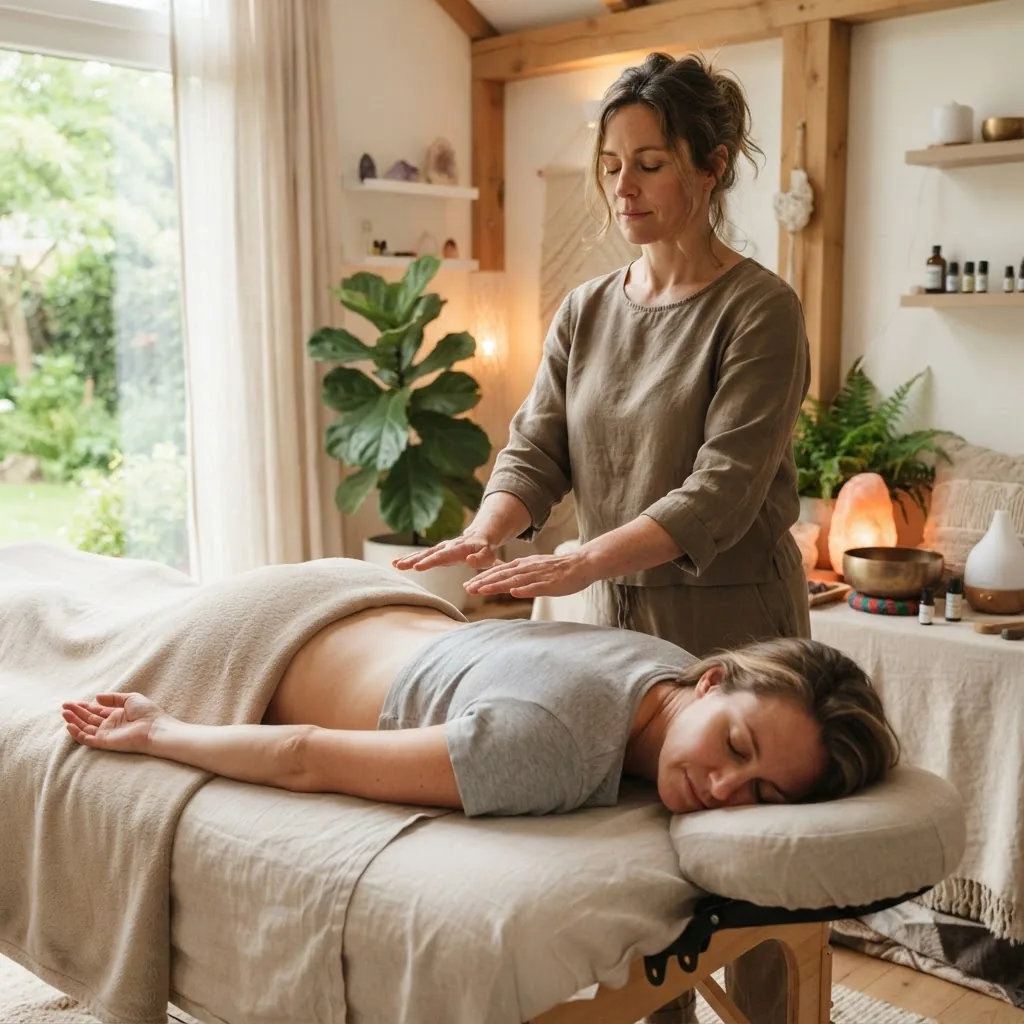
Action: Hold hands 2–5 cm above the client’s back, moving slowly along the spine from sacrum to occiput. Stop where you sense heat, coolness, tingling, or resistance—mark these areas mentally for later work.
Technique detail: move at ~1 cm/sec, pausing 3–5 seconds at irregularities. Use fingertips spread 2–3 cm apart, palms facing the body. This is an energetic assessment of the aura/biofield.
-
Palm healing strokes for large-muscle release (5–8 minutes)
Action: Apply long, slow palm strokes along paraspinal muscles and erector spinae. Pressure: light to moderate, 2–3/10 on a subjective scale. Direction: from base of spine upward toward shoulders, following the natural venous return and energetic ascent.
Energetic intention: visualize moving stagnant energy upward and out. Repeat 6–10 strokes per side, each stroke 8–12 seconds.
-
Meridian gently tapping and acupressure modulation (3–6 minutes)
Action: Using fingertips, lightly tap or hold along key meridian pathways (e.g., bladder meridian along the back). Tap rhythm: 3–5 taps per point, 1–2 mm displacement; hold points for 20–30 seconds when tension present.
Reference: For deeper meridian maps, consult the 12 meridians charts while you train. 12 Meridians Chart PDF Guide
-
Chakra balancing with focused spectral sweep (4–6 minutes)
Action: With palms hovering 3–5 cm above the front body (heart, solar plexus, sacral), move from root to crown or vice versa depending on client needs. Spend ~30–60 seconds per chakra, visualising colour and rotation (clockwise to energise, counter-clockwise to release).
Note: If a client reports anxiety, spend extra time on heart and throat; for digestive complaints, emphasise sacral and solar plexus.
-
Aura cleansing sweep using light, feathered strokes (3–5 minutes)
Action: Use fingertips or very light stroking with the flat of the hand from head to toes, 2–5 cm above the body, moving outwardly away from the spine to “brush” the aura. Make 3 passes around torso and limbs.
Practical cue: keep movements symmetrical and rhythmic; avoid abrupt changes in rhythm or pressure that may startle the client.
-
Vibration and micro-mobility for stuck joints and tissue (2–4 minutes)
Action: Apply gentle hand-held vibration (or rapid finger oscillation) to restricted areas—shoulder girdle, sacroiliac, knees—10–20 seconds per area. Frequency: 6–8 Hz feels grounding; 10–12 Hz is more energising.
Safety note: avoid vibration over acute inflammation or fracture sites.
-
Grounding touch close and aftercare recommendations (3 minutes)
Action: Finish with two-hand grounding hold over knees or feet, 60–90 seconds. Offer water and a 5-minute seated integration. Provide a brief aftercare plan: hydration (300–500 mL water), rest, and journaling about sensations for 24 hours.
Practitioner cue: document session notes, observed energetic blocks, and any recommended follow-ups.
Transition: After practicing these techniques, deepen your theoretical understanding of the energy anatomy that underpins them.
Understanding the Energy Systems Used in Healing Massage
Energy healing massage practitioners work with overlapping models: chakras, meridians, and the biofield. These frameworks help explain where to place hands, which points to stimulate, and how to direct intention. Below is a practical overview that ties traditional theory to observable clinical signs.
Chakras: seven primary centres aligned along the spine; each correlates with plexuses and emotional themes:
- Root (Muladhara) — grounding, lumbar/pelvic stability; issues can show as lower back pain or anxiety about safety.
- Sacral (Svadhisthana) — emotions, digestion; imbalances can present as menstrual or abdominal complaints.
- Solar Plexus (Manipura) — energetic drive, digestion, core tension.
- Heart (Anahata) — emotional regulation and upper thoracic tension.
- Throat (Vishuddha) — expression, neck pain.
- Third Eye (Ajna) — stress, sleep disturbance, headaches.
- Crown (Sahasrara) — overall integration and sense of wellbeing.
Meridian channels (qi pathways) often map to anatomical structures and are used to influence organ systems and muscular tension. Practical meridian roles (selected examples):
- Bladder meridian — travels paraspinally; a common route for back pain and tension.
- Stomach meridian — anterior torso; relates to digestion and abdominal complaints.
- Kidney meridian — lumbar and plantar connections; grounding and adrenal support.
The biofield or aura is the electromagnetic and subtle energy surround detected by practised palpation and non-contact scanning. Working with the aura (hovering, sweeping) can produce rapid shifts in client comfort and relaxation.
For hands-on study of meridian pathways, use the 12 meridians chart for reference. 12 Meridians Chart PDF Guide
Transition: Knowing the systems lets you match techniques to outcomes; next, we cover clinical and holistic benefits you can expect and measure.
Therapeutic Benefits and Applications of Energy Healing Massage
Energy healing massage offers layered benefits—physical, emotional, and energetic. Clinical integration shows that when traditional massage is combined with energetic techniques the client often reports amplified relaxation and symptom relief.
Physical benefits:
- Muscle relaxation and reduced myofascial tension: long palm strokes and vibration aid tissue perfusion and mobility.
- Pain modulation: targeted meridian tapping and acupressure can provide short-term analgesia for chronic pain conditions.
- Improved sleep and parasympathetic tone: grounding holds and chakra balancing encourage vagal activation.
Emotional and energetic benefits:
- Emotional release and regulation—clients commonly report decreased anxiety following heart-centred balancing.
- Improved sense of clarity and reduced mental fog—third-eye sweeps and aura cleansing can support cognitive calm.
Evidence note: According to a 2023 integrative health journal review, hands-on energy therapies show promising effects on subjective stress and wellbeing in small-scale trials; however, results vary by modality and study design (peer-reviewed journal source). For muscular issues, see the targeted approaches in Acupuncture for Sore Muscles.
Complementary point-specific tools: when targeting visceral or localized complaints, combine energetic massage with acupressure maps:
- Abdominal Pain Acupressure Points — for digestive-related energetic imbalances.
- Acupressure Knee Pain Points — pairs well with vibration and micro-mobility.
- Ankle Acupressure Points Chart — supports lower limb grounding.
Real-world case example: A 45-year-old client with chronic low back stiffness and anxiety received weekly sessions combining meridian tapping and chakra balancing. After six sessions they reported 40% reduction in perceived pain and improved sleep—anecdotal evidence from clinic practice (practitioner case file).
Transition: If you’re ready to turn practice into a profession, the next section maps clear training and certification routes.
Training and Certification Pathways for Energy Healing Massage Therapists
Becoming a certified energy healing massage therapist often requires blending accredited massage education with specialised energy modality training. Below is a step-by-step guide that outlines common pathways, timeframes, and credential options.
-
Complete foundational massage therapy training (6–12 months)
Many practitioners begin with a 600–1000 hour diploma in remedial massage or myotherapy (6–12 months full-time or 12–24 months part-time). This covers anatomy, pathology, and manual therapy skills that provide a safe base for adding energetic techniques.
-
Study energy healing fundamentals (weekend to 6 weeks)
Short courses in Reiki, basic aura work, or energy massage fundamentals typically run from weekend (16 hours) to 6-week formats (24–60 hours). These courses teach non-contact scanning, intention setting, and light-touch modalities.
Suggested option: the Energy Healing Techniques Guide provides broader theoretical foundations. Energy Healing Techniques Guide
-
Gain supervised clinical hours and mentorship (3–12 months)
Accumulate 100–300 supervised client hours under an experienced practitioner or within a training clinic. Supervision hones client assessment, technique selection, and professional boundaries.
-
Acquire modality-specific certification (Reiki/Qigong) (2–12 months)
If you integrate Reiki or Qigong, pursue recognised certification: Reiki Level I–III programs (each 2–5 days) or Qigong teacher training (50–300 hours). Reiki Healing Techniques Course
-
Consider complementary certifications (acupressure, meridian therapy) (3–6 months)
Formal acupressure or meridian therapy courses strengthen point-specific intervention skills. For example, review the Acupressure Practitioner Course Overview for structured options. Acupressure Practitioner Course Overview
-
Register with professional association and maintain insurance (ongoing)
Join a recognised association for liability insurance, CPD requirements, and client referrals. Check local accreditation standards and maintain annual professional indemnity and public liability insurance.
-
Complete continuing education and specialty workshops (annual)
Ongoing CPD—advanced meridian workshops, trauma-informed energy work, or clinical supervision—keeps skills current. See recommended pathways below.
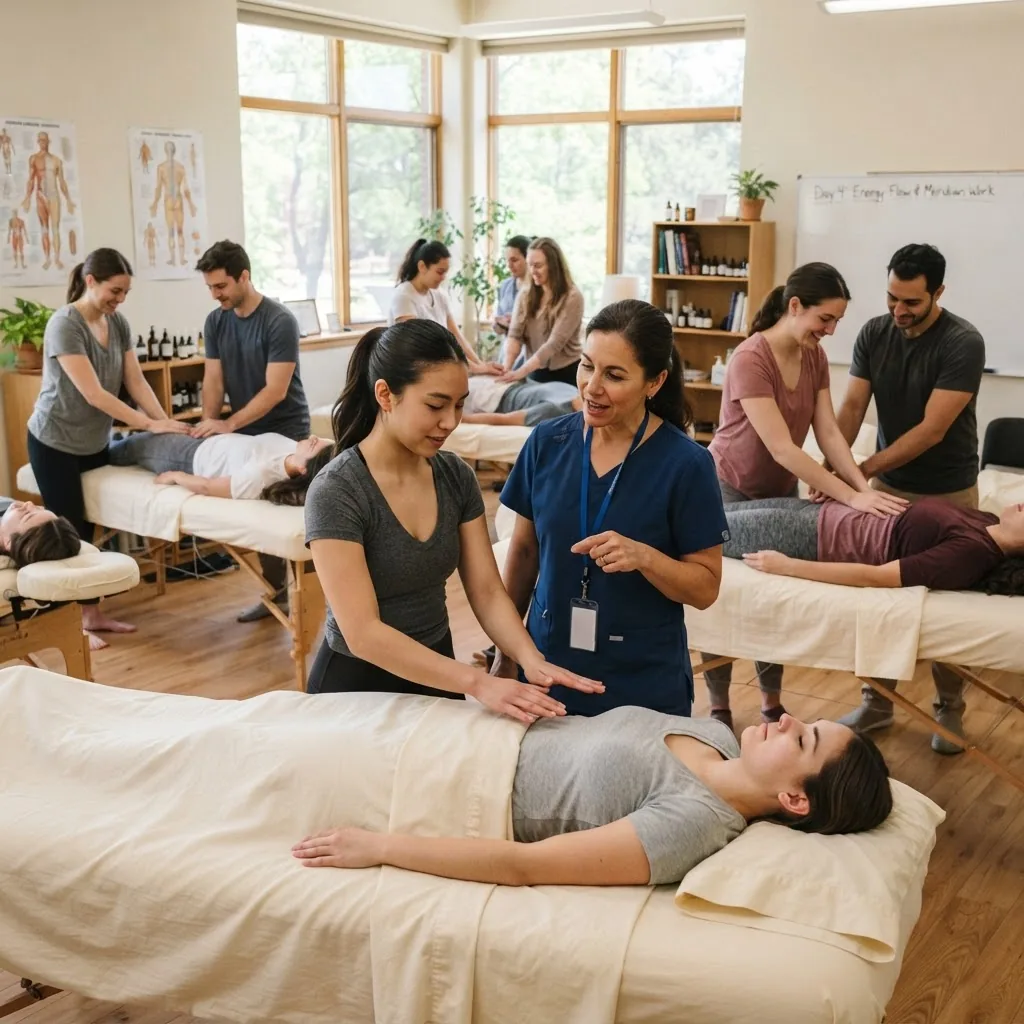
Typical cost and duration: expect foundational massage diplomas to cost AUD 6,000–18,000 depending on provider; short energy courses range AUD 150–1,200. Program accreditation varies—some energy modality courses are non-regulated and rely on school reputation.
For integrated acupuncture and professional-level training that spans energy medicine and needling modalities, consult the Acupuncture Acupuncturist Training and Certification Guide. Acupuncture Acupuncturist Training and Certification Guide
Another complementary option is a short course focused on acupressure techniques that directly supports energetic massage practice: Acupressure Practitioner Course Overview
| Course Type | Typical Hours | Estimated Cost (AUD) |
|---|---|---|
| Remedial Massage Diploma | 600–1000 | 6,000–18,000 |
| Reiki Levels I–III | 16–120 | 150–1,200 |
| Acupressure Practitioner | 60–200 | 800–4,000 |
Transition: With training established, learn how to combine energy massage safely with other energy therapies for deeper results.
Integrating Energy Healing Massage with Other Energy Therapies
Combining modalities can amplify outcomes when done with clinical reasoning. Integration choices depend on client goals, contraindications, and practitioner scope of training.
Reiki: Often layered before or after hands-on massage. Use gentle non-contact Reiki to stabilise an energetic shift after deep tissue work. If you intend to integrate, complete formal Reiki training levels and document scope. For formal Reiki training options, see the Reiki Healing Techniques Course. Reiki Healing Techniques Course
Qigong: Use as a preparatory or homework practice for clients to self-regulate their qi between sessions. Teaching 10–15 minute Qigong routines supports long-term maintenance. Complementary Qigong training is available in structured courses for practitioners.
Acupuncture/acupressure synergy: When permitted by scope, combining point work with energetic strokes yields targeted relief—acupuncture for localized pathology and energetic massage for systemic balance. See how point-specific therapies support muscle recovery in Acupuncture for Sore Muscles.
Practical integration example: For a client with chronic knee pain, I begin with meridian tapping and energy balancing, then apply acupressure points and micro-mobility. Follow-up homework includes Qigong movement and self-massage techniques for daily maintenance.
Transition: Integration raises specific safety and professional ethics issues; read the following section carefully.
Safety, Contraindications, and Professional Ethics
Energy healing massage complements medical care; it does not replace diagnosis or treatment. Always conduct a thorough client assessment and follow clear safety protocols.
Screening essentials: recent surgeries, active cancer, pregnancy (first trimester caution), implanted medical devices (e.g., pacemakers), severe psychiatric conditions, and uncontrolled blood clotting disorders.
Key safety best practices:
- Use a written intake and consent form before the first session and update it annually.
- Avoid deep pressure over acute inflammation, fractures, or varicosities; use light touch instead.
- When working near implanted devices or severe cardiac conditions, consult the client’s medical practitioner.
- Practise trauma-informed care: ask permission before touch and offer clear opt-out language.
- Maintain hygiene: clean linens between clients and sanitise hands; keep oil containers closed.
- Adhere to confidentiality, record keeping, and clear professional boundaries in all client interactions.
External guidance: refer to professional association guidelines and public health advisories when forming policies. For evidence and safety standards consult authoritative sources such as the National Center for Complementary and Integrative Health (NCCIH), peer-reviewed integrative medicine journals, and national health departments. NCCIH, PubMed, Australian Department of Health.
Ethics and scope: Clearly state your scope to clients and avoid offering medical advice or making curative claims. Document sessions and referrals; if a client presents red-flag symptoms, pause energy work and recommend medical evaluation.
Transition: Sustainable practice depends on lifelong learning; below are practical strategies to continue developing your skills.
Continuing Education and Developing Your Practice
Ongoing learning secures both clinical competence and client trust. Create an annual CPD plan with measurable goals.
Actionable recommendations:
- Attend two advanced workshops per year (e.g., advanced meridian therapy, trauma-informed energy work).
- Complete 20–30 hours of supervised clinical practice annually to retain assessment skills.
- Engage in peer supervision or study groups monthly to review difficult cases and get feedback.
- Collect structured client feedback via a 3-question post-session form focusing on pain, sleep, and emotional state; track changes over 6 sessions.
- Maintain a professional portfolio documenting training certificates, supervised hours, and testimonials (with client consent).
Useful resources and networks include professional associations, integrative medicine journals, and interdisciplinary conferences. For broader training in energy medicine, review the Healing Modalities Guide and Energy Medicine Training Overview.
Hands-On Guide Wrap: Common mistakes and how to avoid them
Below I list common practitioner mistakes I’ve observed and how I corrected them in clinic:
- I rushed intention setting. Early in my practice I started before clarifying client goals; now I always spend 2–3 minutes centring and recording a single session objective.
- I used heavy pressure over acute areas. Once I caused increased pain by applying deep pressure to inflamed tissue; I now default to light touch and vibration over acute sites for 48–72 hours.
- I skipped a proper intake form. I once missed a cardiac device note; since then intake is mandatory with explicit device and medication fields.
- I performed advanced energetic techniques without supervision. I learned to refer or seek mentorship before integrating complex meridian protocols into client care.
Checklist: Verify your session
- Intake form completed and contraindication ruled out.
- Client goal recorded and shared at start (one sentence).
- Set intention (2–3 breaths) and performed non-contact scan (90 seconds).
- Applied palm strokes, meridian modulation, chakra balancing, aura sweep, vibration as indicated.
- Finished with grounding hold (60–90 seconds) and gave aftercare (water, rest, journal).
- Session notes recorded and follow-up scheduled if needed.
When to call in a professional
Refer immediately to medical or allied health when you encounter: suspected fracture, signs of acute infection, uncontrolled bleeding, severe psychiatric instability, syncope, or new-onset chest pain. For persistent red-flag symptoms, recommend medical assessment and pause energetic work until cleared.
Final take: Practiced with care, energy healing massage is a powerful adjunct to bodywork that supports both symptom relief and emotional regulation. Use the steps here, combine them with accredited training pathways, and prioritise safety to grow as a confident practitioner.